




Abstract
Introduction
Although social media is widely used in plastic surgery, differences in content and posting patterns across practice settings are poorly understood. This study characterized Ontario plastic surgeons Instagram posting patterns and audience engagement by practice setting.
Methods
This observational cross-sectional study analysed publicly accessible professional Instagram profiles of registered academic, community, or mixed practice plastic surgeons in Ontario. Up to 30 posts (posted on or after January 1, 2020) per account were coded by content type and clinical domain. Chi-square, Kruskal-Wallis, and analysis of variance tests were used to evaluate the association between surgeon characteristics, posting patterns, and engagement rates.
Results
Eighty-six of 261 (33%) plastic surgeons had professional Instagram profiles, yielding 2032 posts. Pre-/post-procedure results (32%) and facial aesthetics (20%) were the most represented content type and domain, respectively. Academic surgeons posted significantly more announcements, research, and reconstructive content (P < .001), while community surgeons posted significantly more advertising/promotional (P = .02) and facial aesthetics (P < .001) content. Engagement rates were highest for academic surgeons, personal posts, and craniofacial content, with significant differences among practice types, content categories, and domains (P < .001).
Conclusions
Instagram use among plastic surgeons varies substantially by practice setting. Cosmetic content dominates posting volume, whereas reconstructive and academic content, despite higher observed engagement, remains under-represented. These findings identify content-practice mismatches that warrant further qualitative, longitudinal, and interventional study before practice recommendations can be made.
Introduction
The use of social media in the healthcare setting has the potential to benefit and/or harm its users. 1 It can be used to disseminate educational information, mobilize social resources, facilitate research, advance professional development, and foster supportive communities. 2 If used irresponsibly, there is the risk of spreading misinformation, violating patient privacy, compromising professional reputation, and possibly leading to legal repercussions. 3
The current literature provides inadequate clarity on the use of social media by plastic surgeons. A review conducted by Economides et al in 2019 identified that most studies on the topic of social media and plastic surgery were found to be either: (1) surveys regarding usage of social media or opinions on social media; (2) commentary on social media use. 4 These findings are corroborated by Gupta et al who conducted a literature review in 2020 on the same topic and similarly found that surveys or commentary dominated the current literature. 5 Thus, there is a need for direct, content-based analysis of what plastic surgeons actually post on public professional social media accounts, rather than relying primarily on self-report surveys or commentary.
Given the lacking data in this area, our study aims to observe how plastic surgeons are currently utilizing social media. Specifically, our research will answer the following questions: (1) What are plastic surgeons practicing in Ontario, Canada posting to their public, professional Instagram profiles?; (2) What patterns in content and engagement can be identified? Understanding these patterns is a necessary first step toward developing evidence-informed recommendations for how social media use can be intentionally aligned with professional and educational goals.
Methods
This is an observational, cross-sectional study that described and analysed the types of publicly accessible posts made on Instagram 6 by the study population of Ontario plastic surgeons. With over 21 million Canadians on the platform, 7 Instagram is one of the most popular social media platforms. Notably, 73% of users surveyed in 2024 responded that they also use Instagram to connect with others over shared interests and 44% report using the platform to look at product reviews or recommendations. 8 Given the popularity of Instagram and relevant uses, the platform was selected as the social media platform of interest for this study. Due to the study's structure and use of publicly accessible internet content, no institutional ethics approval was required.
Eligibility Criteria
The inclusion criteria for this study included Ontario plastic surgeons who were identifiable through a search of the provincial regulatory body, the College of Physicians and Surgeons of Ontario (CPSO). 9 Recruitment utilizing CPSO member directory was favoured over the Canadian Society of Plastic Surgeons (CSPS) 10 because CPSO membership is mandatory in Ontario, while CSPS membership is optional and could lead to inadvertent exclusion of eligible plastic surgeons.
The exclusion criteria for this study included non-practicing or expired registrants, registrants practicing outside of Ontario, and those surgeons without a publicly accessible, professional Instagram profile. To determine if the surgeon has such a profile, their name, designation, and other identifiers were used to search for an associated Instagram profile.
A public profile was defined as one that is accessible through the search method outlined above, with visibility of posts to non-followers. A professional profile was defined as one that visibly includes the surgeon's degree, role, or place of employment. Personal profiles of plastic surgeons, even if they were public, were excluded because personal social media behaviours are outside of our study aims.
Data Collection
Data collection was performed in duplicate by 2 reviewers (AW, TX), and conflicts were resolved via discussion or by a third reviewer (PK) if consensus could not be reached.
For every eligible profile, the relevant demographic information was recorded from the regulatory body and the Instagram profile. Profiles were assigned to the most appropriate practice setting: academic, community, or mixed. Determination of the most applicable setting was based on pre-determined definitions. Academic surgeons were defined as those with their primary address listed under ‘Practice Location’ provided by the CPSO associated with an academic, teaching, or research institution/hospital. Community surgeons were defined as those with their primary address listed under ‘Practice Location’ provided by the CPSO not associated with an academic, teaching, or research institution/hospital. Mixed surgeons were defined as those with a mix of academic and community locations listed under the ‘Practice Location’ provided by the CPSO. Practice locations and association with an academic, teaching, or research institution/hospital were also confirmed by performing an internet search using keywords/identifiers.
For eligible profiles, up to 30 of the most recent posts at the time of collection (between April-October 2025) or all posts posted on or after January 1, 2020 (whichever was met first) had relevant outcomes recorded. Like counts were collected in January 2026.
Outcomes
The included Instagram profiles and posts were analysed for the following outcomes: profile demographics, content type, domain, and like count. Content type and domain were based on the most representative descriptor of the post content. Only the single most applicable category was selected in an attempt to minimize over-sorting. Content types include pre-/post-procedure results, patient testimonials, educational information, announcements, advertising/promotion, research/professional development, personal, and other. Domains include body contouring, burns, cosmetic breast, general cosmetic surgery, craniofacial, facial aesthetics, gender surgery, genital cosmetics, hand and wrist, laser, microsurgery, non-breast reconstruction, non-cosmetic breast, peripheral nerve, skin care, and skin lesions. Appendix Tables A1 and A2 list the content types and domains, and their pre-determined definitions used for sorting purposes. Engagement rate was calculated as the number of likes divided by the number of followers. This metric was used as a pragmatic proxy for audience interaction and does not directly measure educational value, patient impact, or the motivations underlying engagement.
Statistical Analysis
Descriptive statistics were used to summarize profile information, post information, content types, and anatomical categories. Standard deviations were calculated for means and interquartile ranges (IQRs) were calculated for medians. To evaluate associations between surgeon-related factors and social media-related factors, chi-square (ie, categorical variables) and non-parametric analysis of variance (Kruskal-Wallis test, ie, categorical and continuous variables) were performed. Standardized residuals (SR) were calculated from chi-square analyses. To evaluate differences in engagement rates, Kruskal-Wallis test was used to account for skewed data with heavy right-sided tail. Statistical significance was defined as P < .05.
Results
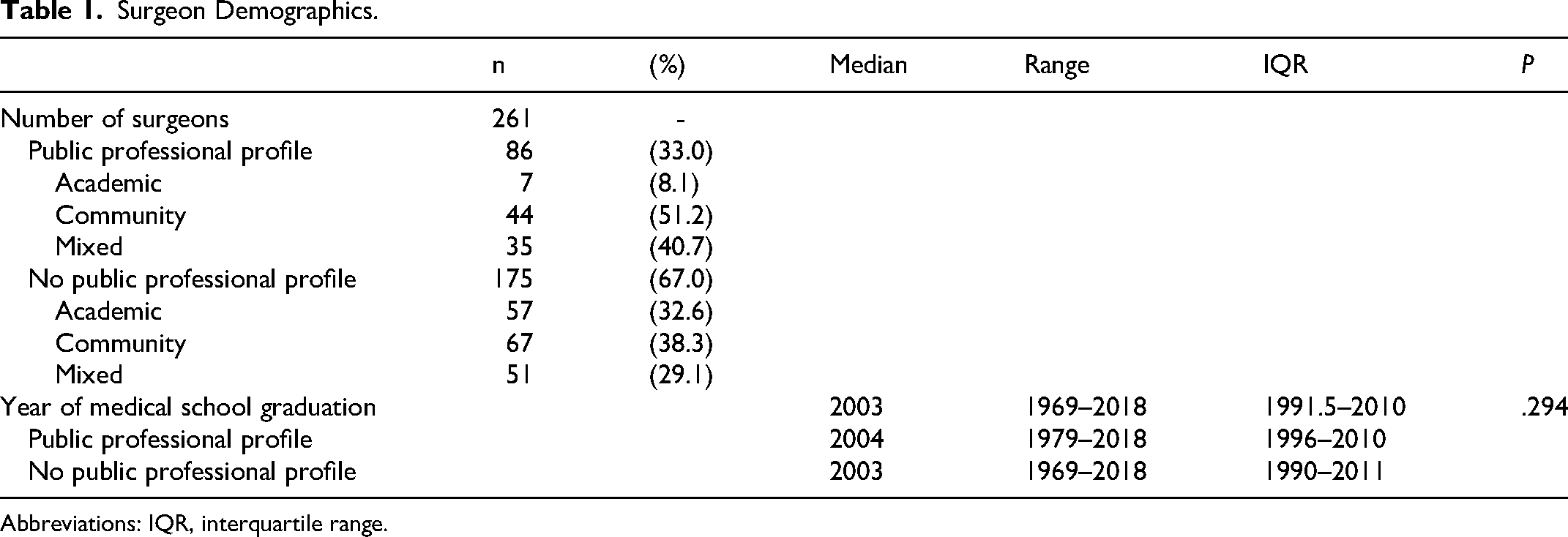
A total of 261 plastic surgeons in Ontario, Canada were included through a search of the provincial regulatory body database. Of these, 86 surgeons (33%) had a public professional Instagram profile. The mean year of medical school graduation was 2002 for those with and 1999 for those without (P = .29). In terms of practice setting, 64 surgeons worked in a primarily academic setting, 111 in a community setting, and 86 in a mixed setting. For those with a public professional Instagram profile specifically, 7 surgeons worked in a primarily academic setting, 44 in a community setting, and 35 in a mixed setting. Further surgeon demographic details can be found in Table 1.
Surgeon Demographics.
Abbreviations: IQR, interquartile range.
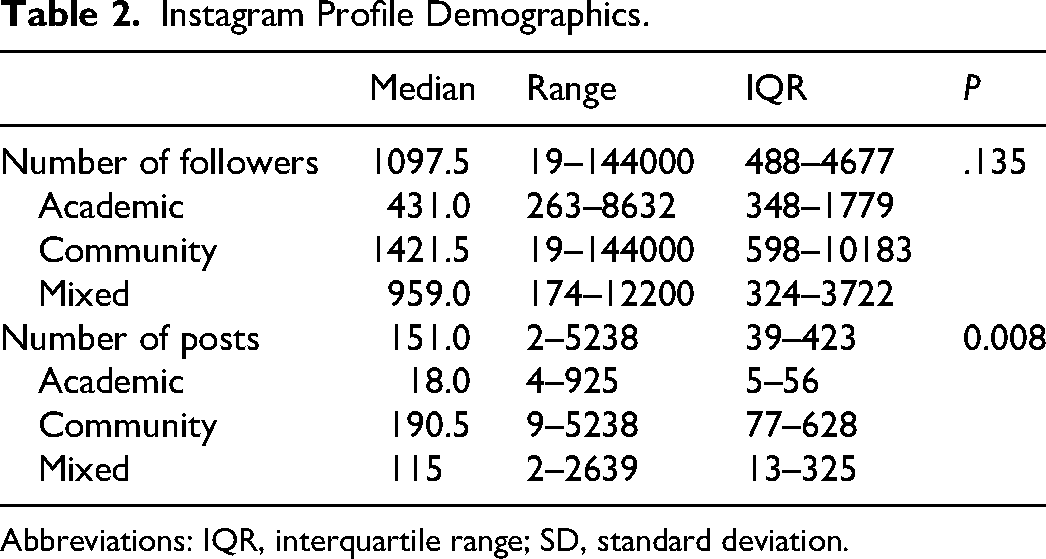
Overall, the median number of Instagram followers was 1097.5 (range = 19-144000, IQR = 488-4677). There was no statistically significant difference in Instagram followers between groups (P = .135). The median number of Instagram posts was 151 (range = 2-5238, IQR = 39-423). There were statistically significant differences between groups (P = 0.008). Further Instagram profile demographic details can be found in Table 2.
Instagram Profile Demographics.
Abbreviations: IQR, interquartile range; SD, standard deviation.
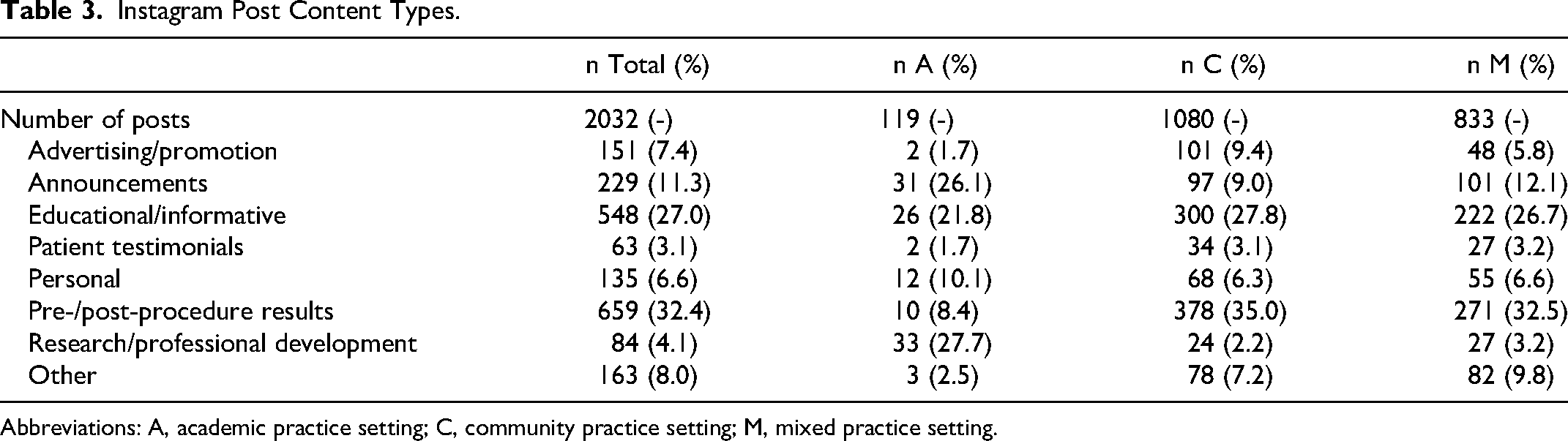
A total of 2032 posts were identified from those surgeons with public professional Instagram profiles. The most common content types of these posts were pre-/post-procedure results (32%), educational/informative (27%), and announcements (11%). The least common content types of these posts were patient testimonials (3%), research/professional development (4%), and personal (7%). A detailed breakdown can be found in Table 3.
Instagram Post Content Types.
Abbreviations: A, academic practice setting; C, community practice setting; M, mixed practice setting.
There were statistically significant differences (P < .001) in the content category of posts made among the surgeon groups (Figure 1). Academic surgeons posted significantly more announcements (SR = 4.80, P < .001) and research (SR = 12.66, P < .001), and posted less pre-/post-procedure results (SR = −4.60, P < .001) and advertising/promotion (SR = −2.30, P = .02). Community surgeons posted significantly more advertising/promotion (SR = 2.32, P = .02), and less research (SR = −3.09, P < .001) and announcements (SR = −2.40, P = .02).
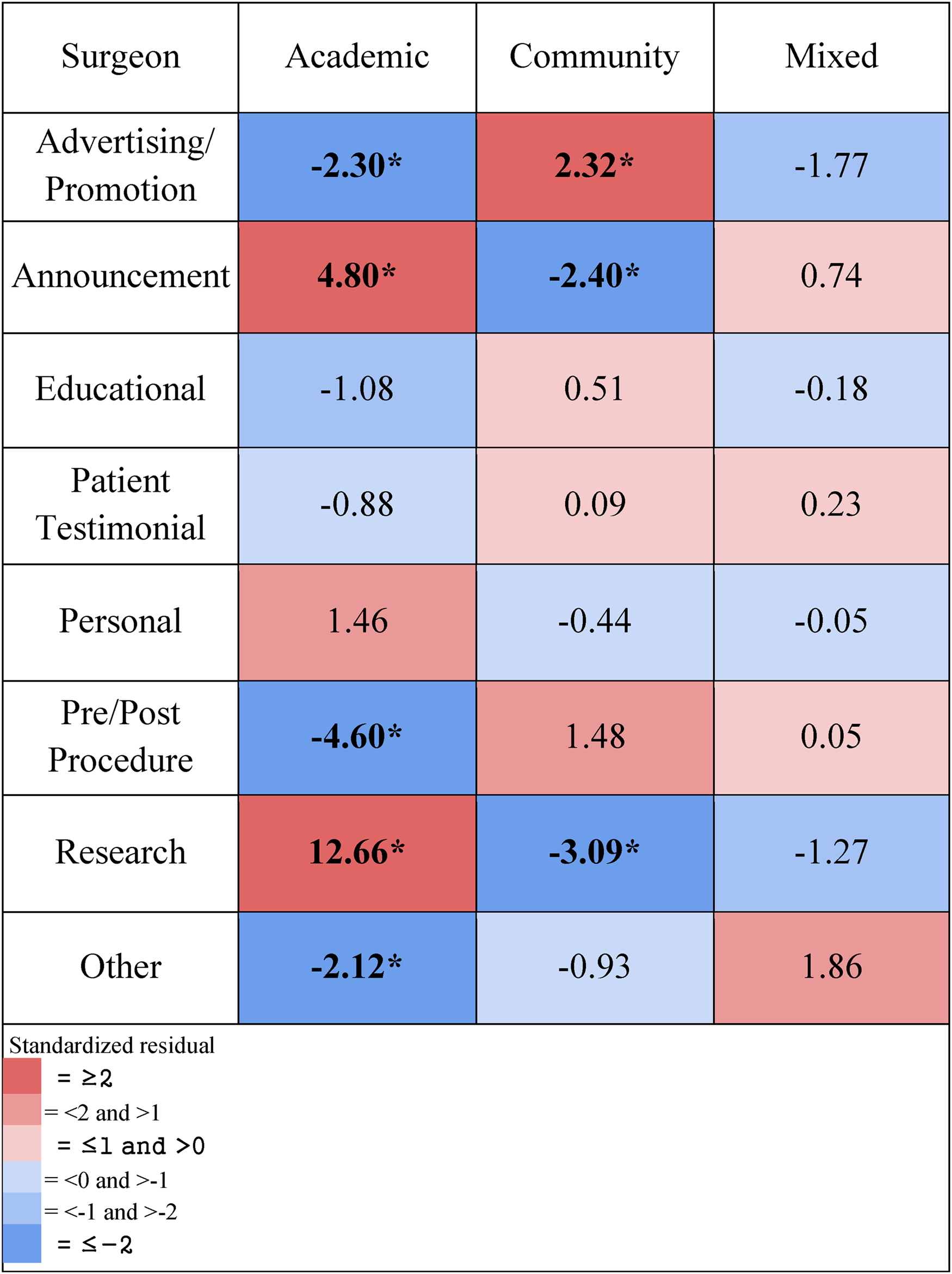
Areas of over/under-representation in content of posts. The values represent standardized residuals calculated from chi-square analysis. Values >|2| correspond to P < .05.
In terms of plastic surgery domains, of the posts identified, 9% were reconstructive in nature, 71% were cosmetic in nature, and 20% did not have an applicable domain. The most common domains were facial aesthetics (20%), body contouring (19%), and cosmetic breast (16%). The least common domains were burns (0.1%), craniofacial (0.3%), gender surgery (0.3%), and microsurgery (0.3%). A detailed breakdown can be found in Table 4.
Instagram Post Domains.
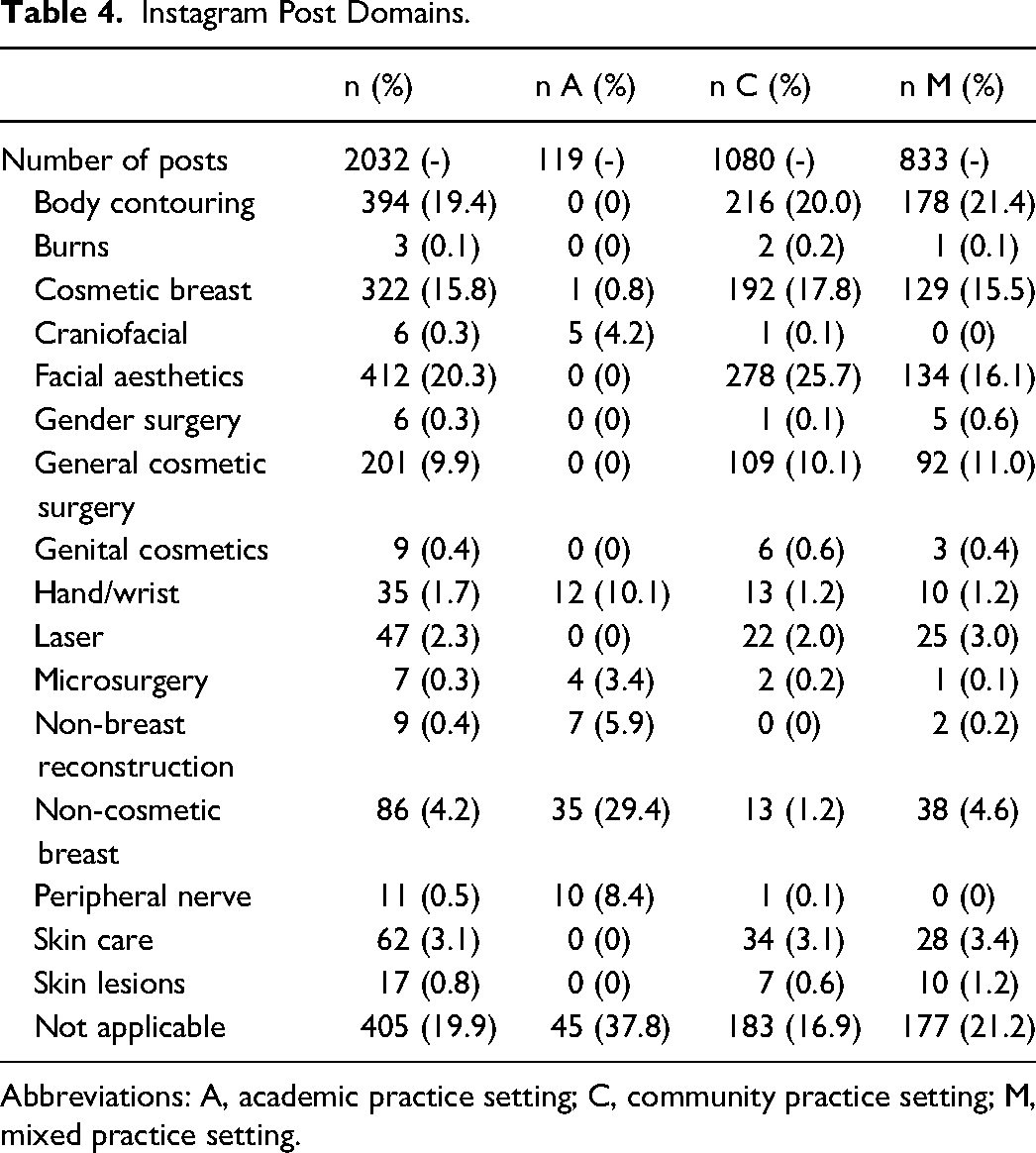
Abbreviations: A, academic practice setting; C, community practice setting; M, mixed practice setting.
There were statistically significant differences (P < .001) in the domains of posts among the surgeon groups (Figure 2). Academic surgeons posted significantly more craniofacial (SR = 7.84, P < .001), hand/wrist (SR = 6.95, P < .001), microsurgery (SR = 5.61, P < .001), non-breast reconstruction (SR = 8.92, P < .001), non-cosmetic breast (SR = 13.35, P < .001), and peripheral nerve (SR = 11.66, P < .001) content, while posting less body contouring (SR = −4.80, P < .001), cosmetic breast (SR = −4.11, P < .001), general cosmetic surgery (SR = −3.43, P < .001), and facial aesthetics (SR = −4.91, P < .001) content when compared to community and mixed surgeons. Community surgeons posted significantly more facial aesthetics (SR = 3.99, P < .001) content, while posting less non-breast reconstruction (SR = −2.19, P = .03) and non-cosmetic breast (SR = −4.84, P < .001) content when compared to academic and mixed surgeons. Mixed surgeons posted significantly less facial aesthetics (SR = −2.69, P = .01) and peripheral nerve (SR = −2.12, P = .03) content when compared to academic and community surgeons.
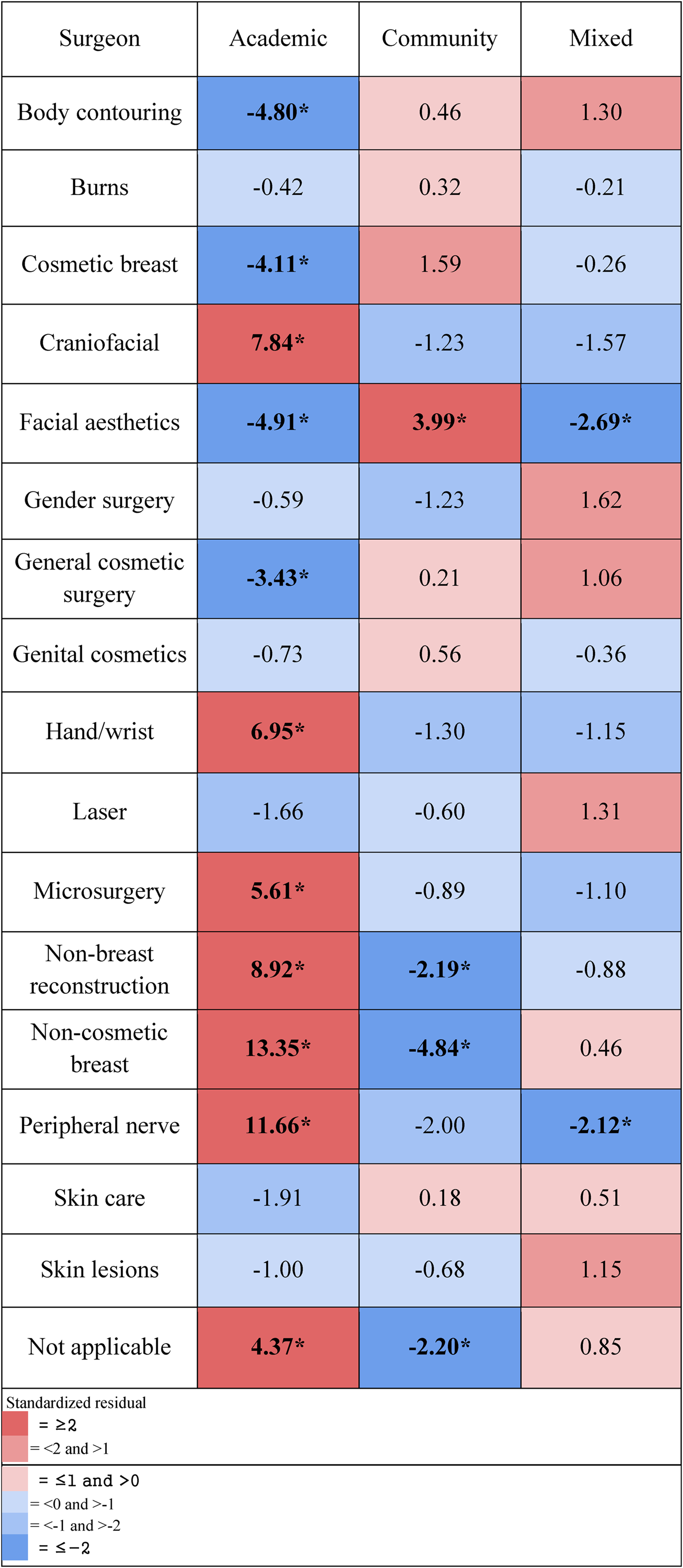
Areas of over/under-representation in domain of posts. The values represent standardized residuals calculated from chi-square analysis. Values >|2| correspond to P < .05.
Academic surgeons had the highest engagement rate on their posts (9.7%, IQR = 2.7-16.4%), with a statistically significant difference compared to community and mixed surgeons (P < .001) (Table 5). There were statistically significant differences in engagement rate by content category (P < .001), with personal (4.9%, IQR = 2-9.7%), announcements (3.2%, IQR = 0.9-7.2), and research/professional development (2.9%, IQR = 0.9-11.1%) having the highest engagement. Posts featuring craniofacial (11.2%, IQR = 7.1-35.1%), non-breast reconstruction (10.9%, IQR = 10.2-15.0%), and peripheral nerve (9.7%, IQR = 7.4-12.5) had the highest engagement rate compared to other domains (P < .001).
Instagram Post Engagement Rates.
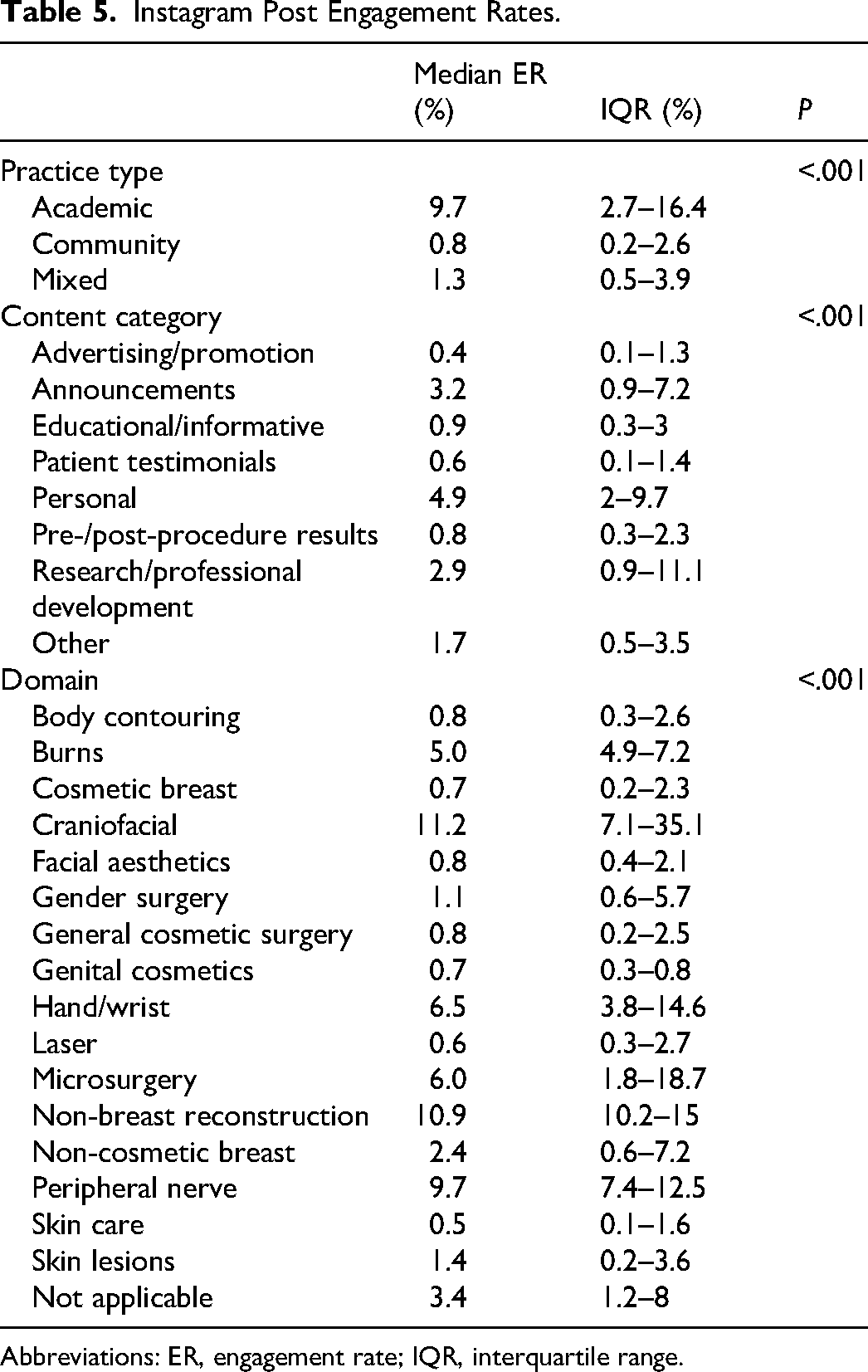
Abbreviations: ER, engagement rate; IQR, interquartile range.
Discussion
This study found that a third of Ontario plastic surgeons had a public, professional Instagram profile. In our analysis, 51% of the surgeons were community-based, 41% were mixed practice, and 8% were academic. There were no statistically significant differences in the number of followers between practice settings, though differences were observed in posting patterns, post volume, and engagement rates across settings.
There was a mismatch between posting volume and observed engagement among academic surgeons. One possible explanation is that academic surgeons may reach audiences that include trainees, colleagues, and other healthcare professionals, but this hypothesis requires direct study. This is in line with trends seen in the general public; in a 2025 social media industry report, higher education had the highest engagement rates on Instagram when compared with all other industries, including sports teams, influencers, and nonprofits. 11 Future qualitative work exploring the goals, pressures, and perceived audiences of surgeons across practice settings would help clarify what incentives drive content decisions and inform guidelines encouraging more educationally valuable posting.
This study also identified numerous statistically significant differences in posting patterns between surgeons of academic, community, and mixed practice settings, which could again be attributed to differences in motivation and audience. Interestingly, academic surgeons did not post significantly more educational content than other surgeons, and educational posts had relatively low engagement (0.9%). In contrast, community surgeons posted significantly more advertising/promotional content and fewer announcements and research posts, suggesting more commercial use of Instagram. These findings are in line with a study by Thawanyarat et al in 2024, which analysed Instagram posts from the top-followed plastic surgeons globally – who primarily worked in private practices focused on aesthetic procedures – and found that marketing posts were most common (64.5%), followed by personal posts (20%), miscellaneous posts (11%), and educational (4.5%). 12 While the broad direction of these findings may be expected, several specific results were not obvious a priori. Academic surgeons achieved engagement rates nearly 12 times higher than community surgeons (9.7% vs 0.8%) despite posting less content overall, and educational posts had among the lowest observed engagement rates (0.9%). These findings suggest that the relationship between content type, practice setting, and audience interaction is more complex than simple educational-versus-promotional distinctions, and that additional unmeasured factors may be contributing.
In terms of procedure type, while Canada-specific and Ontario-specific data are lacking, the American Society of Plastic Surgery (ASPS) 13 reported in 2024 that the most commonly performed cosmetic procedures of the year were liposuction, breast augmentation, and abdominoplasty; the most commonly performed reconstructive procedures of the year were tumour removal, hand surgery, and breast reconstruction. 14 In our data, body contouring and cosmetic breast were the most common and third most commonly featured domains, but skin lesions, hand/wrist, and non-cosmetic breast domains represented only 0.8%, 1.7%, and 4.2% of all posts, respectively. Additionally, the top 9 domains by engagement rate were non-cosmetic domains, while the bottom 7 were all cosmetic. These findings suggest cosmetic content is disproportionately represented relative to reconstructive domains in professional Instagram posting, and future research should examine whether this discrepancy affects public understanding of the specialty.
There is also a lack of existing literature on what content is being posted by plastic surgeons in Canada or Ontario, and whether that content follows existing guidelines from national or provincial governing bodies. Previous work is dominated by surveys and commentary. In 2022, Bouhadana et al surveyed Canadian plastic surgeons on their social media usage and found a general lack of active social media usage, but only received responses from 14.7% of the eligible pool. 15 In 2016, McEvenue et al performed an internet search to determine the proportion of Canadian plastic surgeons with an online website or social media presence, but did not dive into the specific content attached to the online presence of those surgeons. 16 This study bridges that gap by directly analysing posted content at scale, though the paucity of comparable studies limits regional or temporal comparisons.
There are also limited guidelines on the appropriate use of social media for plastic surgeons. A 2018 review by Bennett et al proposed guidelines addressing confidentiality, consent, and ethics. 17 However, guidelines have not been officially set forth by the CSPS Code of Ethics. 18 The CSPS’ stance identifies social media as a tool to improve quality of care through education, outreach, and advocacy, 3 and maintains an active Instagram presence posting announcements and educational content for members and the public. 19 In contrast, the CPSO sets forth clear policies regarding social media use, 20 identifying professionalism, boundaries, and confidentiality as domains at risk. 20 These existing frameworks could inform plastic surgery-specific guidelines. Our findings – showing higher engagement for reconstructive and academic content despite lower posting volume – support further study of whether professional-society guidance could encourage broader representation of such content.
Limitations
This study had limitations. One limitation was the categorization of posts. The validity of the categories defined in the study has not been assessed; some posts could have fit into multiple categories. For instance, nearly all posts on social media could be considered promotional to some degree. Data collection was limited to identifiable public, professional Instagram profiles, and their most recent posts for feasibility reasons, which may have created sampling bias. Notably, there were only 7 purely academic surgeons in this analysis, though this further highlights the paucity of academic content on social media. Additionally, the practice settings defined by this study may not capture all the nuances and diversity in how plastic surgery is practiced, but it was necessary to avoid data collection methods with low engagement rates (ie, a survey). The study has a limited scope due to its reliance on publicly accessible data, which is quantitative in nature, and therefore does not fully capture the qualitative reasons that underlie the observed behaviours. Finally, there were large variations in the follower and post counts between Instagram accounts, suggesting a heterogeneous sample. This was mitigated to an extent by only including a maximum of 30 posts per account to prevent over-representation of certain profiles and converting raw like counts to an engagement rate based on follower counts. Moreover, engagement rate based on likes and follower counts may not reflect educational value, patient understanding, or clinical relevance, and may be influenced by factors such as account age, audience composition, and platform algorithms.
Conclusion
This study offers the first content-based analysis of public, professional Instagram use by plastic surgeons in Ontario, Canada, which included approximately one-third of all eligible surgeons. These findings highlight variability in how plastic surgeons engage with social media and engagement rates with audiences, with under-representation of reconstructive and academic work and over-representation of cosmetic content, providing a baseline for future work on how Instagram is used professionally across practice settings. Although reconstructive and academic content were less commonly posted, several of these categories showed higher observed engagement, suggesting that they merit further study. Future qualitative, longitudinal, and interventional research is needed before firm recommendations can be made regarding guideline development or optimal posting strategies. To build on these foundational findings, future research should explore whether professional-society-endorsed guidelines can influence posting behaviour and whether targeted education can encourage academic and community surgeons to share more reconstructive and educational content. Longitudinal studies tracking posting changes over time, as well as studies examining the relationship between social media content and patient-knowledge or decision making, would further establish if optimizing plastic surgeons’ social media use translates to meaningful benefits for patients and the profession.
Supplemental Material
sj-docx-1-psg-10.1177_22925503261457118 - Supplemental material for Professional Instagram Use by Ontario Plastic Surgeons: Content Patterns and Engagement by Practice Setting
Supplemental material, sj-docx-1-psg-10.1177_22925503261457118 for Professional Instagram Use by Ontario Plastic Surgeons: Content Patterns and Engagement by Practice Setting by Alice Wang, Patrick J Kim, Tracy Xiong and Helene Retrouvey in Plastic Surgery
Footnotes

Ethical Considerations
There are no human participants in this article, and informed consent was not required.
Author Contributions
AW devised the study and prepared the manuscript with input from PK and HR. The data was collected and analysed by AW, PK, and TX. The project was supervised by HR.
Funding
The authors received no financial support for the research, authorship, and/or publication of this article.
Declaration of Conflicting Interests
The authors declared no potential conflicts of interest with respect to the research, authorship, and/or publication of this article.
Supplemental Material
Supplemental material for this article is available online.
References
Supplementary Material
Please find the following supplemental material available below.
For Open Access articles published under a Creative Commons License, all supplemental material carries the same license as the article it is associated with.
For non-Open Access articles published, all supplemental material carries a non-exclusive license, and permission requests for re-use of supplemental material or any part of supplemental material shall be sent directly to the copyright owner as specified in the copyright notice associated with the article.
