




Abstract
Turnover is a major concern in the information technology (IT) industry. Using affective event theory (AET) and conservation of resources (COR) theory, this study investigates how employees’ emotional intelligence indirectly affects their turnover intention in India’s IT industry, specifically in northern part of India, through objective career success (salary) and subjective career success (career satisfaction). Furthermore, the underlying role of employee’s happiness at work between overall career success and turnover intention is investigated. Results suggest emotional intelligence to be negatively related to turnover intention via overall career success. In addition, happiness was found to be an underlying factor in the relationship between career satisfaction and turnover intention. Furthermore, perceived career opportunities within the organization is explored as an essential boundary condition in employees’ decision to stay with their current employer. Finally, unique theoretical and practical contributions are offered for employers in the IT industry.
Keywords
Introduction
Originally, it was believed that logic and emotions were two antipodes with one being counteractive to another (Mayer et al., 2008). However, at the end of the twentieth century, researchers offered a different constructive approach by stating that people can use emotions to assist their rational thinking (Mayer & Salovey, 1993; McCaul & Mullens, 2003). For example, individuals feeling good utilize their cognitive capacities effectively to settle on more rational decisions than individuals feeling awful (Reinhard & Schwarz, 2012). In the meta-analysis by Lyubomirsky et al. (2005), emotions were positioned as crucial attributes for the effective functioning of the workforce. For instance, employees with a positive affect showed better performance, high work engagement, less counterproductive work practices and so forth (Ng & Sorensen, 2009). Even the World Health Organization (WHO) iterated during this Coronavirus Disease 2019 (COVID-19) pandemic that managing negative emotions such as fear, stress and depression becomes the necessary component of people’s physical and mental health that in turn affects both their personal and professional life. Indeed, emotions in themselves are an inseparable part of human existence that cannot be ignored and should be managed. Hence, the term ‘emotional intelligence’ (EI) was originally introduced by Michael Beldoch in 1964. However, the concept became popular after Daniel Goleman’s publication in 1995: Emotional Intelligence: Why it can matter more than IQ? Salovey and Mayer (1990) defined EI as ‘the ability to monitor one’s own and others’ feelings and emotions, to discriminate among them and to use this information to guide one’s thinking and actions’. They claimed that people with high EI are more competent to tackle high work pressures and increasing organizational changes. Additionally, individuals with high EI have other significant outcomes also such as effective team performance, empowered leadership, strong psychologically, resilient behaviour and better academic success (Alotaibi et al., 2020; Halimi et al., 2020; Naseer et al., 2011; Richard, 2020; Smith & Bititci, 2017).
It is well known that today’s corporate world is full of career uncertainties and challenges. As a result, individuals with poor emotional adjustment become stressed and feel powerless to advance in their careers. Research in the IT industry contemplates that EI is an essential dispositional trait to avoid negative emotions and maintain a positive outlook towards setbacks, challenges and obstructive work–life experiences (Naswall et al., 2019; Rothstein et al., 2016). In the context of career development, the latest developments suggest that EI is either equally or more important than intelligence quotient (IQ) in terms of career growth and success (Ackert et al., 2019; Aslam et al., 2016; Vallverdu & Trovato, 2016). According to Gelso and Fretz’s (2001) research, high school students who are self and socially aware progress more in their careers. Thus, based on the affective events theory (AET), it can be argued that unfavourable events in one’s career and at the workplace trigger negative emotions, which influence their performance and perceived satisfaction towards the career and current organization (Cropanzano et al., 2003). For instance, failure to make progress towards desired career goals leads to the origin of different negative emotions such as guilt, shame, anger, sadness, stress, doubt and other such feelings (Ng et al., 2005), which limit one’s neurology, energy and potential to succeed in a variety of ways (Ohly & Schmitt, 2013). On the other hand, achieving career success (CS) has various positive implications such as better well-being (Abele et al., 2015), increased employees’ retention (Al-Ghazali, 2020), enhanced commitment to the organization (Gao‐Urhahn et al., 2016) and life satisfaction (Choi & Nae, 2020).
According to Gartner (2021), a research firm, India’s IT industry is facing a high attrition rate and, in some cases, even up to 30%, which is the highest among all other sectors for the year 2021. To understand this issue, the present study used the conservation of resource (COR) theory, which suggests that resource loss at the initial stage leads to resource loss at a later stage and vice versa (Hobfoll, 1989). To illustrate, failure to succeed in a career results in further resource loss like diminished happiness at work (Pan & Zhou, 2012), which further influences employees’ attitude towards the organizations (Mayer et al., 2002). In the present study, happiness is identified as an underlying mechanism between CS and turnover intention (TI). Therefore, this study argues that overall CS (OCS) and subjective CS (SCS) predict the behavioural intention of employees to leave the organization (Salleh et al., 2020) via happiness at work. However, due to the complexity of defining and perceiving CS differently by different researchers (Abele & Spurk, 2009; Arthur et al., 2005; Greenhaus et al., 1990), the present study considered both measures of CS, that is, OCS (high salary) and SCS (career satisfaction). Although objective measures of CS have shown a weaker association with the happiness level of employees than SCS (Diener & Biswas-Diener, 2002), it is still relevant to study separately with EI construct for accurate and comparative results of relationships in India’s IT industry context.
Hence, it is summarized that employees’ inability to adapt to their career-related uncertainties leads to their emotional exhaustion, which causes hurdles in career achievement and causes career dissatisfaction among them and in turn increases their intention to quit the current organization (de Janasz & Forret, 2007). Given that SCS predictors constitute friendly organization culture, high job performance, empathized colleagues and supervisors, and career adaptability skills, all of these are results of high EI individuals (Ng et al., 2005). In particular, if employees in the organization are not emotionally intelligent, there will be a lack of supportive culture in the organization, which may influence their performance and career advancement and, hence, their attitude towards the present organization (Shmueli Gabel et al., 2005).
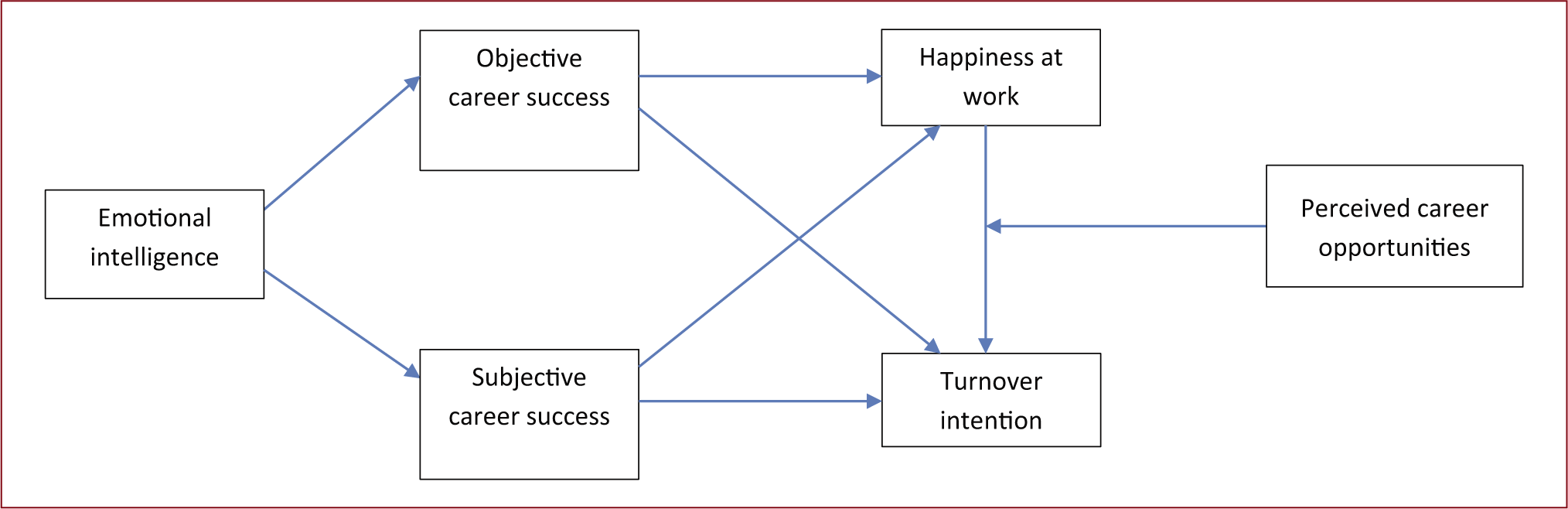
Unfortunately, the role of EI as an indirect predictor of TI via OCS has not been studied yet and forms a research gap for this study. Therefore, investigating the role of EI as an antecedent of a relationship between OCS and TI makes an advanced step to find one of the root causes of the TI problem in the IT industry. Further, the impact of both the measures of CS on TI should be studied separately in the future studies (Aburumman et al., 2020). Previous studies like Joo and Lee (2017) examined the underlying role of career satisfaction, between social support and happiness, among male knowledge workers in Korea. This study focused on the underlying effect of happiness between CS and TI to gain complete and accurate information about how and why they influence each other. In terms of novelty over Joo and Lee’s (2017) mediation, the present study included both measures of CS, that is, OCS and SCS, as our predictors with TI as a criterion construct for both male and female managerial-level employees in the context of India’s IT industry. Finally, the interactive effect of perceived career opportunities (PCO) with CS and happiness on TI was examined where it can be said that the indirect negative relationship between OCS and TIs through employees’ happiness weakens when PCO in the current organization is low and vice versa. The proposed conceptual model was mentioned in the Figure 1.
Literature Review and Hypothesis Development
Emotional Intelligence and Career Success
Arthur et al. (2005) defined CS as the ‘accomplishment of desirable work-related outcomes at any point in a person’s work experiences over time’. Turner (1960) proposed two paths to achieve CS: contest mobility and sponsored mobility. His contest mobility approach implies that it is the performance of employees, which propels them upward in the organizational hierarchy and qualifies them as successful, whereas the sponsored mobility approach implies that employees with early success and high potential receive supervisor support to gain access to additional organizational resources, giving them a competitive advantage over others and achieving CS. In the meta-analysis by Ng et al. (2005), various antecedents for achieving CS were identified (Caire & Becker, 1967; Spurk & Abele, 2011; Wayne et al., 1999; Whitley, 1991) and categorized into four groups: human capital (education level, work experience, political knowledge and skills), organizational sponsorship (training and development opportunities, supervisor support, access to organizational resources), socio-demographic status (age, marital status, race, gender) and stable individual differences (cognitive ability, personality traits, locus of control, emotional stability, etc.). Despite strong evidence of EI benefits in the workplace, few studies looked into the function of EI in its long-term consequence, that is, CS (Rode et al., 2017).
As a result, the current empirical study focuses on the EI trait of employees, where it can be seen that EI abilities benefit employees in both of the preceding paths of CS. First, existing literature on EI suggests that emotionally intelligent individuals are high performers (O’Boyle et al., 2010) and competent to build their human and social capital (more self and socially aware, have healthy social network resources, high employability), and second, EI makes individuals more resilient to deal with high work pressures and increasing organizational changes, thus, attracting the attention of their supervisors and receiving sponsorship support from the organization, allowing them to advance further in their selected career path (Adler & Kwon, 2002; Armstrong et al., 2011; di Fabio & Kenny, 2015; Fisher et al., 2018; Gelso & Fretz, 2001; King, 2010; Hartmann et al., 2019; Wang et al., 2016). In addition, different researchers argued that people with high EI are committed to their career goals, have increased self-efficacy in career decisions, are highly adaptable to career outcomes and have increased work efficiency and employability, all of which lead to high CS (Ahmad et al., 2017; Hamzah et al., 2021; Parmentier et al., 2019). Hence, it can be said that individuals with high EI skills have more probability of getting successful in their careers, both financially (OCS) and psychologically (SCS). Accordingly, the following hypotheses are proposed:
Career Success and Turnover Intention
The term ‘turnover intention’ means conscious and deliberate desire to leave the organization (Tett & Meyer, 1993). Predicting the causes of TI becomes critical to avoid this behavioural intention of quitting among an organization’s top talent or rising stars. In the meta-analysis by Joseph et al. (2007), 43 predictors of TI were identified and classified into six broad categories, namely desire to move (affective organizational commitment, career satisfaction), ease of movement, job search, individual attributes (demographics, human capital, motivation, emotional stability), job-related factors (job autonomy, work-related factors) and perceived organizational factors (fairness of rewards, hierarchical position, pay, social support). Previous researchers studied the inverse relationship between CS and TI behaviour (Aburumman et al., 2020; Chan & Mai, 2015; Guan et al., 2015).
Initially, CS was seen as receiving quick promotion, high salary, etc. However, recent literature divides CS into two dimensions, that is, OCS and SCS, where ‘subjective measurement of career success is defined as satisfactory feelings and the feeling of achievement towards a career’ (Stumpf & Tymon, 2012). Salary and job level (measures of OCS) have been described as important predictors of employee’s TI (Qasim et al., 2014; Salleh et al., 2020) because a high-salaried job provides them with comfortable and luxurious life experiences, and high job positions have been associated with their prestige, status and power (Guan et al., 2015; Nicholson & de Waal-Andrews, 2005). Further research on CS and TI investigates how Hofstede’s cultural dimension of high-power distance and societal comparison norms (White & Lehman, 2005) also motivate employees to perceive their CS objectively, which serves as a key factor in their TI behaviour.
Similarly, research on SCS found that low levels of career satisfaction (SCS) encourage employees, particularly millennials, to leave their jobs and look for new opportunities outside of the organization (Aburumman et al., 2020; Chan & Mai, 2015; Guan et al., 2015; Salleh et al., 2020). Thus, two more hypotheses are proposed:
The Underlying Role of Happiness
Happiness is depicted as a universal measure of an individual’s life satisfaction (Pulakos et al., 2000). It is the highest level of goal for any individual in his or her life; hence, if someone is happy at work, he or she is less likely to quit and leave that organization. In recent literature on happiness, employee’s happiness has emerged as a critical resource for organizations to work on because researchers have found that happy employees are more productive, show greater organizational commitment and thus contribute more to the organization (Bakker, 2011; Page & Vella-Brodrick, 2009; van Wart, 2013). According to Diener (1984), happiness is an individual’s psychological well-being, which influences their cognitive judgement and affective reaction. Fisher (2010) found that valuing extrinsic resources such as money, fame and recognition are weaker contributors to individuals’ overall happiness than pursuing intrinsic goals such as better relationships, health and self-determined career goals (Ryan et al., 2008). Moreover, Pan and Zhou (2012) proposed that both OCS (extrinsic) and SCS (intrinsic) were significant predictors of employee happiness, where happiness leads to increased motivation and lower TI (Diener, 2000; Emery, 2010). Since then, several researchers have investigated the positive association of CS with happiness at work (Greenhaus et al., 1990; Joo & Lee, 2017; Pan & Zhou, 2012) as well as the negative association of happiness at work with TI (Rasheed et al., 2020; Wang et al., 2016). Hence, considering the importance of employees’ happiness at work and a future suggestion put forth by Al-Ali et al. (2019) on gaining more clarity on the association of both the measures of CS (i.e., OCS and SCS) with happiness construct, the current study investigated the aftermaths of happiness (i.e., intentions to quit), caused by the OCS, which include OCS and SCS.
Interaction Effect of Perceived Career Opportunities
PCO refers to ‘an employee’s perceptions of the degree to which work assignments and job opportunities that match their career interests and goals are available within their current organization’ (Kraimer et al., 2011). Maurer et al. (2002) contended that employees perceive career growth opportunities as an important predictor in selecting their job offers. Also, moving from one organization to another at regular intervals of time has become a new career strategy in this boundary-less career era (de Janasz & Forret, 2007). Drawing on the COR theory, which suggests how career growth opportunities as resource gain are associated with the protection from loss of other resources, that is, reduced TI among employees to their current employer. Moreover, higher the congruence between employees’ PCO and desired career goals in the current organization, higher is the likelihood that employees will stay in the organization. In their recent study in the hospitality sector, Rasheed et al. (2020) found that career adaptability leads to an individuals’ psychological resource, like orientation to happiness, which, in turn, reduces their TI along with the interactive effect of perceived career opportunity. The study proposes that the happiness achieved from greater CS mitigates employees’ intention to leave the organization, however, only when they see those ideal career opportunities exist within their current organization. When PCO is low, employees will look towards other organizations for alternative career opportunities despite their high level of happiness at work caused by OCS.
Methodology
Data Collection
Given that EI-related abilities appear to be more relevant in positions that demand more interpersonal interactions both inside and outside the organization (Rode et al., 2017), our conceptual model is more applicable for managerial-level employees in the IT industry. As a result, respondents in our sample are from lower to upper management levels in organizations (mentors, team leaders, managers, supervisors, etc.) primarily operating in north India, specifically the Chandigarh and Delhi National Capital Region (NCR) regions, because as the country’s capital, Delhi contains employees from a wide range of cultural, ethnic and demographic backgrounds, resulting in more generalized results. In addition, all variables were measured independently in a time-lagged manner, that is, across 5 months between September 2021 and January 2022, to reduce the common method bias (CMB) error and the limitation of the cross-sectional nature of the study (Podsakoff et al., 2003; 2012). Three constructs were measured in the first month, September 2021, comprising EI, SCS and the demographic profile of respondents. Happiness and PCO were measured in the month of November 2021. The TI of employees was measured in the fifth month, January 2022. Additionally, questionnaires were distributed to respondents in two formats: paperback and electronic. In the first phase, a total of 684 responses were received through electronic mode. The same 684 respondents were contacted, and 572 valid responses (83.6%) were received after a 2-month interval. In the final phase of sample collection, out of the earlier 572 respondents, only 395 respondents (69.0%) contributed to the final sample. Meanwhile, paperback questionnaires were distributed and filled out in the other organizations. A total of 521 respondents completed the survey in the first phase. Overall, 381 (73.1%) and 276 (72.4%) responses were filed during the second and third-month intervals of the data collection phase, respectively. In total, 671 responses were received through both offline and online mediums, out of which 29 incomplete and unqualified responses were deleted. As a result, our final sample for analysis comprised 642 responses.
Measures
All the instruments used in the study were standardized and have been validated through a small-scale qualitative pilot study conducted by 5 professors, 12 doctoral students and 5 industrial experts to assess the questionnaire’s overall consistency, items relevant to the study’s objectives and ease of understanding of statements to the respondents.
Emotional Intelligence
Wong and Law Emotional Intelligence Scale (WLEIS) created by Law et al. (2004) has been used to assess EI. WLEIS is a 16-item scale based on the EI ability model, which has been validated and used by several authors (Sultana et al., 2016; Urquijo et al., 2019; Wang et al., 2016). Four primary components of EI, each with four items, were scored using a 7-point Likert scale ranging from 1 (strongly disagree) to 7 (strongly agree): appraisal of self-emotions (e.g., ‘I have a good sense of why I feel certain feelings most of the time’.), appraisal of others’ emotions (e.g., ‘I am sensitive to the feelings and emotions of others.’), regulation of emotions (e.g., ‘I always tell myself I am a competent person’.) and use of emotion (e.g., ‘I am quite capable of controlling my own emotions’.). Internal consistency of all components with appropriate Cronbach alpha values (i.e., > 0.7) was achieved: self-emotion appraisal (0.89), others-emotion appraisal (0.91), regulation of emotions (0.87) and use of emotion (0.84). However, for this study, EI is considered as a first-order reflective construct with an internal consistency score of 0.87.
Objective Career Success
For this study, to measure the objective CS, the salary level of respondents was measured using their gross monthly income, as it was considered a strong and consistent predictor of CS (Heslin, 2005). Respondents were asked to fill their monthly salary into five categories: (a) less than ₹35,000, (b) ₹35,000–55,000, (c) ₹55,000–75,000, (d) ₹75,000–95,000 and (e) Above ₹95,000 rather than asking for their actual income values due to the probability of getting skewed data.
Subjective Career Success
Respondent’s subjective career satisfaction was measured using a five-item scale, developed by Greenhaus et al. (1990), with seven choices on a Likert scale ranging from 1 (strongly disagree) to 7 (strongly agree). The current study’s Cronbach’s alpha score was 0.92. Sample items of the construct include ‘I am satisfied with the progress I have made towards meeting my goals for income’ and ‘I am satisfied with the success I have achieved in my career’.
Turnover Intention
The intention of respondents to leave their current organization was assessed using a three-item scale created by Cammann et al. (1979) on a 7-point Likert scale ranging from 1 (strongly disagree) to 7 (strongly agree). The current study’s Cronbach’s alpha score was 0.97. The items of the construct included were as follows: ‘I often think about quitting my job’, ‘I will probably look for a new job next year’ and ‘I don’t think about quitting my job’.
Happiness at Work
The study used Lyubomirsky and Lepper’s (1999) four-item scale to measure the happiness of respondents at work. Respondents rated their responses on a 7-point scale ranging from 1 (strongly disagree) to 7 (strongly agree). Simsek (2010), Babincak (2018), Smith and Benning (2021), and others have utilized and validated this measure extensively. Sample items of the construct include ‘Compared to most of my peers, I consider myself more happy’ and ‘I always know whether I am happy or not’. The current study’s Cronbach’s alpha score was 0.94.
Perceived Career Opportunities
The three-item measure of Kraimer et al. (2011) was utilized to assess PCO among respondents. Respondents were asked to score their current PCO on a 7-point Likert scale ranging from 1 (strongly disagree) to 7 (strongly agree). The sample item of the construct includes ‘this company offers many job opportunities that match my career goals’. The current study’s Cronbach’s alpha score was 0.97.
Control Variables
Based on the literature review on EI, CS and TI (e.g., Greenhaus et al., 1990; Ng et al., 2005; Pinto et al., 2014), it was observed that in a few studies, some of the demographic factors, namely educational qualification, age, gender and work experience, were found to be somewhat influencing the constructs of the present study; hence, they were measured and controlled to find the actual relationship values (Becker, 2005).
Analytical Approach
In this study, all the latent constructs were measured through a Likert rating scale. Hence, structural equation modelling (SEM) with partial least squares (PLS) algorithm on SmartPLS3.0 version was used to analyse the measurement model (exploratory factor analysis—EFA, confirmatory factor analysis—CFA, validity, reliability, etc.) and structural model (path analysis/multiple regression analysis). To assess the structural model’s explanatory power and predictive relevance, standard assessment criteria such as R2, Q2, F2 and statistical significance of the path coefficients were used. PLS-based SEM was preferred over covariance-based SEM for this study since Akter et al. (2017) and Hair et al. (2019) suggested that it is more flexible and suitable for analysing complex models (e.g., requires less sample size, allows even single statement construct analysis, does not require normality assumption and calculates both measurement and structural model analysis simultaneously). The bootstrapping method of analysis was used to examine statistical significance of the direct and indirect effects (Hayes, 2013). Furthermore, SPSS PROCESS macro model-14 was used to analyse the complex moderated mediation model (Hayes, 2012; Preacher et al., 2007).
Data Analysis and Study Results
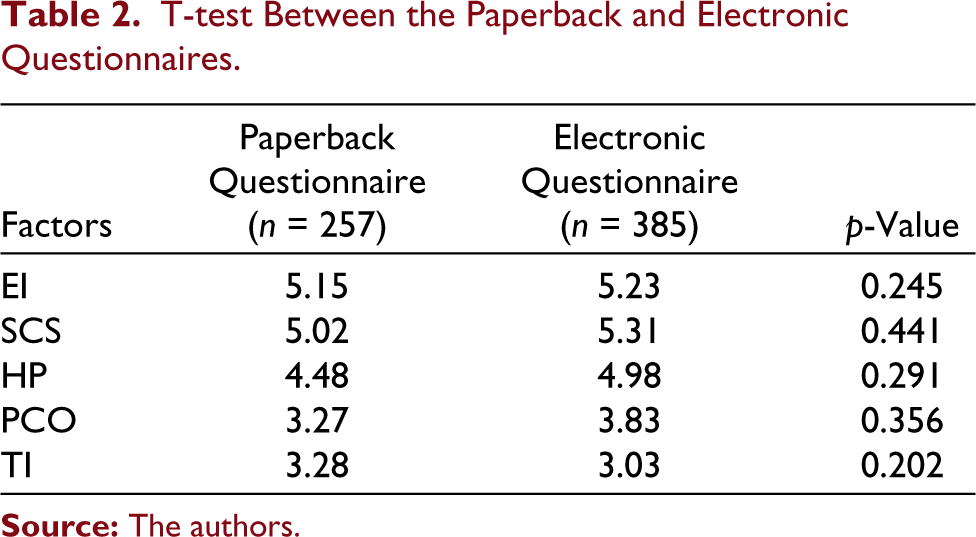
The Kolmogorov–Smirnov (KS) test was used to assess the normality function for the given set of data, and results showed that all the constructs followed a normal distribution in a given sample (see Table 1). Further, the CMB issue was checked for in the data (Podsakoff et al., 2012), and for that, Harman’s single factor analysis was conducted, and results showed that the single largest factor explained 37.21% of the total variance. Hence, there were no issues of CMBs in our data. Additionally, in this study, responses were collected in two ways: paperback and electronically, and a t-test was performed to examine data collection bias, that is, a significant deviation of measured values from their respective means of two sets of respondents’ groups. A comparative analysis of mean values among the two groups (paperback and electronic questionnaire) is presented in Table 2, and the results showed a statistically insignificant difference between the means of the two groups.
Tests of Normality (Kolmogorov–Smirnov test)

T-test Between the Paperback and Electronic Questionnaires
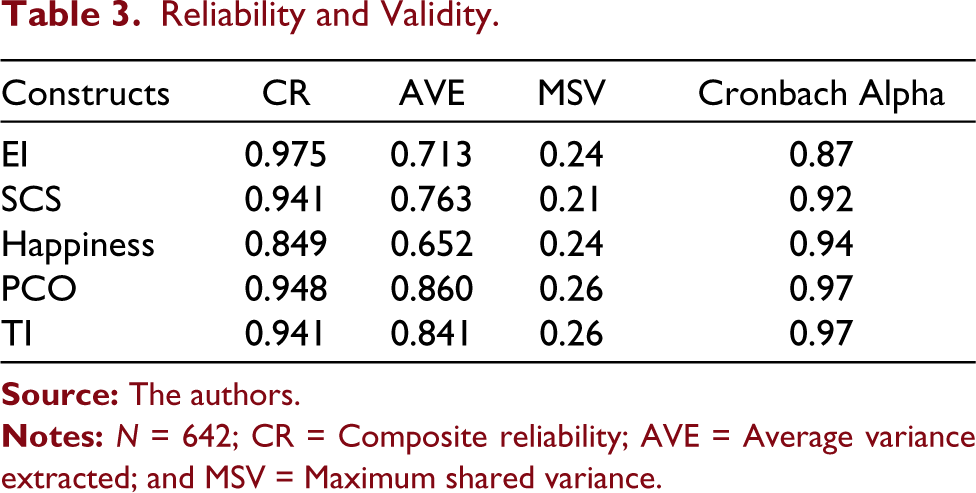
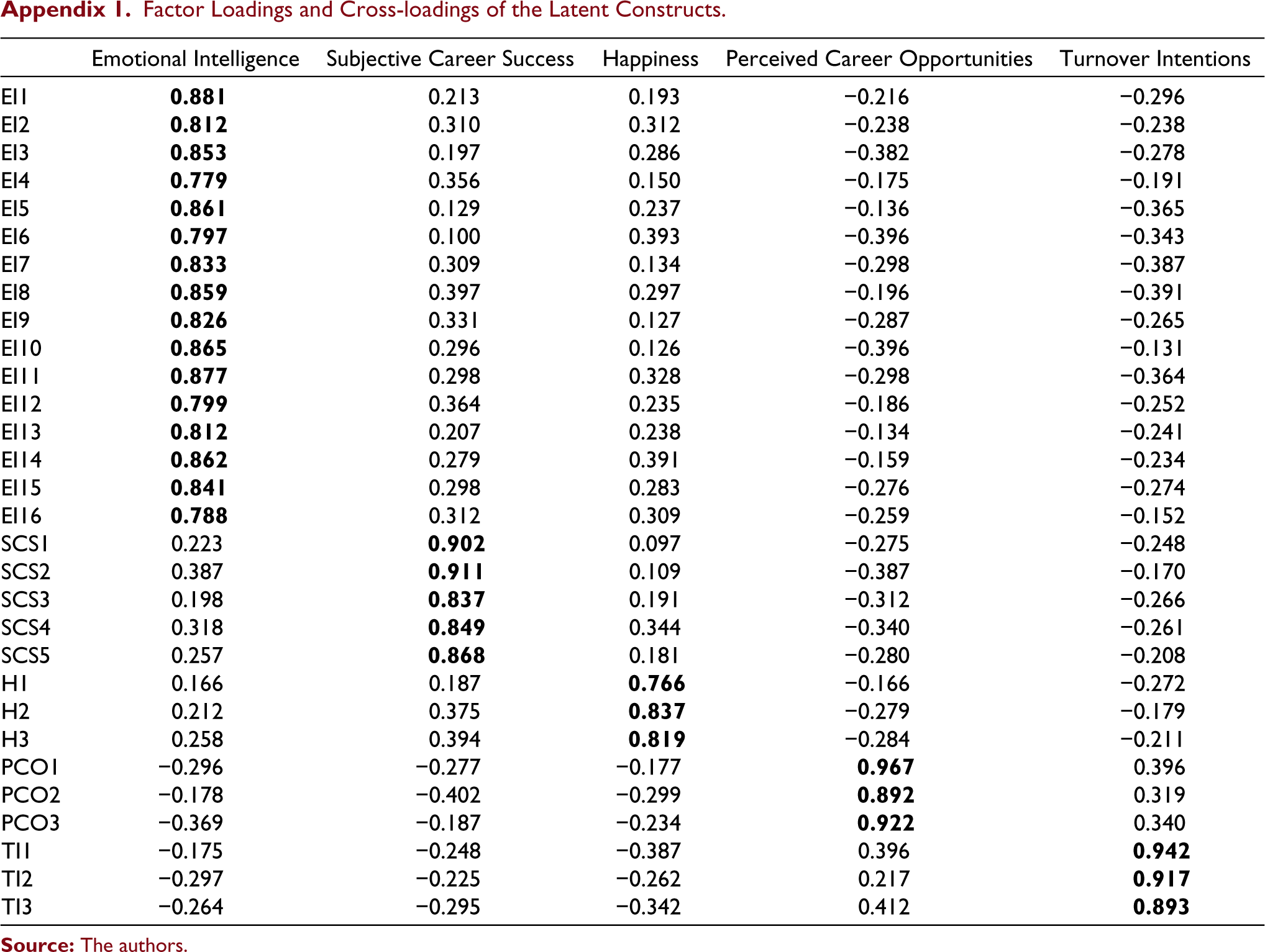
To evaluate the measurement model, the reliability (Cronbach’s alpha, composite reliability (CR), average variance explained (AVE)), convergent validity (outer loadings) and discriminant validity (AVE > maximum shared variance—MSV) using the recommendations of Hair et al. (2010), Fornell and Larcker (1981), and Gefen and Straub (2005) were used. According to them, to check the reliability measures, the value of Cronbach’s alpha should be greater than 0.7, CR should likewise be greater than 0.7 and AVE value should be more than 0.5. To test convergent validity, all the outer loadings should be more than 0.6 at p < 0.01 significance, and finally, to test discriminant validity, the AVE value should be greater than MSV, and the square root of AVE value of the construct should be higher than correlation coefficients of other constructs in its corresponding row and column. As presented in Table 3, Cronbach’s alpha, CR and AVE values of all the latent constructs exceed the recommended threshold values of 0.7, 0.7 and 0.5, respectively, indicating high reliability. All of the outer loadings are between 0.65 and 0.86, exceeding the threshold value of 0.6, suggesting good convergent validity; meanwhile, the AVE of all the constructs was greater than their MSV, indicating adequate discriminant validity. Furthermore, as shown in Table 3, the square root of AVE for all constructs was higher than the correlation coefficients of other constructs, showing good discriminant validity. Furthermore, the factor loadings of each construct are presented in Appendix 1, which confirmed that all the items converged significantly under their respective factors, and no item was found to be worth removing.
Reliability and Validity
Descriptive and Correlation Matrix of All Constructs
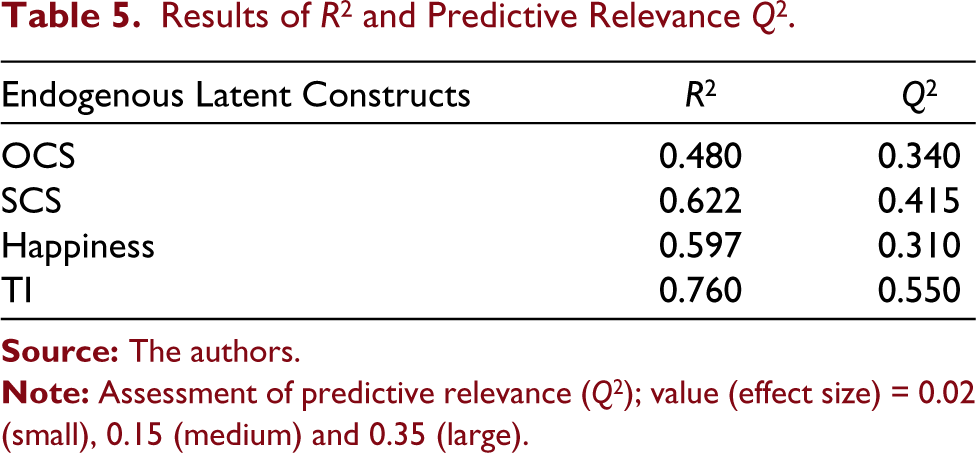
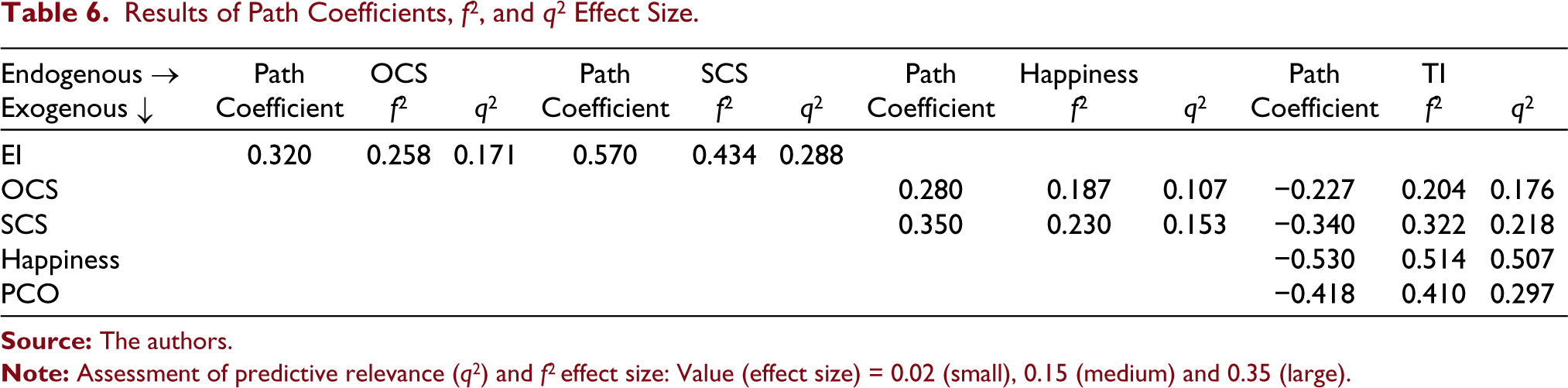
The proposed structural model’s in-sample explanatory power is explained by R2 values of endogenous constructs, and predictive relevance (Q2) of the model is calculated using SmartPLS blindfolding procedure (see Table 5). Furthermore, the f2 value measures the change in an endogenous construct’s R2 value after removing the specific exogenous constructs (Hair et al., 2019) (see Table 6).
Results of R2 and Predictive Relevance Q2
Results of Path Coefficients, f2, and q2 Effect Size
Descriptive Statistics and Correlations
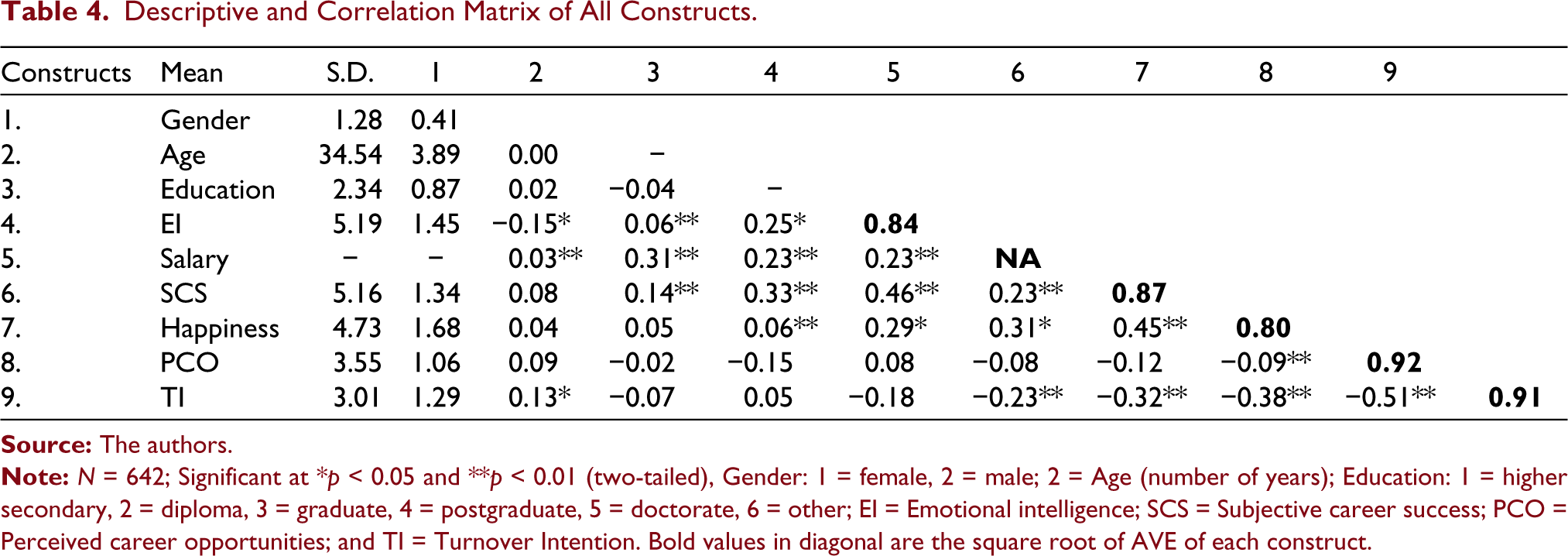
Table 4 presents the demographic and latent constructs’ correlation values. The demographic data revealed that 55.6% of the respondents were male, 41% had work experience between 5 years and 10 years, 54.2% had a postgraduation qualification, 71.8% were married and 33.7% of the respondents’ income was between ₹55,000 and ₹75,000. The presence of significant correlation coefficients showed preliminary support for the proposed hypothesis. For instance, EI was positively correlated with OCS (r = 0.23, p < 0.01) and SCS (r = 0.46, p < 0.01). Further, OCS was positively correlated with happiness at work (r = 0.31, p < 0.01), and similarly, SCS was positively correlated with happiness at work (r = 0.45, p < 0.01). Happiness was negatively associated with TI (r = −0.38, p < 0.01). OCS was negatively related with TI (r =−0.23, p < 0.05), and similarly, SCS also showed a negative correlation with TI (r = −0.32, p < 0.01). Finally, PCO was positively correlated with TI (r = 0.51, p < 0.01).
Hypothesis Testing
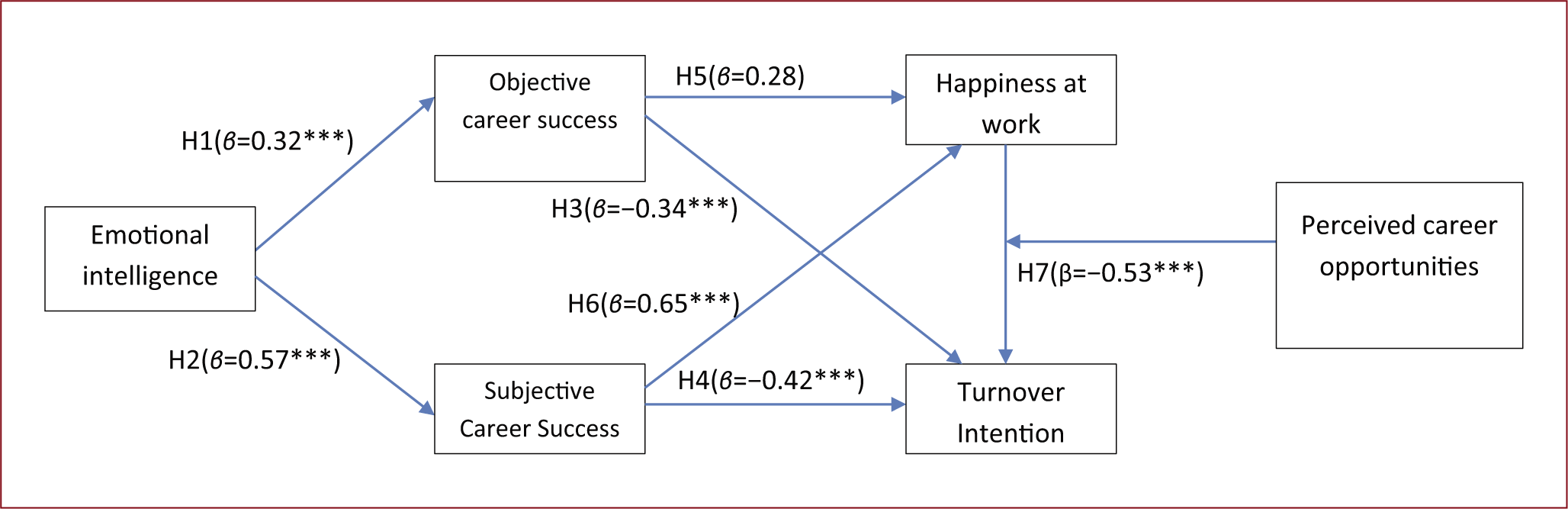
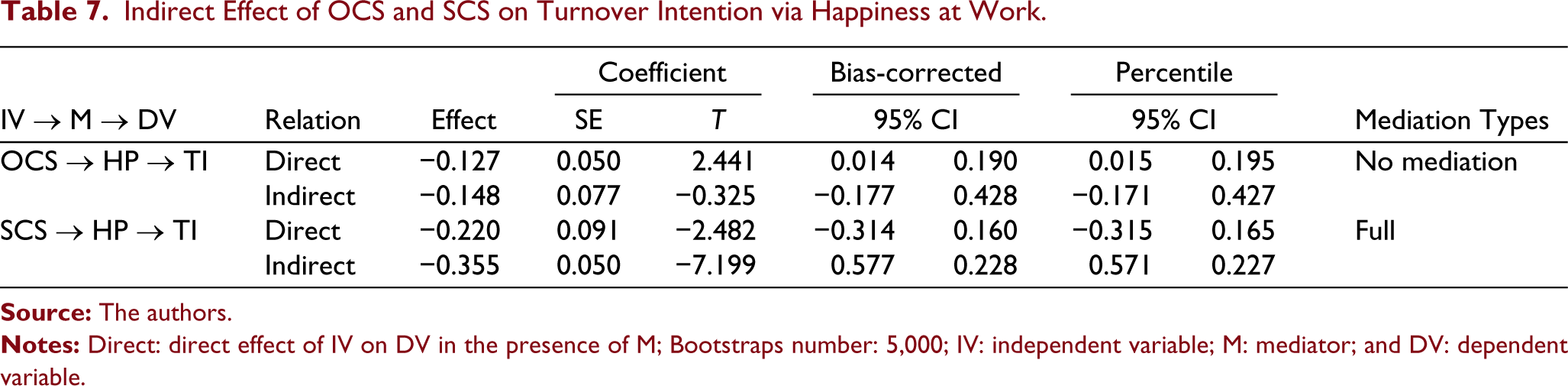
After testing for the hypotheses, it was found that all the hypotheses were statistically significant (p < 0.05, p < 0.01, p < 0.001), except hypothesis 5 and hypothesis 8, also mentioned in Figure 2. Hypotheses 1 and 2 were accepted and confirmed that EI had a positive influence on both OCS (β = 0.32, t = 1.77, p < 0.001) and SCS (β = 0.57, t = 2.34, p < 0.001; see Table 8). Further, hypothesis 3 was supported, stating that OCS was negatively related to TI (β = −0.34, t = 4.34, p < 0.01), and similarly, SCS was also negatively related with TI (β = −0.42, t = 4.46, p < 0.001); hence, hypothesis 4 was also supported. Hypothesis 5 evaluates whether OCS has a significant impact on happiness. The results revealed that OCS had an insignificant impact on happiness (β = 0.28, t = 3.75, p > 0.05). Hence, hypothesis 5 was rejected. Furthermore, hypothesis 6 was statistically confirmed stating that SCS was positively related to happiness (β = 0.65, t = 3.82, p < 0.001). Hypothesis 7 was accepted stating that happiness was negatively related to TI (β = −0.53, t = 5.14, p < 0.001). Then, the mediating effect of OCS and SCS on TI through happiness was calculated. Results in Table 7 showed insignificant indirect effects of OCS on TI via happiness (indirect effect = −0.148, 95%, CI [0.014, 0.190]) suggests that happiness has no mediation effect, hence, rejecting hypothesis 8. On the contrary, significant indirect effects of SCS on TI via happiness at work (indirect effect = −0.355, 95%, CI [0.577, 0.228]) are in support of hypothesis 9. Also, the relationship between SCS and TI in the presence of a mediator becomes insignificant (β = −0.22, t = −2.48, see Table 7), suggesting that happiness has a full mediation effect.
Indirect Effect of OCS and SCS on Turnover Intention via Happiness at Work
The Results of Regressions and the Moderated Mediation Effect
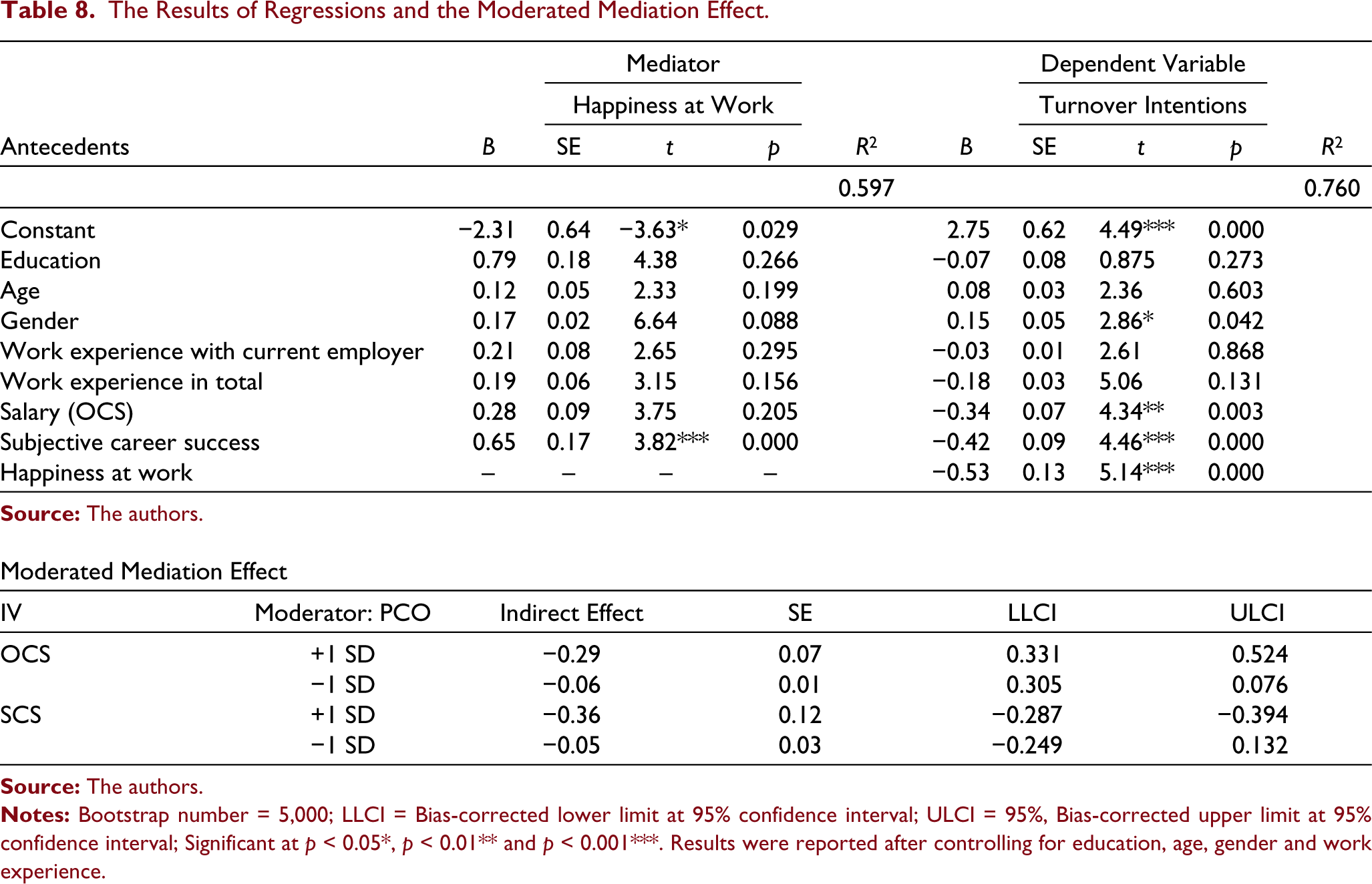
Finally, the moderating mediated effect of PCO on the indirect negative effect of OCS and SCS on TIs through employees’ happiness at two levels (−1 SD and +1 SD) was estimated. Table 8 demonstrated that the negative indirect effect of OCS on TIs through happiness is weaker when PCO is low (conditional indirect effect = −0.06, 95% CI [0.305, 0.076]) as compared to high PCO (conditional indirect effect = −0.29, 95% CI [0.331, −0.524]) and is insignificant, hence, rejecting moderated mediation as per hypothesis 10. Similarly, hypothesis 11 was accepted stating that SCS has a weaker negative indirect effect on TI through happiness when PCO is low (conditional indirect effect = −0.05, 95% CI [−0.249, 0.132]) as compared to high PCO (conditional indirect effect = −0.36, 95% CI [−0.287, −0.394]).
Discussion
Based on the theories of affective event and COR, the current research examined the indirect effect of EI on TI through CS along with the underlying and interactive effect of happiness and PCO, respectively. Overall results of the proposed conceptual model support the assumption of working on an individual’s EI to develop better human capital like high career growth and better happiness at work. In addition, results showed that employees with high PCO and high levels of happiness at work caused by SCS show less intention to quit their current organization. Thus, happiness served as a key explanatory link between SCS and TI relationship. Potential explanations for these findings are provided with the use of existing literature references, suitable theoretical frameworks and logical reasons for their relationship.
Theoretical Implications
Several researchers studied EI with CS (Amdurer et al., 2014; Aslam et al., 2016; Tagiya et al., 2020); however, no study has been conducted to investigate the indirect effect of EI on TI through the CS path, including both the measures of CS concurrently. Based on the overall findings of this study, a significant association among EI, CS and TI after controlling for the effects of demographic variables expands previous literature in the context of career development and employee attrition, demonstrating that EI has a negative indirect effect on TI via both measures of CS. The results indicate an indirect effect of EI on TI, which explains the fact that people with high EI are more committed to their career goals, perform better at work, have social network benefits and are highly adaptable to career outcomes, leading to high CS and lower TI (Ahmad et al., 2017; di Fabio & Kenny, 2015; Meisler & Vigoda-Gadot, 2014; Parmentier et al., 2019). Furthermore, investigating the underlying function of happiness between CS and TI is a step forward in enhancing the existing literature on the association of CS and TI. Analysing the results of indirect effect between OCS and TI, given that OCS has an insignificant impact on happiness, and hence, happiness has no mediation effect between OCS and TI. The findings can be explained by the fact that at higher positions, pay over a specific amount has no or little effect on an individual’s attitude since their fundamental needs or above have already been met, and a further salary increase will not result in a rise in their happiness level (Guan et al., 2015; Pan & Zhou, 2012). Furthermore, persons in higher positions have more obligations, which cause them to experience more stress, which in turn affects their happiness level. As a result, to simplify the complicated nature of CS, SCS should be researched independently. Hence, in the case of indirect effect between SCS and TI, happiness acts as a full mediator because the relationship between SCS and TI becomes insignificant in the presence of a mediator. To illustrate, employees who feel successful in achieving their desired career goals are happier at work, which motivates them to plan their future career in their current organization. The findings of this study are consistent with the corollaries 2 and 3 of COR theory, which proposed that investing in psychological resources like EI protects against loss of other resources, that is, CS, which, in turn, results in additional psychological resource gains like high happiness that subsequently shapes the positive attitude of an individual towards the organization and vice versa is also true, that is, lack of psychological resources like EI in the initial stage results in loss of resources (CS) in later stages that leads to loss of other psychological resources like happiness (Hobfoll, 2001). The study’s unique contribution is the integration of AET and COR theory, which explains employee TI with an R2 of 76%, indicating substantial explanatory power.
Although previous researchers examined the interaction effect of PCO on TI (Rasheed et al., 2020), no study incorporated PCO into a single integrated framework that included CS, happiness at work and TI. In this study, the significant moderation effect of PCO on the mediation effect of happiness on SCS and TI indicates that low PCO in the current organization weakens the employee’s happiness and TI relationship. These findings are consistent with those of Karatepe and Olugbade (2017); Maurer et al. (2002); and Safavi and Karatepe (2018), who suggest that career advancement opportunities are important in an employee’s decision to stay with the organization.
Practical Implications
Discussing the practical contributions of the proposed conceptual model, these results will help managers and HR professionals, particularly in the IT industry, to use this scientific knowledge from academia and bring it into the organization’s HR practices. The results of this study will add more pieces of evidence of multi-fold direct and indirect positive effects of EI and require both organizations and employees to work together through providing EI training programmes and emotion regulation techniques such as deep acting and surface acting, suppressing initial emotional responses in crisis, the cognitive reappraisal of a situation, social sharing/venting and mindfulness to make employees the emotional capital (resilience, self-confidence, ambition and courage) for the company, which, in turn, will help employees in attaining their career goals and also assist organizations to gain a competitive advantage during a period of uncertainty in today’s world (de Haro et al., 2018). Furthermore, offering career development programmes to enhance career adaptability skills and make positive perceptions among employees with respect to their career growth opportunities in the current organization may help organizations to shape positive attitudes towards the organization and restrict financial costs associated with employees’ turnover.
However, beyond providing EI and career development programmes, organizations need to be equally focused on turning around the careers of less successful employees through making employees competent to grow high in their career goals because perceiving low satisfaction in a career might induce further negative acute and long-term attitudes in employees such as hopelessness, low self-confidence, stress and depression. Hence, solving these negative emotional consequences and improving EI skills would increase an individual’s coping ability against uncertainties (Coetzee & Harry, 2014), which in turn enhances their OCS through improved performance at work (Alonazi, 2020). Pan and Zhou (2012) found that achieving CS would positively affect employees’ happiness, which, in turn, retains them in the same organization for a longer period (Rasheed et al., 2020). However, for all these outcomes, EI serves as a key fundamental resource, and all these interventions will be fruitful if organizations make employees perceive about high career growth opportunities in the current organization.
Limitations and Directions for Future Research
First, because the sampling area for this study was chosen to include the organizations of Delhi and the Chandigarh region in north India, the findings of this study cannot be applied to other countries or cultural contexts. Second, this study collected data of over 5 months to reduce cross-sectional biases; hence, future research should replicate the same model over a longer period to reach causal and more valid conclusions. Third, because the sampling frame for this survey only includes employees from the IT industry, future research should include employees from other service industries such as banking, insurance and e-commerce. Fourth, to explain why CS influences TI, the present study incorporated happiness as a mediating variable. More possible mechanisms to explain the CS and TI relationship should be investigated in the future. Future studies should also focus on the antecedents of EI so that suitable interventions may be delivered to help employees enhance their EI skills. Finally, the future researchers should go into the intricacies of this model to see if any other significant moderating and mediating variables can help us better understand this complex model.
Footnotes
Declaration of Conflicting Interests
The authors declared no potential conflicts of interest with respect to the research, authorship and/or publication of this article.
Funding
The authors received no financial support for the research, authorship and/or publication of this article.
Appendix
Factor Loadings and Cross-loadings of the Latent Constructs
| Emotional Intelligence | Subjective Career Success | Happiness | Perceived Career Opportunities | Turnover Intentions | |
| EI1 |
|
0.213 | 0.193 | −0.216 | −0.296 |
| EI2 |
|
0.310 | 0.312 | −0.238 | −0.238 |
| EI3 |
|
0.197 | 0.286 | −0.382 | −0.278 |
| EI4 |
|
0.356 | 0.150 | −0.175 | −0.191 |
| EI5 |
|
0.129 | 0.237 | −0.136 | −0.365 |
| EI6 |
|
0.100 | 0.393 | −0.396 | −0.343 |
| EI7 |
|
0.309 | 0.134 | −0.298 | −0.387 |
| EI8 |
|
0.397 | 0.297 | −0.196 | −0.391 |
| EI9 |
|
0.331 | 0.127 | −0.287 | −0.265 |
| EI10 |
|
0.296 | 0.126 | −0.396 | −0.131 |
| EI11 |
|
0.298 | 0.328 | −0.298 | −0.364 |
| EI12 |
|
0.364 | 0.235 | −0.186 | −0.252 |
| EI13 |
|
0.207 | 0.238 | −0.134 | −0.241 |
| EI14 |
|
0.279 | 0.391 | −0.159 | −0.234 |
| EI15 |
|
0.298 | 0.283 | −0.276 | −0.274 |
| EI16 |
|
0.312 | 0.309 | −0.259 | −0.152 |
| SCS1 | 0.223 |
|
0.097 | −0.275 | −0.248 |
| SCS2 | 0.387 |
|
0.109 | −0.387 | −0.170 |
| SCS3 | 0.198 |
|
0.191 | −0.312 | −0.266 |
| SCS4 | 0.318 |
|
0.344 | −0.340 | −0.261 |
| SCS5 | 0.257 |
|
0.181 | −0.280 | −0.208 |
| H1 | 0.166 | 0.187 |
|
−0.166 | −0.272 |
| H2 | 0.212 | 0.375 |
|
−0.279 | −0.179 |
| H3 | 0.258 | 0.394 |
|
−0.284 | −0.211 |
| PCO1 | −0.296 | −0.277 | −0.177 |
|
0.396 |
| PCO2 | −0.178 | −0.402 | −0.299 |
|
0.319 |
| PCO3 | −0.369 | −0.187 | −0.234 |
|
0.340 |
| TI1 | −0.175 | −0.248 | −0.387 | 0.396 |
|
| TI2 | −0.297 | −0.225 | −0.262 | 0.217 |
|
| TI3 | −0.264 | −0.295 | −0.342 | 0.412 |
|