




Abstract
The study was conducted to identify the role of consumer personality in influencing fashion consumption; the study tries to establish a relationship between personality, fashion involvement, innovativeness, and purchase intention. Data were collected from 512 generation Z participants (born after 1997) and analysed using Structural Equation Modelling to demonstrate multivariate relationships using descriptive and causal research. The study concludes that a consumer’s personality positively correlates with fashion involvement. The present study strengthens the finding that apparel expresses an individual’s personality by stating that consumers’ personalities are positively associated with fashion innovativeness. Once personality leads to a positive association with fashion involvement and innovation, the latter two traits show a positive association with purchase intention. Among the innovativeness and involvement, the latter has a more influential role in shaping the customer’s purchase intention. The examination of the effect of consumer personality on fashion consumption-related variables, involvement, and innovativeness has contributed to a better understanding of the mechanism that underlies the operation of an individual purchasing a product.
Introduction
Personality is used to distinguish one person from another (Buecker et al., 2020), whether for day-to-day behaviour or how an individual consumes a particular product. It is not easy to standardize consumer behaviour (Roe & Bruwer, 2017). The most pressing issue confronting brands is a continual change in consumer preferences and purchase intentions toward fashion items (Won & Kim, 2020). The fashion industry is expanding (Wood, 2021). Customers’ changing attitudes toward fashion have contributed to the rapid expansion of the fashion industry (Neumann et al., 2020; Rao et al., 2021). Customers are more fashion-conscious and keep abreast of fashion trends (Dhiman et al., 2018). Subtle messages about an individual’s personality are sent by their apparel and the colours they choose. One’s style not only reflects who they are as a person but also impacts how they think (Johnson, 2018). Sontag and Lee (2004) describe the psychological closeness of apparel by the degree to which apparel is regarded as one with the self or as an element of the self; recognized as a facet of appearance whereby the self is established and affirmed; recognized as a significant symbol of one’s individuality or emotions; perceived as an interpretation of self-worth; and recognized as a component of affective response to self-evaluation.
Generation Z is the first generation to have evolved in an age of digital communication (Reinikainen et al., 2020). They frequently visit Instagram and are heavily exposed to digital advertising (Vițelar, 2019). They are the most materialistic and demand quick results (Flurry & Swimberghe, 2016). Apparel is one of the first individual purchases made by members of generation Z, as young individuals like to express themselves through their fashion choices (Djafarova & Bowes, 2021). Studying generation Z helps understand how they purchase fashion products, as Wood (2013) highlights that gen-Z focuses on innovation, insists on convenience, wants security, and has a tendency toward escapism. This can help understand the overall personality of gen-Z consumers.
Personality can be characterized as an activity performed by an individual that reveals details about their character or represents themselves (Stachl et al., 2020). Apparel helps to describe the inner self, such as opinions, emotions, and other intrinsic personal traits (Seo & Lang, 2019). The ‘Big Five’ model (Costa & McCrae, 1992) is the most popular and reliable model for predicting behaviour and describing the crucial traits that serve as the basis of personality (Caliskan, 2019; Eastman et al., 2021; Sahni et al., 2021; Salem & Alanadoly, 2020). Since personality traits are a unifying factor in many decisions individuals make, these traits are essential in comprehending a consumer’s style. Targeting the product based on personality traits helps in enhancing the message. To Alexander Nix, CEO of Cambridge Analytica, ‘rather than serving the same advert to 100 million people … you can sub-segment people by personality and change the creative to resonate with individuals based on how they see the world’ (Graves & Matz, 2018). The present research focuses on personality, a blend of behavioural science and marketing strategies (Smith, 2020). This enables brands to give adequate and targeted messages based on demographics (e.g., Gen-Z). It also enables brands to deliver a personalized experience based on the distinct personalities of their clientele (Sun et al., 2021). Furthermore, consumer personalities are a doorway to comprehending current and potential customers’ inclinations and behavioural habits, allowing brands to perform better (Kuehn, 2020).
As a result of the increased emphasis on consumer behaviour research, the significance of involvement studies has increased (Hourigan & Bougoure, 2012; Silva et al., 2019). Fashion clothing is now a crucial part of our livelihood, owing to the prevalence of material possessions (de Klerk, 2020). The present research explores how fashion involvement and innovativeness can lead to an intent to purchase apparel. Fashion involvement reflects how customers interact with fashion products (Colombage & Rathnayake, 2020). Such customers have a proclivity to purchase trendy new products before other customers. On the contrary, fashion innovation is intrinsically associated with disseminating and adopting new ideas (Rahman & Kharb, 2018).
Globally, the fashion industry produces upwards of 150 billion garments annually, which equates to 20 garments per person (Rudenko, 2018). These numbers clearly show that enormous clothing production is happening today, and marketers must effectively incorporate consumer behaviour in channelling the consumption pattern of one of humankind’s most basic needs. Given the growing demand for clothing worldwide, the study focuses solely on apparel fashion consumption as a category among many other fashion products. To identify the role of consumer personality in influencing fashion consumption, the study tries to establish a relationship between personality, fashion involvement, innovativeness, and purchase intention.
The rest of the paper follows a standardized pattern, starting with a review of existing literature and establishing hypotheses for the study. The paper then discusses the measurement items used in the study. After discussing the sample and data collection, the paper explains the statistical analysis conducted. Toward the end, the study’s conclusion, implications, limitations, and future scope are discussed.
Literature Review
Personality
Personality, which comes from the Latin word ‘persona’, meaning mask, is a combination of an individual’s distinct sequence of ideas, beliefs, and behaviour (Perlman, 2018). Personality traits are the most prominent aspects of a person’s personality that influence their behaviour (Meng & Leung, 2021; Thielmann et al., 2020) and are displayed in various personal and social circumstances (Lumsden & MacKay, 2006). Costa and McCrae (2008) described personality as the internal organization of a person’s mental environment that is consistent over time and circumstances.
When examining an individual’s personality, the big five personality model (Goldberg, 1993) is still the most popular method (Busic-Sontic, 2017; Tsiakali, 2018). The rationale is that it is a hierarchical model of personality traits, with five fundamental elements expressing personality at the highest level of granularity (Anglim & O’connor, 2019). Recent marketing studies find strong evidence for the connection between big-five personality traits in fashion shopping (Hermes & Riedl, 2021). Roy et al. (2016) find a significant role for personality traits in justifying the fashion shopping behaviour of individuals. They keep the significance of personality traits in fashion shopping higher even compared to the consumer’s demographic factors. Personality traits form an individual’s motivation, priorities, and perspective for evaluating external stimuli and influencing performance (Mendonca, 2016). Referring to Sarabia-Sanchez et al. (2012), ‘it is necessary for companies to link personal values with fashion shopping styles in order to properly focus their retail marketing mix strategies on the consumer psychographic aspects’. Saran et al. (2016) and Di Crosta et al. (2021) affirmed the argument that consumers make purchasing decisions based on their personality identities.
Tuu (2017) tested the significance of the big-five model while purchasing fashion products, especially luxury products. Three out of five traits, viz., extraversion, openness, and agreeableness, positively influence the consumer’s buying behaviour toward luxury fashion, whereas conscientiousness and neuroticism negatively influence it. However, Mulyanegara et al. (2007) deny the importance of consumer personality traits in defining their purchase behaviour, as they find personality traits to be a weak predictor of consumption patterns. Such contrasting views call for a further investigation into how consumer personality determines fashion consumption behaviour.
Fashion Involvement
Involvement in fashion is essential for today’s consumers because fashion is a significant aspect of their daily lives, and they invest heavily in time and effort to learn about the fashion world (Dahana et al., 2019; Gitimu et al., 2013). Evrard and Aurier (1996) describe fashion involvement as the degree to which customers regard fashion products as an essential focal point in their lives. It is assumed that if a person is interested in fashion, they are more inclined to buy fashion apparel (Martin, 1998).
Customers are involved in fashion for two main reasons, as per Diaz-Meneses (2010): aesthetics and comfort. In contrast to comfort, aesthetics is linked to self-expression, which is an end. When customers prioritize comfort over attractiveness, they are prepared to compromise on attractiveness (Meneses & Rodriguez, 2010). Fashion involvement is a determining factor in identifying the consumer’s lifestyle and purchase intention (Saleem & Ellahi, 2017). Nash (2019) characterized involvement as the consumer’s degree of perceived importance to fashion apparel. According to Nash, consumers who may be more involved in fashion are much more inclined to follow their favourite brands on social media. As a result, Solomon and Rabolt (2009) are not mistaken when they propose involvement as a basis for segmentation.
Personality factors, including the traits an individual displays, act as an antecedent of fashion involvement (Naderi, 2013). Naderi’s (2013) results are also accepted in past studies (Belleau et al., 2007, 2008; Summers et al., 2006). The relationship between fashion involvement and personality is not just limited to the essential traits; instead, studies have found a positive and significant relationship between impulsive buying behaviour and involvement (Pramestya & Widagda, 2020). This association can be viewed from another perspective as well. Rahman et al. (2018) consider fashion products as a material possession, and this possession is directed by the personality of an individual (Wattanasuwan, 2005). Consumer involvement in fashion or any other product can be shaped by their thought process and personality traits (Vazifehdoost et al., 2014). Their innate characteristics decide for them whether the product is appropriate for them or not (Lissitsa & Kol, 2021). However, much research has not been done to explore the relationship between personality traits and fashion involvement, especially in the Indian market. This research tries to fill this vacuum by proposing the following hypothesis:
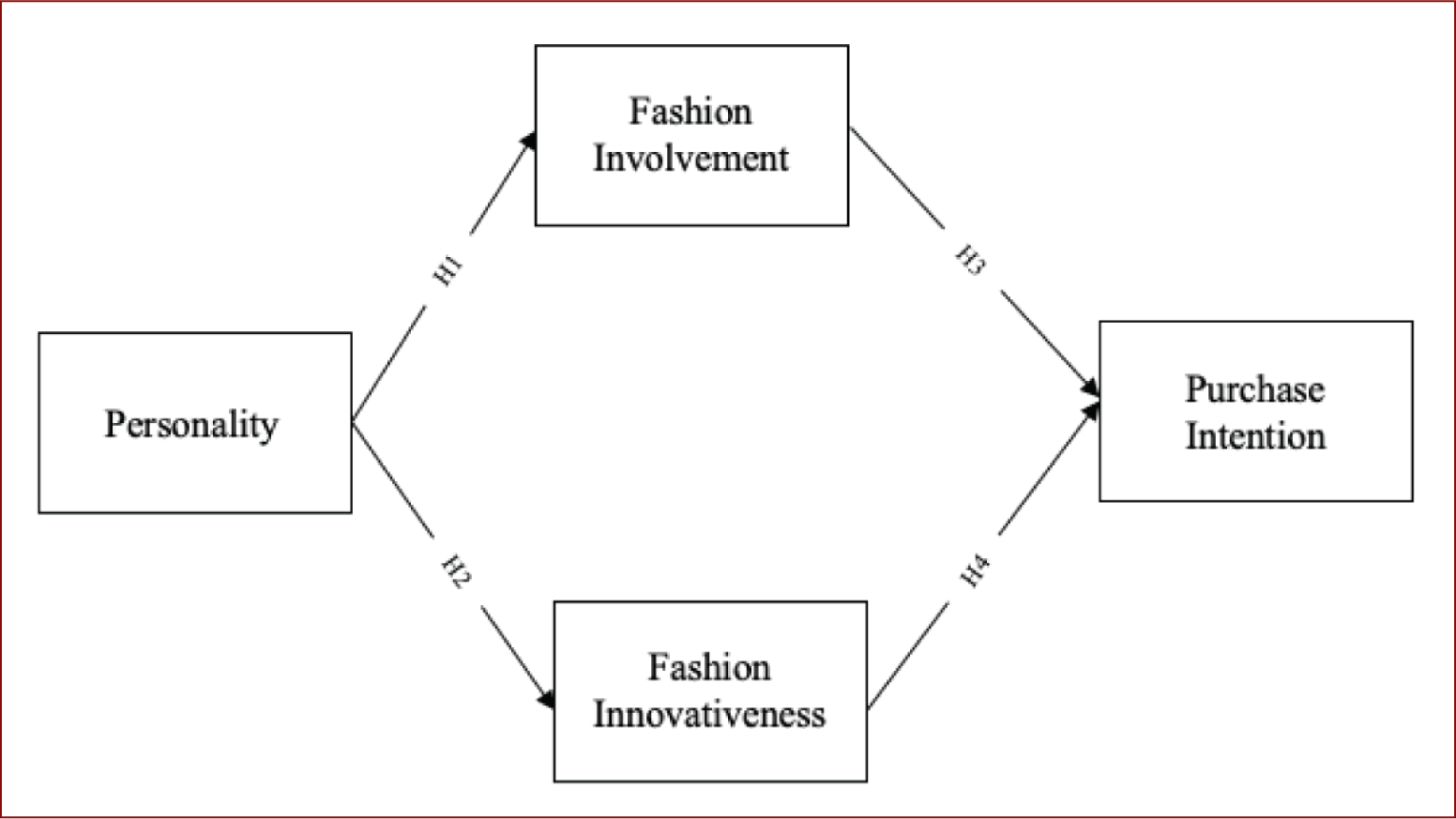
H1: There is a significant relationship between personality and fashion involvement.
Fashion Innovativeness
Fashion products, particularly apparel, are significant symbolic consumption areas for customers. Buyers are not afraid to spend money on fashion items because it says a lot about them (Goldsmith et al., 1999), incredibly how innovative they are. Fashion innovativeness is a customer’s proclivity to embrace and recognize the latest fashion products (Park & Yoo, 2018). Anić et al. (2018) extended the customer’s inclination to new experiences and stimuli.
Various studies have focussed on defining the antecedents of fashion innovativeness; clothing involvement (Choo et al., 2014), need for uniqueness (Dlodlo, 2014), and price sensitivity (Jun et al., 2010) are considered a few drivers of fashion innovativeness. Fashion innovators are considered to be ‘know-it-all’ risk-takers and price-insensitive consumers (Anić et al., 2018; Cardoso et al., 2010). Compared to males, female consumers are more dominant in the fashion innovation category (Rahman & Kharb, 2018).
According to Zeba and Ganguli (2019), fashion innovators are much more likely to buy new fashion products than non-innovators. This demonstrates innovators’ influential role in fashion diffusion by showcasing fashionable merchandise and convincing everyone else to embrace them (Rahman & Kharb, 2018). Rogers (2003) has categorized consumers based on innovation acceptance, viz., ‘innovators’, ‘early adopters’, ‘early majority’, ‘late majority’ and ‘laggards’. Despite being small in percentage (2.5%) (Rogers, 2003) and facing criticism from scholars like Goldsmith and Hofacker (1991), innovativeness is now picking up pace in the light of modern technologies and an increase in disposable income (Lari et al., 2021).
Although fashion innovativeness is considered a personality trait (Anić et al., 2018; Goldsmith & Flynn, 1992), there remains a gap in understanding how the consumer personality (identified by different traits) influences the innovativeness of fashion products. Thus, the study proposes the following hypothesis:
H2: There is a significant relationship between personality and fashion innovation.
Purchase Intention
An individual’s involvement with a good or service can influence their attitude and behaviour (Chavadi et al., 2021). As a result, product involvement significantly impacts overall consumer behaviour (Wang et al., 2009). According to Drossos et al. (2014), a high degree of product involvement can alter customers’ attitudes toward a product and encourage purchase intentions. When developing a purchase intention, customers with strong product involvement have a powerful desire to seek and evaluate product information (Chao & Chen, 2016).
Acknowledging fashion innovativeness as customers’ interest and enthusiasm in apparel, footwear, and accessories irrespective of the trends laid down by the big fashion firms necessitates a more profound understanding (Escobar-Rodríguez & Bonsón-Fernández, 2017), particularly in terms of how innovativeness leads to purchase intention. Because fashion innovators are the first consumers of new apparel and accessories, they can be identified as a direct factor influencing consumer purchasing intentions (Jürgensen & Guesalaga, 2018).
Purchase intention can be characterized as a person’s intent to purchase a specific product they have selected and chosen following a specific evaluation (Khuong & Nguyen, 2015). Purchase intention is a type of cognitive behaviour (Hosein, 2012), and it is a significant factor in determining fashion innovativeness because it mediates the association between buying motivation and consumer purchase intention, developing attitude. Kapoor and Munjal (2019) discovered a direct relationship between shopping motivation and fashion innovativeness. On the other hand, Saleem and Ellahi (2017) have found an indirect relationship between fashion involvement and purchase intention, as they found that highly involved consumers are likely to spread positive word of mouth, which leads to purchase intention. Because of the varied findings, this study hypothesizes that:
H3: Fashion involvement is significantly associated with purchase intention. H4: Fashion innovativeness is significantly associated with purchase intention.
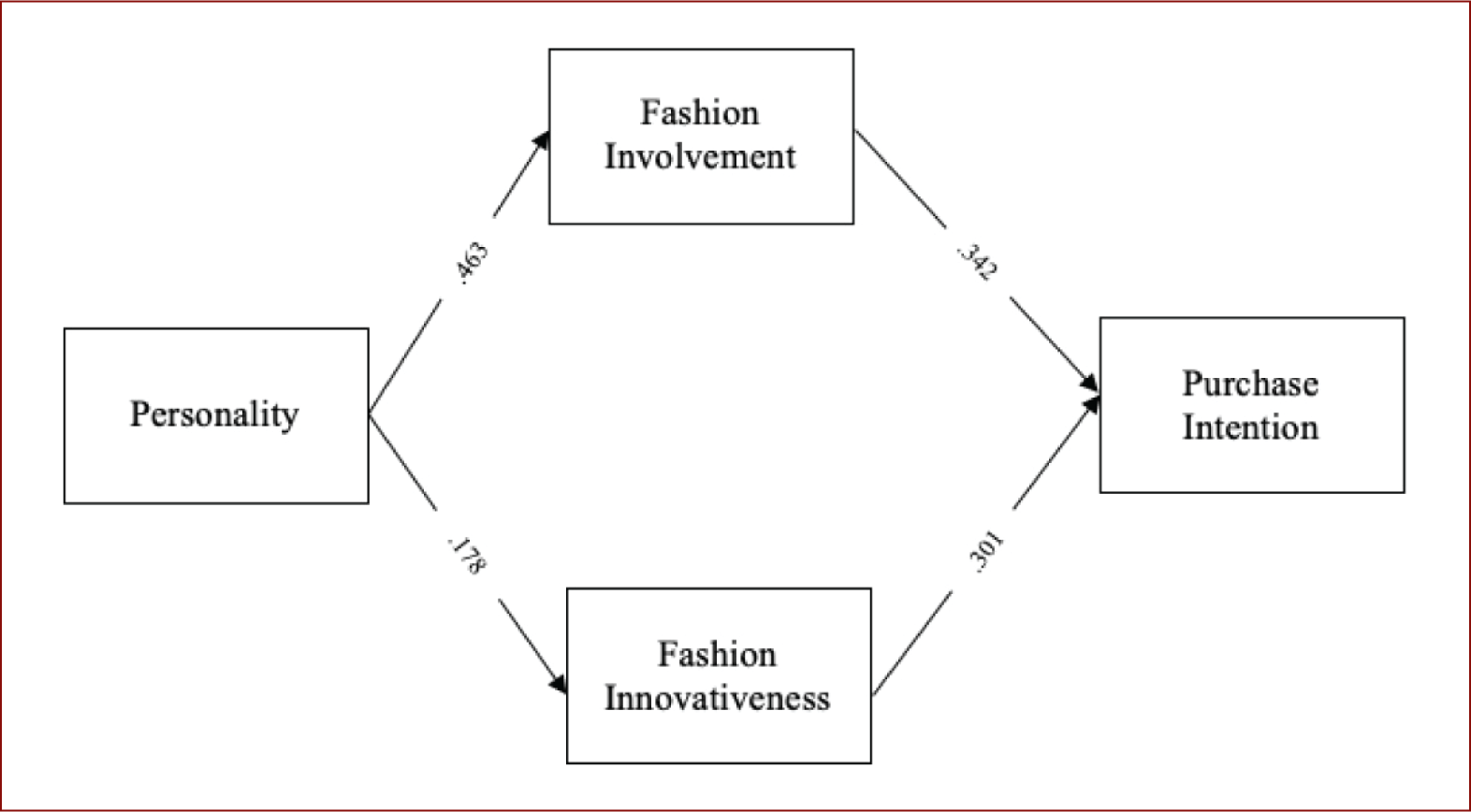
The hypotheses established for the study are shown in the conceptual framework, as shown in Figure 1.
Measurement Items
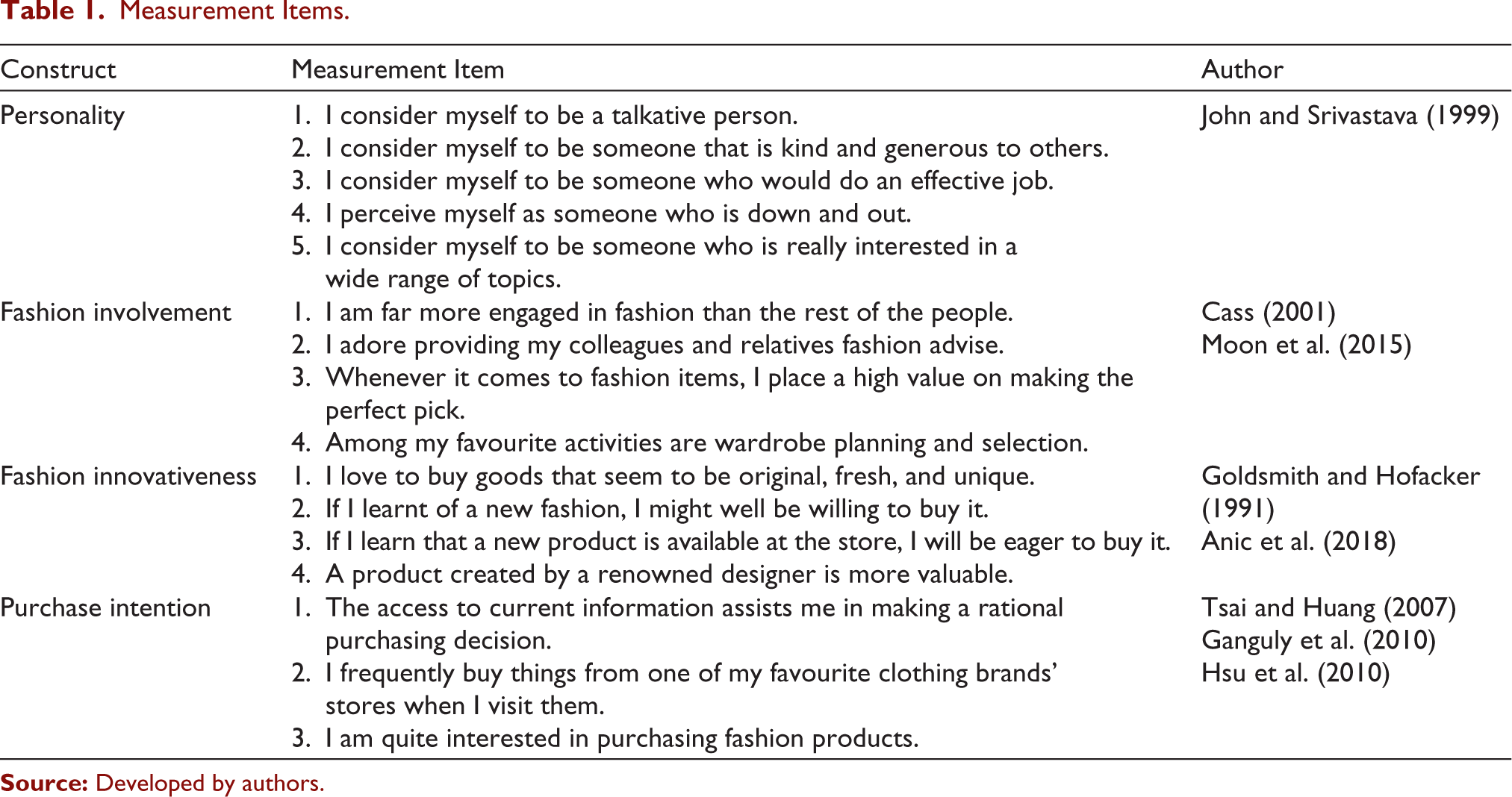
The constructs listed above are evaluated using a standardised scale tailored from various sources. The statements are evaluated using a 7-point Likert scale, with (1) representing ‘Strongly Disagree’ and (7) representing ‘Strongly Agree’. Five statements from John and Srivastava’s (1999) scale for personality are used. Four statements of Cass (2001) and Moon et al. (2015) are used to measure fashion involvement’s construct. Four statement of fashion innovativeness are taken from Goldsmith and Hofacker (1991) and Anic et al. (2018). Finally, purchase intention scale is measured using 3 statements adapted from Tsai and Huang (2007); Ganguly et al. (2010); and Hsu et al. (2010). Measurement items are shown in Table 1. Minor changes have been made to the statements to remain true to the study’s objective.
Measurement Items.
Sample and Data Collection
As the study explores the effect of personality on the fashion consumption behaviour of the consumer, the targeted sample group identified are men and women belonging to the Gen. Z category. Gen-Z is not only concerned with social causes but also progressively supports their beliefs through their purchasing habits, favouring brands that share their values (Amed et al., 2019). According to Francis and Hoefel (2018), this generation is ‘hypercognitive’, which means it is used to gather information from multiple sources. A report by Vogue (2021) finds generation Z engrossed with a brand while looking for innovativeness and is anxious to learn about new trends that will keep them fashionable. In numbers, Gen-Z is almost one-third of the total global population, and in India, the said generation makes up 27% of the total population (Raniwala, 2021). The sheer size of this cohort makes them important to study. The sampling technique used in this study is purposive sampling. Since the researcher is trying to understand the purchase intention of Gen-Z only, the data for the same has been gathered from individuals born between 1995 and 2010 (Priporas et al., 2020).
The present research is a combination of descriptive and causal research. The focus of the descriptive research design is to get a better understanding of the phenomenon rather than to explain why or how it occurs. It does this by describing the phenomenon and its various aspects. Furthermore, causal research seeks to link two or more variables in a cause-and-effect manner. The present research tries to get a deeper understanding of how a consumer’s personality, fashion involvement, and innovativeness influence purchase intention. Additionally, a cause-and-effect relationship is established between the independent variable and the dependent variable of the study.
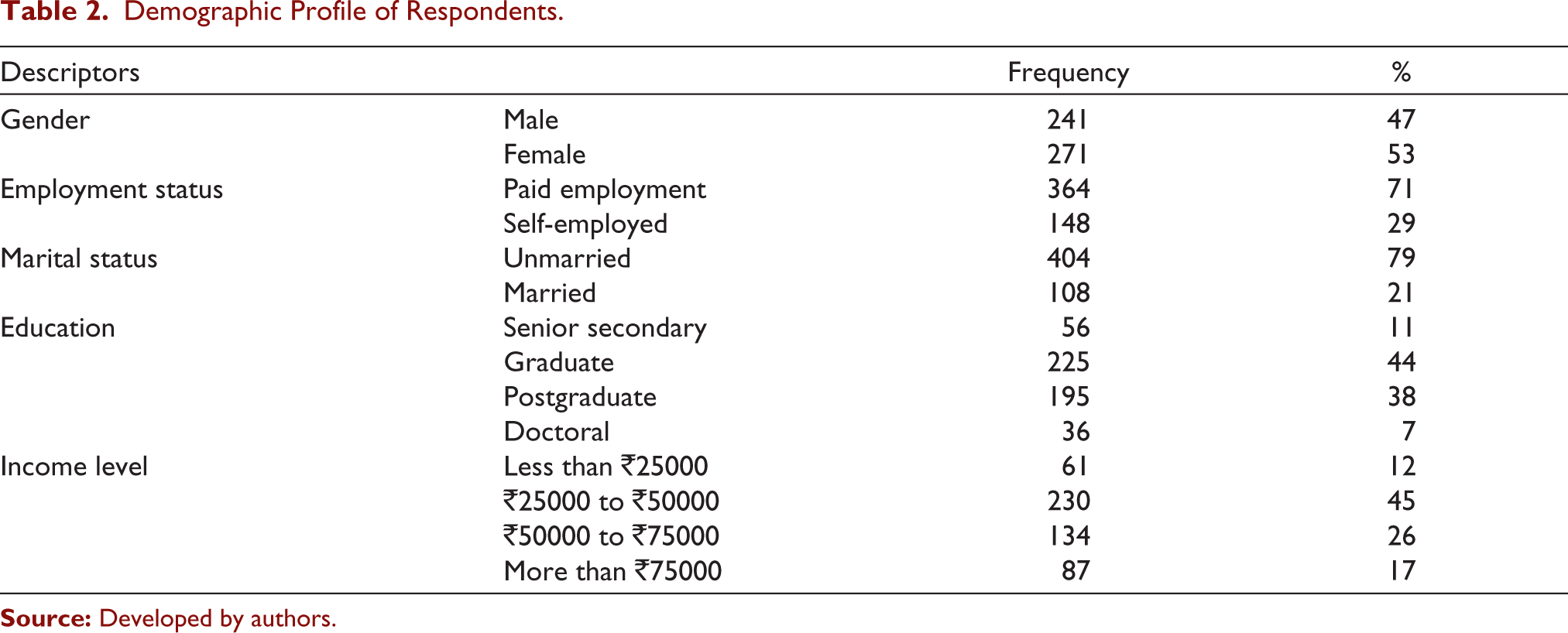
A pilot study of 50 respondents has been conducted to understand whether the final questionnaire would be understandable by the final respondents or not. Six hundred fifty questionnaires were distributed via online and offline channels. After the screening, 512 questionnaires are used to analyse the data. Google forms were distributed to respondents for the online survey. Given that COVID restrictions have been relaxed in Delhi (India’s national capital), data has also been collected using the mall intercept method. This approach aided in screening participants, as the study was performed for individuals of a specific generation. Table 2 summarizes the study’s relevant demographic characteristics.
Demographic Profile of Respondents.
Analysis and Results
The data are analysed using validated methods and techniques. The exploratory factor analysis (EFA) is performed using SPSS (24) software. This is accompanied by confirmatory factor analysis (CFA) for additional validation and then path analysis in AMOS (20).
Reliability Assessment
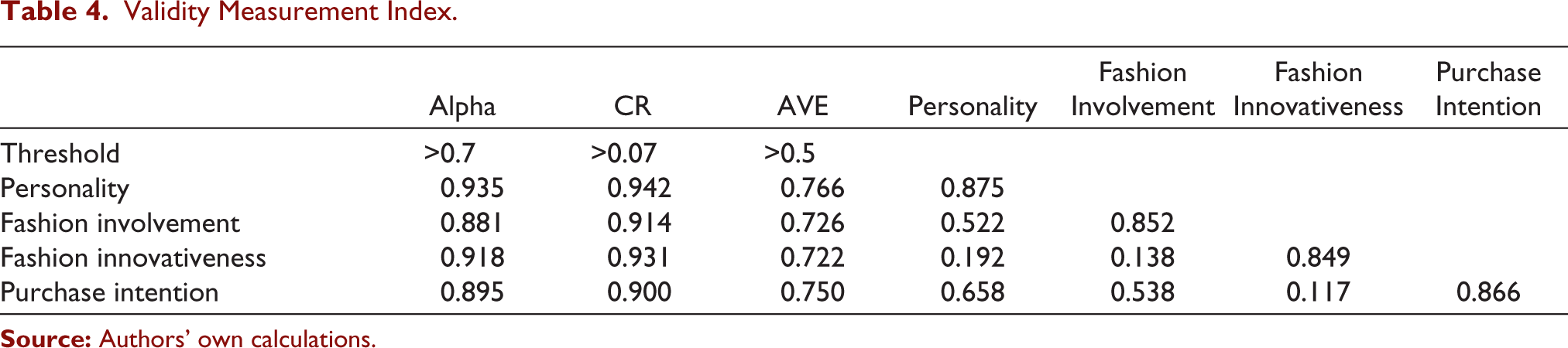
Cronbach’s alpha (α) is used to determine the construct’s reliability (Nunnally, 1978). While squared multiple correlation (SMC) is utilized to evaluate the measurement item’s reliability (Bagozzi & Yi, 1988). The needed values are found to be significantly higher than the thresholds of 0.7 (Table 4) and 0.3 (Table 3).
Exploratory Factor Analysis
The first step is to perform the ‘Kaiser–Meyer–Olkin (KMO) sampling adequacy’ and ‘Bartlett’s sphericity test’. The reason for this is that before identifying the factors, it is vital to evaluate the appropriateness and suitability of the data. The KMO value, 0.81, is significant since it is greater than the threshold of 0.60. (Kaiser & Rice, 1974). The result of Bartlett’s test is also significant (0.000) and is less than the threshold of 0.05. As a result, the factors are not correlated. For the implementation of factor analysis, the SPSS (24) program used principal component analysis with varimax rotation. Four factors, totalling 16 items, are extracted using eigenvalues of one or more. These four factors account for 80.284% of the variance in the variables. As shown in Table 3, the factor loading is greater than 0.50, indicating that the data are suitable for factor analysis (Stewart, 1981).
Confirmatory Factor Analysis
CFA is performed on AMOS (20) to ascertain the adequacy and dimensionality of the measurement model. The CFA applies to all four constructs, viz. personality, fashion involvement, fashion innovativeness, and purchase intention.
Validity
Three conditions must be met before establishing convergent validity.
The commonality should be greater than 0.5.
The SMC value should be greater than 0.5.
Composite reliability (CR) and average variance explained (AVE) values should be greater than 0.7 and 0.5, respectively (Hair et al., 2012).
As shown in Table 3, the factor loading and SMC values are significantly higher than 0.5. Both CR and AVE are far above allowable levels, indicating sufficient convergent validity.
Factor Extraction Results.

The measurement model’s discriminant validity is evaluated by comparing the correlation between factors with the square root of the AVE (Fornell & Larcker, 1981). For any validity concerns to be addressed, the diagonal value, which would be the square root of the average variance explained, has to be greater than the non-diagonal value, which would be the correlation between constructs (Table 4). (Kesharwani & Tiwari, 2011). This helps to ensure that the study’s factors are unique.
Validity Measurement Index.
The key model statistics for the measurement model represent all of the latent factors being modelled simultaneously, with CMIN (χ2) = 254.698, degree of freedom (df) = 214, CMIN/df (χ2/df) = 1.190, and p < .05. All of the goodness-of-fit indices (GFI = 0.913, AGFI = 0.911, NFI = 0.937, IFI = 0.989, CFI = 0.987) and badness-of-fit measurement indices (RMR = 0.085, RMESA = 0.027) are well within the cut-off requirements.
Path Coefficients
Following the evaluation of psychometric properties, the structural model is tested using AMOS (20). As shown in Table 5, the findings show that all hypotheses are statistically significant as the p value is lower than .05.
Hypothesis Testing Result.
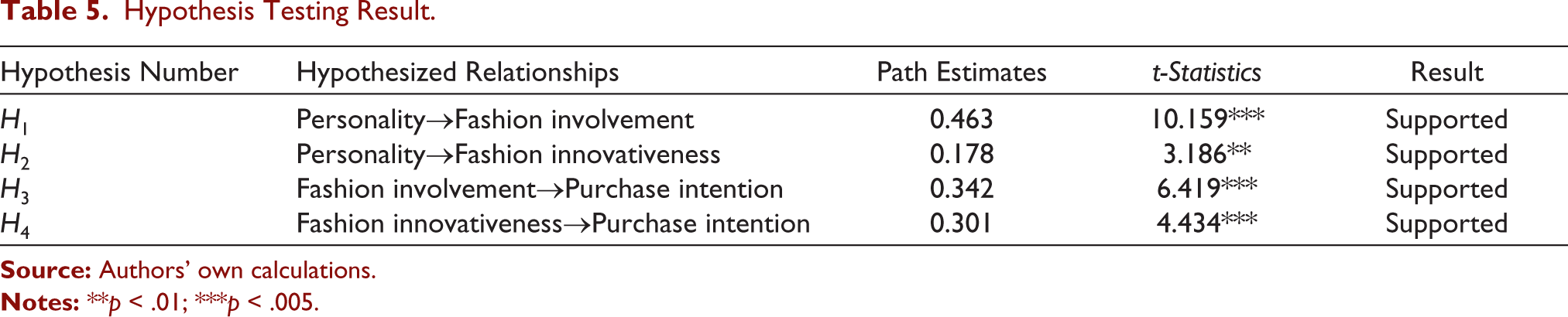
As shown in Table 5, all the four relationships came out to be significant. The first relationship between personality and fashion involvement is found to be statistically significant (H1: β = 0.463; p < .005). The second relationship between personality and fashion innovativeness came out to be positively significant (H2: β = 0.178; p < .005). The third relationship, depicting the association between fashion involvement and purchase intention, is also positively significant (H3: β = 0.342; p < .005). Likewise, the fourth relationship between fashion innovativeness and purchase intention also came out to be positive and significant (H4: β = 0.301; p < .005). A pictorial representation of the path coefficients is shown in Figure 2.
Discussion
How one dresses determines how they are addressed. Shopping has evolved into a pleasurable pastime in India. Apparel sales have skyrocketed in recent years and show no signs of slowing down (Amed et al., 2021). Shoppers respond favourably to low prices and a wide range of trends. Individuals purchase more and more in order to keep up with the latest trend (Morgan, 2020). The premise of conducting this research is to find how an individual’s personal characteristics, namely, personality, influence their fashion consumption behaviour. On the basis of statistical findings, the study concludes that consumer personality does influence fashion innovativeness and involvement, which ultimately leads to purchase intention (Kaur & Anand, 2018; Liu et al., 2020).
The study concludes that a consumer’s personality has a positive relationship with fashion involvement. This finding is consistent with the findings of Krohmer et al. (2007), who revealed that involvement levels moderate the association between self-concept and brand performance. Alternatively, a higher level of product involvement among consumers improves their effectiveness level of self-concept congruence (Chang, 2010). Saran et al. (2016) established an indirect relationship between personality and fashion involvement, where it was found that it is the emotions that drive a consumer’s personality toward being involved in a product. However, the present study establishes a direct relationship between the two constructs. The present results are in contradiction of the findings of McFatter (2005), as they found no relationship between personality traits and fashion involvement. Probable reasons could be attributed to the personality traits measured in McFatter’s (2005) study, which are not big-5 traits.
Studies conducted by Birtwistle and Tsim (2005) and Jordaan and Simpson (2006) agrees that apparel serves as an expression of an individual’s personality. The present study strengthens these findings, by stating that a consumer’s personality is positively associated with fashion innovativeness. The current findings, to some extent, resonate with Khan’s (2020), who explored that an individual’s personal style induces shopping for apparel and thus inspires fashion innovativeness. Studies in the past where personality and innovativeness were related tended to focus on personality traits such as ‘self-monitoring’, ‘self-confidence’ and ‘materialism’ (Muzinich et al., 2003).
Once personality leads to positive associations with fashion involvement and innovation, the latter two traits show a positive association with the purchase intention. How involvement in fashion motivates the intention to buy is justified in a classic study by Kapferer and Laurent (1985), whereby involvement and purchase intention are based on the time and energy invested, as well as the degree to which feelings shape the intention. Fashion apparels, being a shopping product, calls for time and energy investment, which are found in the present study, as well. Lastly, the study found a positive association between fashion innovativeness and purchase intention. Existing literature does display similar results, but the results are limited to online shopping (Gugnani & Choudhary, 2017; Mohamed & Wee, 2020; Mohamed, 2020). The present research primarily focuses on offline stores. The present study also concurs with the assertion that innovators are the first ones to try a new product (Phau & Lo, 2014). Interestingly, among the innovativeness and involvement, the latter has a more influential role in shaping the purchase intention of the customer. The reason attributable to this finding can be traced back to the results of personality and fashion involvement, which had more impact compared to innovativeness. A consumer is more involved in a product which resonates their personality, in other words, there is a brand-self congruence (Bajac et al., 2018; Roy & Banerjee, 2022).
Implications
The present research analyses how a consumer’s personality is associated with fashion involvement and fashion innovativeness. The findings support personality research in marketing by elucidating the relationship between personality and fashion consumption behaviour using psychological concepts.
The present study highlights the importance of consumer personality in determining the fashion consumption behaviour of consumers. It is found that consumer personality influences the involvement and innovation of fashion apparel, ultimately leading to purchase intention. The study confirms that the younger generation (Gen. Z) is more likely to purchase fashion apparel. In Indian markets, generation Z can be a major target segment for apparel. When endorsing fashion apparel for generation Z, marketers should elicit certain personality traits such as extroversion and open-mindedness (Roy & Sethuraman, 2016).
The study found a more significant association between personality and fashion involvement, so marketers need to focus on a consumer personality-driven approach and get them more involved in the product, for instance, by co-creating the product. Although a less significant result for innovativeness is reported in the study, one cannot deny the importance of the same in making a purchase decision. The findings give the marketer a bird’s-eye view of how to approach the market, especially the Indian Generation Z market.
Compared to previous generations (X and Y), Generation Z shoppers have a more robust social conscience, and their purchasing patterns are influenced by their morals and beliefs. As a result, this cohort is drawn to fashion brands with CSR policies and initiatives (Mireles, 2021). According to the findings of this study, marketers should engage more consumers that exhibit agreeable traits since they demonstrate empathy, favourably influencing pro-environmental behaviour (Hirsh & Dolderman, 2007). Businesses cannot alter people’s personalities to conform to their brands or products, but if they are aware of the traits that are responsible for eliciting particular reactions, they may better modify their products and engage with their target audiences. A person’s personality is often stable and durable, but environments change rapidly, so companies need to consider how different types would react in such circumstances.
Limitation and Future Scope
The current study establishes a path between certain consumer behaviour constructs, for example, personality. However, there remains scope for exploring other consumer and brand-related factors which can give a more exhaustive outlook. The present study was conducted only on generation Z respondents. This limits the scope of study and, as a result, may not be generalized for the overall market of different age groups. Future research can consider other generations or do a cross-sectional study among generations to see which one is more involved and innovative in fashion. This study does not consider the role of online shopping, which could have differing findings. Future research can focus on comparing offline and online stores and which platform a consumer’s personality has more effect on. Income, as a factor in determining the intention to purchase fashion products, can be critical. However, the present research has not incorporated this aspect but focused on psychological factors. Future research can be conducted to understand how consumer income levels determine their purchase intention toward apparel.
Conclusion
According to the study, consumer personality and involvement in fashion are positively correlated. The current study confirms that consumers’ personalities are favourably correlated with fashion innovativeness, supporting the conclusion that apparel serves as a reflection of an individual’s personality. The latter two attributes exhibit a favourable correlation with the intention to purchase after personality led to a positive association with involvement in fashion and innovation. Innovativeness and involvement are both critical, but the latter has a more significant impact on how customers will decide whether or not to make a purchase. The investigation of the relationship between consumer personality and fashion consumption-related factors, involvement, and innovativeness has helped to clarify the process underlying how people make purchases of goods.
Footnotes
Declaration of Conflicting Interests
The authors declared no potential conflicts of interest with respect to the research, authorship and/or publication of this article.
Funding
The authors received no financial support for the research, authorship and/or publication of this article.