



Abstract
Employee voice has witnessed a consistent growth in conceptual as well as empirical research across a range of disciplines. Several reviews have been conducted on employee voice due to diverse and extensive literature available; however, no systematic literature review is available on the antecedents, outcomes, inhibitors, organizational norms and practices in employee voice research. This study, therefore, presents a systematic review of 67 research articles on employee voice published in 33 journals from 2000 to 2021. The articles were collected from seven well-known management databases namely, ScienceDirect, SpringerLink, SAGE, Taylor and Francis, Emerald Insight, Wiley and JSTOR. The primary aim of this review is to identify themes of research on employee voice and to assess the methodologies used in the literature. Five themes were used to organize the findings of the research on employee voice. Subsequently, the review also sought to determine the type of research methods employed in the studies of employee voice concentrating on research design, statistical methodology and sectoral focus. On the basis of review findings, the study also discusses practical implications and provides future research directions.
Introduction
Hirschman (1970) coined the term ‘voice’, which he defined as ‘any attempt at all to change rather than to escape from an objectionable state of affairs’ (p. 30). He asserted that people can react to dissatisfaction in one of the two ways, by leaving or by complaining. Later, the term was extended to employees by Freeman and Medoff (1985), defining voice as ‘providing workers as a group with a means of communicating with management’. It has also been defined as ‘promotive behavior that emphasizes expression of constructive challenge intended to improve rather than merely criticise’ (Van Dyne & LePine, 1998). Employee voice includes mechanisms through which employees try to communicate and influence their work and overall functioning of the organization (Morrison, 2014; Wilkinson et al., 2004). Employees can speak up through various mechanisms (direct and indirect, formal and informal, individual and collective) on different issues such as working conditions, pay, organizational policies, procedures and the like.
Unlike other sorts of organizational citizenship behaviours which are mostly voluntary but nevertheless favourable to the organizational functioning, employee voice is intrinsically challenging (Van Dyne & LePine, 1998). However, promotion prospects (Dutton & Ashford, 1993) and visibility of employee (Stamper & Dyne, 2001) may increase by voicing constructive ideas. Yet, managers view employees who voice ideas that challenge the status quo as worse performers (Burris, 2012) and may face other undesirable social consequences (Morrison & Milliken, 2000). In a recent study, it was found that organizations resort to coercive HRM practices in order to restrict prohibitive voice (Wæraas & Dahle, 2020). Furthermore, employee voice that is aimed for betterment of the organization may be misconstrued as ‘bossiness, unsolicited interference, and an effort to undermine the credibility’ of supervisors and co-workers (Tepper et al., 2004). Consequently, employees exhibit voice behaviour by taking into consideration potential benefits and risks (cognitive calculus of costs and benefits) associated with it (Dutton et al., 1997; Milliken et al., 2003).
Given the costs and benefits associated with employee voice behaviour, a thorough review of prior research on the subject is required to gain a better understanding of different determinants, constraints and buffering mechanisms of employee voice in organizations. While studies of employee voice can be found in a range of disciplines and at various levels of analysis, this study concentrates on employee voice in the management domains of human resource management/employee relations and organizational behaviour. The study utilized systematic literature review approach to address the following research questions: (a) What are the main themes of research in employee voice literature? (b) What is the nature of research methods utilized in employee voice research?
Background of the Study
The study makes a significant contribution since it is the only systematic literature review to concentrate specifically on important themes, such as antecedents, outcomes, inhibitors, organizational norms and managerial practices in employee voice research. Earlier, reviews in the field of employee voice were only detailed analysis of different conceptualizations of employee voice in various management domains (e.g., Morrison, 2011; Mowbray et al., 2015). Moreover, prior reviews on the subject have primarily used theoretical and conceptual approaches, paying less attention to empirical research on employee voice (see, Chou & Barron, 2016; Kwon & Farndale, 2020; Morrison, 2011; Mowbray et al., 2015; Townsend et al., 2020; Wilkinson et al., 2019). Although, this is also useful for gaining better understanding and unified conceptualization of employee voice, empirical studies (about 80% of the studies under review) are better placed to offer useful insights by demonstrating what pertains in practice in the management of employee voice behaviours at workplaces. Similarly, the only systematic literature review by Hosseini and Sabokro (2022) on organizational voice summarized findings on existing basic themes of HRM, OB and IR with focus on the role of organizational voice on these three management disciplines. Also, Hosseini and Sabokros’ (2022) review was limited to 49 articles published up to 2019, while this review is based on 67 papers with more than 16% articles from the recent 2 years, that is, 2020 and 2021, thereby, providing more opportunities to gain thorough insights on the subject. Additionally, authors in the aforementioned review discussed three research themes, specifically; HRM, HRM-OB-IR and HRM-OB. Hence, this study contributes to the existing body of knowledge by being the first systematic review to examine antecedents, outcomes, inhibitors, organizational norms and practices in employee voice research. Apart from highlighting future directions for research, the study will also provide useful insights to managers in understanding the role of organizational norms and practices in the exhibition of employee voice behaviour at workplaces. Consequently, this will help them to know how to react as recipients of voice to signal it safe for employees to voice their concerns and recommendations.
The remaining article is divided into four parts. The third section provides a historical overview of employee voice literature. The methodology adopted to find relevant research articles is discussed in the fourth section. Findings and their discussion are presented in the fifth section. The sixth section presents managerial implications, limitations of the study and future directions for research.
Historical Overview
Although the concept of employee voice may be traced back over two centuries, it is still relevant today (Kaufman, 2015). Exit-voice-loyalty theory of Hirschman (1970) was the basis for early employee voice theories, which emerged from an economic perspective and focused on customers not employees (Allen et al., 2015). Hirschman argued that dissatisfied customers could either decide to exit or voice in ‘an objectionable state of affairs’. He further hypothesized that customers who are loyal would be more inclined to choose the voice option. Hirschman’s (1970) exit- voice-loyalty model of how customers react to declining business performance was the basis for several studies published in the late 1980s and early 1990s that sought a greater understanding of employee reactions to work-related concerns. Finally, Farrell (1983) extended the concept of neglect to Hirschman’s (1970) voice theory and applied it to employees. Neglect is defined as ‘lax and disregardful behavior’ (Farrell, 1983) in which employees willingly choose to underperform manifested through tardiness, absenteeism and silent sabotage (Allen, 2020). Then, this theory was applied by Freeman and Medoff (1985) to employment relations and they asserted that unionized workplaces voice mechanisms result in reduced employees’ intention to leave, thereby highlighting the importance of trade unions to the functional voice system.
Spencer (1986) integrated OB and HRM/ER perspectives, by publishing a paper that investigated the relationship between formal voice mechanisms and employee retention, suggesting that formal voice mechanisms have a significant positive impact on employee retention. However, some scholars (e.g., McCabe & Lewin, 1992) took a different path in describing employee voice, leading to the development of disciplinary silos within the literature on employee voice. McCabe and Lewin (1992) suggested combining the notions of voice and grievance by including participation. As a result, scholars in both the ER and HRM disciplines began to consider employee voice to be made up of two components: work-related complaints and participative decision-making.
Subsequently, the concept of voice was narrowed by OB scholars from its original Hirschman beginnings. The tendency to confine the construct of voice began with Van Dyne et al.’s (1995) paper in the organizational citizenship behaviour (OCB) literature on extra-role behaviours. They defined voice as an extra-role challenging/promotive behaviour in which a person ‘proactively challenge(s) the status quo and make(s) constructive change recommendations’ (p. 266). Van Dyne and LePine’s (1998) work on the development of a valid measure of voice behaviour was also influenced by this paper and definition. They acknowledged that their definition of voice was distinct from prior definitions mentioned in the HRM and ER literature addressing participation in decision-making and grievance procedures. As a result, within the OB discipline, two distinct streams of voice literature emerged: pro-social voice and justice-oriented voice.
Overall, it is evident that employee voice has been examined within disciplines in a divergent manner. However, both HRM/ER and OB scholars considered promotive voice as both extra-role and in-role behaviour (Tangirala et al., 2013; Van Dyne et al., 2008), and employees who feel dissatisfied may engage in pro-social voice. In view of the above arguments and calls for cross-disciplinary studies (Mowbray et al., 2015), the current study attempts to synthesize findings from both disciplines in order to advance the body of knowledge on employee voice in an integrated manner.
Methodology
The present study used the systematic literature review approach considered to be a reliable, scientific and transparent method of searching and analysing the literature (Sangwa & Sangwan, 2018). A systematic review entails a clearly stated research problem and the application of systematic methods for identifying, selecting and critically evaluating existing published research on the subject. According to Baloyi (2016), systematic reviews are sometimes referred to be ‘original empirical research’ because they focus on primary data (quantitative and qualitative). Moreover, research suggests that systematic review reduces bias and errors while also providing a credible knowledge base and an audit path for reviewers’ decisions, procedures and findings (Tranfield et al., 2003). By reviewing relevant literature, we gain better understanding of the existing body of knowledge and identify to explore research gaps (Xiao & Watson, 2019). The eight-step methodology grouped into three major stages as recommended by Xiao and Watson (2019) was adopted for carrying out the present review.
Stage I. Planning the Review
Step 1: Formulate the problem
Literature reviews being research inquiries should be guided by research questions (Xiao & Watson, 2019). Hence, the authors at this first stage identified the appropriate research question and determined research boundaries considering the scope of the research. The main aim of this review is to assess the past research on employee voice and intends to put forth key themes such as antecedents, outcomes, inhibitors, organizational norms and managerial practices, and reviews in employee voice research. Moreover, the study also intends to identify the research methods used in employee voice research. Therefore, the objective of the current review is to address the following research questions:
RQ1: What are the main themes of employee voice research?
RQ2: What is the nature of research methods utilized in employee voice research?
Step 2: Develop the review protocol
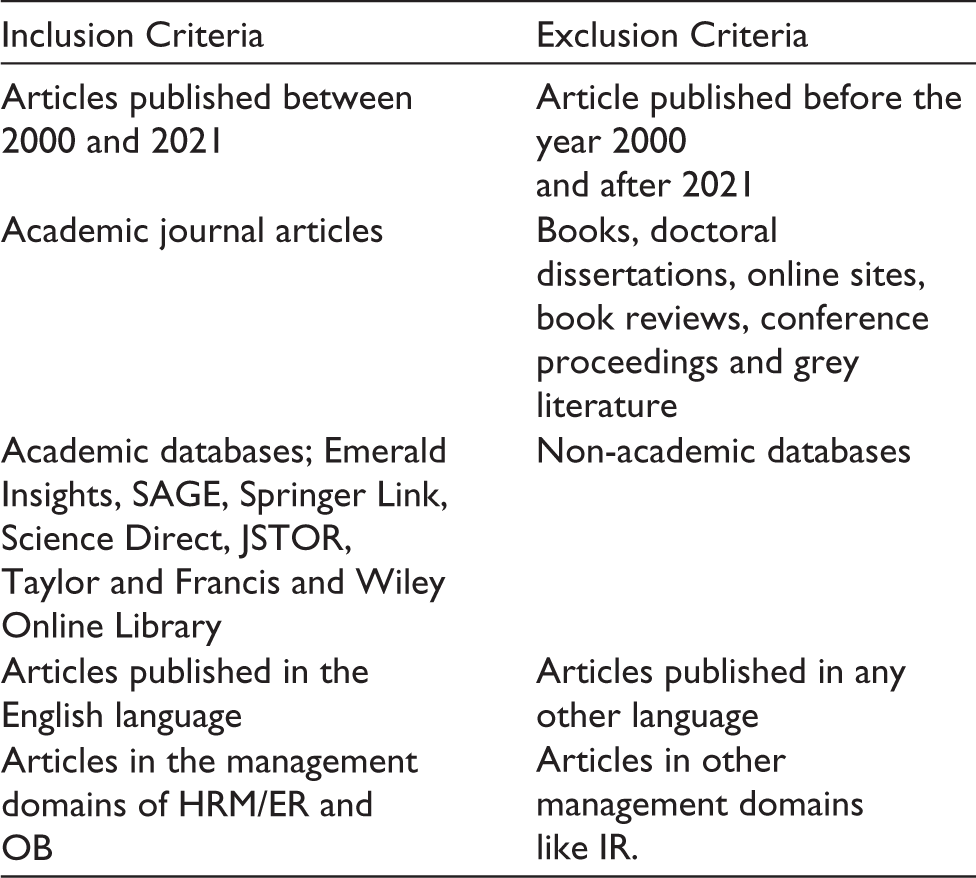
Here authors decided on the search strategy for the collection of relevant studies. The authors determined the review protocol in view of the rationale for conducting the review as presented in the introduction section. Consequently, the time frame, document type, databases for retrieving the articles, keywords and the type of articles were argued. The publication time frame was set from 2000 to 2021. The search of articles was restricted to seven internationally recognized databases namely Springer Link, Science Direct, Wiley Online Library, SAGE, Taylor and Francis, Emerald Insight and JSTOR. We restricted the search of articles to these databases only because of limited access to other databases. Books, conference papers, and theses were excluded from the study. Empirical studies, case studies, literature review articles and conceptual papers were among the articles included in the sample. For the review, only articles that were completely accessible and written in English were examined. These conditions served as the basis for the review’s inclusion and exclusion criteria (Table 1).
Inclusion and Exclusion Criteria of Articles.
Stage II. Conducting the Review
Step 3: Search the literature
The second stage involved searching through keywords such as ‘employee voice’, ‘employee voice behavior’ and ‘voice’ in the shortlisted databases. A large number of related articles were found in this initial search. Papers published before 2000, grey literature, web articles, books, articles written in any language other than English, or papers with incomplete access were excluded after taking into account the inclusion and exclusion criteria. All databases were searched for peer-reviewed journals alone. Using the above-mentioned search criteria, we identified 274 records. Wiley, ScienceDirect, Taylor and Francis, SAGE, Springer Link, Emerald and JSTOR, respectively, offered 58, 46, 40, 35, 33, 32 and 30 records. After initial title screening, a total of 170 studies were identified from all the databases. The authors made sure that the selection criteria did not lead to any substantial omissions or oversights.
Step 4: Screen for inclusion
At this stage, we read the abstract of the 170 studies which were earlier identified in order to fully assess their relevance to the review. The main aim of this preliminary screening is to remove those articles whose content is not relevant to the research question (Xiao & Watson, 2019). Hence, the three authors individually read the abstract and excluded those which were not in line with the research question. Following this, the list was checked by authors in the meeting after the abstracts were reviewed, and 96 articles were unanimously removed due to their lack of relevance. A total of 74 studies were found to be relevant and we obtained full-text articles for the quality assessment.
Step 5: Assess quality
Articles that passed the previous step were read thoroughly to further assess their quality and eligibility. We limited review to the journals which were listed in the Chartered Association of Business Schools list by utilizing Academic Journal Guide (AJG). Only those papers that met the eligibility requirements were chosen for inquiry and content evaluation after considering the pre-determined inclusion and exclusion criteria.
All the authors independently assessed the quality and eligibility of the articles and any discrepancies in the findings were addressed and resolved. Consequently, seven articles were excluded: three articles were excluded because they were related to remote research areas (e.g., studies related to home voice assistants, judicial voice and personal voice); two articles were excluded because the journals were not listed in AJG. We could not find the full text of one study. As a result, the final sample of 67 articles from seven databases covering the years 2000 to 2021 were included in the review.
Step 6: Extracting data
At this stage, general information about the articles was collected in an Excel spreadsheet, including authors’ surname, year of publication, title of the study, name of the journal, publisher, name of the country and the type of paper. Each author identified, retrieved and subsequently saved relevant qualitative data regarding key findings, conclusion and research methods of the papers in a separate database (Excel spreadsheet). Then the authors summarized findings, conclusions and research methods into distinct categories on the basis of similarities among the research findings and methods of sample articles. The key findings and methods were organized into themes and groups, respectively, based on their similarity. These logical themes offered a representative framework for a large amount of research information and a clear way of describing the literature.
Step 7: Analysing and synthesizing data
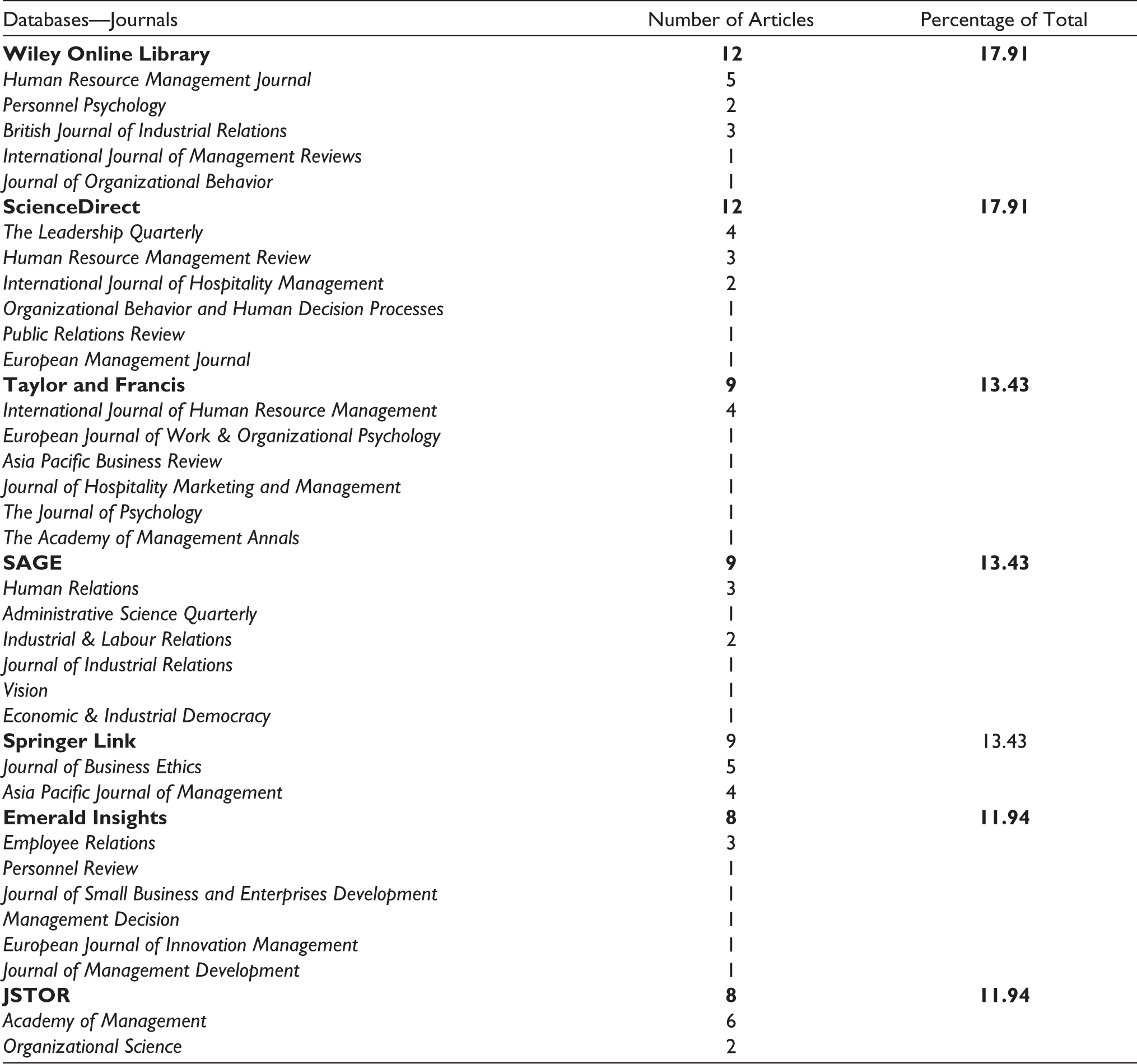
Charts and graphs were used to present the general information from the reviewed articles, providing a clear picture of employee voice research and revealing its publication trend. This section presents and summarizes the general characteristics of the reviewed articles. The results reveal that 67 articles were published in 33 journals from 7 selected databases (Table 2). Out of 67 articles in 33 journals, 6 articles were traced in the Academy of Management (listed in JSTOR), 5 articles each were traced in Human Resource Management Journal (listed in Wiley) and Journal of Business Ethics (listed in Springer Link) followed by 4 articles each from International Journal of Human Resource Management (listed in Taylor & Francis), Asia Pacific Journal of Management (listed in SpringerLink) and The Leadership Quarterly (listed in ScienceDirect). Three articles each were traced in the British Journal of Industrial Relations (listed in Wiley), Human Resource Management Review (listed in ScienceDirect), Human Relations (listed in SAGE) and Employee Relations (Emerald). The remaining articles (29) were dispersed across the other 23 journals. As reflected from the distribution of articles, these 10 journals were found to be the most influential journals covering the subject of employee voice. Future researchers thus interested in employee voice research and reviews are suggested to begin with these journals.
List of Journals Considered in the Study.
The publication volume of employee voice research is illustrated in Figure 1 which indicates that employee voice research is on the rise. The trend has accelerated since 2010, with two-fold growth in 2012 over the previous year (2011), indicating a peak in researchers’ interest. In 2013 and 2014, there were fewer publications, with only two articles published in 2014; however, in 2015, there was a significant increase in the trend, which continued during 2016. The number of publications declined in 2017 and 2018 but grew again from 2019 to 2021. It is worth mentioning that more than half of the articles in the sample (58.20%) were published between the last six years (2015–2021).
Publication Volume.
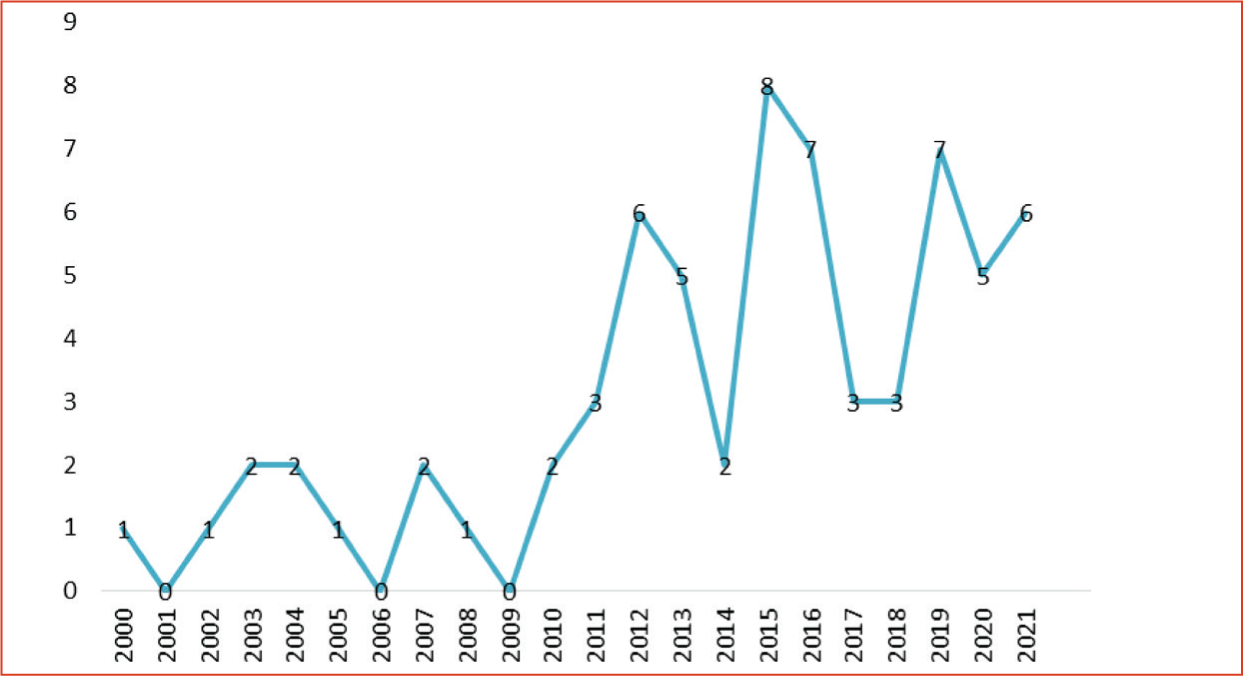
Table 3 depicts the countries which have been frequently surveyed with regard to research on employee voice. Data indicate that China (23) and the United States (19) top the list of frequently surveyed countries on employee voice followed by Australia (6), the UK (5) and multi-country context (3). Pakistan, Turkey, India, Germany, Taiwan, Hong Kong, etc., country context has also been studied by researchers.
Countries Surveyed.

Besides, empirical papers account for the majority (79.10%) of relevant publications, while the remaining articles present conceptual and literature review (13.42%), case studies (5.97%) and meta-analysis (1.49%) (Figure 2).
Article Type.

Stage III. Results and Discussion
Step 8: Report Findings
This section will discuss the main findings of the systematic literature review.
Research Themes
Based on a careful examination of the study objectives, important findings and conclusions of the sample articles, the studies examined can be divided into five broad thematic groups (Table 4). They are concerned with the antecedents of employee voice, outcomes, inhibitors, organizational norms and managerial practices and reviews. These are discussed in detail below:
Thematic Areas of Employee Voice Research.

Antecedents
The systematic literature review revealed that the most prevalent theme is antecedents of employee voice behaviour. Out of 67 publications, 33 examined different determinants of employee voice behaviour. The studies suggest that leadership style significantly affects the exhibition of employee voice behaviour. For example, authentic leadership (Hsiung, 2012), moral leadership (Chan, 2013), leader–member exchange (Nazir et al., 2020), ethical leadership (Lam et al., 2016; Qi & Ming-Xia, 2013) and empowering leadership (Gao & Jiang, 2019) are positively related to employee voice, while supervisor authoritarian leadership (Li & Sun, 2014) negatively affected employee voice behaviour. Similarly, field studies involving police officers and staff conducted in the UK revealed that authoritarian leadership has a negative relationship with ethical employee voice (Zheng et al., 2019). A study conducted in the Chinese telecom sector reveals that empowering leadership buffers the positive relationship between leader trust and employee voice (Gao et al., 2011). Besides, studies have also stressed on organizational and managerial involvement in predicting the employee voice. For example, managerial openness (Detert & Burris, 2007; Liu et al., 2021a), HRM (de Azevedo et al., 2020), HPWS (Rasheed et al., 2017), supervisor empowerment (Park et al., 2021) and positive management attitude (Unler & Caliskan, 2019) play a key role in promoting voice behaviour for organizational efficacy. According to a study conducted in the Chinese retail industry, both, felt obligation and psychological safety are significantly related to subsequent promotive voice, and organization-based self-esteem is reciprocally related to promotional voice (Liang et al., 2012). Additionally, using multi-level data from 75 US chain restaurants, it was found that employee–organization goal alignment builds employee efficacy necessary to exhibit an effective pro-social voice (King et al., 2020). A study in a construction management company found that employees with central roles in the team’s formal workflow network are more inclined to contribute with ideas and suggestions (Venkataramani et al., 2015). Tangirala and Ramanujam (2008) found that levels of personal control determine the intensity of employee voice, that is, voice was higher at two extremes of personal control than at intermediate levels in a sample of frontline hospital nurses. Studies also argue that union membership (Benson & Brown, 2010) and supervisor ostracism (Li & Tian, 2016) are negatively related to employee voice behaviour. Moreover, at the organizational level, interpersonal justice was found to be positively related to employee voice behaviour in a study conducted in Hong Kong (Takeuchi et al., 2012). A recent study conducted in US school districts revealed that units where managers are more open to employee voice are viewed as more attractive places to work (McCarthy & Keller, 2021). The evidence from these studies indicates that major determinants of employee voice are leadership style, organizational involvement and managerial attitude, employee-organization goal alignment, union membership, ostracism and perceived justice. Notably, a majority of the studies focused on leadership style as a determinant of voice. Other antecedents aforementioned are thinly explored in various studies, necessitating additional research and analysis.
Outcomes
The next prevalent theme is outcomes derived from employee voice behaviour. Fourteen of 67 studies examined various outcomes of employee voice. A study conducted in the United Kingdom revealed that employee voice is positively related to employee engagement (Rees et al., 2013). Burris et al. (2013) conducted a study in the corporate-owned chain of restaurants and found that managerial receptiveness acts as a buffering mechanism in the positive relationship between employee voice and engagement. Moreover, in view of the potential benefits, organizations should encourage direct voice arrangements as it helps in the alleviation of employee trust in the management (Holland et al., 2012) and to increase the unit’s effectiveness, voice flows should be directed to the focal leader (Detert et al., 2013). Similarly, psychological well-being (Avey et al. 2012), organizational commitment (Jena et al., 2017) and employee performance (Song et al., 2019) have been found to be positively associated with employee voice behaviour. Kim et al. (2010) found that team voice when considered in conjunction with representative voice significantly contributes to enhanced worker efficiency. A study involving graduates of a university in Southern China found that stronger pro-social voice beliefs are associated with more positive voice at higher levels of job satisfaction and less negative voice at lower levels of job satisfaction, (Lin et al., 2020). Similarly, it was revealed through analysis of 139 call centres in Canada that organizations where staff have access to collective voice mechanisms have weaker positive relationships between establishment-level customer aggression and workforce exit rate (Liu et al., 2021b).
Inhibitors
Of the 67 studies chosen for the review, 7 studies had an exclusive focus on inhibitors of employee voice behaviour. The in-depth anatomy of the studies that investigated the inhibitors to employee voice behaviour suggests that managers play an important role in creating an environment where employees feel free to voice their opinions, recommendations and ideas. In a study conducted on employees of a multinational oil and gas exploration, and refinery organization employee voice was found to be lower among managers with low managerial self-efficacy (Fast et al., 2014). Studies in this category highlighted that managers have the tendency to endorse ideas from those employees only who use supportive forms of voice than those who use challenging forms of voice (Burris, 2012). A Norwegian study found that companies seek a desirable image through a single official corporate voice by restricting challenging forms of employee voice through coercive HRM practices and technocratic control (Wæraas & Dahle, 2020). Additionally, a case study in Nigeria found that the presence of fear of victimization among employees of two multinational organizations resulted in employee silence (Emelifeonwu & Valk, 2019). A study carried out in Germany revealed that female employees demonstrate less self-efficacy than men; therefore, supportive leadership plays an important role in the voice behaviour of female employees as they exhibit less voice at low levels of supportive leadership (Eibl et al., 2020). Moreover, a study conducted in an auditing firm, revealed that on training contracts, employees prefer to remain silent on workplace problems (Donovan et al., 2016). Since only a few (seven papers) have focused on inhibitors to employee voice, it implies that there is scope for more research in this particular thematic area.
Less Prevalence Themes
Seven papers looked at how organizational norms and managerial practices may ensure that employees’ voices are heard and that their concerns and ideas are properly addressed. Organizations should ensure employee voice by offering them the right to be heard in order to achieve higher performance and employee commitment (Gollan, 2003). Despite the reduction in union density in organizations, Batt et al., (2002) demonstrated that union institutions combined with managerial policies facilitating employee voice can substantially reduce exits. Furthermore, managers should evaluate the form of employee voice behaviour exhibited by taking into consideration the interests of other organizational members, that is, whether this form of voice behaviour creates unjust and unfavourable working conditions for them (Chou & Barron, 2016). In an analysis of 18 case studies from the UK, Wilkinson et al. (2004) argued that the management of employee voice will be strongly linked to managing diversity as more employees feel comfortable expressing their opinions. Findings in another study conducted in England, Scotland and Ireland suggest that employee voice practices should be embedded in an organization in order to achieve positive outcomes (Dundon et al., 2004). Similarly, research has indicated that employees will speak up only when organizational norms signal that their concern or idea is addressed effectively without any fear of retribution (see Kwon & Farndale, 2020). Benson (2000) argued that in unionized workplaces there are more voice mechanisms present for employees than those in non-unionized workplaces. It is important to mention here that the majority of the studies looking at organizational norms and managerial practices adopted the qualitative method, thereby, necessitating additional empirical research based on data from multiple sources in order to enable generalization. Six of the articles were related to theme reviews of which four studies focused on integration and review of past research on employee voice (see Morrison, 2011; Mowbray et al., 2015; Nechanska et al., 2018; Wilkinson et al., 2019) and two papers critiqued the organizational behaviour conception of employee voice (see Barry & Wilkinson, 2016; Kaufman, 2015).
Nature of Research Methods
The review also sought to determine the type of research methods employed in the studies of employee voice behaviour. It primarily concentrated on research design, statistical methodology and sectoral focus.
Statistical Methods Used in the Literature
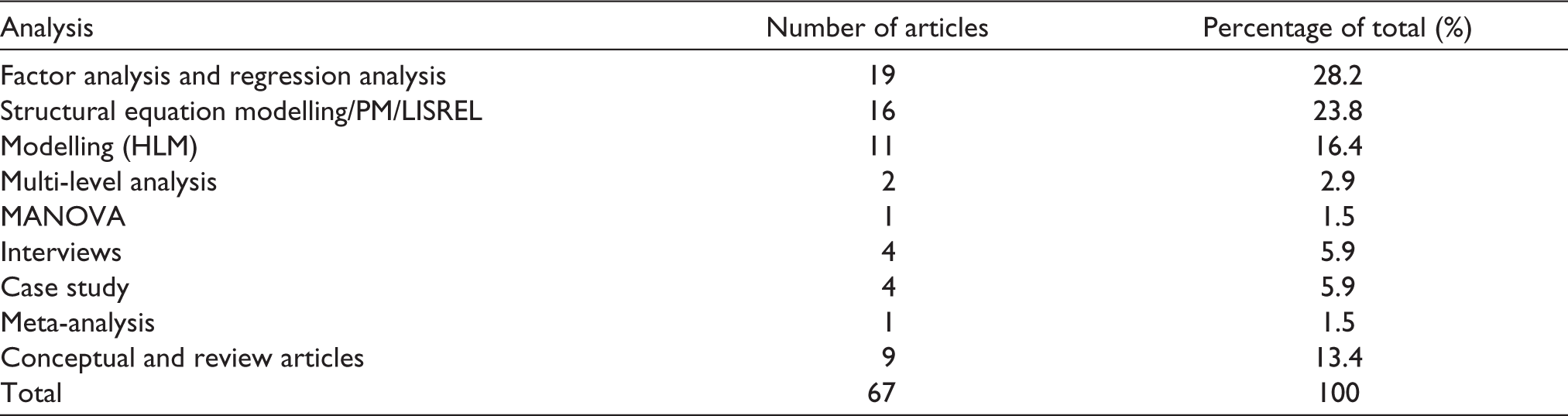
Table 5 elucidates the frequency of the application of different statistical methods in the studies analysed. The analysis presented in Table 4 reveals that factor and regression analysis was used in 19 studies. Other popular statistical techniques used for the sample studies included SEM (16), Modelling (11), Multi-level analysis (2) and MANOVA (1). A detailed description of the statistical tools used in employee voice research is provided in the aforementioned table. The utilization of hierarchical linear modelling (HLM) and multi-level analysis in 20% of empirical studies on employee voice indicates an increasing trend of using advanced quantitative analytical techniques to ensure the accuracy and utility of the results.
Statistical Methodology Used in Employee Voice Research.
Research Design
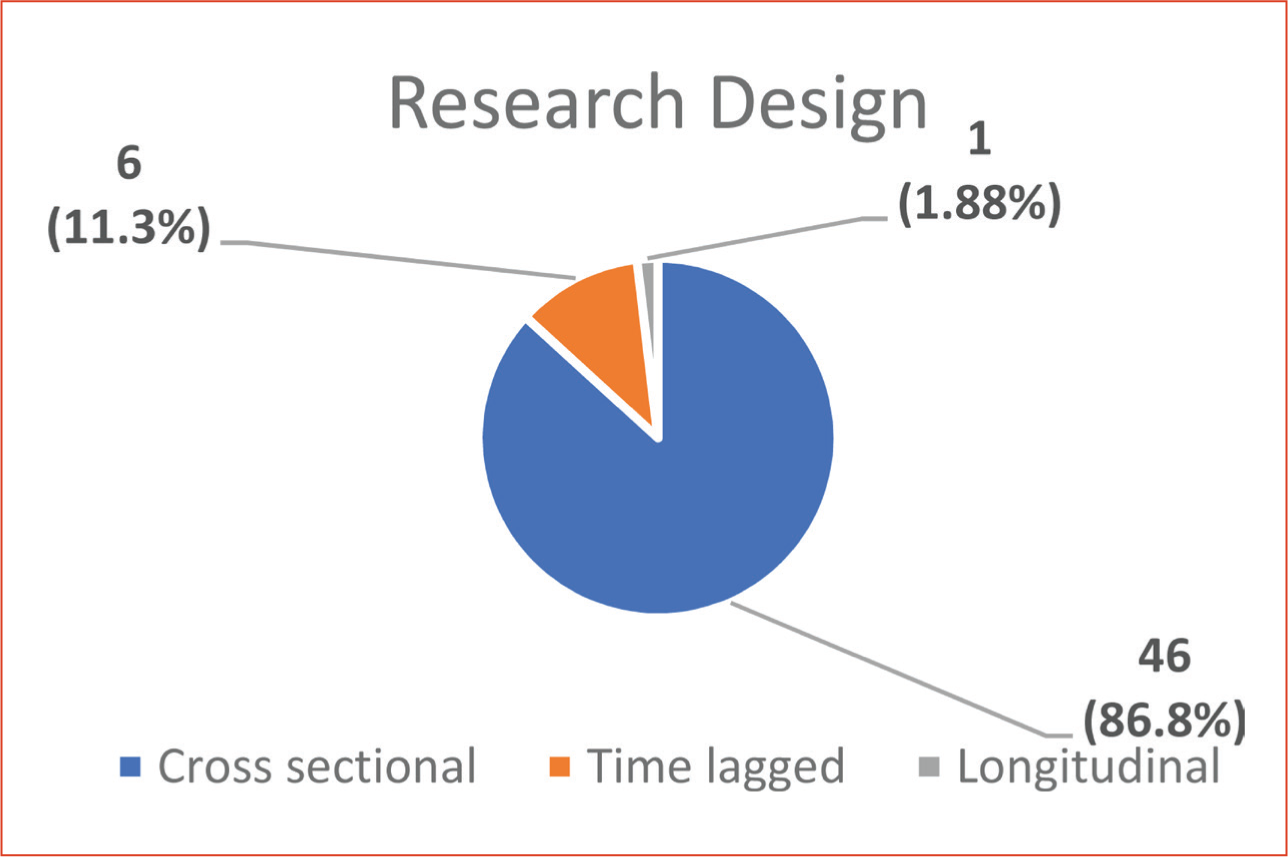
The majority of the empirical studies on employee voice under review used the cross-sectional research design (46). Out of the 53 empirical studies, 6 studies used time-lagged research design to collect data. Only one study utilized a longitudinal approach for the collection of data (Figure 3). Therefore, it seems important for researchers to gather data at multiple time points because the majority of the studies have been cross-sectional, which limits strong conclusions about causality. Moreover, almost all of the studies have evaluated employee voice behaviour from a single perspective, that is, employee or his/her supervisor. Precisely, out of 49 quantitative studies, 23 studies used self-rated assessment for the measurement of employee voice while 15 studies used supervisor-rated assessment for the measurement. Notably, only one study by Burris et al. (2013) assessed employee voice behaviour from the perspectives of both employee and his/her supervisor.
Research Design.
Sectoral Focus
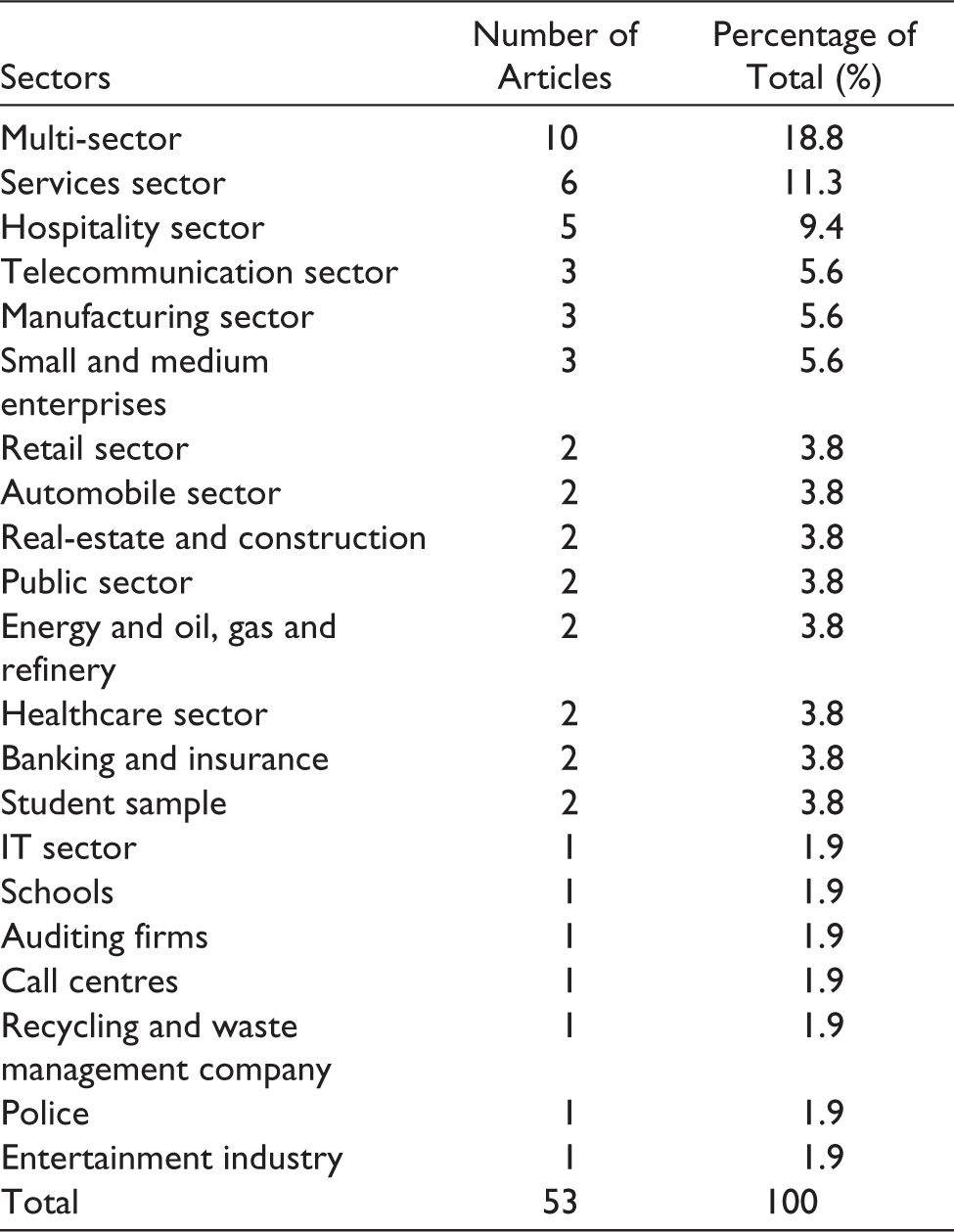
Data regarding sectoral focus indicate that 18.8% of papers were conducted in multiple sectors (10). Also, 11.3% (6) of the studies were conducted in the service sector. Besides, 9.4% (5) of the studies, each focused on the hospitality and telecommunication sector. Similarly, 5.6% (3) of the studies, each was conducted in the retail sector, banking and insurance, SMEs and manufacturing sector. A detailed summary of sectoral focus related to employee voice research is elucidated in Table 6. It can be concluded from the sectoral focus that there is diversified empirical research on employee voice. Notably, majority of the studies have assessed employee voice in multiple sectors in order to capture a more generalized picture of this important workplace phenomenon.
Sectors Studied.
Practical Implications
Organizational norms and managerial practices have a substantial impact on employees’ ability to share their opinions, suggestions and recommendations because they ensure their ideas and concerns to be heard and properly addressed. Although several reviews have been published on employee voice behaviour, the current study is the first to employ a systematic review methodology with a focus on organizational norms, managerial practices, and a range of antecedents, outcomes and inhibitors. The evidence reveals that employee voice had a positive impact on employee engagement, organizational engagement, employee efficiency and overall unit effectiveness. However, inhibitors, such as low managerial self-efficacy, challenging voice, technocratic control and coercive HRM practices, and fear of victimization among employees can inhibit employee voice behaviour. Therefore, these findings urge managers to take measures in order to pave the way for smooth flow of employee voice.
Specifically, to resolve the issue of low levels of employee upward communication, we recommend that managers should ensure internal communication practice by enriching strategic plans with specific employee voice objectives (e.g., enhancing opportunities for upward employee voice). In addition, employee voice behaviour initiatives should be complemented with strategic efforts to increase managerial receptiveness to voice. Senior managers need coaching on how to reach their potential to encourage employee opinion and respond to their suggestions. Furthermore, both formal and informal mechanisms should be encouraged in the organization in order to facilitate voice on regular basis. Simultaneously, managers should foster higher levels of organizational identification among employees in order to strengthen their drive for upward communication.
More so, as indicated earlier, coercive HRM policies hamper upward communication therefore, organizations should design inclusive HRM policies for ensuring the psychological safety of the employees’ willingness to express their opinions. Regarding managerial reactions on challenging voice, organizations should train managers to take the challenging form of voice positively. Apart from rewarding the employees who offered an initial suggestion, managers who acted promptly should also be rewarded to facilitate employee voice in organizations. As technology has posed a challenge to the status quo in every industry, Work Tango and Hyphen employee voice applications are also increasingly being used to collect real-time employee opinions and concerns regarding work-related issues. The HR managers can incorporate features as per their needs because these applications allow for customized user interfaces. Managers can benefit from such applications as they provide quick insights for effective decision-making.
Limitations
Though we discussed wide literature on employee voice, it is bound to have a few limitations as well. First, this literature review may have limitations as it addresses only the antecedents, outcomes, inhibitors, organizational norms, practices and reviews of employee voice. Also, we excluded conference proceedings, book reviews and dissertations, which has some inherent limitations. Moreover, Scopus and Web of Science were left out, which may be construed as a myopic practice. Finally, only English papers were analysed due to the authors’ linguistic restrictions. Therefore, only those publications that fulfilled the inclusion criteria were included in this review which could limit the study’s ability to capture all relevant studies on employee voice. However, the studies utilized for this review are a good representative of all articles published on the subject.
Directions for Future Research
The systematic review of employee voice research has offered some important directions for future research which are summarized below.
Collection of Data over the Period and from Multiple Sources
The findings revealed that the cross-sectional design has been used in the majority of empirical research on employee voice. Therefore, future empirical research should be conducted by using longitudinal and panel data in order to effectively demonstrate the causal effect of employee voice. Similarly, a majority of the studies have examined employee voice behaviour from a single perspective, either the employee or his/her supervisor. As research in this domain moves forward, it becomes essential that researchers collect data from both employee and his/her supervisor in order to assess voice from multiple perspectives.
Multi-Level Analyses in Empirical Employee Voice Research
The findings also indicate that multi-level analyses in empirical employee voice research are under-researched. Only two studies emerged from the review that performed multi-level analysis (see Burris, 2012; Detert & Burris, 2007). Considering the growing significance and calls for multi-level analyses in employee voice research (Morrison, 2011), the current review has revealed multi-level empirical research on employee voice as a crucial area for future research in the field.
Multi-Country Analyses of Employee Voice
There are few multinational studies on employee voice (see Table 3). Employees may be reluctant to use their voices in collectivistic cultures because they may be worried about how others will perceive them or whether the culture will encourage voice behaviours. Hence, more studies should be conducted in this regard particularly performing cross-country analysis to understand the possible contribution of national culture in the exhibition of employee voice.
Inhibitors to Employee Voice Behaviour
Considerably fewer studies have analysed inhibitors to voice in the empirical employee voice research. Employees feel free to voice their opinions when managers exhibit behaviours that encourage it. Employees limit their voice behaviour when managers lack managerial self-efficacy as they are less inclined to solicit employee voice (Fast et al., 2014). Further research on this less prevalent theme can help in identifying managers who are most likely to demonstrate a lack of self-efficacy.
Role of Organizational Practices and Norms on Employee Voice
Only a few studies have analysed the influence of organizational practices and norms on the exhibition of employee voice. Future studies regarding the influence of formal voice channels and institutional voice protection on employee voice would add to the conversation.
More Integrated Studies
While undermining the relational dimensions of voice that are prevalent in OB, HRM researchers have been preoccupied with investigating structures and procedures enabling employee voice. On the other side, OB scholars have been criticized for defining voice in a way that supports the interests of managers. Despite these differences, some integrative reviews (see Mowbray et al., 2015; Nechanska et al., 2018) have started to recognize the problems with a siloed approach to employee voice research, and a growing understanding of the necessity of greater integration between disciplines has emerged. We suggest more integrative studies in this less prevalent theme of reviews as there is an opportunity to further the literature on employee voice within both the OB and HRM/ER disciplines by the acknowledgement and influence of the alternate perspective.
Conclusion
The main purpose of this review is to contribute to the body of knowledge on employee voice by presenting a systematic literature review of employee voice research. The academic studies from the last two decades related to employee voice have been examined to get insights into its body of knowledge. We presented the distribution of articles, publication volume, countries studied and sectoral focus in this review. We also discussed research themes, research design, and statistical methods employed in employee voice research. In addition to practical implications, this paper also highlights some important research gaps in the employee voice literature and offers important suggestions for future research in this field.
Footnotes
Declaration of Conflicting Interests
The authors declared no potential conflicts of interest with respect to the research, authorship and/or publication of this article.
Funding
The authors received no financial support for the research, authorship and/or publication of this article.