



Abstract
Innovation plays a critical role in the growth of developing economies like India. The primary purpose of the current study is to investigate the role of research and development (R&D) and Information and communication technology (ICT) in firms’ innovation outcomes. The study uses data from firm-level surveys in India to examine the linkages of R&D and ICT on innovation outcomes and establishes linkages with policy elements to develop innovation ecosystems. The study uses a set of tobit regression models, generalized structural equations model and explorative content analysis to examine innovation outcomes of firms. The results indicate that both R&D and ICT parameters play a significant role in influencing innovation outcomes though they are moderated by the size of the firm and sector. The study adds to the existing literature on the resource-based view of the firm and also the literature on innovation management in the context of emerging economies. The authors examine the role of capabilities around R&D and ICT in influencing firm-level innovations.
Keywords
Introduction
Firms are expected to drive business innovation in emerging economies like India. Economic liberalization in India in the early 1990s has increased motivation for firms to carry out innovations to maximize their gains. However, innovation inputs and innovation capabilities have been found lacking in Indian firms. Global connectivity is an important issue in this regard and according to Dahlman and Utz (2005). India lags in the Global Innovation Index and is often seen as high on ‘jugaad’—a term for an indigenous ‘frugal, flexible, and inclusive approach to innovation’ (Prabhu & Jain, 2015). Further, studies carried out in the food and agricultural manufacturing industry in India reveal that innovation-focused investments have a positive relationship with firm growth (Manogna & Mishra, 2021). Besides, a recent study of Hanaysha et al. (2022) suggests that product innovation has a significant impact on business sustainability whereas process innovation also plays a key role. Realizing the state of existing fragmented ecosystems and the innovation potential, various policy initiatives have been introduced by the government to fully leverage the innovation potential of the country. Some of these include Amendment to the Patent Rules in September 2021 allowing for reduced fees, encouraging more private sector involvement by setting up various Centres of Excellence and research and development (R&D) centres on a public–private partnership basis and other motivations to boost the innovation ecosystem. India has ranked 76 in the Global Innovation Index 2014 which had noted that India has the youngest population below 30 years and is in an advantageous position with regards to innovation. However, in 2014, compared to the BRICS countries, India has been slipping back and China has been rising in the Index (Figure 1). Garcia Martínez et al. (2017) studied the effect of diversity in the R&D team on innovation performance. A similar study in the context of another emerging economy China is conducted by Yi et al. (2017). Steinberg et al. (2017) studied how both R&D offshoring strategies affect innovation output. They have shown that captive offshoring and contract offshoring have fundamentally different effects on firm innovation performance using a panel data set of 2,421 R&D-active firms in Germany. Hameed et al. (2018) examined the key factors that influence how well small and medium-sized businesses in Malaysia engage in open innovation (SMEs). Zouaghi et al. (2018) examined how external knowledge assets and internal innovation efforts work together as flexible tools to overcome challenging economic circumstances. They also looked at how the financial crisis has affected high- and low-tech sectors differently. Their finding shows that having strong internal and external knowledge capabilities allows firms to mitigate the effects of the financial crisis. According to Bhagavatula et al. (2019), the interest of multinational enterprises in setting up a location in India is mostly driven by cost and not by capability and creativity. The study by Usai et al. (2021) determines whether firms’ innovation performance is enhanced by the increased use of digital technologies. India has picked up in some sectors, such as IT, ITeS, healthcare, but not much in other sectors such as manufacturing (Saini & Giri, 2022).
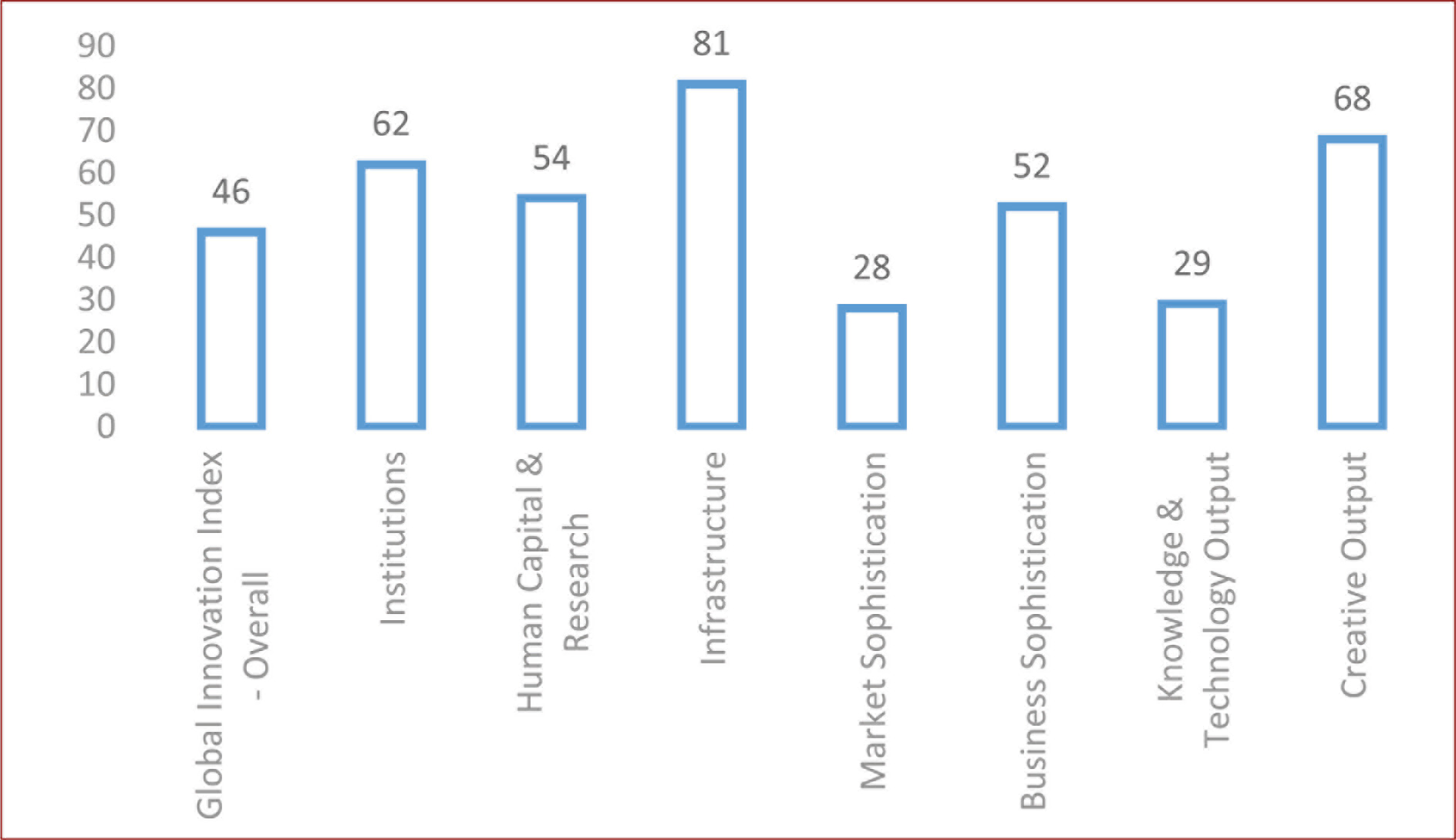
The paper has been set against this backdrop to understand various factors that may encourage successful innovation in firms.
However, till date there has been a scarce focus in the Indian context on factors that influence firm-level innovations. To leverage the innovation potential of any country, one must have a comprehensive understanding of the factors that led some firms to be more innovative than others. Investing in R&D, for example, might lead to improvements in existing processes by virtue of an increase in efficiency and reduction in costs. It allows firms to develop new products and services which in turn helps them not just to survive but also to thrive in competitive markets.
Broadstock et al. (2020) studied the impact of corporate social responsibility on firm’s innovation capacity. Information and communication technologies (ICT) also play a vital role as a key enabler of innovation (Wu et al., 2021). Innovations used by companies need to be brought to the market or adopted by businesses and ICT are key enablers of innovation (Mardani et al., 2018). ICT, if used appropriately, shall play a vital role in bringing this innovation to the markets. Besides, R&D and ICT have been treated as inputs for innovation (Hall et al., 2012; Wang & Hu, 2020; Wu et al., 2021; Zhu et al., 2019). This brings us to the main objectives of this study.
To investigate the role of R&D in influencing firms to take up innovation.
To investigate the role of ICT in influencing firms to take up innovation.
This study examines the role of capabilities around R&D and ICT in influencing firm-level innovations. A study of this kind is important for several reasons. First, the conclusions shall inform policymakers towards the influencing factors which can impact innovation performance of firms. Second, the study adds to the existing literature of the resource-based view of the firm and also the literature on innovation management in the context of emerging economies. Third, our study reveals that to encourage product/service innovation, firms may spend on internal R&D, ICT and recruiting personnel specifically for innovation. Thus from a government policy perspective, it may be beneficial to set up supporting ecosystems for R&D and ICT as all firms may not have the capacity to invest initially. Fourth, firms have to maintain a clear demarcation of focus between product/service innovations or process innovation as both these may work at cross purposes. Fifth, the exploratory text analysis reveals that small, medium and large firms have a different perspective about both product/service innovation and process innovation. Thus innovation policies need to be crafted to the needs of different categories of firms, and one size fits all may not work.
Theoretical Background
The Theory of Reasoned Action, Theory of Planned Behaviour and the Technology Acceptance Model (TAM)
The Theory of Reasoned Action is about the relationship between attitude and behaviour. The intention, of an individual or a firm, to perform a certain behaviour, like innovation, is the main predictor of whether or not they actually perform that behaviour. According to the proponents of this theory Ajzen and Fishbein (1975), the behavioural intention precedes the actual behaviour. Two key determinants of behavioural intention are (i) the attitude towards the particular behaviour and (ii) subjective norms. The attitude towards behaviour depends on behavioural beliefs regarding the outcomes of the performed behaviour, that is, how probable the outcome is and the evaluation of the potential outcomes, that is, whether the outcome is positive/neutral/negative. Thus, if one believes that a certain behaviour will lead to a favourable outcome, then one is more likely to have a positive attitude towards the behaviour. Subjective norms, the other determinant of behavioural intention, refer to the way perceptions of relevant social groups or individuals. In the case of firms, these could be the various stakeholders of the firm, competitors, employees, etc., that may influence the firm’s performance. Thus, if in such relevant social groups a certain behaviour is acceptable, then one is more likely to indulge in such behaviour.
The Theory of Planned Behaviour was developed by Ajzen (1991) and has an additional construct ‘Behavioural Control’ over the Theory of Reasoned Action. Behavioural Control, in the context of firms, refers to the firm’s belief of the ease or difficulty of performing the behaviour of interest for example whether the firm believes that it can perform innovation.
Based on the Theory of Reasoned Action, the original TAM was introduced by Davis et al. (1989) and was used for modelling users’ acceptance of information systems. The model had two specific beliefs, that is, perceived usefulness and perceived ease of use, which influence the attitude of the user which in turn influence behavioural intention. In the context of firms, perceived usefulness is defined as the firm’s subjective belief that the use of a certain system or technology will improve its behavioural action, that is, performance. Perceived ease of use refers to the degree to which the firm expects the system or technology to be easy to use. The final version of TAM was formed by Davis and Venkatesh (1996) in which both perceived usefulness and perceived ease of use were found to have a direct influence on behaviour intention, thus the construct ‘attitude’ was dropped from the model. Social influences were considered as external variables which affect the ease of use and perceived usefulness.
However, the study does not directly use the TAM as technology adoption is not the same as innovation. Instead, the study uses the well-established Crépon–Duguet–Mairesse (CDM) to examine four types of innovation outcomes—product innovation, process innovation, organizational innovation and marketing innovation and explores linkages with three specific inputs—R&D, ICT and human capital.
Firm-Level Innovation
The field of evolutionary economics and strategic management have left a deep influence on the present-day innovation discourse. The theory of the firm mentions knowledge as an important driver. In the strategic management literature, the resource-based view of the firm views knowledge-based capabilities as a competitive asset and a driver for innovation and growth of the firm (Almeida & Phene, 2012). Firms, even with similar resource endowments, display a wide heterogeneity in performance (McGahan & Porter, 1997). Some studies attribute the difference in firm performance to certain unobserved or latent factors or capabilities (Rumelt, 1991). In fact, certain capabilities play a key role in influencing firm-level innovation pathways (Penrose, 1959). Dynamic capabilities focus on capabilities related to change and innovation (Teece et al., 1997). There is also general agreement that innovation requires knowledge, ingenuity and focus and is capable of being practised (Drucker, The Discipline of Innovation, 2002). Others simply describe innovation as ‘ideas that create the future’ (Kanter, 2006) or innovation as a tool for business and entrepreneurs to leverage opportunities for a different business or a different service.
Innovation Performance and Interlinkages
The resource-based view of the firm holds that R&D is a valuable resource that helps the innovating firm in gaining a competitive advantage (Barney et al., 2001; Santoro et al., 2020). Firm-level innovations can manifest themselves in various forms—product/service innovation, process innovation, marketing innovation and organizational innovation.
While product/service innovation, process innovation and organizational innovation have been well documented, there have been fewer studies on marketing innovation. The critical part played by innovation in marketing has been recognized long back by leading experts like Wroe Alderson. Marketing is often viewed as organized rational innovation (Simmonds, 1986). Leading researchers, like Drucker apart from Simmonds, also mention innovation as a paradigm of marketing, without which marketing will only be a function without any linkages to innovation (Drucker, Innovation and entrepreneurship: Practices and principles, 1985).
Innovation, R&D and ICT
The study titled ‘Patents and R&D at the Firm Level: A First Look’ lays the basis for other studies connecting R&D and innovation (Pakes & Griliches, 1984). Few studies have investigated the association of R&D and ICT jointly with innovation. One study reports that high intensity of ICT leads to a decrease in R&D efforts (Cerquera & Klein, 2008). Another study concludes that ICT and innovation are complementary (Polder et al., 2009). Other studies have also concluded the role of ICT in firm-level innovation (Arendt & Grabowski, 2018). Studies are available which have treated R&D and ICT as inputs for innovation (Hall et al., 2012). This study uses R&D and ICT as inputs for innovation and also adds to the literature by differentiating between various forms of innovation in the emerging markets context. Figure 2 depicts a conceptualization of the proposed study, and it will be used for addressing the research questions raised.
Conceptualization of the Study.

Our study uses data of firm-level surveys in India to examine the linkages of R&D and ICT on innovation outcomes and for this purpose, we have used well-established CDM model (Crépon et al., 1998). Further, the model is modified by classifying different types of innovations as separate outputs (Figure 3).
Conceptual Linkage of Constructs.
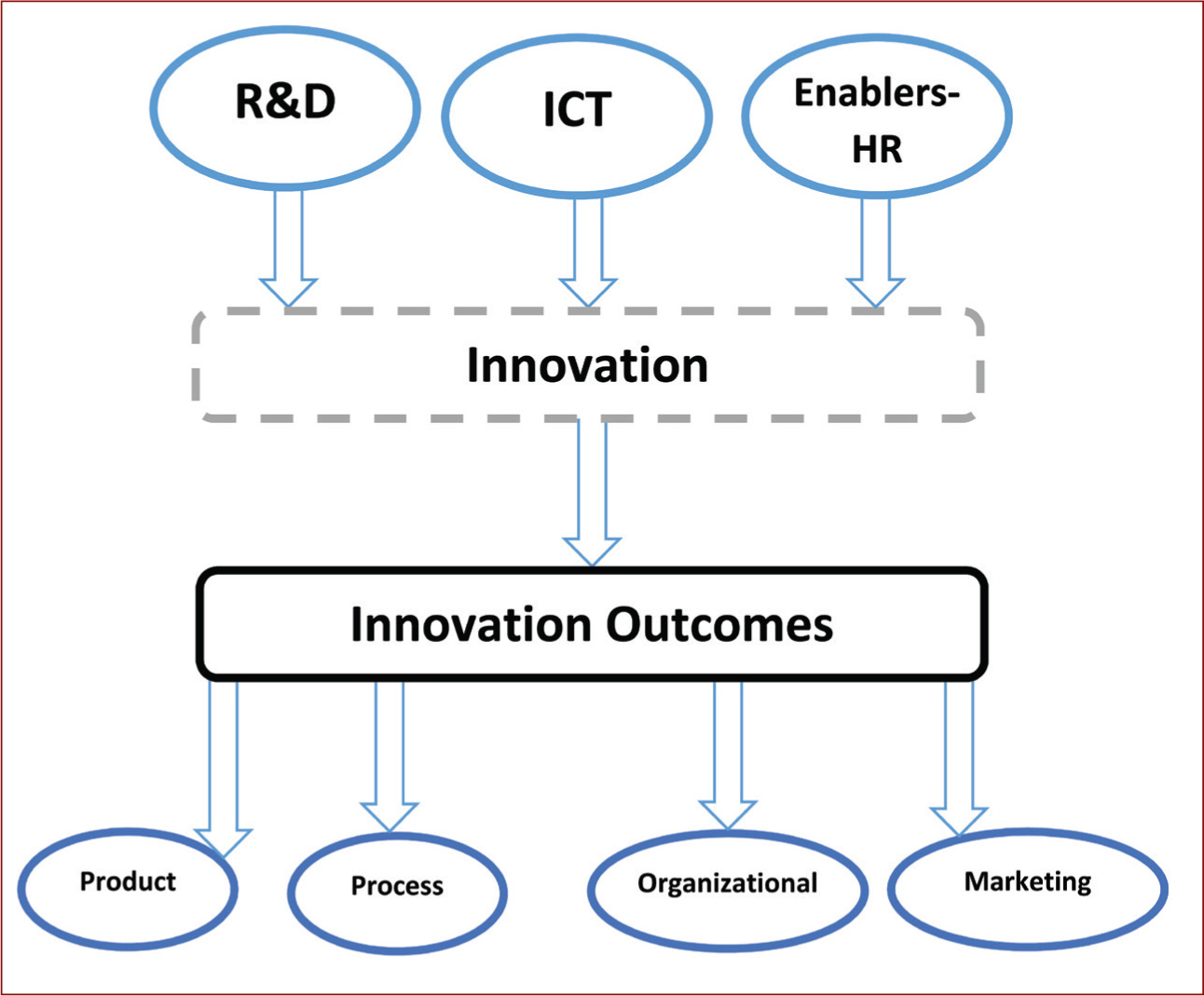
Our study uses multiple methods of classification and regression and also develops a frontier function to examine the efficiency of innovation outcomes of firms. The results indicate that both R&D and ICT parameters play a significant role in influencing innovation outcomes though they are moderated by the size of the firm and other interaction terms.
Data and Summary Statistics
The study uses firm-level survey data from the World Bank’s Enterprise Surveys (Enterprise Surveys, The World Bank). The surveys use standardized survey instruments and a uniform sampling methodology. The survey uses stratified random sampling from the population of firms with the industry sector and the industry size as the stratum. However, the data sets represent only firms that were willing to participate in the survey.
This study adopts a non-experimental cross-sectional, exploratory and confirmatory research design. Firm-level survey data from the World Bank were used for this study. The surveys in India were carried out till 2014. The study considered survey data for 3,492 Indian firms. The surveys were carried out across several industrial sectors as provided in Table 1.
Number of Indian Firm-Level Surveys Used for This Study.

Model Specification
The study explores four types of innovation outcomes—product innovation, process innovation, organizational innovation and marketing innovation and explores linkages with three specific inputs—R&D, ICT and Human Capital. The study takes up parameters of four different innovation outcomes and regresses them on a set of innovation input variables. The input and output variables are provided in the Annexure. The basic approach of the well-established CDM model is followed with the addition of two different parameter sets—ICT and Human Capital. Three different types of modelling approaches are used:
A generalized tobit model for four different categories of innovation A generalized structural equations model to take care of the feedback and endogeneity Content analysis and clustering of textual data
The dependent variables are categorical in nature, which calls for either a set of logit or probit models. However, many innovation studies report a large number of zeroes, that is, the absence of innovation mostly because the innovation project got delayed or abandoned or took a long time to complete which was beyond the time frame of the survey. Thus, the dependent variables in innovation data suffer from left censoring (Beers & Zand, 2014) and inputs which have been harnessed for innovation show a zero value and cannot take on a negative one to reflect a failed innovation. To address this problem, the CDM model, which used only R&D parameters, used a tobit model (Baum et al., 2015). In accordance with the relevant literature, this study uses a generalized tobit model.
The tobit model can be written as:
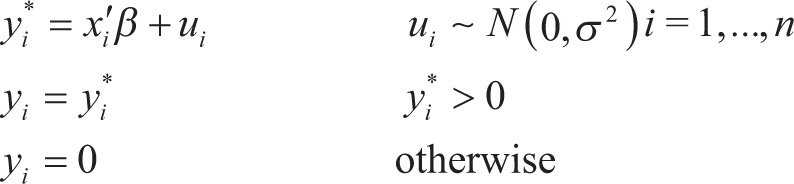
xi are a vector of independent variables for the ith participant, yi are observed responses of the ith participant and yi* is an unobserved continuous latent variable for yi.
The maximum likelihood estimation produces consistent estimates of the parameters of the tobit model. Homoscedasticity and normality of the error terms are assumed. The likelihood function of the tobit model is as follows:

Four different models are estimated for four different categories of innovation.
Dependent Variables (categorical)
Independent Variables
Expenses on internal R&D
Expenses on external R&D
Expenses on employee training for innovation
Expenses for purchase of new equipment
Expenses on knowledge (purchase of patent, licence and others)
Non-financial support from government (categorical)
Percentage of employees using ICT in their jobs
Expenses on external ICT consultants
Use of ICT for R&D (categorical)
Employees hired specifically for product/service innovation
Employees hired specifically for process innovation
Control Variables
Firm size
Industry sector
In addition, a generalized structural equations model is also estimated.
Results
The study presents results from three different approaches of modelling the innovation data.
First the results of the tobit models are presented (Tables 2–6).
Regression Models
Model 1. Product/Service Innovation
Model 1 Results.
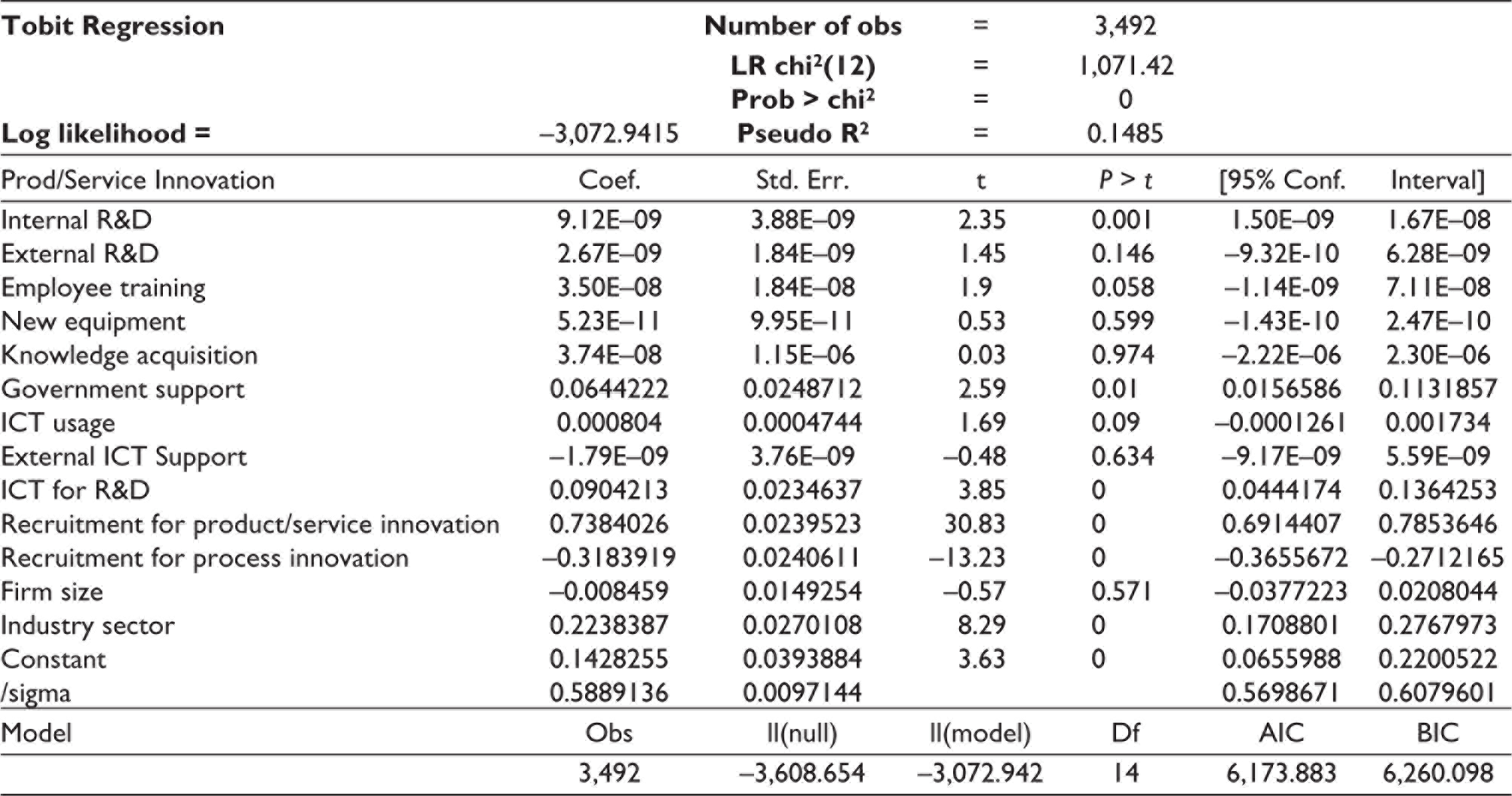
Obs. summary: 1,217 left-censored observations at hb1 ≤ 0.
2,275 uncensored observations.
0 right-censored observations.
The likelihood ratio chi-square of 1,071.42 with a P value of 0 indicates that the tobit model significantly fits better than one without predictors. The results indicate that for product/service innovation the following parameters are significant—spending on internal R&D, spending on ICT for R&D, recruitment for product/service innovation and recruitment for process innovation. The coefficient of the last parameter, that is, recruitment for process innovation in negative indicating that if the focus is provided on employing for process innovation, then product innovation may suffer. The influence of the industry sector is significant indicating that it has a significant influence on product/service innovation.
Model 2. Process Innovation
Model 2 Results.


Obs. summary: 1,379 left-censored observations at hc1 ≤ 0.
2,113 uncensored observations.
0 right-censored observations.
The likelihood ratio chi-square of 680.09 with a P value of 0 indicates that the tobit model significantly fits better than one without predictors. The results indicate that for process innovation the following parameters are significant—recruitment for product/service innovation and recruitment for process innovation. What is surprising is that none of the R&D parameters are considered significant for process innovation. Firm size and industry sector are both significant indicating that they have a significant influence on process innovation.
Model 3. Organization Innovation
Model 3 Results.

Obs. summary: 2,335 left-censored observations at hd3a <= 0.
1,157 uncensored observations.
0 right-censored observations.
The likelihood ratio chi-square of 620.51 with a P value of 0 indicates that the tobit model significantly fits better than one without predictors. The results indicate that for organizational innovation the following parameters are significant—government support and recruitment for process innovation. Firm size is significant indicating that it has a significant influence on organizational innovation.
Model 4. Marketing Innovation
Model 4 Results.

Obs. summary: 2,711 left-censored observations at he2a ≤ 0.
781 uncensored observations.
0 right-censored observations.
The likelihood ratio chi-square of 232.33 with a P value of 0 indicates that the tobit model significantly fits better than one without predictors. The results indicate that for marketing innovation the following parameters are significant—knowledge acquisition, ICT for R&D and recruitment for process innovation. Firm size and industry sector are both significant indicating that they have a significant influence on marketing innovation.
Explorative Content Analysis and Clustering
The innovation survey tried to capture the details of both product and process innovation through free-flowing text inputs. These are important for the study, as apart from various innovation input and output parameters already considered, these text fields provide us a sense of keywords participants associate with innovation.
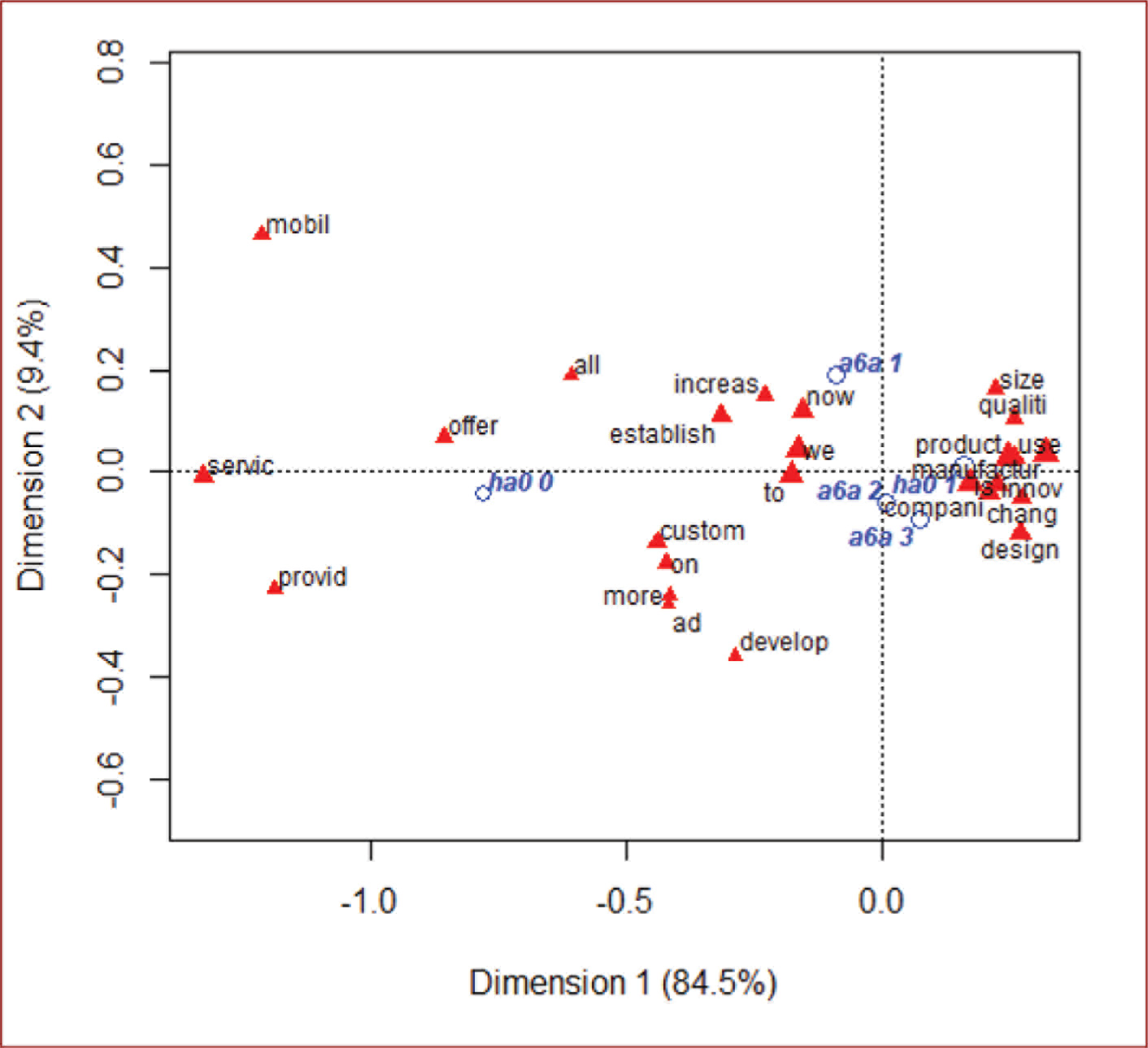
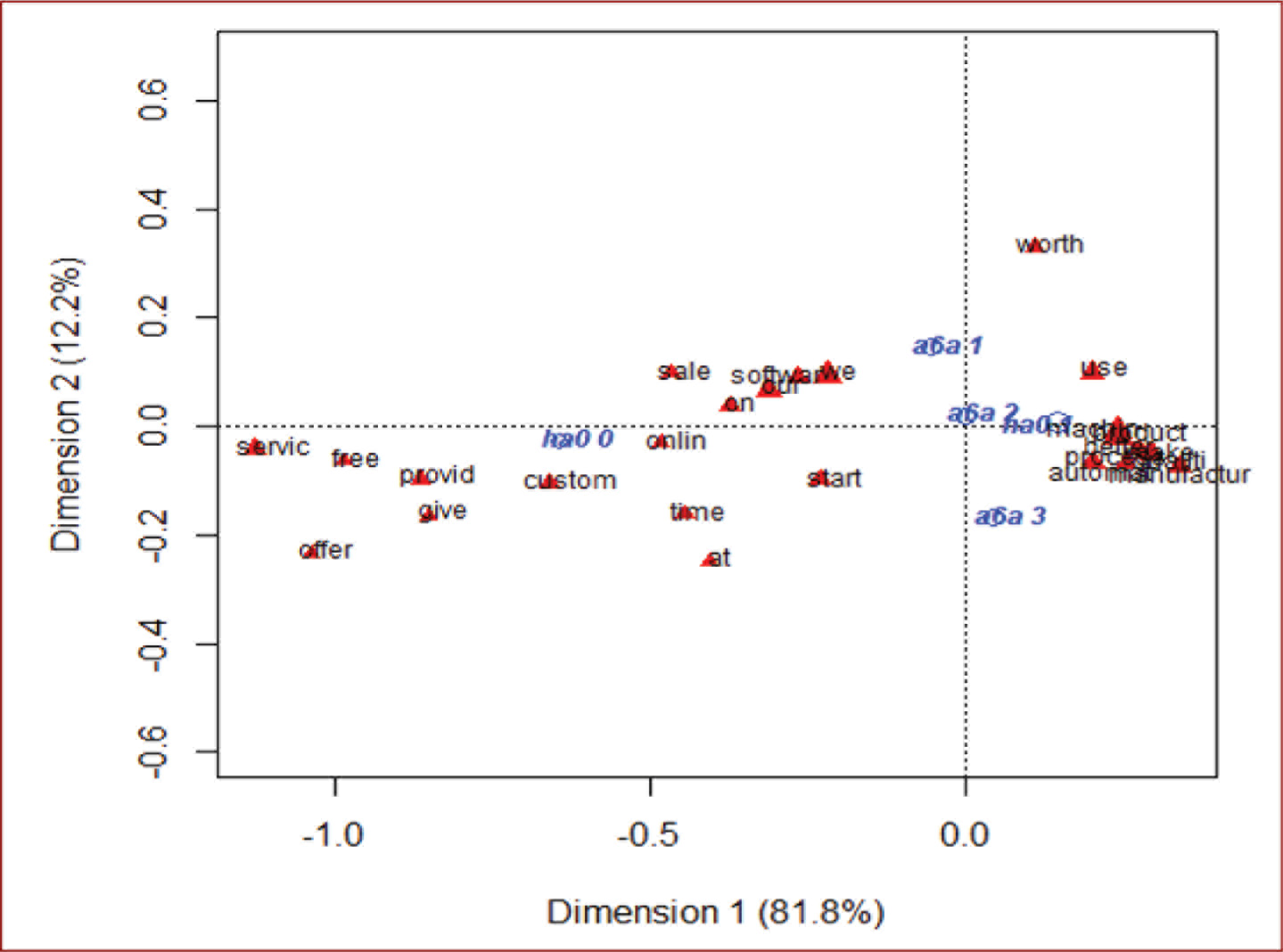
Our text analysis explores high-frequency words both in product and process innovation. These were subject to chi-square tests to identify those words that occur with more frequency than the normative data set. The text analysis was carried out in R using tm package. These were then clustered to identify dimensions associated with each word cluster. The standard process of lemmatization and word stemming was carried out. The results are presented below for both product/service innovation and process innovation and classified according to the size of the firm. The results indicate some keywords which are associated with product/service and process innovation according to firm size and sector (Figures 4 and 5).
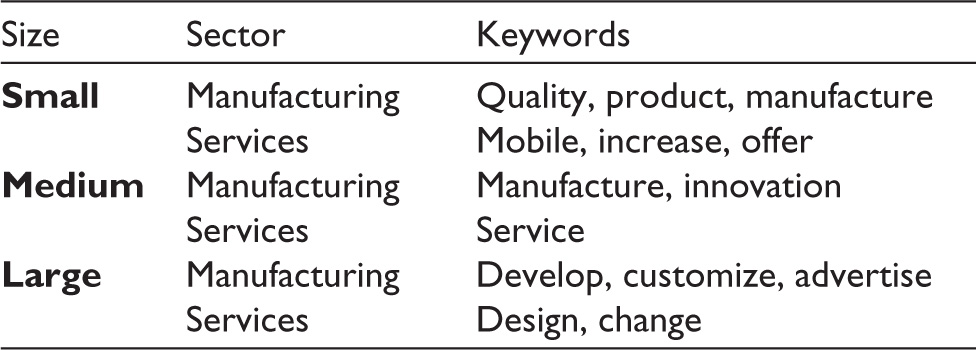

Classification of Keywords for Product/Service Innovation.
Classification of Keywords for Process Innovation.
Results and Policy Implications of the Study
The study started with the objective of understanding various factors that influenced different types of innovation in Indian firms in the backdrop of policy-driven encouragements for innovation. The study has reached several important conclusions which will be of benefit to firms and government in policymaking as well as informing the academic debate about factors that influence innovation. First, the study finds that to encourage product/service innovation, firms may spend on internal R&D, ICT and recruiting personnel specifically for innovation. Thus from a government policy perspective, it may be beneficial to set up supporting ecosystems for R&D and ICT as all firms may not have the capacity to invest initially. Second, firms have to maintain a clear demarcation of focus between product/service innovations and process innovation as both these may work at cross purposes. Multipronged policies, thus, may be targeted towards product and service innovations which can bring in rich dividends and also for process innovations aimed at increasing efficiency. Third, to strengthen the earlier result, none of the R&D parameters influence process innovation, which is solely driven by the recruitment and nurturing of a knowledgeable workforce. Thus, policies must be geared towards the creation of a pool of efficient knowledge workers which will benefit in innovation. Fourth, organization innovation is highly influenced by government support and human resource recruitment. Fifth, the significant factors that influence marketing innovation include knowledge acquisition, ICT for R&D and recruitment for process innovation. Sixth, the exploratory text analysis reveals that small, medium and large firms have a different perspective about both product/service innovation and process innovation. Thus innovation policies need to be crafted to the needs of different categories of firms, and one size fits all may not work. Finally, the study finds that both external and internal R&D, employee training, harnessing ICT and developing an innovation ecosystem by purchasing innovation equipment and platforms significantly influence product/service innovation. The study produces several rich insights which can be factored in to develop targeted government policies to boost the innovation ecosystem in the country.
Theoretical Contribution
Some recent works, such as the ones of Sareen and Pandey (2022), argued that although innovation is traditionally viewed as a process or product innovation but can be viewed from other perspectives as well. In this study, we focused on four types of innovation, that is, product, process, organizational and marketing. The three aspects affecting these innovations were identified as R&D, ICT and the Human Capital related issues. To the best of our knowledge, our paper is the first to investigate the effects of R&D, ICT and Human Capital on the four different categories of innovation.
Our findings show that spending on internal R&D, spending on ICT for R&D and recruitment for product/service innovation positively affect product innovation. This gives support to studies carried out by Haider and Mishra (2021), in the context of iron and steel firms, where they found investment in R&D can give more efficiency in energy efficiency. As product innovation deals with some change in the product itself, it can be achieved by either an improvement in the performance of a product or by adding new features to a product. This can be achieved through more spending on R&D, ICT and recruitment of skilled workers. These findings are also in accordance with the TAM which states that the ease of use and usefulness of a product or service makes it more acceptable. The industry sector was also found to be having a significant influence on product/service innovation. This could be because of the fact that firms belonging to tech savvy IT industries, where product life cycles are shorter, might be more inclined to invest in such product innovations as compared to traditional ones having longer product life cycles.
We also found that both recruitment for product/service innovation and recruitment for process innovation positively affect process innovation. This is because of the fact that product innovation precedes process innovation. Process innovation is used for reducing costs of the product that is being produced by improving the logistics and manufacturing process etc. Thus, recruitment for product/service innovation and for process innovation would positively affect process innovation.
Further, we argue that once a dominant design emerges the industry stabilizes. This is where process innovation becomes dominant for firms as they try to reduce costs. This explains why we found both firm size and industry sector to be having a significant influence on process innovation.
Our results indicate that for organizational innovation government support plays a significant role. According to the state‐centred theory, the state should play a more strategic role in ‘taming market forces and harnessing them to a national economic interest’ (White & Wade, 1988). According to Wang (2018), ‘Government intervention can be vital in supporting R&D and innovation as market alone cannot provide adequate incentives for knowledge production.’ Luedde-Neurath (1988) argued that government intervention is mainly of two kinds. First, a directive intervention to achieve results by making changes in investment and production patterns in selected industries; and facilitative intervention—which aims at creating positive environments for private enterprises by providing public goods such as infrastructure and education. Thus, our work supports the aforementioned theories wherein these interventions would impact organizational innovation.
We found that knowledge acquisition, ICT for R&D and recruitment for process innovation positively affect market innovation. This is not a surprise as market innovation is about implementing new marketing method that involves significant changes in product design, packaging, product placement and product pricing. ICT and R&D play a significant role in design, packaging and pricing. Recruitment for process innovation affects process innovation which in turn affects product packaging and pricing.
Managerial Implications and Limitations
In our study we found that recruitment for process innovation negatively affects product innovation. We further note that none of the R&D parameters are considered significant for process innovation. We believe that in the initial phases of technology lifecycle, companies and customers face a high level of uncertainty. Firms keep changing their product features and design with the hope of making them more useful and easy to use. Thus, product innovation is the best way to reduce technological and market uncertainty. However, in later phases the technological and market uncertainty reduces, due to the emergence of some dominant and stable technology, thereby making firms focus on efficiency. Thus, process innovation becomes dominant. At this stage firms do not focus on R&D and prefer focusing on innovative ways of cost reduction. So, depending on the phase of the product life cycle they are in, decision-makers in firms need to carefully balance between product and process innovation. In the initial phases, if firms recruit too many employees for process innovation, they might adversely impact product innovation.
The output of this study has been limited by the survey methodology followed for collecting data. In-depth understanding of what managers report as innovation and clarity on various factors like what is reported as R&D spending and what really gets spent etc. may be explored. Future studies following this may adopt qualitative methods to understand these issues and also explore the gap between what is reported and actuals and what factors influence this.
Footnotes
Declaration of Conflicting Interests
The authors declared no potential conflicts of interest with respect to the research, authorship and/or publication of this article.
Funding
The authors received no financial support for the research, authorship and/or publication of this article.