



Abstract
Researchers have shown interest in theory of organizational information processing and the resource-based theory, as they can both serve to provide competitive advantages for companies. Earlier studies have indicated that procedural rationality is used by firms to increase the demand for information processing when making effective strategic decisions. However, there is limited understanding of the mediating effects of entrepreneurial orientation as an intangible resource for organizations between procedural rationality and strategic decision-making effectiveness in the available studies in the literature. Thus, this study sheds light on the relationship between procedural rationality in strategic decision-making from organizations and their strategic decision-making effectiveness, taking into consideration the mediating effects of entrepreneurial orientation as an intangible resource for organizations. The research model was tested using a structural equation modelling design based on survey data from 162 companies that work under the umbrella of the Saudi financial sector, collated and analysed by software (SPSS and SmartPLS), the research found that procedural rationality in strategic decision-making within organizations positively affected their strategic decision-making effectiveness. Likewise, the research revealed that procedural rationality in strategic decision-making increased the level of entrepreneurial orientation. Moreover, the research findings showed that the high level of entrepreneurial orientation within organizations positively impacted their strategic decision-making effectiveness. These findings enrich the fields of strategic decision-making and procedural rationality through entrepreneurial orientation within organizations, this relationship should synchronize in function focusing on relevant information, data analytics, and strategic approach process. In light of this, this study brings scientific evidence from the perspective of financial companies within Saudi Arabia.
Keywords
Introduction
Many researchers have shown a growing interest in organizational information processing theory and intangible resources for companies, as they can both serve to provide competitive advantages for companies (Hove et al., 2014; Zin et al., 2017; Rehman et al., 2022). Using the organizational information processing theory, procedural rationality in strategic decision-making within companies is an effective way for them to gather, share and analyse information when they attempt to support the decision-making process (Tushman & Nadler, 1978). This suggests that requirements of information processing are based, to a greater extent, on the processes of decision-making within companies (Forbes, 2007). This study examines procedural rationality as the way that firms use to increase the demand for information processing when companies consider making strategic decisions.
Procedural rationality is related to using systematic and comprehensive analytical methods while solving problems and making strategic decisions (Anderson, 1983; Dimitratos et al., 2016). This usually has a positive impact on the overall entrepreneurial orientation of companies. Therefore, studying a resource-based perspective and organizational information processing theory will be crucial for the present research since they enrich and complement each other. The present research aims to investigate whether entrepreneurial orientation impacts the degree to which strategic decision-making can be effective. Entrepreneurial orientation refers to ‘how entrepreneurially an existing firm is managed’ (Miller, 1983) and has been widely studied in the existing literature, especially in terms of its influence on a firm’s outcomes (Mugambi & Karugu, 2017; Sadiku-Dushi et al., 2019). However, deeper investigations on firm-level outcomes are crucial in this field (Wales, 2016). These involve financial outcomes (Covin & Slevin, 1991) or non-financial outcomes, such as the quality and effectiveness of the decisions taken at the firm-level (Edmond & Wiklund, 2010; Elbanna & Child, 2007a; Wales, 2016; Wiklund & Shepherd, 2011). This study is therefore crucial, as previous studies have not shed enough light on the effectiveness of decisions (Dean & Sharfman, 1996; Elbanna & Child, 2007a; Fredrickson, 1985). For this reason, this paper studies the influence of entrepreneurial orientation on the effectiveness of strategic decision-making among Saudi Arabian companies. This study is structured into the following seven sections: Introduction, Theory and Hypotheses, Methods, Results, Discussion and Implications, Conclusion, and References.
Theory and Hypotheses
Procedural Rationality and Entrepreneurial Orientation
The current research suggests that procedural rationality, as a way that companies use to increase demand for information processing whilst making strategic decisions, affects the entrepreneurial orientation of these companies. This study further proposes that the value of entrepreneurial orientation depends upon the level of rationality that top management employs within such companies. Prior studies in the existing literature reveal that procedural rationality in strategic decision-making has a positive association with entrepreneurial orientation in companies (Covin et al., 2006). Some researchers think that opportunities become obvious to entrepreneurs who know how to effectively acquire, translate and use information (Anokhin et al., 2011; George, 2020). As a result, entrepreneurial orientation is a strategic orientation that reflects the organizational processes (such as procedural rationality) employed by the firm (Lumpkin & Dess, 1996; Wiklund & Shepherd, 2003). Based on the bounded rationality approach, it is noted that the personal values and cognitive abilities of top management teams substantially affect what rational points of view or decisions should be adopted (Hutzschenreuter et al., 2007). In previous literature, Slater and Narver (1995) showed that systematic rational analysis seemed to enhance the entrepreneurial orientation of companies in two ways. First, procedural rationality in strategic decision-making reduces the chances that companies will quickly move to exploit opportunities without taking advantage of all the benefits related to their current opportunities. Second, procedural rationality in strategic decision-making increases the potential for generative learning that boosts more innovative products and services. Moreover, Shane and Delmar (2004) realize that entrepreneurial organizations that opt for a detailed analysis and planning before starting strategic activities are less likely to fail. This can be explained by the fact that the time span between planning and feedback within these organizations is much shorter than that in conservative organizations. Furthermore, Covin et al. (2006) state that companies that adopt entrepreneurial orientation are more inclined to analyse information about what should be done, so as to successfully make new critical efforts and effectively apply learned lessons in the future. In a similar vein, Hammedi et al. (2011), Wales et al. (2020), Putniņš and Sauka (2020), Meekaewkunchorn et al. (2021) point out that companies that adopt entrepreneurial orientation can achieve higher market performance, if they offer innovative products that follow rational routines.
In light of this, the existing evidence supports the hypothesis that procedural rationality in strategic decision-making may enhance entrepreneurial orientation in firms. Taking these points into account, this study suggests that:
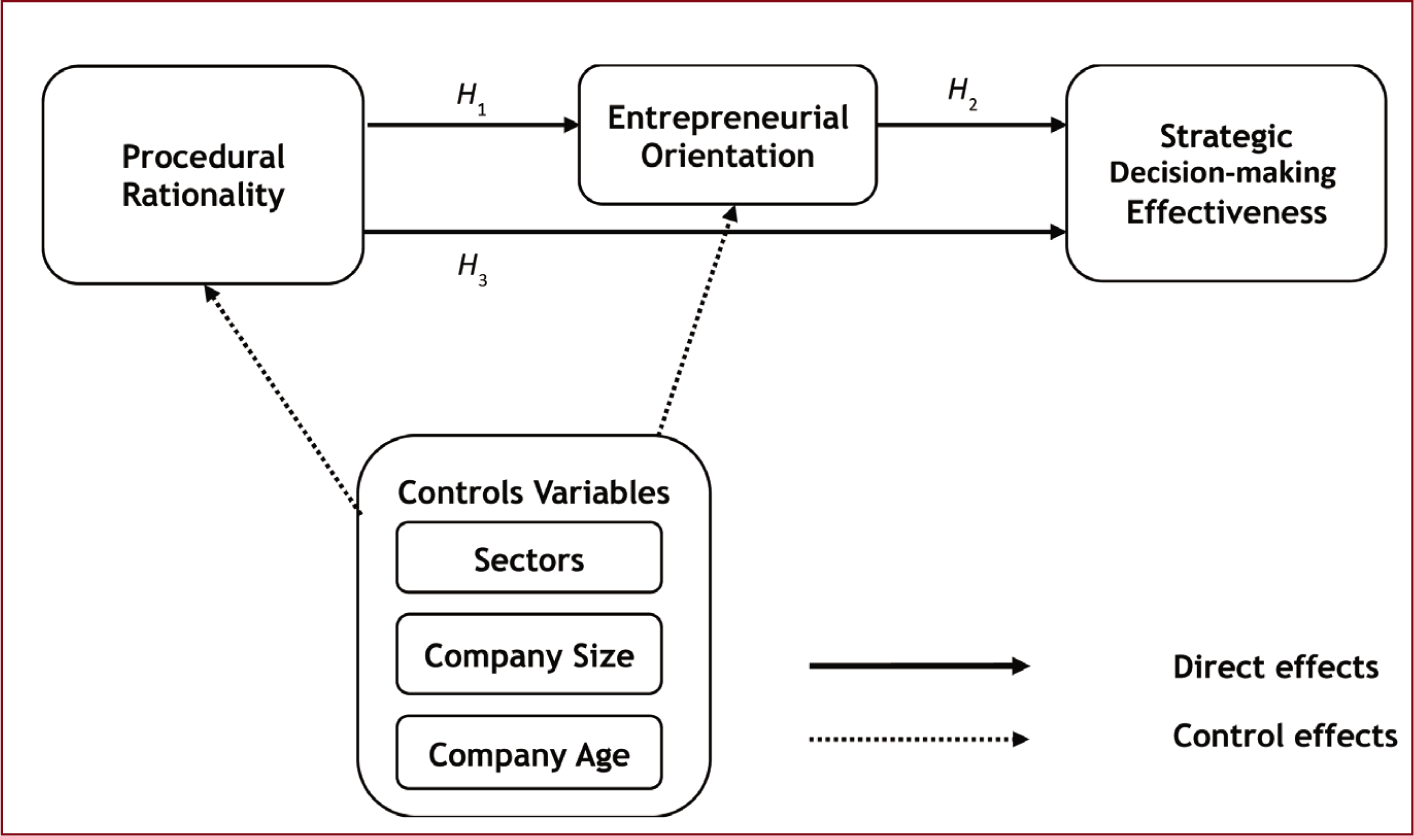
H1: The greater procedural rationality that is adopted, the better the entrepreneurial orientation within such organizations (see Figure 1).
Entrepreneurial Orientation and the Effectiveness of Strategic Decision-making
Entrepreneurial orientation within organizations has recently attracted the attention of researchers (Dada & Fogg, 2016; Wales et al., 2013; Wales, 2016). Miller (1983) views entrepreneurial orientation as a compound construct that has three interrelated dimensions: innovativeness, proactiveness and risk-taking. Innovativeness can be defined as ‘the ability of the firm to introduce new products and services or modify existing ones in order to meet the demands of current or future markets’ (Zahra & Covin, 1995). Proactiveness, however, refers to ‘the tendency of the firm to introduce new products and services ahead of the competition and act in anticipation of future demand’ (Wang & Altinay, 2012). As for risk-taking, it refers to ‘the propensity of the firm to commit resources to projects with unknown outcomes’ (Wiklund & Shepherd, 2005). Consequently, in order to draw a comprehensive picture of this phenomenon and obtain more accurate results when investigating entrepreneurial orientation, empirical studies have to take these three components into account (Anderson et al., 2009; Covin & Wales, 2019).
In view of the above, it is expected that companies displaying high levels of entrepreneurial orientation will enhance the effectiveness of strategic decision-making for three reasons. First, companies that adopt innovative ideas have the potential to make more special and competitive strategic decisions, such as creating new product lines or advancing into new markets (Shu et al., 2019; Walter et al., 2006). Second, proactive and risk-taking companies tend to be in an advantageous position due to their pursuit of promising opportunities that allow them to make competitive strategic decisions (Yang & Yu, 2022). Second, proactive and risk-taking companies tend to be in an advantageous position due to their pursuit of promising opportunities that allow them to make competitive strategic decisions. Such decisions could be offering competitive prices, withdrawing present products and offering new products, or starting new investments. This is enhanced by previous studies that suggest that those who enter the marketplace first can gain a competitive advantage (Kimura, 1989). Third, proactive firms are in an advantageous position to react rapidly, since these companies are able to make both prompt and effective strategic decisions because their strategic logic looks for opportunities (Eisenhardt & Martin, 2000; McGee & Peterson, 2019).
Subsequently, these firms are competitively advantageous via the identification of opportunities and their rapid integration into their internal activities. This means that such firms may gain competitive advantages in dynamic business environments when their dynamic abilities match with their strategies (Di Benedetto & Song, 2003; Harreld et al., 2007). In this context, Gumusluoglu and Acur (2016) point out that competitive advantages are often temporary in dynamic business environments. Thus, competition between firms is often nurtured by creating a series of short-term advantages and proactively involving them in their internal activities, rather than establishing a long-term position relating to a given product or technology. Several studies provide empirical evidence to support these arguments (Balabanis & Katsikea, 2003; Covin & Miller, 2014; Knight, 2001; Sundqvist et al., 2012; Wales et al., 2019). In view of the above, this research suggests that:
H2: The stronger the entrepreneurial orientation is, the more effective the strategic decision-making will be (see Figure 1).
The Conceptual Model with the Research Hypotheses.
Procedural Rationality and the Effectiveness of Strategic Decision-making
Some empirical evidence suggests strong links between procedural rationality in strategic decision-making and strategic decision-making effectiveness, especially when decisions are made to manage crises rather than take advantage of opportunities (Hakeem, 2020; Hall & Van Ryzin, 2019; Pollanen et al., 2017). Dean and Sharfman (1996) highlight a strong relationship between procedural rationality in strategic decision-making and the effectiveness of strategic decisions, especially in unstable environments. Similarly, Elbanna and Child (2007a) reveal stronger links for strategic decisions taken by decision-makers to address crises rather than decisions made to take advantage of opportunities. Previous studies, like Bourgeois and Eisenhardt (1988) have also found a positive relationship between the level of rationality and companies’ performance in environments that are constantly changing; a number of previous studies have displayed similar results, such as (Alarifi et al., 2019; Covin et al., 2020; George & Desmidt, 2018; Glick et al., 1993; Martins & Perez, 2020; Shepherd, 2014). After examining the overall results, it is obvious that procedural rationality in strategic decision-making remains ambiguous, especially in terms of its relationship with strategic decision-making effectiveness. Deeper research is therefore crucial to address the contradictions between prior studies. Taking these points into consideration, this paper suggests that:
H3: The higher the procedural rationality is, the more effective the strategic decision-making will be (see Figure 1).
Methods
Sample and Procedures
The study setting for this paper is a number of companies in Saudi Arabia that belong to Saudi Arabia’s financial sector; namely, banks, finance companies, insurance companies, investments companies, real estate development companies, and Awqaf (endowments) companies. These firms, whose activity is mainly financial, employ more than 100 employees. In terms of collecting the research data, electronic surveys were selected to survey a large and widely-dispersed population. These provide accurate information via the application of one approach on all respondents (Craig & Douglas, 2005; Hair et al., 2008). Surveys have traditionally been used in previous studies (i.e., Elbanna & Child, 2007b; Haniffa & Hudaib, 2007; Jansen et al., 2013; Miller, 1983) as methods of examining procedural rationality, entrepreneurial orientation and strategic decision-making effectiveness. As such, a survey questionnaire was prepared focussing on the aforementioned areas. In total, 1,500 questionnaires were distributed to 375 companies over a period of approximately three months, from mid-December 2019 until mid-March 2020. Out of the distributed questionnaires, 379 were returned from 177 companies. At least two responses from each company were collected so as to guarantee the validity of the research results. However, 15 questionnaires were excluded for various reasons, such as incomplete schedules or irrelevant answers. The remaining questionnaires, 364 from 162 companies, represented a final response rate of 25%, which is quite high and satisfactory.
An initial meeting was held with top management teams, promising to anonymize the research responses and offer a free summary of the results once the survey was completed. Then, the link to the electronic questionnaire was forwarded to the members of the top management team of each firm directly or via the Human Resources Manager. Several measures were taken to avoid participants’ bias. For instance, the research questions were repeated on different pages of the lengthy questionnaire to ensure that the respondents do not link the variables under study (Miller, 2008). In addition, the multiple responses procedures, suggested by Elbanna and Child (2007b), were implemented by asking at least two executives from each company to answer the same questionnaire. Comparisons between the responses of these executives were subsequently drawn. Similarly, this study implemented the Structural Equation Modelling technique to analyse the data.
The study focused on testing causal relationships that were suggested as a research hypothesis to investigate multiple independent and intervening variables. SPSS (Statistical Package for the Social Sciences) (Version 24), and the SmartPLS 3.0 (Partial Least Squares Path Modelling) software packages were used to analyse the collected data.
Even though previous studies have opted for a covariance-based SEM (CBSEM) approach, this study used the PLS path modelling for a number of reasons. First, PLS path modelling is easier in handling formative constructs compared to CBSEM. Although the tools used in CBSEM are capable of handling formative constructs within a study model (i.e., AMOS), only a small number of studies actually adopt such a model, implying there are difficulties in using it (Hair et al., 2016). Second, for research that is exploratory in nature (such as this one), PLS path modelling has been identified as being more appropriate for exploratory research, whereas CBSEM is more applicable and suited to theory testing (Fornell & Bookstein, 1982). Third, there are no restrictive assumptions placed on the data when adopting the PLS path modelling; for instance, PLS path modelling can support reflective and formative constructs, small samples that are less than 100, constructs with single-item, metric and non-metric data types, datasets with multi-collinearity and data sets with missing values (Hair & Alamer, 2022). In light of this, PLS path modelling is recognized as being a ‘soft-modelling’ method.
Research Sample Profile
As previously stated, the sample for this study comprised 177 companies within Saudi Arabia’s financial sector, which includes banks, finance companies, insurance companies, investments companies, real estate development companies and Awqaf (endowments). In relation to the data, the initial data that was returned and collated were from 379 decision-makers as part of the upper-level management of these companies. However, upon further analysis, 15 of the questionnaires returned had to be excluded due to a number of reasons, such as incompletion or non-relevant responses. Thus, the final data sample was 364 participants, representing 164 companies. What follows is a breakdown of the participants’ profile, with regard to their gender, age, level of education, position held and subsequent experience in their position, as well as the type, size, and age of the organization they work for (see Table 1).
Profiles of the Participants and Companies.

The results from Table 1 show that, in terms of gender, male participants made up 57% of the respondents, while 43% were female. This highlights an interesting, yet anticipated, representation of the Kingdom of Saudi Arabia, which, as a result of current reformations, has been identified as one of the five most improved countries in bridging the gender gap within the business sector (Ministry of Labour—Kingdom of Saudi Arabia, 2022). In relation to age, all of the participants fell within 25–63 years old, with 14% in the 25–35 age bracket and 43% in both the 36–45 age group and those above 45. These findings look to be consistent with the country profile, whereby the majority of the population in Saudi Arabia is aged between 20–80 years-old (General Authority for Statistics-Kingdom of Saudi Arabia, 2022). As for education, the results showed that very few were at the diploma or other degrees level (1% for each of these categories), while the majority held a Master’s (50%), followed by an undergraduate degree (42%); only 7% had a Doctoral degree. These findings evidently highlight that those in the upper-level management Saudi financial sector do hold a certain level of academia. In terms of their position/job titles within the top management teams of their respective companies, the findings showed that the majority of the participants were at a managerial position (52%), while 35% identified themselves at the CEO level and only 5% at board level. It is important to note that all the participants were in positions that allowed them to provide comprehensive information on the strategic decision-making actions of the companies they were affiliated with. Furthermore, it should be noted that the approach of sampling different members of upper management, as opposed to only targeting CEOs, is consistent with previous studies on strategic decision-making (Dean & Sharfman, 1993b, 1996; Elbanna & Child, 2007b; Elbanna & Child, 2007a; Goll & Rasheed, 2005), as this improves the generalisability of the research findings.
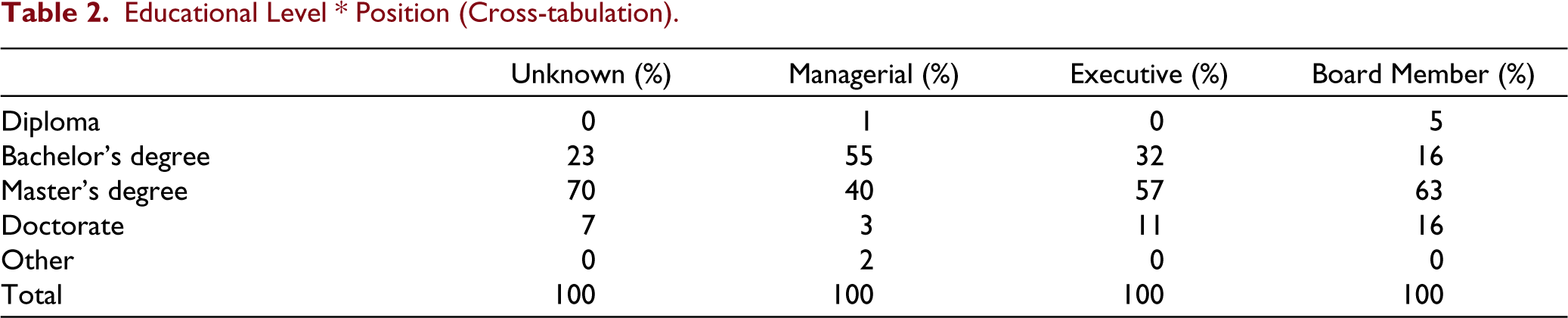
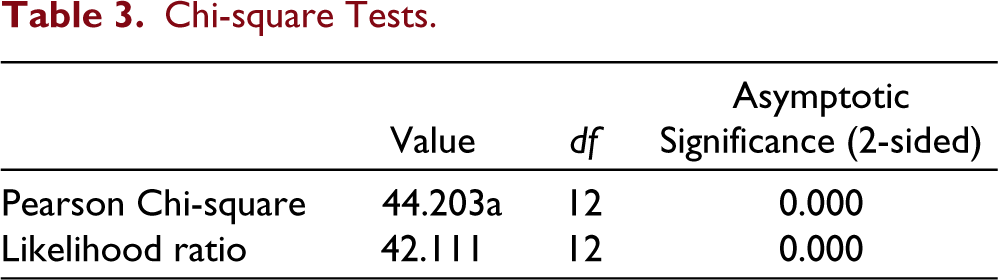
A further insight and cross-reference of the participants’ education level and position were conducted (Table 2). These findings show that at the executive and board level, the majority of these individuals held a masters’ degree, while for those at the managerial level—a position that requires high-level qualifications—over half held a bachelor’s degree (55%). Table 3 provides a Chi-square test on the above data, indicating a significant different between the education background when compared to the job position within upper management (sig < 0.01, df = 12), which denotes that the executives obtain the highest level of education in comparison to the others.
Educational Level * Position (Cross-tabulation).
Chi-square Tests.
The data collection approach adopted in this study was a convenient sampling from a specific sector (i.e., Saudi Arabia’s financial sector), which further enhances the generalisability of the research findings. As shown in Table 1, these sectors consist of banks, insurance companies, Awqaf (endowments) companies, finance companies, real estate development companies and investment companies. The findings were relatively broad across each of these six categories, with the highest respondents coming from both investment companies and real estate development companies (23%), while finance companies and Awqaf (endowments) companies were both at 15%, followed by insurance companies at 14% and lastly, banks at 9%. One of the reasons banks may have had a lower response rate than the other categories is because, as identified by the Saudi Arabia Monetary Authority (2022), there only has 12 main local banks within Saudi Arabia. Company size, as based on the number of employees, was another key component that was collected in the data sample. As highlighted in Table 1, 36% of the companies had between 1,001 and 5,000 employees, whereas 31% had between 501–1000. Hence, the majority of the organizations would constitute medium-sized and above, enhancing the generalisability of the research’s findings. As for those companies that had more than 5000 employees, this was significantly lower in comparison, representing 12% of the data set. Lastly, in relation to the companies’ age, Table 1 illustrates that the majority of the companies in the sample were between 11–20 years-old (31%), with 25% of companies either <10 years-old or over 40 years-old. Only 9% were between 21–30 years-old. This shows that the majority of the organizations in the data sample have had over 10 years of practical experience in their respective area of expertize. This, in turn, enhances the reliability of the responses to the study surveys and thus, enhances the generalizability of these findings.
Measures
To measure the construct, pre-existing tested scales were used to measure the main variables of the study.
Independent Variable: Procedural Rationality in Strategic Decision-making
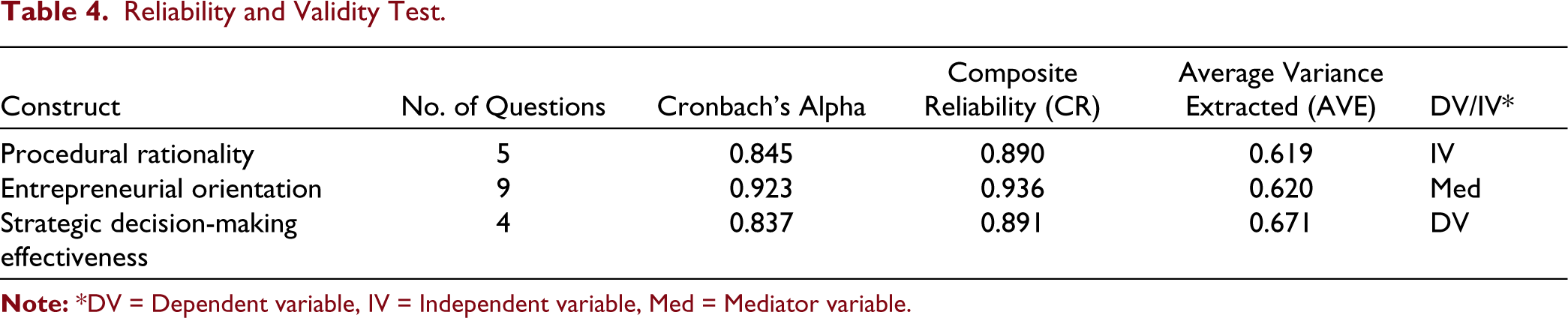
In the present research, procedural rationality in strategic decision-making was examined via a five-item scale taken from Dean and Sharfman (1996) and scaled on a seven-point Likert scale. This measure and its variants have been widely used with similar reliability estimates (Dean & Sharfman, 1996; Elbanna & Child, 2007a; Papadakis, 2006; Thanos et al., 2017). The Cronbach’s alpha value in this study is (0.845), as displayed in Table 4, which is similar to that of previous studies that used a similar scale for measuring procedural rationality (Deligianni et al., 2016; Hakeem, 2020). To sum up, in the current survey, this five-item measure shows acceptable levels of reliability (α = 0.845; CR = 0.890) and validity (AVE = 0.619), as demonstrated in Table 4. Table 5 provides the items, source, measurement and descriptive statistics for the procedural rationality in strategic decision-making construct.
Reliability and Validity Test.
Items, Source, Measurement and Descriptive Statistics of Procedural Rationality in Strategic Decision-making.

Dependent Variable: Strategic Decision-making Effectiveness
In this research, strategic decision-making effectiveness was calculated using a four-item scale taken from Jansen et al. (2013) and scaled using the same seven-point Likert scale. The Strategic Decision-making Effectiveness variable was measured as the total of these four items. This four-item measure shows acceptable levels of reliability (α = 0.837; CR = 0.891) and validity (AVE = 0.671). Table 6 provides the items, source, measurement and descriptive statistics for the strategic decision-making effectiveness construct.
Items, Source, Measurement and Descriptive Statistics of Strategic Decision-making Effectiveness.

Mediator Variable: Entrepreneurial Orientation
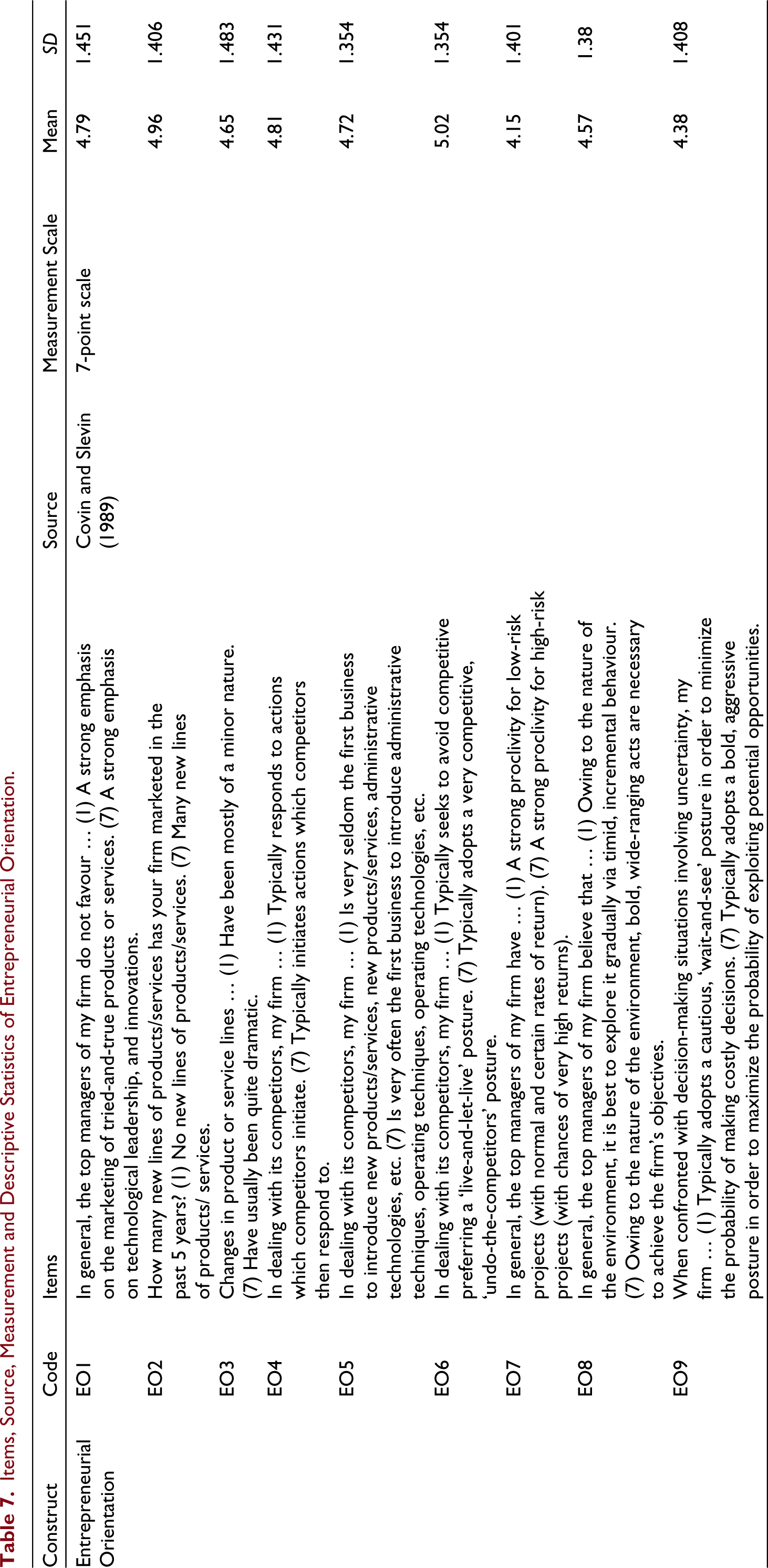
In this research, entrepreneurial orientation was measured via a nine-item scale taken from Covin and Slevin (1989). Entrepreneurial orientation has three dimensions (innovativeness, risk-taking and proactiveness). This scale has been validated well and is widely used in entrepreneurial orientation research (Edmond & Wiklund, 2010; Rauch et al., 2009; Thanos et al., 2017; Vu, 2017). The Cronbach’s alpha value in this study is (0.837), which is homogenous with previous studies that used a similar scale to measure entrepreneurial orientation (Thanos et al., 2017). In short, the three-item measure in this study showed sufficient levels of reliability (α = 0.837; CR = 0.891) and validity (AVE = 0.671). Table 7 provides the items, source, measurement and descriptive statistics for the entrepreneurial orientation construct.
Items, Source, Measurement and Descriptive Statistics of Entrepreneurial Orientation.
Control Variables
Based on prior studies, this research examines the effects of three variables on entrepreneurial orientation, procedural rationality in strategic decision-making and strategic decision-making effectiveness—namely, type of sector, company age, and company size. More details on these three variables are as follows:
Type of Sector
This research investigates the type of sector, which are: banks, finance firms, insurance companies, investment firms, real estate development firms, and Awqafs (endowments) companies.
Company Age
This article examines the impact of company age because this affects organizational processes and outcomes (Zahra & Garvis, 2000). Company age was measured by the number of years in operation (Liu et al., 2011).
Company Size
This research studies the influence of company size based on the number of full-time staff (García-Villaverde et al., 2013; Thanos et al., 2017; Wales et al., 2015). Company size affects its growth and its outcomes (Dimitratos et al., 2004).
Once the Average Variances Extracted (AVE) has been calculated in Table 4, the discriminant validity is to be analysed using the following measures: (a) the Fornell-Larcker criterion, (b) Cross-Loadings and (c) the criterion of Heterotrait–Monotrait Ratio. With regard to the Fornell-Larcker Criterion, Fornell and Larcker (1981) hypothesized that there should be a correlation between each latent variable and its indicator. Thus, to ensure discriminant validity, the AVE of each construct ought to be higher than the latent variable’s highest squared correlation with any other latent variable. For this study, the AVE values of all latent variables were: Entrepreneurial Orientation is 0.788, Procedural Rationality is 0.787, and Strategic Decision-making Effectiveness is 0.819. These values all show that the self AVE for each latent variable is greater than the other variables, as illustrated in Table 8.
Construct Correlation: The Fornell–Larcker Criterion.

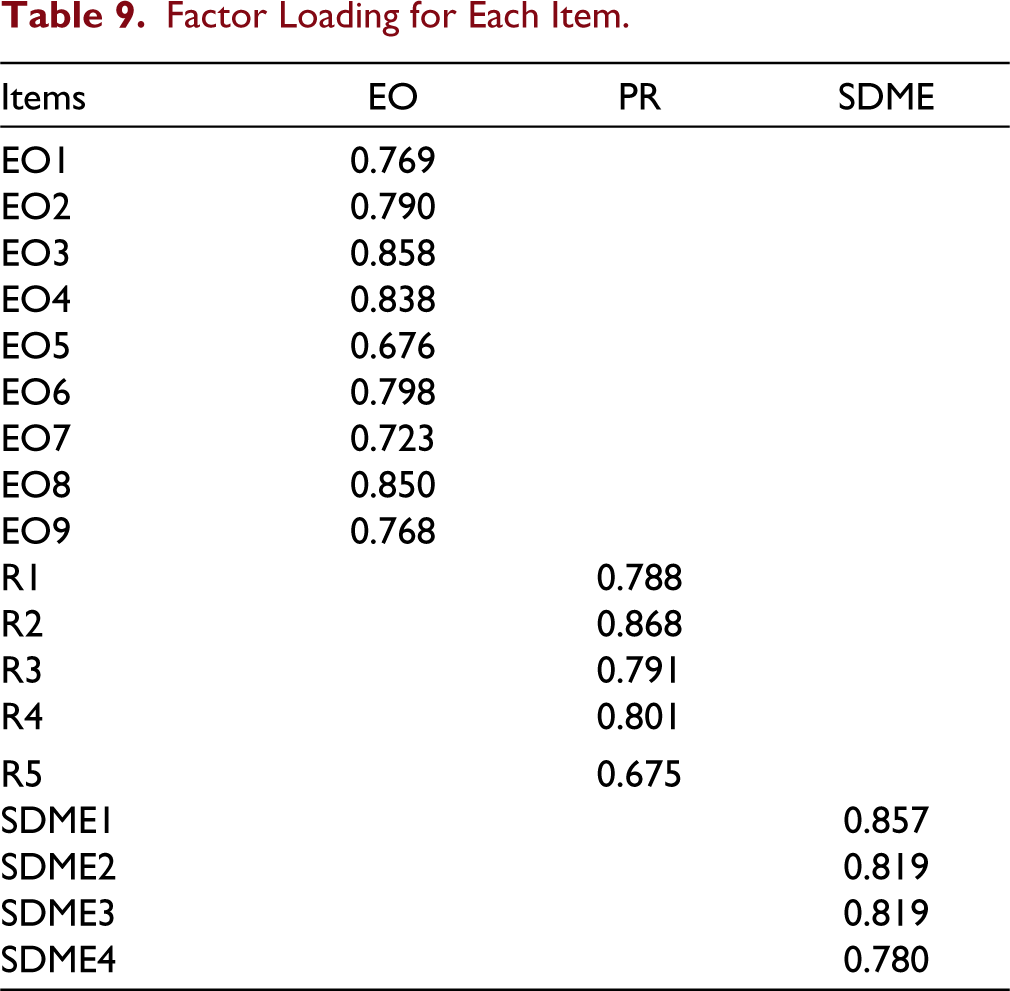
With regard to the cross-loading test, the loading of each item was shown to be greater than all of its cross-loadings (see Table 9). In addition, the loading for items over 60% were acceptable results and attained the required cut-off point of factor loading. Thus, the items emerged with their original variables, with no overlapping between items.
Factor Loading for Each Item.
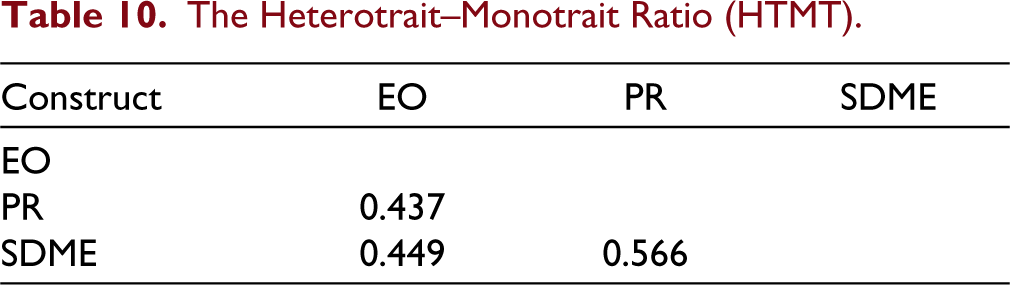
In relation to the criterion of the Heterotrait–Monotrait Ratio (HTMT), Henseler et al. (2016) concluded that, when using this technique to measure discriminant validity, if the value of the HTMT is lower than 0.90, discriminant validity is established between two reflective constructs. For this study, all the HTMT values for the constructs were lower than 0.90, which denotes that the formative constructs were valid (see Table 10).
The Heterotrait–Monotrait Ratio (HTMT).
With regard to the criterion of Inner VIF Values for this study, all the values were higher than 10, which denotes the presence of harmful collinearity (see Table 11). In contrast, any VIF values significantly higher than 1 denote multicollinearity. To surmise, the analysis of the reliability and validity tests indicate that the validity and reliability of the reflective measurement of latent variables were confirmed for all indicators.
The Inner VIF Values.

Results
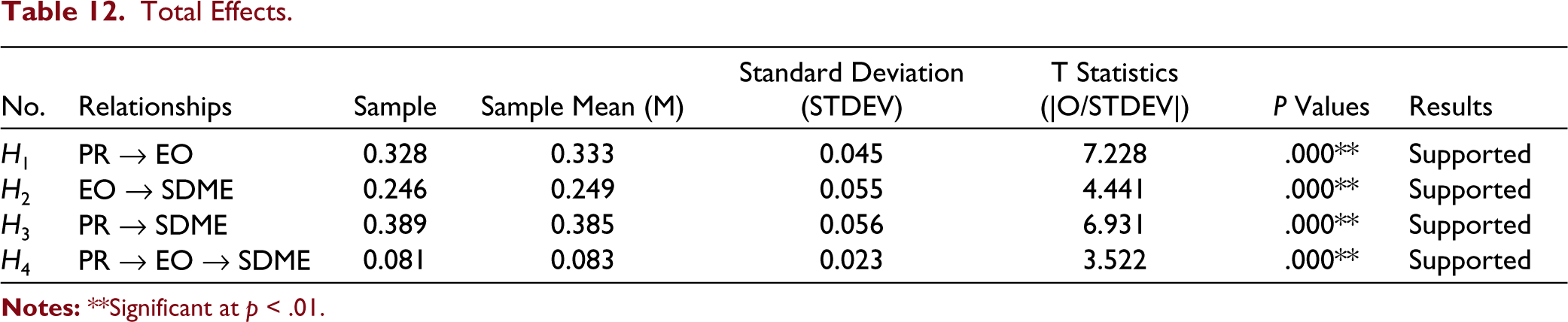
Based on Table 12, the main results of this study show that there is a strong relationship between procedural rationality in strategic decision-making and entrepreneurial orientation in organizations. One may therefore assert that the higher the level of procedural rationality there is in strategic decision-making, the better the entrepreneurial orientation will be within organizations. Similarly, strong links are also noticed between entrepreneurial orientation in organizations and strategic decision-making effectiveness. More specifically, the higher the level of entrepreneurial orientation there is within organizations, the better the strategic decision-making effectiveness will be. Moreover, the research results highlight a strong link between procedural rationality in strategic decision-making and strategic decision-making effectiveness. The mediatorrole of entrepreneurial orientation in companies between procedural rationality in strategic decision-making and strategic decision-making effectiveness was as hypothesized.
Mediator Analysis
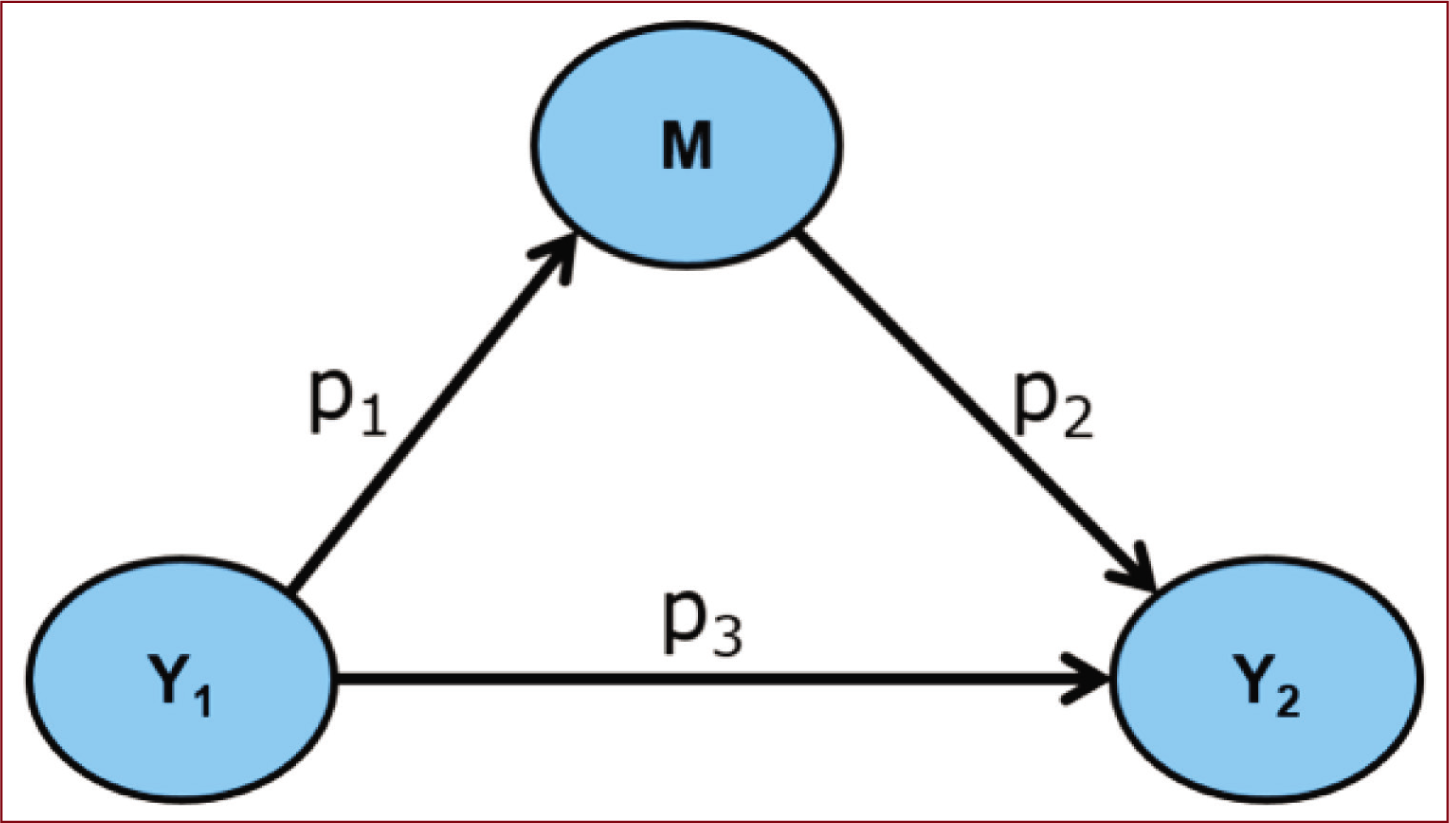
Figures 2 and 3 shows a model that was provided by Hair et al. (2022) explaining the systematic mediator analysis process found in PLS-SEM. Consequently, this study decided upon the indirect effect of mediation and looks at what type of mediation occurs.
Example of a Simple Mediator Model.
Explanation of the Systematic Mediator Analysis Process in PLS-SEM.
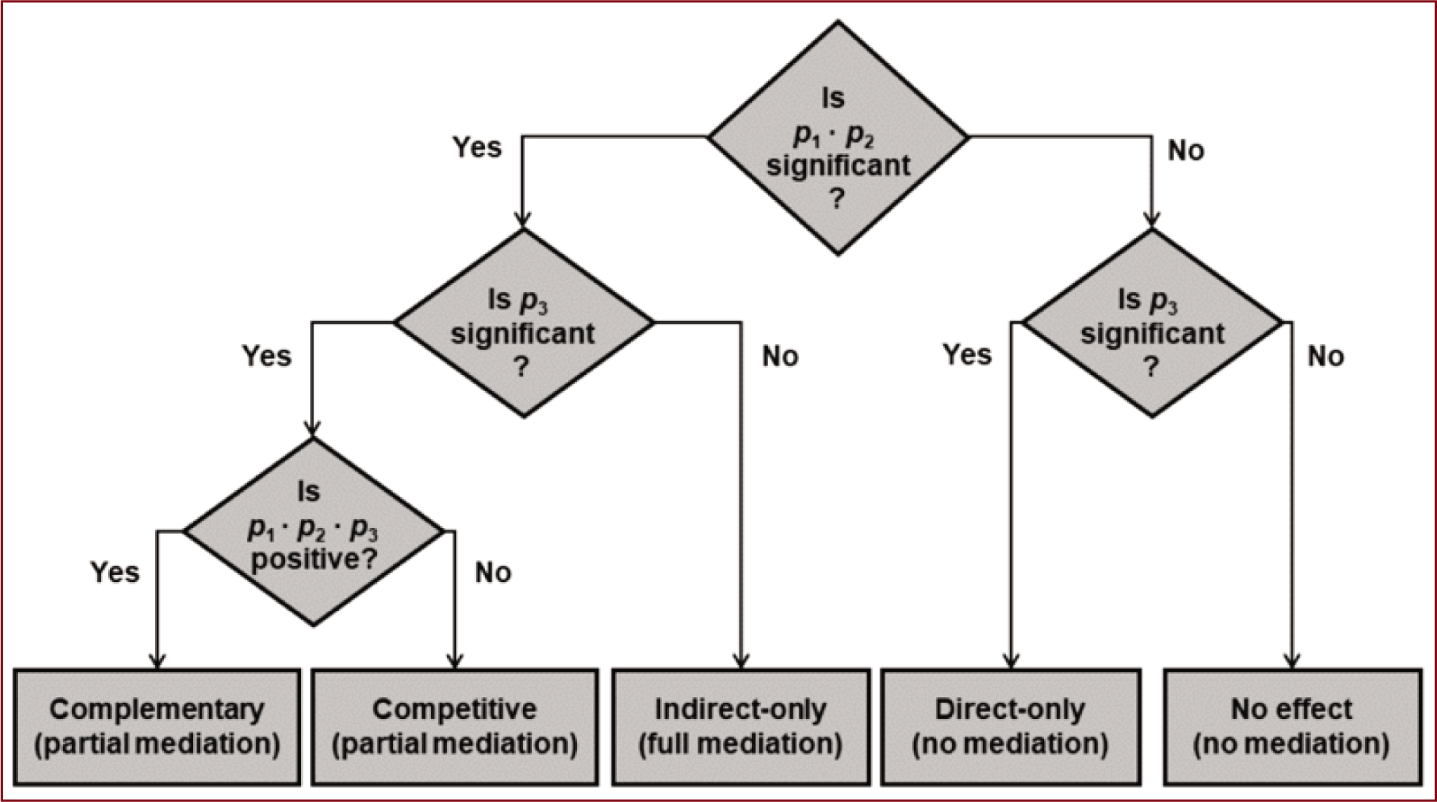
Looking at the results from Table 12 and based on the p values of the effects, the following can be articulated: PR → EO (P1) and EO → SDME (P2) are statistically significant at 0.000% level of significance. Therefore, the requirements of the 1st step of mediator analysis for P1. P2 were met. PR → SDME (P3) was also statistically significant at a 0.000% level of significance. Therefore, the requirements of the 2nd step of mediator analysis for P3 were met. PR → EO → SDME also are statistically significant at the 0.000% level of significance. Therefore, the requirements of the 3rd step of mediator analysis for P1. P2 were met.
Total Effects.
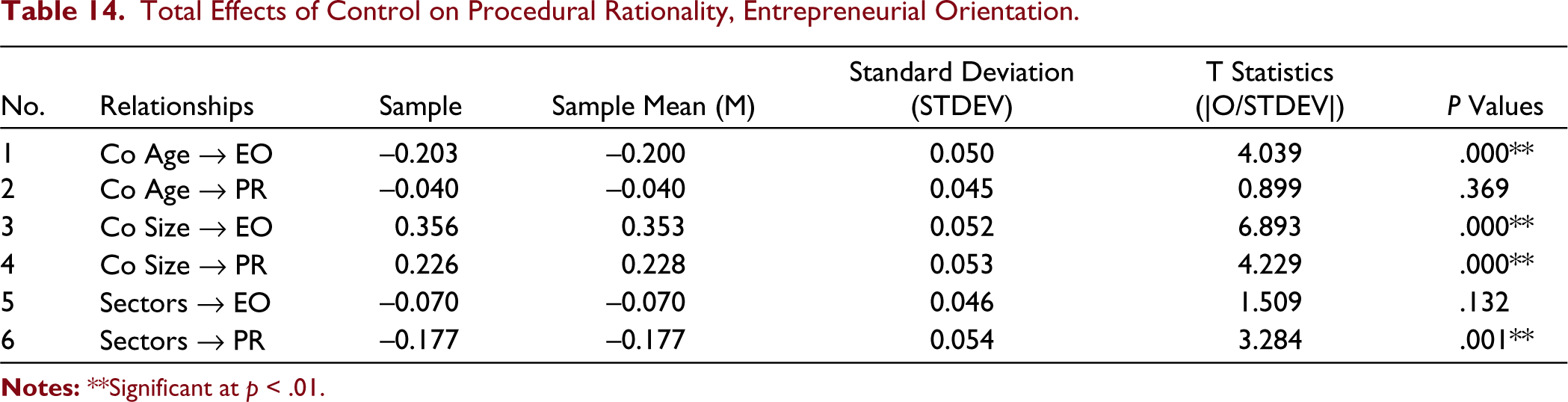
As highlighted earlier, this paper is based upon previous studies (De Clercq et al., 2015; Dimitratos et al., 2004; Liu et al., 2011; Thanos et al., 2017) by investigating the effects of the aforementioned variables (type of sector, company age and company size) on entrepreneurial orientation, procedural rationality in strategic decision-making and strategic decision-making effectiveness. In terms of company age, the findings in Tables 13 and 14 revealed that the effect of a company’s age on entrepreneurial orientation attained a p value of .000. Since the p values attained were statistically significant at a .1% level of significance, this denotes a positive impact between company age and entrepreneurial orientation. That said, in terms of the effect of the company’s age on procedural rationality in strategic decision-making, the findings revealed the p values for this were higher than .05% (at 0.369), which denotes no statistical significance and therefore, a negative impact of company age on procedural rationality in strategic decision-making. In terms of company size and its effect on entrepreneurial orientation and procedural rationality in strategic decision-making, the findings showed that the p values for both were .000, which is <0.01% level of significance and therefore confirming that company size has a positive effect on entrepreneurial orientation and procedural rationality in strategic decision-making. Lastly, for the type of sectors, the findings showed that, for entrepreneurial orientation, the p values were greater than .05% significance (at 0.132), which means there was no statistical significance and thus, the type of sectors had a negative effect on entrepreneurial orientation. However, for procedural rationality in strategic decision-making, the p value was .001, which denotes a statistical significance and therefore a positive impact of the type of sector on procedural rationality in strategic decision-making.
Confidence Intervals Bias Corrected.

Total Effects of Control on Procedural Rationality, Entrepreneurial Orientation.
Model Fit
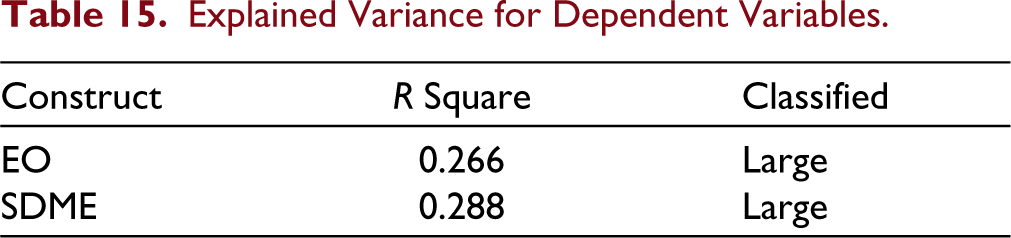
As this study adopted the PLS path modelling, variance explained (R2) is used to assess the study model fit. A number of fairly-recent studies have added supplementary assessment measures of model fit, such as the goodness of fit (GoF) (Henseler & Sarstedt, 2013; Vinzi et al., 2010; Wetzels et al., 2009) and predictive relevance (Stone-Geisser’s Q2) (Hair Jr et al., 2022). Once the validity and reliability of this study’s measurement model were explained, the conceptual model was then assessed and tested via the path coefficients and the explained variance (R2) of the dependent variables. R2 specifies the in-sample explanatory power of the model and the values for R2 range from 0 to 1, in which higher values signify higher levels of explanatory power (Hair et al., 2022; Shmueli & Koppius, 2011; Shmueli, 2010). In terms of the effect size of R2, Cohen (1988) explains that it has a large effect if the value is 0.26, medium if it is 0.13 and small at 0.02. As shown in Table 15, both entrepreneurial orientation and strategic decision-making effectiveness achieved a large effect.
Explained Variance for Dependent Variables.
Stone-Geisser’s Q2.
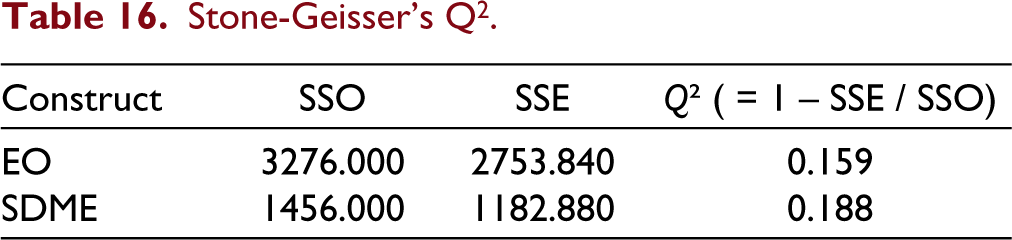
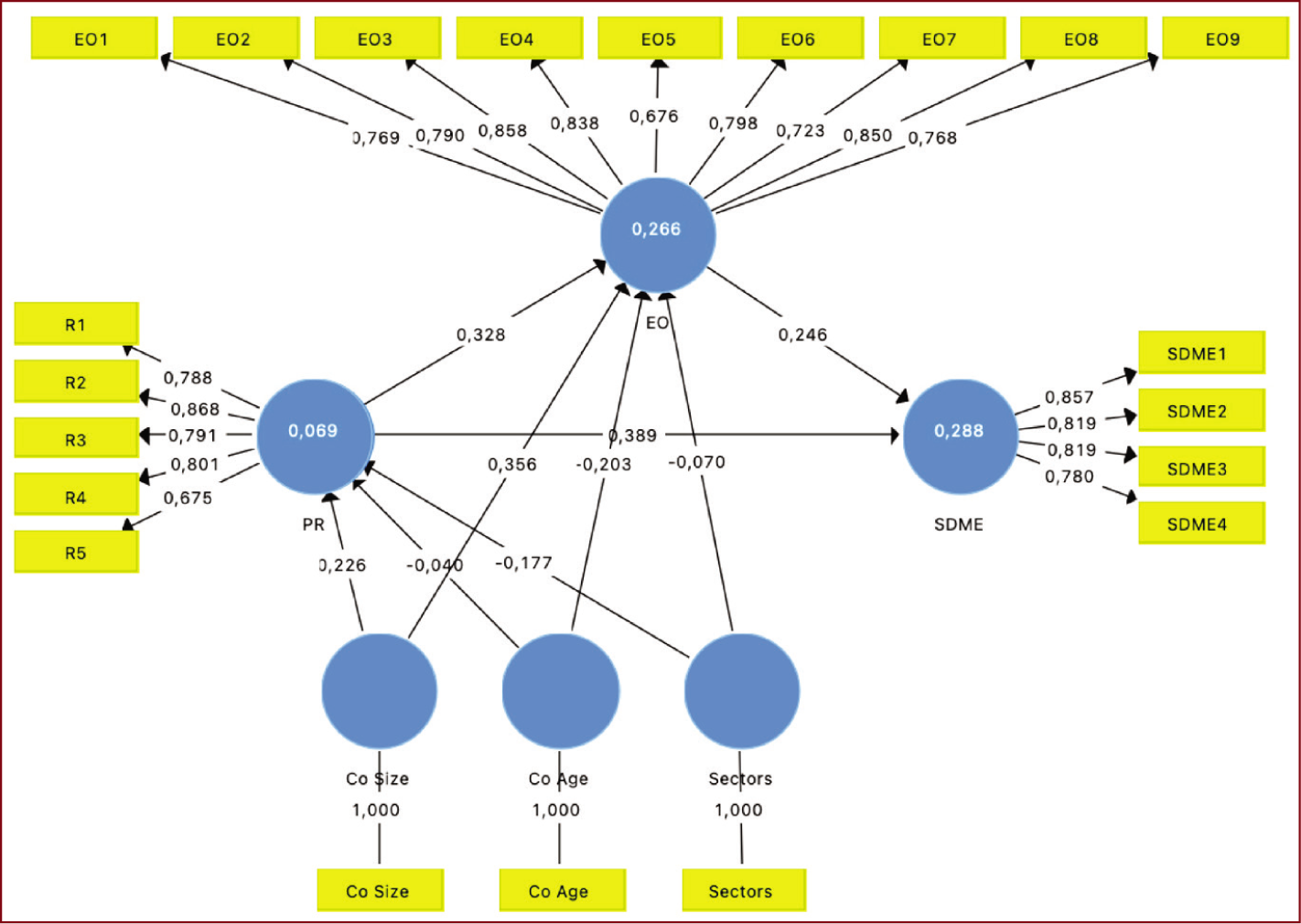
As illustrated in Figure 4, the structural model for this study significantly explains that, for the SDME construct, there is a 28% variation, whereas, for the EO construct, it explains a 26.6% variation. Furthermore, in relation to the predictive relevance (Stone-Geisser’s Q2), Chin (1998) explains that a Q2 value that is higher than 0 denotes predictive relevance. The results of these are found in f 16, which shows that entrepreneurial orientation achieved a Q2 value of 0.159 while strategic decision-making effectiveness achieved a value of 0.188; this means the study model shows a high predictive relevance and an acceptable fit.
The Structural Model with Estimated Parameters.
In terms of the goodness of fit (GoF), Vinzi et al. (2010), defines this as the global fit measure, which is the geometric means of the R2 of the endogenous (dependent variable) and AVE. The purpose of this measure is to account for the study model at the levels of structural model and measurement, focusing on the overall performance of the model (Henseler & Sarstedt, 2013; Vinzi et al., 2010; Wetzels et al., 2009).
To calculate the GoF, the formula is

The GoF of the measurement model was checked and evaluated accordingly, as shown below:

The findings showed that the model fit was acceptable. That is, in order to be considered a global valid PLS model, the criteria of the GoF values that are given by Wetzels et al. (2009) are: no fit (<0.1), small fit (0.1–0.25), medium fit (0.25–0.36) or large fit (>0.36). Thus, the value for this model was 0.423, which means it is considered a large fit in the global PLS model validity. Furthermore, to check and evaluate the goodness of fit for the measurement model, the standardized root mean square residual (SRMR) value was used. This measure means that the squared discrepancy between the model-implied indicator and observed correlations should be close to 0 or <0.08 (Henseler et al., 2014). For this study, the findings revealed that the SRMR was 0.065, meaning this study provided support for a model fit.
Discussion and Implications
The objective of this article was to explore the relationship between procedural rationality in strategic decision-making, entrepreneurial orientation and strategic decision-making effectiveness, taking into account mediating relationships. The study suggests that organizations that opt for procedural rationality in strategic decision-making will increase strategic decision-making effectiveness. It also proposes that, by adopting rational thoughts, organizations will increase the positive effect of entrepreneurial orientation (innovativeness, risk-taking and proactiveness).
The setting of the surveys that were conducted for this study were all from companies that fell under the umbrella of Saudi Arabia’s financial sector, since this sector is considered a milestone for trade in any economy (Hakeem, 2020). Focusing exclusively on Saudi Arabian companies complies with recent calls in the literature for the importance of considering different cultures while implementing a study model (Thanos et al., 2017). In turn, there are a number of important theoretical implications that can be drawn from these findings.
First, based on the theory of organizational information processing, this study hypothesises that the higher the procedural rationality is, the more effective the strategic decision-making will be. The findings support the study hypothesis (H3), indicating a positive relationship between procedural rationality in strategic decision-making and decision-making effectiveness. In other words, rational thinking encourages decision-makers to make effective strategic decisions by collecting and analysing information, developing alternatives, objectively selecting alternatives, and using external sources for information processing (Das & Bing-Sheng, 1999; Eisenhardt & Zbaracki, 1992; Nutt, 1984). Decision-makers should consider all possible alternatives and choose the solution with the greatest value and benefit. This requires spending more time looking for better alternatives (Stroh et al., 2002). These findings are consistent with previous studies. For example, Rodrigues and Hickson (1995) found that successful decisions are more likely to result from using adequate information and implementation methods; and many recent studies that approve this relationship, (Alarifi et al., 2019; Covin et al., 2020; Martins & Perez, 2020).
Additionally, based on the theory of organizational information processing, this study hypothesises that the greater procedural rationality that is adopted, the better the entrepreneurial orientation within such organizations. The findings support the hypothesis (H1), which indicates a positive relationship between procedural rationality in strategic decision-making and entrepreneurial orientation. In other words, rational thinking helps organizations adopt entrepreneurial orientation (innovativeness, risk-taking, and proactiveness). This finding is in consistent with previous studies that found analytical strategic decision-making can improve entrepreneurial action within companies (Meekaewkunchorn et al., 2021; Putniņš & Sauka, 2020; Wales et al., 2020). Moreover, this research shows that in competitive environments, procedural rationality in strategic decision-making enhances entrepreneurial action and encourages decision-makers to seize opportunities. Decision-makers of entrepreneurial firms must involve analytical processes in strategic decision-making when evaluating critical opportunities in competitive environments. Thus, the study confirms that taking time to collect and analyse information when making strategic decisions is a valuable activity.
Furthermore, using the resource-based theory (Barney, 1991), this study treats entrepreneurial orientation as an intangible resource that enhances an organization’s competitive advantages. This study hypothesises that the stronger the entrepreneurial orientation, the more effective the strategic decision-making. The findings indicate a positive relationship between entrepreneurial orientation and strategic decision-making effectiveness within organizations. This implies that higher levels of entrepreneurial orientation led to better and more effective strategic decision-making by decision-makers. Overall, this study provides evidence for a positive association between entrepreneurial orientation as an intangible resource and strategic decision-making effectiveness within organizations, which approved relevant consistency with the hypothesis (H2).
The study findings have number of important implications for the theory. The positive relationship between entrepreneurial orientation as an intangible resource and the outcome of strategic decision-making suggests that companies with strong entrepreneurial orientation (i.e., those that are involving innovativeness, proactiveness and risk-taking) are more likely to use available resources to make better decisions and achieve a sustainable competitive advantage and superior performance (Uncapher, 2013). Therefore, pursuing new opportunities, adopting innovative ideas, and taking calculated risks can help organizations gain a competitive advantage through excellent and effective decision-making. This finding is consistent with previous studies that emphasized the importance of entrepreneurial orientation as a catalyst for strategic initiatives and improved company performance (Covin & Wales, 2019; Lumpkin & Dess, 1996; Wiklund & Shepherd, 2005). Martin and Javalgi (2016) and McGee and Peterson (2019) also found that increasing entrepreneurial orientation levels in organizations enhance performance. However, their study showed that higher performance only occurs when decision-makers of international new ventures make effective strategic decisions regarding resource allocation. Increasing entrepreneurial orientation levels requires significant resource investment (Wales et al., 2019), and strategic decision-makers must ensure that their investments will yield suitable rewards.
Although some prior studies’ results support the findings of this survey, the existing literature does not clearly and explicitly examine the link between entrepreneurial orientation and strategic decision-making effectiveness in companies, especially Arab firms in Arab countries like Saudi Arabia. This piece of research, therefore, argues that this is a significant contribution to the body of research because it is one of the first studies to shed light on the link between entrepreneurial orientation as an intangible resource for firms and the effectiveness of strategic decision-making. Moreover, it has unveiled the impact that entrepreneurial orientation can have on strategic decision-making effectiveness.
In addition, this study expands the geographical scope of research on entrepreneurship. The positive relationship between entrepreneurial orientation and strategic decision-making effectiveness in Arab firms is important because these firms are resource-constrained and need to use their capabilities domestically to survive in contemporary markets. Compared to some European and Latin American countries (Kshetri, 2014), Arab firms, especially in Saudi Arabia, have a large number of young entrepreneurs who are shaping the country’s economic landscape. With their strong initiative, skills, drive, and innovative spirit, they have brought significant changes to economic growth by developing an entrepreneurial orientation in their companies and making effective strategic decisions (Hassan et al., 2013; Yusuf & Albanawi, 2016).
In light of this, corporate leaders in Saudi Arabia would benefit from this research, allowing them to see the positive impact procedural rationality has on strategic decision-making. Moreover, there is a sense of urgency for companies today, as they need to quickly and accurately analyse data to acquire relevant and important information to make effective decisions. This is more relevant with the advent of artificial intelligence, which collectively uses machine and human intelligence to analyse data and provides accurate, rapid, rational and comprehensive decisions based on the data provided (i.e., ChatGPT). Such modern artificial intelligence techniques could help strategic decision-makers to use these tools for their own advantage in finding more opportunities, as well as motivating them to enter new markets before others. This can be achieved through advice on new and distinctive services/products that are popular in new or current trends. In terms of this impact on the study’s setting, this has great potential to help companies in Saudi Arabia as areas of artificial intelligence and entrepreneurship are of significant interest as part of Saudi Arabia’s 2030 Vision.
Conclusion
This study aimed to examine the impact of procedural rationality in strategic decision-making on its effectiveness, considering the mediating role of entrepreneurial orientation as an intangible resource for organizations, based on the theories of organizational information processing and resource-based view. Thus, this study sought to investigate whether procedural rationality in strategic decision-making increases the level of entrepreneurial orientation in companies. This study also investigated whether the high levels of entrepreneurial orientation would have a positive effect on strategic decision-making effectiveness. The investigation adopted a quantitative method approach to address the research questions. Questionnaires were designed for members of the top management teams within Arab financial companies in Saudi Arabia, who were closely involved in making strategic decisions for their organization. In turn, a structural equation modelling technique was used to analyse the data collected from the survey. Due to this, the study relied upon testing causal relationships that were hypothesized in the research framework consisting of multiple independent and intervening variables. The first major finding of this study showed that procedural rationality in strategic decision-making increased the level of entrepreneurial orientation within organizations. The second major finding of this study is that a high level of entrepreneurial orientation, influenced by procedural rationality, positively affected strategic decision-making effectiveness. The third major finding of this study is that procedural rationality in strategic decision-making is positively related to strategic decision-making effectiveness; this also applies to entrepreneurial orientation as a mediating factor.
Limitations and Future Scope
Although the present study’s results were relatively positive, the data may have been affected by a number of limitations. The first limitation of this study is that the sample used was selected only from the Saudi Arabian financial sector. The second limitation of this study was that the sample was only taken in Saudi Arabia; hence, the findings cannot be generalized to the whole region of the Middle East or all Arab countries. The third limitation is that a number of participants avoided disclosing their positions or the names of their companies, which led to excluding their responses from the study sample. This could have had serious effects on the study, but out of 379 questionnaires, only 15 questionnaires were excluded; fortunately, this did not significantly affect the overall results.
Footnotes
Declaration of Conflicting Interests
The author declared no potential conflicts of interest with respect to the research, authorship and/or publication of this article.
Funding
The author received no financial support for the research, authorship and/or publication of this article.