



Abstract
Artificial intelligence (AI) has lured consumers to orchestrate their routine activities relying on such technologies. Though AI-powered virtual assistants (AIVAs) have gained traction among service providers, these are still lagging on the demand front. This study intends to develop an ‘AIVA adoption model’ delineated under a holistic framework based on structural equation modelling and deep neural network incorporating multilayer perceptron algorithm. The sensitivity analysis designated ‘effort expectancy’ as the most dominant antecedent of AIVA adoption, followed by ‘perceived innovativeness’. While ‘perceived risk’ held high relevance, the tech users were equally concerned about the performance of AIVA in conjunction with its anthropomorphic response; however, they gave the least consideration to subjective norms. The parallel mediation analysis revealed that the adopters preferred transactional relationships with AIVA more than the communal one, while the simultaneous application of both the perspectives better generates loyal customers. The moderation analysis unveiled that the uncanny valley paradigm could not always be supportive, especially in the context of AIVA. The developed model may serve the basis to generate as well as sustain adoption and loyalty of the specified technology.
Keywords
Introduction
The advancements in the technological environment have changed the very nature of technology. Lowe et al. (2019, p. 5) acknowledged that ‘the fabric of technology and its role in society has changed from being a passive problem-solving vehicle to an active partner in everyday life’. In recent years, artificial intelligence (AI)-based technologies have transformed the way individuals integrate, analyse and use the resulting insights of information for their intended task performance. Initially, AI was applied by manipulating a finite set of symbols and the approach was called symbolic AI, which had limited scope. The resurgence of machine learning algorithms enriched the probabilistic feature of AI and enhanced its relevance and ubiquity to an unimaginable level. Most of the innovations today are driven by AI; one such technology is AI-powered virtual assistants (AIVAs). These are application programs or software agents that use AI to perform the user’s task based on a combination of inputs and location awareness. In the modern era, the stated technology mainly came to light across the globe with the launch of Siri (Apple’s AIVA) in 2010, followed by Google’s Google Now in 2012. Virtual assistants mainly drove the interest of innovators with the launch of Amazon’s Alexa on home automation devices. In the same year, Microsoft launched Cortana. However, consumers basically began to understand about AIVA functionalities in 2016, when Google Assistant was made available on Android-based smartphones. With the passage of time, AIVAs of other companies also joined Android-based mobile platforms. Forecasts suggest that AI could contribute to $15.7 trillion to the global economy by year 2023 (PwC’s Report 2023). The report said that the developing countries have yet not realized the true potential of AI; thus, they are likely to benefit more from it, particularly in terms of GDP; however, mere availability of the product does not guarantee its adoption among consumers.
Studies suggest that resistance to change is still a major barrier to adoption of AI technologies (Chi et al., 2020; Fernandes & Oliveira, 2021), specifically privacy and security concerns (Bhonsle et al., 2022; Bolton et al., 2021). Tech users are mainly preferring human-contact to self-service, especially for sensitive tasks (Yu et al., 2023), and there exist only 35% to 47% of AI adopters across different sectors (PwC’s Report, 2023). The major reason attributed to this has been the time-specific evolution of psychological and behavioural antecedents of AI adoption and their resultant combination (Frank et al., 2023; Mariani et al., 2023). Studies revealed that the sustenance of adoption has even emerged as a more complex problem, particularly due to insufficient attention on consequential evaluation of AI adoption and the associated interventions (Huh et al., 2023; Lee & Li, 2023). In this regard, a hybrid model accompanying a combination of theories could be more effective due to its high explanatory power (Zhang et al., 2023a). Moreover, the application of deep learning techniques could bring more clarity in understanding the complex nature of behavioural constructs (Hu et al., 2023; Prasad & Ghosal, 2022). Shetty R (President Consulting-Deloitte India) commented that, ‘while India is doing fairly well in terms of AI adoption among enterprises; it is still behind developed countries; more so, in terms of consumer adoption of the stated technology’ (Malhan, 2021). Considering the stated facts and figures, a strong need was felt to develop an integrated AIVA adoption structural model incorporating deep neural networks parameters exhibiting antecedents and consequences of AIVA adoption, while taking into consideration the complex relational interventions in human–AI interactions.
Artificial Intelligence
The term ‘artificial intelligence’ was officially coined by John McCarthy in 1956 in a conference in Dartmouth College, where he defined AI as ‘the science and engineering of making intelligent machines, especially intelligent computer programs’ (Qadiri et al., 2020, p. 45). Collins et al. (2021, p. 7) referred AI as ‘A subset of IT that can sense their environment, comprehend the collected information, learn and derive actions based on interpreted information and their implemented objectives’. Huang and Rust (2018, p. 155) mentioned that, ‘Artificial intelligence (AI) manifested by machines, exhibit aspects of human intelligence’.
AI-powered Virtual Assistants
According to Soofastaei (2021, p. 1), ‘A virtual assistant is an intelligent application that can perform tasks or provide services for a person responding to orders or inquiries’. In the literature, AIVAs have been referred by different names, such as ‘intelligent personal assistant’, ‘voice assistant’, ‘artificial intelligence virtual assistant’, ‘digital voice assistant’ and ‘voice activated personal assistant’ (Bawack & Desveaud, 2022). Yadav et al. (2021, p. 39) defined AIVA as ‘A software agent which can perform an individual’s tasks or services as per the instructions command given by a user.’
Consumer Adoption
The concept of consumer adoption is far different from mere purchase of a product. Rogers (1962, p. 17) defined adoption as ‘the decision towards continuous full-scale use of an innovation’. Pandey and Rai (2020) noted that ‘adoption’ exhibits psychological as well behavioural attributes. They defined adoption as ‘the acceptance, usage and embracement of a technology by its user’ (p. 41). Bawack and Desveaud (2022) pointed out that different studies interchangeably used the terms ‘behavioural intention to use’, ‘usage’ or ‘acceptance’ to indicate ‘adoption’.
Review of Literature
In terms of the increasing adoption of new technologies, India is well positioned from the funding standpoint, which gives it a leverage to quickly harness the merits of AI technologies; however, the country has been a leading adopter of AI from the commercial standpoint (McKinsey Report, 2021) rather than self-consumption purpose, creating complexities for marketers to deal with consumer adoption of such technologies.
AIVA Adoption: Applicable Adoption Theories
AI-based technologies are shaping the future of humanity. As AIVA is one of the many crucial emerging technologies, studies pertaining to its adoption are consistently evolving (Mukherjee & Chittipaka, 2022), so does the application of underlying theories. In the context of AIVA, Davis’s (1989) Technology Acceptance Model (TAM) had served as a base model for most of the studies (Chung et al., 2022; Song, 2019; Yılmaz & Rızvanoğlu, 2021; Zhang et al., 2021) due to its constructs ‘perceived usefulness’ and ‘perceived ease of use’ specifying the very expectation of AIVA adopters. While the TAM 2 model had also been preferred by researchers in AI adoption domain (Coskun-Setirek & Mardikyan 2017), Venkatesh et al. (2003) ‘Unified Theory of Acceptance and Use of Technology’ (UTAUT) (later UTAUT2) gained equal traction within the specified context (Kessler & Martin, 2017; Phaosathianphan & Leelasantitham, 2019; Van et al., 2022). UTAUT theory basically comprises four determinants: ‘performance expectancy’, ‘effort expectancy’, ‘social influence’ and ‘facilitating conditions’. Farooq et al. (2017) ‘UTAUT 3’ framework is an extension of the UTAUT 2 model which brings an additional predictor ‘personal innovativeness’, especially applicable to IT technology adoption (Gunasinghe et al., 2020); however, till date, the theory has rarely been applied in the AI adoption context. Further, ‘service robot acceptance model’ (sRAM) had also been considered by few authors (Fernandes & Oliveira 2021; Zhang et al., 2021), especially due to its functional and social elements. The ‘functional’ element of sRAM most likely resembles to that of TAM’s ‘perceived usefulness’ or UTAUT’s ‘performance expectancy’, while that of its ‘social’ element reflects ‘humanism’ or ‘anthropomorphism’.
Studies pertaining to AI assistant adoption persistently investigated Fishbein and Ajzen’s (1975) ‘theory of reasoned action’ (TRA) and Ajzen’s (1991) ‘theory of planned behaviour’ (TPB) (Coskun-Setirek & Mardikyan, 2017; Song, 2019); however, both the theories had rarely been utilized on standalone basis, subject to their low explanatory power. In order to explore barriers of adoption, Ram’s (1987) ‘model of innovation resistance’ (MIR) was evaluated by few researchers (Chung et al., 2022), but the theory found limited applicability in the context. As privacy and security concerns emerged as major risk factors affecting the adoption of AIVAs (Bhonsle et al., 2022; Bolton et al., 2021; Muthukumaran & Vani, 2022), the Bauer’s (1960) ‘theory of perceived risk’ (TPR) could serve as an external model supporting base theories of AIVA adoption.
Antecedents of AIVA Adoption
In the context of AI assistants, researchers attributed ‘anthropomorphism’ as a crucial antecedent of adoption (Kääriä, 2017; Pentina et al., 2023; Wagner et al., 2019), while privacy and security-related perceived risks emerged as major inhibitors in the context (Bolton et al., 2021; Hasan et al., 2020; Malodia et al., 2023). Van et al. (2022) applied UTAUT and found that the constructs ‘performance expectancy’, ‘effort expectancy’, ‘social influence’ and ‘trust’ significantly influenced the adoption of the afore-mentioned technology. Relying on TAM and MIR, Chung et al. (2022) indicated ‘relative advantage’, ‘perceived ease of use’ and ‘perceived risk’ as crucial factors in the context.
Based on the ‘service robot acceptance model’ (sRAM), Fernandes and Oliveira (2021) explained the relevance of ‘functional’, ‘social’ and ‘relational’ elements, while Fernandes and Panda (2018) already attributed ‘social influence’ as a crucial antecedent of technology adoption, which ultimately represents ‘subjective norms’ (Tran et al., 2023). Zhang et al. (2021) also specified the relevance of ‘functionality’ and ‘social emotion’ in the context, while designating ‘Trust’ as an effective intervening variable. Song (2019) demonstrated the indirect influence of ‘subjective norms’ on AI adoption via ‘perceived usefulness’. Researchers often reinforced the significance of functionality elements ‘perceived usefulness’, ‘perceived ease of use’ in the context (Song, 2019; Yılmaz & Rızvanoğlu, 2021), while Kontogiorgos et al. (2019) argued that, apart from considering performance aspect, consumers at some point expect a degree of anthropomorphism from their virtual assistants; thus, AIVA adoption would be more likely to generate if a trade-off is established between ‘task performance’ and ‘perceived sociability’.
Sun (2021) attributed ‘consumer innovativeness’ and ‘perceived value’ as significant determinants of AIVA adoption. Hasan et al. (2020) too specified the relevance of ‘perceived innovativeness’ apart from recognizing the effects of crucial adoption antecedents such as ‘trust’, ‘easy interactivity’, ‘ease of use’ and ‘novelty’. Bhonsle et al. (2022, p. 1) pointed out that, ‘mostly young population prefer to use AI-based technologies such as virtual assistants’, specifying ‘perceived security’ as an essential antecedent to adoption. Similarly, Muthukumaran and Vani (2020) viewed that, the adoption of virtual assistant technology for comprehensive usage such as shopping-based utilities can be enhanced through imparting effective ‘security’ as well as ‘performance’ options. Apart from performance, Burbach et al. (2019) specified ‘privacy’ as one of the most crucial influencers of AI assistant adoption. Tan and Fatehi (2019) concluded that the enriched performance of virtual assistants may diversity its usage and could bring greater adoption of such technologies.
Consequences of AIVA Adoption
AI has been one of the most epoch-making innovations in contemporary history. Huh et al. (2023) noted that the congruency between brand image and the assistant’s voice persuades adopters to develop loyalty for their AI agents. Maroufkhani et al. (2022) attributed ‘reuse intentions’ as significant outcomes of AI assistant adoption and remarked that few studies focussed on ‘loyalty’ as a long-term effect of adoption. Hasan et al. (2020) discussed the consequences of adoption and specified that the adoption of AI-based technologies such as virtual assistants generates consumer loyalty. Jenneboer et al. (2022) concluded that virtual assistants’ adoption has a significant impact on customer experience, which in turn generates loyalty among its users. Shedding light on the importance of AI assistants’ adoption consequences, Hu et al. (2021, p. 6) stated, ‘In the post-adoption stage, perceived warmth enables users to maintain and reinforce trusting and harmonious relationships with AIVAs; on the other hand, few users are likely to engage in continuance usage of the technology under the perception that AIVAs are competent and intelligent’.
Drawing inferences from mind perception theory, Xue et al. (2023) attributed ‘digital engagement’ as a crucial outcome of AI assistant adoption, while highlighting the mediating interventions of warmth and competence in the afore-mentioned relationship. Kim et al. (2019, p. 3) noted that ‘once robots are anthropomorphized through human-like physical features or behaviour, as is the case with AI assistants, consumers may find warmth increasingly relevant; however, ascribing psychological warmth to a machine seems odd which ultimately generates a feeling of uncanniness among its users’. Acknowledging the significance of sustained adoption of anthropomorphized AI assistants, Belanche et al. (2021) constructed a ‘human-value-loyalty’ model which designated ‘competence’, ‘warmth’ and ‘human-likeness’ as prime determinants of ‘value’ leading to ‘loyalty’. Liu et al. (2022) applied stereotype content theory to explain the role of competence and warmth perception for AI counterparts in inducing trust among tech users which form usage intentions.
Sung et al. (2023, p. 5) posited that ‘Despite the usefulness of ‘stereotype content model’ (SCM), only limited research has adopted the theory, specially to explain human–AI interaction’. Researchers designated SCM as an effective theory to explain how consumers perceive and respond to humanized objects such as AI assistants and chatbots (Hu et al., 2021; Sung et al., 2023). Relying on SCM theory, Kallel et al. (2023) concluded that, AI assistants’ adoption leads to continuance usage intentions subject to the perceived competence of the specific assistant. They discarded the utility of perceived warmth in the adoption–continuance intention relationship.
Research Gap
The projected figures with respect to the potential of generative AI that it could add around $4.4 trillion annually to the global economy (McKinsey Report, 2023) reflect a sense of optimism; however, there are certain ground-based realities which cannot be ignored. Despite the availability of the stated service on smartphones, the AI adoption rate has plateaued between 35% and 47% across different sectors (PwC Report, 2023). Research pertaining to automated technologies is still in its infancy and has largely been conceptual (García et al., 2022; Huh et al., 2023); moreover, as AIVA technology is a novel one, to date, there have been few studies on the topic, especially based on standalone theories (Al-Emran et al., 2023; Bawack & Desveaud 2022). An interplay of complex and time-specific behavioural factors is creating complexities for marketers to determine an effective set of predictors for AIVA adoption (Fernandes & Oliveira 2021; Mariani et al., 2023). Further, countable studies have extended their AI adoption model to investigate its underlying consequences (Agarwal, 2022; Yu et al., 2023), more so, by taking into account the relational interventions and the effect of the uncanny valley paradigm. Additionally, it was noted that none of the existing studies provided a comparative evaluation of AIVA adoption predictors, specifically utilizing the algorithm-based analytical approach which could enhance the predictive power of the framed adoption models.
Research Framework and Hypotheses Development
The study intends to explore and develop a hybrid model representing antecedents and consequences of AIVA adoption under the purview of a moderated-mediation structural framework. Based on the parallel mediation approach, it intends to explore both transactional as well as relational consequences of adoption, while taking into account the moderation effect of the uncanny valley paradigm. The study further aims to examine the relative importance of the identified antecedents of AIVA adoption and validate the predictive power of the designed model employing a multilayer perceptron algorithm-based neural network technique.
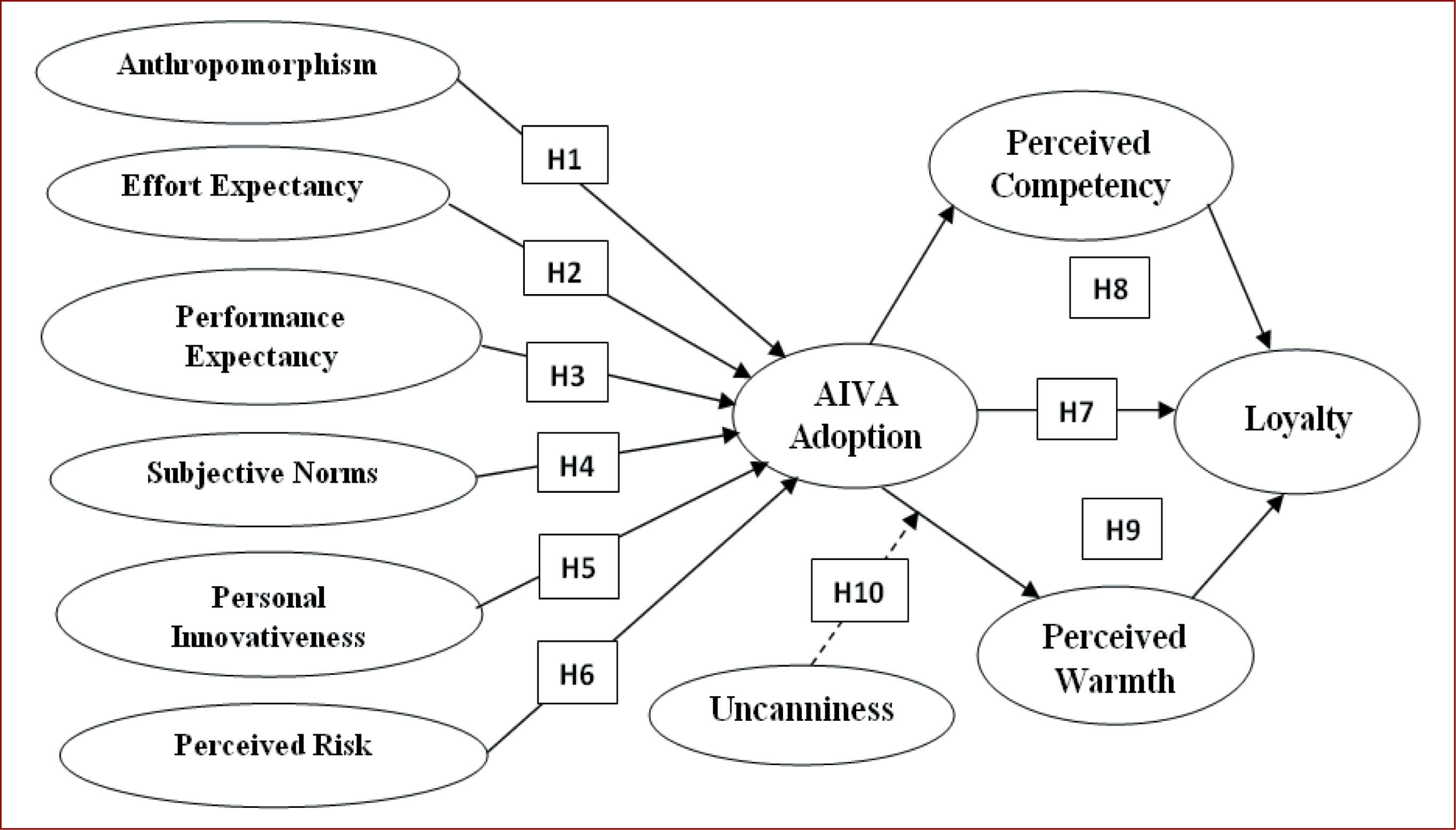
Following the integrated approach of model building, the study used extended ‘unified theory of acceptance and use of technology-3’ (UTAUT-3) by including additional adoption antecedents, while the TRA and TPR were utilized as external theories. Further, the study relied upon SCM and ‘uncanny valley paradigm’ to explain the consequences of AIVA adoption. The hypothesized framework is represented in Figure 1.
Hypothesized Framework.
Anthropomorphism and AIVA Adoption
Embodied agents such as robots and AIVAs display anthropomorphic cues that mainly emerge from their design elements (Moussawi et al., 2021). Moussawi and Koufaris (2019, p. 346) defined ‘anthropomorphism’ as ‘the degree to which the users perceive the agent to be human-like based on typically and uniquely human characteristics, such as being fluent, respectful, or funny, and as being friendly, happy or caring’. Wirtz et al.’s (2018) ‘service robot acceptance model’ (sRAM) asserted ‘perceived humanity’ as one of the major indicators explaining ‘social element’ as an antecedent of adoption; however, the model failed to include the construct of ‘anthropomorphism’ in its original form. Existing studies attributed ‘anthropomorphism’ as one of the crucial predictors of AIVA adoption (Cao et al., 2022; Fernandes & Oliveira, 2021; Shao et al., 2021). We thus expect that:
Effort Expectancy and AIVA Adoption
Effort expectancy is another essential construct of the UTAUT model, which Venkatesh et al. (2003, p. 431) defined as ‘as the degree to which an individual believes that using the system would be free of effort’. Chu (2019, p. 32) asserted that ‘users must have the impression that technological innovations in their workplace are simple to operate’. Recent studies indicated ‘effort expectancy’ as one of the fundamental elements affecting AIVA adoption (Mariani et al., 2023; Saxena et al., 2023). We, thus, expect that:
Performance Expectancy and AIVA Adoption
Performance expectancy is one of the essential constructs of the UTAUT model, which Venkatesh et al. (2003, p. 426) defined as ‘the degree to which someone believes that using a particular system would help them gain job performance’. Studies signified it as a highly influential antecedent of AIVA adoption (García et al., 2022; Johnson & Reimer, 2023). The construct has been considered as one of the most important utilitarian-benefit components of adoption (Aruldoss et al., 2023; Moriuchi, 2023), especially in the context of virtual assistant technologies (Al-Emran et al., 2023). We, thus, expect that:
Subjective Norms and AIVA Adoption
‘Subjective norms’ is a construct from TRA, which Fishbein and Ajzen (1975, p. 302) defined as ‘the person’s perception that most people who are important to him think he should or should not perform the behaviour in question’. The construct also forms part of Ajzen’s (1991) TPB. The essence of the construct has also been considered by the UTAUT model in the form of ‘social influence’ (Fernandes & Londhe, 2015; Fernandes & Panda, 2019). In fact, White et al. (2009, p. 135) mentioned that, ‘In TRA and TPB models of adoption, social influence is represented by the concept of subjective norms’. Researchers in the adoption domain agreed that ‘subjective norms’ denote ‘social influence’ (Tran et al., 2023; Weiz et al., 2016). Few researchers attributed ‘subjective norms’ as weak (Pal et al., 2020; Song, 2019) or insignificant (Coskun-Setirek & Mardikyan, 2017) determinant, while others (Belanche et al., 2021; Sohn & Kwon, 2020) regarded it as a crucial predictor of AIVA adoption. Following the views of the latter, we expect that:
Personal Innovativeness and AIVA Adoption
Personal innovativeness is the ‘willingness of an individual to try out any new information system’ (Nasirian et al., 2017, p. 4). Considering its relevance, Farooq et al. (2017) developed the UTAUT 3 model by including it as an additional construct. Researchers claimed that the construct of ‘personal innovativeness’ had been crucial in AIVA adoption (Bhadauria & Chennamaneni, 2022; Choudhury & Shamszare, 2023; García et al., 2022). Roger’s (1995) ‘perceived attribute theory’ (PAT) demonstrated the factors influencing innovation-adoption; however, the theory did not accompany the very construct of ‘personal innovativeness’. Sun (2021, p. 2) agreed that ‘Due to the dynamic and fast-developing situation, “personal innovativeness” can be used to represent individuals’ tendency to adopt new innovations’. We, thus, expect that:
Perceived Risk and AIVA Adoption
‘Perceived risk’ is the prime construct of Bauer’s (1960) TPR. Literature suggests that the security and privacy concerns with respect to AIVA technology posit risk as one of the crucial predictors of adoption (Acosta & Reinhardt, 2021; Bolton et al., 2021; Rana et al., 2023); however, TPR has rarely been applied by existing studies, as instead of evaluating the composite risk factor, most of the studies explained AIVA adoption by undertaking discrete elements of risk. Bridging the gap, we thus expect that:
AIVA Adoption and Loyalty
‘Loyalty’ has been defined as ‘customers’ long-term commitment to continuously use a specific AI-technology even when it is exposed to the marketing efforts of competing brands’ (Cheng & Jiang, 2020, p. 598). Adoption of AI-enabled technologies inherently drives loyalty among tech users (Bedi et al., 2022). Huh et al. (2023) affirmed that adoption of AI assistant evokes a sense of loyalty among its users, particularly due to AI assistant’s voice and brand image congruency. Maroufkhani et al. (2022) noted that the adoption of AI assistant applications brings loyalty among its users; however, in human–computer interaction domain, the loyalty of such technology has been seldomly studied. We, thus, expect that:
AIVA Adoption, Perceived Competency and Loyalty
‘Perceived competency’ is a construct of Fiske et al.’s. (2002) ‘stereotype content model (SCM). Competence is related to a person’s ability, intelligence and skilfulness (Fiske et al., 2007). In the context of AI, ‘competence perception’ is closely associated with individualism and agency (Hu et al., 2021). The perceived competence may communicate that the provider is capable enough to effectively complete the assigned task, such performance may trigger a sense of loyalty among the users for their AI counterparts (Belanche et al., 2021). Lee and Li (2023) concluded that the fulfilment of expected affordances from AI assistants makes users perceive it as a competent agent that generates loyalty towards it. We, thus, expect that:
AIVA Adoption, Perceived Warmth and Loyalty
‘Perceived warmth’ is a construct of Fiske et al.’s (2002) SCM. The warmth dimension reflects a person’s sociability, friendliness and trustworthiness (Fiske et al., 2007). It is closely associated with communion explaining relationships and interactions. Such perception may cause an individual to cultivate an emotional commitment and personal dedication to non-human entities and engage in actions to maintain and preserve relationship with them (Hu et al., 2021). Han and Yang (2018) asserted that the logic can be applied to the para-social relationship formed during post-adoption stage of human–AI interaction, where warmth perception enables users to maintain and reinforce trusting and harmonious relationships with AI assistants. We, thus, expect that:
AIVA Adoption, Uncanniness and Perceived Warmth
The replication of human traits in AI assistants generates a feeling of emotional attachment or warmth among AI adopters; however, such friendly perception may diminish on account of Mori’s (1970) uncanny valley phenomenon, which states that the perceiver’s affinity towards its AI counterpart reduces as robots replicate more and more human traits; at this point, a feeling of eeriness or uncanniness brings negative impact on human–AI affective para-social relationship (Tsai et al., 2023). Kim et al. (2019) pointed out that, though AI users perceive competence in their assistants up to a certain level, an in-depth interaction with such humanoids induces perceptions of warmth among its adopters; however, such emotional attachment may deteriorate on account of uncanny valley paradigm that often brings a feeling of uncanniness among tech users. We, thus, expect that:
Research Methodology
Survey Instrument
The data collection instrument comprised of structured and non-disguised ‘five-point Likert scale’, ranging from ‘totally disagree’ (1) to ‘totally agree’ (5). Besides demographic data, the survey included measures of 11 constructs consisting of 39 questions. The measurement parameters of the constructs were mainly adapted from established sources and were customized to suit the context of the present study (refer to Table 5). The scale for each of the constructs was finalized after examining their psychometric properties under the measurement model.
Respondent’s Selection Criteria
The sampling technique employed was purposive, targeting AIVA users belonging to the millennial generation (i.e., roughly born between the mid-80s to the early 2000s). As per Bilgihan (2016, p. 110), ‘millennials represent a technology-savvy group’. Tuzovic and Paluch (2018, p. 107) pointed out that ‘millennials are four times as likely to use virtual assistants compared to baby boomers’. The MTurk platform was used to collect the data, particularly from pan-India to ensure population representativeness and high generalizability of results. The platform is considered reliable and has been used extensively in recent research related to AIVA adoption (Cao et al., 2022; Pal et al., 2020). A majority of respondents belonged to the NCR regions and states of Gujarat, Maharashtra, Karnataka and Kerela, while other respondents participated from Madhya Pradesh, Chhattisgarh and Telangana. A handful of respondents belonged to Orissa, Tamil Nadu and Sikkim. Screening questions were used to determine whether the respondents belong to the millennium group and use AIVA on Android or iOS-based platforms. A total of 520 participants were approached for the study; out of which, 434 filled out the questionnaire; however, subsequent to data cleaning, the responses of 412 participants were retained for the study. Sample size was calculated with the help of Cochran’s (1963) formula, which confirmed a sample of 385 as adequate to provide a 95% confidence interval. Thus, the sample size of 412 respondents was found sufficient.
Statistical Techniques
Descriptive statistical techniques included ‘mean’, ‘standard deviation’, ‘correlation’, etc. ‘Confirmatory factor analysis’ was used to ensure the fitness of the psychometric properties of the constructs and evaluate the measurement model. ‘Structural equation modelling’ (SEM) was performed to analyse the determinants of AIVA adoption and examine the fit indices of the structural model, while bootstrapping technique (2,000 resamples) was used to better obtain the results of mediation and moderation analysis. SEM is a more reliable technique in comparison to simple linear regression as it allows for the modelling of unexplained variances in the endogenous variables (Mackenzie, 2001), takes into account the measurement errors (Musil et al., 1998) and possesses a considerable potential for theory development (Nunkoo & Ramkissoon, 2012). Researchers agreed that the application of AMOS-based SEM provides robust results with data obtained through purposive sampling (Anantasiska et al., 2022; Lavuri, 2021), more so in studies pertaining to consumer behaviour (Hulland et al., 2018). ‘Analytical neural network’ technique based on multilayer perceptron algorithm was employed to check the accuracy of the predicted results; while ‘sensitivity analysis’ was run to determine the relative importance of the predictive constructs. Statistical software such as ‘SPSS 20.0’ and ‘AMOS 21.0’ were used.
Research Findings
The study revealed that most of the respondents preferred Google Assistant (36.61%) followed by Alexa (31.12%), Siri (23.56%) and others (8.69%). Table 1 highlights the respondents’ preference for different AIVAs in each demographic category:
Respondents’ Preference for Different AIVA: Demographic Categorization.
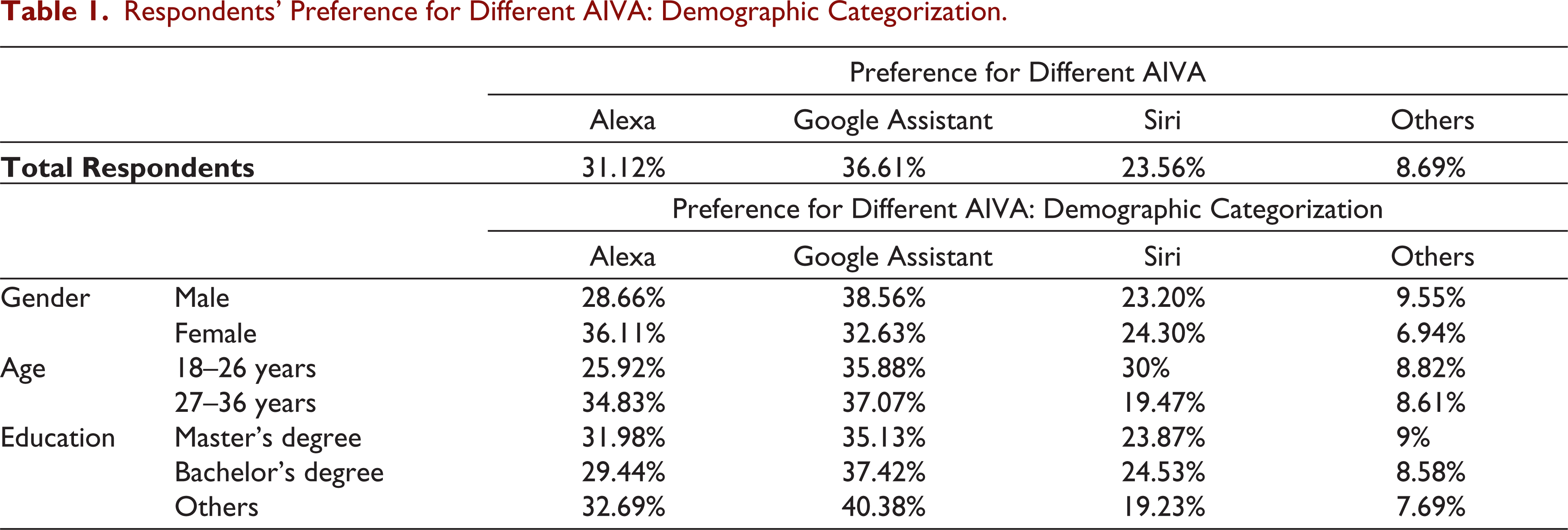
As shown in Table 1, amongst the male respondents, 38.56% preferred Google Assistant over Alexa (28.66%) or Siri (23.20%). Alexa is more popular among female respondents, as 36.11% of them preferred it over any other AI assistants. Users who fell in the age group of 18–26 years preferred Siri after Google Assistant, while those falling in the age group of 27–36 years preferred Alexa. Lastly, irrespective of the education category, most of the respondents preferred Google Assistant over other AIVAs.
In order to examine the hypothesized framework of AIVA adoption, the study employed an integrated approach of SEM and analytical neural network (ANN). The two-step approach of SEM suggested by Hair et al. (2010) was applied, according to which the measurement model was examined first followed by the structural model.
Measurement Model
It is suggested that ‘the adapted scales with sufficient empirical and theoretical evidence can be taken directly to CFA without running EFA beforehand’ (Hurley et al., 1997, p. 668). In order to ensure the fitness of the measurement model, ‘confirmatory factor analysis’ was performed verifying the existing scale of antecedents and consequences of AIVA adoption. The maximum likelihood method of estimation was executed for the complete set of items. The factor loadings of all the items were found high (> 0.50) for their respective factors (Hair et al., 2010), except one of the items of ‘perceived warmth’ and two items of ‘loyalty’ which were dropped due to poor factor loadings of < 0.5 (Hair et al., 2010). The authors recommend three items per factor as a desirable condition to perform CFA (Hair et al., 2010), which was found justifiable in this case. The measurement model exhibited a good fit (refer to Table 2).
Fit Indices of the Measurement Model.

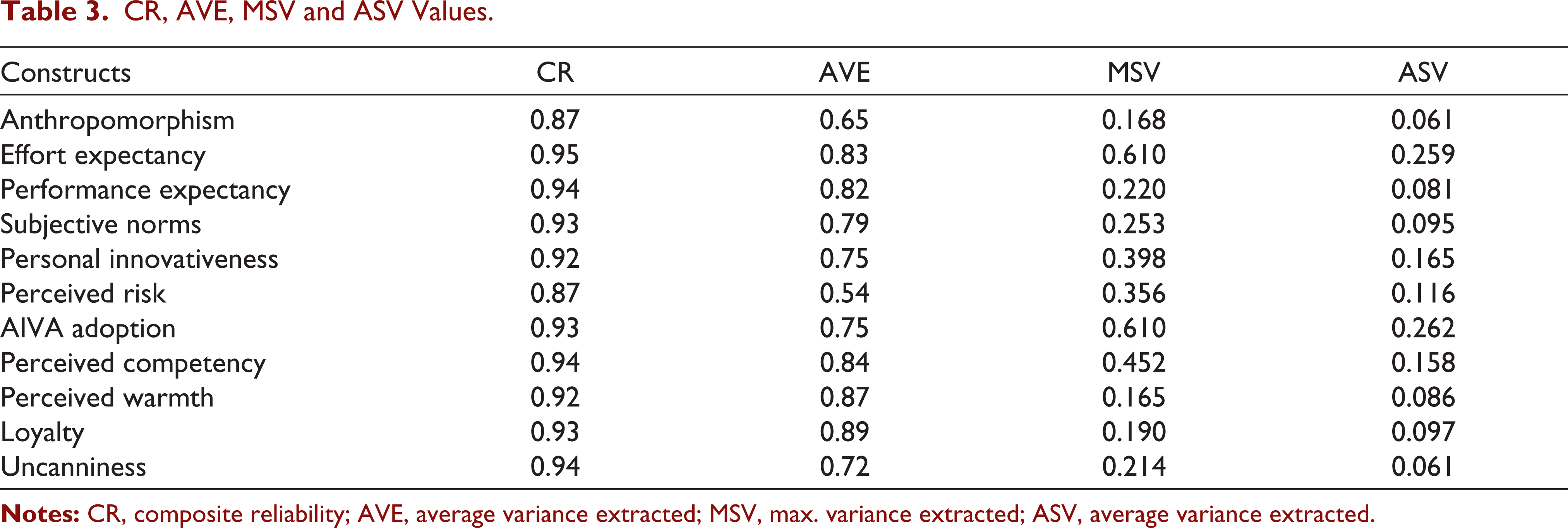
Since the measurement model exhibited a good fit, the psychometric properties of the model in terms of ‘reliability’, ‘convergent validity’ and ‘discriminant validity’ were assessed. For this purpose, the following estimates (as presented in Table 3) were calculated:
As shown in Table 3, the CR values for each of the constructs were found greater than 0.70, indicating sufficient reliability of the constructs (Carmines & Zeller, 1988). A CR value above 0.90 is acceptable, as it affirms unidimensionality, as long as the items of the scale are not redundant and measure similar (not same) aspects of a construct (Sweeney & Soutar, 2001) that has already been taken into consideration. Content validity was verified through existing literature on AIVA adoption and subject expert’s opinion. The obtained CR and AVE values of all the constructs were found greater than 0.70 and 0.50, respectively. Further, the CR values for each individual construct remained greater than their respective AVE values (refer to Table 3), indicating sufficient convergent validity (Hair et al., 2010). The MSV as well as ASV values of each of the constructs had been found lesser than that of their respective AVE values (refer to Table 3) fulfilling the necessary condition of discriminant validity (Hair et al., 2010). Further, as per the ‘Fornell–Lacker criterion of discriminant validity’, the ‘square root of AVE’ of each of the constructs was found greater than the ‘inter-construct correlations’ formed by them (refer to Table 4), establishing sufficient discriminant validity (Hair et al., 2010).
CR, AVE, MSV and ASV Values.
Discriminant Validity of the Constructs.
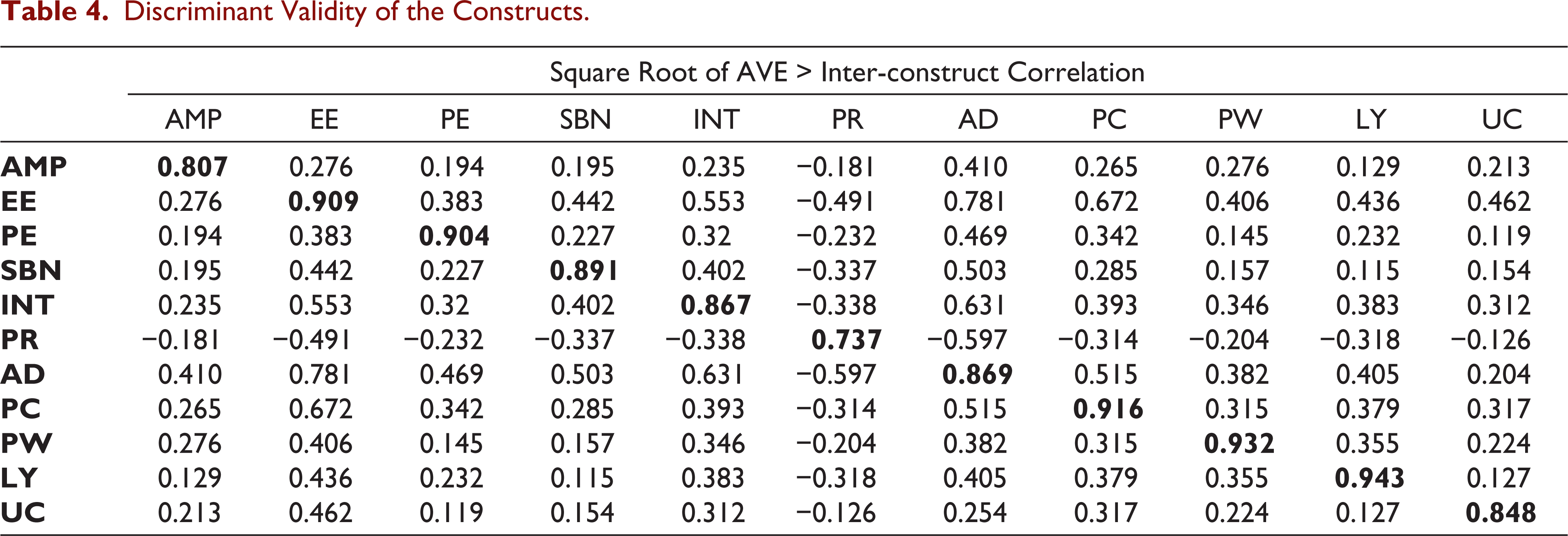
After examining the obtained values of the psychometric properties of the constructs (refer to Tables 3 and 4), against the recommended threshold values (discussed above), the ‘measurement scale’ for each of the constructs was finalized (refer to Table 5).
Measurement Scale of the Constructs.

Structural Model
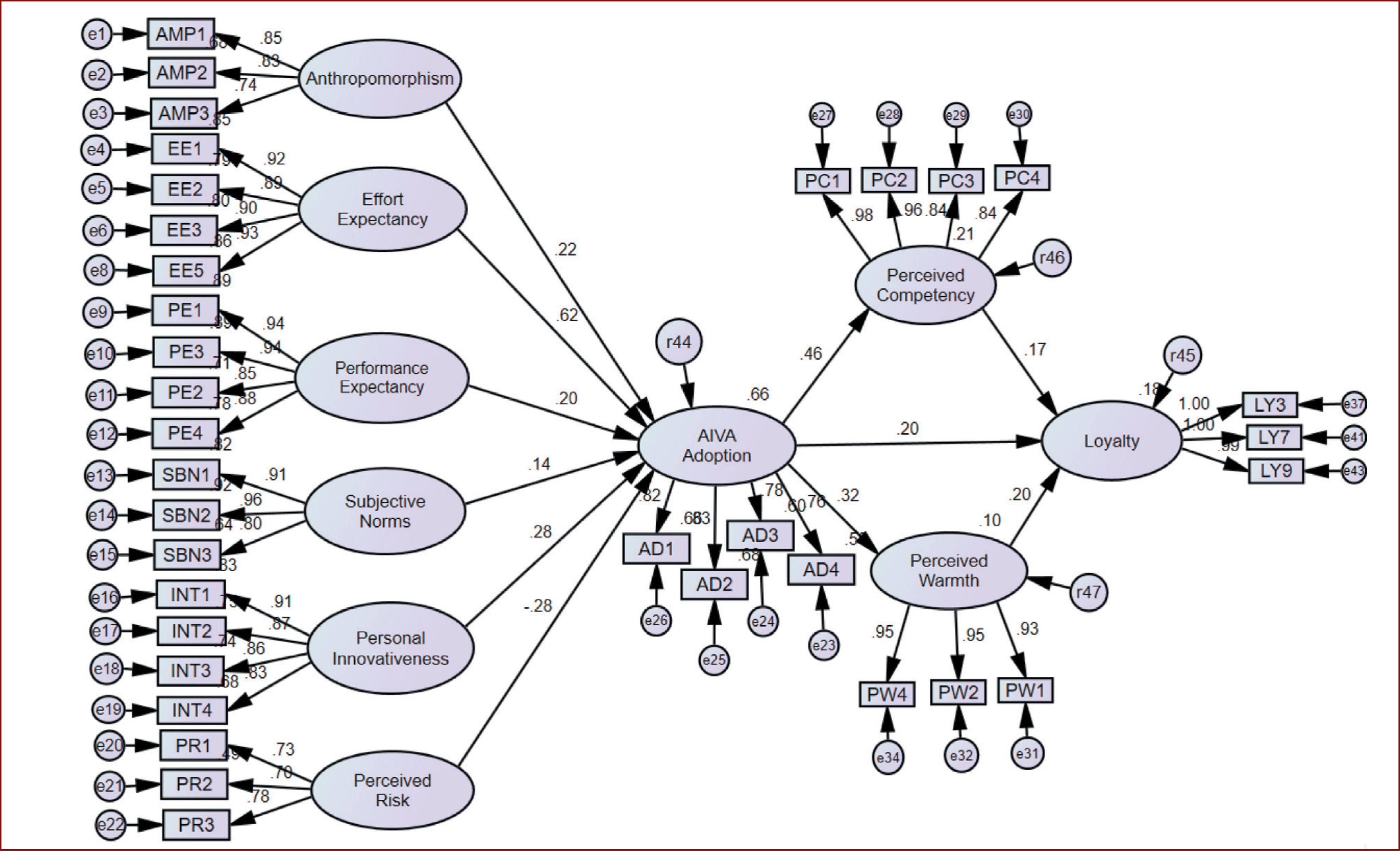
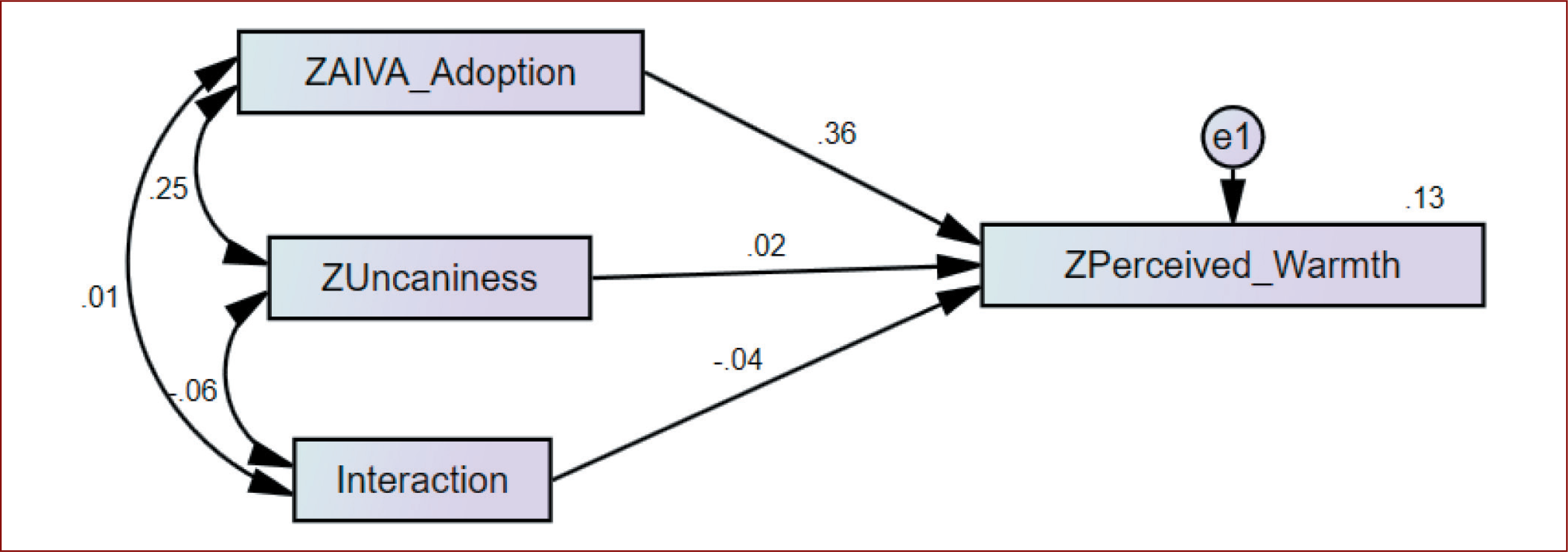
The structural model of ‘AIVA adoption’ accompanying the parallel mediation effect of transactional as well as communal relationships has been illustrated in Figure 2, while the moderation effect of the uncanny valley paradigm has been presented in Figure 3. The bootstrapping technique (2,000 resamples) was used to test the higher-order effects.
Path Analysis of Antecedents and Consequences of AIVA Adoption.
Uncanny Valley: Moderation Analysis.
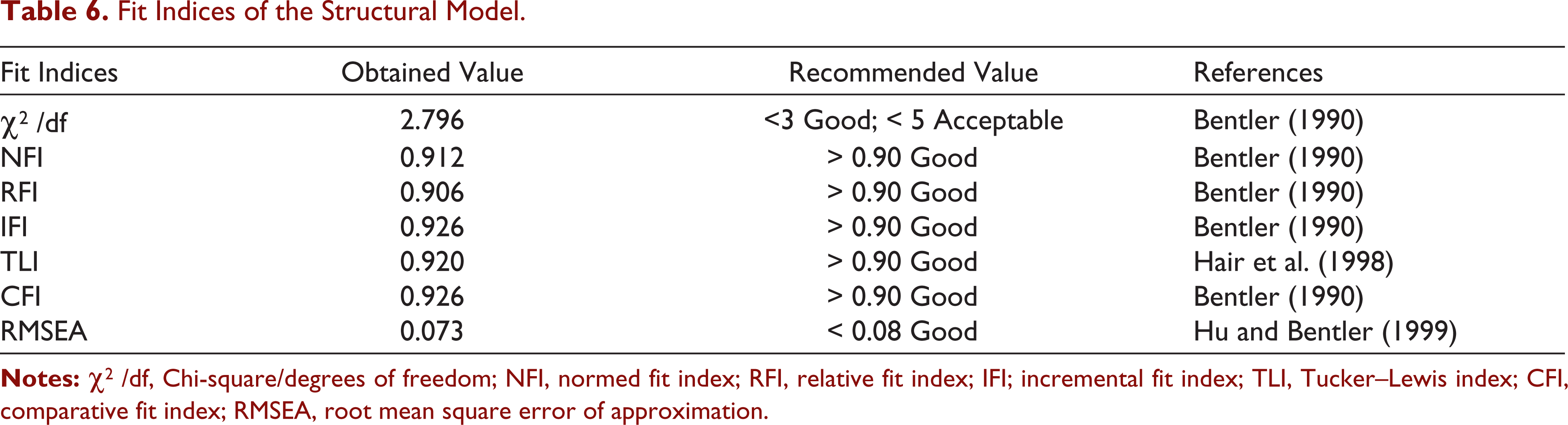
The structural model exhibited a good fit (refer to Table 6).
Fit Indices of the Structural Model.
The structural model was further tested in order to examine the hypothesized framework with respect to antecedents and consequences of AIVA adoption (refer Table 7).
Hypothesis Testing
Based on the results depicted in Table 7, hypothesis testing was done. We found that ‘anthropomorphism’ had a positive influence on ‘AIVA adoption’ with β1 = 0.217 and p = 0.002 < 0.05 significant at 95% CI; thus, hypothesis H1 was supported. Further, ‘effort expectancy’ had a positive influence on ‘AIVA adoption’ with β2 = 0.622 and p = 0.001 < 0.05 significant at 95% CI, supporting the H2 hypothesis. It was found that ‘performance expectancy’ had a positive influence on ‘AIVA adoption’ with β3 = 0.203 and p = 0.001 < 0.05 significant at 95% CI, thus supporting the H3 hypothesis. ‘Subjective norms’ had a positive influence on ‘AIVA adoption’ with β4 = 0.139 and p = 0.004 < 0.05 significant at 95% CI; thus, hypothesis H4 was also supported. The construct ‘personal innovativeness’ had a positive influence on ‘AIVA adoption’ with β5 = 0.283 and p = 0.001 < 0.05 significant at 95% CI; thus, hypothesis H5 was supported. Further, ‘perceived risk’ had a negative influence on ‘AIVA adoption’ with β6 = −0.285 and p = 0.003 < 0.05 significant at 95% CI; thus, hypothesis H6 was supported.
Path Coefficients.

As far as consequences of adoption were concerned, it was found that ‘AIVA adoption’ had a direct positive influence on ‘loyalty’ with β7 = 0.200 and p = 0.001 < 0.05 significant at 95% CI, thus supporting the H7 hypothesis. The mediation analysis revealed that AIVA adoption had a positive influence on ‘perceived competency’ (β8 = 0.461; p = 0.001) which further had a positive influence on ‘loyalty’ (β9 = 0.171; p = 0.001); moreover, AIVA adoption had an indirect positive influence on ‘loyalty’ (β14 = 0.082; p = 0.002) designating ‘perceived competency’ as a significant mediator in adoption–loyalty relationship, thus supporting H8 hypothesis. It was found that AIVA adoption had a positive influence on ‘perceived warmth’ (β10 = 0.321; p = 0.001), which further had a positive influence on ‘loyalty’ (β11 = 0.201; p = 0.004); moreover, AIVA adoption had an indirect positive influence on ‘loyalty’ (β15 = 0.061; p = 0.003) designating ‘perceived warmth’ as a significant mediator in adoption–loyalty relationship, thus supporting H9 hypothesis. Even after accounting for parallel mediation with a total indirect effect of β16 = 0.143; p = 0.001, there was still found a direct effect of ‘AIVA adoption’ on ‘Loyalty’ with β7 = 0.200 at p = 0.001, while the total effect of ‘AIVA adoption’ on ‘loyalty’ was found as β17 = 0.347 at p = 0.001 at 95% CI, evidencing the existence of partial mediation.
The moderation analysis revealed that though ‘AIVA adoption’ had a positive influence on ‘perceived warmth’ (β10 = 0.321; p = 0.001), ‘uncanniness’ had an insignificant influence on ‘perceived warmth’ (β12 = 0.024; p = 0.616); additionally, the interaction of ‘uncanniness’ and ‘AIVA adoption’ also had an insignificant effect on ‘perceived warmth’ (β12 = −0.038; p = 0.406), thus ‘uncanniness’ did not moderate the adoption–loyalty relationship, thus H10 hypothesis was not supported.
Analytical Neural Network
Artificial neural network technique was employed by considering the significant antecedents of AIVA adoption from the SEM analysis (refer to Figure 4). The training of the neural network model was executed using the multilayer perceptron training algorithm. A 10-fold cross-validation was performed whereby 90% of the data were used to train the neural network and the remaining 10% were used to test the model.
A Three-layered Artificial Neural Network Model.
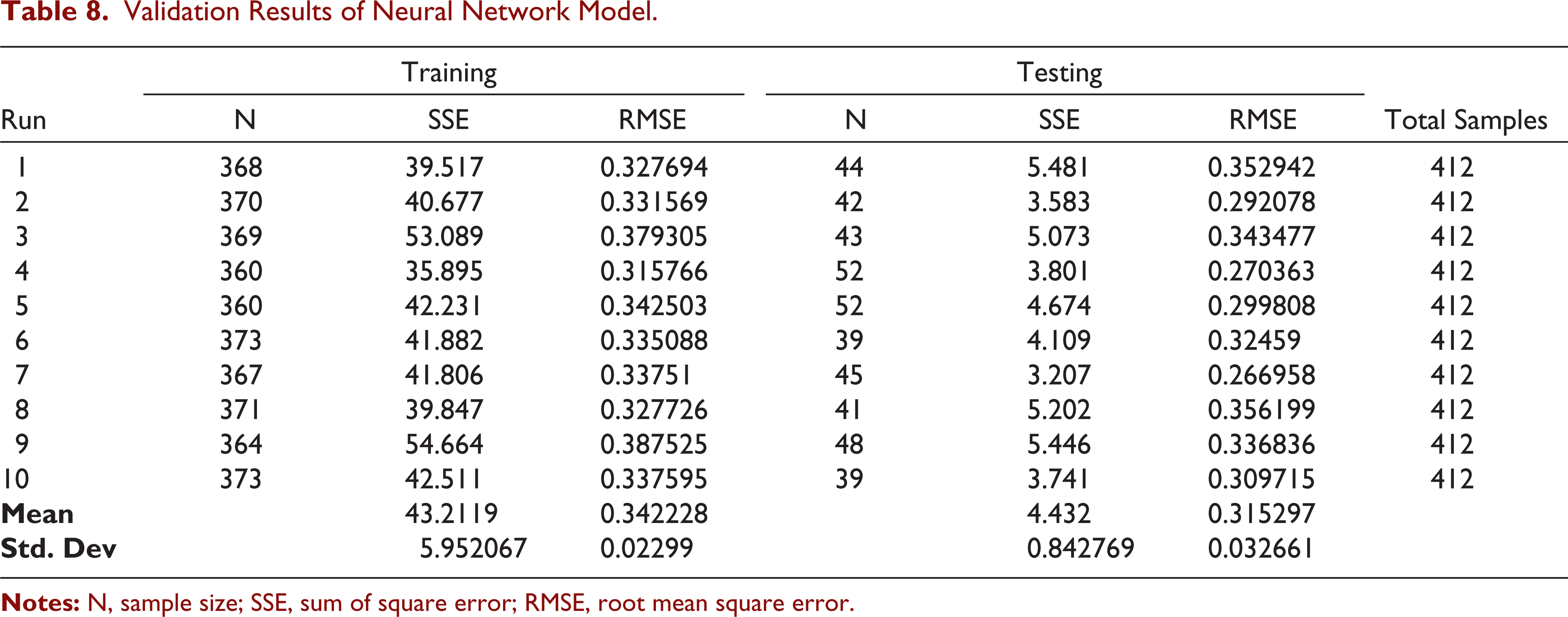
The accuracy of the network model was measured through ‘root mean square error’ (refer to Table 8).
Validation Results of Neural Network Model.
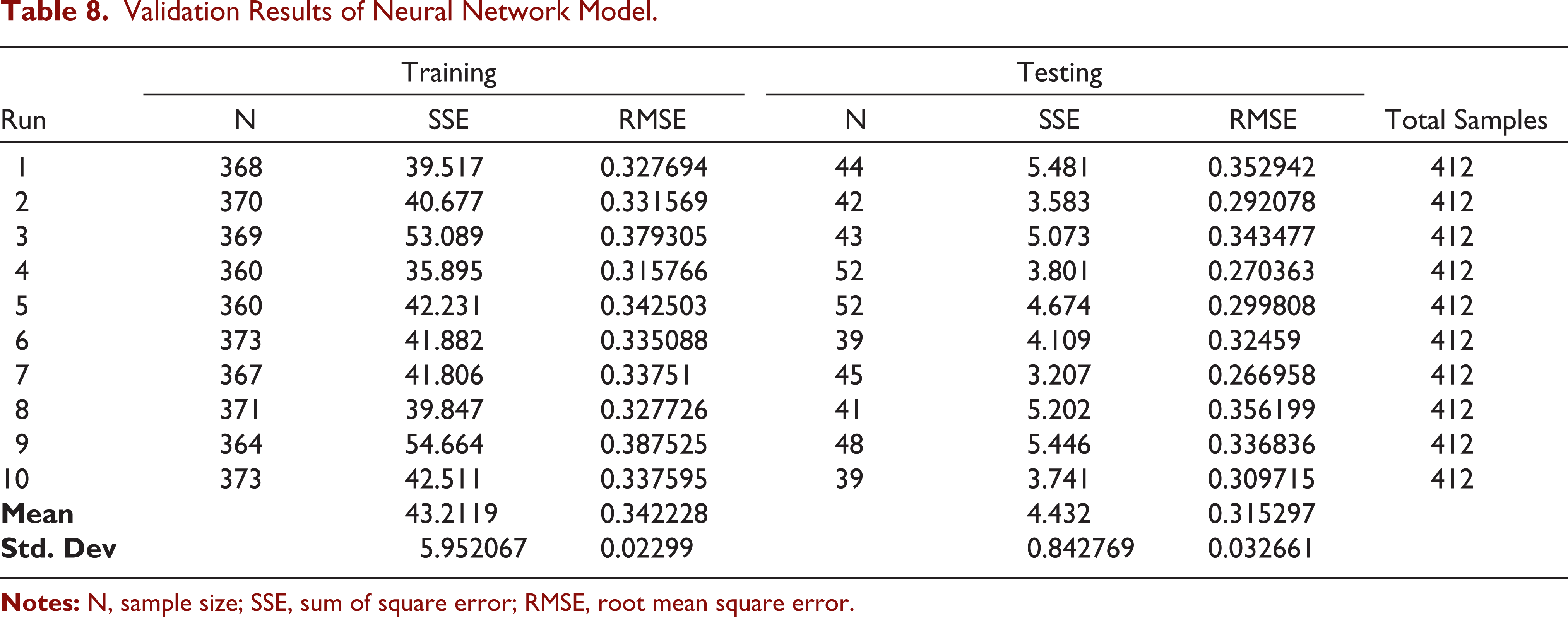
As depicted in Table 8, the ‘average cross-validated RMSE’ for the training model was 0.342 while that for the testing model, it was 0.315; therefore, the network model was found reliable in capturing the numerical relations between the predictors and outputs, as the values were found less than the threshold limit of 0.4 (Chong, 2013).
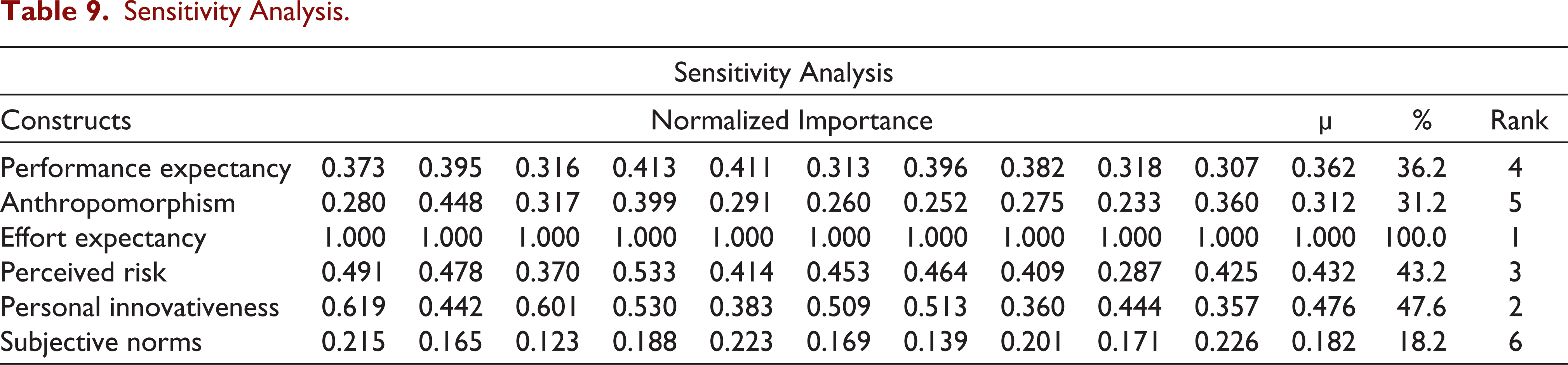
To assess the relative importance of the identified antecedents on ‘AIVA adoption’, a sensitivity analysis was performed in the neural network model (refer to Table 9).
As depicted in Table 9, the 10-fold cross-validation process of the neural network generated different outputs in each run with respect to the normalized importance of the independent variables. The estimates were averaged, and the final percentage was calculated. Based on the order of importance, the variables were ranked. It was found that ‘effort expectancy’ (100%; Rank 1) was the strongest predictor of ‘AIVA adoption’ followed by ‘personal innovativeness’ (47.6%; Rank 2); ‘perceived risk’ (43.2%; Rank 3); ‘performance expectancy’ (36.2%; Rank 4); ‘anthropomorphism’ (31.2% Rank 5) and ‘subjective norms’ (18.2%; Rank 6).
Sensitivity Analysis.
Discussion
Although AIVA technologies have become popular among consumers since 2016, the adoption of technology has yet to realize its true merits (Frank et al., 2023; Pan & Pawlik, 2023). The major reasons attributed are the emergence of a complex blend of psychological and behavioural antecedents of adoption, particularly with change in time and scenario (Ashrafi & Easmin, 2023; Van et al., 2022). Moreover, an ‘adoption’ if not sustained could lead to discontinuance of service; however, most of the studies (Gopinath & Kasilingam, 2023; Molinillo et al., 2023) often ended up focussing upon the AI adoption predictors, while overlooking its consequential part, specifically the transactional and communal view associated with the uncanny valley interventions. At this juncture, marketers demand a concrete framework depicting the antecedents and consequences of AIVA adoption to work upon. The present study developed an integrated model of AIVA adoption while working on the inefficiencies of classical solitary models and registering time-specific modifications. The moderated-mediation SEM of ‘AIVA adoption’ integrated with neural network analysis based on multilayer perceptron algorithm revealed that the developed model was found reliable in capturing the numerical relations between the concerned predictors and output both at the training and testing phases.
The 10-fold cross-validation process of sensitivity analysis under the neural network approach indicated ‘effort expectancy’ as the strongest predictor of AIVA adoption, more than the ‘performance expectancy’, as acknowledged by the existing studies (Chow et al., 2023; Malodia et al., 2023), suggesting that tech users primarily prefer an effort-free use of technology; yet, Johnson and Reimer (2023) viewed that adopters who seek high utilitarian value often get more concerned about the performance of the technology. Further, the present study found that consumers who possess ‘personal innovativeness’ are more inclined towards adoption of AIVA technologies, which was supported by recent studies (Bhadauria & Chennamaneni 2022; Choudhury & Shamszare 2023). The antecedent ‘perceived risk’ was found to negatively affect AIVA adoption, as tech users are highly concerned about the privacy and security of their sensitive information (Frank et al., 2023; Zhao et al., 2023); contrary to this, the study of Traiyatha and Buranasiri (2023) is amongst such few studies which argued that due to high dependency on AI technologies, AIVA adopters do not evaluate the risk factor of the specified technology. In the human–AI interaction domain, studies have often designated ‘anthropomorphism’ as one of the dominant antecedents of adoption (Kim et al., 2019; Pentina et al., 2023); however, the present study evidenced that, AIVA adopters do expect a sense of anthropomorphism from their agents, but not to an extent that they overlook its functionality features. Kontogiorgos et al. (2019) suggested establishing a trade-off between anthropomorphic and functional aspects of AI assistants. With respect to the effectiveness of ‘subjective norms’ in the AI adoption domain; researchers often hold contradictory views, where few assigned it as a crucial predictor (Belanche et al., 2021; Sohn & Kwon, 2020), while others indicated it as weak (Pal et al., 2020; Song, 2019) or insignificant predictor (Coskun-Setirek & Mardikyan, 2017); however, the present study designated ‘subjective norms’ as the least effective antecedent of AIVA adoption. As far as the consequences of AIVA adoption are concerned, the study found ‘loyalty’ as an effective outcome of AIVA adoption, as reinforced by the studies focussing on continuous usage intentions (Huh et al., 2023; Maroufkhani et al., 2022). In this line, few studies went beyond explaining either transactional or communal view (Fang et al., 2023; Tschopp et al., 2023), while the present study simultaneously highlighted both the views attributing ‘perceived competency’ and ‘perceived warmth’ as parallel mediators in adoption–loyalty relationship. The study evidenced the dominance of transactional relationship over communal one; however, an in-depth analysis revealed that the combined effect of both the relationships exceedingly contributed towards generating loyalty among AIVA adopters. In the human–AI interaction domain, most of the studies (Kim et al., 2019; Tsai et al., 2023) witnessed the presence of the uncanny valley effect, while others often held distinct views about the phenomenon (Jang, 2022; Zhang et al., 2023b). In the present study, the results of moderation analysis produced an insignificant effect of the ‘uncanny valley phenomenon’ in adoption–warmth relationship, evincing a persistently strong attachment between humans and AI.
Conclusion
AI-based technologies have witnessed a wide application, especially,in the service sector. Technology providers in such sectors are persistently involved in providing valuable offerings to their customers; however, mere availability of a product does not guarantee its success until and unless it is adopted by the consumers and such adoption gets sustained over time. The findings of the study revealed that tech users primarily expect effort-free interaction with their AI assistants. AIVA is mainly popular among innovators or early adopters who seek experimenting with such advanced technologies; thus, they are least likely to depend on the suggestions of others for using such technology. However, due to high cyber-insecurity, they are equally concerned about the informational and financial risks associated with such software applications. Further, the anthropomorphic traits do impact AIVA adoption; the performance or functionality of the agent remained a crucial factor in predicting the adoption of such technology. The study evidenced that AI adoption inherently generates loyal customers; moreover, such effect can be enhanced through simultaneous improvement in competence and warmth feature of AIVA, signifying the relevance of both cognition and affection. A detailed investigation revealed that tech users were more interested to establish transactional relationship with AIVA, rather than a communal one, which could be a possible reason that they do not get trapped in an uncanny valley.
Implications of the Study
Managerial Implications
Consumer adoption of a new technology is the ultimate success for the provider of that technology; however, despite acclaimed relevance and optimistic prophecies, AI-based technologies have accumulated limited customer preferences. Researchers agreed that marketers still lack true knowledge about the concrete set of antecedents and consequences of AIVA adoption due to the involvement of complex behavioural factors as well as the lack of research in the area (Bawack & Desveaud, 2022; Yu et al., 2023). Thus, marketing managers can utilize the findings of this study to better understand the factors determining the adoption of robotic technologies such as AIVA. The significant positive antecedents of AIVA adoption may serve as a base in the process of technology upgradation, while the negative antecedent might help the service providers to improve the service and reduce/remove the associated inhibitors acting as a barrier in the way of adoption. Moreover, the computed relative importance of the determinants of AIVA adoption could assist AI managers in framing appropriate marketing strategies intended to expedite the adoption of such technologies, while ensuring greater market coverage. Marketers are suggested to utilize the combined effect of transactional and communal view of adoption consequences to witness long-term retention of consumers; at the same time, they are required to focus more on the former approach as AI users are more concerned about the competency of such technology. The insignificance of the uncanny valley paradigm reveals that the human–AI communal bond fails to reach its threshold limit; thus, marketers are suggested to further enrich the anthropomorphic traits of such agents that could enhance the effectiveness of the warmth dimension in producing hardcore loyals.
Theoretical Implications and Future Research Areas
The study contributes to the literature with an ‘integrated model of AIVA adoption’ which not only qualifies the fit indices parameters of the SEM but also remains robust in meeting the criteria of an analytical neural-network model. The study is a pioneer to introduce such type of AI adoption-model accompanying both antecedents and consequences, while taking into account the transactional as well as communal perspective. Relying on a context-specific framework, the study contributed to enriching the effectiveness of classical theories by providing a more holistic approach to dealing with the adoption of AI-based technologies. Further, the study offered a nuanced outlook with respect to the relevance of humanoid elements in determining the adoption of robotic technologies and specified that, at times, the uncanny valley hypothesis could be unsupportive.
The present study relied upon extended UTAUT-3 theory in combination with TRA and TPR to determine crucial antecedents of AIVA adoption; future researchers may extend the model subject to time-specific interventions. Additionally, they may assess the relative strength of predictors based on the radial basis function which possesses strong tolerance to input noise as compared to multilayer perceptron algorithm. To witness sustained adoption, upcoming studies may evaluate para-social interventions apart from transactional and communal views in human–AI relationships. As advancements in AI continue to enhance user experience with newer features such as on-device haptic feedback incorporating touch sensation, upcoming studies may assess the uncanny valley of haptics which may affect the subjective realism of human–AI intercourse.
Footnotes
Declaration of Conflicting Interests
The authors declared no potential conflicts of interest with respect to the research, authorship and/or publication of this article.
Funding
The authors received no financial support for the research, authorship and/or publication of this article.