



Abstract
Supply chain (SC) disruptions are increasingly common in today’s dynamic business environment, and understanding the effectiveness of customer relationship management (CRM) practices in achieving customer satisfaction through supply chain resilience (SCR) can provide valuable insights for businesses. This study aims to empirically examine the impact of CRM dimensions and SCR on customer satisfaction. It also examined the mediation role of SCR between different dimensions of CRM and customer satisfaction. A total of 529 responses were collected from different customers of small and medium-sized enterprises (SMEs) in the Middle Eastern region. For empirical analysis, this study employed structural equation modelling through PLS software. The results clearly show a significant direct influence of SCR, customer orientation and knowledge management on customer satisfaction, while surprisingly technology-based CRM does not influence customer satisfaction. Further, the outcomes of this study indicate that there is a significant mediation role of SCR between CRM practices (knowledge management, technology-based CRM) and customer satisfaction. The findings of this study can have important ramifications for managers, stakeholders and policymakers regarding the significance of CRM dimensions and SCR as factors that increase customer satisfaction in Middle Eastern businesses in particular and in developing nations in general.
Keywords
Introduction
Small and medium-sized enterprises (SMEs) are recognized to perform a critical role in developing socio-economic characteristics and hence considered the backbone of the Middle East region. The sector of SMEs in the Middle East region constitutes more than 90% of all corporations other than the agriculture sector. SMEs in the middle region primarily incorporated the service and manufacturing sectors and generated more employment opportunities for both qualified and unskilled labour. Furthermore, the SMEs in Egypt construct around 95% of all private manufacturing and services enterprises whereas in Kuwait and Lebanon, they account for around 90% of employment in non-agriculture enterprises. However, SMEs account for 94.3% of commercial enterprises in the UAE employing around 62% of the population and generating 75% of the economy’s GDP (Otman, 2021). In other words, SMEs appear to be a significant sector for the countries in the Middle East region since they comprise 35% of the GDP in the region. Hence, SMEs in the region illustrate a sheer proportion of businesses and operate remarkably in generating employment and manufacturing of products and services.
Despite the significant role of SMEs in the economy of the Middle East, they still face some challenges regarding the provision of knowledge to businesses related to enhancing their market share. Lack of finance is the most prominent challenge for SMEs and it can directly influence their operations. Usually, SMEs do not have extensive financial knowledge and have experienced more susceptible opportunities and high costs from financial organizations. Thereby, a shortage of adequate financial resources has emerged as the biggest challenge for the development of SMEs (Otman, 2021). Other challenges in the advancement of SMEs are inadequate use of information technology and lack of government support (Alkhwaldi, 2024). SMEs in the Middle East region are unable to employ such opportunities since 55% of SMEs do not use information technology (Xin et al., 2022).
The rising complications and intrinsic threats of disturbance make modern-day supply chains (SCs) susceptible to distinguishing professional activities (Alsmairat, 2021). In vigorous and unstable circumstances, SMEs in the world are encountered with several incidents that are proved to be alarming for disruptions in operations. These incidents may originate from man-made and natural events such as the collapse of equipment, earthquake, disagreement between labourers, default of supplier, lack of integral suppliers, instability in politics and probably this lead to disruption of the operational performances of the enterprises. The primary feature of disruption is that it may happen without any alerts. Enterprises are required to develop their potential capacity to retrieve their value position from disruption which introduces the manifestation of supply chain resilience (SCR). Thereby, SCR demonstrates the pivotal and crucial competencies that alleviate destructive consequences of disruptive incidents on the effectiveness of SCs or enterprises (Asamoah et al., 2020).
Fair competition among enterprises is effective for their development since it leads enterprises to adopt new methods and innovations in the production of products to compete with their rivals and grab the opportunity to attract more customers (Al-Okaily, 2022). Due to globalization, SMEs are facing severe competition. To survive, they are thriving to differentiate themselves and increase their market share by implementing various methods to improve their relationship with customers, enhance customer satisfaction, reduce their costs and improve their SC by creating more value for all members (Dandis et al., 2021). However, they are facing massive challenges related to rapid changes in consumption patterns, continuous development in technology, shorter product life cycles and complicated SC designs. Considering these challenges, some companies managed to innovate new products, others tended to cut down their costs, while others focused on improving their customer relationship management (CRM) practices or enhancing their SC (Alsmairat, 2022; Chatterjee et al., 2021).
The success of enterprises and their long-term effective performance are based on customer satisfaction. Undoubtedly, satisfying customers is recognized as one of the critical objectives for CRM (Drosos et al., 2019). For instance, it has a substantial influence on the reduction of customer complaints and withdrawals, enhances customer loyalty and eventually fosters the performance and profitability of SMEs. It is strongly believed that implementing CRM practices is likely to improve customer satisfaction for many reasons. First, CRM enables companies to be more customer-oriented. Collecting customer information and tracking their interaction and purchasing behaviour will enhance the likelihood of offering better products that suit their customers’ tastes. Second, CRM enables companies to process customer orders promptly facilitated by using technology-based tools, which improves their consumption experiences and increases their loyalty (Cavaliere et al., 2021; Guerola-Navarro et al., 2020).
Moreover, mitigating the disruption hazard through SCR is another imperative strategy for achieving customer satisfaction and improving performance. By effectively connecting and integrating with potential suppliers, manufacturers, distributors and customers, SCR enables companies to manage their upstream and downstream in a better way, become more competitive, satisfy their customers, potentially generate more profit and improve their performance (Diaz et al., 2021).
Therefore, SCR is considered not only for its positive impact on performance but also for its imperative role in the formation of design, and implementation of a firm’s strategy which leads to an increase in customer satisfaction and survival in the markets (Rejikumar et al., 2021). From this perspective, the recent studies of Alsmairat and Al-Shboul (2023) and Wieland and Durach (2021) have focused on the major and fundamental aspects of developing SCR strategy by emphasizing on adoption of technologies and techniques that mitigate risks and enhance customer satisfaction. Furthermore, the previous study of Ali et al. (2023) demonstrated that SCR features have a direct impact on the CRM dimension (knowledge management).
The most recent study of Dah et al. (2021) has focused on the different aspects of CRM. Their study investigated the association among culture, management change initiatives and organizational readiness as success drivers for implementing CRM. The results of the study showed that management change initiatives and culture have a significant impact on organizational readiness to implement CRM. However, organizational culture has a mediating effect on CRM implementation which leads to enhancing their impact on customer satisfaction and experience. This study concluded that effective CRM is responsiblefor enhancing customer satisfaction while focusing on customer orientation and satisfaction. On the other hand, Asamoah et al. (2020) examined the link between SCR, network relationship and customer-oriented performance and their study proclaimed that the SCR increased the customer-oriented performance of the firms.
The purpose of this study is to examine the association between the different dimensions of CRM, SCR and customer satisfaction. However, this study also evaluates the mediating effect of SCR on CRM and customer satisfaction. To the best of our knowledge, this study is a pioneer attempt since SCR as a mediator between CRM and customer satisfaction has not received attention in the existing literature. However, previous studies have not focused on SCR and CRM practices in one framework and their effects on SMEs’ customer satisfaction in the Middle East region. Therefore, this study tries to fill this gap by examining the mediating effect of SCR on CRM and customer satisfaction in the SMEs of the Middle East. The contribution of the study is threefold. Foremost, this study investigates the role of three dimensions of CRM practices on customer satisfaction of SMEs in the Middle East region. Second, this study also examines what role SCR is playing in the SMEs of the Middle East region to ensure continuous operations along with customer satisfaction. The firms that adopt the SCR can reinforce improvement by reducing costs, increasing operating margins, sustainability and efficiency in their SC operations. Third, does SCR mediate the relationship between CRM and customer satisfaction of SMEs in the Middle Eastern region?
The rest of the research is organized as follows. First, a theoretical background and conceptual research framework are undertaken, followed by the research model and hypotheses. Following that, the research methodology and results are discussed. Lastly, a conclusion is presented after demonstrating the study’s limitations.
Literature Review
Customer Orientation and Customer Satisfaction
Customer satisfaction is the priority of any business because customers are the primary source of revenue for any company (Yussoff & Nayan, 2020). Customer satisfaction is complex to evaluate because it is difficult to quantify the level of satisfaction. The contemporary methods for quality in organizations and enterprises are demonstrated through customer satisfaction and it performs its function in creating a customer-oriented culture and management (Shamsudin et al., 2019). It is strongly proven that stronger customer-oriented behaviours in companies have a favourable impact on the performance of enterprises. Measurement of customer satisfaction suggests instantaneous, substantial and purposeful feedback about the expectations of customers and their preferences that leads enterprises to optimize their value and thus yield higher profits (Alshourah et al., 2018). Subsequently, the customer-oriented behaviour of enterprises not only facilitates the development of a long-term relationship with the customers that strengthens the performance of the organization but it helps retain the potential customer which leads to an increase in the satisfaction level of the customer and also has a direct impact on marketing (Domi et al., 2020).
On the other hand, customer orientation is a cluster of task-oriented attributes like services for customer support. The business not merely benefits themselves by developing distinguish worth for their enterprises but also their consumers with the help of an appropriate understanding and proficient knowledge about the demands of customers. In other words, the goal of customer orientation is to enhance and sustain the profitability of enterprises by generating long-term associations with the customers and thus optimizing the satisfaction of customers (Gonu et al., 2023). Moreover, CRM has changed the customer mindset and behaviour towards purchasing anything which provides an opportunity in which customer gets a variety of products and services at the moment with the help of a better SC management system (Daud & Aziz, 2019). Due to advanced information technology used in CRM, it has become more customer-oriented which provides all the advanced features to help customers have a better experience (Bhatnagar & Saxena, 2013). Moreover, the studies of Usman et al. (2012) provided comprehensive insights into the major features of CRM which enable the system to be more efficient and effective in terms of comfortable interactions with the customer, prompt processing of transactions, security and privacy, trust and convenience, customized products and services, and so on.
A study by Ismail (2023) suggested that customer orientation is a key factor in developing customer loyalty and satisfaction through functional and relational customer orientations. Functional customer orientation is centred on task-oriented behaviours that guide customers in making informed purchasing decisions. In contrast, relational customer orientation aims to establish strong personal connections with customers. Similarly, a study by Singh et al. (2023) highlighted that companies that embrace a customer-oriented strategy may benefit from increased customer satisfaction, loyalty and retention, which in turn leads to a better understanding of what customers want and can help them create goods and services that satisfy those demands. Therefore, the following hypothesis is proposed:
H1: Customer orientation has a direct impact on customer satisfaction.
Knowledge Management and Customer Satisfaction
To create a marketing strategic plan, the customers’ diversified tastes and preferences make complicated to categorize customers in a sheer homogeneous population. Every customer has different choices concerning his/her personal and individual needs. Characteristics of customers can be understood through assessing customer knowledge, customer deviation, customer acquisition and customer retention (Alani et al., 2023). Managing the knowledge regarding the preferences of customers can help companies in understanding their customers’ needs and thus serve them in a better way which leads to stronger relationships with customers that will be reflected in customer satisfaction and better business outcomes. Knowledge management enables communication to be more effective in terms of providing two-way communication with customers; it also helps to gather customer information after having better interaction with customers. Knowledge of customers regarding their habits, interests and behaviour towards products and services facilitates enterprises in making quick decisions. Knowledge management is quite useful in quick and accurate customer interaction with the help of gathering customer information to manage the queries related to customers (Mahawrah et al., 2016). In addition, previous research has shown that firms can enhance their performance by adopting knowledge management strategies (Fidel et al., 2018; Taherparvar et al., 2014). Yusr et al. (2022) argued that processes of knowledge management provide support to businesses by directing them on how to satisfy the needs of customers. Similarly, Hamzah and Shamsudin (2020) pointed out that to satisfy customers, companies tend to provide superior products and excellent services, and continuously search for ways to improve, differentiate themselves from their competitors and exceed customer expectations. Furthermore, the study by Chi (2022) noted that promoting knowledge management improves an organization’s chances of achieving customer satisfaction because enterprises tend to use collected knowledge in manufacturing products according to the needs of customers. Therefore, the following hypothesis is proposed:
H2: Knowledge management has a direct impact on customer satisfaction.
Technology-based CRM and Customer Satisfaction
In the era of technology, companies enable to collect customer information, communicate with them in a better way and keep track of key customers, which leads to a better understanding of customers and strong relationships between them (Pozza et al., 2018; Tian & Wang, 2017). Information technology enhanced the worth of available data. It enables the enterprises to access extensive data to develop more worth of their company. A significant progression has been made by modern information technology in the domain of interactivity and it transferred the marketing strategy from mass to individual which information regarding the needs of every customer (Demirel, 2022). Moreover, various IT tools can be used to attract customers and improve customer retention and loyalty. In addition to managing customer data, technology-based CRM practices become more effective and accurate which improves the performance and business relationships among suppliers, vendors, brokers, middlemen and customers (Aloqool & Alsmairat, 2022). Blockchain technology can be considered a helpful tool in business transactions (Mbaidin et al., 2023). The implementation of blockchain technology in SC management will affect future business growth and it will affect the large businesses of organizations for whom blockchain technology is more relevant and a trustworthy business partner (Durach et al., 2021). Technology has a disruptive impact on CRM practices which affects the customer’s mind to understand organizational value and its business strategy (Magatef et al., 2023).
Customer experience is one of the main reasons for customer satisfaction which can be achieved by using appropriate CRM tools (Mulyono & Situmorang, 2018). Perceived rewards and privileged transactions are the two main dimensions of e-CRM that affect the relationship with customers. The quality of the relationship with customers defines the customer’s loyalty to the products and services (Sokmen & Bas, 2019). The technology-based CRM has importantly played its role in the data-driven era where data science evolved as a revolutionary system to understand the customer tendency of buying behaviour. This behaviour helps to make more effective and accurate strategies for customer satisfaction and customer retention. Now advanced artificial intelligence-enabled e-CRM tracks the customer needs and the customers who are potential to buy products and their habits of purchase and purchasing process (Alam et al., 2022).
Based on previous arguments, the following hypothesis is proposed:
H3: Technology-based CRM has a direct impact on customer satisfaction.
Supply Chain Resilience and Customer Satisfaction
The extant literature has introduced many approaches to optimize the SC design, such as flexibility, agility and resilience (Linton & Vakil, 2020; Remko, 2020). The roots of SCR can be traced back to the late 1950s. Scholars emphasize that many uncertainties and risks exist along with the various SC activities such as supply, demand and control risks that may disrupt the SC (Pettit et al., 2019). To remain relevant and meaningful, SCs have to continuously change and evolve, which necessitates managers to thrive for adaptability and transformability, allowing them to anticipate and foresee events outside the SC. SCR is an emergent feature that makes SC management more effective (Al-Shboul & Alsmairat, 2023). SCR is more cost effective which helps to reduce the expenses (Benjamin et al., 2015). Linton and Vakil (2020) emphasized the importance of companies having a higher level of resilience in their SC to mitigate future disruptions and uncertainties. Likewise, Gu et al. (2023) acknowledged that developing a resilient SC is a difficult endeavour that necessitates firms to allocate extra resources and reconfigure their SC. It is evident that organizations with resilient capabilities can endure unstable and volatile conditions and can be more competitive in the market, which may enable them to survive for a longer period (Karl et al., 2018). To build a resilient SC, comprehensive information regarding the determinants of service quality is essential to ensure the satisfaction that customers get through the delivery of products (Das et al., 2021). As a result, companies with excellent SCR can enhance the quality of their services and attain high levels of customer satisfaction (Ridwan et al., 2021). Based on previous arguments, the following hypothesis is proposed:
H4: SCR has a direct significant impact on customer satisfaction.
The Mediation Role of SCR
Previous research has emphasized the significant and direct impact of SCR on achieving various objectives such as mitigating risks, enhancing operational performance, gaining competitive advantages, improving customer services and achieving higher levels of customer satisfaction (Pimenta et al., 2022).
Cardoso et al. (2015) argue that business with SCR will better adjust their operations in response to customer preferences and satisfy changing demands. Understanding and addressing customer needs and preferences can improve a company’s responsiveness and agility, both of which are critical components of a resilient SC (Lozada-Contreras et al., 2022). The dimensions of CRM can enhance information flow and communication among SC partners, which can reduce uncertainties and risks. The use of information and communication systems enables companies to maintain business strategies relationally, allowing for the processing and storage of consumer data to better understand individual demands interactively (Morrish & Jones, 2020). This understanding of customer demands can have a significant impact on the resilience of SC networks.
The mediating effect of SCR on different dimensions of CRM and customer satisfaction has not gained much attention in the literature whereas the study of Pirani et al. (2020) has explored the mediation effect of SCR on the dimensions of SC integration and the SC performance. Furthermore, Zhao et al. (2023) investigated the mediating effect of SCR between SC digitalization and SC performance. Hence, previous studies have focused on the direct impact of SCR on customer satisfaction, as well as the relationship between CRM and SCR. However, the mediation role of SCR in the relationship between CRM dimensions and customer satisfaction has not been extensively explored. It can be argued that a more resilient SC network leads to higher customer satisfaction, as it requires a high level of technology, knowledge and customer orientation. So, the hypotheses stated below are formed following the above discussion:
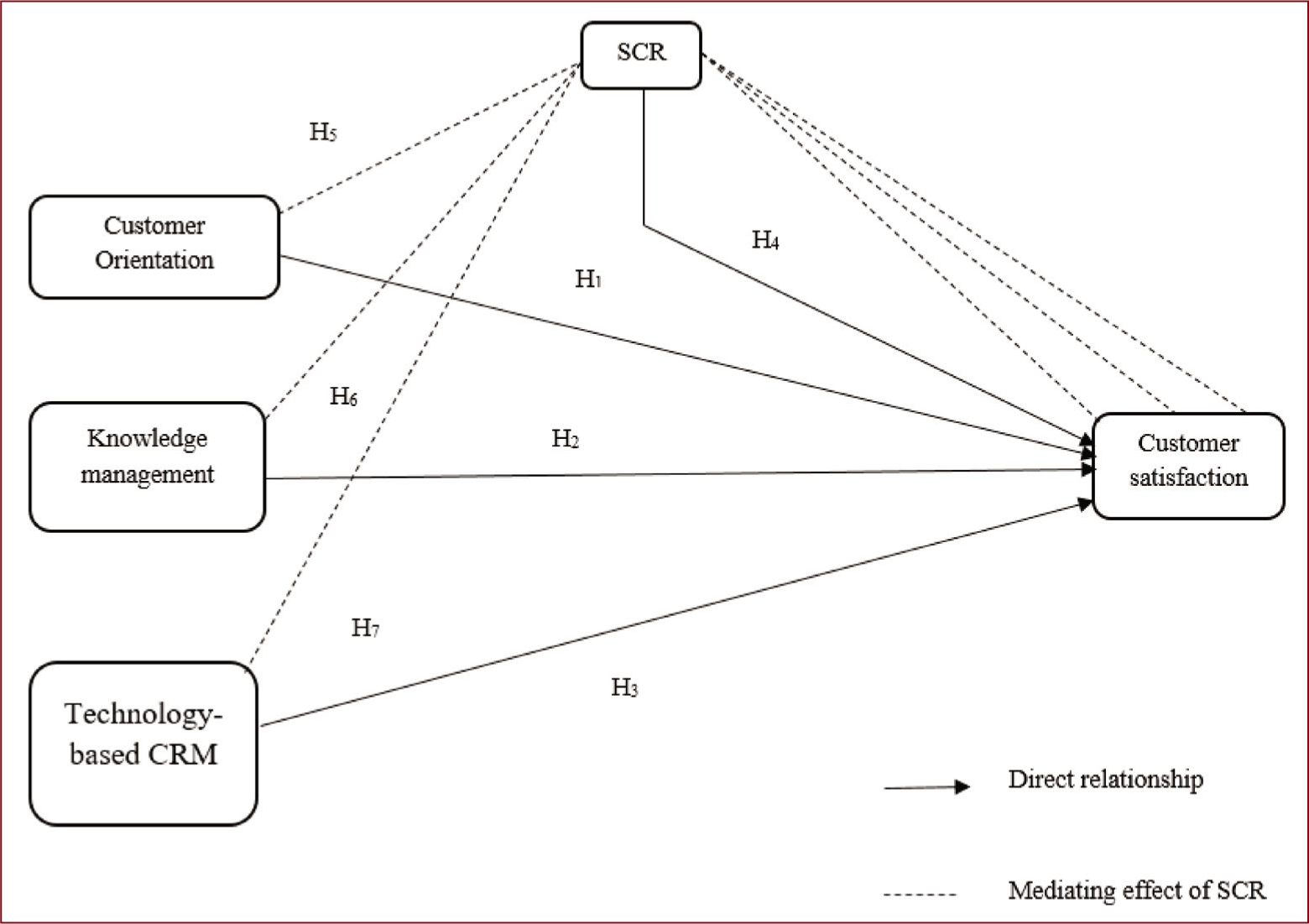
H5: SCR mediates the relationship between customer orientation and customer satisfaction. H6: SCR mediates the relationship between knowledge management and customer satisfaction. H7: SCR mediates the relationship between technology-based CRM and customer satisfaction.
Figure 1 depicts the conceptual framework of SCR, CRM dimensions and customer satisfaction. The direct relationship between the construct is represented through solid arrows while the mediating effect of SCR between the dimensions of CRM and customer satisfaction is illustrated through a dotted line.
Conceptual Framework.
Methodology
Method and Sample
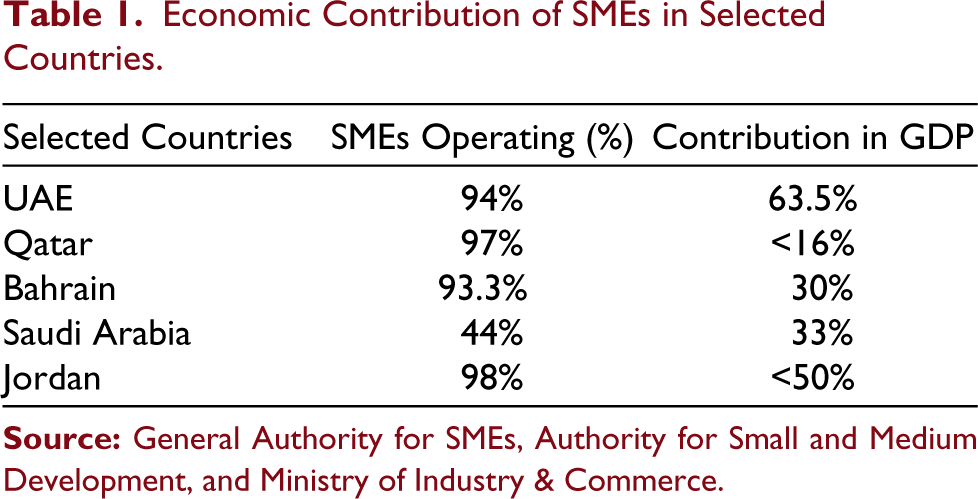
This study aims to examine the mediation role of SCR between CRM dimensions and customer satisfaction in SMEs. A quantitative approach was used in this study to obtain quantitative results of research constructs. A survey-based questionnaire designed based on a points Likert scale was used to gather data. Furthermore, an online questionnaire was distributed to different customers of SMEs through Google Forms. The questionnaire has been distributed to the customers of SMEs which were selected through the medium of social media. The focus of the study was the customers of SMEs in the Middle East, specifically in Jordan, Qatar, the United Arab Emirates, Saudi Arabia and Bahrain. The sample for this study was drawn from SMEs operating in these countries. The reason for targeting these countries from the Middle East was that the SMEs of these countries had a significant share in their gross domestic product (GDP). The economic contribution of SMEs in selected countries is presented in Table 1. We tracked the customers of SMEs in these five countries through social media and a questionnaire was distributed. A technique of convenient sampling was used. Initially, we sent a questionnaire to 630 customers of SMEs of which 60 customers did not respond and the rest 41 responses were omitted due to response bias. So, in total 529 observations with a response rate of 83.9% were collected and analysed, which was deemed an appropriate sample size for the data analysis of the study. Because the minimum requirement for sample size is 100–200 which was suggested by Wong (2013). The research data were analysed using structural equation modelling (SEM) with Smart PLS as the analytical tool. PLS-SEM is an efficient technique for exploring the interrelationships among multi-item constructs (Hair et al., 2019) and this technique is widely employed among social sciences and business scholars to analyse multivariate data. The wide acceptance of the PLS-SEM technique among students and scholars is because it can facilitate researchers to examine the simultaneous association between the latent and study variables in a complicated model. Furthermore, it can be equally helpful for small and larger sample sizes (Memon et al., 2021). Moreover, the SEM technique has two sub-models; an inner model which reflects the association between the explanatory and outcome latent variable. On the other hand, an outer model depicts an association between the latent variable and their perceived measure.
Economic Contribution of SMEs in Selected Countries.
Instrument Design
The survey items used in this study were adopted from previous research studies. The items measuring SCR were adopted from the study conducted by Asamoa et al. (2021). The items used to measure customer focus and knowledge management were taken from the research conducted by Sin et al. (2005). The items assessing customer satisfaction were adopted from the study conducted by Le et al. (2020), and the items measuring technology-based CRM were taken from the studies conducted by Lin et al. (2010) and Sin et al. (2005). By using previously validated survey items, the current study was able to build upon existing research and ensure the validity and reliability of the survey instrument.
Findings
Demographic Variables
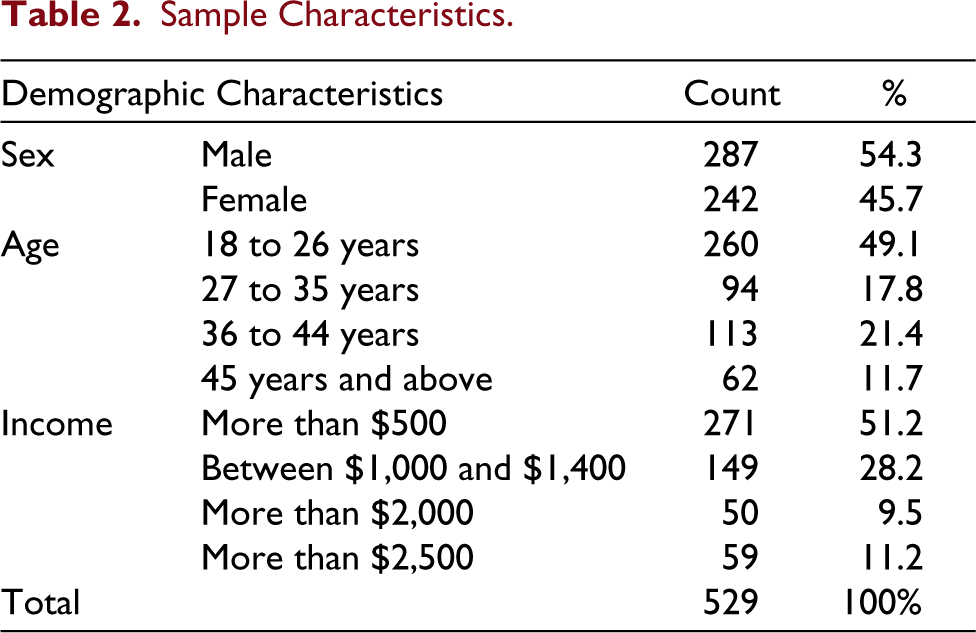
The data highlight the variation in the respondents’ gender, age and income. The sample includes 529 individuals, of which 54.3% are males and 45.7% are females. Moreover, the majority of the sample falls into the 18 to 26 years age bracket, with 49.1% of the individuals, followed by 21.4% of respondents in the age bracket of 36 to 44 years. The respondents in age brackets between 27 and 35 years and 45 years and above make up only 17.8% and 11.7% of the sample, respectively. The income of respondents is converted into US dollars; the majority of the sample earns more than $500, with 51.2% of individuals falling into this category. The next largest group, at 28.2%, earns between $1,000 to $1,500. A smaller proportion, 9.5%, earns more than $2,000, and only 11.2% earns more than $2,500. Overall, these data provide insight into the demographic composition of the sample population. The sample is predominantly male and young, with the majority earning a relatively low income (more than $500). Table 2 summarizes these characteristics.
Sample Characteristics.
Measurement Model Assessment
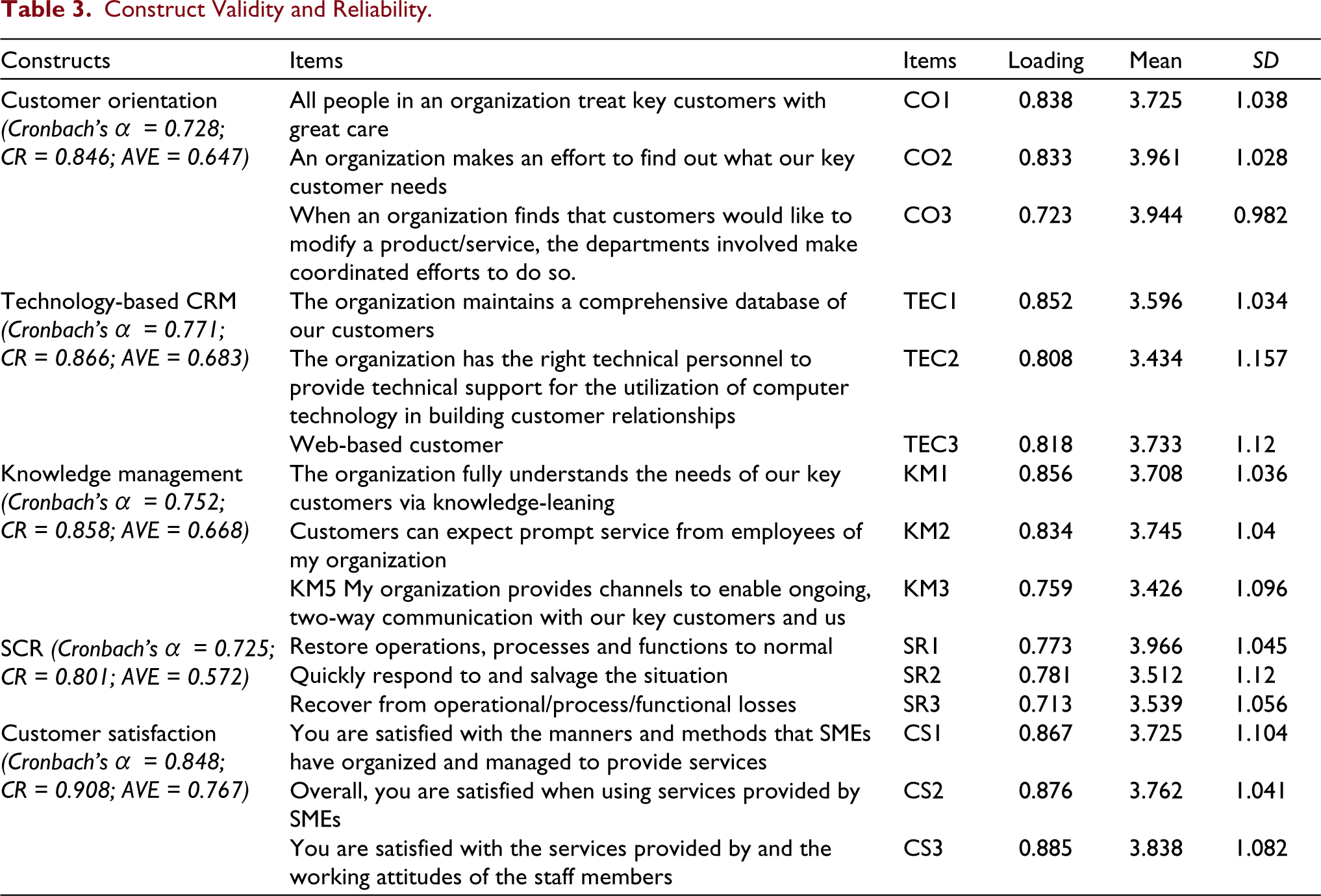
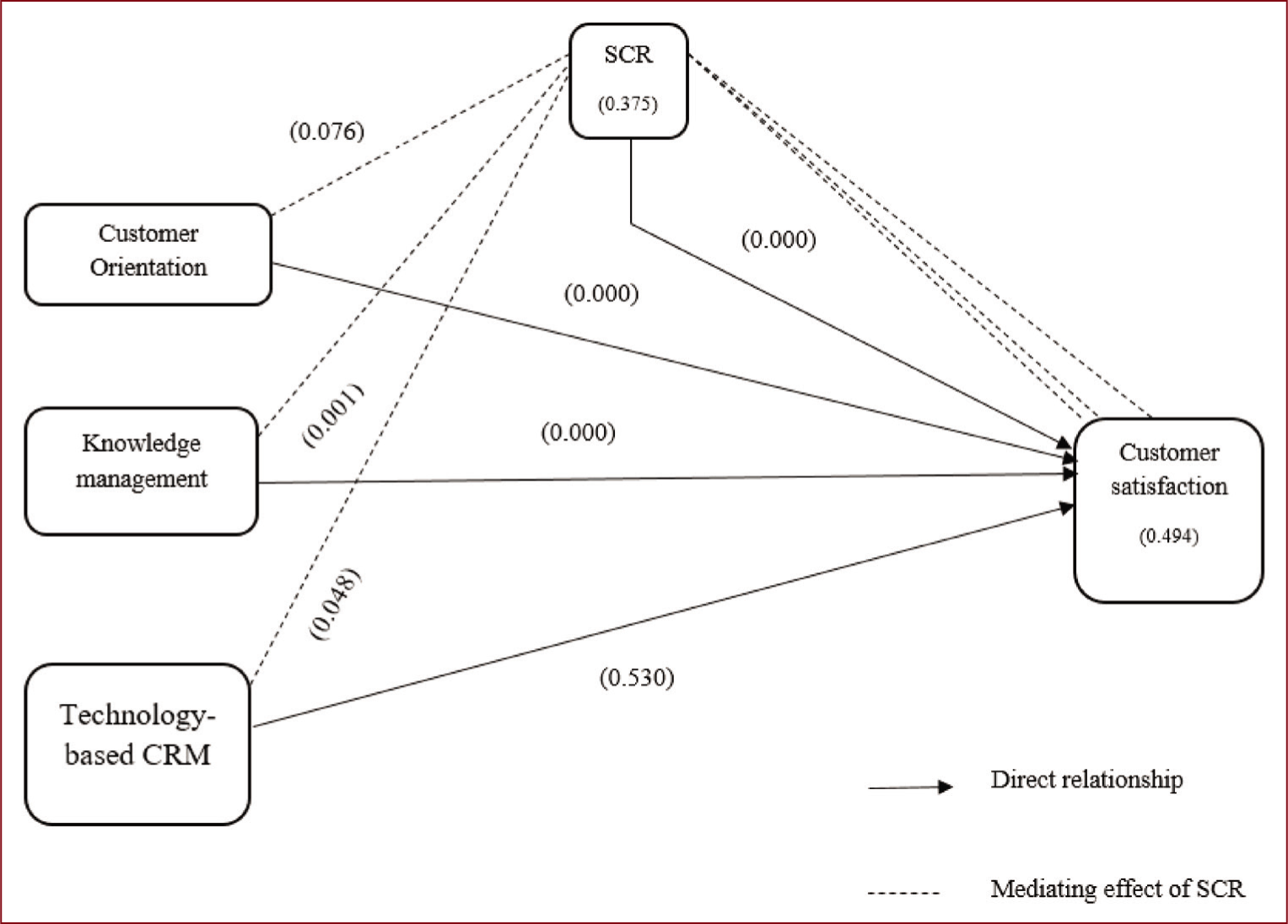
Measurement models are assessed based on the constructs’ validity which involve internal consistency, reliability and discriminant reliability (Sarstedt et al., 2022). The internal consistency and reliability of a measurement model can be assessed using several statistics, including Cronbach’s alpha, composite reliability (CR) (rho_c) and average variance extracted (AVE). Based on the results, Cronbach’s alpha coefficients for all five constructs are above the commonly recommended threshold of 0.7, indicating good internal consistency (Hair et al., 2017). The CR coefficients for all constructs are also above the recommended cutoff of 0.7, indicating good construct reliability (Hair et al., 2019). Convergent validity is evaluated through AVE; values above 0.5 are generally considered acceptable (Fornell & Larcker, 1981). In the current data, all constructs meet this threshold. Overall, the measurement model appears to have good internal consistency and reliability. The factor loading scores show that all items have high loadings on their respective constructs. As suggested by Hair et al. (2019), factor loadings above 0.7 are an indicator of reliability. In this study, all items have factor loadings above this threshold, ranging from 0.715 to 0.885, indicating that the items are measuring their intended constructs well. Table 3 and Figure 2 summarize these results.
Construct Validity and Reliability.
Full Path Research Model.
Structural Model Assessment
A structural model assessment was conducted to examine the relationship between customer satisfaction and SCR. The assessment involved analysing several statistical indices, including the standardized root mean square residual (SRMR), the effect size index (f²) and the coefficient of determination (R²) (Hair et al., 2019).
The SRMR value of 0.070 suggests that the model provides a good fit to the data (Sarstedt et al., 2022). The effect size index (f²) value of 0.403 indicates that the relationship between CRM, customer satisfaction and SCR is moderate to strong (Hair et al., 2017).
The R² value of 0.494 for customer satisfaction indicates that 49.4% of the variance in customer satisfaction can be explained by CRM. The R² value of 0.375 for SCR suggests that 37.5% of the variance in SCR can be explained by CRM dimensions.
Hypotheses Testing
Hypothesis testing is an essential step in SEM that involves evaluating the statistical significance of the relationships between variables in a proposed model. Partial least squares (PLS) is a widely used SEM approach that can accommodate complex models and handle small sample sizes (Hair et al., 2019). In PLS, the bootstrapping method can be used to test the significance of the estimated path coefficients and their standard errors (Henseler et al., 2016). Additionally, the β coefficient can be used to determine the strength and direction of the relationships between variables in the model (Sarstedt et al., 2022). Table 4 and Figure 2 represent the results of the hypotheses tests.
Table 4 represents the findings of hypotheses (H1–H7). The results of our study accepted H1 and H2, stating that customer orientation and knowledge management positively and directly influence customer satisfaction with highly significant β values of 0.304 and 0.301, respectively. Hence, both hypotheses are supported through our study. On the other hand, H3 is not confirmed by our study which stated that technology-based CRM has a direct impact on customer satisfaction since its p value is greater than .05. Therefore, H3 is rejected. Furthermore, H4 stated that SCR positively influences customer satisfaction and the findings of our study confirm this hypothesis (β = 0.201, p < .05). Thus H4 is supported. H5 is not supported by our study which stated the mediation role of SCR between customer orientation and customer satisfaction since its p value is greater than .05. Thus, our result rejects the H5. Whereas, H6 and H7 predicted that SCR mediates the relationship between knowledge management and customer satisfaction and technology-based CRM and customer satisfaction. The findings of our study confirmed that SCR plays a mediating role between knowledge management and customer satisfaction and technology-based CRM and customer satisfaction with β values of 0.084 and 0.030, respectively (p < .05). Thus, both H6 and H7 are supported in our study.
Direct and Indirect Path Analysis.

Discussion
This study sought to identify the key factors contributing to customer satisfaction in the context of collaborative SCR and CRM practices. Specifically, we investigated the mediating role of SC resilience between different dimensions of CRM (including, customer orientation, technology-based CRM and knowledge management) and customer satisfaction. Our analysis indicates that the direct paths between customer orientation, knowledge management and SCR and customer satisfaction are supported by empirical data.
Our study supported the direct path relationship between the dimensions of CRM (customer orientation and knowledge management) and customer satisfaction except the technology-based dimension of CRM and customer satisfaction. As we discussed above, customer orientation enables businesses and SMEs in the region of the Middle East to encourage customer-oriented tradition by understanding and recognizing the demands of customers and then transforming that information into manufacturing products and services to achieve the satisfaction of customers. Furthermore, the finding of H1 in our study are in line with the results of Singh et al. (2023) and Ismail (2023). On the other hand, the direct path relationship between customer satisfaction and knowledge management indicated that SMEs in the Middle East can provide distinguished products with great service and differentiate themselves from their competitor means they constantly explore ways to improve the satisfaction of their customers through managing the knowledge regarding their interest and preference. The study by Hamzah and Shamsudin (2020), Chi (2022) and Yusr et al. (2022) showed a direct impact of knowledge management on customer satisfaction.
H3 is rejected through our study which stated that technology-based CRM has a direct impact on customer satisfaction. This result may be because of lack of trust and privacy issues are two of the primary impediments in the era of technology since trust leads to customer satisfaction. The findings of the study by Dehghanpouri et al. (2020) supported the results of our study by stating that trust substantially influenced the satisfaction of customers; thereby, trust and privacy issues both noticeably influenced the technology-based CRM. Similarly, the study by Sethi (2021) also mentioned that trust is a determinant of technology-based CRM and plays a significant role in achieving customer satisfaction and loyalty. On the other hand, Khan et al. (2020) found a positive impact of CRM on customer loyalty and they also revealed that customer satisfaction partially mediates between CRM, company reputation and customer loyalty.
Moreover, the findings of H4 reveal that SCR has a direct impact on customer satisfaction. Our study has also supported the idea that SCR contributes to more organizational success and changes adaptability across the SC, which in turn influences customer satisfaction. This result is consistent with prior studies that have established the importance of SCR in improving customer satisfaction (Das et al., 2021; Lin et al., 2023). Furthermore, unpredictable and unstable situations can be endured by enterprises through their resilient characteristics and become more competitive in the business markets which makes them continue their operations for a long period. The survival of enterprises for a long time enables customers to build their trust in them which ultimately leads to satisfaction of customers (Karl et al., 2018). In contrast to our result, Gligor et al. (2020) found that SCR is significant for attracting new customers, but greater resilience is not favourable every time as soon as a customer relationship is built.
Furthermore, the results reveal that SCR mediates the relationship between knowledge management and technology-based CRM and customer satisfaction. In addition, this result is supported by previous studies by Hussain et al. (2022), Asamoah et al. (2020) and Madhani (2020) which pointed out that SC suppliers and partners can also contribute to building a more resilient SC and more loyal customers. By prioritizing the needs of their customers, companies can better understand customer demand preferences and develop more effective SC strategies that can withstand disruptions and changes in the market. Similarly, the positive and significant roles of knowledge management and customer satisfaction confirm its relevance. However, On the other hand, Bahrami and Shokouhyar (2022) considered SCR as a mediator between big data analytic capabilities and firm performance and they found SCR as a partial mediator between them. Theoretically, this result is supported by the findings of Alani et al. (2023), Yang et al. (2022) and Irfan et al. (2021). For instance, Yang et al. (2022) indicated that knowledge management across different functions allows them to work together and thus better integrate, coordinate and reconfigure processes and resources towards changes that enhance SCR and customer satisfaction. Moreover, it is worth noting that while firms that prioritize SCR may have a better understanding of market changes, they still need sufficient capabilities to respond to fluctuations in the market, customer expectations and competitors. Without these capabilities, firms may struggle to ensure reliable operations and address downstream market changes effectively.
Implications
The results of this study have several critical theoretical and managerial implications for firms seeking to improve customer satisfaction through collaborative SCR.
Theoretical Implication
Our study provided some theoretical implications for future research. It gives a comprehensive understanding of the association between the different dimensions of CRM and customer satisfaction by employing survey data on 529 customers of SMEs in the Middle East region. First, this study has demonstrated a direct and indirect relationship between dimensions of CRM and customer satisfaction, but this study is a pioneer attempt to evaluate the mediating effect of SCR on CRM and customer satisfaction. Therefore, studying the mediating effect is imperative for researchers as it provides better insights into the influence of the third variable on the association between two variables in a model. The findings revealed that a resilient SC can be used to build CRM and will increase customer satisfaction (Bahrami & Shokouhyar, 2022). Second, this study will provide an understanding of the customer-oriented approach by reducing the disruptive effect on the performance of enterprises which directly influences customer satisfaction (Xu et al., 2014) and long-term relationships with customers can be maintained through knowledge management about the preferences and interests of customers (Hassan et al., 2015).
Managerial Implications
This study has managerial implications for the top management of SMEs to establish a more resilient SC by emphasizing customer orientation, knowledge management and technology-based CRM (Wicaksono & Illes, 2022). Since, understanding and prioritizing the needs of their customers, SMEs can develop more effective SC strategies that can withstand disruptions and changes in the market, which in turn will contribute to building a more resilient SC. In addition, this study will provide help to top managers of SMEs in evaluating SCR and CRM in determining customer satisfaction and this will foster their capabilities to implement more resilience in their current SC management system (Das & Hassan, 2022). Additionally, this study highlights that SMEs can promote partnerships between their suppliers and partners through a customer-focused approach. Therefore, it is recommended that top management of SMEs invest in technology-based CRM to improve their adaptability and resilience across the SC which will assist in achieving the satisfaction of customers by boosting the functions of SCs and reducing disruptions (Santouridis & Veraki, 2017). Furthermore, this study has also raised another important managerial implication. SMEs are more inclined towards labour as compared to large-scale businesses because of the expensive machinery and equipment. Therefore, this study showed that customer satisfaction is adversely affected by the knowledge and skills of employees. However, top management of SMEs should invest in the knowledge and skills of their employees by providing training to them.
This study has a few limitations as we focused on the population of SMEs in Middle Eastern countries. In the future, scholars can explore CRM practices and SCR in different sectors, for instance, large-scale enterprises (textile, steel, automobile and manufacturing industries). Furthermore, this study used a quantitative approach to examine the effect of CRM and SCR on customer satisfaction and the mediating role of SCR between CRM and customer satisfaction. Future research can adopt a mixed method approach for the analysis and can also study the factors affecting CRM’s different dimensions, SCR and customer satisfaction. This study provided the demand-side perspective; future research can focus on the supply-side perspective of CRM and SCR.
There is still much domain for research on SCR in the small and medium industries, like circumstances of exposure because of the effect of the bullwhip in SCM, and commencement of information technology and its implementation may also be investigated in future studies. Furthermore, in the future, researchers may employ longitudinal data to capture the resilience of the SC before disruption, at the time of disruption and after the disruption stage linked with outcomes.
Conclusion
In conclusion, this study underscores the importance of prioritizing customer orientation, technology-based CRM and knowledge management in building resilient SC and enhancing customer satisfaction. Moreover, this study also analyses the mediation role of SCR between customer satisfaction and three different dimensions of CRM (i.e., customer orientation, knowledge management and technology-based CRM).
The findings of this study show that customer satisfaction can be achieved by customer orientation, knowledge management and SCR, while surprisingly not being affected by technology-based CRM. The technology-based CRM has an insignificant impact on customer satisfaction may be due to privacy and trust issues since trust leads to satisfaction of customers which in turn has an impact on the effectiveness of technology-based CRM practice. As mentioned above, the significance of these three drivers (customer satisfaction, knowledge management and SCR) on customer satisfaction is supported by Lin et al. (2023), Gu et al. (2023), Ismail (2023) and Karl et al. (2018). In addition, the results reveal that SCR significantly mediates the relationship between customer satisfaction and CRM dimensions (knowledge management and technology-based CRM). These elements were derived from anecdotal evidence from earlier investigations (Asamoah et al., 2020; Rejikumar et al., 2021). In a nutshell, this study concludes that knowledge management and customer orientation are significant drivers to examine the CRM practice in SMEs in the context of the Middle East region. CRM practices in SMEs of the Middle East region are not affected by technology; it may be because customers of SMEs are reluctant to trust e-CRM systems in the region of the Middle East. Furthermore, SCR is beneficial for SMEs to mediate a relationship between customer satisfaction and the different dimensions of CRM practices. As SME becomes more resilient and stable, it is able to collect more information about the customers and transform and manage this knowledge effectively, more able to focus on the production of distinguish product and customer-oriented strategies and ultimately able to gain satisfaction from their customers. Consequently, SCR is essential for the development of a firm’s value and CRM should be undertaken to enhance customer satisfaction. In particular, this is crucial when SCR is struggling for a prospective strategic role. SMEs should invest in strategies and policies that are proven to be better equipped to manage disruptions and uncertainties and respond to changes in the market, thereby ensuring their effective operations and meeting the needs of customers to satisfy them.
Footnotes
Declaration of Conflicting Interests
The authors declared no potential conflicts of interest with respect to the research, authorship and/or publication of this article.
Funding
The authors received no financial support for the research, authorship and/or publication of his article.