



Abstract
The article explores the relationships between different forms of empowerment—psychological, social, political and economic and their influence on work–life balance and women’s start-up intentions in Lebanon. The study also investigates the mediating role of work–life balance in these relationships. Utilizing a sample of 380 Lebanese women, the study employs factor analysis, reliability analysis, regression models and mediation analysis to examine the direct and indirect effects of different empowerment variables on work–life balance and start-up intentions. The study reveals statistically significant correlations between various types of empowerment and work–life balance. Work–life balance acts as a mediator between the empowerment variables and entrepreneurial intentions. The partial mediation suggests that while work–life balance plays a significant role, other factors may contribute to women’s start-up intentions. The study is limited by its sample size and reliance on self-reported data. It is context-specific to Lebanon, and the results may not be generalizable to other cultural contexts. Despite these limitations, the findings provide valuable insights for policymakers, practitioners and scholars interested in women’s empowerment and entrepreneurship. The study offers essential guidance for developing programmes and policies to empower Lebanese women to launch their businesses. By understanding the role of work–life balance, interventions can be more effectively tailored to improve entrepreneurial well-being and entrepreneurial activity.
Introduction
A woman’s entrepreneurial start-up ambition is her desire to launch her own business. This includes finding a target market, creating a business strategy, and implementing that plan (Salamzadeh, 2018). Shatila and Jalloul (2022) found that women’s educational background, social networks, and family support all play a role in determining whether they would establish their businesses. Women business owners encounter challenges that include financial limitations, an inadequate support system, and cultural norms and expectations that are not very objective against women (Kamberidou, 2020). However, many women’s rights entrepreneurs have considered starting their businesses. Townsend et al. (2010) stated that entrepreneurial start-up intention refers to the decision to launch a new business. Women business owners may fear taking the plunge for various reasons, such as lack of confidence, negative peer pressure and financial resources. While many nations have made strides towards gender equality, Shatila and Jalloul (2023) discovered that women in Lebanon encounter substantial obstacles when trying to create their businesses. Consequently, they were less inclined to do so. The economic growth potential of a society is hindered when women are not empowered, which includes a lack of access to resources, social attitudes and cultural norms (Duflo, 2012). According to Ushakov et al. (2023a, 2023b), societal attitudes restrict job opportunities and access to resources for women in Lebanon, which may discourage them from pursuing entrepreneurship. Women may find it more challenging to pursue their business goals because of a lack of resources to help them strike a work–life balance and insufficient educational opportunities (Shastri et al., 2019). According to Shatila and Jalloul (2023), women business entrepreneurs face this obstacle, which slows down the economy. According to Tlaiss and Kauser (2019), Lebanon has lost economic growth opportunities. This research shows the importance of support programmes that provide women with the tools they need to become entrepreneurs (Nigam & Shatila, 2023). Eliminating obstacles that prevent women from pursuing entrepreneurial opportunities will benefit Lebanon economically, encourage women to enter the workforce and foster a more varied and inclusive corporate environment (Ghorfi & Jurd de Girancourt, 2022). According to Shatila and Jalloul (2022), female business owners in Lebanon face a particularly steep uphill battle when trying to juggle the many duties of founding and maintaining a business with those of raising a family.
The role of women in entrepreneurship has gained significant attention in recent years; Lebanon represents an interesting case study in this regard. While there is growing interest in promoting women’s empowerment and entrepreneurship in the country, various challenges hinder the realization of these goals. One of the key issues that requires investigation is the impact of empowerment on women’s entrepreneurial intention in Lebanon, according to a study by Ushakov et al. (2023). Empowerment encompasses various aspects including financial independence, access to resources and self-efficacy. Understanding how these elements influence women’s inclination to start and sustain business is crucial for advancing both women’s economic participation and Lebanon’s economic growth (Chatterjee et al., 2022). Additionally, the role of work–life balance as a mediating factor in this relationship remains underexplored. Women often grapple with the dual responsibilities of managing a business and fulfilling family roles, and how a balance between these aspects affects their entrepreneurial intention merits thorough investigation, according to Shatila et al. (2023).
Despite the growing body of research on women’s entrepreneurship globally, there is a significant research gap when it comes to Lebanon, especially regarding the mediating role of work–life balance in the relationship between empowerment and entrepreneurial intention. Previous studies have examined various factors influencing women’s entrepreneurial intentions in different contexts, but a dearth of research specifically delves into the Lebanese context. This gap hinders the development of tailored policies and strategies to support female entrepreneurs in Lebanon. Moreover, understanding the mediating effect of work–life balance is essential, as it can provide valuable insights into how women navigate the complexities of entrepreneurship while fulfilling familial obligations. Therefore, this research seeks to bridge these gaps by investigating the impact of empowerment on women’s entrepreneurial intention in Lebanon and examining the mediating role of work–life balance, contributing to a more nuanced understanding of the challenges and opportunities faced by women entrepreneurs in the country.
This study makes several noteworthy contributions to the field of women’s entrepreneurship, particularly within the context of Lebanon. First, it sheds light on the multifaceted challenges that female entrepreneurs in Lebanon encounter, ranging from financial limitations to cultural norms that may discourage them from pursuing their business aspirations. By identifying these barriers, this research raises awareness and provides a basis for designing tailored interventions and policies to address these specific challenges, ultimately fostering a more conducive environment for women to thrive in entrepreneurship. Second, this study underscores the significance of self-efficacy in women’s entrepreneurial endeavours. This study highlights those self-assured women, who have confidence in their abilities to succeed despite setbacks, are more likely to embark on entrepreneurial ventures. This finding has broader implications beyond Lebanon, emphasizing the importance of providing women with resources and support systems that bolster their self-confidence and motivation.
Literature Review
Self-efficacy theory plays a pivotal role in understanding women’s entrepreneurial intentions in Lebanon. According to this theory, an individual’s belief in their ability to perform a specific task or achieve a particular goal greatly influences their willingness to engage in entrepreneurial activity. Empowerment initiatives that enhance self-efficacy, such as access to education, training and mentorship programmes, can have a profound impact on confidence in starting and sustaining a business (Gates, 2019). Overcoming sense of self-efficacy can lead to stronger entrepreneurial intentions as women become more assured of their capabilities, thereby encouraging them to overcome obstacles and embrace entrepreneurship as a viable career decision (Alshebami et al., 2023). Work–life balance can be seen as a mediator in this relationship, as empowered women may be more adept at managing the demands of entrepreneurship while balancing their personal lives, thereby strengthening their entrepreneurial intentions (Doepke & Tertilt, 2019).
Social capital theory is another essential framework in the context of women’s entrepreneurial intentions (Chatterjee et al., 2022). This theory emphasizes the significance of social networks, relationships and connections in influencing entrepreneurial outcomes. Social networks play a significant role in business and society; empowered women who have access to a robust social capital network may be better positioned to pursue entrepreneurial endeavours, according to Doepke and Tertilt (2019). These networks can provide valuable resources, including financial support, knowledge and opportunities, which can positively affect women’s entrepreneurial intentions. Furthermore, work–life balance may be affected by the social capital network’s support, as these relationships can help manage the dual demands of entrepreneurship and personal life, further mediating the relationship between empowerment and entrepreneurial intentions among women in Lebanon.
Hypotheses Development
More than 49.6% of the world’s population are women, lending validity to the premise that women may significantly affect economic development. The position of women has increased in many developing countries. When people are given greater control over their lives than they previously had, they are empowered (Block, 2016). McLaughlin (2016) argued that empowerment is more of a means to an end than a fixed condition and that its most direct application is to those who are marginalized, unequally treated, or discriminated against. Previous studies confirmed the value of this approach. According to Gates (2019), empowerment is a state of mind that encourages women to take initiative in their career. Indeed, ‘psychological women’s empowerment’, as some academics use the term, is a mental condition in which one experiences sentiments of autonomy, self-assurance and control over one’s destiny. One’s sense of competence, or belief in one’s capacity to execute one’s job, as well as one’s sense of autonomy in the workplace and one’s belief in one’s power to influence the results of one’s work, all fall under this umbrella of ‘cognitions’. Accordingly, it is hypothesized that the degree to which women experience psychological empowerment influences their participation in entrepreneurial activities. According to Marzuki et al. (2021), strong independent women are less likely to be discouraged by the possibility of business failure. Following the above arguments, we propose the following hypothesis for the relationship between psychological empowerment and women’s entrepreneurship:
H1: Women’s psychological empowerment has a positive impact on their entrepreneurship intention.
Normative masculinities in entrepreneurship development techniques reflect the social constructions of gender, time, location, economy and culture. Given the social nature of entrepreneurship and the possibility that it is best understood as a social activity with economic ramifications, Santos (2012) argues that this perspective should be included in efforts to empower women. Haugh and Talwar (2016) investigate social entrepreneurship, women’s empowerment and social transformation. Commercial innovations that empower and inspire women to participate in the economy have rearranged their traditional roles. Movono and Dahles (2017) examined the link between women’s entrepreneurship and their increased economic and political power, which in turn influences workplace outcomes such as innovation and collaboration. According to this study, social entrepreneurs promoted women’s empowerment more effectively than NGOs, despite both types of entrepreneurs being equally capable. Based on research on professional women’s efforts to encourage their rural counterparts to succeed, Ghodsee (2018) argues that social entrepreneurship should be used to help women achieve economic independence. This is consistent with the results of Lenka and Agarwal (2017), who propose that enhancing women’s agency in India may be accomplished through initiatives to expand their skills and bring them into the mainstream economy. For example, the government’s decision to encourage women to participate in social entrepreneurship initiatives may lead to new job opportunities, which may help eliminate the current challenges to women’s economic empowerment (Alshebami & Alzain, 2023). We can test the following hypothesis for the relationship between social empowerment and women’s entrepreneurial intention:
H2: Women’s social empowerment positively affects their entrepreneurship intentions.
According to Paxton et al. (2020), rules and regulations are crucial for the advancement of women in politics. All areas of business and society are impacted by laws and regulations that affect women’s ability to advance. The state government recognized the importance of empowering women and initiated several programmes with this goal in mind. Collins (2022) investigated political climate and argued that women still face institutionalized discrimination. Women’s economic and social empowerment has made great strides, but political empowerment has not (Al-Qahtani et al., 2020; Aloulou, 2018). National law protecting and advancing women’s rights in Saudi Arabia has led to greater women’s empowerment and better social, economic and political standing. Welsh et al. (2014) claim that women in Saudi Arabia now feel more economically secure thanks to the growth of the tourism industry. According to Cornwall and Rivas (2015), women’s empowerment is aided by progressive modernization and a non-discriminatory gender policy. To achieve gender equality and women’s empowerment, as stipulated in the Sustainable Development Goals, Staeheli (2004) examined the significance of feminist mobilization. They concluded that feminism can stand its ground, defend human rights and advocate for economic, ecological and gender equality. According to Block (2016), political empowerment gives people the authority to make decisions and influence policies that affect their lives. When women felt more politically empowered, Alsaad et al. (2023) found that they were more likely to be interested in starting businesses. Legal protection and initiatives that assist women in starting and running their businesses encourage them to do so (Henry et al., 2017). We examine the following hypothesis for the relationship between political empowerment and women’s entrepreneurship:
H3: Women’s political empowerment positively affects their entrepreneurship intentions.
There is a strong association between women’s political empowerment and economic progress, meaning that empowering women in politics increases technological innovation (Doepke & Tertilt, 2019). According to previous studies, economies might benefit from granting women more economic power and legal protection. Women in corporate leadership positions may find more opportunities to start and operate their businesses because of their social capital and shared accountability. According to Ugwu et al. (2016), women may achieve professional success while maintaining an excellent work–life balance. In Vietnam’s informal sector, women-led businesses were shown to create less value than male-led firms, whereas in the formal sector, when both values were higher, women were more likely to lead medium-sized firms. Women’s entrepreneurship is an essential aspect of regional economic development projects, and Bernhard and Olsson (2020) suggest that women-only business networks may be a great source of encouragement, guidance and connections. An essential part of Rawat’s (2014) discussion was devoted to women’s empowerment and their place in modern society. Getting out of poverty, keeping up with inflation, providing for a family and making more money are the reasons women establish businesses in the black market. According to Cornwall (2016), economic empowerment gives people and groups agency over their economic circumstances. According to Duflo (2012), economic empowerment is the most crucial factor in determining whether a woman in the Middle East will pursue an entrepreneurial path. There is a lot of comparisons between male and female entrepreneurs in books on entrepreneurship. Studies have shown that female entrepreneurs still have ways to go before they catch up with their male counterparts despite the fact that their contributions are highly valued. Compared with males, women entrepreneurs have different goals when starting a firm. It has been determined that women are naturally gifted business owners, but it is unfair to compare them with male entrepreneurs. Educational and training institutions, lawmakers, academics and other stakeholders may use the results to welcome the traditionally male-dominated field of entrepreneurship to female entrepreneurs (Dixit et al., 2022). We can propose the following hypothesis for the relationship between economic empowerment and women’s entrepreneurial intention:
H4: Women’s economic empowerment positively affects their entrepreneurship intentions.
Numerous studies revealed that work–life balance may mediate the link between psychological empowerment and women’s entrepreneurial and professional ambitions (Al-Rashdi & Abdelwahed, 2022; Aloulou et al., 2023). Psychologically empowered women are more likely to believe in themselves and their talent, which increases the likelihood that they will seize entrepreneurial opportunities. However, Rehman and Azam Roomi (2012) claim that women face unique challenges in maintaining a work–life balance due to the time and energy required to establish and operate their businesses. The concept of work–life balance, or the capacity to successfully juggle professional and entrepreneurial responsibilities, has significantly impacted whether women are interested in starting their businesses. The researcher observed that work–life balance might mediate between women’s psychological empowerment and their intention to start a business. Women who have found a good work–life balance are more inclined to believe in themselves and their talents, making them more likely to create businesses. Block (2016) states that women who balance their professional and entrepreneurial lives are likely to feel empowered and pursue business ownership. The authors argue that encouraging a healthy work–life balance would boost women’s self-esteem and contribute to the development of flourishing firms run by women. Rey-Martí et al. (2015) examined how work–life balance affects women’s propensity to start their businesses. Goffee and Scase (2015) observed that women who could balance their professional and entrepreneurial lives were more likely to look for and succeed in their entrepreneurial intentions. Logan (2014) discovered that women who could balance their professional and entrepreneurial lives were more likely to start their businesses. We can advance the hypothesis for the mediating effect of work–life balance on the relationship between psychological empowerment and women’s entrepreneurship intention as follows:
H5: Work–life balance mediates women’s psychological empowerment and entrepreneurial intention.
How women perceive work–life balance may influence the association between women’s social empowerment and their ambitions to establish their businesses (St-Jean & Duhamel, 2020). If women can keep their entrepreneurial and professional lives in check, they are more inclined to take on chances as entrepreneurs. Odriozola and Baraibar-Diez (2018) examined how women’s work–life balance affects their decisions while starting a business. They found that it had a significant effect. The results of the research conducted by Poggesi et al. (2019) on businesswomen and the resolution of work–life conflicts are shared. Zreik et al. (2023) found that women who want to be entrepreneurs prioritize an excellent work–life balance. The researchers aimed to determine how gender plays a role in developing entrepreneurial vocations. More specifically, Walker et al. (2008) delve into the challenges female business owners face when juggling their home and work lives. According to St-Jean and Duhamel (2020), an excellent work–life balance may reduce the correlation between women’s social empowerment and their desire to launch their businesses. More women would start their businesses or help out existing ones if we promoted an excellent work–life balance, as Gambles et al. (2006). This leads to the following hypothesis.
H6: Work–life balance mediates the relationship between women’s social empowerment and their entrepreneurship intentions.
Finding a good work–life balance may help women achieve their political empowerment and business start-up goals (Panda & Sahoo, 2021). A woman’s ability to manage her time well between work and family, and her political influence may determine whether she wants to be her boss. Contrary to popular beliefs, several researchers have shown that women who are successful in balancing their professional and entrepreneurial lives are more likely to be interested in starting their businesses (Rana et al., 2024). There seems to be a strong correlation between women’s political empowerment and their desire to establish a business and work–life balance. Socio-economic studies have shown a correlation between women’s political empowerment and their likelihood of working outside the home and starting their businesses (Kovid et al., 2022). People are better equipped to embark on entrepreneurial pursuits, with access to more possibilities and resources. However, a woman may enter business for more freedom and independence. According to Zreik (2023a), a woman’s ability to establish a business and her willingness to do so may be significantly impacted by burnout and stress from an unhealthy work–life balance. Confidence and security in commercial pursuits are enhanced when women can balance their home and work lives effectively.
H7: Work–life balance mediates the relationship between women’s political empowerment and their entrepreneurship intentions.
According to research, women who believe that they can support themselves financially are more likely to pursue careers or start businesses. However, Petersen (2021) claims that if they cannot find a way to balance their work and home life, they will end up stressed and burned out, which would lessen their desire to start a business. However, Carlock (2010) claims that women who maintain harmonious entrepreneurial and professional lives are more likely to be successful business owners. Uppalury and Bhaskar Racherla (2014) suggested that women’s economic empowerment and desire to establish their businesses are mediated by work–life balance. According to Zreik (2023b), successful women keep their entrepreneurial and work lives separate, yet complementary. Hilbrecht and Lero (2014) found that women who felt they had a healthy work–life balance were more likely to start their businesses. This is especially true for economically powerful women. Women’s ability to strike a work–life balance is crucial for their business success. Another study by Walker et al. (2008) indicated that women with an excellent work–life balance were more likely to start their businesses. Women’s economic empowerment benefited their plans to start businesses, and a good work–life balance was crucial for women to take advantage of business opportunities. In addition, Agarwal and Lenka (2015) discovered that economically independent women were more likely to start businesses if they had a better work–life balance. According to Alkhaled and Berglund (2018), women who can strike a healthy balance between their professional and entrepreneurial lives are more economically empowered than those who cannot, and vice versa.
H8: Work–life balance mediates women’s economic empowerment and entrepreneurial intention.
Methods
Empirical Strategy
The empirical strategy implemented in this research aims to test the mediating impact of work–life balance on the relationship between various types of empowerment (psychological, social, political and economic) in a sample of 380 individuals in Lebanon. The strategy consists of several key components, including data collection, variable conceptualization and scales, principal component matrix analysis (PCMA), structural equation modelling analysis (SEM), mediation analysis and discussion of findings at the end.
Lebanon Context
Due to Lebanon’s distinctive social terrain, it is challenging to analyse women’s roles and involvement in society, particularly in the business sphere (Shatila & Jalloul, 2022). Crucial metrics indicate that women in Middle Eastern countries face distinct obstacles. The gender inequality index (Shatila & Jalloul, 2023) indicates that, in Lebanon, men and women are noticeably unequal in terms of educational attainment, job opportunities and political representation. Just because more women than males have access to good education, this does not mean that they will automatically have equal political and workplace opportunities. According to Ushakov et al. (2023), one major problem in Lebanon is the preservation of old-gender norms and cultural expectations. The difficulties women encounter are exacerbated when they are part of marginalized communities. As a result of several forms of discrimination, women in these areas find it difficult to enter the business sector (Shatila & Jalloul, 2022). Lebanese women face structural and social challenges that prevent them from achieving economic empowerment. It encompasses issues such as insufficient funds, the inability to acquire job-related skills and social isolation. Resolving these inequalities is essential if Lebanon builds an inclusive and fair society (Dana et al., 2022).
Data Collection and Sample Characteristics
Positive and deductive research will focus on women’s economic empowerment, work–life balance and entrepreneurial intentions. With this approach, we may assume that there is a real world, and that it is possible to learn objective facts about it by gathering and analysing pertinent data. Overall, 380 women were selected from a pool of 450 who participated in the survey for this research. The high response rate (84%), indicative of genuine interest in the study topic and a reliable and representative sample, provides strong evidence for the reliability and validity of the results. SPSS and AMOS were used to analyse the data provided by the respondents. The initial analysis and descriptive statistics were analysed using SPSS software. Another option is to use AMOS for SEM, which assesses the mediating role of work–life balance and examines the relationships between the variables. The selection criteria for respondents in this study were designed to ensure a representative and relevant sample for examining the impact of work–life balance on various types of empowerment among women in Lebanon. The study focused exclusively on women, given the research aim to explore women’s economic empowerment, work–life balance and entrepreneurial intentions. Participants were required to have an interest in or intention to launch their own business, ensuring that the study’s findings would be relevant to the context of entrepreneurship. A diverse range of educational backgrounds was sought, including individuals with PhDs, MBAs, bachelor’s degrees, and so forth, to provide insights into how empowerment and work–life balance might vary across different levels of education. The study aimed to include participants from all corners of Lebanon, encompassing both urban and rural locations, to capture the varied socio-economic and cultural contexts within the country. Respondents were required to voluntarily participate in the survey and express genuine interest in the study topic. These criteria were established to ensure that the study sample was both representative of the target population and relevant to the research objectives. The high response rate of 84% indicates that the selected respondents were indeed interested in the topic and that the sample was likely reliable and representative of the broader population of women with entrepreneurial intentions in Lebanon. The sample for this study consisted of 380 females who were willing to launch their own business with a diverse range of degrees (PhD, MBA, bachelor’s degree, and so forth). The study employed a large sample size to perform appropriate statistical analysis and ensure that the findings apply to a larger population. The diverse backgrounds and experiences of the 450 females surveyed in this research shed light on the multifaceted nature of female entrepreneurship. Ensuring a diverse range of socio-economic origins and entrepreneurial situations, the participants hailed from all corners of Lebanon, including urban and rural locations.
Descriptive Statistics
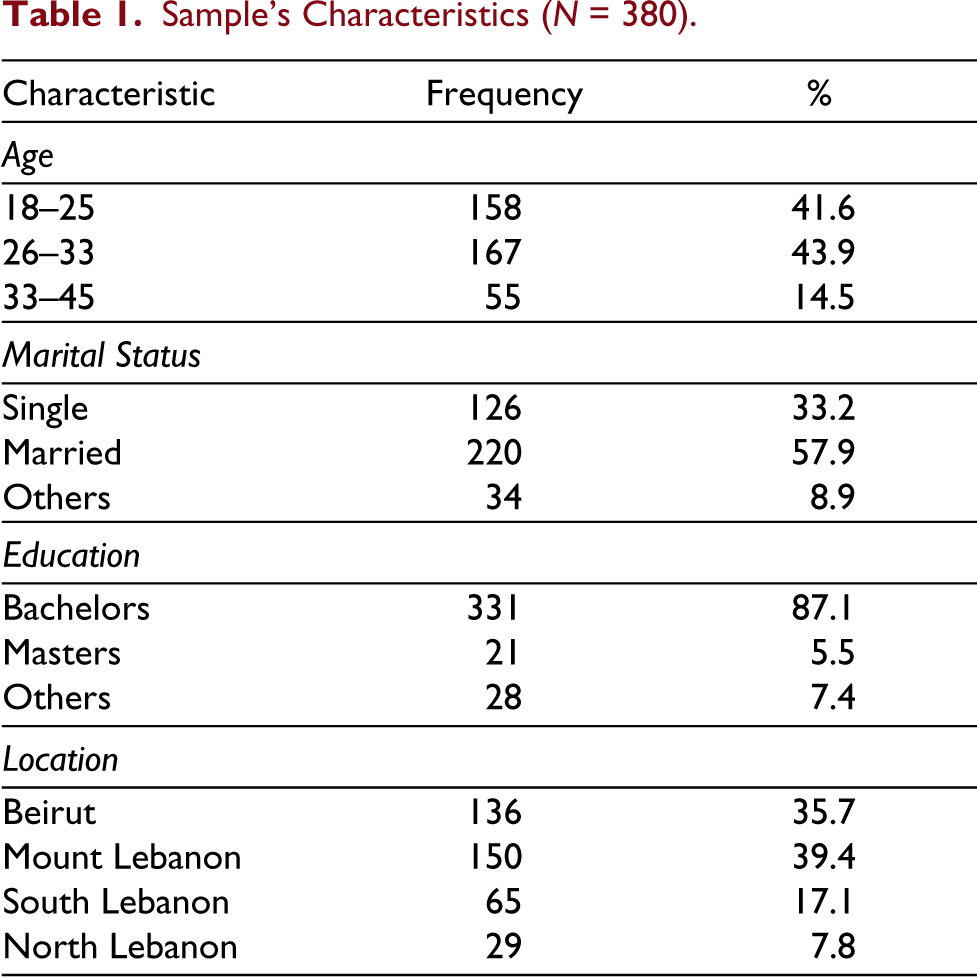
Table 1 presents the distribution of the characteristics of the study’s main participants. Of the total sample of 380 respondents, the majority fell into three distinct age groups. Specifically, 41.6% of the participants belonged to the age bracket of 18–25 years, while 43.9% were in the 26–33 age range. Additionally, 14.5% of the respondents were between the ages of 33 and 45 years. The majority of respondents were categorized into three marital status groups. Notably, 33.2% of participants were identified as ‘Single’, while 57.9% fall under the ‘Married’ category. A smaller percentage (8.9%) were classified as ‘Others’. Within the sample, the distribution of educational level was categorized into three groups. Specifically, 87.1% of participants hold a ‘bachelors’ degree, while 5.5% have achieved a ‘Masters’ degree. An additional 7.4% are classified under the category of ‘Others’. Participants were categorized into four distinct geographical regions. Specifically, 35.7% of participants are in ‘‘Beirut’, while 39.4% are situated in ‘Mount Lebanon’. Furthermore, 17.1% of respondents come from ‘South Lebanon’, and the remaining 7.8% belong to ‘North Lebanon’.
Sample’s Characteristics (N = 380).
Variable Measurement
All variables were based on a multi-item 5-point scale ranging from 1 (Strongly Agree) to 5 (Strongly Disagree). The constructs’ items were listed in the appendix.
Independent Variable
Empowerment type was assessed using a scale developed by Vieira et al. (2023).
Mediator
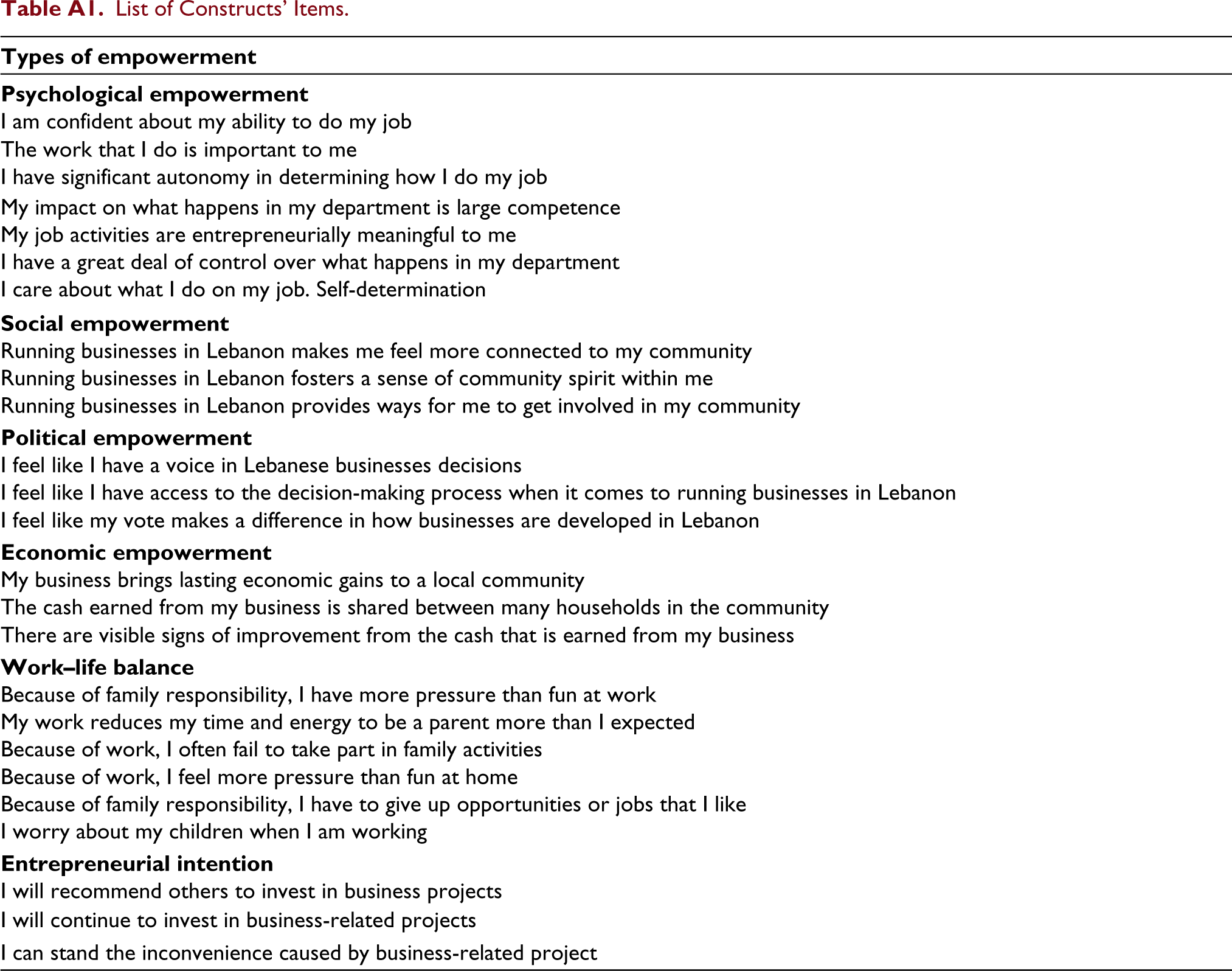
Work–life balance is assessed by a scale developed by Hayman (2005) and the questions include ‘My work cost me something I should have had as a parent’, ‘Because of family responsibility, I have more pressure than fun at work’, ‘My work reduces my time and energy to be a parent more than I expected’, ‘Because of work, I often fail to take part in family activities’, ‘Because of work, I feel more pressure than fun at home’, ‘Because of family responsibility, I have to give up opportunities or jobs that I like’ and ‘I worry about my children when I am working.’
Dependent Variable
Entrepreneurial intention is measured using a scale developed by Nikou et al. (2019), and the questions include ‘I will recommend others to invest in business projects,’ ‘I will continue to invest in business-related projects’ and ‘I can stand the inconvenience caused by business-related projects’.
Common Method Variance
In the context of this research endeavour, meticulous attention was directed towards the potential influence of common method variance (CMV) to ensure the methodological integrity of this study. To rigorously address this concern, the researcher judiciously applied PCA as a diagnostic tool to assess whether a dominant latent factor significantly accounted for the observed variance in the collected data, which would suggest the presence of CMV bias. Furthermore, a suite of methodological safeguards were implemented as procedural remedies, encompassing techniques such as counterbalancing the sequence of survey items, safeguarding the confidentiality and anonymity of participant responses, and employing a diversified array of response formats. These deliberate measures were meticulously incorporated to mitigate potential response biases and methodological artefacts. Through this comprehensive strategy, the researchers sought to enhance the research’s credibility, reliability and the validity of our findings, thus ensuring that our study’s conclusions are grounded in robust and unbiased data (Hayes, 2012).
Exploratory Factorial Analysis, Validity and Reliability
Principal Component Matrix
PCMA is a statistical method used to reduce the dimensionality of data sets. This technique was used to identify the underlying structure of a group of variables. In PCA, variables are transformed into a new set of uncorrelated variables called principal components, explaining the maximum variation in the original dataset. In the context of the study on the mediating impact of work–life balance on the relationship between different types of empowerment (psychological, social, political and economic), PCA can be used to identify the underlying structure of the dataset. By reducing the dimensionality of the dataset, PCA can also help minimize the impact of noise and outliers in the data, thereby improving the accuracy and validity of the results.
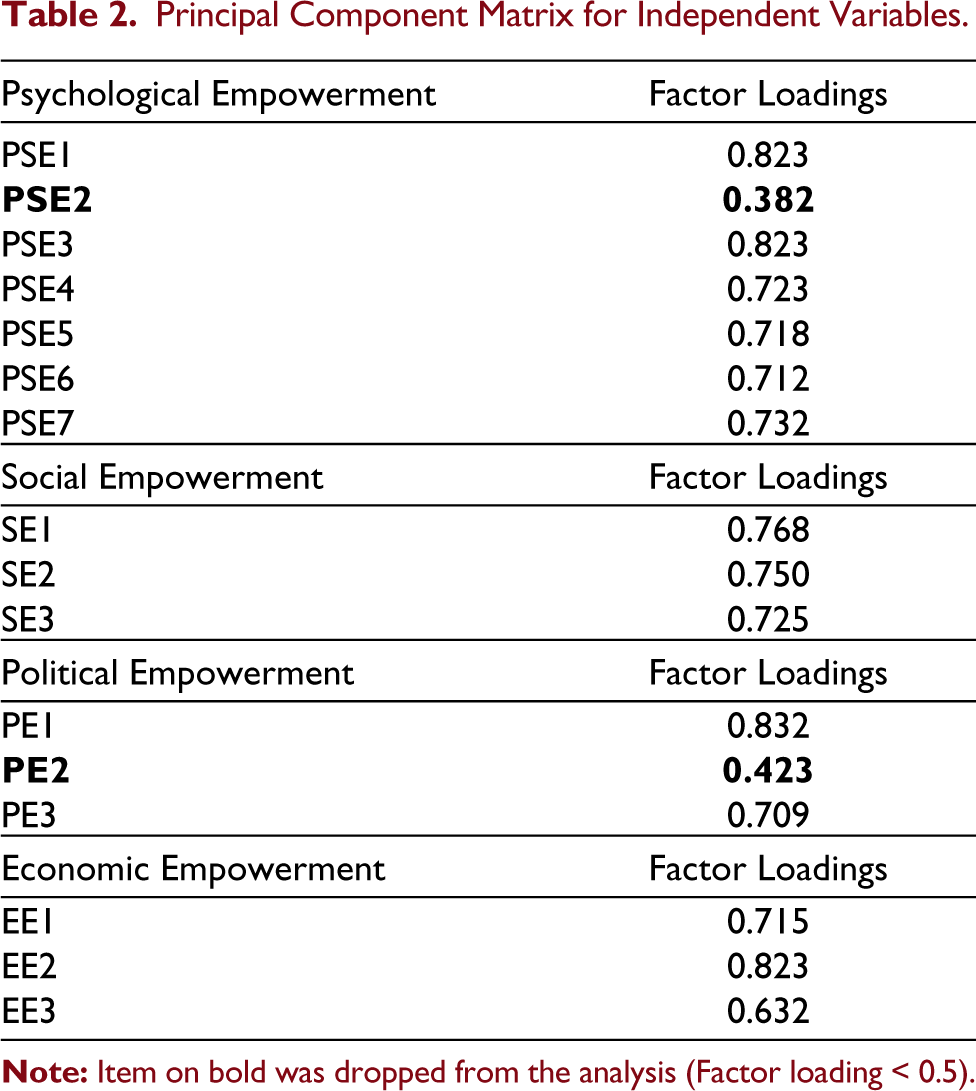
Referring to Table 2, all the statements scored a PCA higher than 0.5 except ‘PSE2’ scored 0.382 which means all the questions of this variable will be considered for statistical analysis except the mentioned two statement will be excluded from statistical analysis to improve the Cronbach alpha. As for the social empowerment variable, all the statements scored a PCA higher than 0.5, which means that all the questions of this variable will be considered for statistical analysis. As for the political empowerment variable, the PCA is higher than 0.5, except for PE2, which means that this statement will be excluded from the analysis.
Principal Component Matrix for Independent Variables.
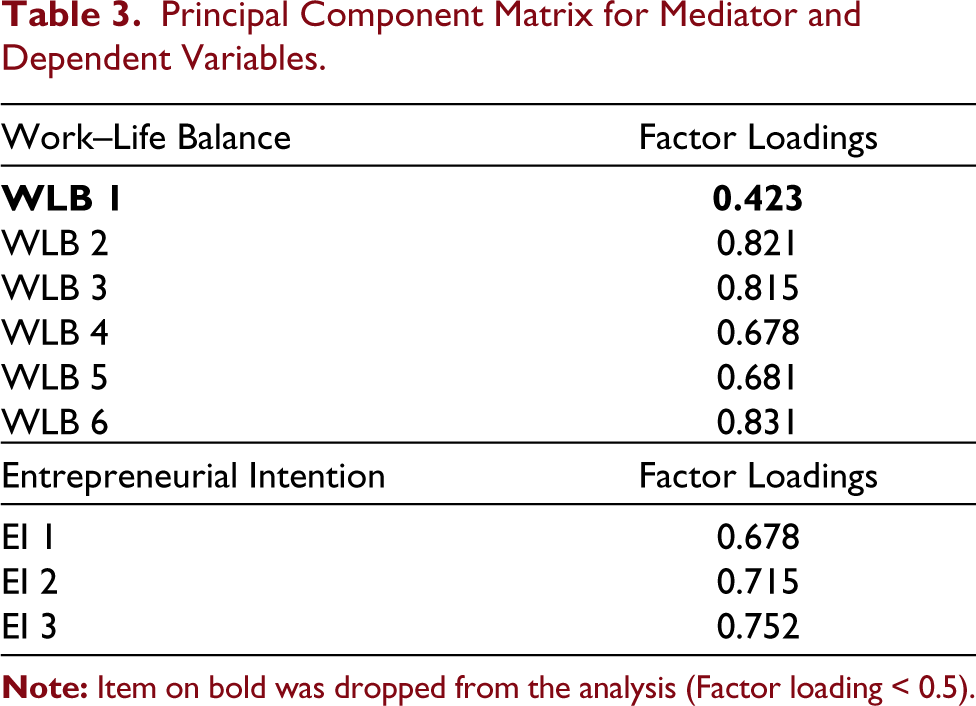
Referring to Table 3, all the statements scored a PCA higher than 0.5 except the statement ‘WLB1’ scored 0.423 which means all the questions of this variable will be considered for statistical analysis except the mentioned statement will be excluded from statistical analysis to improve the Cronbach alpha. All statements related to entrepreneurial intention scored a PCA higher than 0.5, indicating that all the questions of this variable were considered for statistical analysis.
Principal Component Matrix for Mediator and Dependent Variables.
Validity Test
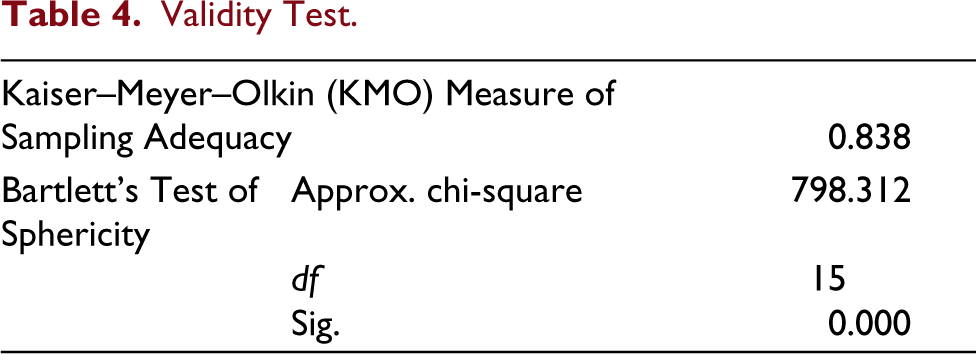
From Table 4, a KMO value of 0.838 indicates that the data are suitable for factor analysis. A value of 0.8 or higher is considered acceptable for factor analysis. The approximate chi-square value of 798.312 was significant (p < .000), indicating that the variables were intercorrelated and that factor analysis was appropriate. These results suggest that the data are suitable for factor analysis and that sufficient inter-correlation among the variables warrants further analysis.
Validity Test.
Reliability Analysis
The reliability study results are presented in Table 5 for the following six variables: PSE, SE, PE, EE, WLB and INT. When evaluating dependability, Cronbach’s alpha is a standard metric for academic research, which measures internal consistency. In most cases, researchers would consider a Cronbach’s alpha value greater than 0.7, which is sufficient for establishing the reliability of the measured variables. The reliability of all six variables was good, as indicated by the Cronbach’s alpha values. The alpha values of 0.815 for the WLB variable and 0.810 for the INT variable place them first and second, respectively, in terms of reliability. Great news for future research: The constructs in question exhibited robust internal consistency, as shown by the high scores for EE, which showed a reliability alpha of 0.704.
Reliability Analysis.

In this study, convergent validity analysis was conducted to evaluate the internal consistency reliability and measurement quality of various constructs, including PSE, SE, PE, EE, WLB and INT. The results, presented in Table 6, yielded compelling outcomes. The composite reliability (CR) values for all constructs exhibited strong internal consistency, ranging from 0.703 to 0.875, attesting to the reliability of the constituent items or indicators within each construct. Furthermore, the average variance extracted (AVE) values, which quantify the extent to which a construct is accurately measured in relation to measurement error, were notably robust. All constructs achieved AVE values above the widely accepted threshold of 0.5, with none falling below the critical threshold of 0.05. Specifically, AVE values for the constructs ranged from 0.511 to 0.747, providing a strong indication of the quality and precision of the measurement instruments.
Convergent Validity.
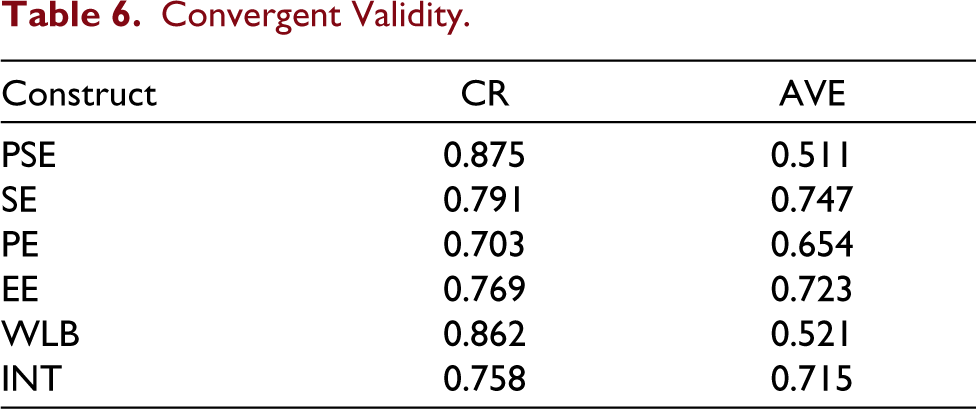
Table 7 displays the results of discriminant validity analysis for the examined constructs, which include PSE, SE, PE, EE, WLB and INT. Discriminant validity assesses whether each construct is distinct from others by examining the correlations between them. In this table, correlations between constructs are presented, and it is important to evaluate whether these correlations meet the criteria for sufficient discriminant validity. Table 7 reveals that the correlations between constructs are generally below 0.90, indicating that there is sufficient discriminant validity among the constructs. Specifically, the values ranged from 0.502 to 0.710, with all values falling below the threshold of 0.90. This finding suggests that each construct is sufficiently distinct from the others, supporting the idea that they measure distinct underlying concepts or variables.
Matrix of Correlations and Discriminant Validity.

**Correlation is significant at the 0.01 level (2-tailed).
Model Fit and Robustness Tests
From Table 8, the Number of Parameters to be Estimated (NPAR) value of 68 refers to the NPAR within the model. This statistic indicates the complexity of the model, with higher numbers generally reflecting a more complex model. The CMIN value was 234.276, and the degrees of freedom were 121, leading to a highly significant p value of .000. The CMIN/df score was 1.936, suggesting a reasonable fit of the model to the data.
From Table 9, the Normed Fit Index (NFI) scored a value of 0.900 in this context, which is generally considered good, as values above 0.90 are often taken as indicators of acceptable model fit. The Relative Fit Index (RFI) was 0.874, lower than the conventional cutoff of 0.90, but still suggests a decent model fit. The Incremental Fit Index (IFI) was 0.949, implying a perfect model fit. The Tucker–Lewis Index scored 0.935, well above the accepted standard of 0.90. Finally, the Comparative Fit Index (CFI) scored 0.949, well above the generally accepted threshold of 0.90, signifying a strong model fit.
Model Fit.

Robustness Tests.

Results
The following section addresses the path analysis and mediation analysis in which the research hypotheses were validated based on them.
Path Analysis
Table 10 provides a comprehensive analysis of the relationships between different forms of empowerment and the variables of work–life balance and intention. Each relationship was quantified using an estimate, standard error (SE), critical ratio (CR) and p value.
Path Analysis.

Mediation Analysis.

Starting with the influence of psychological empowerment on work–life balance, the estimate of 0.228 suggests a positive yet moderate relationship. This was further validated by a low standard error of 0.017 and highly significant critical ratio of 13.411. A p value of 0.008 indicates statistical significance, corroborating the positive influence of psychological empowerment on work–life balance.
Similarly, social empowerment presents an estimate of 0.272, indicating a moderate positive effect on work–life balance. The SE is 0.022, and the relationship is statistically significant, with a CR of 12.640 and a P value of .002. Political Empowerment followed suit with an estimate of 0.280, which is again a moderately positive effect. It has a slightly higher SE of 0.025, but maintains statistical significance with a CR of 11.300 and a P value of .003.
Among the empowerment forms, economic empowerment exerts the strongest influence on work–life balance, with an estimate of 0.456. The SE was 0.025, and the high CR of 18.355, combined with a P value of 0.012, affirmed the statistical significance of this relationship.
Moving on to intention, work–life balance exhibits a strong positive relationship with an estimate of 0.721. The SE is relatively larger at 0.051, but the CR of 14.101 and P value of 0.036 still denote statistical significance. In terms of the effects of empowerment on intention, psychological empowerment has a relatively smaller estimate of 0.124 but is statistically significant. Social and political empowerment show moderate estimates of 0.151 and 0.158, respectively, and both are statistically significant. Lastly, economic empowerment stands out, with a strong estimate of 0.321, confirming its statistically significant positive effect on intention.
Mediation Analysis
Table 11 presents the results of the mediation analysis, showing the relationship between the variables of psychological empowerment (PSY), social empowerment (SOC), political empowerment (POL), economic empowerment (ECON), work–life balance (WLB) and intentions (INT).
For each direct effect relationship (i.e., PSY → WLB, SOC → WLB, and so forth), the beta (β) value represents the strength of the relationship between the variables, with values close to 1 indicating a strong relationship. The direct effect column shows the magnitude of the direct effect, with values close to zero indicating no direct effect.
The indirect effect column shows the magnitude of the indirect effect through the mediator variable, WLB.
Each partially mediated relationship (i.e., PSY→WLB→INT, SOC→WLB→INT, POL→WLB→INT, ECON→WLB→INT) has a beta 0.823, 0.493 and 0.751 value that represents the strength of the relationship between the variables, with the direct effects and indirect effects columns indicating the size of the direct and indirect effects, respectively. The significance of the link is demonstrated by adding the direct and indirect impacts in the total effect column.
A statistically significant link was indicated by a P value of less than .05. In the summary of findings found in the Results column, ‘Validated’ denotes a direct impact and ‘Partially Mediated’ denotes an effect both directly and indirectly through the mediator variable.
According to the findings, there are substantial and statistically significant correlations (beta values near 1, P values .05, direct effects close to the beta value) between various types of empowerment and work–life harmony. A robust and statistically significant correlation exists between work–life balance and intentions (beta = 0.512, p = 0.036, direct effect = 0.631).
In addition, work–life balance acts as a mediator between the empowerment variables and intentions, with the indirect impact being larger than the direct effect (indirect effects > direct effects, P < .05). This indicates that each empowerment variable’s correlation with intentions may be partly explained by its association with work–life balance.
Discussion and Implications
Discussion
A regression study examined the relationship between women’s psychological empowerment and their intention to start a business in Lebanon. The results are shown in table. For women, psychological empowerment (PSY) is an essential independent variable in their intentions to establish businesses (INT), and a beta value of 0.326 confirms this. The results show that confident women are more likely to want to establish their own business. The commonly accepted significance criterion was 0.05, while the link’s P value was 0.025. The findings also reveal that WLB acts as a mediator between women’s sense of psychological empowerment and entrepreneurial start-up intention (PSY→WLB→ INT, Partially Mediated). Therefore, work–life balance cannot be primarily credited with the correlation between women’s psychological empowerment and their intention to establish a business. The findings point to a favourable association between psychological empowerment and the desire to start a business among women in Lebanon, and it seems that work–life balance plays a role in this. These results have significant implications for scholars, practitioners, and policymakers interested in this subject in Lebanon and might influence future efforts to empower women. There seems to be a positive link between SOC and INT, as shown by the beta value of 0.418 (regression analysis). Consequently, more women will be encouraged to create businesses if they have more access to social capital. With a P value of only 0.014, it is improbable that this association is coincidental. If the ‘Partially Mediated’ result in Row ‘SOC àWLBà INT is believed, WLB mediates the relationship between women’s social empowerment and their desire to start their businesses. The positive impact of social capital on women’s intentions to establish a business may be attributed to the combination of work–life balance and social capital.
A positive correlation exists between women’s political empowerment (POL) and INT goals, as shown by a beta value of 0.632. If more women hold a political office, it may encourage them to leave independently. The statistical significance of this link is indicated by a p value of .032. In addition, the data support the hypothesis that WLB mediates the link between women’s political agency and their desires to form their businesses, according to the ‘Partially Mediated’ result in the ‘POL→WLB→INT’ row. Economic independence (ECON) and women’s desire to start their businesses were positively correlated (beta = 0.715). Once women achieve financial independence, they are more inclined to leave independently. The correlation between the two variables was statistically significant (P = .025). The ‘Partially Mediated’ result in the ‘ECON→WLB→INT’ row indicates that WLB works as a mediator in this connection. The findings of this study support previous research by Alsaad et al. (2023) and Basit et al. (2020), which show that work–life balance and empowerment strongly influence women’s intentions to start their own entrepreneurial businesses. Additionally, the results agree with Collins’ (2022) findings that these factors are crucial in determining entrepreneurial start-up intentions. A work–life balance provides an environment conducive to entrepreneurial innovation and risk-taking because it helps individuals feel psychological stability and reduces their burden.
Implications
Theoretical Implications
First, it contributes to the literature on work–life balance and empowerment by investigating the role of work–life balance as a mediator in the interactions between various forms of empowerment among Lebanese workers. Second, it helps to guide the development of theories and models by providing a more complete picture of the connections between work–life balance and various forms of empowerment. This study explores the relationships between various forms of empowerment—psychological, social, political and economic—and their impact on work–life balance and start-up intentions among Lebanese women. It also offers significant theoretical contributions to entrepreneurship and women’s research. Using multidimensional empowerment concepts, this study adds to what is already known about entrepreneurship. This is achieved by highlighting the multitude of ways in which various forms of empowerment affect the development of entrepreneurial intentions. This approach improves upon and challenges the traditional understanding of entrepreneurship by addressing the multifaceted character of empowerment and its effects on entrepreneurial purposes. By examining these elements in Lebanon’s specific social and cultural context, this study contributes to a global understanding of entrepreneurship and addresses a gap in the existing literature.
Practical Implications
The results of this study have significant practical implications for entrepreneurs, policymakers and organizational leaders in Lebanon. First, it can help them understand the importance of work–life balance in promoting employee empowerment. Second, it can guide the development of programs and laws that empower workers and support a healthy work–life balance. Finally, the findings can be used to create treatments and training courses that emphasize work–life balance and employee agency, which can positively impact workers’ health and productivity. These insights can be used to create organizational cultures that prioritize employee well-being, reduce burnout and improve job satisfaction. Policymakers can use this evidence to design policies that protect employees’ rights to a balanced life, such as mandatory leave policies and childcare support. Additionally, the study highlights the need for programmes that emphasize work–life balance through training and support for both managers and employees. These initiatives include educating stakeholders on effective time management, stress reduction strategies and establishing boundaries between work and personal life. Such programmes have the potential to improve health outcomes and boost productivity, making it crucial to integrate work–life balance into organizational policies and practices. While the research focuses on Lebanon on a broader scale, its implications are far-reaching, suggesting that the insights could be applicable in various cultural and economic contexts worldwide. This opens opportunities for global dialogue and cross-cultural studies on work–life balance and employee empowerment, potentially leading to international policy exchanges and collaborative efforts to improve workforce well-being. The study not only lays a foundation for future research in the field but also serves as a call to action for practitioners to prioritize work–life balance as a key component of employee empowerment and organizational success.
Limitations of the Study and Future Research Directions
Research on the role of work–life balance as a moderator between different forms of empowerment (psychological, social, political and economic) in Lebanon is constrained by several factors. It is possible that a sample of 380 people does not adequately reflect the total population of Lebanon, or its wide range of backgrounds and viewpoints. Self-reported data from the respondents were used, which might have introduced biases such as social desirability bias and memory bias into the research. This research is being undertaken in Lebanon, whose distinct cultural milieu may moderate the connection between work autonomy and entrepreneurial life. These findings may not apply to different cultural contexts. This study examines the role of work–life balance as a moderator in the association between four distinct forms of empowerment. Future studies should determine whether other factors, such as the level of education, type of employment and social support system, play a role in this association. Due to its correlational nature, this research cannot draw any causal conclusions regarding the connection between work–life balance and empowerment.
Further studies are required to determine its causes and effects. One key area for future research is to expand the demographic and cultural scope beyond Lebanon. By replicating this study in various cultural contexts, researchers can explore the universality or specificity of these findings, providing a more global perspective on how empowerment and work–life balance are interrelated in different socio-economic and cultural environments. The level of education plays a crucial role in shaping an individual’s opportunities and outlook. Investigating how different levels of education impact the relationship between work–life balance and empowerment could provide valuable insights. Second, the nature of one’s job, such as full-time, part-time, freelance, or remote work, significantly influences this relationship. Exploring how various employment types affect work–life balance and empowerment is essential. Third, the availability and quality of social support, both in the workplace and in personal life, are crucial for maintaining a healthy work–life balance and feeling empowered. Examining how different support systems contribute to or hinder empowerment and work–life balance is important. Additionally, expanding the research beyond Lebanon to include diverse cultural and socio-economic environments would allow for a comparative analysis of how cultural norms, societal expectations and economic conditions influence the relationship between work–life balance and empowerment. Conducting longitudinal studies could provide insights into the causal relationships between these factors, while qualitative research methods such as interviews and focus groups can offer deeper insights into personal experiences and perceptions. By addressing these aspects, future research can provide a more comprehensive understanding of the association between work–life balance and empowerment, informing policies and interventions to enhance both in various contexts.
Conclusion
This study delved into the intricate relationships between various forms of empowerment, psychological, social, political and economic, and their impact on work–life balance and women’s start-up intentions in the unique context of Lebanon. The findings shed light on the significant correlations between these empowerment variables and work–life balance, affirming the importance of addressing holistic empowerment for women in entrepreneurial endeavours. Furthermore, the study revealed that work–life balance plays a crucial role as a mediator in these relationships. This implies that enhancing women’s work–life balance could indirectly stimulate their intentions to engage in entrepreneurial activities and be more resilient within such underrepresented communities (Aloulou, 2023). However, it is noteworthy that work–life balance only partially mediated the link between empowerment and entrepreneurial intentions, suggesting the presence of other contributing factors not explored in this study. These may include cultural and societal factors specific to Lebanon, individual characteristics and entrepreneurial motivation. Despite these intricacies, our findings have substantial implications for policymakers and practitioners interested in advancing women’s empowerment and entrepreneurship in Lebanon. The study highlights the need for multifaceted interventions that focus on enhancing empowerment and recognizing the pivotal role of work–life balance in influencing women’s entrepreneurial intentions. Future research should consider other enabling factors that play a role in the entrepreneurial process, such as the personal resilience of women in such contexts, continuously marginalizing them.
Footnotes
Declaration of Conflicting Interests
The authors declared no potential conflicts of interest with respect to the research, authorship and/or publication of this article.
Funding
This work was supported and funded by the Deanship of Scientific Research at Imam Mohammad Ibn Saud Islamic University (IMSIU) (grant number IMSIU-RG23150).
Appendix
List of Constructs’ Items.
| Types of empowerment |
|
|
| I am confident about my ability to do my job |
| The work that I do is important to me |
| I have significant autonomy in determining how I do my job |
| My impact on what happens in my department is large competence |
| My job activities are entrepreneurially meaningful to me |
| I have a great deal of control over what happens in my department |
| I care about what I do on my job. Self-determination |
|
|
| Running businesses in Lebanon makes me feel more connected to my community |
| Running businesses in Lebanon fosters a sense of community spirit within me |
| Running businesses in Lebanon provides ways for me to get involved in my community |
|
|
| I feel like I have a voice in Lebanese businesses decisions |
| I feel like I have access to the decision-making process when it comes to running businesses in Lebanon |
| I feel like my vote makes a difference in how businesses are developed in Lebanon |
|
|
| My business brings lasting economic gains to a local community |
| The cash earned from my business is shared between many households in the community |
| There are visible signs of improvement from the cash that is earned from my business |
|
|
| Because of family responsibility, I have more pressure than fun at work |
| My work reduces my time and energy to be a parent more than I expected |
| Because of work, I often fail to take part in family activities |
| Because of work, I feel more pressure than fun at home |
| Because of family responsibility, I have to give up opportunities or jobs that I like |
| I worry about my children when I am working |
|
|
| I will recommend others to invest in business projects |
| I will continue to invest in business-related projects |
| I can stand the inconvenience caused by business-related project |