



Abstract
For strongly securing the employer–employee relationship, it is important to have a desirable and positive working environment. This study investigates the impact of workplace bullying on self-concept, employee cynicism and life satisfaction, which effect employees’ performances. The survey has been conducted through the adaptation of standard tools among 200 employees working in various banks like ICICI and Axis to name a few. The analysis of data will be done through G*power software and SmartPLS4 software to apply structural equation modelling. Results revealed that the relationship between workplace and personal bullying on employee cynicism, self-concept and job performance of employees is significant which effect the employee’s satisfaction with life. It develops the turnover intention among employees. This study has very strong and valid implications for management for the employees of the banking sector. It will help in energizing and motivating their workforce more towards effective performances, which will make their well-being stronger. It will be effectively helpful in maintaining a productive working environment by prioritizing their daily role at the workplace. This study validates the relationship among the variables used in the study. It invites more research from a different perspective to identify the impact in understanding the role of workplace bullying which creates deviance among employees.
Introduction
Bullying
Bullying in the workplace has gained attention nowadays as it is affecting society, especially in organizational settings, with a decline in performance that triggers identity issues among employees (Bartlett & Bartlett, 2011). Bullying is a pattern of repeated aggressive behaviour intended to hurt, intimidate or cause harm to another person who is perceived as being less powerful or unable to defend themselves (Malik & Sattar, 2022). Bullying at the workplace is like a roller coaster ride of emotions which may affect employees’ creativity, energy and passion. Bullying is understood as social exclusion and offences that dominate working at the workplace. It can also be considered that criticism, humiliation, excess workload, treatment given in a disrespectful and unfair way and cold violence can take various forms, including physical, verbal, social or electronic actions (Bajwa, 2017). Bullying typically involves an imbalance of power, where the aggressor uses their perceived advantage to control, dominate or demean the target. It is a harmful and intentional act that can occur in various settings, such as schools, workplaces, online platforms or communities (Liu et al., 2020). Bullying on employee cynicism (EC) may result in distrust and negative attitude towards their organization and also influence over leadership and organizational policies. It will eradicate the organizational commitment to maintaining employee well-being if the erosion of trust takes place due to bullying. Another issue may also take place due to such bullying that it may develop the feeling of organizational injustice by bullied people, and there will be a lack of integrity in their respective organizations. This will fuel the cynicism among employee resulting in resentment. So overall, we can conclude that bullying at work can make people feel disillusioned and cynical, which lowers their dedication to the company, engagement and morale (Haq et al., 2018).
It does not stop here but may lead to more negative behaviours like exclusion at the workplace and abusive supervision which usually extends to absenteeism and increased turnover intentions (Tiwari et al., 2019). Job dissatisfaction and extreme effects on weak psychological health also may turn into name-calling, spreading rumours, physical intimidation, cyberbullying, exclusion and other behaviours that cause emotional or physical distress to the targeted individual (Mathur et al., 2023). Effective prevention and intervention strategies involve fostering a culture of respect, empathy and inclusion to address and mitigate instances of bullying (Finstad et al., 2019). Moreover, the other aspects of an organization are at stake including challenges to employee voice, weakening of internal branding, brand evaluation and so on (Gulati et al., 2023). Researchers talked about the ramifications of bullying; employees are witnessing and experiencing it but what is not being studied is why it is troubling.
Self-concept
An organized system that shapes how one feels about himself or herself and about others and their relationships with them is understood as self-concept (SC). A person’s SC is the culmination of their views and opinions about themselves. It includes a range of identity-related elements, such as connections, roles, values, abilities and personality traits. SC is dynamic and subject to change over time because of experiences, criticism and introspection (Vazire & Wilson, 2012). Impressions and beliefs for themselves play an important role in the experiences of psychological systems (Xiang et al., 2013).
Researchers identified that SC becomes weak and turned into identity issues which further affects employees’ behaviour more towards deviation and cynicism. This may in the long run affect employees’ performance and their satisfaction with life (SWL). It is misunderstood as physical violence but it is different within the organizational settings or environment in ways like chats, gossip and jokes, which are extremely effective working environments, which will hurt employees’ SC and their performances. Bullying is profoundly related to the SC of an individual as it is strongly related to the process of shaping the perception of self. As constant personal attacks, insulting criticism may turn into the internalization of negative beliefs for self where they see themselves as inefficient and incompetent. SC including morality, appearance and acceptance of employees among peer groups is inversely correlated with bullying (Ponce et al., 2021). People question their abilities, which erodes their confidence in public and increases insecurities by feeling unworthy of work relationships. They also prefer social isolation and start calling stupid or unintelligent to themselves (Akter & Rahman, 2018).
Employee Cynicism
A feeling of being undervalued, witnessing unethical behaviour at the workplace and lack of transparency in the treatment given to employees and due to which employees disconnect with the vision and mission of the organization is defined as EC. It results in negativity in attitude and lack of trust in the workplace and peer groups. This is characterized as frustration and hopelessness (Andersson, 1996). Several detrimental effects of EC have been theorized which include decreased performance, work satisfaction, organizational commitment and higher levels of intention to quit (Chiaburu et al., 2013).
In the same streamline, EC is where the feeling of frustration, distrust and disillusion takes place towards the organization or maybe against some group or individual colleagues. The stress and negativity associated with cynicism can have adverse effects on an employee’s physical and mental health. Chronic exposure to a cynical work environment may contribute to increased levels of stress, anxiety and burnout (Rodríguez-Cifuentes et al., 2020).
Workplace bullying (WB) can have significant and far-reaching effects on employees, both personally and professionally. Employers must address WB promptly through policies and interventions to protect their employees’ well-being and maintain a healthy work environment. Additionally, employees who experience bullying should seek support from HR, supervisors or external resources like therapists to help them cope with the effects and find solutions to the problem. In extreme cases, employees do not trust and follow their leaders which is also known as a psychological flaw which has to be given attention by HR professionals as it requires a lot of improvement in making employees a state of agreement instead of disagreement with the organization, more guidance and recognition socially instead of weak one, and the cynical employees may find it challenging to build positive relationships with colleagues. Their negative outlook can hinder effective communication, collaboration and teamwork, leading to a less cohesive and supportive work environment (Haq et al., 2018).
Life Satisfaction
Cognitive components of subjective well-being are usually understood as individual judgements towards own life (López-Gómez et al., 2020). When employees become responsible, experience less emotional exhaustion due to high trust among co-workers and start turning into high performance, it is considered as employee life satisfaction (Merkin, 2020). However, the opposite of the above good results may occur, leading to poorer job satisfaction and fewer work successes, if work circumstances cause employees’ discontent with life (Walsh et al., 2023).
Researchers have identified many classifications like social, organizational and EC and having dimensions like cognitive and behavioural. Such affected cynical employees always develop a tendency that all their efforts will be compromised on the self-interest of their bosses or leaders. In addition, cynicism may affect an employee’s willingness to invest in their professional development or pursue career advancement opportunities. A lack of belief in the organization’s motives and leadership may discourage employees from actively seeking growth within the company. By researching EC, organizations can gain a nuanced understanding of the factors influencing negative attitudes in the workplace. This knowledge empowers leaders and HR professionals to implement evidence-based interventions, creating a healthier and more positive work environment (Çınara et al., 2014).
There are many issues that employees face at the workplace due to bullying but why it affects so much is still unanswered or somewhere the root cause of it is being ignored to resolve the issue. Such patterns affect the SC of an individual which originates in self-doubts and breaks the confidence and trust in selves. It is driven by the self-image that employee develops and relates to their beliefs in context to their persona (Ansari et al., n.d.). A strong and positive SC promotes and extends effective professional identity and professionalism among manpower that will improve quality in their jobs or vice versa. On the contrary, bullying has more results that are devastating as an impact on SC (Hosseini et al., 2021).
Addressing WB is essential for creating a healthy, positive and productive work environment. It promotes employee well-being, organizational effectiveness and ethical business practices, contributing to the long-term success of the organization. As an emerging global issue, bullying has been seen at numerous workplaces and experienced by employees. Many studies have been done in different countries to address this issue. However, in India, bullying is mostly perceived at the student level and very few studies have been done in context to employees, especially those working in Indian-based companies or organizations. So, keeping in mind bullying and its longitudinal consequences the role of SC is being studied which is also affected by bullying in professional settings. So, the aim and objective of the proposed study is to determine how bullying at the workplace and personal bullying (PB) is experienced and its effects in connection to SC as a ramification which further affects employee performance and their SWL during their stay in the organization.
Theoretical Framework
Looking Glass Self-theory proposed by Charles Cooley in 1902 stated that one’s self or individual social identity is highly dependent on one’s appearance to others. Further, this theory contributes that people have some feelings regarding their self-images which is the repercussion of response to the perception of how it internalizes others to perceive and evaluate them (Chandler & Munday, 2011). Symbolic interactionism also adds that every individual defines themselves according to their social interactions be at their home or at their workplace since their birth. There is another conceptualization related to ‘Me’ and ‘I’ introduced by George Herbertt Mead where the social self is formed through the interaction between ‘Me and I’ (McIntyre, 1998). Addressing and preventing bullying and EC are crucial for HR professionals to foster a healthy and productive work environment. Bullying, characterized by repeated negative behaviour intended to harm or intimidate others, not only harms the targeted individuals but also adversely affects the overall workplace atmosphere.
All the above theories conclude that any issue due to weak self-impression caused by bullied social interaction may lead to negative outcomes like EC, which may ruin their SC and SWL.
HR professionals play a pivotal role in creating a culture of respect, inclusion and well-being within organizations. EC poses significant challenges that HR professionals must address. Cynical employees exhibit pervasive scepticism and distrust towards the organization, its leadership and colleagues. This negativity can spread, creating a toxic workplace culture. HR professionals need to understand that cynicism can result from various factors, including poor communication, perceived injustice or ineffective leadership. Identifying the root causes through surveys, open communication channels and regular feedback mechanisms is crucial for implementing targeted interventions.
By prioritizing a culture of respect, communication and fairness, HR professionals create a foundation for a positive and thriving workplace where employees can reach their full potential. As per the review done from a theoretical perspective, the following conceptual model is proposed for the current study.
As per the proposed model given in the next section (Figure 1), PB and WB are independent variables to EC and SC as the dependent variable. Further, SC is tested as an independent variable to see the impact on the dependent variable job performance (JP) and SWL.
Proposed Model for the Study.

Literature Review
Psychological repercussions of WB are more associated with employees who face hardships in meeting their routine job demands due to work pressures (Valentine et al., 2023). Victims of bullying at workplace are at increased risk of mental health deterioration (Chan et al., 2019). There is a strong relationship between bullying and psychological adversities depending upon the nature of individuals (Bir & Hassan, 2014). The existence of bullying adversely affects employees’ self-esteem and hinders their organizational performance (Fisher-Blando and Lynn, 2008; Nimmi et al., 2023). Factors related to gender, age and work experiences also reflect and expose employees to bullying (Visvizi et al., 2020). Because WB depletes many resources, individuals must choose silence to preserve their remaining resources but need to raise voice for constructive change (Chauhan and Mathur, 2023). To be more specific, WB causes employees’ psychological cognition to be unsafe (psychological safety) and consumes a large portion of their cognitive resources (Fasanya & Dada, 2016). WB plays a vital role in determining subjective well-being (Annor & Amponsah-Tawiah, 2020) as well. It is important to understand other significant dynamics of WB (Miller et al., 2019). WB is moderately positively correlated with job stress and burnout. It affects the mental health of workers and physical health (Galanis et al., 2024). A study found 24 pertinent research from 13 different nations. The majority of research employed non-probability samples using cross-sectional single-source data, primarily consisting of female respondents from Western nations, which indicated a significant association between mental health, turnover intent and dissatisfaction with jobs (Nielsen et al., 2024). Risk factors for bullying are related to working conditions (Rosander & Birkeland, 2023). Women employees are ignored in the context of WB due to inappropriate and selective policies of the organization (Reddy, 2023).
Cynicism is one of the other major issues taking place, which turns into a negative attitude of employees towards their organization where they feel that their organization is not trustworthy and lacks integrity (Khalid, 2020). Emotional reactions are also considered a part of affective cynicism, including tension, anxiety, irritation and so on. The behavioural dimension discloses criticism of the organization, predicting negatively about organizational future policies and a sarcastic sense of humour as all this reduced employee performance (Supatni & Sunaryo, 2024). Moreover, individuals with a negative SC may find it challenging to bounce back from setbacks or cope with life’s challenges. A lack of belief in one’s abilities can hinder resilience and the ability to adapt to changing circumstances (Dean et al., 1998). The relationship between cynicism with employee performance is significant in terms of outcomes like absenteeism and frustration due to overload in work assignments which may further increase employee turnover as well (Abraham, 2000; Buriro et al., 2022). The workplace syndrome includes a lack of energy or tiredness, a pessimistic or unfavourable attitude towards one’s work and a decrease in professional effectiveness or the perception that one is no longer productive or capable of giving their best effort as organizational cynicism (Wiens, 2023).
H1: Workplace bullying has a significant influence on employee cynicism.
H2: Personal bullying has a significant influence on employee cynicism.
As a result, social interactions within the organization are disrupted, and employees’ desire to respond to company goals decreases, as does employee effort to achieve company goals and objectives. PB in the workplace can have a profound and detrimental impact on the SC of employees. When individuals are subjected to persistent mistreatment, such as verbal abuse, humiliation or manipulation, it can erode their self-esteem and self-worth. The constant exposure to negative behaviour can lead employees to internalize the bullying, questioning their abilities and values. They may start to believe the derogatory remarks or unfair criticism, resulting in a distorted self-perception. This negative SC can extend beyond the workplace, affecting personal relationships and overall well-being. Additionally, negative SC is often associated with low self-esteem. Individuals with low self-esteem may harbour feelings of inadequacy, worthlessness and a lack of confidence in their abilities and values (Neves, 2012). Girls are bullied more as compared to boys. Students indicate lower SC if bullied (Ibrahim et al., 2024). Self-esteem acts as a mediator in the interaction between these two emotional issues and bullying victimization (Balluerka et al., 2023).
H3: Workplace bullying has a significant influence on the self-concept of employees.
H4: Personal bullying has a significant influence on the self-concept of employees.
Based on the above literature, it has been seen that bullying triggers negative behaviour among employees. Through this, our first two hypotheses have been discovered which is classified into forms of bullying that are workplace and PB. Employees who experience PB may become more withdrawn, anxious and less confident, making it challenging for them to perform at their best. Organizations must actively address and prevent PB to create a healthy work environment that nurtures positive SCs, fosters employee well-being and promotes a culture of respect and support.
Organizational cynicism is understood as an employee’s belief that their organization is dishonest and employees are not important to the organization, which results in an unfriendly attitude towards the organization, which further leads to unethical outcomes like bad-mouthing, counterproductive behaviours and dissatisfaction with the job, which leads to demotivation and affects interpersonal relationships. Individuals may struggle with trust, intimacy and effective communication. Low self-worth can lead to difficulties in forming and maintaining positive connections with others due to which they enter or prefer to have more use of drugs or alcohol that may be an attempt to alleviate emotional pain or escape from negative self-perceptions (Panchali & Seneviratne, 2019). Most studies conclude that cynical employees foster negativity in the workplace and spread a negative image of the organization. It may further develop negative attitudes towards the organization like negative beliefs and related behavioural tendencies. This made the researcher to come out with the formulation of another hypothesis that low performance in job due to cynicism could also be triggered by SC which is given below:
H5: Employee cynicism has a significant influence on the self-concept of employees.
Positive SC is a mechanism which is highly associated with performance (Judge et al., 1998). There is the concept of core self-evaluations, which was positively connected to target self-concordance, implying that people with positive and strong self-esteem were more likely to initiate goals for integral and known reasons (Judge et al., 2015). Individual differences appear to be a positive association between SC clarity and perceived work meaningfulness, and the relationship between SC clarity and work motivation was mediated by perceived work meaningfulness (Oh & Roh, 2019). Within the workplace developmental group, it appears that self-esteem and life satisfaction are related because there are other phenomena that are not indifferent to the process of self-perception and life perception (Szcześniak et al., 2022).
It is noted that the relationship between SC and SWL is strongly supportive towards each other irrespective of the gender like male and female (Ayub, 2010). Among adolescents, social SC was a strong predictor of life satisfaction, whereas in actual academic test scores, it is predicted by life satisfaction among children (Chang & Stewart, 2003). Health and psychological states such as happiness and life satisfaction are also commonly assumed as a result of a satisfying social and economic situation. Life satisfaction is defined as a cognitive evaluation of people based entirely or primarily on one aspect of their lives (Febrian & Kurniawan, 2012). A multifaceted concept of life satisfaction refers to an individual’s overall assessment of life domains such as health, finances, job, self-esteem and interpersonal relationships. Individual-based variables such as personality traits, cognitive variables (such as control, self-esteem and optimism) and socio-environmental factors all played a role in life satisfaction (Agyar, 2013). A positive relationship was discovered between experienced meaning in life, life satisfaction and SC (Tas & İskender, 2018). Higher and stronger the SC, more satisfaction with the life people will enjoy (Leung & Leung, 1992). Close interpersonal relationships are almost always the result of social friendships; however, social relationships are much easier to obtain than close interpersonal relationships which obstruct bullying and develop life satisfaction among individuals (Bozorgpour & Salimi, 2012). As a result, the lack of close relationships caused by emotional loneliness causes more pain than social loneliness. The negative predictor of life satisfaction is identified as emotional loneliness which may take place due to bullying in the workplace (Bozorgpour & Salimi, 2012). SC, the way individuals perceive themselves, plays a crucial role in shaping their overall SWL. A positive SC, built on a foundation of self-awareness and acceptance, tends to contribute significantly to life satisfaction. When individuals possess a realistic and positive view of their abilities, values and identity, they are more likely to approach life with confidence and resilience. Such individuals are better equipped to navigate challenges, set and achieve meaningful goals, and cultivate fulfilling relationships. On the contrary, a negative SC, characterized by self-doubt or a distorted self-image, can hinder life satisfaction. It may lead to feelings of inadequacy, anxiety and a diminished sense of well-being. Therefore, fostering a healthy SC through self-reflection, self-compassion and personal growth can be instrumental in enhancing overall SWL. Recognizing one’s strengths, embracing imperfections and nurturing a positive self-view can contribute to a more content and fulfilling life experience. This gave another idea to test the following hypothesis:
H6: Self-concept has a significant influence on the job performance of employees. H7: Self-concept has a significant influence on satisfaction with life among employees.
As per the above literature, the researcher identified that there are certain gaps, like mostly the studies are based not in the context of the Indian corporate scenario as many studies had been done in countries other than India. Most of the studies investigated the bullying impact among students which gave scope to the researcher to work on workplace and PB for the employees. The researcher identified that studies talked about the bullying impact directly on employees’ performance, so another gap was identified in context to the reason behind changes in the performance of employees due to bullying. When employees possess a healthy self-image and a sense of self-efficacy, they tend to approach tasks with confidence and motivation. This positive outlook can lead to higher levels of job satisfaction, increased resilience in the face of challenges and a greater willingness to take on responsibilities. On the contrary, a negative SC marked by self-doubt or a lack of confidence can hinder JP.
As per the literature reviewed for the study, no such study is based on model testing in combination with constructs like EC, SC and SWL among employees as a result of bullying at the workplace or PB either directly or indirectly. This gave motivation to the researcher to test the proposed model to advise more effective ways to cope with such issues which would be beneficial for organization in having a sustainable journey of manpower at the workplace and more productive work environment.
Methodology
The study explains and investigates the repercussions of WB on employee and their JP. The questionnaire is adapted (Table 1) and modified from the various standard scales like Gupta, Bakshi and Einarsen (2017) for WB and PB. For EC, Kuo’s scale (2014) is adopted. There is a shorter version scale of JP in 2020 developed by Andrade. For SC, the Fernández and Goni scale (2016) is adapted. Diener and Griffin’s (1985) scale is adopted for SWL.
The Details of the Scales Adaptive for the Analysis.

The framed questionnaire was tested and then revised after the survey was done on a pilot basis. Five-point Likert scale was used for investigating the responses which ranged between strongly agree (5) to strongly disagree (1). Table 2 represents the demographic profiles of the respondents who participated in the current study.
Sample Descriptive.
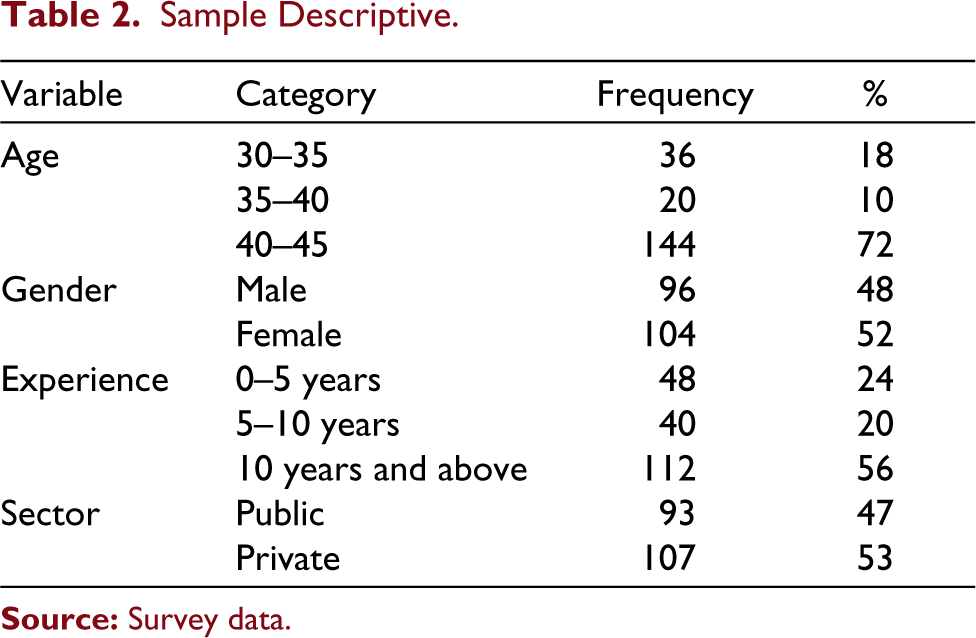
The data collection included the preparation of a Google form, distributed to the employees from the banking sector. The employees of both public and private sector banks were contacted through personal contacts and references. Purposive sampling was adopted to collect the sample from the population of bank employees as respondents were asked to fill the questionnaires only if they are bullied at some point of time in the last six months to justify the responses. The care has been taken while collecting the data to meet the requirements of research work. The Google form link was shared with almost 500 employees either through email or through WhatsApp. In the details of the questionnaire form, it was mentioned that only those who faced WB and were willing to respond were asked to fill out the questionnaire. Out of 500 communications, only 203 responses were received and 200 were considered.
The appropriate sample size was identified by the G* power software version 3.1.9.7 to find the minimum sample size required for the current study (Faul et al., 2007, 2009; Figure 2). The required minimum sample size came out through G* power software was 84, whereas, for the current study, the sample of 200 respondents under the a priori to compute the required sample size using a power 95% effect size based on number of predictors used in the study.

Data Analysis
Structural Model Assessment
To check the internal consistency, composite reliability (CR) was calculated. Further, the assessment of outer loading individual indicator’s reliability was assessed. Average variance extracted (AVE) values were checked to validate the convergent validity. Likewise, to test discriminant validity, HTMT (heterotrait and monotrait) criteria were tested and confirmed.
Bootstrapping was adopted for calculating the significant structural path and PLS-SEM4 4.0.9.9 version was used to find out R2 and β coefficient with 10,000 sub-samples to be randomly drawn with 95% of confidence interval without change in order to find out the p values for the hypothesis framed for the study. However, to validate the proposed relationships among the constructs, as per the proposed model for the current study, reliability and validity is important to identify. So reliability was assessed by CR through factor loading and by AVE value.
Table 3 shows the CR and AVE values which are high and above the accepted and threshold value 0.7 for CR and AVE (Ali et al., 2018; Hair et al., 2020). The CR depicts the extent to which construct items show latent constructs.
Criteria for Model Assessment.
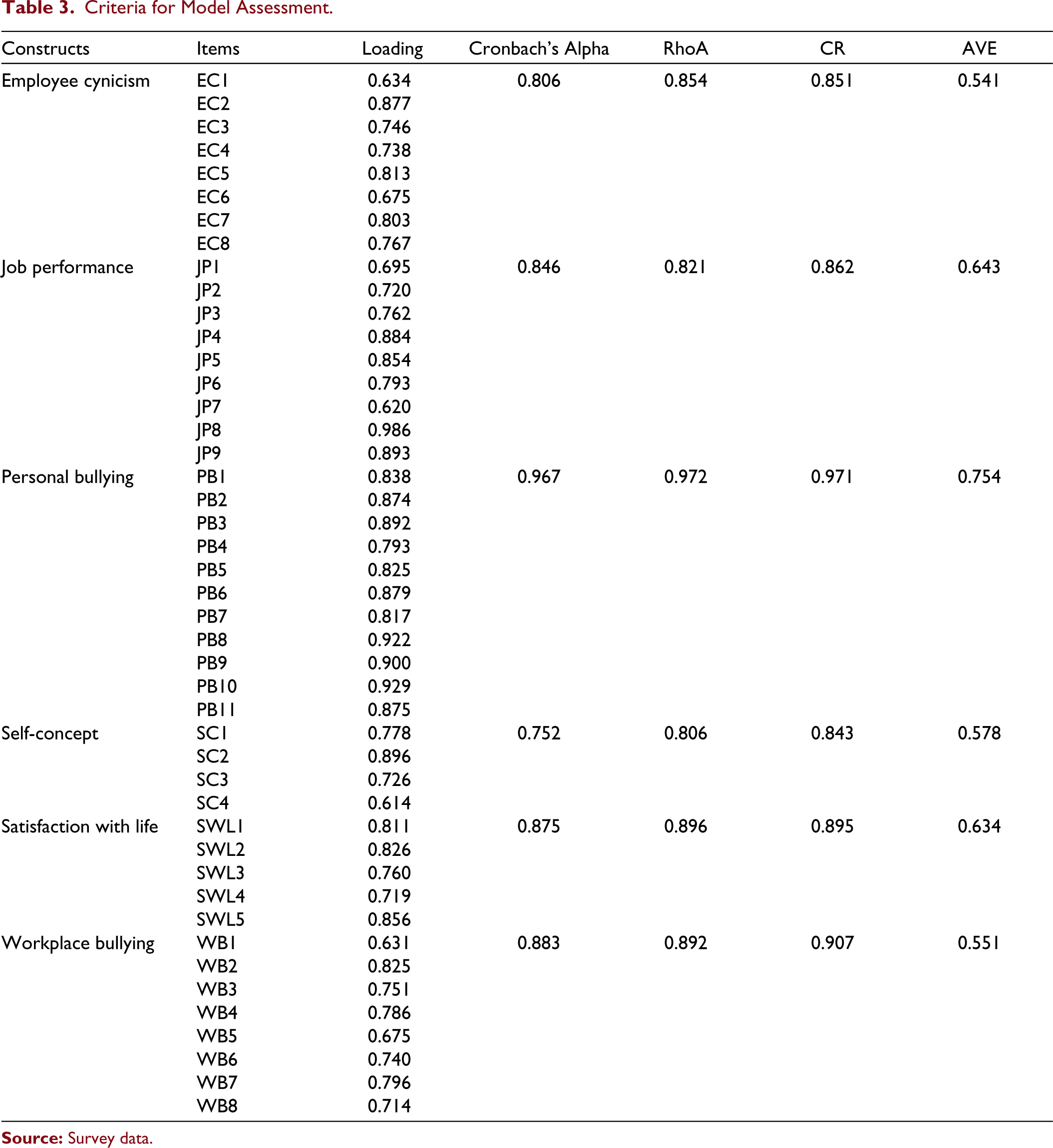
In extension to the validity criterion, convergent validity was also checked through AVE values, which were reported higher than the threshold value of 0.5 (Hair et al., 2013). Table 4 shows the status of variance in reported indicators for the latent constructs by internal reliability assessment.
Values for HTMT Tests.
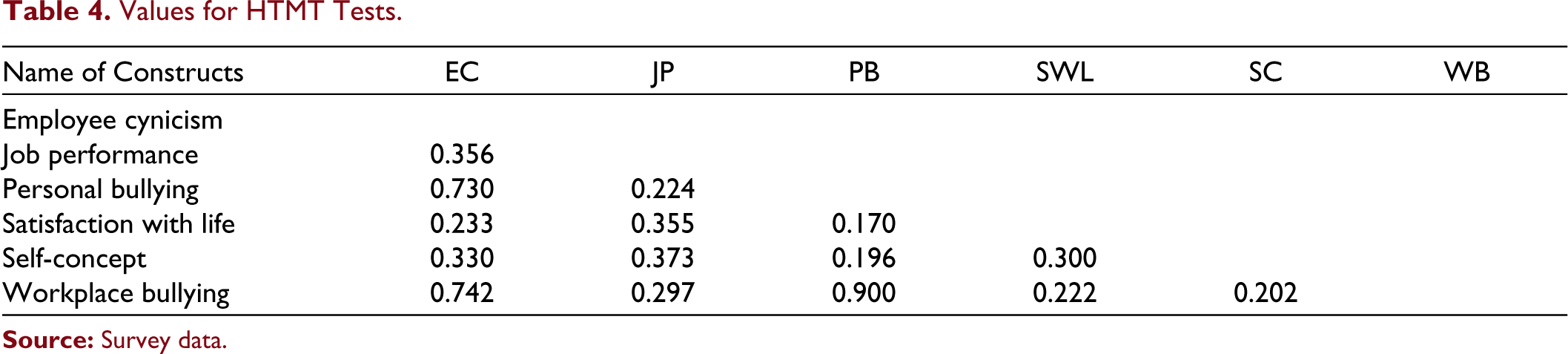
Moreover, in the above investigation, discriminant validity was assessed through the HTMT test application and by a Fornell and Larcker testing criteria. Table 4 also depicts the very new prerequisite where all the values must be less than 1 in HTMT, as advised under the interface technique of HTMT with a maximum ratio of 0.85 (Henseler et al., 2015; Voorhees et al., 2016). This could also be acceptable as a permissible value of 0.9 which indicates that the proposed study is completely and perfectly fit for the final analysis (Gold et al., 2001).
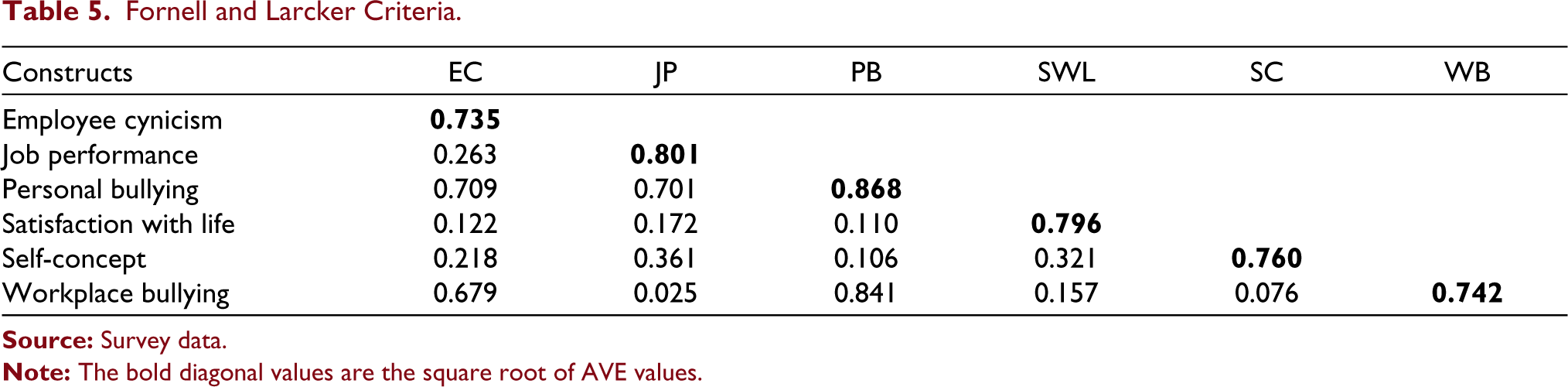
The AVE square root (diagonally mentioned) of each and every construct depicted in Table 5 is higher than its corresponding correlation coefficients. This would be denoted as appropriateness in discriminant validity (Fornell and Larcker, 1981).
Fornell and Larcker Criteria.
Model-fit Indices
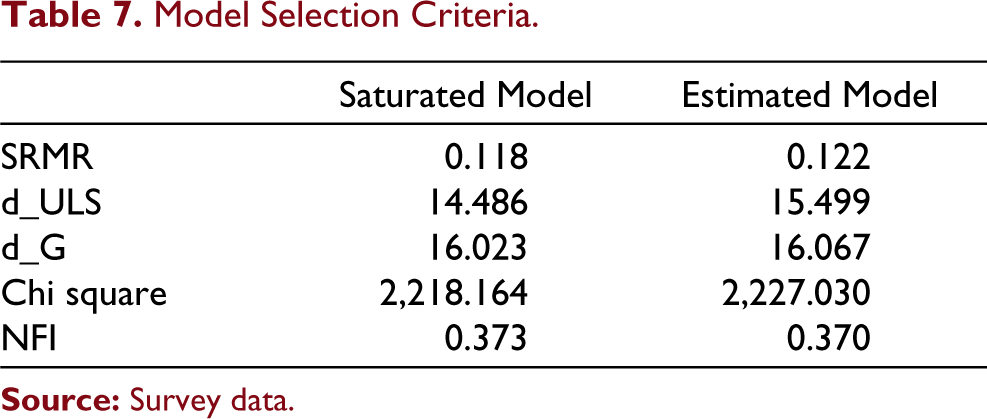
Model-fit indices assess how well a statistical model explains the data. The SRMR indicates good fit for both saturated (0.118) and estimated (0.122) models. The models seem to be reasonably fitting to the data.
Results and Discussions
The relationship between the dimensions along with their predictive applicability is checked and investigated when we apply a structural model (Hair et al., 2017). The value of R2, β and t values is always advised to report through the applications of the bootstrapping process with 10,000 advised bootstraps, without any symbolic difference in an objective, to analyze, to calculate and to find out the p values for the proposed hypothesis as per the proposed study (Hair et al., 2020).
Therefore, at the very second stage of testing the proposed hypothesis, a researcher identified the association among the variables used for this study given in Table 6. WB (β = 0.28; p < .001) and PB (β = 0.47; p < .001) positively and significantly influence the EC among employees when they are bullied at the workplace which is also supported by the study (Haq et al., 2018). WB (β = –0.12; p < .001) and PB (β = –0.005; p < .001) were negatively found significant in influencing the SC of employees at the workplace. In addition, EC (β = –0.31; p < .001) is significantly negatively influencing the SC of employees. Thus, H1, H2, H3, H4 and H5 all were found supported and significantly shown in Table 6, also supported by Hosseini et al. (2021). Further, the proposed relationships were also checked and verified, where SC (β = 0.36; p < .001) for JP and (β = 0.32; p < .001) for SWL were observed to be positive, significant and influencing employee’s performance at workplace and improving their SWL. Therefore, H5 and H6 all were found significant and supportive. All above findings were also supported by Abubakar et al. (2017), Jackson et al. (2010) and Judge et al. (2011).
Values for Path Coefficients.

Employees may struggle with decision-making, fear taking on new challenges and experience heightened stress levels. Therefore, fostering a positive SC through professional development, feedback and recognition is not only beneficial for the individual but also contributes to a more productive and thriving work environment. Organizations that prioritize building and maintaining positive SCs among their employees often witness improved morale, enhanced teamwork and ultimately higher levels of overall JP. It may indicate that the statistical analysis supports the presence of a relationship between WB and SC.
It is important to note that the relationship between EC and SC is complex and can vary from person to person. Additionally, organizational factors play a significant role in shaping workplace attitudes. Addressing and mitigating cynicism requires a comprehensive approach, including efforts to improve organizational culture, leadership effectiveness and communication. Individuals may also benefit from strategies to cope with and navigate a cynical work environment, such as seeking support, setting realistic expectations and maintaining a positive mindset where possible.
These results suggest associations between WB, PB, EC, SC, JP and SWL. Employees should be provided with a welcoming environment and sufficient autonomy to discuss their management concerns. Insecurity in the minds of competitors makes it difficult for creative people to advance and to raise awareness is the most effective way to eliminate this immoral and wicked activity. Many of them do not feel confident enough to raise their voice against such workplaces or PB but prefer to leave such workplaces which leads to disturbing the organizational operations; if they continue, it will affect their SWL badly with lower JP. This further lessens their morale by affecting their SC. Everyone should be treated respectfully in every organization to protect everyone’s rights.
As per Figure 3, the coefficient of determination means R2 which is also identified for the regression equation in the modelling for the structural equation.

It usually depicts the variance in each of the constructs used and explained by the explanatory variables which may also be referred to as predictive power as in the sample (Hair et al., 2020). Therefore, the acceptable value for the R2 depends on the context of the study, where sometimes the R2 is also considered as satisfactory in PLS-SEM analysis (Raithel et al., 2011).
So, as per the proposed model, it can explain the variance of 52.6% of EC, 57% variance for SC, 13% variance for JP and 10.3% variance for SWL. The results from Table 7 show how the assessment of the structural model is being done by applying bootstrapping through SmartPLS software.
Model Selection Criteria.
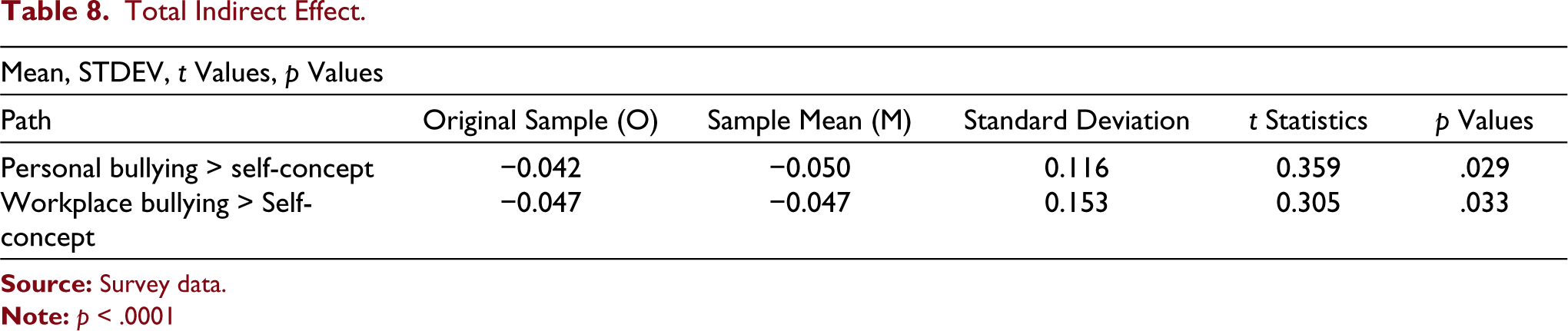
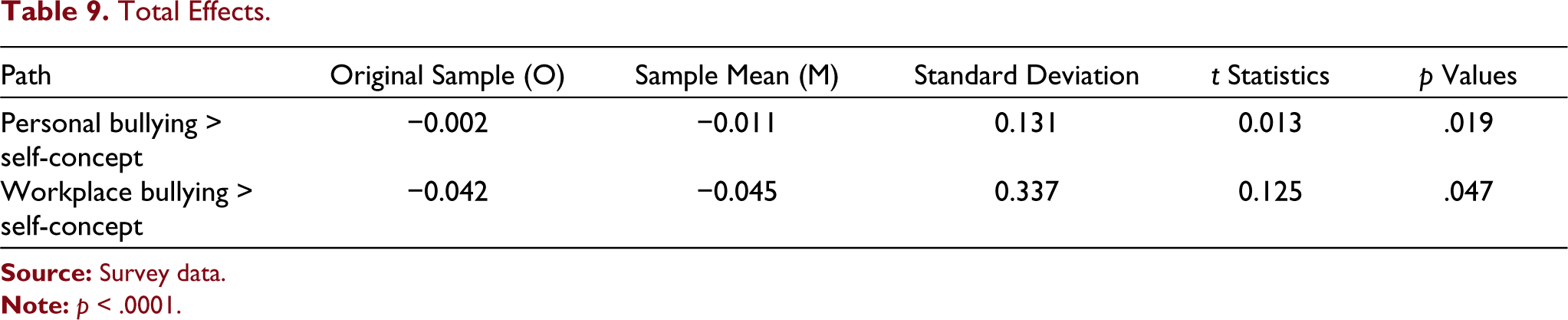
As per Tables 8 and 9, total direct and total indirect effects have been provided for WB and PB with SC, the original sample is negative, indicating a negative relationship. The t-statistic of both the independent variables indicates that the difference between the original sample and the sample mean, in terms of standard deviations, is relatively small. The p value in both direct and indirect relationships suggests that there is a statistically significant difference between the original sample and the mean, indicating that WB and PB also correlate with changes in SC, albeit negatively.
Total Indirect Effect.
Total Effects.
Conclusion
The acts of bullying in the workplace are penetrating nowadays. Bullying is not only a deliberate act but most of the time the person harassing does not even realize that he has somehow done it. The banks are required to take proactive measures to create awareness about bullying at the workplace and its consequences. On the contrary, many times, employees do not understand that they are bullied by their superiors or peer group members. Management may plan to organize human values and ethics development programmes involving all members’ perpetrators and targets to realize each other’s true condition.
Furthermore, activities such as T-group training for sensitizing employees on how others are feeling can be one effective approach. Experimentally, job rotation within the department as a role-play of seniors and juniors or between peers can make them aware of each other’s condition in a much better way. Such events should not take place in any organization first, and if they occur, the HR representatives on priority should report them on a serious note. The culprit must be identified and should be viewed as a source of stigma in the workplace. Some whistle blowers should be appreciated by organizations to detoxify the workplace from bullying issues and maintain a productive and positive working environment where everyone can grow together. In future, the study will also serve as the literature for future research, and due to this, it will increase awareness among the people at the workplace to avoid such issues.
Implications and Limitations
Bullying predicts intentions to leave the organization among employees, which may create a difficulty in managing the right number of employees (Jawazneh & Smadi, 2017). These costs are huge to the organization. This study is effective in understanding such intentions among employees to maintain a productive and competitive work culture and environment.
The banks should take the initiative to counsel employees who indulge themselves in such acts and warn them about the repercussions of such acts. They should be motivated not to indulge in bullying activities as it affects the mental health of those who face such bullying at their workplace.
This research article reveals the impact of bullying which may help organizations in taking corrective measures in context to handle any grievance received by them by any aggrieved employee facing a bully at the workplace.
Organizations can easily tackle such problems of bullying via proper counselling to make victims of bullying emotionally stronger with a strong SC which would help them in achieving good performance in their assigned tasks. They should further lay down anti-bullying policies and sensitize staff to the consequences of bullying.
This study will also help organizations to reduce the stress level of employees caused due to mocking, teasing, shouting or bullying employees to enhance performance (Mathur et al., 2007) and the employees must be encouraged to report bullying issues regularly. To reduce cynicism, banks should foster a culture of respect and empathy. WB can lead to higher levels of cynicism among employees. This means that employees who experience bullying at work are more likely to develop negative attitudes and distrust towards their organization, colleagues or the work environment. This further includes handling of bullying-related issues in a time-bound manner. Among the others, there are crucial effects of cynicism whereby organizations need to realize that cynicism can reduce SC, so proper care must be taken to invest in programmes to boost employee morale, providing constructive feedback in view of creating opportunities for performance and appreciation. SC in turn not only enhances SWL but also the performance of the individual. Employees who experience WB may suffer from reduced self-confidence and a negative self-image due to the mistreatment they endure. The organizations should offer employee well-being programmes for better work–life balance and to create a supportive and inclusive work environment. PB, when directed at employees, is also associated with increased cynicism. This suggests that individual experiences of bullying can have a detrimental effect on employees’ trust and perceptions of their workplace.
These findings underscore the importance of addressing WB to maintain a healthy work environment and promote positive SC and JP among employees. Organizations should consider implementing policies and interventions to prevent and address bullying in the workplace to mitigate its negative effects on employees and overall organizational success.
This study is based on a fixed sample size, which discloses the mentioned results; it may have different results if executed in addition to a greater number of samples to test the same. The demographic is not tested due to a fixed time frame which can be extended to analyze the study along with the inclusion of moderating or mediating effect of mentioned variables in the proposed model.
Footnotes
Declaration of Conflicting Interests
The authors declared no potential conflicts of interest with respect to the research, authorship and/or publication of this article.
Funding
The authors received no financial support for the research, authorship and/or publication of this article.