



Abstract
This study investigates business sustainability and the development of comprehensive capabilities that are crucial for future-ready organizations. It delineates the sustainable business practices that are necessary to enhance the functional, operational, technological and strategic dimensions of an organization. Furthermore, we examine methods to augment a firm’s capacity to foster sustainable growth. The authors utilized a structured approach; four focused group discussions (FGDs) were conducted with experts from multinational firms to garner real-time industry insights in the context of the new normal. The discussions emphasized key practices such as change management, competency building, green business functions, regenerative strategies, empathetic leadership and the triple bottom line approach. This research underscores the real-time business practices implemented during and after the pandemic to address and mitigate the disruptions caused by the outbreak.
Keywords
Introduction
The increasing awareness about sustainable development has led to a surge in sustainability literature (Abulibdeh et al., 2024; Rao et al., 2022). Since the adoption of the Sustainable Development Goals (SDGs), organizations have started to focus on the planet, people and the environment with the belief that it will lead to better business performance for the firm. Thus, the relationship between sustainability practices and the business performance of companies has attracted much attention from researchers (Shah et al., 2024). Following a recent review, authors Rao et al. (2022) identified eight business areas resembling tremendous growth opportunities through sustainable business practices (SBPs) in the future. On the business front, several businesses are tackling sustainability in their own way. Not too long ago, global consumer electronics giant Apple Inc. decided to no longer include wall chargers and earbuds in its new iPhone 12 boxes. These moves may save the company money, but just how good it will be for the planet is something that is harder to visualize (New York Times, 2024). Similarly, worldwide economic developments have led to a substantial increase in the rapid exploitation of natural resources and of the planet, causing global imbalances and unsustainability. Thus, it is vital to address the environmental, social and governance (ESG) components of existing business practices.
Sustainability in business has been defined in dynamic ways, covering diverse components of business and sustainability. The World Commission on Environment and Development (WCED, 1987) describes it as ‘development that meets the desires of the past generation without compromising future generations to satisfy their needs by knowing the scarcity of natural resources’, Schaltegger et al. (2012) defined it as ‘a voluntary activity to contribute to the societal and environmental problem by creating profits’. Similarly, hundreds of definitions were coined later in academic debates and business arenas (Arena et al., 2009). However, a golden thread that weaved together all definitions referred to sustainability as a more transparent, more ethical and more humane way of doing business. Seeking a forward-looking perspective, it appears that a profound paradigm shift is required, concerned with what is to be called SBPs in these uncertain, dynamic and unexpected business landscapes. However, across existing studies, what is missing is a careful analysis and scrutiny of the theoretical approaches to understanding SBPs. More specifically, understanding the theories that enable predictions about why, when and how specific capabilities can be developed to render SBPs for future-ready organizations. Not only is there a need to rethink the human capabilities to learn, but there is also an emerging need to reinvent workforce experience (Johnston & Samanta, 2024), dynamics (Fyhn et al., 2023) and diversity (Sukalov), and to enhance efficiency and reconsider how to develop future leaders (Raut et al., 2024). Thus, despite the anticipated growth and widespread acknowledgement of sustainable practices (Visvizi et al., 2018), a crucial gap remains in understanding how such practices can be practically implemented across different sectors and how they genuinely impact business performance. Therefore, the present study aims to fill this gap by exploring the integration and effectiveness of these practices amidst varying organizational strategies.
Sustainability in business is a continuous learning process yielding bi-directional benefits to societies and businesses alike. However, how conscious businesses today are to adapt to inclusive strategies and incubate suitability and capability enrichment is a pertinent and debatable question. In this line of thought, several companies have been forced to reassess their old organizational structure due to the changing market demands, fluctuating client expectations, environmental challenges and limited economic profits in numerous industries (Magnusson & Werner, 2023). Therefore, it is vital to address the social, environmental and economic components of manufacturing methods due to the government policies and societal and customer pressure. To achieve these sustainability goals, industries are turning to modern technologies such as blockchain, big data analytics, cyber-physical systems, cloud computing and the circular economy (CE). These technologies represent critical tools for advancing Industry 4.0, offering potential solutions to sustainability challenges in manufacturing and healthcare sectors (Mehrotra & Jaladi, 2022). These alternatives arose as a response to the need for sustainability in the manufacturing and supply chain industries (Dharmayanti et al., 2023). All these emerging technologies are referred to as critical technologies for Industry 4.0 or the fourth Industrial Revolution (Abulibdeh et al., 2024). This study is motivated by the observation that despite widespread acknowledgement of the importance of sustainability, the integration and effectiveness of sustainable practices vary significantly among organizations, necessitating a focused analysis of the enabling factors and barriers.
Therefore, the main objective of this study is to explore the reasons, effects and challenges in managing inclusive business sustainability and comprehensive capability enhancement. Through focused group discussions, this research will document the experiences of business managers, practitioners and policymakers, providing actionable insights into the integration and effectiveness of sustainable practices. By examining the real-world applications and challenges of SBPs in various industries, this research aims to contribute valuable insights to the ongoing academic discourse and offer practical guidance for organizations striving to enhance their sustainability efforts.
The article is structured as follows: The second section illustrates the literature review followed by the research methodology in the third section. Results and discussions have been presented in the fourth section and the study is finally concluded in the fifth section.
Literature Review
Amidst global challenges, notably the COVID-19 pandemic, the focus on SBPs has intensified, marking a critical area of research. The world saw resonance effects, turmoil and demand and supply ripples spread across international networks (Guan et al., 2020). These challenges underscore the urgent need for firms to adopt robust sustainable practices that can mitigate the impacts of such global disruptions and ensure long-term viability. The uncertainty brought an unprecedented opportunity for businesses to embed sustainability in the different aspects of firm operations and to adopt a strategic approach to business management. As businesses navigate these disruptions, it becomes imperative to explore how established research has connected sustainable practices with strategic business objectives and overall firm performance.
Theoretical Foundation
The literature on sustainability provides sufficient support in terms of explaining the importance of it for business (Abulibdeh et al., 2024). Further, Amer (2023) has linked sustainability to other business-oriented concepts, including internalization, organization-specific advantages, public policy, organizational strategy, competitiveness and leadership. Expanding on these dimensions, the resource-based view (RBV) emphasizes that unique internal capabilities enable firms to achieve a sustainable competitive edge by leveraging strategic resources that are valuable, rare, inimitable and non-substitutable (Barney, 1991). This framework helps to further understand how firms can align their strategic resources towards sustainability initiatives that contribute to both environmental stewardship and economic gains. Moreover, the integration of ‘lean and green’ practices offers a pathway for small and medium enterprises (SMEs) to align efficiency with environmental sustainability. By adopting lean tools such as 5S and Kaizen, SMEs can reduce waste and minimize environmental impact, embodying a practical application of sustainable strategies that also enhance operational efficiency. Additionally, the natural resource-based view (NRBV) extends the RBV by integrating the environmental dimension, suggesting that sustainable competitive advantage also depends on a firm’s ability to manage its natural resources amidst environmental constraints (Hart, 1995). This perspective is crucial for understanding how businesses can transform their operations and strategies to not only mitigate environmental impacts but also capitalize on sustainability-driven opportunities. In addition to resource-based perspectives, the Dynamic Capabilities Framework (Oliver & Holzinger, 2008) sheds light on how firms can adapt to rapidly changing environments through the development of capabilities that foster innovation and technological adaptation. This framework is particularly relevant for implementing SBPs, as it emphasizes the firm’s ability to modify and reconfigure strategic resources dynamically in response to environmental shifts (Yi & Demirel, 2023).
By combining these theoretical perspectives, this research focuses on the association between sustainability and value maximization of firms through the lens of leadership, organizational change and information communication technologies, setting the stage for an exploration of how specific SBPs directly contribute to corporate success and shareholder wealth.
Economic Models Supporting SBPs
Economic models such as the circular economy not only provide a framework for environmental sustainability but also demonstrate how SBPs can be aligned with financial success, bridging the gap between ecological responsibility and corporate profitability. SBPs contribute to the shareholder’s wealth maximization. These business practices are emphasized by the organizations (Stern & Stern, 2007), specifically in turbulent economic conditions and climate change. Further, this quest to continually increase corporate wealth is at the centre of commercial traditions (Wood & Callaghan, 2003). Although at times it is difficult to distinguish between sustainable and unsustainable business practices (Svensson et al., 2010), the SBPs are always guided by laws and regulations promulgated by government bodies and enhanced education among different stakeholders (Blackburn, 2012). Further, socially responsible managers enforce the implementation of SBPs and monitor the effectiveness of these practices in corporations. Assessments within the context of economic, social, environmental, good governance or other factors are frequently seen in research investigations. However, many authors do not take into account these dimensions and their interactions in a thorough manner with economic trade-offs. Despite recognition of their necessity, businesses often view SBPs as being at odds with their financial goals. This perception underscores a critical gap in understanding how SBPs can be economically viable while contributing to corporate sustainability. Building on the economic frameworks, technological innovations such as big data and blockchain further enhance the implementation and monitoring of SBPs, bridging theoretical models with practical execution.
Technological Innovation Supporting SBPs
Technologies such as big data and blockchain are pivotal in enabling these models to efficiently track resource usage and recycling processes, thereby embedding sustainability deeply into business logistics and strategy. The CE exemplifies sustainable economic growth; its full potential is unlocked through technological innovation. To illustrate, D’Adamo and Lupi (2021) share the concept of circular price and circular premium where the circular price is the price paid to produce a 100% bio-based product using a sustainable method and the circular premium is the difference between the normal price and the circular price paid by the consumers. It takes incentives to encourage a circular model (Sehnem et al., 2021). A similar example of circular premium is observed in the fashion industry where the study (D’Adamo et al., 2022) highlights the need for efficient management and internal competition on low-cost production as key business drivers, while prospects for consumers include incentives and sustainable consumption. These technological and management advancements not only support but are essential for the robust application of SBPs, ensuring their adaptability and resilience in dynamic market conditions.
Impact of Technological Advancements and Management Tools on SBPs
Complementary fields of study have recently emerged; for example, authors Tseng et al. (2013) addressed sustainability through the design, practice and management of the green chain in the Asian continent by examining sustainable production and consumption activities. The diffusion of new management tools for business transition management (Boons & Lüdeke-Freund, 2013) aids businesses today to create a sustainably strong business model (Dentchev et al., 2016). The strongly sustainable business model ontology (SSBMO) framework allows the description of highly sustainable and successful business models, including functionally necessary relationships (Upward & Jones, 2016). Technological advancements have proven essential not just for facilitating SBPs but for ensuring resilience in the face of disruptions like COVID-19. This resilience is critical as businesses navigate recovery, yet the literature often overlooks how technology-mediated SBPs contribute to sustained operational capacity during crises. The strategic integration of SBPs, supported by economic models and advanced technologies, enables businesses to align sustainability with their core operational and financial strategies.
Strategic Level Treatment of SBPs
To approach SBPs, it is rather important to treat these sustainability issues at the strategic level. The idea of the triple bottom line is a new corporate goal, widening the scope of the company’s duties beyond the generation of economic value (Elkington, 1994). Considering the triple bottom line, it is further proposing a definition of sustainable business models (SBM) that will incorporate a triple bottom line approach comprised of stakeholder, environmental and societal interests (Elkington, 1997). SBMs, then, have at their heart some component of societal or environmental welfare and studies find that an accumulation of such green activities and growth at the country level can result in economic benefits (Fernandes et al., 2021; Ferreira et al., 2021). As these SBMs evolve, they incorporate advanced technologies and management strategies that foster their widespread adoption and effectiveness. The pandemic underscored the critical need for the strategic resilience capabilities discussed, highlighting how SBPs support sustained business operations during unprecedented disruptions.
SBPs in Enhancing Resilience and Guiding Recovery Post-pandemic
The pandemic’s impact has vividly demonstrated the importance of resilience, facilitated by a blend of technological innovation and sustainable practices. However, detailed insights into how these elements are integrated within corporate strategies during crises remain scant. This study seeks to fill this void by investigating the real-time application of SBPs in enhancing resilience and guiding recovery in the post-pandemic era. The CE studies (Perotti et al., 2023) how businesses might redesign the way the economy functions by creating items that can be ‘made to be created again’ and by running the system on renewable energy. There are a lot of opportunities for businesses to rethink and redesign the way they conduct business. While lean and green initiatives can lead to SBPs (Caldera et al., 2017), in contrast, the CE’s conceptualizations and origins, tracing its meanings and exploring its economics and ecology backgrounds in business and policy, help businesses attain sustainability (Franco & Rodrigues, 2019; Murray et al., 2017). Several studies (Evans et al., 2017; Lüdeke-Freund & Dembek, 2017) have developed a unified theoretical perspective that can serve as a basis for more cohesive analysis and comparison of SBM studies and new business model tools used in various disciplines and sectors. As many business model innovations fail (Geissdoerfer et al., 2018), learning the core components of circular business models links to contingency theory, transaction cost theory, resource-based theory, network theory, industrial economics and agency theory (Lahti et al., 2018). By comparison, Nosratabadi et al. (2019) provided insight into the state-of-the-art SBMs in various application areas. To effectively implement these circular models, businesses increasingly rely on advanced technologies. Technologies like big data analytics and blockchain not only support but are integral to the successful operationalization of sustainable practices by enhancing efficiency and transparency across global supply chains.
Significance of Capability Building
Building resilience helps in increasing the chances of survivability and supports firms to cope with unexpected situations (Ortiz-de-Mandojana & Bansal, 2016). With COVID-19 hitting the economies hard and pushing the global lockdowns, it resulted in locking the wheels of the growth engine of the countries (Liouaeddine et al., 2024). The period of digitalization has been attributed in large part to Industry 4.0 (Endres et al., 2019; Qi & Tao, 2018). The triple bottom line, sustainable business strategies and circular economy have all drawn attention to their implications for sustainable development. Companies from all industries were compelled to take extreme precautions to protect their employees and continue operations as a result of the worst health and economic catastrophe in recent memory (Khan et al., 2021a). Before COVID-19, businesses that scaled Industry 4.0 use cases were in a better position to handle the crisis (Almeida et al., 2020).
Therefore, the concept of SBPs is again gaining traction among business leaders and is enforcing them to apply practices that aim for longevity, equity, and ecological balancing. Global interconnection has contributed to enormous economic and social benefits for years, albeit unevenly, but it has also aided in the pandemic’s quick transmission. A basic tenet of the global economy, prioritizing short-term economic growth and efficiency above long-term resilience, has been shown to entail significant societal consequences by the pace and severity of the current economic crisis. Long and intricate global value chains have shown their vulnerability, with many economies finding it difficult to recoup from the losses. The uneven loss of employment has revealed and quickly worsened social inequities. However, identifying the type of practices being adopted by the firm post-pandemic to recover from the losses becomes the foundation of the present research. Further, an interesting aspect related to sustainable business practices is creating organizational capabilities that support the architecture/framework of SBPs.
Capability Building
Amid rising natural disasters, pandemics, equipment failure, and so on, the importance of building resilience in an organization for surviving, adapting and growing in an uncertain environment has increased (Oeij et al., 2017). Building organizational capability is a strategic investment (Raut et al., 2023) since it is the ability to get its people and other resources together to proactively respond to changes in the business environment, and deliver value to its customers and stakeholders, and secure its long-term growth (Jämsä et al., 2011). There are some difficult-to-replicate capabilities in an enterprise, and these can be considered as precursors to firm-level success (Teece et al., 1997). Organizations that are flexible and can present a timely respond to changing environments can gain sustainable advantage. In the literature, there is evidence of different types of capabilities; researchers try to identify them as zero-, first- and second-order capabilities (Zollo & Winter, 2002), while other classifications use different terminology such as ordinary or dynamic capabilities. Over the years, organizations have shifted their focus from just looking at ordinary capabilities—best practices, and technical and operational efficiency (Teece, 2014). Even signature processes and activities need a revamp over time because they have become imitable (Dangi et al., 2020; Laaksonen & Peltoniemi, 2018). Specific routines such as resource allocation, alliance, acquisition, knowledge creation, product development and so on (Eisenhardt & Martin, 2000) are considered to be repetitive patterns of activity (Nelson, 1985), and these patterns are considered as different for stable and high-velocity conditions. Hence it is vital that ‘the organizational and strategic routines by which firms achieve new resource configurations as markets emerge, collide, split, evolve and die’ (Eisenhardt & Martin, 2000, p. 1107). These capability-building leveraged resources have also been called dynamic or second-order capabilities. In other words, dynamic capabilities refer to the capacity to extract rents from current resources as well as build new competencies (Teece et al., 1997). Deploying dynamic capabilities thus involves both capability exploitation and capability building (Tallman, 2015). While capability exploitation concerns the extent to which a firm exploits rent-generating resources, capability building involves the extent to which a firm commits to building new capabilities through learning from other organizations, creating new skills or revitalizing existing skills in new situations. Both are important in today’s turbulent business environment. Capability exploitation is critical for gaining competitive advantages and determining strategies for exploiting such advantages (Cantwell, 2014). Capability building ensures the growth of sustainable advantages and generates new bundles of resources. Collectively, capabilities determine an enterprise’s ability to create and use organizationally embedded resources in the pursuit of a sustained competitive advantage in a global marketplace. The Porter Report (Porter & Ketels, 2003) focuses on innovative capabilities, and it highlights that networking translates into innovative outcomes and that inter-organizational networking is prime for the development of innovative capability. According to the logic of dynamic capability leverage, this innovation capability is about both the generation and the exploitation of new products, services, processes and business practices (Pittaway et al., 2004)
In the context of very dynamic markets, the logic of leverage and its relevance regarding strategic conduct has been questioned, hence the need for understanding how organizations can develop capabilities to explore, exploit and capture market opportunities and relentless innovations with speed and surprise as an important imperative for organizational success for a more sustainable future (Christensen, 1997). Specifically, post-COVID-19, businesses need to rethink the capabilities building of their employees to make them prepared for future turbulences in the business environment. According to McKinsey and Company Report 2020, capability building has gained more attention than the pre-COVID-19 business environment. Higher value is placed on providing knowledge enhancement, skill development and capability building.
It is critical to examine the demands, roles and results of SCPs. From an environmental and social standpoint, sustainability progress is being accomplished, but it is gradual, intermittent, narrow and prone to unsustainable behaviours. Table 1 highlights research articles published in 2021 and 2020 on the SBPs, using the keywords ‘Sustainable Business Practices’, ‘Capability Building’ and ‘COVID-19’. The articles were sorted by recency and relevancy, and the top eight pieces of research, and their results have been summarized in Table 1.
Summary of Recent Research Articles on Sustainable Business Practices.
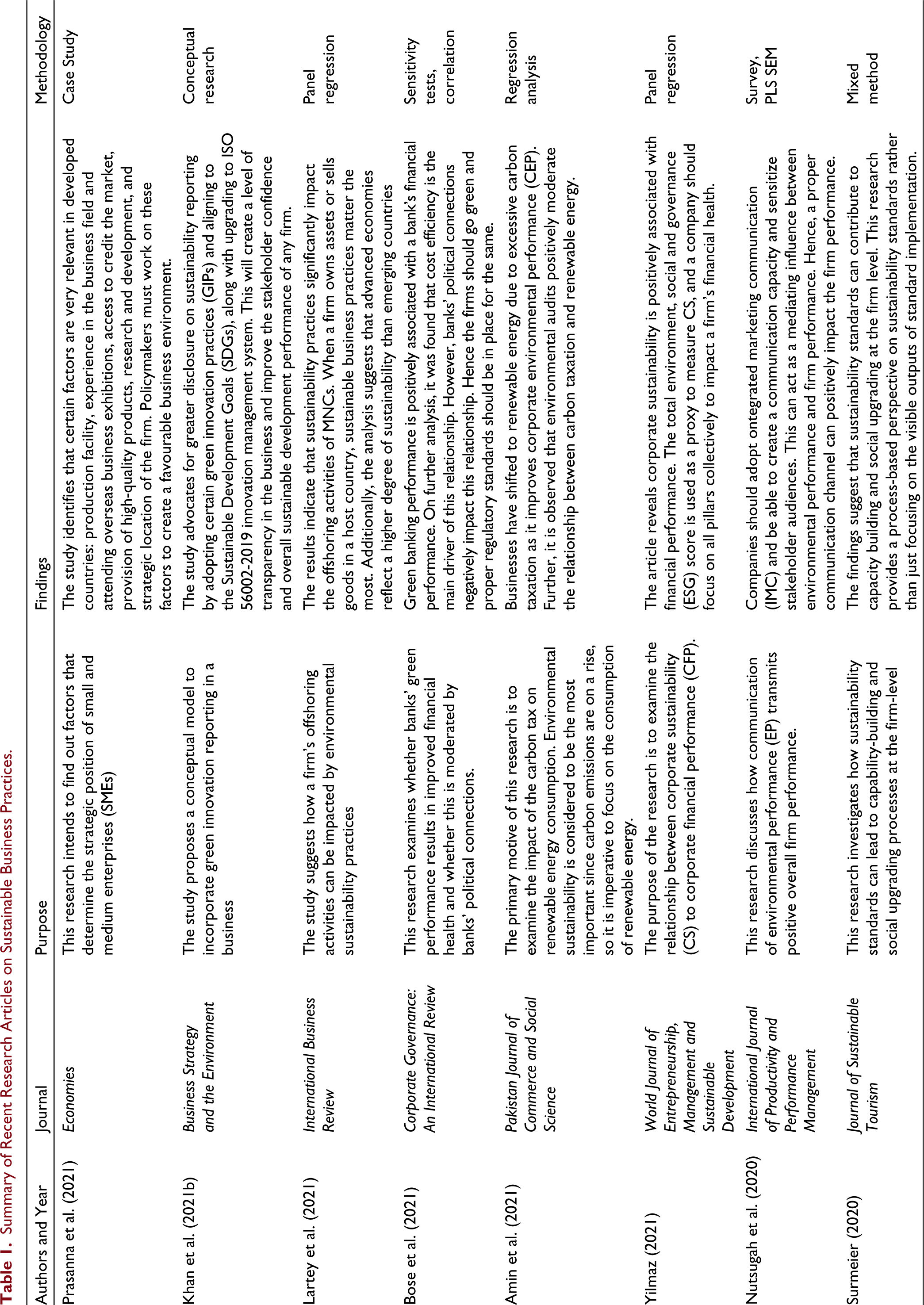
The key themes in focus have been more so on environmental sustainability: carbon taxation, green innovations and communication of environmental performance. Other elements of corporate sustainability concerning social governance provide valuable insights overall. Most of the research is empirical and lacks qualitative analysis. This indicates that the recent academic research on SBPs has yet not integrated the practitioner’s opinion; therefore, this study will enrich the extant literature, and the findings reported can probably help in strengthening the empirical outputs of the previous studies. It will also guide future researchers about the potential avenues in the field.
Research Methodology
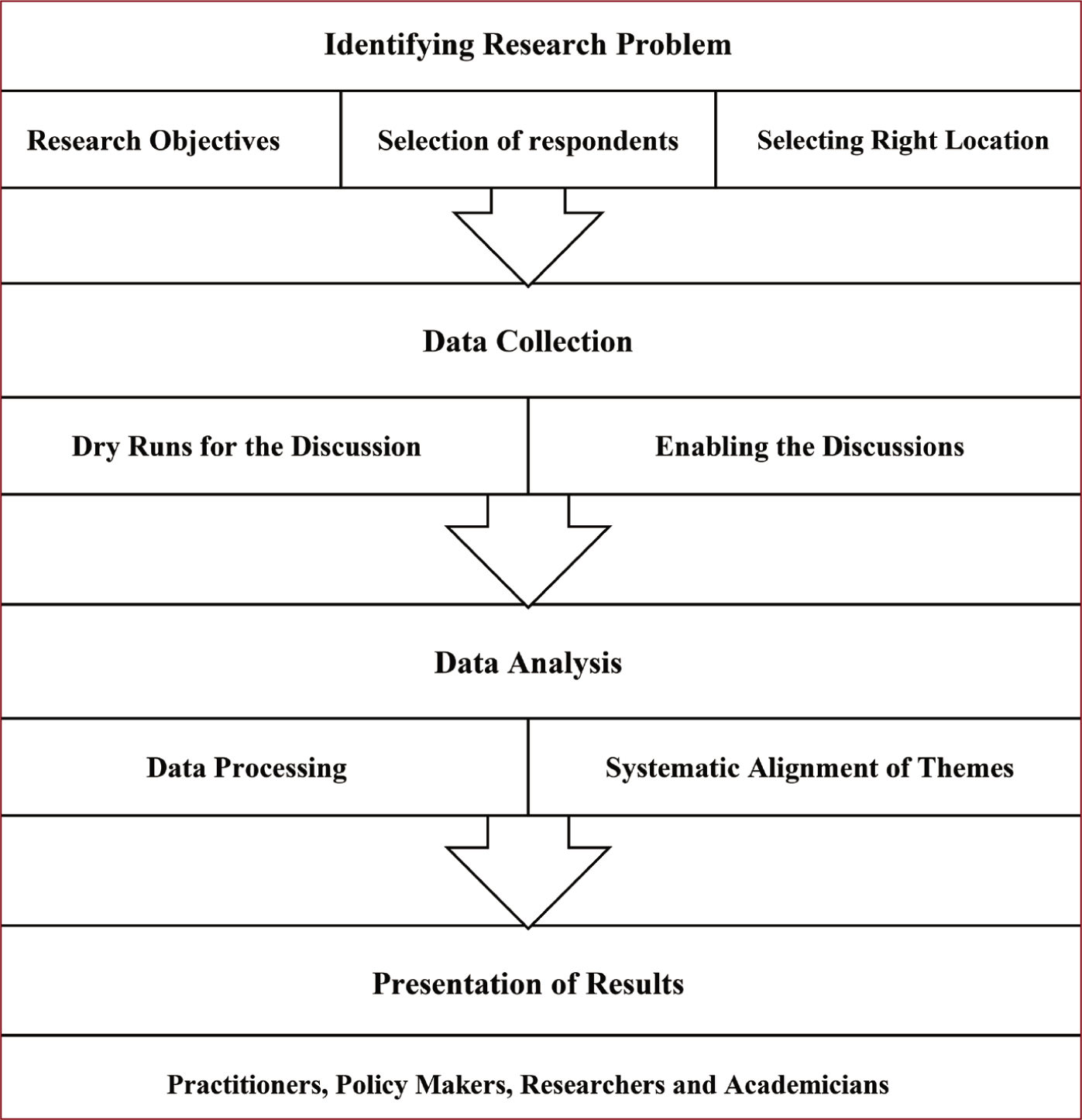
A practitioner’s view of reality has anchored the methodology in this study. Comprehending the social actors’ expertise (Wahyuni, 2012) and constructive viewpoint is better understood by interacting and conversing with the study sample. Therefore, a focused group discussion was undertaken to apprehend the best practices undertaken by the managers, policymakers and practitioners, ensuring innovative SBPs. The groups are ‘focused’ such that all respondents participate in a shared goal (Onwuegbuzie et al., 2009). They are differentiated from other group interviews by ‘the conscious utilization of group interaction’ as primary research’ (Kitzinger, 1994). To determine the sustainable growth of company practice, a focused group discussion is the most effective way (Hamilton & Finley, 2019) to learn what people think about innovative and effective methods to adopt. Figure 1 exhibits the systematic flow of research methodology adopted in the study.
Research Design.
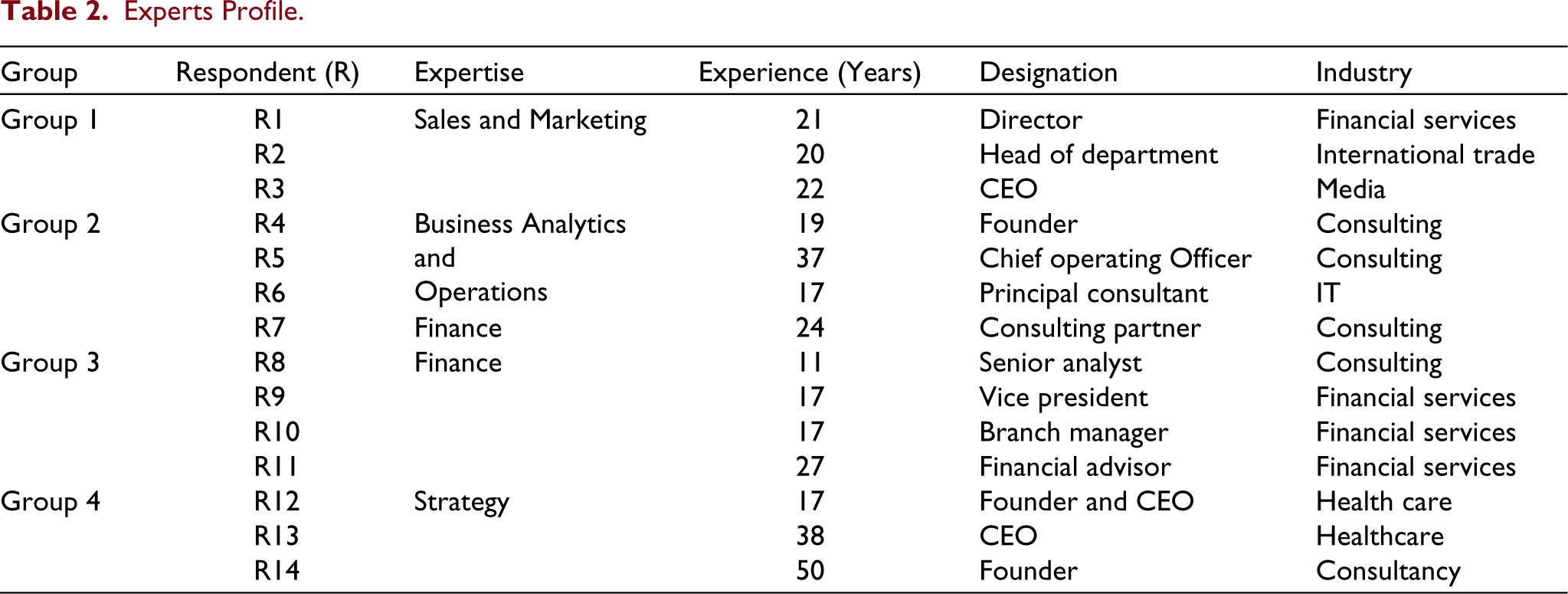
This study has visibly portrayed the importance of SBPs with the support of previous studies, it and has therefore clearly articulated the research objective around illustrating the SBPs adopted by the businesses and how these can be strengthened by capability enrichment. The experts for the focused group discussion were identified using purposive sampling. Purposive sampling is preferred (Morgan, 1996) for focused group discussions. It allows researchers to attain the participants’ expertise in their area and topic of research, further providing insightful comprehension. Therefore, the choice of experts is completely guided by the involvement of these people in the strategic decision-making process. We have prepared a sample of 231 experienced professionals working in different industries in strategic positions (CEO, Heads, Directors and so on). The choice of industry is guided by the major shift witnessed in the business practices of the firm during the recent pandemic. For example, financial services has seen a paradigm shift with technology integration into their processes; similarly, healthcare was another sector that was actively operative during COVID-19, followed by consultancy firms involved in preparing research and corporate reports about the major shift being noticed in the overall economy. Participants were drawn from three key sectors—financial services, healthcare and technology and consulting—reflecting industries with significant operational shifts during the pandemic. Companies ranged in size from small enterprises with fewer than 100 employees to large multinationals employing thousands. These firms were predominantly located in India’s major economic hubs including Mumbai, Delhi, Bangalore and Hyderabad, offering a broad perspective on the challenges and innovations driven by the pandemic across diverse urban landscapes. These professionals have been contacted through an email stating the purpose of the research. Out of the 231, only 25 agreed to participate and a further 11 were dropped due to their unavoidable work commitments. As proposed by Hennink et al. (2019), the sample size in focused group research is dependent on the number of parameters under study. In our study, two parameters, sustainable growth and capability enhancement, have been discussed. To study these parameters, four groups were created, with three-four experts in each group. To maintain the homogeneity (Odimegwu, 2000) among the participants, the classification of groups was done according to the expert domain of the speaker to initiate a collaborative yet distinctive discussion (Silverman, 2004) among the experts. The total sample size of 14 consisted of managers, policymakers and practitioners, working in top multinationals in India, as presented in Table 2.
Experts Profile.
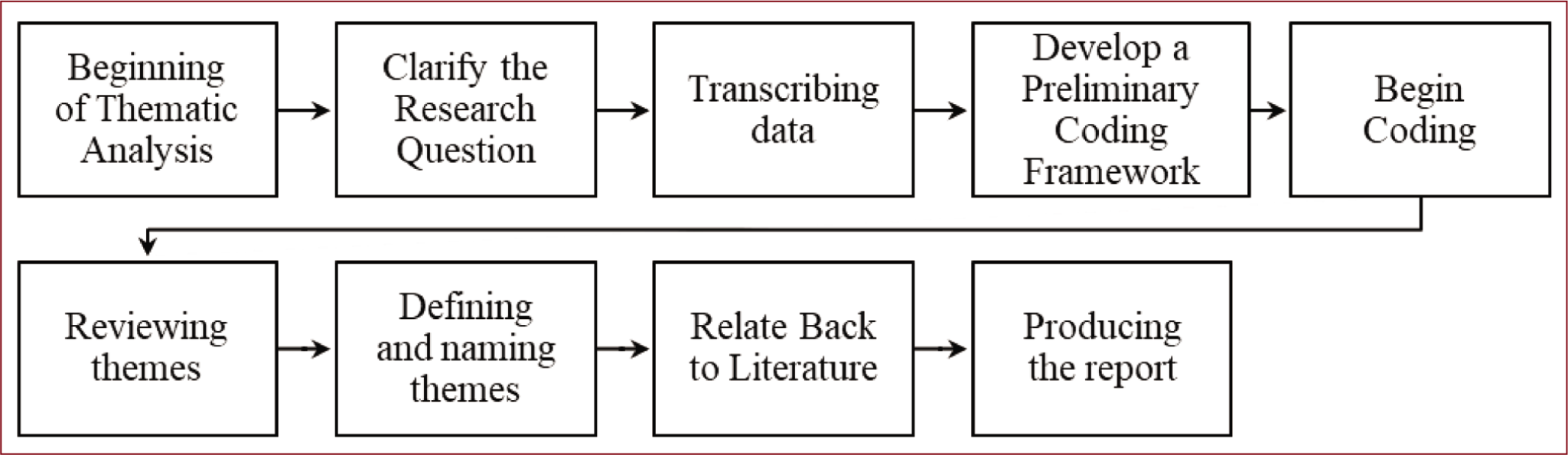
A preliminary discussion was undertaken with the experts to make them comfortable with the topic of discussion and to take consent from the participants (Sim & Waterfield, 2019) for further deliberation during the focused group discussion. The focused group discussion was conducted in virtual mode on the Zoom platform in November 2022. During the discussions, participants were prompted with targeted questions designed according to their experiences and perspectives on implementing SBPs. Examples of questions include: ‘Can you describe a successful sustainable practice implemented in your organization?’, ‘How do these practices impact your strategic decision-making?’ and ‘What challenges do you face in scaling these practices within your industry?’ The discussion was deliberated to identify and describe the SBPs that are required to strengthen the functional, operational, technological and strategic aspects of an organization. To ensure effective moderation of the virtual focused group discussions, the sessions were led by an experienced moderator supported by remote staff. The staff helped manage the discussion flow, addressed technical issues in real time and maintained backup communication channels to mitigate potential virtual constraints, ensuring comprehensive engagement and data integrity. All respondents were asked open-ended questions, and themes were identified to understand the question in consideration. The responses to the discussion were recorded with the consent of the participants. These recordings were used to transcript the discussion. After the transcription of the focused group discussions, a structured thematic analysis (as stated in Figure 2) was initiated by defining and refining themes based on the responses linked to the research questions. This process involved the careful alignment of emergent themes with our pre-defined questions to ensure that all aspects of the discussion were comprehensively addressed. The coding framework was iteratively revised to refine the specificity and relevance of themes, facilitating a deeper exploration of how these themes interrelate with established theoretical frameworks. As a result, the focused group discussion yielded qualitative data that could be systematically analyzed when transcribed. The results will be reported and interpreted in accordance with their utility for scholars, researchers, practitioners and policymakers.
Steps Involved in Theoretical Thematic Analysis.
Results and Discussion
The discussion on sustainability is increasingly prominent across various sectors (Kanashiro et al., 2020). These sustainability practices not only address environmental concerns but also strategically position companies for competitive advantage by reducing costs and enhancing brand reputation. The concept of CE emphasizes incentivizing the reuse, recycling, repairing and refurbishing of products rather than scrapping them and then extracting new resources (Geissdoerfer et al., 2017). To protect the environment, one must use the resources judiciously and develop new capabilities from existing resources. A paradigm shift has been observed in making green products and making processes green (Tariq et al., 2017), which aligns with our research objective to explore how sustainability practices are integrated within organizations. Nowadays, not only environmental sustainability, but industry leaders are also embracing overall sustainability to drive new value for their businesses (Yu et al., 2018). This comprehensive adoption underscores the importance of sustainability in enhancing firm value, addressing our study’s goal of investigating the impact of sustainable practices on business performance. A panellist provided insights on how the integration of sustainability into business models, especially through enhanced ESG disclosure structures, not only meets regulatory standards but also significantly benefits people, the planet and company profits. This will create value for people, the planet and society, and at the same time positively impact profits. This strategic integration of ESG practices not only aligns with global sustainability trends but also attracts ethically focused investors, enhancing the financial stability of the firm.
Apart from building sensitization, creating green business functions, sustainable value creation and working under the triple bottom line framework, some respondents emphasize abandoning outdated technologies and seeking digitization in maintaining sustainable supply chains. This transformation is crucial for developing the capabilities that support sustainable practices, directly connecting with our objective to examine capability enhancement strategies in businesses. Moreover, organizational commitment to sustainability often reflects the values and culture set by top leadership, who are encouraged to be curious, change-driven and empathetic. These qualities are essential as they dictate the direction and success of sustainability efforts within the firm. The leadership’s commitment to sustainability fosters a culture of continuous improvement and innovation, which is crucial for long-term business resilience and adaptability.
The focused group discussion largely centres on understanding the sustainability ecosystem of an organization and foreseeing how industries will shape in a 5-year timeline. The major themes extracted from these discussions included sustainability sensitization, leadership development, the integration of green business functions, the application of Industry 4.0 technologies, value creation and adherence to the triple bottom line.
Furthermore, the emphasis on training and development, digital transformation and employee connection emerged as significant sub-themes. These are viewed as critical for enhancing the knowledge base and skills of employees, which in turn improves job performance and prepares staff to handle the challenges of a hybrid working environment. Especially after COVID-19, where the survivability of the firm is challenged, some key learning from the diverse corporate experiences of the industry panellists have been presented in Table 3.
Results and Supportive Research.


Many employees are being trained to operate in a hybrid setup. These training initiatives not only enhance individual competencies but also collectively elevate the organization’s capacity to innovate and respond to market changes dynamically. Building connection with the employees has become even more important, with cases of moonlighting seeing an increase, inculcating a trustworthy relationship with employees should be encouraged. By linking these findings back to our initial research objectives, it is evident that the integration of sustainable practices within business operations not only addresses environmental and social issues but also enhances organizational capability, thus contributing to long-term business success.
Future Research Directions
The future research directions indicated by our study suggest deriving insights from the discussed themes and then formalizing these into specific research objectives (see Table 4).
Future Research Directions.
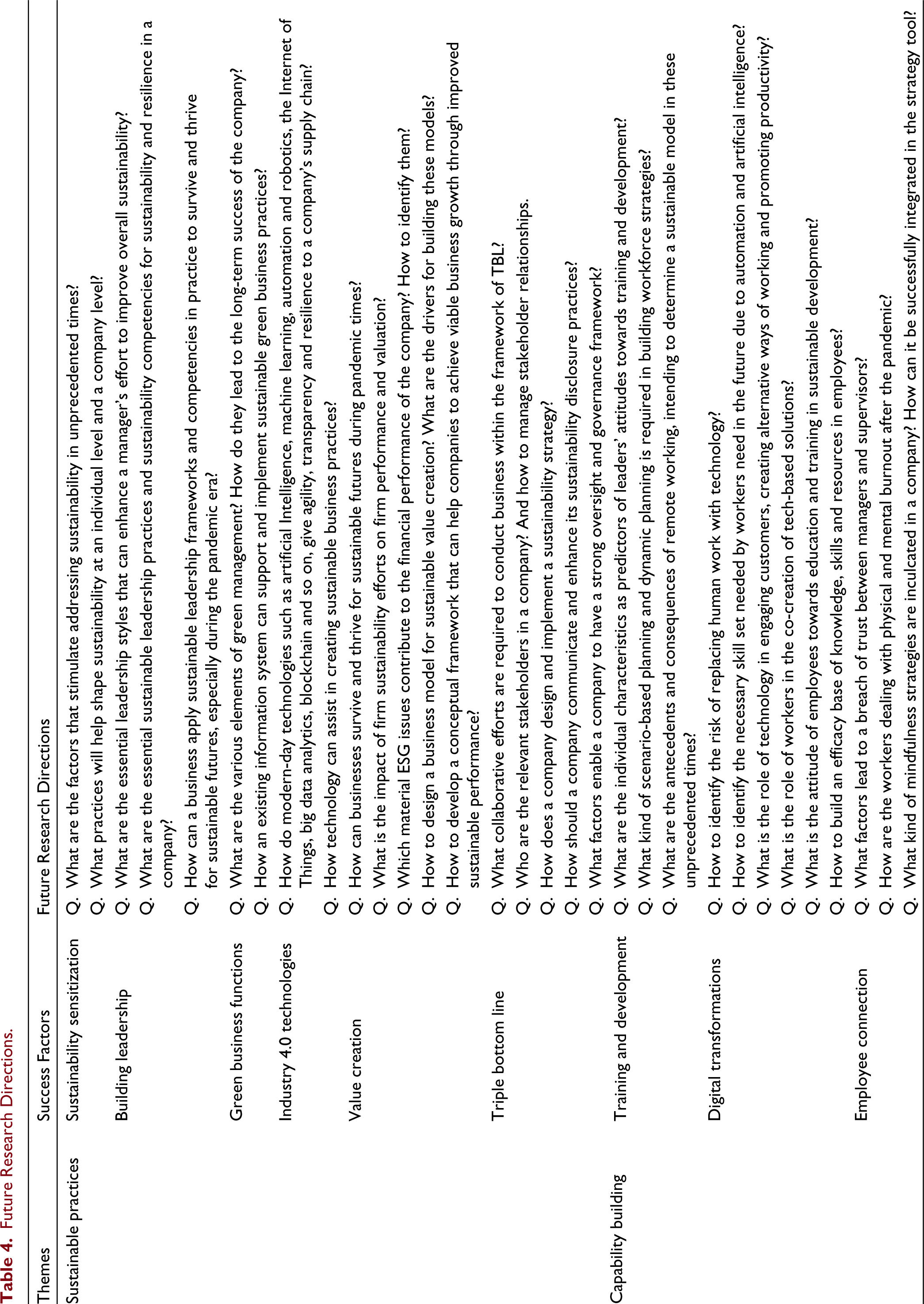
The future research directions are crucial for advancing the field of SBPs. These directions propose investigating deeper into the role of technological innovations like AI and blockchain in enhancing supply chain transparency and resilience, a topic that has emerged as critical in our discussions on Industry 4.0 technologies. Additionally, exploring the effectiveness of leadership styles in fostering a culture of sustainability presents a vital avenue for further empirical study.
Conclusion
The themes of sustainability touched upon the key parameters and stressed the fact that businesses are prospering long-term only if they are working on sustainability and resilience (Caldera et al., 2017; Perotti et al., 2023). The road to corporate sustainability should ensure the creation of long-term wealth for not only shareholders but for all the stakeholders of society, at large (Dangi, 2024). The intersection of SBPs and capacity building is essential for future growth. Especially during a time when COVID-19 and uncertainty have wrapped businesses and changed the functioning of the world economy (Verma et al., 2020). During this time, the ability of the firm to survive, adapt and be resilient is paramount. How a firm absorbs the shocks of disruption and its capability to recover from a crisis justifies its existence (Kyrdoda et al., 2023). After reviewing the literature and analyzing expert industry opinion, the following has been observed. (a) The research is very emergent with respect to incorporating SBPs but it still lacks in terms of a holistic assessment of all parameters-economic, social and environmental (Barbosa-Póvoa et al., 2018). Even after brainstorming ideas with the industry leaders, it was observed that environmental sustainability forms the core of the discussion. (b) Questions relating to how implementing sustainable practices can lead to cost minimization or profit maximization still haven’t been answered in entirety. (c) Apart from SBPs, the literature is heavily dominated by building dynamic capabilities as a leveraging factor against adverse and unforeseen circumstances (Zayed et al., 2022). Our findings demonstrate the practical application of the RBVs and NRBVs, showing how internal capabilities and environmental considerations drive sustainable competitive advantages. The adaptability and strategic changes observed in the focused group discussions reflect the core principles of the Dynamic Capabilities Framework, emphasizing the importance of these theories in real-world sustainability practices.
This study distinctly contributes to understanding the transformational impact of sustainability practices on organizational resilience and adaptability, particularly in the face of global disruptions like the COVID-19 pandemic. It emphasizes the importance of dynamic capabilities in fostering an organization’s responsiveness to external changes. The experts draw some practical implications and reiterate to train employees, work on human resource skill adjustment (Edeh et al., 2021), adapt to workplace learning (Kshirsagar et al., 2020) and undertake upskilling and reskilling programmes (Raut et al., 2024). (d) It has been observed that there has been a marked increase in live learning programmes and the setting up of cross-functional response teams comprised of all stakeholder groups. Rolling out topical programmes such as remote-working skills, management and leadership skills will enrich organizational capacity building (Kshirsagar et al., 2020). To succeed, the organization should know the art of managing inclusive growth, building SBMs, hybrid organizations and social enterprises. The future generation of managers are adept at certain skills that can promote sustainability accounting and reporting.
Hence, in this article, the researchers have adopted focused group discussion as the methodology to get real-time insights from the industry. Since the literature is evolving, considering the focused group discussion, our research has initiated a conversation on better management of the new threats and anomalies, ensuring sustainability and capability building. Under sustainability and capacity building a total of nine themes have emerged including (a) sustainability sensitization (b) building leadership, (c) green business functions, (d) industry 4.0 technologies, (e) value creation, (f) triple bottom line. The other major themes talks about capability building in the organization. Various sub-themes are explored under it- (a) training and development, (b) digital transformation and (c) employee connection. This research illustrates how businesses are practicing sustainability in the era of new threats and anomalies. The findings underscore the pivotal role of integrating ESG criteria into corporate strategies, which significantly contributes to SDGs and enhances corporate reputation and stakeholder trust. This study contributes to the literature by demonstrating practical implementations of sustainability in varied organizational contexts, highlighting the interdependencies between environmental initiatives and corporate profitability.
Footnotes
Declaration of Conflicting Interests
The authors declared no potential conflicts of interest with respect to the research, authorship and/or publication of this article.
Funding
The authors received no financial support for the research, authorship and/or publication of this article.