



Abstract
This article seeks to understand one of the most important problems in the contemporary discourse of modern development, that of management, control, collection and trade of medicinal plants in India. The tremendous growth in the market for herbal medicines since the 1990s has prompted large-scale industrial production of these medicines by big pharmaceutical corporations. This relies on medicinal plants mostly derived from the wild, and while their market has grown enormously, it has also led to their over-harvesting, without any concomitant efforts at regeneration. This article offers to analyse the political aspect of the existing market supply chain of medicinal plants in India. This study specifically focuses on problematizing the complex power structures in the market supply chain of medicinal plants, with reference to the knowledge of production that guides the corporations. In order to manufacture herbal products on the basis of large-scale centralized production systems, the corporations privilege their ‘knowledge’ of harvesting, production and distribution over that of the collectors. The collectors are usually part of communities that have built up their knowledge of accessibility and medicinal properties of these medicinal plants over centuries of care, experience and innovation. It is when these two knowledge systems clash, in the larger context of political economy of development and the public policies of the state, that the degradation of nature becomes inevitable.
Keywords
Introduction
Globally since the last two decades of the twentieth century, we observed the tremendous growth in the market of herbal and traditional medicines derived from the wild biodiversity of medicinal plants. The major reason for the boom in international demand lies in the increasing public awareness of the side effects of synthetically made allopathic medicines (Shiva, 2007, p. 272). This trend directly motivates the big multinational pharmaceutical corporations to produce these herbal medicines with large-scale centralized industrial mass production system based on the logic of returns to scale. Making these medicines accessible to a large market of consumers enables high profit and accumulation of capital. Large-scale industrial manufacture requires raw material (plants and herbs) to be available in bulk, priced low so that a reasonably cheap product can be mass produced and then sold far and wide (Banerjee, 1998). This logic gives rise to collection and harvesting practices, which are inimical to the species of these plants in the long run.
A crucial part of this story are the communities of collectors that have the traditional knowledge and expertise and whose livelihood it is to harvest them. Their location makes them vulnerable to the power of the corporations, while also being criticized for over-harvesting. Yet, it is the corporations that depend upon these collectors’ knowledge that make the decisions about the volumes to be harvested.
This article seeks to locate this issue as one of the politics of knowledge. This framework of analysis is deployed to bring together the dynamic and contestations around the way existing knowledge is constituted in four spaces in society—history, epistemology, political economy and public policy—in order to understand how they can become relevant in the contemporary world. In order to identify and explore the major issues in this sector, I conducted fieldwork in rural Chhattisgarh, during which I interviewed different stakeholders, such as primary collectors, folk healers, local Haat traders, brokers and commissioning agents of medicinal plants. This article tries to problematize the current issues and policy paradigm in this sector in the light of theoretical discourse on politics of knowledge.
Historical Context
For centuries, the majority of the people, specifically members of indigenous rural communities, rely on traditional medicinal knowledge systems, based on the medicines derived from the medicinal plants and herbs found in the local biodiversity for their healthcare as well as livelihood needs (Hamilton, 2004). The textual medical knowledge systems like Ayurveda, Unani and Siddha, as well as local health traditions list medicinal properties of more than 7,000 species of medicinal plants with which various traditional medicinal formulations can be prepared (Shiva, 2007, p. 272).
During pre-colonial times for the purpose of making different herbal medicines, vaidyas and local healers collected herbs and medicinal plants from the adjoining forests from the villages (Basham, 1976, pp. 29–30). The classical texts of Ayurveda and Siddha clearly specify the specific season in the climate cycle, lunar positions as well the timings of day and night when different species of herbs should be collected for the purpose of making different medical formulations. These have now been understood to indicate the changing chemical profile of the plants, which are exactly suited for the medicines to be made. But with the passage of time, gradually, a specific community of collectors had emerged, that lived in the areas adjacent to the forests and natural habitats, and developed the skill and knowledge of identifying and collecting the different species of plants and herbs according to the prescribed parameters (Banerjee, 2009, p. 23). The collection and gathering of medicinal plants for the vaidyas and local healers for their occupational requirement then became their primary occupation (Banerjee, 2009).
Local healers in Dhamtari and Kondagaon districts of Chhattisgarh corroborated this practice of collection and cited how, at that time, there were clear traditional and customary norms and practices regarding the collection and harvesting of medicinal herbs, followed by every villager. These embodied principles of sustainable collection practices and conservation values. When followed by the villagers and transmitted to the next generation, these helped to protect the knowledge and also the bio-resource base. As a result, the villagers were able to take care of the forest and its various resources very sustainably. They usually collected the medicinal herbs from the forest as per their regular needs, as per the right season and time within the limits, which were specified by the village bodies. The clear rules and practices of selective harvesting meant that most of the time, they collected mature plants. Plants which need to be collected in the form of their underground parts like roots and rhizomes are generally gathered after the plant completes its complete natural cycle, generally after 2–3 years (Kala, 2010). Kala points out that:
Tubers and bulbs of the annual species were collected at the end of the flowering or fruiting. Young leaves of medicinal plants were gathered throughout the growing period to maximize the quality of active compounds. When the whole herb was required for medicine, the herb was collected at the beginning of the flowering stage. Fruits and seeds of medicinal plants were collected when mature. The bark was collected when trees and shrubs began to bud in spring and after leaves shed in autumn. (Kala, 2002, p. 22)
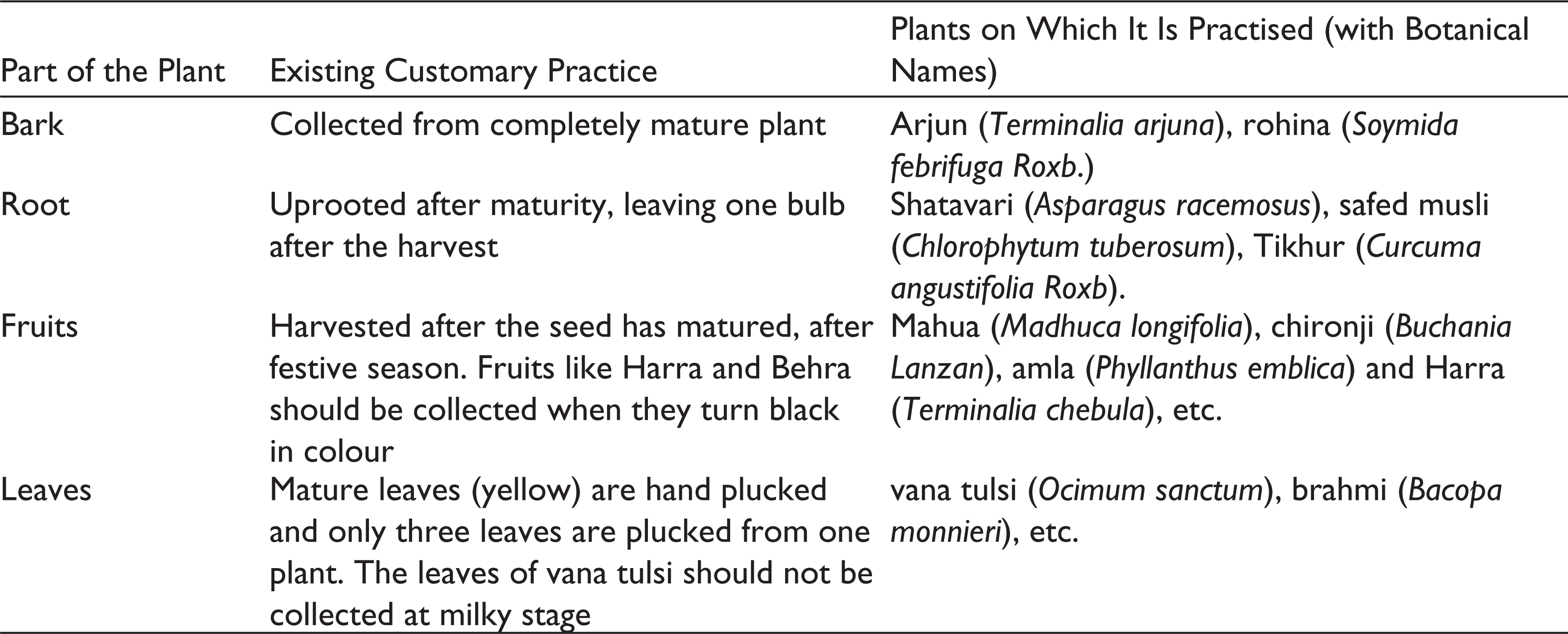
Table 1 shows the Field observation, that relates to the customary practices for sustainable collection of medicinal plants still existing in the memory of forest dwelling communities in Chhattisgarh. Local institutions in the form of gram panchayats clearly specified the rules and practices regarding the limits on collecting medicinal plants from the adjoining natural habitats in the villages so that the sustainability of these plants be managed for a long period of time (Larsen & Olsen, 2007).
Customary Practices for Sustainable Collection of Medicinal Plants in Chhattisgarh
In the nineteenth century, various traditions of traditional medical knowledge systems were transformed and modernized by the colonial state and market forces in foundational ways, including its epistemological parameters. Banerjee argues ‘the whole modernization process of Ayurveda in the colonial and post-colonial period was governed by ‘Pharmaceutic Episteme’, which focuses on retaining the usefulness of Ayurveda as a mere supplier of new medicines while dismissing its world view on the body, health and disease’ (Banerjee, 2002, p. 1136). In this process, the dominant logic of centralized mass industrial production that has emerged was applied to the production of Ayurvedic medicines, which clearly set aside the various alternative, community-based and decentralized democratic production possibilities, which not only suit its epistemological specificity but were also socially and environmentally sustainable (Banerjee, 2002). The expansion of this industry thus severely impacted the sustainability of medicinal plants and its traditional collection practices in the rural indigenous sphere.
Market and Political Economy
The contemporary discourse around over-harvesting of wild medicinal plants is deeply rooted in the existing structure of uneven power relations in its market supply chain. Medicinal plants in the Indian market are as old as the oldest known traditions of medical practice, whether textual or oral. So, trade in this sector is very old, with established wholesale and retail markets in different parts of the country.
The contemporary pharmaceutical industry has induced the trade of high-demand species of medicinal plants in a particular way in which more than 72% of the medicinal plants required as a raw material are sourced from the wild because they are cheap and believed to be of higher potency (Ved & Goraya, 2017, p. v). These corporations, however, usually do not get their raw material in the form of raw herbs directly from their source of origin in the forest areas. The accessibility of these herbs involves a huge market supply chain, which incorporates various stakeholders (having divergent interests) at every point and phase (Hishe et al., 2016) and can be broken down into several subsets of activities: collection, processing, storage, transport, marketing and sale. Each activity is carried out by a specific stakeholder at each point. An important subset in the matrix of the market, as discussed before, is that of the collectors of these plants.
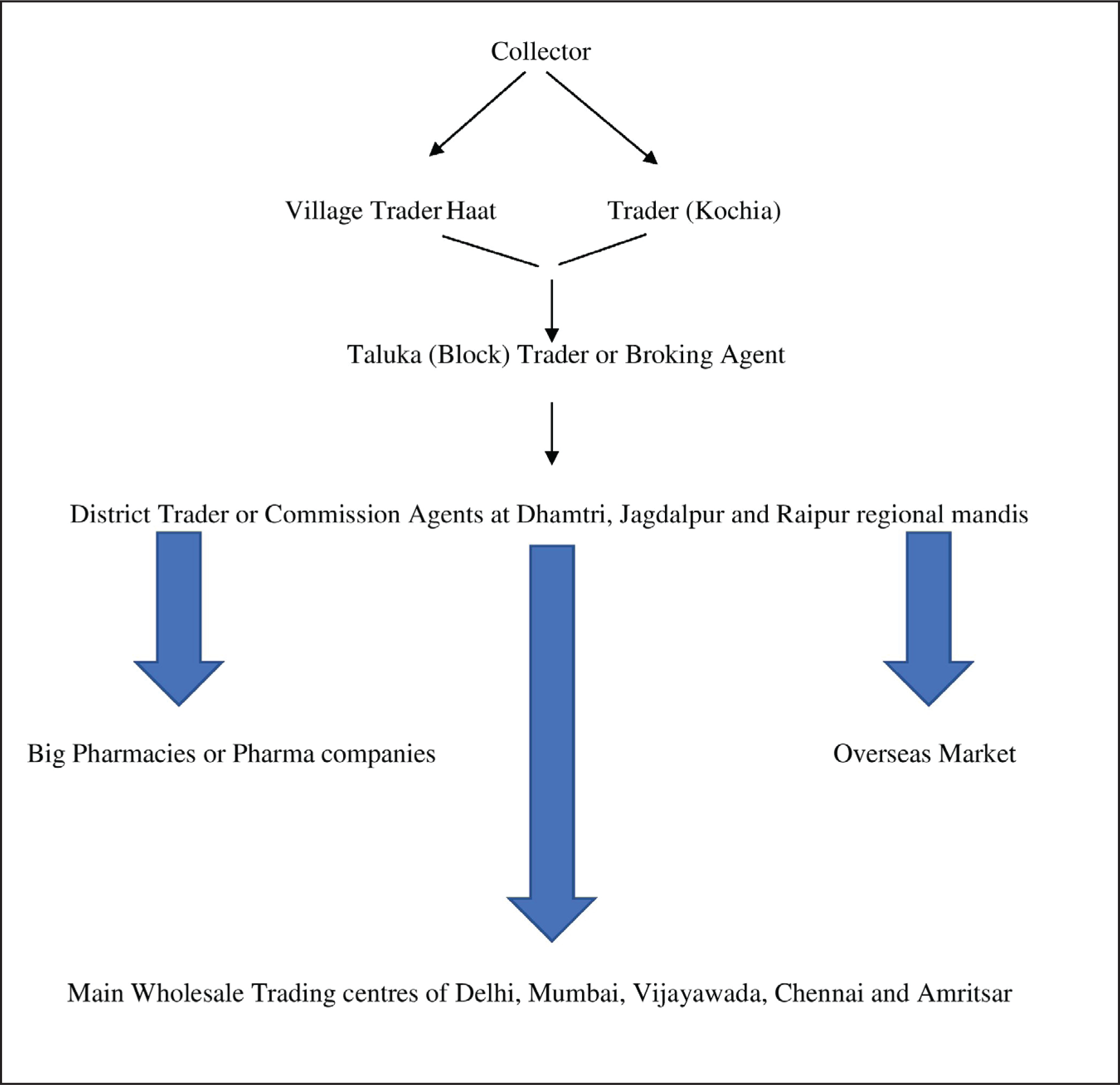
In Chhattisgarh, I found that various local kochia (local name for middlemen or traders) of medicinal plants organized weekly haats on fixed days in the various villages, at which tribal collectors in the villages near the forest areas collect the produce from the wild and sell to them. They carry fresh collections in small sacks. They sell by placing the herbs like Harrara, Behra, Baibidang, Saal seed, Shatavari, safed musli, and Tikhur in neat mounds on a cloth spread out on the ground, without even a primary processing/grading of the herbs. Usually, these gatherers are unaware of the commercial worth of their collected herbs, which they sell at very cheap rates for their daily livelihood needs. This material is sold in nearby mandis or to the main traders or commissioning agents at Jagdalpur, Bilaspur, Dhamtari and Raipur—the main markets in Chhattisgarh. The main trader, if required, further processes/grades the material according to the market need and sells the same either directly to the different pharmacies and companies or in the bigger markets of the country in Khari Baoli in Delhi, Mumbai, Chennai, Bangalore and in Amritsar. 1
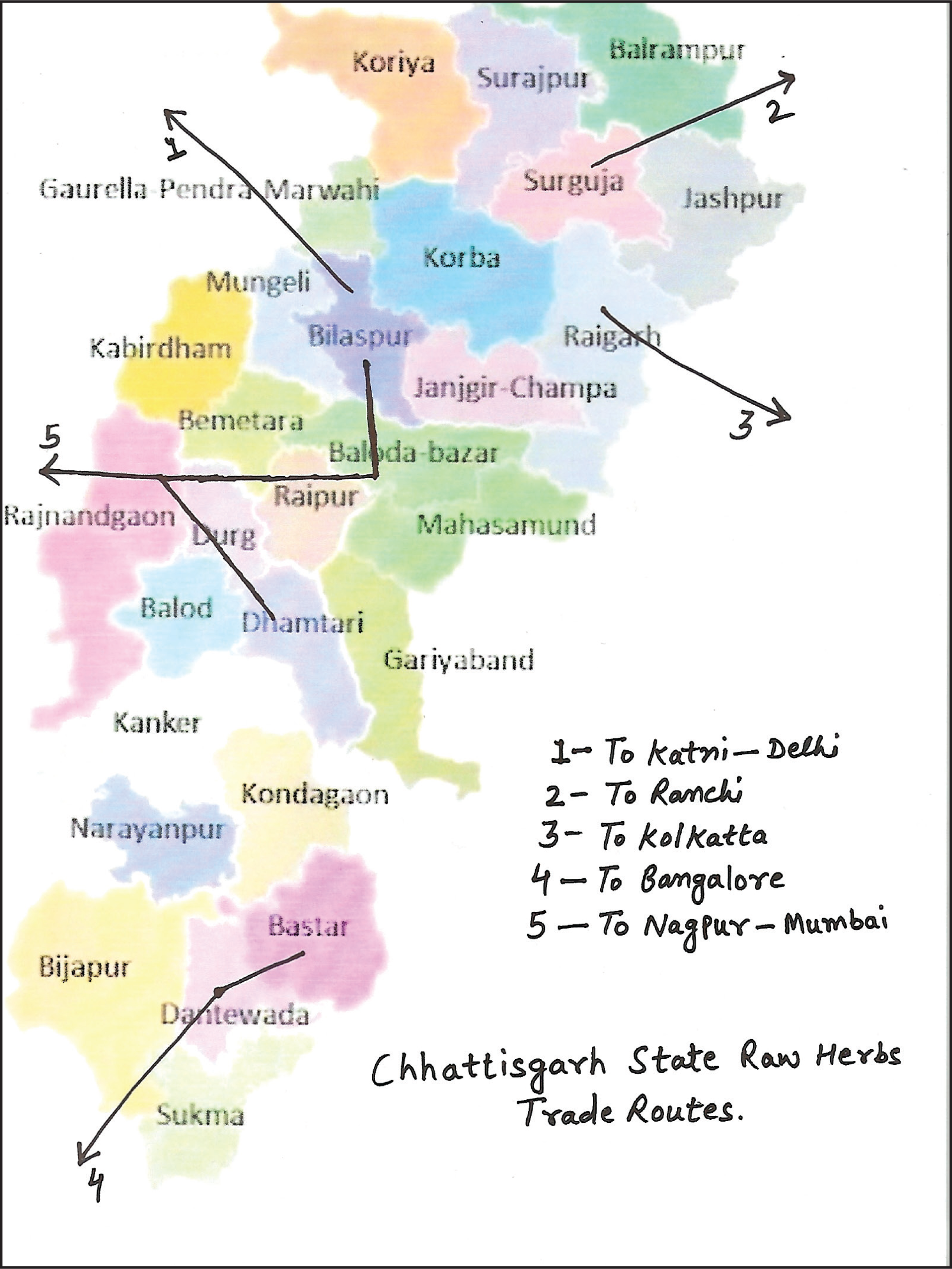
The kochias here are the agents of the main city commissioning agents, the Aadhatis, most of whom belong to the prominent trading caste communities such as Marwaris, Jains, Rajasthanis and Muslim Pathans. They easily speak the language of the Adivasis and often extend loans to collectors as advance payments. Tribal collectors still operate their economic transactions through the barter system, selling their small quantities of collected forest produce (Vanopaj) to these small agents, exchanging these herbs for soaps, detergent, edible oil and other daily requirements. Often, because the collectors are unfamiliar with the metric measures, but are bound to sell because they need the cash to buy necessary weekly supplies, not covered by the barter, sell 20–25 kg of the raw unprocessed herbs monthly during the right season and earn ₹500–800 weekly. So the kochias make their profits at the expense of the collectors. They stock the major herbs in their hidden godown until the price rises in the off-season. In the case of the herbal raw material that goes out of the regional market, they act as wholesale suppliers to stockists and commissioning agents of bigger cities. They are invaluable also because they can ‘manage’ a transport permit (TP) from the forest department. Traders in big cities, on the other hand, are connected across the countries as well as international markets. The big commissioning agents of Dhamtari and Jagdalpur know the pulse of the pharmaceutical industry as well as national and international markets very well and have trusted contacts in the industry nationwide that use raw medicinal herbs (see Figures 1 and 2 for more information on the trading routes of medicinal plants in Chhattisgarh State). During my conversations with the forest officials and local healers of Dhamtari and Kondagaon districts, it was revealed that powerful commissioning agents and middlemen most of the time provide huge financial funding to the political parties, and in return, they are successful in attaining political protection. These kochias and traders have a powerful political lobby and also have a strong nexus with the bureaucratic officials of the forest department and State Medicinal Plant Board (SMPB), and through that, they are able to hinder the formulation and implementation of any path-breaking policy initiative centred on the benefit of the tribal collectors and the sustainability of the medicinal plants, which could have the potential to change the grassroots situation in the positive direction.
Various available studies in this area have shown that there are ‘very big powerful players (who) access this market but the very disorganized and illegal nature makes it easier for middlemen at various points to access and indeed control it’ (Banerjee, 2014, p. 156; Booker et al., 2015; Pauls & Franz, 2013; Varshney & Chakrabarty, 2001). Trade of medicinal plants, ‘their availability, the agents through which one can get the information regarding the source of demanded species are part of the huge trade secret of the big commissioning agents and middleman in this sector’ (Dejouhanet, 2014, p. 217). And it seems no different from what S. K. Datta (2001) pointed out 20 years ago. While these existing studies on analysing the gaps in the value chain of medicinal plants in India had mainly focused on measuring the impact of over-harvesting of medicinal plants, these studies have insufficiently focused on the prospect and role of the primary gatherers/collectors as active knowledge bearers whose active participation in the decision-making process in this value chain could yield more interesting results.
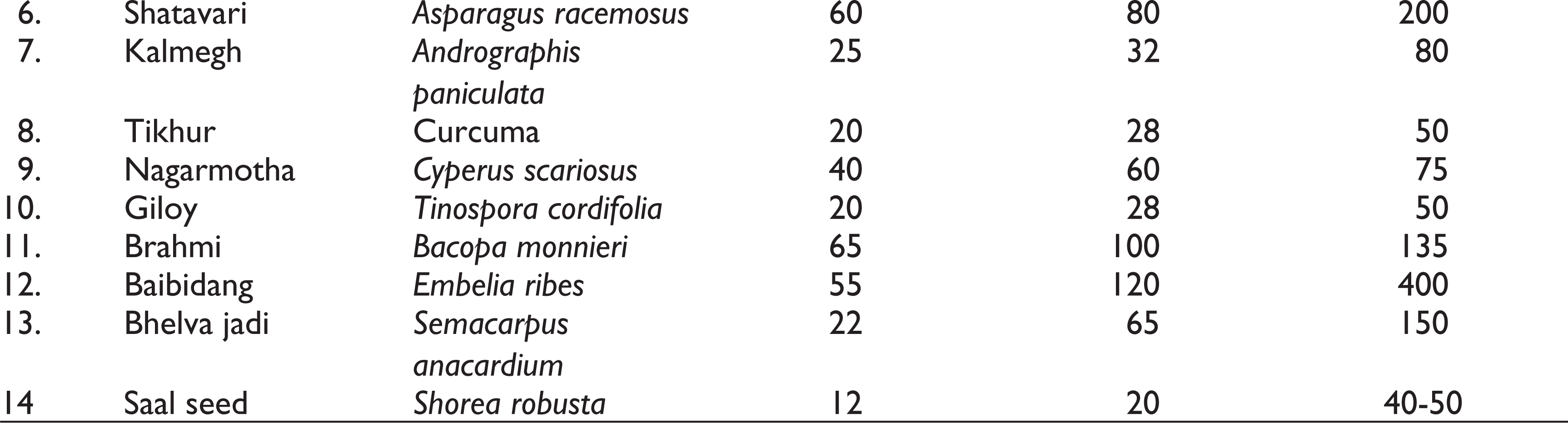
An accurate way to figure out the inequity, hierarchy and power relations between different stakeholders in the supply chain is to evaluate and compare the prices offered to collectors by the middleman and the prices paid by the Ayurvedic pharmacies and corporations for the semi-processed medicinal herbs. Table 2 helps us to clearly figure out the huge gap between upstream and downstream points at supply chain. This shows us that the existing market of medicinal plants in India does not come under the perfect competition parameter where every stakeholder has complete and freely available information about the source, quality and prices. This market suffers from acute information gaps and secrecy where organizing information and transactions is not only costly but also involves uncertainty (White & Jan, 2012). 2 This market incorporates a wide variety of social and economic institutions, which controls the necessary information regarding source of the herbs, processing parameters, quality parameters and reliable trade linkages. Therefore, this market is composed of unorganized secretive networks of the stakeholders that take various forms—sociocultural, political and economic (White & Jan, 2012). These informal institutions and stakeholders ultimately create an informal structure of power, which crucially influences the way in which decisions related with trade, contracts, production and distribution are taken. This whole process leads to transaction costs at each point of the supply chain, which contributes to profitable value addition for each middleman. These are the costs that exemplify the exploitation of the collector’s knowledge, given that they not only lack the crucial market information like price and demand but have no basis for being politically organized, continue to lack bargaining power (Banerjee, 1998; Datta, 2001; Pauls & Franz, 2013). Thus, even while there is increasing popular demand for medicinal plants and the expectation of trade to grow enormously, the collection and trade of medicinal plants, which could provide a significant source of income to forest dwellers, prove otherwise. Thus, the collectors are in a very vulnerable position, and there is an unevenness of power relations in which various stakeholders of every stage of the market supply chain function, which ultimately reflects upon the manner in which the modern market devalues the knowledge of the collectors.
Selling Rate of Medicinal Plants at Various Points of the Supply Chain in Chhattisgarh State, November 2019 (all prices are per kg, in ₹)

Policy and Politics of the State
Over the first four decades of post-colonial state policymaking, creation of policies for protecting and managing the non-timber forest produce (NTFP) like medicinal plants was not a priority. State forest departments made all crucial decisions on regulating or managing the trade and marketing of raw herbs from the wild. After the 1990s when the international market for traditional and herbal medicines witnessed tremendous growth, the Indian state came under continuing pressure from both the international environmentalist lobby and the emerging lucrative international export market. It became aware that this boom in the demand for herbal medicines could cause great harm to the natural biodiversity of medicinal plants because of over-harvesting (Banerjee, 2009, p. 109). Yet, it wanted to take advantage of new opportunities, and this dilemma resulted in the appointment of a special taskforce under the Planning Commission headed by Dr D.N. Tewari. In its report Planning Commission (2000) acknowledged the huge scope for India to emerge as a major player in the global herbal medicine industry, which required a holistic view of the entire situation. It argued for in situ as well as ex situ measures for conservation of plant species, of which one of the most significant reccomendation was to set up a National Medicinal Plants Board (NMPB) to regulate and coordinate the market for medicinal plants in India.
Subsequently, the NMPB produced two very crucial reports entitled ‘Demand and Supply of Medicinal Plants in India’ in 2007 and 2017, emphasizing the requirement for periodic and systematic assessment of demand and supply pattern of medicinal plants. Both these reports have recommended some in situ as well as ex situ conservation strategies in which they suggested that Medicinal Plant Conservation Areas (MPCAs) could be established in the forest areas so that the gene pool of the various endangered species of herbal plants can be conserved in their own habitat zones (Unnikrishnan & Suneetha, 2012). But over the years, it has been felt that despite the relevance of this approach, neither the forest department nor the State Medicinal Plant Board (SMPB) have been able to do this because they neither considered actively involving the local forest-dwelling communities and collectors in this conservation strategy nor did they bother to create any feasible way to promote economic and trading opportunity and initiative for tribal communities living in the adjoining areas within this scheme. The local healers and members of joint forest management (JFM) committees of the MPCA zone in Jabarra village in Dhamtari district informed me that the lack of funds was the main reason for the latter. The legal loopholes due to the provisions of the new Forest Rights Act (FRA), 2006, gives liberty to the local gatherers to freely collect the endangered herbs in an unsustainable manner from these sacred zones to sell it to the kochias and regional broking agents that fetches them a higher price than the minimum support price (MSP) offered by the Chhattisgarh State Minor Forest Produce Federation Ltd. Further, the payment by the latter is always delayed, while that by the former is prompt. Had the SMPB and Chhattisgarh State Minor Forest Produce Federation Ltd been able to establish localized value addition programmes at the local level, this scheme would not only have opened the prospect of conservation of the various threatened species but also enhanced the livelihood opportunities for local inhabitants. Given that most herbs used by the industry are still those from the wild, collection from the wild is still open in most of the areas where these valuable herbs are found (Larsen & Olsen, 2007; Ved & Goraya, 2017).
So the concern for collectors, their agency and major issues are missing in their policy directives, despite the intensive policy initiatives of the NMPB.
Over the past 15 years, NMPB’s policy discourse and conservation priorities had shifted from in situ to ex situ conservation methods, especially large-scale promotion of cultivation strategies of threatened medicinal and aromatic plants (Larsen & Olsen, 2007). This focus on promoting cultivation no doubt serves the interest of industry, by providing good-quality raw material at cheap rates, but the existing scale of cultivation/farming of the medicinal plants is very limited (Kala et al., 2006). There are major economic as well as technical reasons behind the slow progression of cultivation initiative among the farmers, such as risks associated with long gestation period, high transaction costs as well as the unavailability of reliable marketing and trade channels for the selling of the crops (Panwar, Sharma and Singh, 2010, pp. 270–273). Various studies have suggested that ‘Cultivation of medicinal plants on the ground is more difficult than usually suggested by the scientific literature and state institutions’ (Booker et al., 2015, p. 625). The other major issue is that subsidy schemes for local farmers involve complicated official technicalities concerned with its dispensation. ‘The farmers… not educated enough, are required to prepare cases for seeking subsidy. On approval of the cases, they get first instalment of subsidy, however the process of getting second installment released is much complex’ (Ved & Goraya, 2017, p. 142).
My study reveals that it is mostly the influential landholders and zamindars that are granted cultivation projects. Instead of cultivating them, however, these powerful zamindars purchase wild collected herbs from the collectors at cheap rates and show them as cultivated material from their farm. This double exploitation of both subsidy funds and local collectors is possible because these influential zamindars have an ‘understanding’ with the officials of the SMPB, who are more inclined towards strengthening their local power base and dominance. Thus, policies of cultivation alone are not enough.
The other major area to which limited attention has been paid is regulating the actual supply chain of the medicinal plants market in various states. Most schemes, initiatives and policies of the board are unable to construct a coordination with the state forest department to ensure better negotiated prices to the local right holders for their collected raw material. For the past five years, NMPB with the help of SMPBs is constantly working to implement an online portal and app for price monitoring, which figure out the current and previous prices of medicinal plant species in various regional mandis providing crucial marketing information to the gatherers and cultivators. Despite this, the prices that the NMPB listed for various herbs deviated from market realities most of the time (Pauls & Franz, 2013). One of the major reasons behind this is the absence of any legal framework for the traders that legally compels them to share crucial price as well as marketing information (Bhattacharya et al., 2008). Value addition programmes through decentralized small-scale production units in the supply chain for wild collectors, a sure-shot means of livelihood and self-sufficiency, have also not been initiated or promoted. However, in 2018, major pharmaceutical companies like Dabur signed a memorandum of understanding (MOU) with Chhattisgarh state government and SMPB. On this MOU Dabur states that:
to roll out a mega biodiversity promotion and development initiative aimed at preserving rare medicinal plants in the region through Assisted Natural Regeneration (ANR). This joint initiative, which will involve training the rural populace on sustainable herb cultivation, will create job opportunities for local communities and positively impact more than 4,000 households in Chhattisgarh in the first phase. (
Other major Ayurvedic companies are also keen to join with SMPB’s because this could both reduce their dependency on the complex web of middleman and agents and also contribute to their image of contributing to the welfare of the collectors and income of the state through herbal raw material exports. There are many such opportunities possible to make the market supply chain more equitable as well as income generative for the collectors. For instance, in Chhattisgarh, there are 1,067 primary minor forest produce co-operative committees at the village level under the apex body of Chhattisgarh State Minor Forest Produce Co-operative Federation Ltd. Presently, besides tendu leaves, which are under the monopoly trade of the state, this federation is not actively engaged in the trade of non-specified medicinal plants with primary gatherers. Even if the collectors sell their stock of collected raw herbs to the primary committees of the federation, the prices are not comparable to what local haat traders can provide them, nor are they paid on time, as indicated earlier too. Conditions would have been very different and promising had these two conditions been met. What is clear is that the ‘existing power structure of this sector, the powerful pharmaceutical lobbies and commissioning agents of the market constructs the political economy of this sector. It is unlikely to give way to the regulation and oversight, because the economic stakes are so high for them in this sphere’ (Banerjee, 2014, p. 156). Their power enables them to control the policy decisions for the entire structure as well.
Epistemology
The ongoing politics of knowledge emerging from the aforementioned discussion is between two mutually contradictory knowledge systems that access the knowledge of the collectors. One is represented by the modern industrial episteme, governing through the logics of the laws of market and industrial cost-efficiency, and another by the already existing knowledge practices of those forest-dwelling collector communities, which are actually based on ‘the adaptive management of resource use resulting through living adjacent to the local natural habitat in symbiotic way’ (Berkes et al., 2000). The major question that emerges is: whose knowledge matters? Following de Sousa Santos (2007, p. xix) who argues that: the contemporary paradigm of capitalist development process not only has social, economic and political consequences but also has deep-rooted epistemological foundations, the existing trade practices and the policies of the state work the linkages of power and knowledge to create a hierarchy between different knowledge systems and transform the inherent nature of different systems of local knowledges so that concerns of the capitalist market can be fulfilled and fitted into the epistemic parameter of modern science, technology and market (de Sousa Santos, 2007).
The epistemic realm of the modern capitalist paradigm has subjected the whole aspects of society at large to the modern laws of the market and economy. So every domain of social existence today is being overshadowed by the modern economy and the logics of demand and supply patterns of the market (de Sousa Santos, 2007; Sachs, 1999).
The epistemic realm and concerns of the economic efficiency principle of modern pharmaceutical corporations govern the terms of collection, trade and marketing of medicinal plants in India. The corporations aim for a cheap final product on the basis of cheaply bought raw material processed by large-scale centralized production systems is deeply anthropocentric and its calculation of negative externalities also ‘maximizes the social and ecological cost of the production process’ (Shiva, 1989, p. 238). The knowledge base of indigenous forest-dwelling collectors evolves from constant interaction between communities and local environment, their cultural practices, experiences and resilience (Berkes et al., 2000), and this constitutes an effective system of production and consumption, which maintain ecological harmony, while ensuring cultural cohesion of the group (Marglin & Marglin, 1990, p. 24). This epistemic frame, therefore, drives the traditional medicine manufacturing corporations to source their raw material from powerful well-established commissioning agents of the market, cost-efficient and convenient as they supply instantly, without expectation of payment.
This domination of the modern industrial episteme is actually not established through fair cognitive competition but through the active political support from the state and its allied policy experts who determine directions and agendas of state development policies (Shiva, 1989, pp. 238–239), subscribed to the vision of development, regardless of local context and needs (Pacey, 1983, p. 14). Nandy points out that both modern reductionist science and technology have been dialectically and inseparably linked with the capitalist world view, wondering if ‘there is something intrinsic in the very nature of the modern science which makes it a human enterprise particularly open to co-optation by the powerful and the wealthy?’ (Nandy, 1988, p. 2). Jasanoff pioneering the idea of ‘co-production’, further argued that not only are scientific knowledge and technology not value neutral, but also that the two are woven together in socio-economic and political formations of social reality, and the mutual interactions between them simultaneously co-produce a new kind of social order as well as the culture of technocratic practices situated within the larger sociology of power and knowledge (Jasanoff, 2004, pp. 2–3). Modern states and their policy institutions in the name of scientific knowledge and technocratic rationality create pockets of decision-making power that always exclude people at the grassroots and undermine their democratic potentials (Foucault, 2007). The power of scientific expertise and technocratic logics of development planning and policy measures systematized in the top-down manner creates the binary between experts and lay, excluding the masses at the grassroots from participating in crucial decision-making, reducing people merely to a passive recipient of the dictates of governmentality (Parfitt, 2006).
The discourse of state policy, fashioned by the scientific establishment and policy experts, is rooted in the assumption that the farmers and collectors lack knowledge and need to be provided with scientific as well as technocratic inputs in a monolithic fashion (Visvanathan, 2009). Thus, it has never been able to either construct a democratic dialogue with the forest-dwelling communities or recognize the importance and relevance of the diverse knowledge systems of the traditional collectors and gatherers. Thus, the discourse of state policy perpetrates ‘cognitive injustice’ (Visvanathan, 2009).
Conclusion
Thus, the frame of politics of knowledge examines how different spaces of political economic, policy and epistemological structures in society enable the dominant discourse of the modern industrial system to undermine those elements of collector’s knowledge, which are crucial in maintaining ecological harmony as well as long-term livelihood security of the forest-dwelling communities. Powerful corporations are able to do this because they are never directly or commercially affected by the destruction of the biodiversity of the habitats, as they can easily switch their source of raw material extraction and trade from one ecological region to another. The profits of the corporations and traders obliterate the ecological and social externalities resulting from this, while never being held accountable. With the existing state institutions denying the collectors their reasonable position as active knowledge bearers and significant decision-makers, they are rendered a deeply exploited and marginalized entity. Community-based civil society mobilization and social movements, then, are the biggest need at this time. The new social movements and mobilization through local community-based actors who are victims of development and are at the bottom of the power hierarchy, are active carriers of knowledge of production, which could actualize the hope for finding sustainable alternatives. The way to counter and break this vicious cycle is ultimately rooted in organizing forest-dwelling collectors and cultivators into co-operative-like systems, which would have the real power to actualize the decentralized community-based production possibilities. Gram Mooligai Co-operative Limited (GMCL) located in Madurai district is one of the outstanding examples in this direction. 4 Only these kinds of community-based approach can reasonably strengthen the bargaining power of the forest-dwelling gatherers and their political position. This not only ensures meaningful livelihood opportunities for the village collectors but also incentivizes them to revitalize the existing customary practices meant for the sustainable collection of medicinal plants. Only these initiatives would ensure the establishment of real knowledge democracy and epistemic Swaraj at the grassroots.
Footnotes
Declaration of Conflicting Interests
The author declared no possible conflicts of interest concerning this article’s research, authorship and publication.
Funding
The author received no financial support for the research, authorship and/or publication of this article.