




Abstract
The employer branding (EB) phenomenon has garnered the attention of practitioners and academicians over the past decade. However, the subjective experiences of managers on EB are hardly tapped. This study explores company executives’ views on EB through the case study method with semi-structured interviews in the context of the business-to-business (B2B) and business-to-consumer (B2C) companies located in India. Four key categories relevant to EB emerged from the data. These are (a) essence of a successful EB, (b) precursors of EB, (c) visibility of the employer and (d) outcomes of EB. Attributes of these categories were explored along the sub-themes, which reveal the respondents’ perceptions regarding their implementation of EB strategy. These attributes were similar in B2B and B2C companies.
Keywords
Introduction
Employer branding (EB) is an extension of branding theory applied to human resource management (HRM) (Backhaus & Tikoo, 2004) and has been advocated as an effective tool in attraction, motivation and retention of talents (Ambler & Barrow, 1996; Backhaus & Tikoo, 2004; Moroko & Uncles, 2009). It has become a strategic tool for companies to gain competitive advantage (Edwards, 2010).
The brand building of a company depends on the market, the competitors and the core business (Keller, 1993), which raises the question as to what contributes to EB and whether EB varies over business types. Most earlier studies documenting the relevance of branding in HRM (Ambler & Barrow, 1996; Backhaus & Tikoo, 2004; Barrow & Mosley, 2005; Edwards, 2010; Moroko & Uncles, 2008; Parment & Dyhre, 2009) have focused on employer’s reputation and attractiveness (Berthon, Ewing & Hah, 2005; Lievens & Highouse, 2003) and on the impact of corporate brand personality (Davies, 2008) in one kind of service organizations. Hardly any study has discussed the EB strategy over different kinds of businesses. This study, adopting a qualitative paradigm, explores the precursors and outcomes of EB in two business types: (a) B2C and (b) B2B. The B2C companies work directly with consumers while B2B companies do business with other companies as customers (Kotler & Pfoertsch, 2006).
Background of Employer Branding
The EB concept emerged in India following globalization and opening of economy during the 1990s, when talents became most sought after by companies for competitive advantage. The EB relates to marketing the employability of an employer (Ambler & Barrow, 1996) focusing on distinct attributes of the employer through effective HR practices (Backhaus & Tikoo, 2004). It is used to position the employer’s image favourably (Ambler & Barrow, 1996; Ewing, Pitt, de Bussy & Berthon, 2002) and to attract and retain talent in a cost-effective manner (Ritson, 2002). The concept revolves around the notion of marketing the company as a great place to work (Ambler & Barrow, 1996; Backhaus & Tikoo, 2004; CIPD, 2010; Moroko & Uncles, 2008). Attempts are made to brand the company, through internal and external marketing of employment experiences, to current and potential employees. Internal branding is a tool for aligning the values of employees with the corporate brand (Reichheld & Rogers, 2005) and focuses on existing employees of a company (Foster, Punjaisri & Cheng, 2010).
Davies (2008) explored the role of the employer brand in influencing employees’ perceived differentiation, affinity, satisfaction and loyalty using the corporate characteristic scale (Davies, Chun, Da Silva & Roper, 2004). The scale was similar to the scale that measures human personality traits and included agreeableness, enterprise, chic, competence and ruthlessness. Due to limited information in the labour market, potential employees often use signals to formulate judgements about a potential employer. Well-known companies are more likely to target and influence potential employees. Companies with a strong reputation have more publicity compared to others (Cable & Turban, 2003), which also influences the employer brand, increasing familiarity and awareness about an employer (Cable & Graham, 2000; Gatewood, Gowan & Lautenschlager, 1993).
Consumer research has shown that product branding can positively influence buying behaviour of consumers (McEnally & de Chernatony, 1999). Similarly, EB is posited to influence the employees’ behaviour towards a company such as organizational identification, job engagement and commitment (Ambler & Barrow, 1996; Backhaus & Tikoo, 2004). The theoretical foundation of EB includes external and internal marketing, psychological contract, brand equity and social identity theory which all can enhance employer attraction and employee productivity through a coordinated HR strategy (Backhaus & Tikoo, 2004). The employment offerings of a company include tangible and intangible benefits for EB campaigns (Edwards, 2010). Edwards’ (2010) review presents the linking of (a) personnel psychology field to increase organizational attractiveness through HR practices towards recruitment, (b) organizational identity theory to enhance company’s image through employees’ commitment and identification with the company, (c) psychological contract theory to create distinctive employment brand through unique and attractive employment offerings and (d) personality traits of a company in identification and creation of company image through symbolic and instrumental characteristics.
The working principles of EB need to meet three criteria: first, consistency with the realities of the company, second, differentiation from its competitors, and third, attractiveness to the targeted employees (Backhaus & Tikoo, 2004; Maxwell & Knox, 2009). The first criterion suggests that EB strategy should be based on business objectives. Researchers on EB have focussed on the last two criteria. However, research on EB is sparse based on business perspectives of B2B and B2C companies. Indeed, business perspective can provide practitioners the understanding to implement EB.
Present Research Questions: Employer Behaviour in B2B Versus B2C in India
The complexity of products and services differentiates B2B and B2C companies (Kotler & Pfoertsch, 2006). Because B2C companies are the customers of B2B companies directly or indirectly, B2B companies undervalue the importance of a well-built brand (Kotler & Pfoertsch, 2006). Evidently, B2B companies focus less on EB and are more concerned with the quality of their products for their customers (Parment & Dyhre, 2009). This creates less visibility of B2B companies among potential employees. Contrarily, B2C companies have a strong corporate presence due to proximity with external stakeholders including general public. B2C companies devote more resource on their product branding, thereby contributing towards EB activities (Parment & Dyhre, 2009). However, Roper and Davies (2010) propose that EB cannot be screened out on the basis of types of companies. Thus, question arises whether business type can impact EB activities because EB is targeted towards employees as primary customers. Based on the above discussion, this study addresses two research questions: (a) what are the key attributes of EB in the mind of company executives and (b) how does business type, B2B or B2C, influence the conceptualization of EB?
Method
The case study method with semi-structured interviews was used to collect open-ended data from practitioners (Yin, 2003) in five Indian companies (two B2B and three B2C companies). The method helps unfold the lived experiences of stakeholders through narrations, descriptions and visuals. The texts of semi-structured interviews were converted to open, axial and thematic codes with frequencies.
Table 1 presents the profile of case companies and profile of participants and interview details. The sample companies in India were identified on the following criteria: (a) registered in the Bombay Stock Exchange, (b) having a prominent brand, distinct corporate tagline, logo and substantial presence in the market and (c) having a well-established web-page. The five companies had the well-established HR departments and had employees’ strength ranging 300–20,000. They were profit-earning companies. The selected companies had (a) a unique logo, (b) tagline, (c) vision and mission statement and (d) won awards at the national level for employee welfare. The HR managers of companies were requested through emails for nominating participants for this study. Two participants from each company were selected after studying their job profiles in brand management strategies, including recruitment and selection, developing HRM policies of their companies. The participants were top-level executives who were involved in the branding of their company and were HR, marketing and strategic managers. The names of the companies and participants are anonymized (see Table 1).
Company Profile, Participant Profile and Interview Details
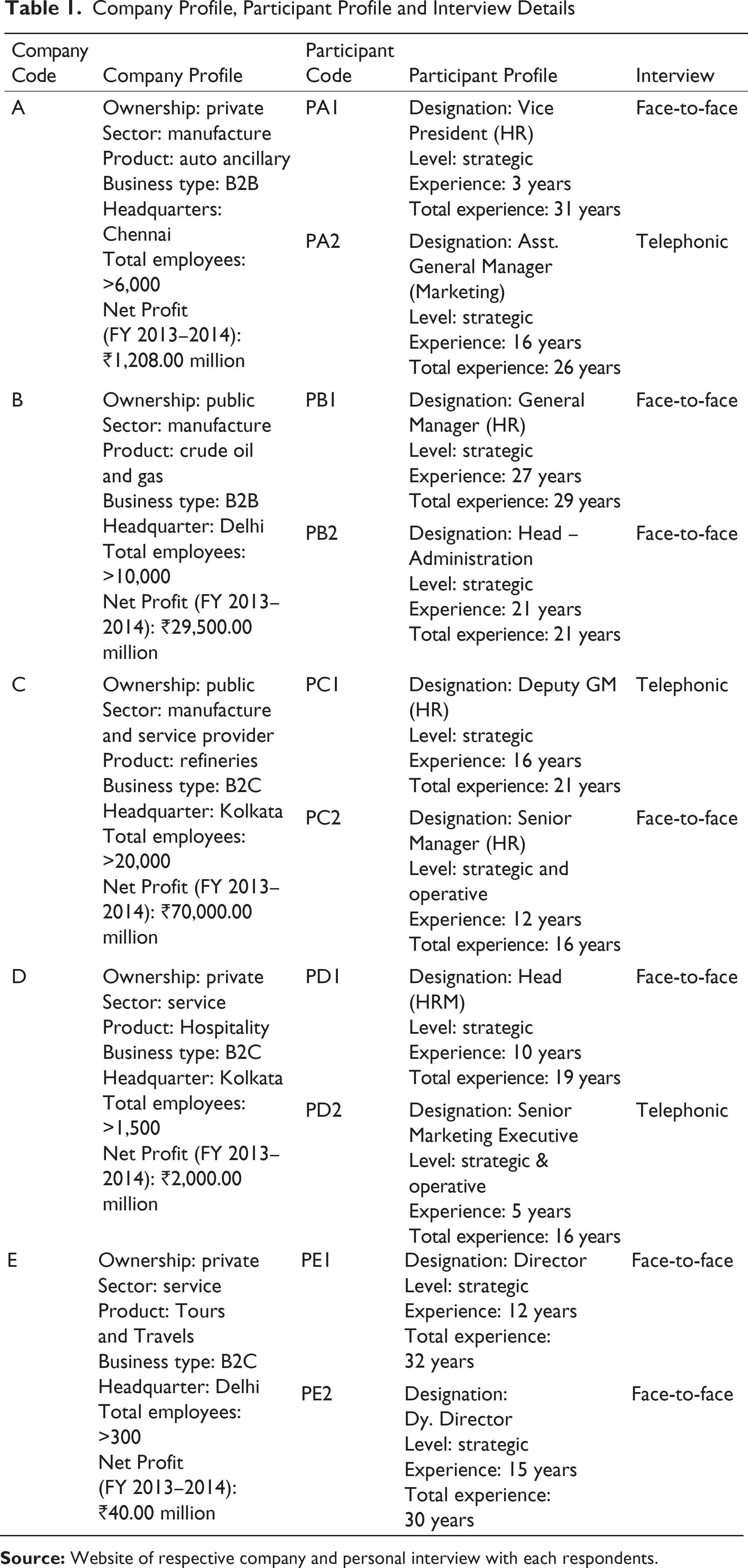
The data was collected via 10 semi-structured interviews (seven face-to-face and three telephonic interviews) from 10 participants. Each participant was interviewed twice, first time to gather information and second time to authenticate the interpretation of the interview responses. The average duration of the initial interviews was 40 minutes, during which notes were taken. The follow-up interviews averaged 45 minutes. The interviews were carried out in English and Hindi (national language of India). The participants were asked about their perceptions of EB, the factors that contribute to EB the practice, measurement and the evaluation of EB in their companies. They were also asked what characterizes successful EB and whether EB provides competitive advantage. In a follow-up interview, the interviewer read the researcher’s interpretation of the prior interview, and the participants indicated the accuracy of the interpretation. Corrections, if any, were subsequently incorporated based on participants’ response during the follow-up interviews. This helped authenticate the interview responses.
Before conducting the interviews, the researchers also referred to the archival documents related to company activities and involvement in EB. The documents included such materials as recruitment advertising, recruitment brochures, annual report and sustainability report available on the companies’ website. Apart from the primary questions, the participants also put forth questions during interview based on the first-hand information about companies to keep their responses relevant to the objectives of the study.
Analysis
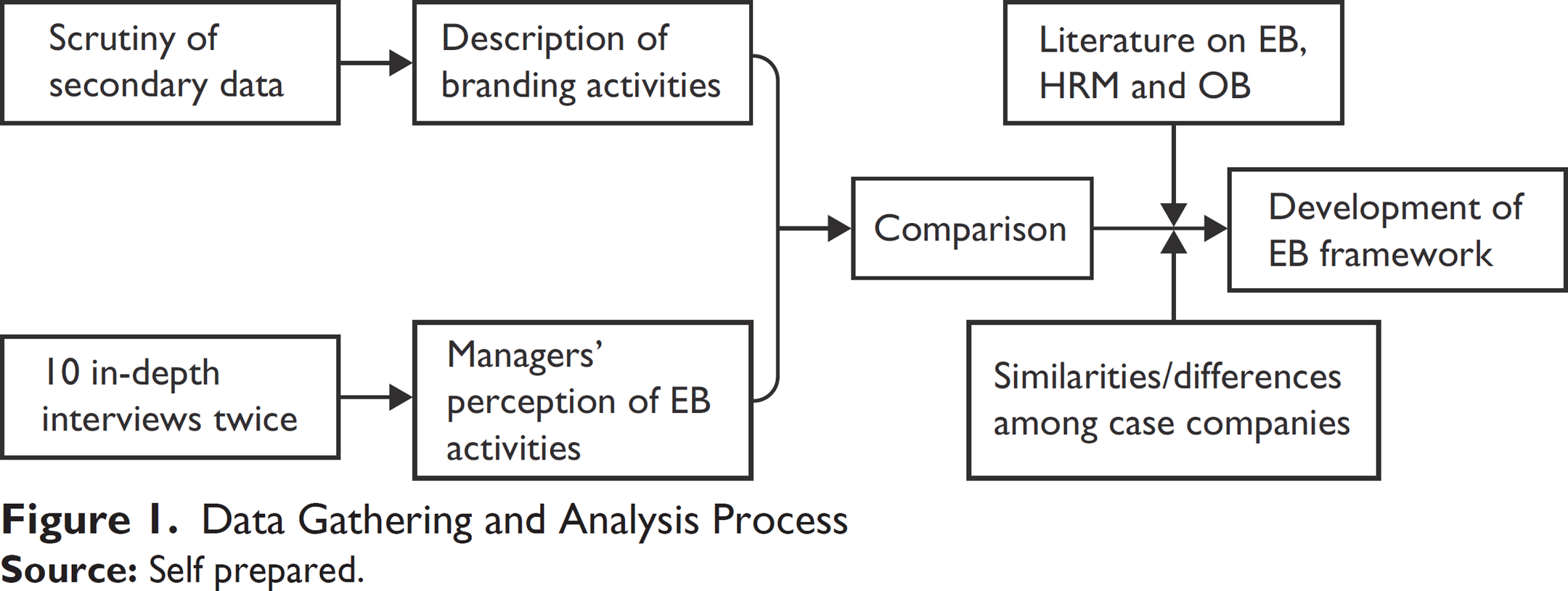
Figure 1 depicts the overall data gathering and analysis process. Content analysis was used to analyse the narrations and descriptions of interviewees (Berg, 2001). First, the entire data set was read to get the ideas and identify possible patterns. Second, responses were coded systematically as main categories. List of all incidents representing the constructs across cases were mapped and tabulated. Third, common themes/patterns within the data were identified and were critically examined for similarity. The themes were collected, coded, combined, refined and separated or discarded throughout this step. Fourth, the themes were thematically mapped and were grouped for conceptual consistency. Fifth, these constructs were compared for the purpose of establishing possible inter-relationships to arrive at a framework. For this, previous literature and the data were tracked backward and forward to develop theoretical categories towards a holistic, contextualized recognition of how practitioners approach EB.
The perceptions of the participants from each company were noted with the objective to explore for precursors of EB rather than compare the convergence of their perceptions. However, any large divergences in the perceptions from the two participants of the same company were subsequently taken up with the participants in the follow-up interviews and the clarifications were noted for analysis. Since themes were abstract and often fuzzy constructs identified before, during and after analysis (Ryan & Bernard, 2000); the analysis process constantly moved backward and forward between the entire data set, the coded extracts from data and the analysis of the data that were being developed. The jotting down of ideas and potential coding schemes were initiated right from the beginning of data collection and continued throughout the entire coding and analysis process. Simultaneously, the relevant literatures were referred for congruency and consistency of the data because it enhanced analysis by sensitizing the researcher to subtle features of the data (Tuckett, 2005).
Results
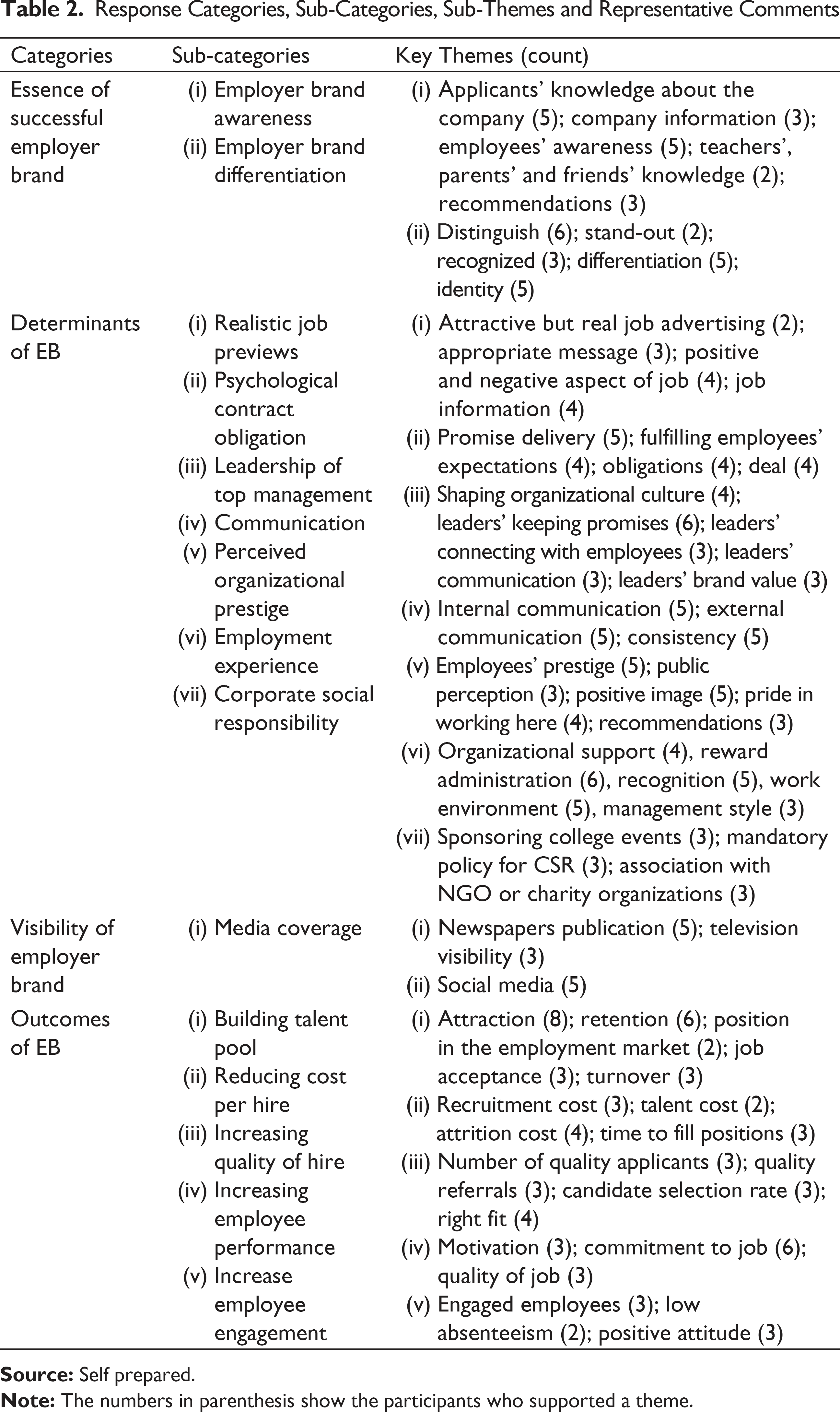
Table 2 presents the categories, sub-categories, themes and illustrative comments derived from the interview data. Four key categories relevant to EB emerged from the data. These are (a) essence of a successful EB, (b) precursors of EB, (c) visibility of the employer and (d) outcomes of EB. Attributes of these categories were explored along the sub-themes, which reveal the respondents’ perceptions regarding their implementation of EB strategy. Similarities and variations across the cases depicting a construct were explored to capture its meaning.
Response Categories, Sub-Categories, Sub-Themes and Representative Comments
Essence of Successful Employer Behaviour
Marketing literature indicates that success of branding depends on creation of a well-known and distinguishable brand in the market (Aaker, 1991; Keller, 1993). This study reinforces this evidence by revealing the two sub-categories for a successful EB: employer brand awareness and employer brand differentiation.
Employer brand awareness: Participants felt that the success of EB lies on how much it increases the prospective employees’ knowledge about the company (PA1, PC2, PD1, PE2). Therefore, EB practitioners need to disseminate information about the employers’ products/services and HR practices to increase awareness of the company in the employment market. Teachers, parents and friends also influence the intention of the potential employees to join the company (PA2, PC2). However, the challenge is to provide concise and relevant corporate information (PA1). Apparently, the data suggest that B2B and B2C companies are equally concerned about their awareness and image.
Employer brand differentiation: The interviews revealed that EB will be a failure if a company cannot distinguish itself from the competitors and create its own identity (PC1, PD1, PD2). Therefore, the challenge lies in finding a position where the company and its processes cannot be imitated by its competitors (PD1, PE1). By doing so, the company stands out, is understood and remembered (PC1, PD1). This can be done by taking the views of existing employees to identify the core values defining a truly differentiated employer brand (PA1, PB2, PD1). Although apprehension of getting copied is high, yet distinction can be maintained via marketing and communication strategies (PC2, PD2, PE1).
Precursors of Employer Behaviour
Interview data revealed seven precursors of EB: realistic job previews, psychological contract obligation, leadership of top management, communication, perceived organizational prestige, employment experience and corporate social responsibility (CSR).
Realistic job previews: All five companies had clearly defined recruitment and selection procedures in place; however, providing realistic job previews to the applicants during the process was underdeveloped (PA1, PB2, PC2, PD2, PE1). In the recruitment phase, managers identified the following as being critical: (a) providing attractive but real job advertising (PC1, PD2), (b) sending accurate messages about the job (PA1, PB1, PE1) and (c) revealing both positive and negative aspects of the job (PA1, PB2, PC2, PD1). However, providing realistic job previews remains a challenge because of the pressure from top management and time shortage (PC2, PD2). But participants reflected that providing realistic job previews ensures screening off the unwilling applicants and selecting right people (PC2, PD1, PE1). As suggested by a vice president (HR) that realistic job previews prohibit the creation of unrealistic expectations in potential employees:
Currently, we are concentrating on how to write job descriptions which I believe are clearer about the attributes we want in the applicants and also, it is important to give a clear picture about the job we offer. This is to take care of the unrealistic expectations about the job. This is, I believe, important for our image. After all, the longer the talent remains with the company … the more will be the business. (PA1)
The analysis could not depict any impact of business on realistic job previews. However, B2C companies reported getting many more applicants because of the corporate brand. B2B companies reported frequent withdrawal of applications from prospective job candidates. One reason can be the job information on the company’s website.
Psychological contract obligation: It became evident that an employer faces challenge in fulfilling the obligations towards employees, created due to brand. These obligations are a set of expectations developed in the mind of an employer (PA2, PC1, PD1, PD2). These expectations create a set of unwritten contracts which the employer needs to oblige to employees (PA2, PC2, PD2). If these remain unfulfilled, these can affect employees’ behaviour and lead to low performance and withdrawal from the company (PA2, PC1, PD2). Participants did not identify the risk associated with the prospective employee being right for the job; rather, they were more concerned with the risk if the company failed to deliver the promises (PA1, PB1, PC2, PC2, PD1, PE1). The effectiveness of EB strategy which lies on fulfilling the promises made by the employer brand was a recurrent theme of all respondents irrespective of the business they were associated with. As summarized by one respondent:
we should worry the most, that a big chunk of our employees compare, I think, what we do is whether matching with their expectations or not … It’s like politicians promising a lot to the voters and then forgetting everything once they win the chair … We cannot do that … Can we? I believe these expectations are psychologically developed and our company brand plays a major role in that development … unless we take care of these expectations, we are bound to face a lot of labour problems. We should not promise what we cannot give. (PD1)
Leadership of top management: The general perception is that EB will invariably fail if leaders of the company fail to live up to what is promised through EB (PA1, PB2, PC1, PC2, PD1). Unless the leaders connect with the employees, EB strategy can never be effective (PA2, PB1, PD2). Examples include the top leaders having a monthly gathering with the employees to know about their well-being and what the company can do to achieve those goals (PA1, PA2, PE2). Innovatively, leaders use the intranet portal on a daily basis to forward their message in order to connect with the employees (PC1). Leaders are the face of the company (PA2, PB2, PD2) and play an important role in promoting well-being at work (PA2, PE1), uplifting the employees’ performance and their satisfaction level (PB2, PE2) and creating a positive work environment (PB1, PC1). Now that makes it evident that EB is not a domain of HR function but includes all other functions like marketing, IT, PR, and so on and more importantly, as put by one of the CEOs, is:
I strongly believe that EB should be under the ownership of the top most leaders and CEO. Because everything flows down the line from the leaders, the top-down approach would be effective for EB. He must bind the whole company including all stakeholders … here specialists from the marketing and HR teams can play a major role in developing EB strategy and take it forward internally and externally … however, you cannot ignore the role of marketing and PR. And yes, these days IT has a major role in the branding. (PC1)
Communication: All studied companies have strong internal communication channels in place. Companies are working hard on their internal and external communication (PA1, PB2, PC1, PD1, PE1). They give an employee handbook containing the company’s vision, mission, code of conduct and the company’s expectations from their employees. There are various communication modes like news magazine, brochures and intranet through which the company signals about their achievement and the brand:
Whatever communication we make, we keep our people, our customers, and our business in mind. We believze in action, and hence communicate verbally through stories, monthly newsletters and annual reports. We always believe in reciprocation. If we do what is right for our people, employees will do right with our customers, and our business will grow. (PD2)
Additionally, where it is difficult to communicate with employees largely due to size of the company, HR department adopted social media like blogs and within-the-company chat rooms where all contributed to the increased motivation in engaging with the initiatives of the company (PC2, PD1, PE1). In fact, almost all the respondents are in unison towards maintaining consistency in internal and external communication for a successful EB strategy, as viewed by a respondent:
We have strict instruction from our top leader, for example, what we say outside should be no different than what our employees believe. For this, all the functions were told to follow all the processes as per the mission and vision of the company. Whatever values we market to the outside are always gathered from our employees internally. Every year we survey our employees, analyse data, and know their values. Every five year, we revisit our mission and vision, accordingly. (PA2)
Perceived organizational prestige: Public perception towards the company is an important sub-category. Recommendations from parents, friends, neighbours, faculty and other acquaintances play a major role in applicants’ intention to apply (PA1, PC1). Hence, EB initiatives need to incorporate a “benign” set of activities increasing the pride of being the employee (PD2, PE2), something outsiders envy and wish to be a part of (PB2). It is believed that EB campaigns should be humanistic and have social ambience (PA2, PB1, PE2), something which employees would like to tell outsiders. Indeed, pride of being associated with any company is what matters most than other characteristics, as put by one respondent:
Because of our business activity, our employees have to go to the fields and have to interact with the local people … Actually, they are always subjected to scrutiny by friends, family, outsiders, and communities—they have to be prepared to face these. Our effort should be directed in such a way so that our employees feel proud working here … I believe … actually I experienced … I am able to say so because I worked earlier in three other companies, everywhere if the company can inculcate pride in employees, they will not lose employees … If you hurt the employees’ self-esteem, you are bound to lose, now that everyone knows how’. (PB2)
Employment experience: Employment experiences dominated amongst emerging response categories. The sub-categories include organizational support, reward administration, recognition, work environment, work-life balance and management style. The general responses included providing support to employees in need (PB1, PD2); reward will be meaningless if not followed on the principle of equity (PA2, PE1) and should be linked to performance (PA1, PC2, PD1); recognition to employees is important for their excellent and good work (PA1, PB2, PD1, PE1). Sometimes employees are ready to help the employer even during tough times like recession if they believe that their employer will reward them suitably during good times (PA1, PC2). In fact, the process of awarding appreciation letters every month to highly performing employees has decreased attrition rate (PA1). The better the employment experience of an employee in any business, the more effective will be the EB, as clear from the following citation:
For branding us a good employer, we have considered several factors such as the making our employees feeling that they are being paid appropriately for what they are doing, that they are getting a competitive salary, more valuable benefits than other companies, happy family life, happy working life, good career progression … we have a well established training and development section … and more importantly we have employee counselling programme, which I think have helped us a lot in retaining our valuable employees … our activities are all directed to make the experiences of our employees, a wonderful one, a pleasant one so that they give their best … otherwise our brand will be damaged. (PA2)
CSR: It was stressed by few respondents that the EB strategy is incomplete without the incorporation of CSR activities (PB2, PC1). CSR is sharing a percentage of profit with the stakeholders (PB1) in the form of community service and philanthropic activities such as development of roads (PB2), opening training centres (PB2, PC2), participating in career fairs and sponsoring events of universities (PA1, PB1, PC2), in association with NGOs and charitable trusts (PD2, PE1). However, PB2 and PC1 also criticized certain CSR initiatives, those that made the local people demand more; if their demands were unmet, these led to agitations, thereby exerting external pressure on business processes. Part of the issue cited is that unemployment in the local region and lack of employable skills which contributed to the negativity of all the good work done through CSR:
I think … the worry is … that CSR when first implemented was very successful … everyone was quite happy, our employees, our management, and more importantly the local people. Then over the time … it became a joke, it became demand based. Local people demanded more, and then we had limitation of fund, limitation due to policy guidelines and negative attitudes of functioning bodies. All these are also politically motivated … you demand, if you don’t get, block the company … dharnas and agitations became frequent. What can be done … unless the scope of employment is increased, the local youth will continue to do so… All these contributed to made us unhappy and our employees were unhappy. (PB2)
This shows that a predictor like CSR can turn out to have a negative influence on EB over the years. Therefore, as noted, CSR needs very strategic and futuristic thinking where the implications are to be thoroughly analysed (PA2, PC1). Nonetheless, some interesting propositions are observed by few practitioners to make CSR more efficient, engaging and influential. For example, CSR should not be simply adopted but needs to be continuously monitored for its implications and changed as the situation demands (PB2). Additionally, CSR projects should positively align with employees’ pride, satisfaction and motivation (PC1).
Visibility of Employer
Another EB-relevant theme that emerged is the visibility of employer in the traditional media like newspapers, magazines and television and social media like Facebook and LinkedIn. These are beyond the control of a company (PA1, PB1, PC2) and can have positive or negative impacts on the image of the employer (PC2, PD1, PE1).
Media coverage: A category that seemed to emerge was that the EB campaign will be less significant to the company if it is not visible in the media like newspapers and television (PC2, PD2). This is more particular in today’s media-driven world. The more the people see the company in the media, the more they would like to associate with the company (PC1, PE2). This not only creates a rapport with the local people but also motivates employees to work anywhere for the company:
Of late, we have understood the importance of media for our company. Earlier it was believed that we do the right for the society by various CSR activities, our brand will be known and people will appreciate us. Better late than never, we realized that if we do not promote these through media, our efforts towards a society will not be appreciated. So, we have started through local dailies and channels. We see significant improvement. This helped the company to counter the local people agitation and motivated the employees to work in the fields. (PC1)
Moreover, telling success stories of the company in a magazine increases the visibility of good things of a company (PC1, PD1). One caution highlighted is over visibility in media that can raise unnecessary suspicion even if there is truth behind the claims (PD2). It becomes evident that B2C companies need more visibility through media than B2B companies.
Social media: Social media can influence the reputation of an employer (PA1, PC1, PD1, PE1). Presence of an employer in social media boosts recruitment (PA2, PC1, PD1, PE1), which becomes more obvious because potential employees look for updates of the company in social media before taking any decision to join (PC1, PD1, PE1, PE2). However, this does not play a major role in retaining talents (PA2, PE1). The impact due to media is clear from the following citation:
Increasing access to internet, large number of TV channels, and so many advertisements has dramatically changed not only the perceptions of customers but also our employees towards the company. Now, these types of media are responsible, whether it is positive or negative, regarding such perceptions. Digital marketing and social networking management in future will play a greater role. We are recognizing this and are looking for effective branding strategy. (PD1)
However, it can be risky if not handled properly (PD1, PE2). Any bad doing of the company can spread like fire on social media (PA1, PC1, PD2). The concern is that the transmission of messages is not limited to employees but to the chain of friends they have on social media (PD2, PE2). It will reveal the diverse and plural voices of the brand and disseminate those to a wider audience and multiple public ratings. It will serve the public without editorial censorship.
Outcomes of Employer Behaviour
The following top five recurring sub-categories emerged after an analysis of the outcomes: (a) building talent pool, (b) reducing cost per hire, (c) increasing quality of hire, (d) increasing employee performance and (e) improving employee engagement. These sub-categories correspond to talent management strategies in organizations. Talent management includes recruitment, selection, on-boarding, mentoring, performance management, career development, replacement planning and career planning (Bhatnagar, 2007; Heinen & O’Neill, 2004; Romans & Lardner, 2006). Thus, talent management involves development of talents which provides direction for EB (Mandhanya & Shah, 2010). A strong talent pool ensures that organizations get new projects and their timely completion (PA2, PC1, PD1, PE2).
The EB is critical during campus recruitment, when the employer’s brand plays a key role in the job acceptance of talented candidates (PB2, PC1, PD2). It is noteworthy that companies value key employees and assert that EB can help them in retaining those valuable employees (PA1, PA2, PC2).
We are very worried with the current trend. People so often switch their job, especially those for whom we have fought to get them. These talents are very difficult to replace and their leaving is a cost to the company. All necessary steps must be taken to prevent such employees leaving the company. EB is an interesting phenomenon and hope we would restrict the movement of talents by this. (PA2)
Cost per hire can highlight the return on investment of EB by comparative analysis of cost per hire before and after EB implementation showing the monetary impact of EB (PA2, PD2). However, cost per hire does not end just after recruitment and it should be calculated till the hire leaves the company (PC1, PE1). Nevertheless, EB can reduce the cost of hire:
We have a well-planned and limited budget for recruitment. Therefore, cost per hire is quite relevant. Plus, it is difficult to fill the replacement of a talented employee. Plus, the new hire need to fit into the role. A few years back I went through an article on EB … where it was clearly mentioned to measure cost per hire. EB can impact number of website hitting, increase the number of referrals, retention of talents, and more importantly let the employees speak about the company to outsiders. This can attract talents and reduce the cost per hire. (PD2)
Although none of the case companies have measured their EB effectiveness, however, all companies carry out employee satisfaction survey to measure the engagement level (PA1, PB1, PC1, PD1). Those employees who score high on engagement levels have stayed with the company for a long time; among these, a few are very far away from their hometown (PC2, PD1). Employees’ intention to stay with the company can be linked to its employer brand (PB2, PD1). Apparently, an individual joins a company based on skills and expertise and intends to remain there based on their employment experiences in the company irrespective of business type.
A further analysis of the narratives reveals that employee engagement is the most important outcome of EB. Experts view that a talent can be attracted, can be bought and can be retained too with various other strategies (PA2, PC1, PD1, PE2), but EB helps in engaging the employees which ultimately enables a company to achieve market leadership (PA1, PA2, PB1, PC2, PD1). Respondents concur that their companies carry out annual employee engagement survey and believes that EB activities do increase the engagement score (PA1, PC2, PD1).
Discussion
Using qualitative research, this study provides a nuanced understanding of EB in select B2B and B2C organizations in India. More specifically, the study reveals that, irrespective of business type, companies make use of the EB strategy. Furthermore, participants’ views about EB converge on the idea that EB is the application of various HRM practices aimed at attraction and retention of talented employees, which is critical to the success of a company.
The results of this study contribute to the understanding of the factors related to the emerging field of EB integrating with the theories of HRM, Organizational Behaviour (OB) and marketing (Backhaus & Tikoo, 2004; Edwards, 2010). This study confirms the importance of HRM and OB theories to understand the factors influencing EB. Additionally, factors like CSR and employer visibility emerged as precursors of EB. Theoretically, this means that the current conceptualization of EB should be broadened to include HRM practices (employment offerings), OB theories (in terms of psychological contract theories, prestige theories, organizational identification theories and social identity theory), marketing theories (in terms of brand equity) and corporate strategy (in terms of CSR and media interaction). Moreover, this study rationalizes that EB provides competitive advantage to companies through attraction, retention and development of employees. The findings of this study corroborate with some of the antecedents to EB on the backdrop of HRM and OB theories, that is, realistic job previews, psychological contract obligations and leadership (Biswas & Suar, 2014) while revealing dimensions like employer visibility as other precursors influencing EB. The study found that the precursors influencing EB converge for both B2B and B2C companies; however, visibility is required for B2C companies than B2B companies.
In terms of the essence of successful EB, findings are consistent with the study of Moroko and Uncles (2008). Typology of the characteristics of successful EB indicates that the success of EB depends on the ability of the company to create increased awareness and the differentiation from the competitors through practices which are desirable to employees and external stakeholders (Backhaus & Tikoo, 2004; Cable & Turban, 2001). Brand awareness or recognition occurs when the targeted audience is familiar with the brand and holds some favourable and unique brand associations in memory (Keller, 1993). Both B2B and B2C companies converge on this aspect.
With respect to the precursors of EB, even though the participants were from different companies, different businesses and even in different roles, they had a similar perception towards EB. Realistic job previews, providing accurate information about the job to the applicants, can strengthen potential employees’ confidence in the company (O’Nell, Larson, Hewitt & Sauer, 2001). Maintaining the accuracy and consistency in internal and external communications can provide opportunity to employees for evaluating the inferred promises of a company’s brand (Miles & Mangold, 2005; Moroko & Uncles, 2008). An individual’s initial attraction to a company is influenced by the degree to which the company displays desirable characteristics (Slaughter & Greguras, 2009). Job seekers tend to combine information from multiple sources including word of mouth before deciding to join a company (Roberson, Collins & Oreg, 2005; Van Hoye & Lievens, 2007). The recruiter behaviours, the recruiting process, perceived job-person fit and hiring experiences of applicants influence attraction of employees towards the company (Chapman, Uggerslev, Carroll, Piasentin & Jones, 2005). Studies suggest that a company providing messages containing information that is enough, correct, consistent and balanced to current and potential employees can have an effective employer brand (Backhaus & Tikoo, 2004; Miles & Mangold, 2005; Rosethorn, 2009). Our findings are consistent with the literature.
The interview insights are also consistent with the notion of brands as a “promise” (Kapferer, 2004) and the psychological contract obligations between employees and employers (Rousseau, 1990). Carrington (2007) argued that EB is essentially a deal between the company and its people. Hence, violations can lead to employee exit, reduced performance and distrust between employees and the employer (Robinson & Rousseau, 1994). The remarks on leadership made by our interviewees support the observation made in the case study of Mark and Toelken (2009) where the toxic effect of EB is exposed when senior executives fail to live up to the promise of their employer brand. Leadership behaviours should be consistently aligned with the stated brand beliefs for shaping the organizational culture (Kotter & Heskett, 1992).
The findings also highlight the importance of communication. The employer can enhance their brand, more particularly in today’s media-driven world. Marketing literature reveals that brand visibility increases brand awareness and initial attraction (Keller, 1993), but employer brand visibility on media is still at a nascent stage and therefore provides a scope for future research. Industry practitioners believe that EB, in a controlled manner, can be boosted through more visibility. While prospective employees use social media to research on employers before making application decisions, HR professionals can use the same tool to research on talents’ wants and needs. Therefore, it is arguable that greater the visibility of employer brand, greater will be the awareness of the company as an employer.
Additionally, perceived organizational prestige and CSR emerged as important factors apart from other HRM factors that determine EB. Applicants’ perceptions about the prestige of the company have symbolic benefits (Backhaus & Tikoo, 2004). Company’s prestige, when perceived, highly increases the effectiveness of EB. Similarly, the CSR activities of a company, providing benefits to the external stakeholders by sharing a part of the profit, create a positive attitude amongst potential employees and instil a sense of pride amongst existing employees. Hence, these two factors are important for effective implementation of EB.
Regarding outcomes of EB, all the respondents felt that EB can minimize the demand gap of talent in their companies. The EB contributes to employee attraction in the employment market, enhances employer image, helps in retaining the valuable employees and enhances employee engagement which is key for competitive edge. Furthermore, they also agreed that their branding strategy is not limited to targeting consumers but also to potential, current and former employees. Most of the respondents viewed EB as a multifaceted phenomenon; however, HRM professionals play key roles in establishing EB (Ambler & Barrow, 1996; Backhaus & Tikoo, 2004; Edwards, 2010; Moroko & Uncles, 2008).
The findings also reveal that employment experience of employees is a dominant precursor of EB. This is unique to most of the Indian companies where the potential employees look for suitable and enjoyable working conditions (Bali & Dixit, 2016; Dawn & Biswas, 2010; Gupta, Patti & Marwah, 2014; Kaur & Syal, 2016) which can be attributed to India’s ethnically rich diversified culture and traditions. Indeed, employment experiences can define the identity enabling the company to position itself in the minds of current and future employees. Another important precursor unique to the subcontinent is the top leadership emerging as an influential factor as companies in India emphasize leadership values for successful EB (Dawn & Biswas, 2010; Gupta et al., 2014). Further, prestige and the company image matters for Indian employees (Bali & Dixit, 2016; Kaur & Syal, 2016). Hence, CSR and organizational prestige become important precursors of EB in India.
There are few limitations of the study. First, our sample size was small; hence, questions of generalization may arise. Second, the participants may have presented a positive view of their company. Also, EB being in a nascent stage amongst Indian companies, the participants had not experienced the impact of EB over a long period of time to provide an in-depth assessment. The qualitative nature of the study provides insights into the framework of EB and illustrates the complexities of EB phenomenon in the Indian context.