Abstract
Background:
The prevalence of mental health symptoms among adolescents and adolescent athletes has risen considerably over the past several years. It is necessary to understand how mental health (anxiety and depressive symptoms) may differ between adolescent athletes of different sport types, namely individual and team sport athletes.
Hypothesis:
We hypothesized that individual sport athletes would report higher anxiety and depressive symptoms at pre- and post-season assessments, and team sport athletes would report a stronger athletic identity. Additionally, sport type (individual/team) and other potential influencers (age, sex, diagnosed history of anxiety or depression, physical activity volume, and injuries sustained during the season) will be associated with pre-to-post-season changes in anxiety ratings, depressive symptoms, and athletic identity.
Methods:
We conducted a longitudinal cohort study. Participants were included if they participated in an organized sport in the Fall 2023 or 2024 sport seasons. Participants enrolled and underwent an initial pre-season assessment prior to the start of their sport season and completed a post-season assessment following completion of the season. At pre- and post-season evaluations, participants completed assessments detailing demographics, medical history, physical activity, and primary outcome variables (anxiety ratings, depressive symptoms, and athletic identity). Weekly surveys were also used to assess for physical activity volume and any injuries sustained.
Results:
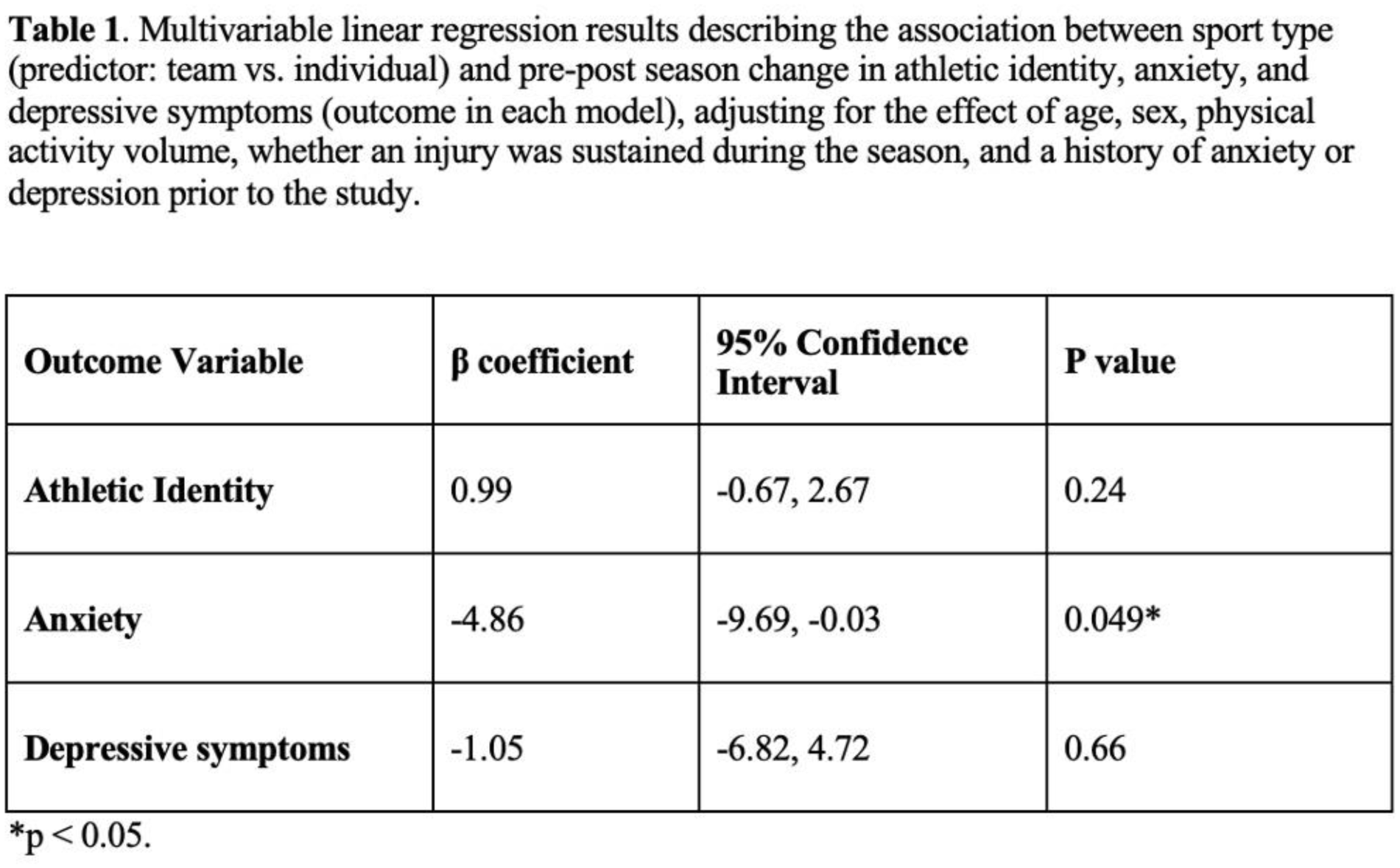
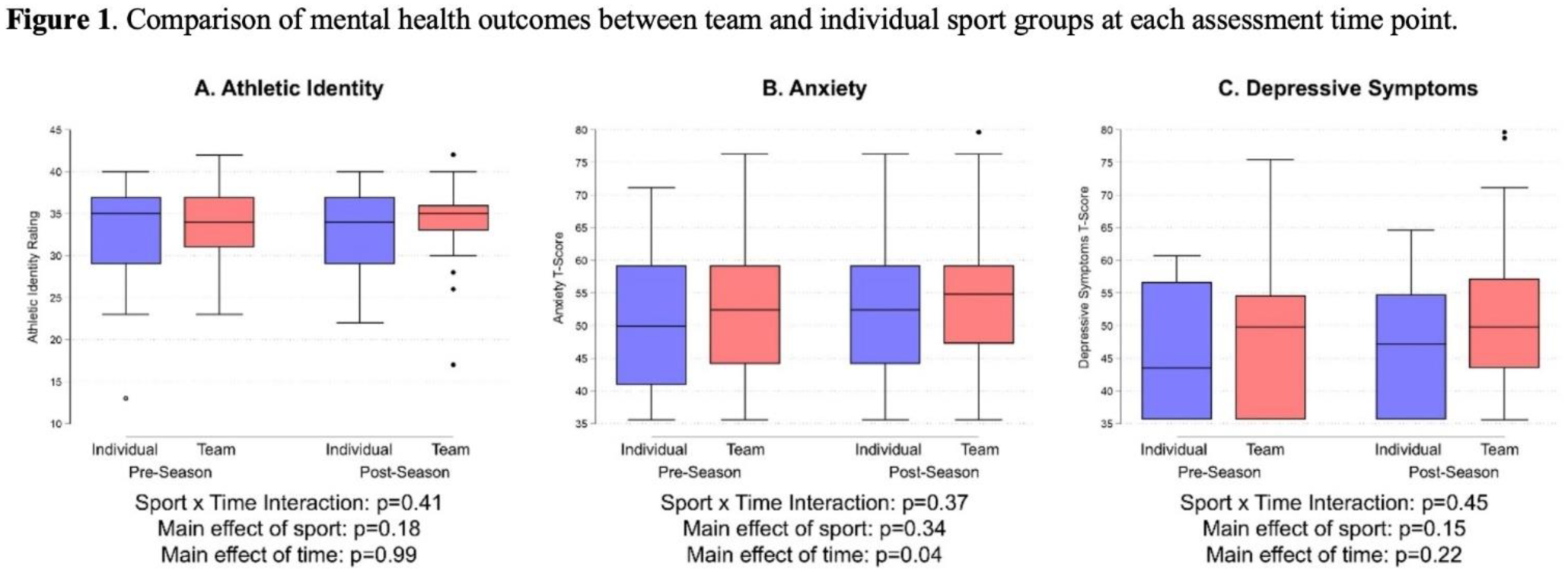
A total of 149 adolescent athletes were included, with 111 (75%) indicating they were primarily team sport athletes, and 38 (25%) indicating they were primarily individual sport athletes. We found individual sport athletes reported higher anxiety levels at pre-season and post-season compared to team sport athletes (Figure 1). Furthermore, independent of sport type, anxiety ratings were higher at the post-season assessment compared to the pre-season assessment (Table 1). No interactions or main effects related to sport type or time (pre/post-season) were identified for athletic identity and depressive symptoms (Figure 1).
Conclusion:
Individual sport athletes reported significantly worse anxiety symptoms from pre- to post-season compared to team sport athletes. Additionally, independent of sport type, anxiety ratings were higher at the post-season assessment compared to the pre-season assessment. Our findings suggest that team sport participation may be protective against worsening anxiety during a sport season. Additionally, healthcare providers, coaches, and parents should be conscious of anxiety ratings, particularly among individual sport athletes. Screening for anxiety symptoms pre-season in these athletes may allow for early identification and help athletes seek appropriate medical care to help improve quality of life and reduce the risk for mental health concerns.