Abstract
Background:
Sleep disturbances after pediatric concussion predict delayed recovery and reduce post-injury quality of life. The goal of this study was to determine which specific patient-reported sleep disturbances best predict prolonged recovery.
Hypothesis:
We hypothesized that any subjective sleep disturbance is predictive of prolonged recovery, with no differences among the specific disturbances.
Methods:
An electronic health record-based registry of prospective cohort of pediatric patients diagnosed with a concussion presenting to a specialty care concussion program within 28 days of injury between January 2, 2018 and June 4, 2024 was used. Patients between 5 and 18 years of age, sustaining their concussion from any mechanism, were included in analyses. The following patient-reported sleep disturbances were assessed on initial visit: trouble falling asleep, sleeping less than usual, sleeping more than usual, frequently or difficulty waking up.
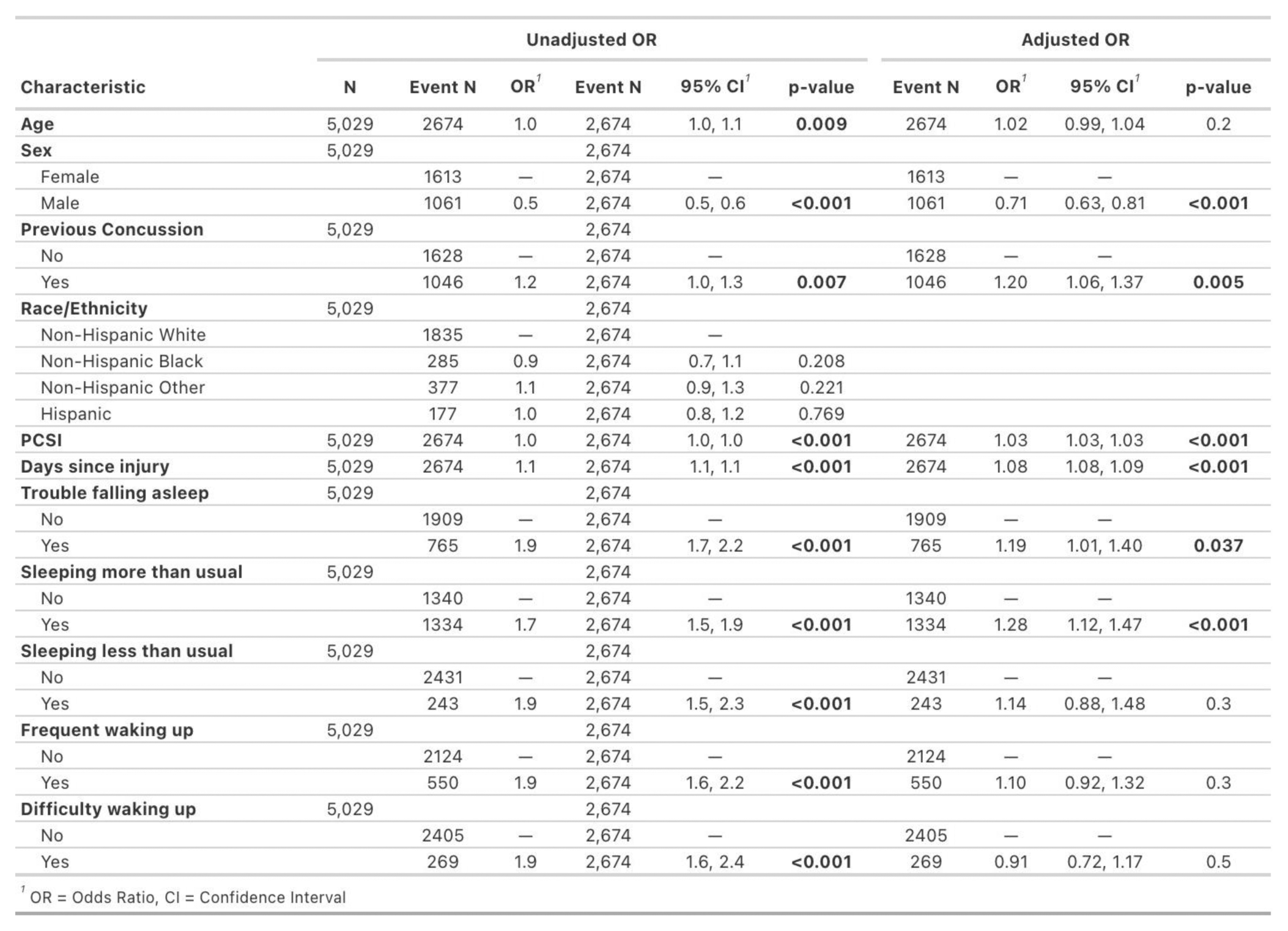
Descriptive statistics were used for sociodemographic and clinical characteristics of the cohort. The association of each of the 5 sleep disturbances with prolonged recovery, as well as sociodemographic and clinical characteristics which have also been associated with prolonged recovery, was calculated using univariate (unadjusted) and multivariate (adjusted) logistic regression. Factors associated with prolonged recovery (p <0.05) in the univariate model were included in the multivariate regression analysis as potential cofounders.
Results:
A total of 5,029 patients were included in the analysis (average age=14 years; 53% female). 67.2% of patients reported a change to their sleep since injury: the two most prevalent changes were sleeping more than usual (44%) and trouble falling asleep (23%). When adjusting for characteristics significantly associated with prolonged recovery in the univariate analysis, patients who reported trouble falling asleep had increased odds of prolonged recovery (OR 1.19, 95% CI 1.01–1.4), as did those who reported sleeping more than usual (OR 1.28, 95% CI 1.12–1.47).
Conclusion:
This study provides further insight into the association between patient-reported sleep disturbances and prolonged recovery in pediatric concussion after controlling for known sociodemographic and clinical predictors of prolonged recovery –those patients reporting trouble falling asleep or sleeping more than usual were more likely to have prolonged recovery from their concussion. Our findings align with emerging literature that describes objectively measured insomnia and oversleeping as predictors for persisting symptoms longer than 28 days. Clinicians should inquire about sleep during their evaluation and follow-up and consider providing sleep education to patients who report sleep issues – specifically those with trouble falling asleep or sleeping more than usual.