Abstract
Background:
Meniscus root suture anchors are used for adult meniscus root fixation, due to improved biomechanical performance compared with suture/button fixation on the anterior tibia, but in smaller pediatric knees, arthroscopic suture anchor fixation may be challenging. Previous ex vivo research has demonstrated that open pediatric cadaveric placement of suture anchors for root repairs provides strong biomechanical performance while avoiding fixation across the physis. This study aims to assess the feasibility of in vivo arthroscopic placement of joint level suture anchors for pediatric meniscus root repair and quantify the biomechanical pull-out strength of meniscal root suture anchors.
Hypothesis:
Arthroscopic in vivo suture anchor repair for pediatric knees is feasible, and in comparison to previous studies of ex vivo open suture anchor placement in pediatric knees, the biomechanical evaluations will show similar stiffness, displacement, and ultimate load to failure.
Methods:
Six pediatric cadaveric knees (ages 8–16) underwent arthroscopic lateral meniscal root repair using a high posteromedial portal. A single suture anchor was placed at the posterior root by experienced meniscal repair surgeons. Surgeon teams were monitored, then interviewed about the technical feasibility of repair. Following soft tissue removal and implant exposure, the distal tibia was potted and mounted for biomechanical loading of the anchors (Figure 1). Constructs were preconditioned between 10–30 N for 10 cycles and individually pulled to failure at 10 mm/min.
Results:
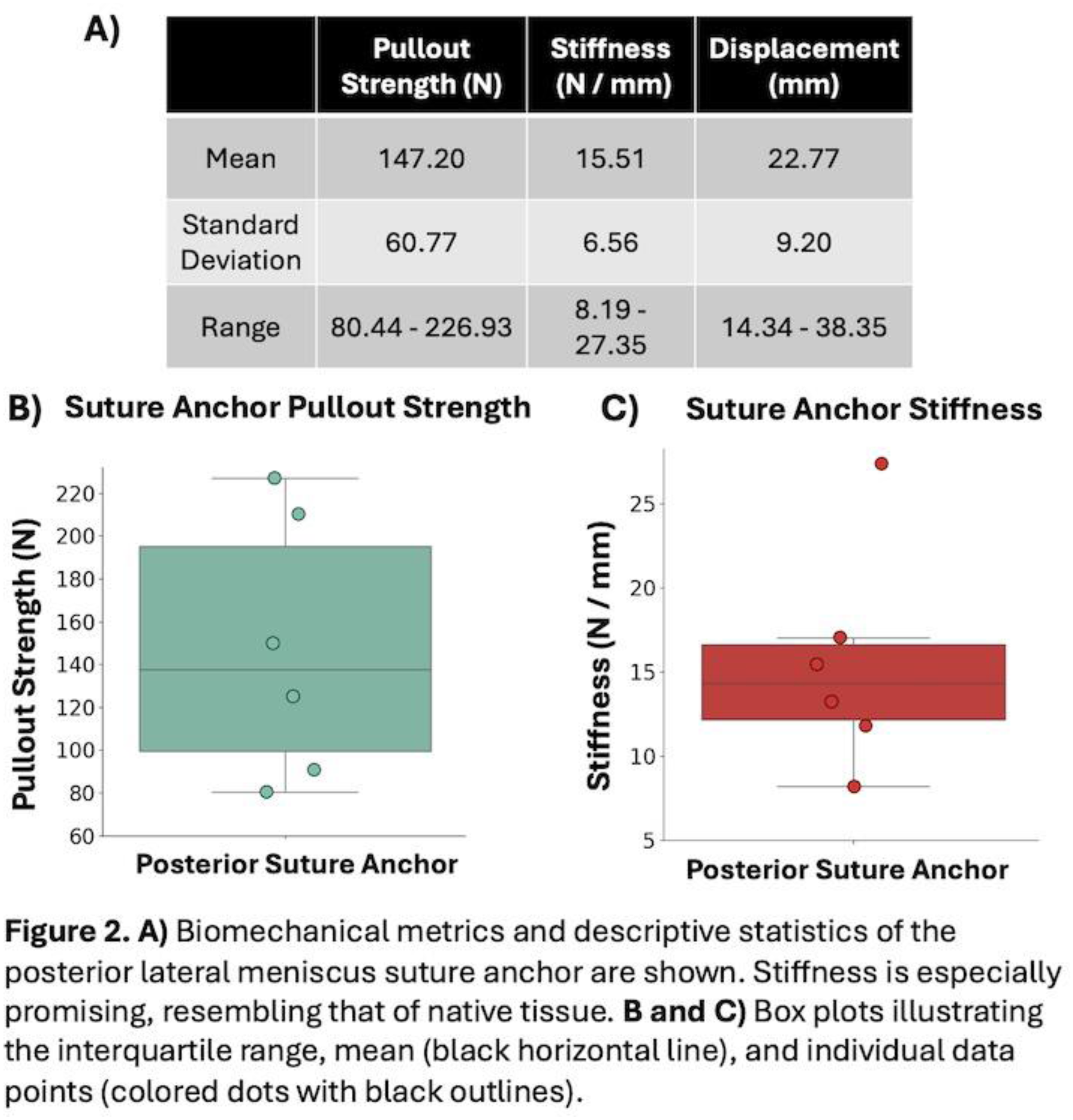
The mean pull-out strength of arthroscopically placed suture anchors was 147.20 N (SD: 60.77), mean stiffness was 15.51 N (SD: 6.56) and mean displacement was 22.77 mm (SD: 9.20). In comparison to prior research on ex vivo open suture anchor placement in pediatric bone, arthroscopic placement demonstrated no significant difference in pull-out strength. Surgeon interviews revealed that many found optimal anchor placement using a high posteromedial portal more challenging in pediatric knees than in adult knees.
Conclusion:
While this technique avoids fixation across the physis and demonstrates adequate biomechanical performance, surgeon interviews revealed significant technical challenges with the high posteromedial portal, raising concerns about the feasibility of the procedure in pediatric patients. Although a viable technique in adult knees, this procedure may have limited application in smaller knees.