Abstract
Background:
Segmental meniscus transplantation represents a new tissue-sparing repair option for patients with partial meniscal deficiency. Various surgical repair techniques exist in the current literature; however, little is known about the biomechanics of these approaches. In the current study, we aim to compare a novel repair technique to a recently described repair technique (control).
Hypothesis:
The novel suture technique will improve ultimate strength and resistance to cyclic fatigue compared to a recently described control technique.
Methods:
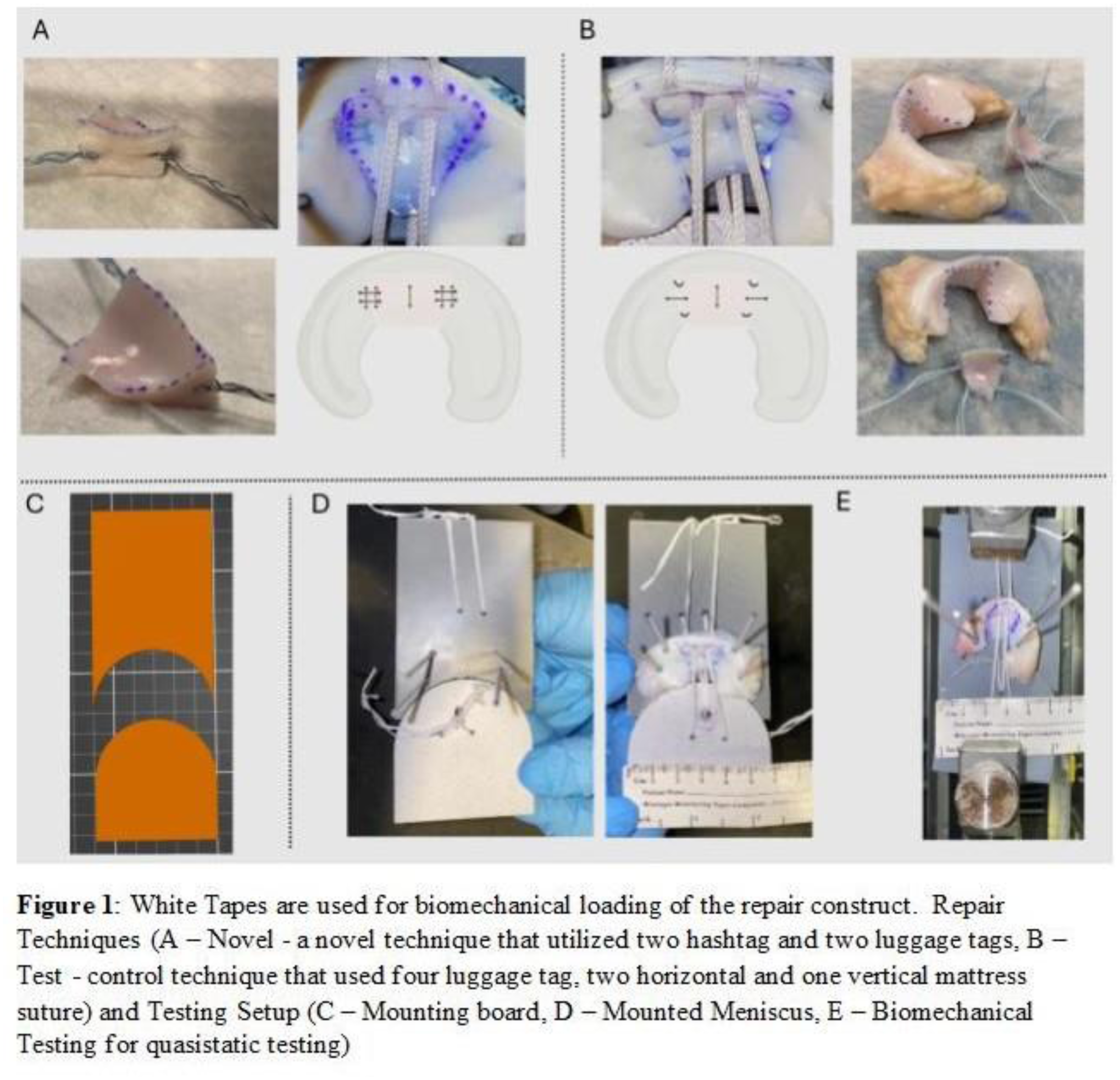
Twenty-four bovine menisci (12 medial, 12 lateral) explants were used in the study. A segmental meniscus defect was created in the middle third of the specimen, and the defect was repaired using the native tissue. Two techniques were tested: 1) a novel technique that utilized two hashtag and two luggage tags and 2) a control technique that used four luggage tag, two horizontal and one vertical mattress suture repairs. (Figure 1). Quasi-static (n=6) and cyclic (n=6) uniaxial tension protocols were performed in universal test frames using custom jigs and grips. For the quasi-static experiments, specimens loaded to failure at a rate of 1mm/s. Cyclic tests consisted of 1000 loading cycles between 20 and 50 N, followed by a ramp to failure at 1 mm/s. Stiffness, maximum force, and failure mode were recorded for all tests. Measures of plastic deformation and survival curves over 1000 cycles were also measured for cyclic tests. Statistical analysis was performed using a one-way ANOVA.
Results:
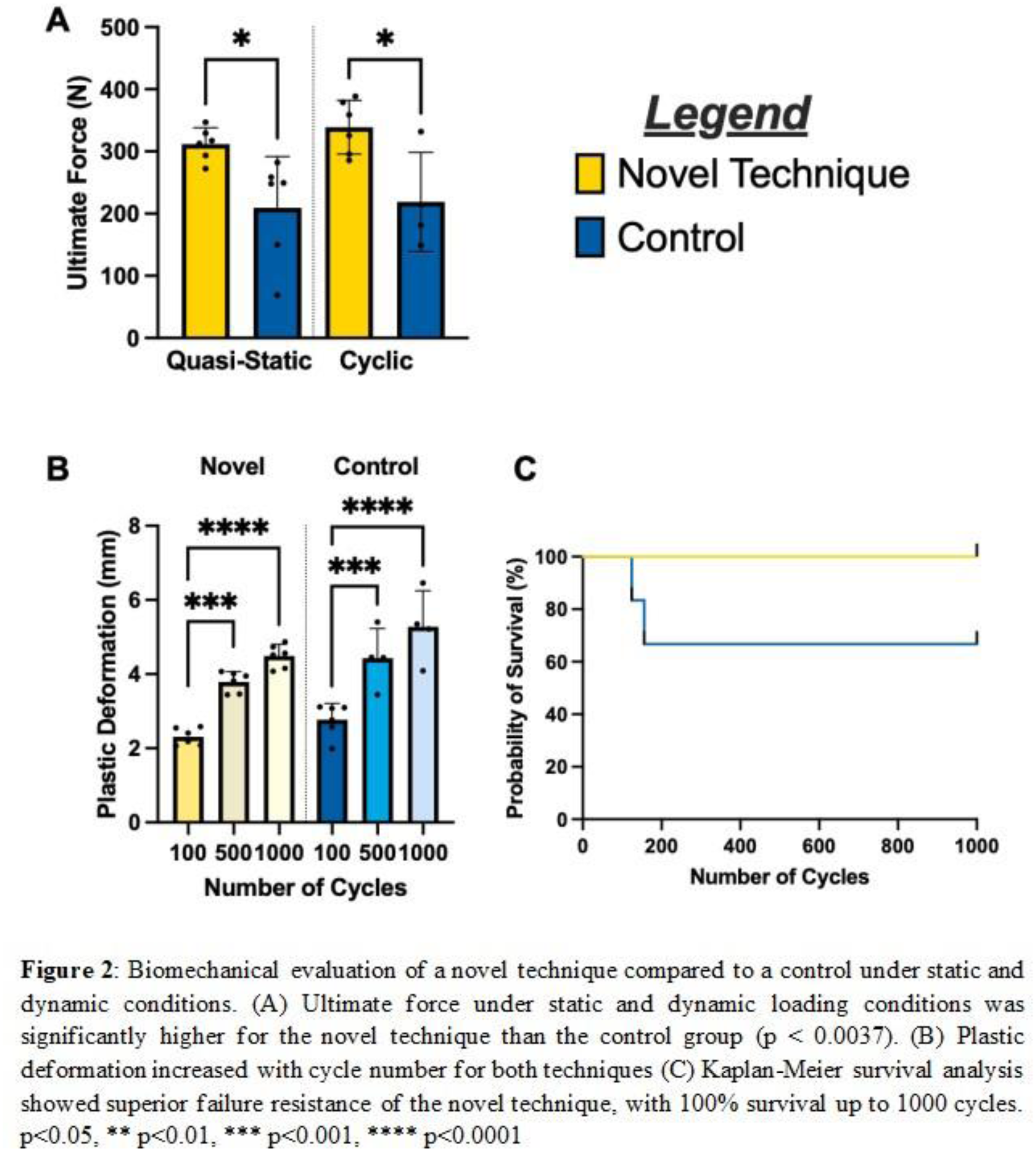
The novel repair technique showed significantly higher maximum load to failure in both static (311.9 ± 26.2 N vs. 209.5 ± 82.6 N, p = 0.0159) and dynamic tests (339.0 ± 43.0 N vs. 181.0 ± 89.0 N, p = 0.0029) compared to the control group (Figure 2A). There were no significant differences in stiffness between the two groups. Plastic deformation increased significantly from 100 to 500 cycles in both groups. No significant differences were found between groups at any cycle count (Figure 2B). 33% of control specimens did not complete the cyclic test (Figure 2C).
Conclusion:
Results of this study confirmed our hypothesis, that the novel suturing technique would improve ultimate failure load and cyclic fatigue. The use of this novel technique may further enhance the stability and durability of the transplanted segment. Future studies will be required to assess the knee loading characteristics as well as in-vivo biological healing.