Abstract
Background:
Previous research on the relationship between sport specialization and mental health in adolescents is limited, focused primarily on the association between psychological and social effects of specialization itself, rather than injury-related associations with mental health. Although athletic identity has been found to increase with specialization, (1) few studies have examined how injury influence’s identity in specialized athletes following sport-related injuries.
Hypothesis:
We hypothesized that among athletes with a recent musculoskeletal (MSK) injury, those with high sport specialization would report worse mental health outcomes and higher athletic identity scores than those with moderate or low specialization.
Methods:
Participants 13–18 years of age who presented to a sports medicine clinic following a sport-related MSK injury within the last month were enrolled in the study. Sport specialization level (high, moderate, or low) was determined using the 3-point Jayanthi Scale. Mental health was assessed using the PROMIS Pediatric Global 25, which evaluates six domains: mobility, anxiety, depression, fatigue, peer relationships, and pain interference. Athletic identity was measured using the Athletic Identity Measurement Scale (AIMS), with higher scores indicating stronger athletic identity.
Results:
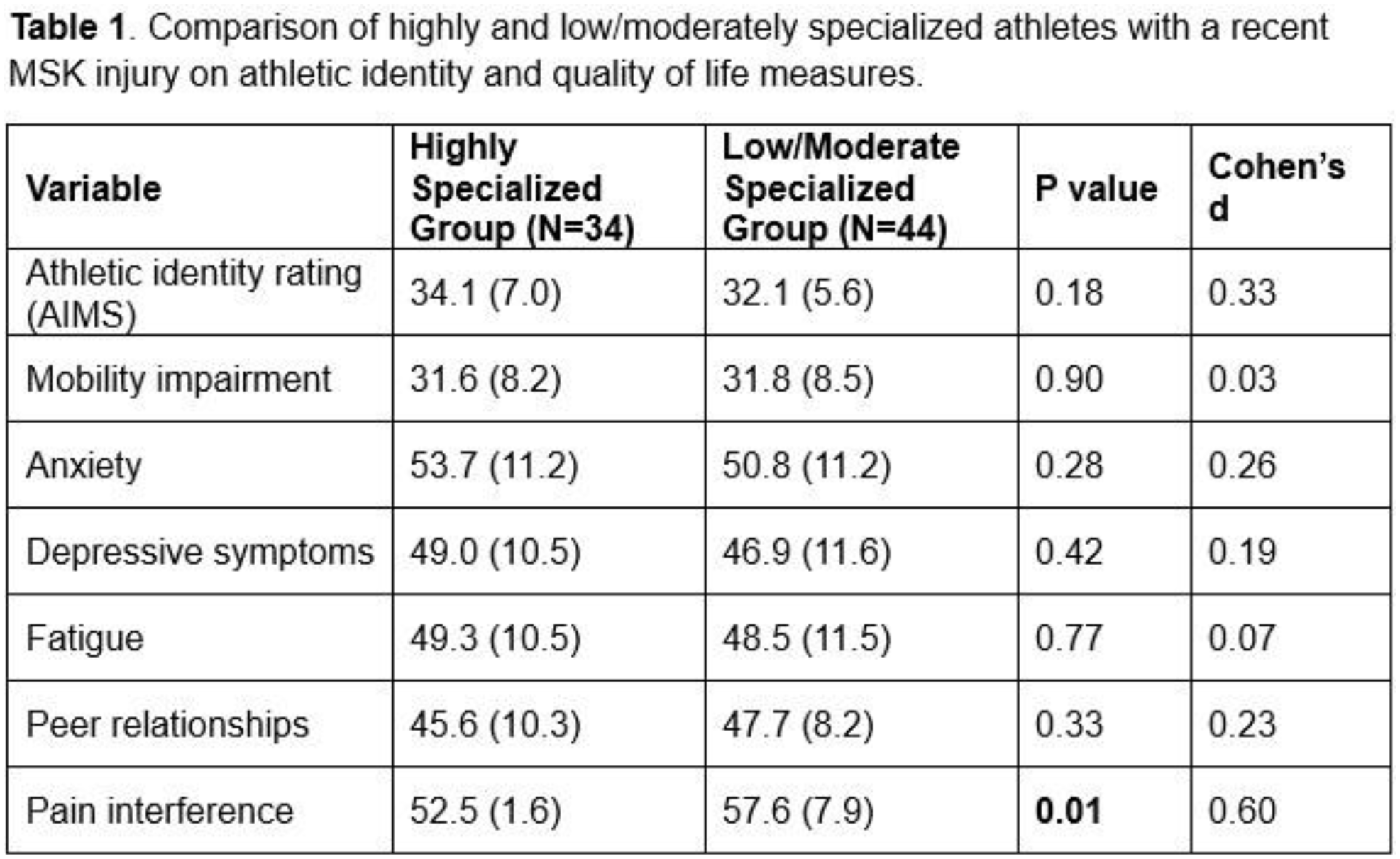
We enrolled and assessed 78 adolescent athletes ages 13-18 years who had recently sustained a MSK injury. Those who were highly specialized did not significantly differ from those who reported moderate/low sport specialization levels for age (14.7±1.5 vs. 14.7±1.4 years; p=0.87), proportion of female participants (59% vs. 45%; p=0.24), or time from injury to evaluation (10.1±7.5 vs. 9.1±8.2 days; p=0.57). There were no significant differences between groups in athletic identity rating (Table 1). The highly specialized athletes, however, did report significantly lower pain interference ratings than the moderate/low specialized athletes, with a moderate effect size (Table 1). There were no significant between group differences identified for mobility impairment, anxiety, depressive symptoms, fatigue, or peer relationships (Table 1).
Conclusion:
In conclusion, we found that athletic identity ratings were not significantly different among athletes with a recent MSK injury who were/not highly specialized athletes. This contrasts with previous research suggesting a correlation between athletic identity and level of sport specialization, (1) suggesting that injury may influence athletic identity in highly specialized athletes. We also observed highly specialized athletes reported less pain interference. This may reflect a higher pain tolerance or a more normalized perception of pain resulting from prolonged sport participation, which has been associated with increased injury risk. (2) Future research is needed to understand the relationship between sport specialization and pain tolerance.