Abstract
Background:
Arthrofibrosis, a debilitating complication of ACL reconstruction (ACLR), involves excessive joint scar tissue causing pain, stiffness, and restricted motion. This significantly impacts young athletes' mobility and quality of life.
Despite its impact, arthrofibrosis lacks a consistent definition. Criteria range from specific post-operative knee range of motion deficits compared to the contralateral knee, often necessitating further intervention. Beyond requiring unplanned surgery, arthrofibrosis burdens patients with increased kinesiophobia, anxiety, depression, and a reduced quality of life.
This study aimed to review orthopedic literature on arthrofibrosis incidence and risk factors following primary ACLR in children and adolescents.
Hypothesis:
We hypothesize that inconsistent definitions and the inclusion of mixed adult and pediatric populations contribute to variability in reported incidence and risk factors.
Methods:
We systematically searched Medline/PubMed, Embase, and Scopus using the terms: (Anterior Cruciate Ligament Reconstruction OR "ACLR") AND ("Arthrofibrosis" OR "knee stiffness" OR "stiffness" OR "adhesions" OR "cyclops lesion") AND (pediatric OR pediatrics OR child OR children OR adolescent OR adolescents).
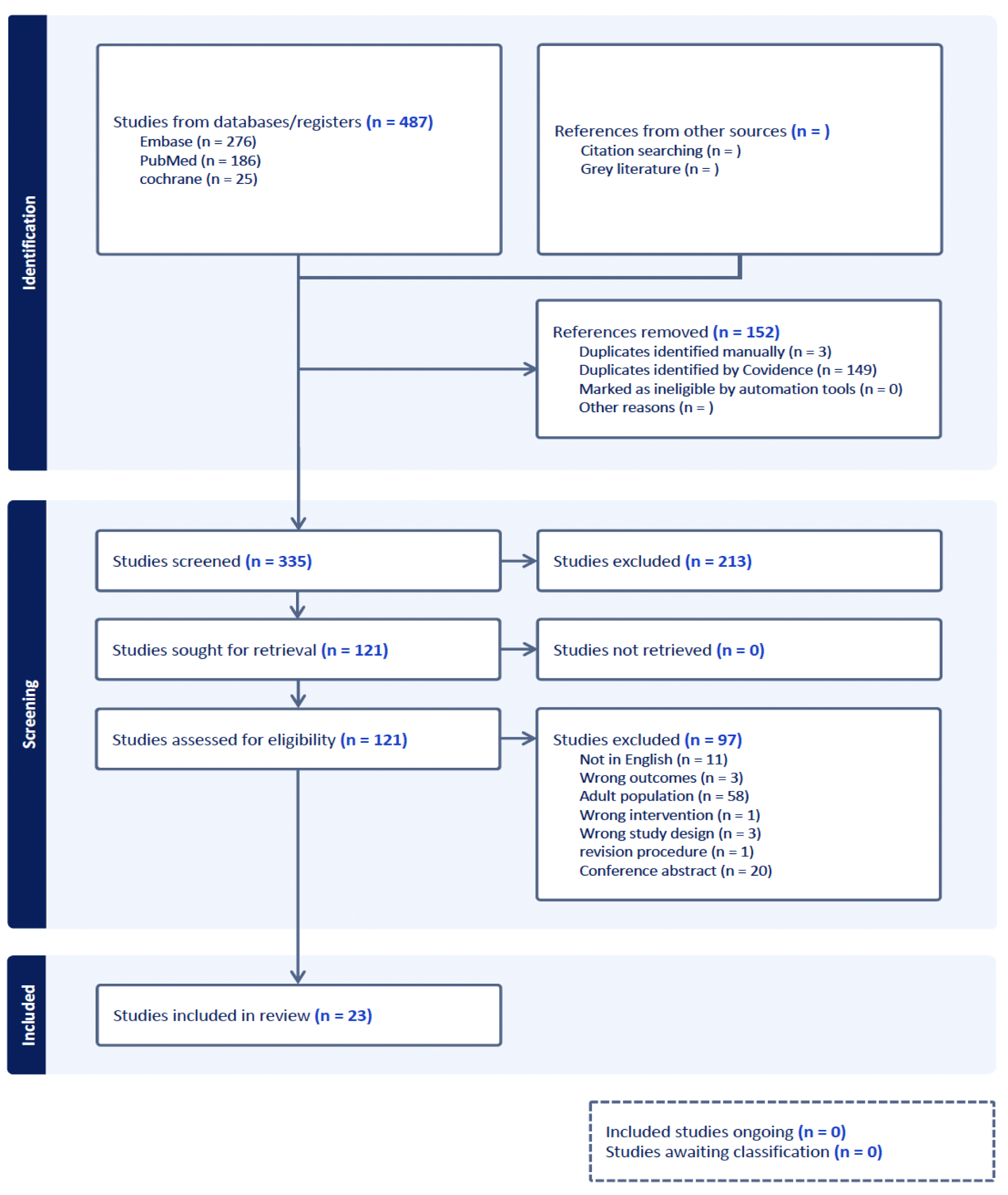
This review adheres to PRISMA guidelines. We included full-text original research articles detailing arthrofibrosis of the knee post-ACLR, while excluding studies on revision ACLR, multi-ligamentous injuries, case reports, grey literature, abstracts, commentaries, editorials, and unpublished material. Review papers were excluded, though their references were screened for additional relevant articles (Figure 1).
A detailed quality assessment was performed for all included studies on Arthrofibrosis After Primary ALCR in Children and Adolescents. The following domains were evaluated using critical appraisal guides and design-based checklists; study design and level of evidence, selection bias, outcome measurement, confounding and adjustment, reporting and attrition and risk of bias summary.
Results:
From 487 screened studies, 23 were included, encompassing 14,387 pediatric ACLR patients, 249 of whom developed arthrofibrosis (Figure 2). The pooled arthrofibrosis prevalence was 3.7% (random-effects model), exhibiting substantial heterogeneity (I² >80%). Graft type influenced prevalence, with quadriceps tendon autografts showing an 8.9% rate, hamstrings 3.2%, and patellar tendon autografts 4.6%.
Risk factors consistently identified include higher BMI, female sex, African American race, early surgery, and lower socioeconomic status. Heterogeneity is driven by differences in AF definitions, patient populations, and follow-up periods. Publication bias is possible.
Conclusion:
Arthrofibrosis, an uncommon yet significant complication following ACL reconstruction in children and adolescents, has a pooled prevalence of approximately 3.7%. To advance future research, standardized definitions and outcome reporting are crucial. Our meta-analysis underscores the importance of clinical vigilance for at-risk populations and highlights the need for further prospective, multicenter studies.