Abstract
Background:
Female adolescents participate in sports at a lower frequency than male adolescents and drop out at twice the rate. The purpose of this study was to describe the factors (intrinsic vs. extrinsic) that motivate sport participation among adolescent females and to evaluate the association between sport participation motivators and demographic, medical history, and psychological measures.
Hypothesis:
We hypothesized that extrinsic factors would be the primary motivator for sport participation among female adolescents. Additionally, female adolescents who reported intrinsic motivation for sport participation would demonstrate differences in demographic, medical history, and psychological measures compared to those who reported extrinsic motivation for sport participation.
Methods:
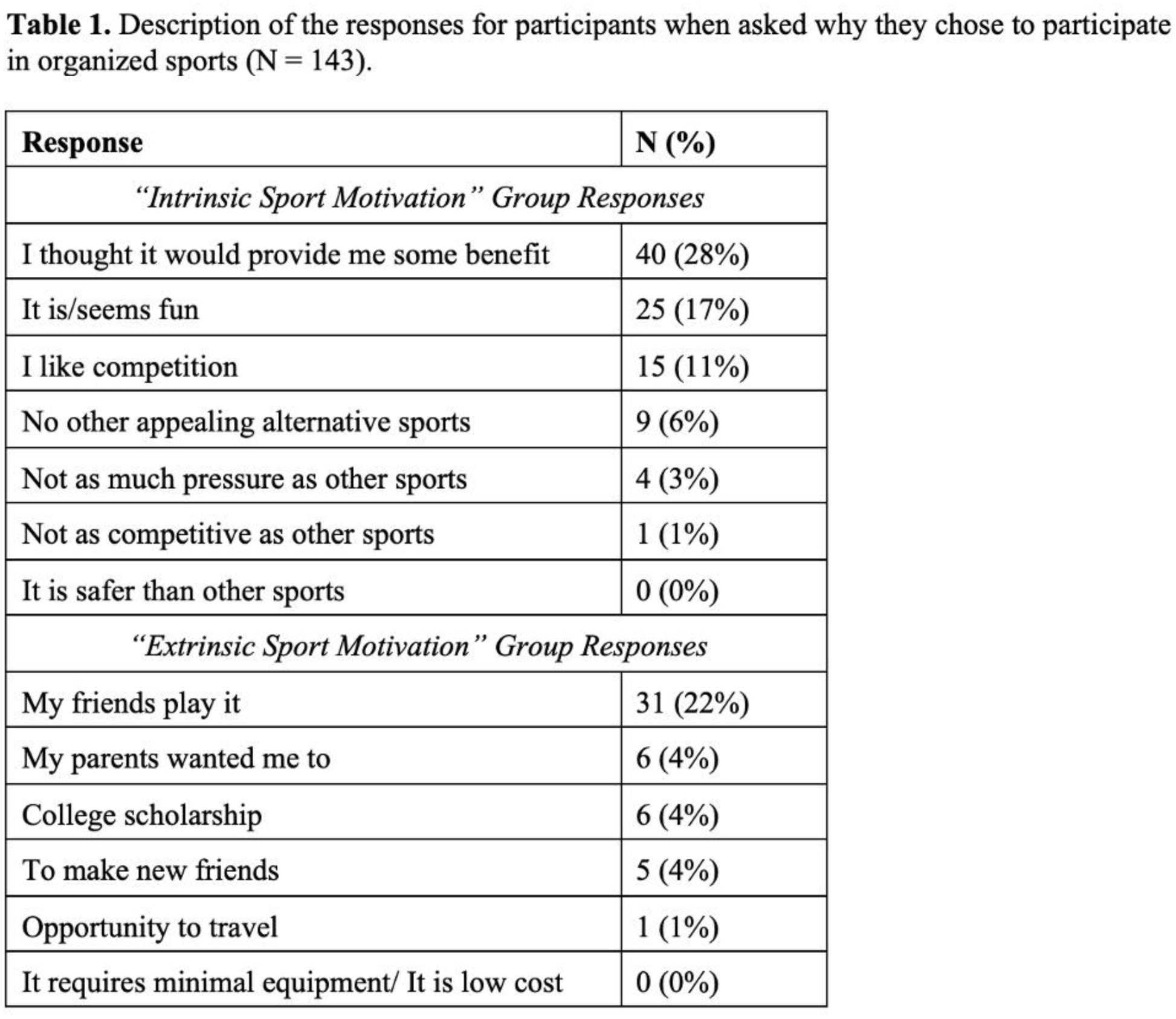
We conducted a cross-sectional study of female adolescents prior to the fall sports season. Participants were asked to select their primary motivator for sport participation. The answer options provided were based on primary motivators found from previous literature. The primary motivator was then grouped into the appropriate category (intrinsic vs. extrinsic, Table 1). We defined intrinsic motivation as performing an action for the inherent satisfaction and enjoyment of the activity. Extrinsic motivation was defined as performing an action to receive an external reward, such as obtaining a scholarship or praise from others. Psychological measures assessed included: anxiety and depression (via HADS), grit (via Grit-s), and body appreciation (via BAS). Primary outcomes (anxiety, depressive symptoms, grit, and body appreciation) between groups were compared using independent t-tests, while multivariable linear regression provided an adjusted comparison between groups. We adjusted for the independent effect of age, ethnicity, race, BMI, and history of anxiety or depression.
Results:
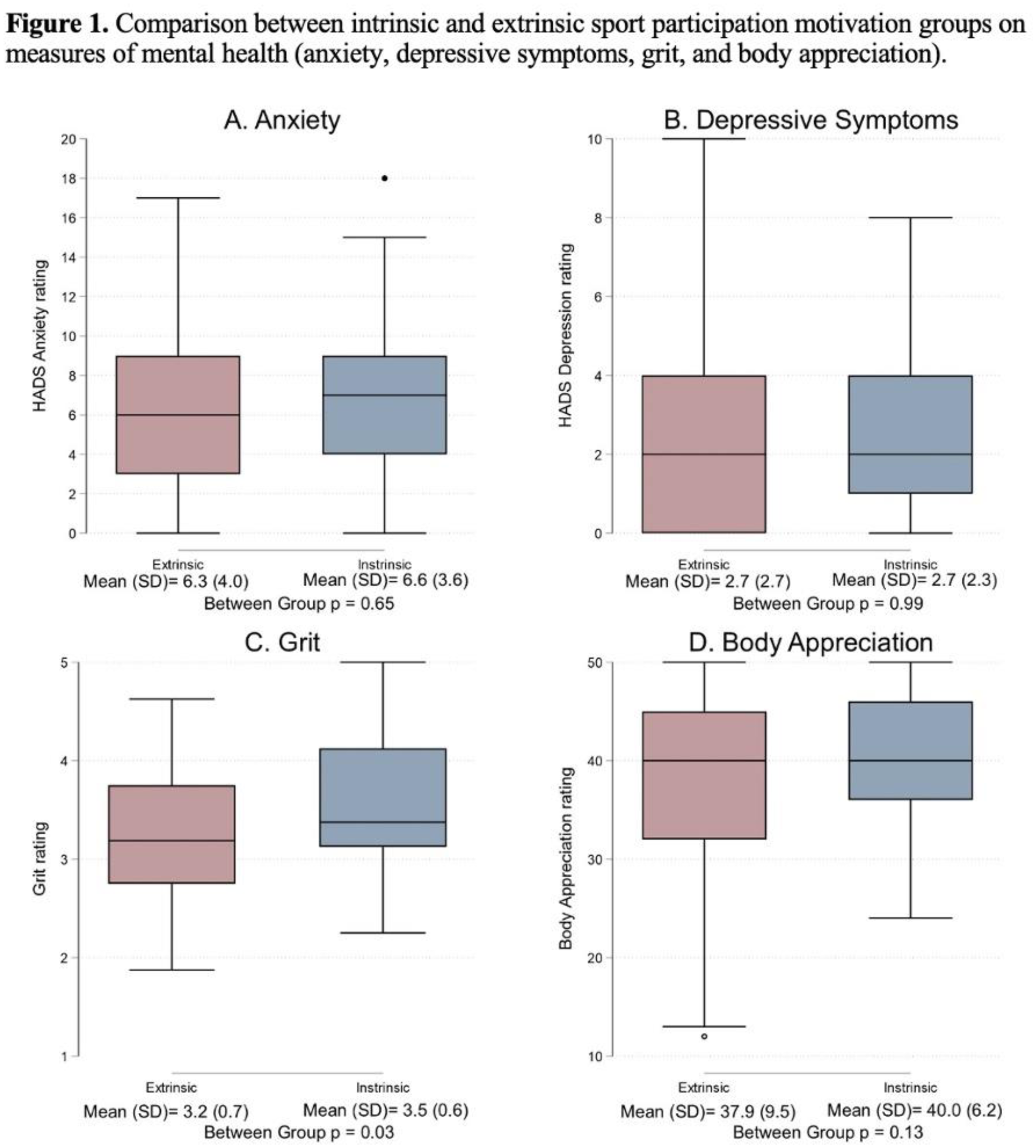
We enrolled 143 female adolescents, with 66% indicating their motivation for sport participation was intrinsic (Table 1). There were no significant differences between groups in demographic, socioeconomic, body size, medical history, or physical activity characteristics. However, the intrinsic motivation group reported significantly higher grit ratings than the extrinsic motivation group (p=0.03). There were no significant differences between groups for body appreciation, anxiety, or depressive symptoms (Figure 1).
Conclusion:
The participants were primarily intrinsically motivated to participate in sports. The intrinsically motivated group reported significantly higher grit ratings than the extrinsic group. Healthcare providers, coaches, and parents should be conscious of the relationship between grit and intrinsic motivation for sport participation and how that may influence sustained participation in sport among female adolescents. Fostering grit and intrinsic motivation among female athletes may lead to improved sports resilience, longevity of sport participation, and improved long-term health outcomes.