Abstract
Background:
Swim training programs promote positive mental health such as improved mood and self- efficacy. Sociodemographic factors can support or hinder accessibility to swimming facilities and aquatic education programs. Furthermore, drowning is the leading cause of death among children aged 1-14 years and disproportionately affects marginalized communities. While the benefits of swimming are well studied, the influences of socioeconomic conditions on how youth learn to swim, and their mental health outcomes are not well known.
Hypothesis:
This study examined the relationship between method of learning to swim, mental health, and socioeconomic status in adolescents. We hypothesized that youth taught to swim by a family member would show: (1) greater socioeconomic disadvantage (marked by a higher Area Deprivation Index and lower Child Opportunity Index), (2) more severe anxiety and depressive symptoms, and (3) lower swimming proficiency compared to their peers who learned to swim through formal instruction.
Methods:
Adolescent females were evaluated using a series of questionnaires: Patient-Reported Outcomes Measurement Information System (PROMIS) Global 25, Area Deprivation Index (ADI), Child Opportunity Index (COI) and self-reported demographics, medical history, and swimming ability. PROMIS anxiety and depression subdomains (mean=50) were used for analysis. ADI ranks for disadvantaged (range=0-100) and COI scores (range=0-100) for opportunity characterized participant socioeconomic status.
Results:
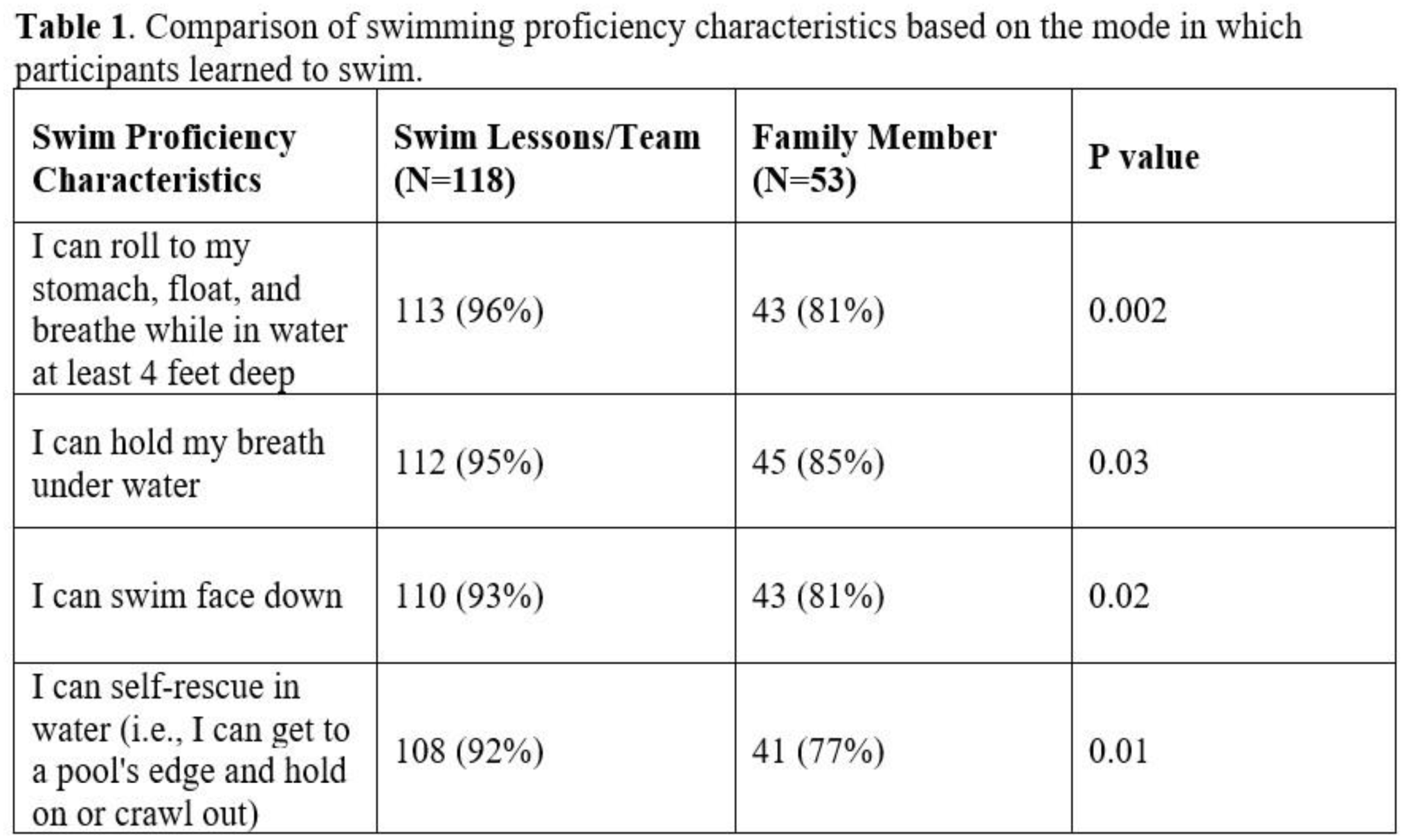
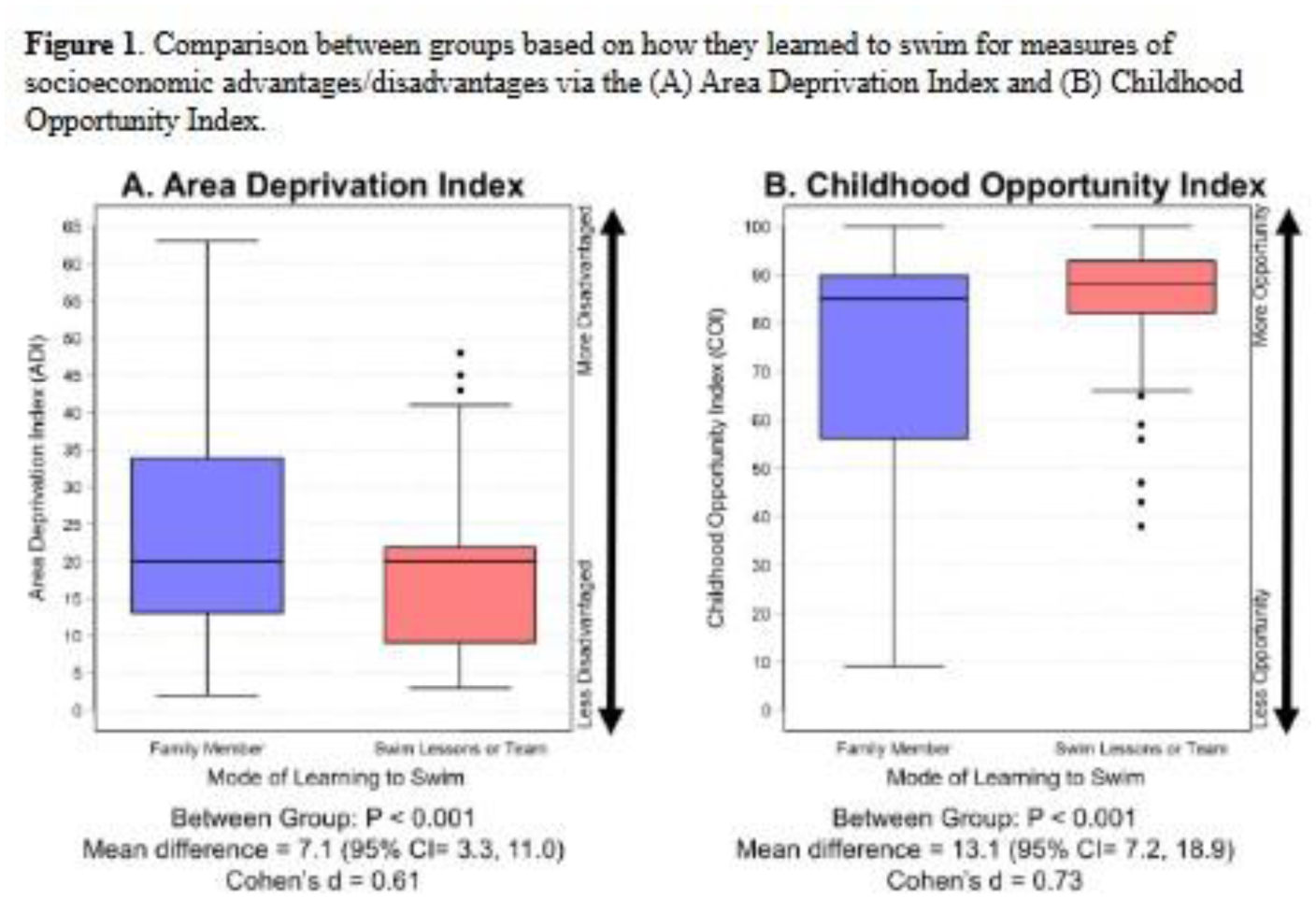
Of 173 participants enrolled, 166 were included for analysis. A significantly greater proportion of those who learned to swim from a family member were Hispanic or Latino/a/x compared to those who learned to swim from formal lessons or guided instruction through swim team (29% vs. 14%; p=0.02). Of those who were taught to swim by a formal swim lesson or team, a significantly greater proportion demonstrated more swimming ability characteristics than those who were taught by family members (Table 1). Those taught to swim by family had significantly higher ADI ratings (Figure 1A) and lower COI scores (Figure 1B) compared to those who learned from formal lessons or swim team. Those taught via formal swim lesson or team demonstrated significantly better swimming ability. No significant differences existed between groups for anxiety or depressive symptom scores.
Conclusion:
Greater opportunity, less deprivation, and better swimming ability were associated with youth who learned to swim formally via lessons or swim team, while no significant differences in mental health outcomes were noted. Our findings suggest that the conditions in which youth grow up in may not influence mental health outcomes but may significantly impact swimming ability.