Abstract
Background:
The highly repetitive and precise motions of playing an instrument are risks for playing-related musculoskeletal disorders (PRMD). Prior studies report an injury rate of 39 to over 90% in professionals (1–3) with similar rates reported in amateurs (4). Risk factors for PRMDs are consistently highest in females and string players across all abilities. There is little known, however, about treatment and recovery from injuries aside from self-report data. In this study we reviewed medical records to report more precise and granular diagnoses, diagnostic, and management strategies in the amateur population.
Hypothesis:
Specific diagnoses of amateur musician injuries will reflect previously reported high rates of PMRD'S among string and female players, with a strong emphasis on conservative treatment approaches.
Methods:
We retrospectively analyzed clinical, demographic, and injury characteristics of adolescent and young adult amateur musicians from January 1, 2014 through December 31, 2024. Up to 3 injuries per patient were collected. For each injury we recorded onset, anatomic location, provisional diagnosis, and recommended treatment. When available, we reviewed follow-up visits for time to resolution of pain. Patient pain burden was calculated as a cumulative summation of pain duration from initial onset of pain to reported resolution at follow-up. Descriptive statistics were applied to summarize frequencies and percentages of demographic, injury, and clinical characteristics.
Results:
A total of 54 subjects were included (50.0% female). Specific diagnoses were available in 83.3% of cases. The dominant injury location was the upper extremity (81.5%) followed by head and neck (9.3%), trunk (3.7%), and lower extremity (1.9%). Injury classification detailed injuries as 54% overuse, 37.0% non-specific, and 13.0% acute. Among injuries, the most common type was muscle-tendon (53.7%), followed by nerve (31.5%), with ligament and joint/cartilage comprising 11.1%. Investigating subtypes, tendonitis/tendinopathy (44.4%) and muscle strain (7.4%) were most common.
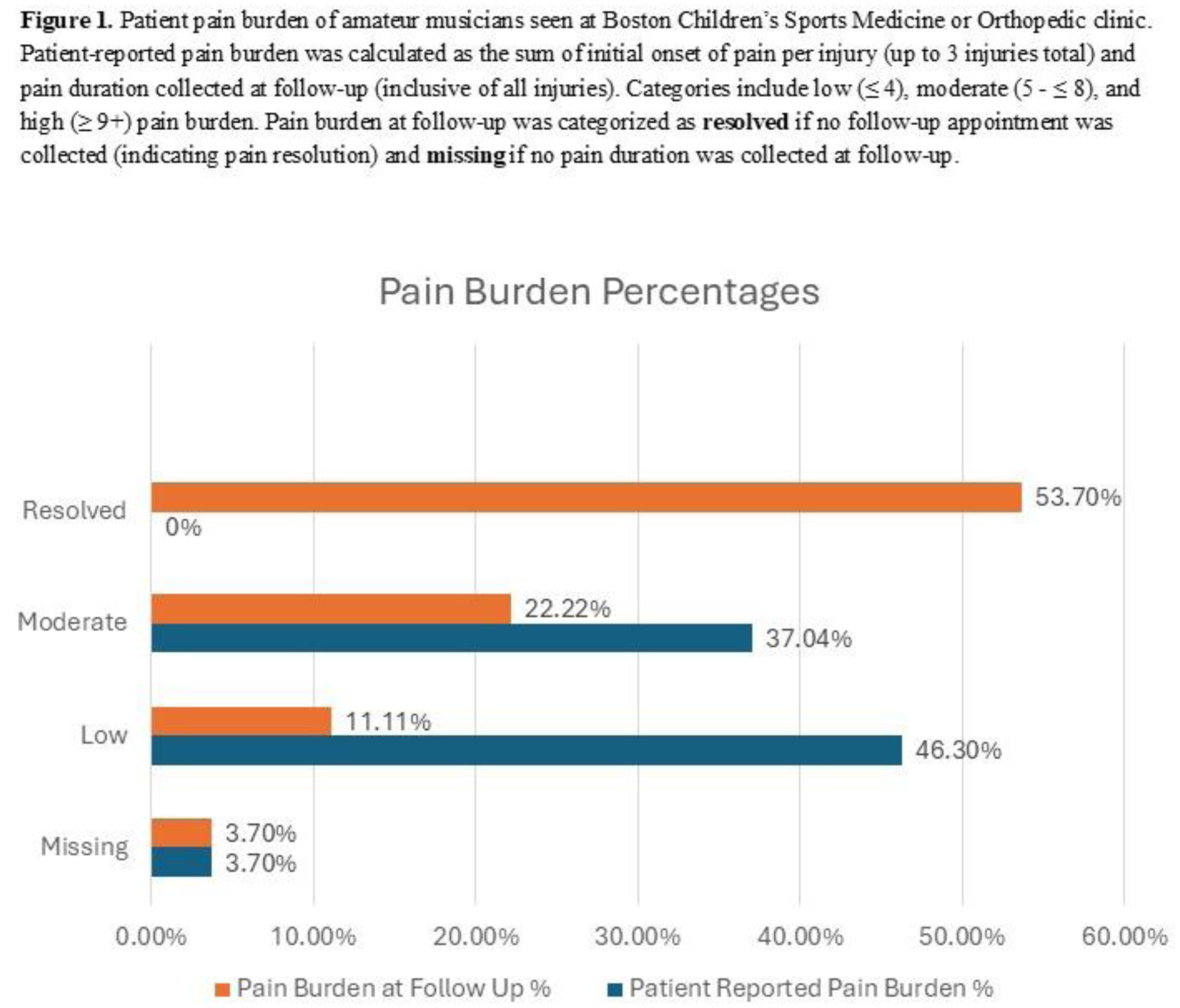
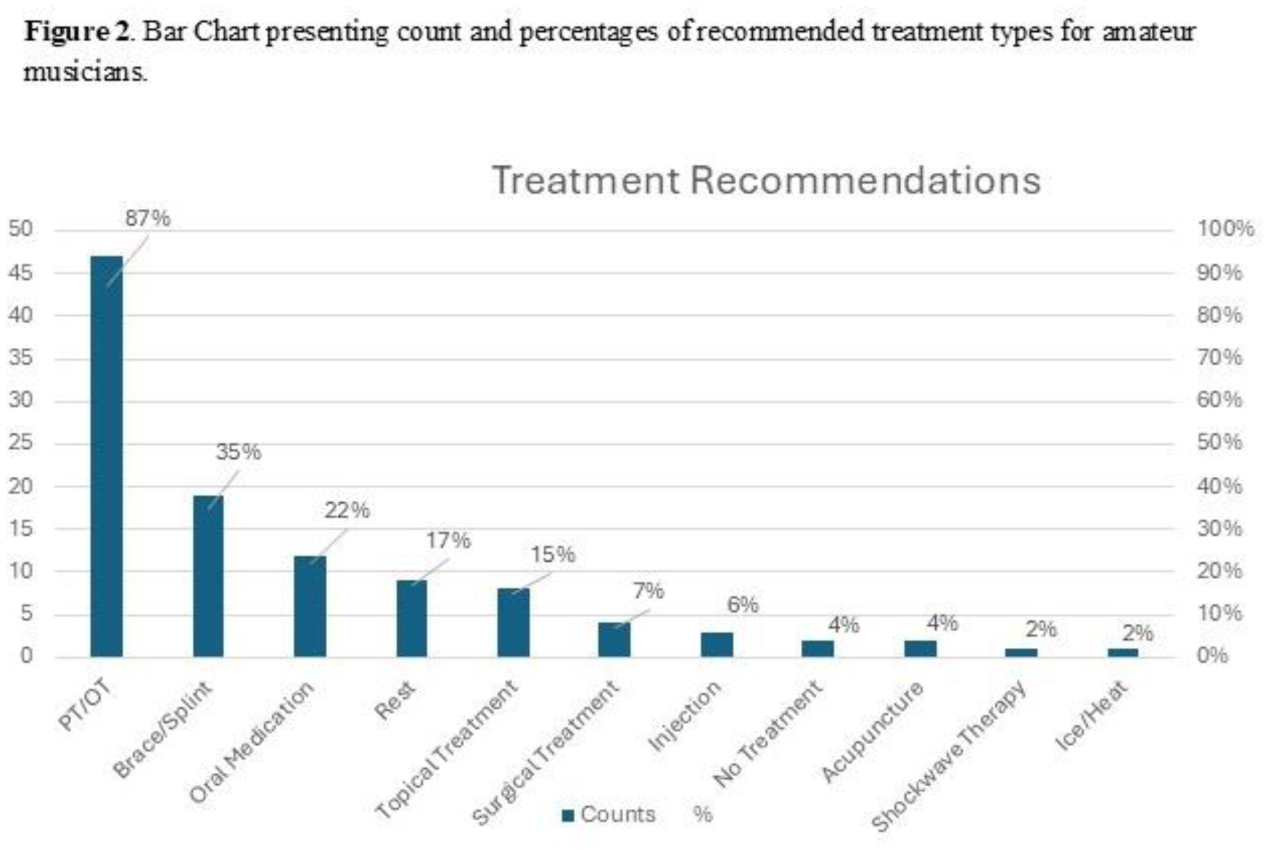
Almost every patient was recommended conservative treatment (94.4%) with the vast majority (87.0%) referred to PT and/or OT and 7.4% recommended for surgery. Total patient pain burden reflected majority moderate (37.0%) followed by low (46.3%), and high (13.0%) pain values. At follow-up, 53.7% reported pain resolution (Figure 1), reflecting high rates of success with conservative treatment outcomes. (Figure 2).
Conclusion:
Amateur musician PRMD’s in our population mirror those previously reported, with a high occurrence of overuse injuries in the upper extremity, in females, and in string players. Most favorable and successful treatment types include PT/OT, with a majority experiencing pain improvement and/or resolution, and a small minority recommended for surgery.