Abstract
Background:
Physical activity (PA) is an effective method to improve post-concussion outcomes.1 Many factors, including biological sex, may affect concussion recovery.2 While many studies prioritize equal representation of males and females, they fail to include comparisons between the sexes. Exploring the sex-specific effects of PA on concussion outcomes is important to provide personalized care to adolescents with a concussion.
Hypothesis:
Early PA engagement (PA prior to initial evaluation) would be associated with better outcomes after concussion in both female and male adolescents.
Methods:
We evaluated adolescents <21 days post-concussion while they were still symptomatic. Assessments included the Post-Concussion Symptom Inventory (PCSI), PROMIS Pediatric Global v.1.1. anxiety, depressive symptoms, fatigue, pain interference subscales, and the Dizziness Handicap Inventory (DHI). We assessed main effects and interactions between sex (female/male participants) and those who did/not begin PA after injury/before assessment (early PA vs. no early PA) using two-way ANOVA.
Results:
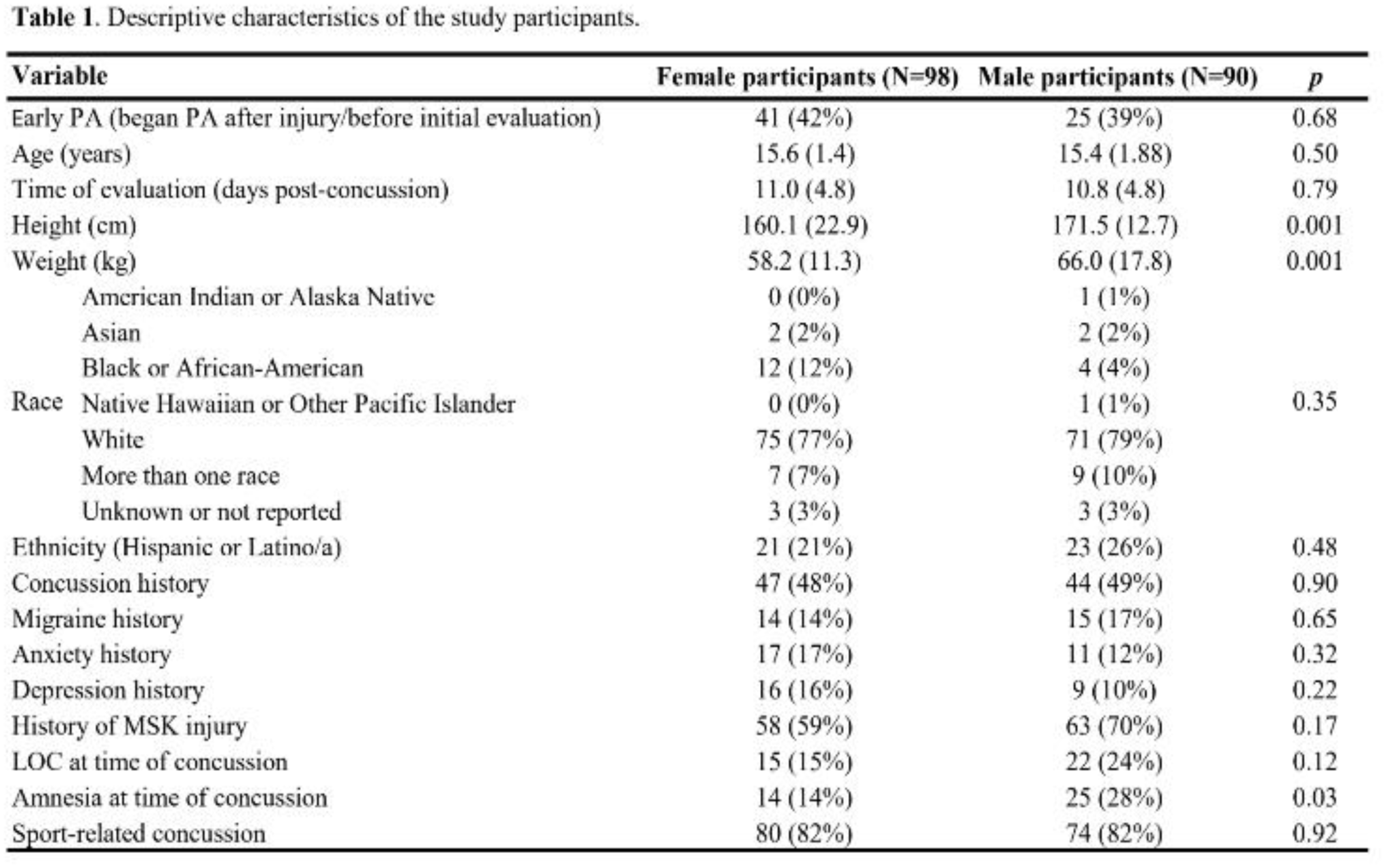
We enrolled 188 adolescents with a concussion (51% female; 15.5±1.6 years of age; 10.9±4.8 days post-concussion). 66 participants (42% female) reported engaging in PA prior to initial evaluation (Table). There was no significant proportional difference between female and male participants who did/not engage in PA before the evaluation (Table). Female participants reported more severe concussion symptoms (Figure 1A), anxiety symptoms (Figure 1B), and depressive symptoms (Figure 1C) than male participants. There were no significant main effects or interactions identified for fatigue (Figure 1D). Female participants reported more severe pain interference than male participants, and both females and males who had begun PA reported significantly less pain interference than those who had not (Figure 1E). A significant interaction effect for dizziness (Figure 1F) indicated that among participants who had not yet begun PA, females reported more severe dizziness than males. Among female participants, those who had not started PA reported more severe dizziness.
Conclusion:
Early PA following concussion is associated with less pain interference and dizziness in both female and male adolescents. However, early PA was not associated with sex differences in depression, anxiety, or concussion symptom severity at initial evaluation. Sex differences were observed in multiple domains, in line with prior work. Dizziness severity may be associated with exercise tolerance or response to exercise in adolescents, especially for female adolescents with concussion. Understanding and addressing barriers to early PA post-concussion is a crucial step in providing individualized and multidimensional care.