Abstract
Background:
For an adolescent athlete, complete recovery from a concussion can include successful reintegration into sport. The timing of return to sport participation in the months following symptom resolution is unknown, as are differences in clinical, injury, and demographic characteristics between adolescents who do/not return to sport.1
Hypothesis:
We hypothesized that participants would gradually return to sport participation following self-reported symptom resolution and that clinical/injury, and psychosocial characteristics would differ among those who did/not return to sports after recovery.
Methods:
Adolescents with a diagnosed concussion were prospectively and longitudinally followed within 21 days of injury from initial injury evaluation to 3 months post-symptom resolution. Participants reported demographics, symptom severity (Post Concussion Symptom Inventory [PCSI] score), and injury characteristics (mechanism of injury [sport vs. non-sport]) at enrollment. Within 2 weeks of self-reported concussion symptom resolution, participants reported fear of movement (Tampa Scale of Kinesiophobia [TSK-17]; score 17-68), and confidence in return to sport (Injury Psychological Readiness to Return to Sport [IPRRS]; score range 0-60; 0 reflecting least confidence, 60 representing most confidence). Monthly questionnaires assessed sport participation for 3 months post-symptom resolution. Participants were grouped as those who reported sport participation and those who did not. Demographic, clinical, and injury characteristics were compared between groups using Wilcox rank sum/Chi-Squared tests. A Cox proportional hazards model assessed the hazard of sport participation over the 3-month period - a higher hazard indicating a greater likelihood of return to sport participation.
Results:
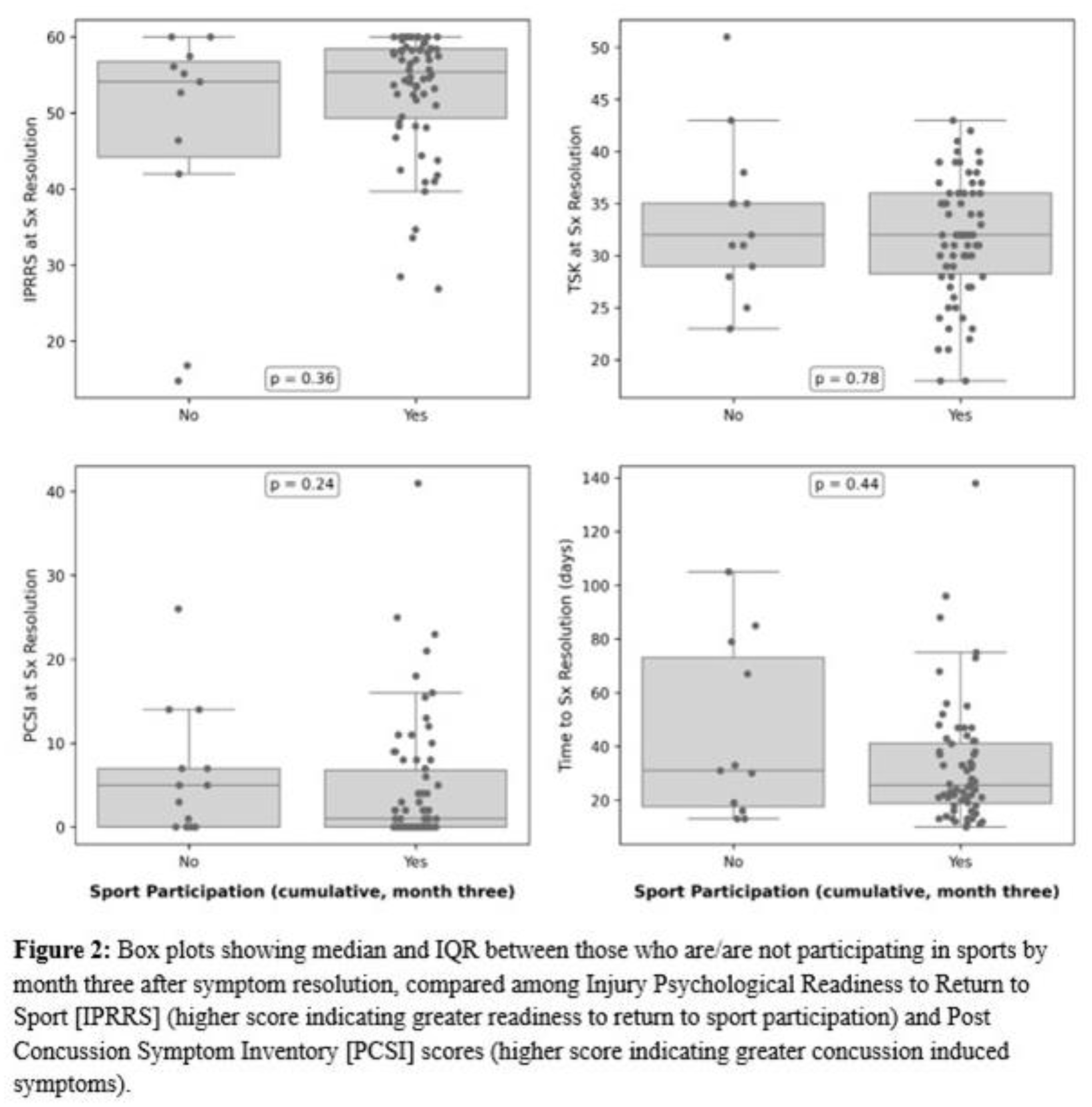
83 subjects were enrolled (mean age15.7±1.5 years, 52% female). The mean±standard deviation time to symptom resolution was 35.6±25.1 days. Monthly surveys were completed 48.1±13.1, 76.4±10.3, and 108.0±13.1 days after symptom resolution. Rates of return to sport participation post symptom resolution were: 65.1% (n=54) at month one, 79.5% (n=66) at month two, and 84.3% (n=70) at month three (Figure 1). At 3 months, a significantly higher proportion of those participating in sport sustained their initial concussion in sports (n=63, 90%) compared to those not participating in sports (n=8, 61.5%; p= 0.02) No other variables were significantly associated with sport participation (Figure 2). Across all time points, those who sustained their concussion in sports were more likely to return to play than those who sustained their concussion outside of sports (HR: 2.46; 95% CI: 1.11, 5.45; p=0.03).
Conclusion:
Mechanism of injury – but not fear of movement or confidence in return to sport – is significantly associated with the likelihood of sport participation following concussion symptom resolution.