Abstract
Background:
Ballet is a theatrical pursuit known for its high training volume and relatively young starting age of participants. The ankle-foot of the young ballet dancer is most injured, with both acute and chronic mechanisms contributing to injury. However, the radiologic spectrum of these injuries is not well defined.
Hypothesis:
We hypothesized that fractures and stress injuries would be most common in pediatric ballet dancers, with imaging use and injury patterns varying by age, skeletal maturity, and presence of accessory ossicles.
Methods:
This IRB-approved retrospective case series includes pediatric patients (≤18 years) who presented to a tertiary care children’s hospital with ballet-related foot-ankle symptoms or injuries (2014-2024). Cases were identified via radiology report search using “ballet,” “dance,” “foot,” and “ankle.” Clinical data, onset, and imaging modality were extracted from medical records. Injury type and location were based on pediatric radiologist reports. Descriptive statistics and Fisher’s exact test (p < 0.05) were used.
Results:
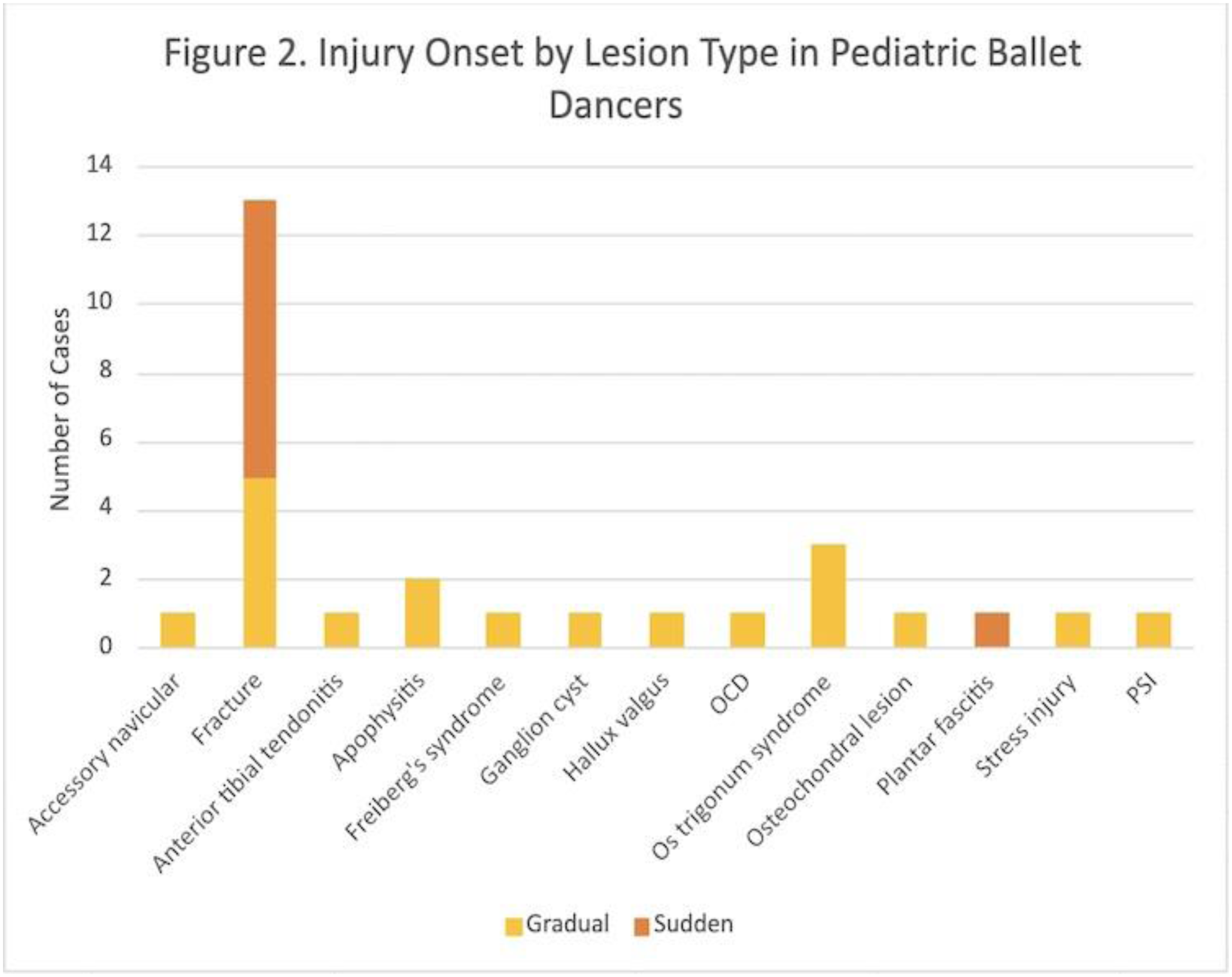
Twenty-eight dancers (25 females, 3 males; median age 14.1, range 10–18) met inclusion. Radiographs were most used (n = 20, 71.4%), followed by MRI (n = 6, 21.4%), and both (n = 2, 7.1%). Most injuries involved the forefoot (n = 16, 57%), particularly medial rays. Fractures were most common (n = 13, 46%), followed by os trigonum syndrome (n = 3, 11%), apophysitis (n = 2, 7%), plantar fasciitis (n = 1, 3.6%), and others (n = 1 each). Stress injuries accounted for 36%, including bone stress injuries (BSIs, n = 7) and physeal stress injuries (PSIs, n = 3). Fractures were typically sudden onset (88.9% vs 26.3%, p = 0.0036); stress injuries were gradual. MRI was used more in stress injury cases (50% vs 12.5%, p = 0.044). The second metatarsal was most affected (n = 6), followed by the fifth and first toe (n = 4 each) (Figure 1). Among younger dancers (≤12 years), pathologies included accessory or osteochondral lesions; early adolescents (13–15) had BSIs; older adolescents (≥16) had tendinopathies or plantar fasciitis. Return to sport ranged from 22.9 to 44.2 weeks, with fractures, apophysitis, and os trigonum syndrome taking the longest (Figure 2). Only 3 patients (2 os trigonum, 1 OCD) required surgery.
Conclusion:
Foot-ankle injuries in pediatric ballet dancers commonly include fractures and stress-related injuries. Fractures showed distinct location and mechanism patterns with stress injuries most often diagnosed with MRI. Recognizing injury-specific imaging findings may guide diagnosis, treatment, and prevention efforts.