Abstract
Background:
Participation in rock climbing, both recreationally and competitively, has increased in recent years, especially since the addition of rock climbing to the 2020 Olympic games. Epidemiologic studies have characterized the common injury patterns occurring in adults, but there is limited research characterizing national trends in rock climbing-related injuries between AAP age categories of late childhood (ages 5-12 years) and adolescence (ages 13-17 years) and between sexes within these age groups.
Hypothesis:
We hypothesized that rates of acute rock climbing-related injuries will have increased over time, with differences in injury patterns based on age category and sex.
Methods:
The Pediatric Health Information System (PHIS) was queried for patients 5-17 years old from 2010-2023 who presented for inpatient management, to the emergency department, or to ambulatory surgery centers for rock climbing-related injuries. Descriptive and multinomial regression analyses were performed to identify trends in injury patterns and associations between age and sex.
Results:
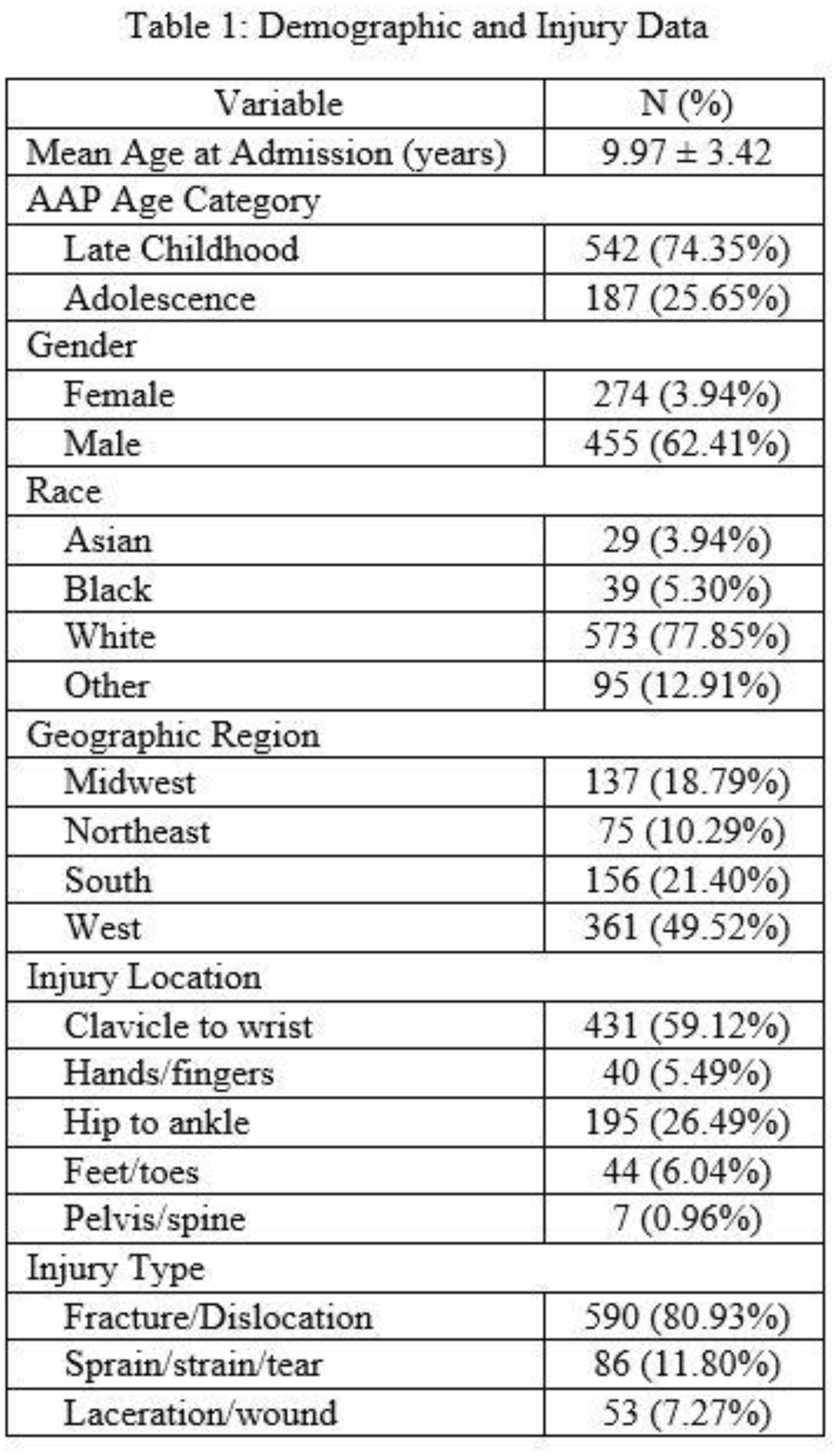
729 rock climbing injuries were identified (mean age at presentation 10.0 ± 3.4 years; 274 [37.6%] female). Rates of rock climbing injuries increased from 36 in 2010 to 83 in 2023. Most cases occurred during the summer and were more common in the Western United States. Overall, fractures/dislocations were the most common type of injury (80.93%), followed by sprains/strains/tears (11.8%) and lacerations/wounds (7.3%). Injuries were most common in the upper extremity, from the clavicle to the wrist (59.1%); injuries of the hand/fingers were less common (5.5%). Patients of the late childhood age group accounted for the majority of injuries (74.4%). The late childhood age group presented more often with injuries of the upper extremity, from clavicle to wrist (67.3% of injuries in children), while adolescents presented more commonly with injuries of the lower extremity, from the hip to the ankle (48.7% of injuries in adolescents) (p<0.0001). There were no significant differences between males and females in terms of injury location or injury type in either age group.
Conclusion:
Rock climbing injuries have increased over the past decade and occur more frequently in the Western U.S. Knowledge of differences in injury locations between children and adolescents may help inform rock climbing gyms, club programs, parents, and climbers in best practices for safety and conditioning regimens within specific age categories to mitigate injury.