Abstract
Background:
Pediatric clavicle fractures are among the most common fractures in this age group. Current research supports the efficacy of nonoperative treatment for these injuries in pediatric patients. Despite this, former studies have noted a rising trend in the surgical management of pediatric clavicle fractures. Our study seeks to examine the current trends in the management of these fractures and determine whether they align with the existing evidence-based guidelines.
Hypothesis:
Our hypothesis was that both the incidence of clavicle fractures and the utilization of surgical treatments have increased over time.
Methods:
A retrospective analysis of pediatric patients with clavicle fractures between January 1, 2014, and December 31, 2024 were analyzed. This query was run in a large national database of healthcare organizations across the United States. Patients were dichotomized into two groups based on open reduction internal fixation (ORIF, CPT code 23515) and closed treatments (CPT codes 23500 and 23505) over this period, performing subgroup analyses by sex, ethnicity, race, and age, and employed regression models to predict future incidences.
Results:
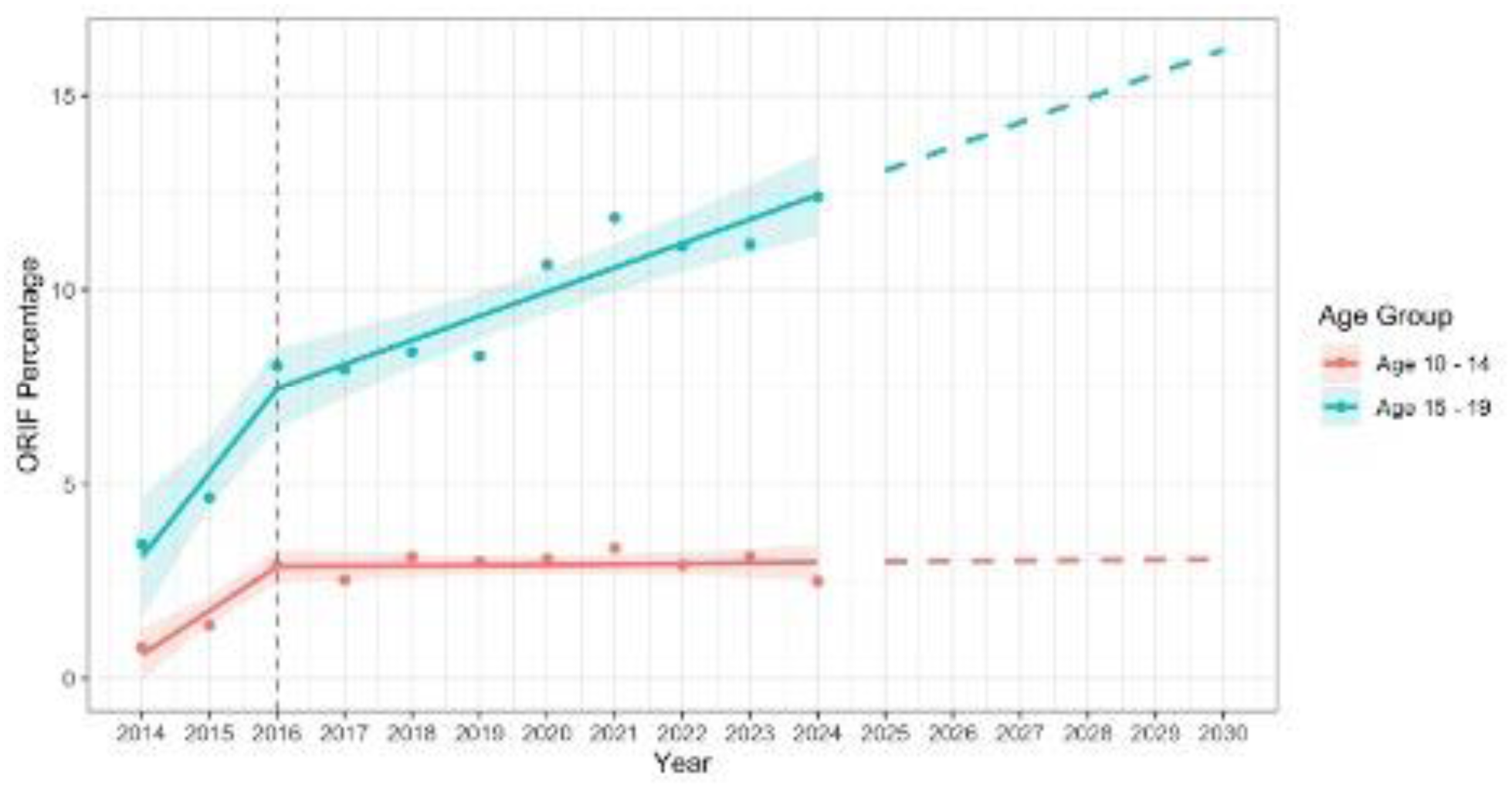
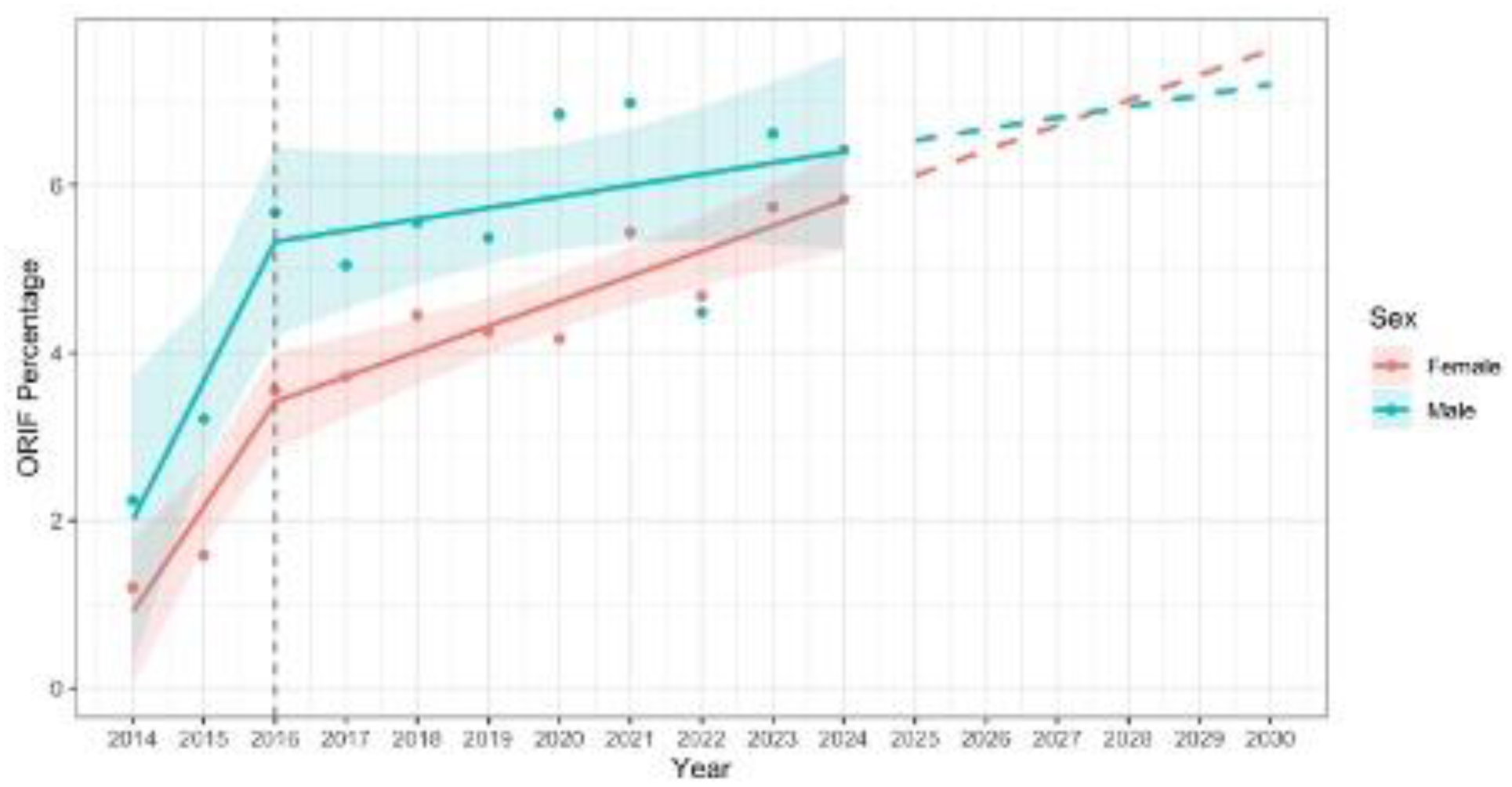
78,251 patients under age 18 with clavicle fractures from 2014–2024 were assessed; 3,546 underwent ORIF. The ORIF rate increased from 1.62% in 2014 to 5.89% in 2024. Males were more likely to receive ORIF than females throughout the study period. However, females showed a sharper yearly increase after 2016 (APC 7.9 vs 2.1, p = 0.029). The 15–18 age group had a higher and more rapidly increasing ORIF rate than the 10–14 group. In 2014, 3.4% of older adolescents underwent ORIF compared to 0.8% of younger ones. By 2024, these increased to 12.4% and 2.5%, respectively. White patients consistently had a higher ORIF rate than Black patients, though the gap narrowed over time (APC 15.0 vs 3.4, p = 0.003). Non-Hispanic patients had higher ORIF rates than Hispanic patients (P < 0.05). From 2016 to 2024, rates increased by 35.3% in non-Hispanic patients but decreased by 7.7% in Hispanic patients (p = 0.045). By 2030, projections are 9.3% and 4.6%, respectively.
Conclusion:
Despite the lack of supporting literature, current trends in 2024 show an overwhelming rise in the surgical management of pediatric clavicle fractures (256%). This increase in ORIF procedures adds unnecessary risks to patients, such as infection, anesthesia complications, and prolonged recovery times, without clear benefits. Additionally, the financial burden is significant, elevating costs for patients and increasing the utilization of Medicare resources.