Abstract
Background:
Sports injuries are a leading cause of pediatric emergency department (ED) visits in the U.S., accounting for approximately 23% of all injury-related visits and 41% of musculoskeletal-related visits. Football, basketball, baseball, soccer, and ice hockey represent the five most popular U.S. sports by viewership and participation and pose a high lower extremity orthopedic injury risk. Despite increasing youth participation, prior studies have focused on a single sport or diagnosis, with limited population-level data comparing injury patterns across sports and sexes. This study aimed to use nationally representative ED data to characterize the epidemiology, anatomical distribution, types, and temporal trends of pediatric lower extremity injuries from 2015 to 2024 across the five most popular U.S. sports.
Hypothesis:
Pediatric lower extremity sports injuries show sport and sex-specific trends, with females sustaining more knee injuries and rates declining during the pandemic before rebounding to pre-pandemic levels.
Methods:
Pediatric lower extremity injuries from January 1st, 2015 to December 31st, 2024 in football, baseball, basketball, ice hockey, and soccer were queried using the National Electronic Injury Surveillance System (NEISS). Demographics, injury site, diagnosis, and product codes were recorded for patients aged 0-18. National estimates (NEs) were calculated using the NEISS sample weighting and injury trends were evaluated via linear regression modeling.
Results:
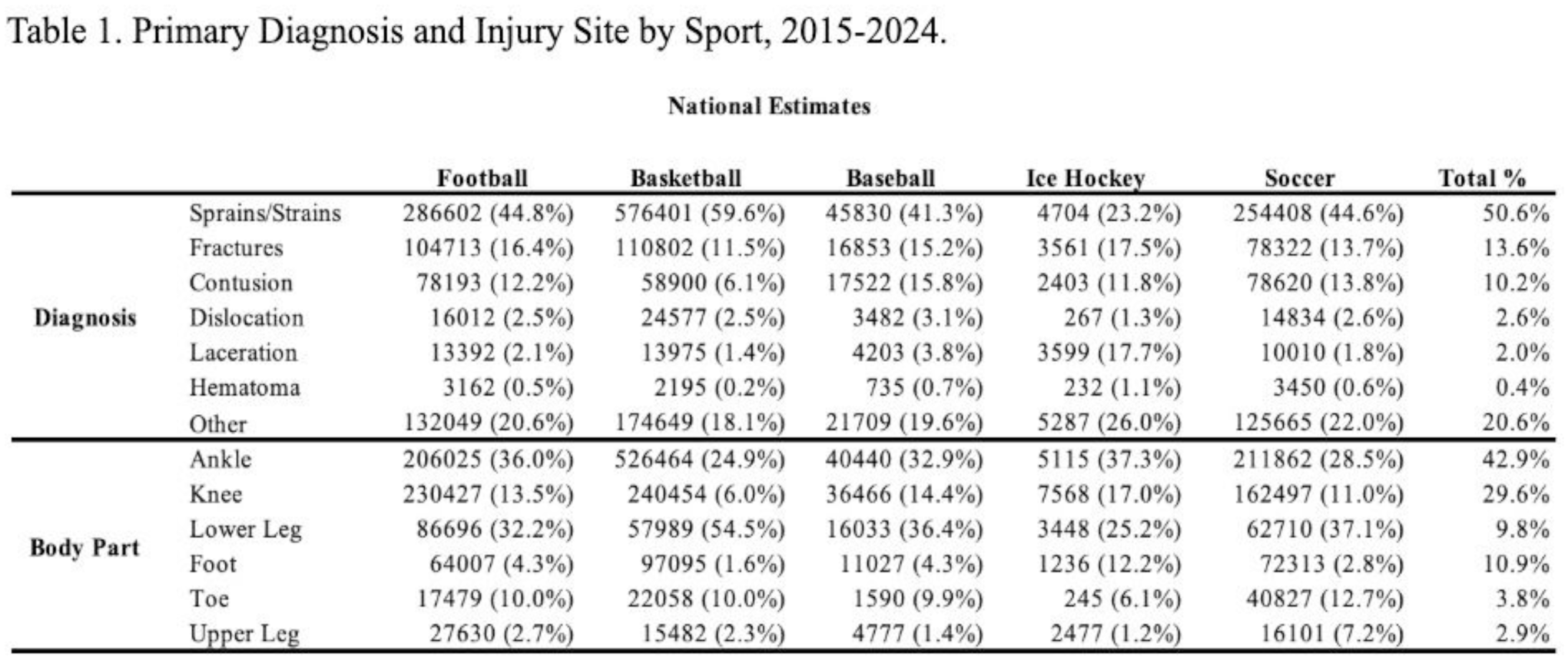
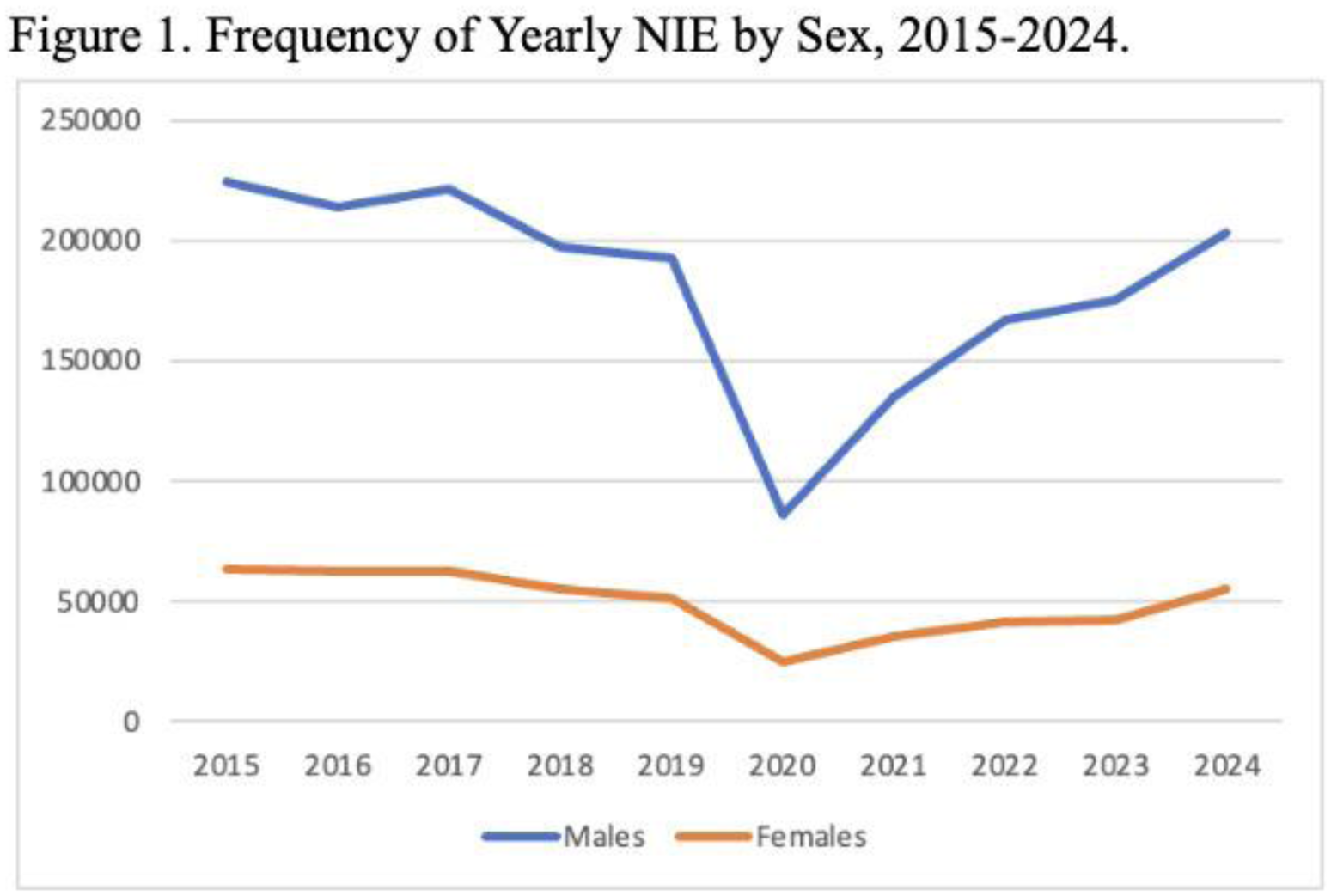
A total of 77,654 cases representing an estimated 2,308,476 national injuries were identified over the 10 years, with a mean age at presentation of 14 years. The injury distribution by sport was 41.9% basketball, 27.7% football, 24.7% soccer, 4.8% baseball, and 0.9% ice hockey. The most injured body parts were the ankle (42.9%) and knee (29.3%). Sprains/strains accounted for 50.6%, followed by fractures (13.6%), contusions (10.2%), and dislocations (2.6%). Males accounted for 78.7% of injuries; however, females experienced disproportionately higher rates of sprains and knee injuries in soccer and basketball. Injury levels peaked in 2015, with a 53.5% decline between 2019 and 2020 during the COVID-19 pandemic. By 2024, injury frequencies rebounded to 94.9% of pre-pandemic levels.
Conclusion:
Despite a temporary pandemic-related decline, pediatric lower extremity injuries remain common and have nearly returned to pre-pandemic levels. While injury rates were highest among males, females in soccer and basketball experienced disproportionately high rates of sprains and knee injuries. Targeted prevention efforts should address sport and sex-specific risks to improve youth athlete safety as participation, especially among girls, continues to climb.