Abstract
Background:
Psychological factors including fear of re-injury and post-injury depression have been linked to worse outcomes following ACL reconstruction (ACLR).
Hypothesis:
We hypothesized that the psychological burden of repeat ACL tear negatively impacts athletes during their recovery and that patient and surgical factors may affect recovery from the first and second injury differently. This study aims to evaluate patient-reported depression, anxiety, pain, peer relationships, mobility, and fatigue to identify potential predictors of worse subjective outcomes following primary and repeat ACLR.
Methods:
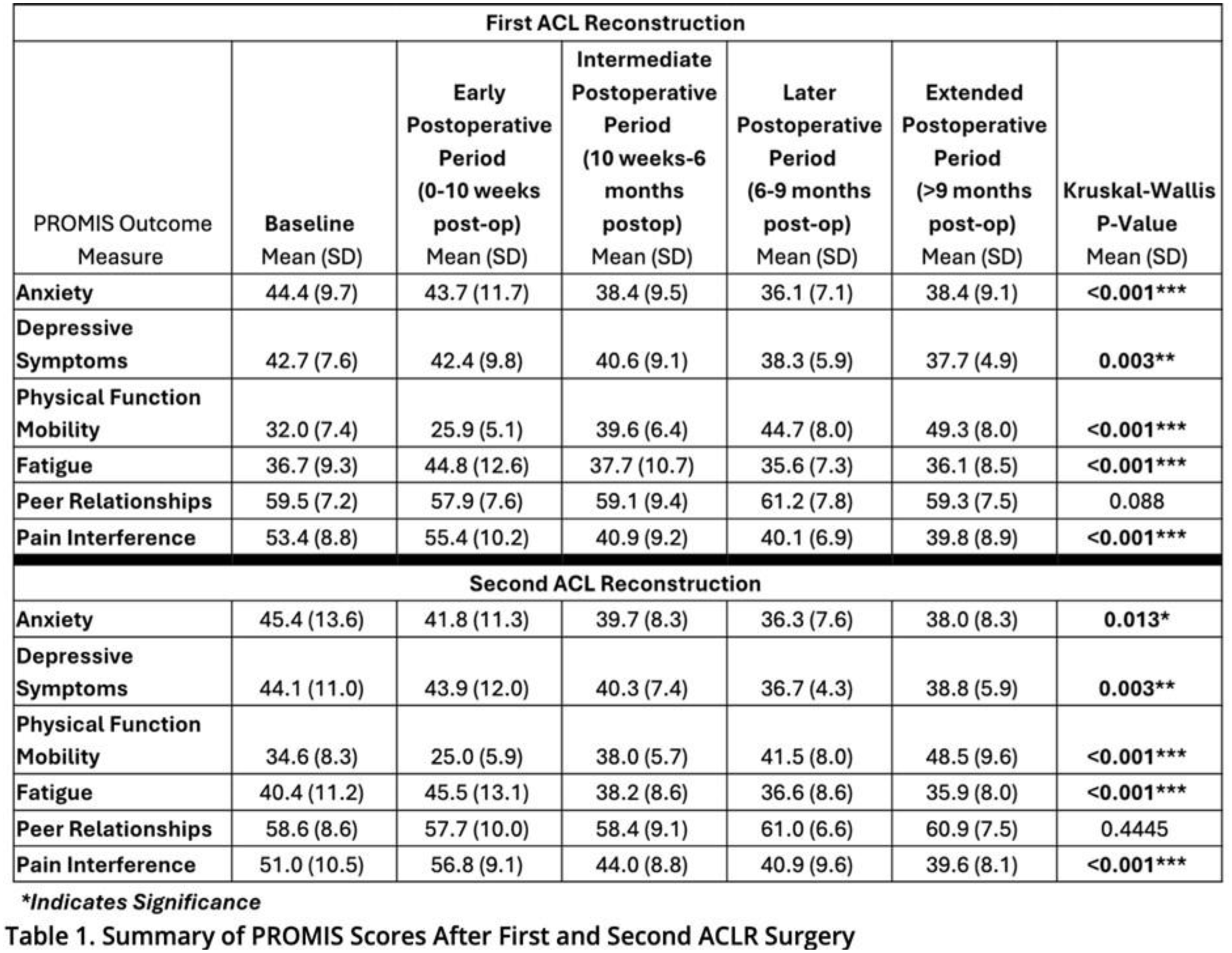
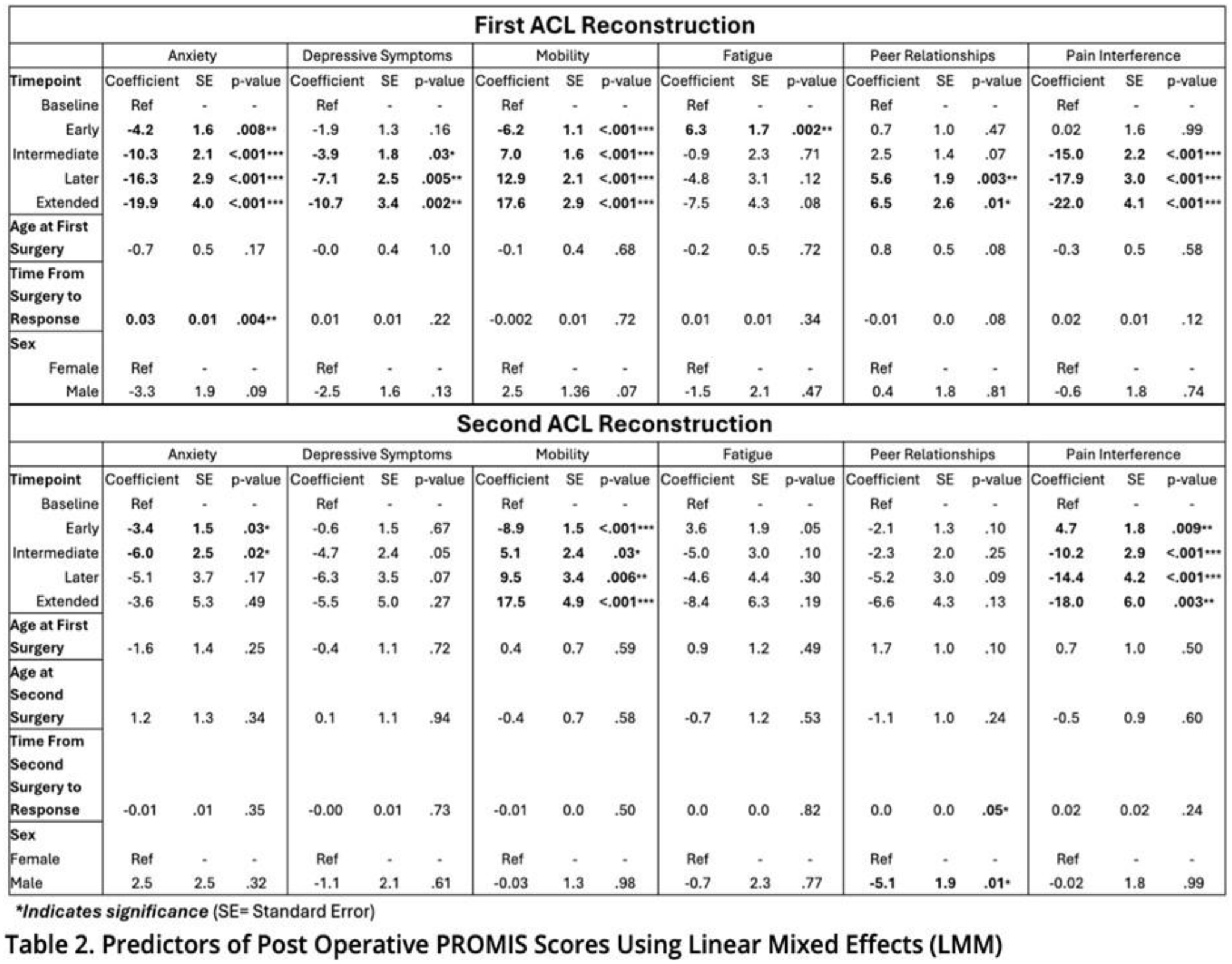
PROMIS Anxiety, Depressive Symptoms, Physical Function Mobility, Fatigue, Peer Relationships, and Pain Interference surveys were prospectively collected from patients aged 7 to 24 years between 2020 and 2024. Patients were included if they sustained two ACL tears, underwent ACLR for both injuries, and completed PROMIS surveys during treatment for both tears. Kruskal–Wallis tests were used to compare PROMIS scores across timepoints, and linear mixed effects (LMM) models with patient random effects were employed to identify predictors of PROMIS scores. Statistical significance was defined as p<0.05.
Results:
Sixty-two patients met inclusion criteria and were included for final analysis. Average anxiety and depression scores were highest at the preoperative timepoint. The LMM models showed that being at any postoperative timepoint following primary ACLR was a predictor for improved anxiety and depressive symptoms in comparison to the preoperative timepoint. Evaluation at time points further from surgery was predictive of larger improvements in anxiety and depressive symptoms. Following the second surgery, being within the later and extended periods was not a predictor of improved anxiety or depressive symptoms. Similarly, falling within the later and extended periods was a predictor of improved peer relationships following primary ACLR, but was not a predictor of improved peer relationships following second ACLR. Sex was not a predictor of any PROMIS scores following primary surgery, but males were found to have more negative peer relationship scores following repeat ACLR.
Conclusion:
Our results highlight several differences in factors predictive of postoperative psychological improvements between first and second surgery. Specifically, progression to later timepoints in the postoperative period, which was found to be predictive of large improvements in anxiety and depression, was not found to be predictive of improvements following repeat ACLR. This may be attributed to the lingering patient fear of suffering another ACL tear. Physicians should remain attentive and prepared to counsel high-risk patients, particularly during the later and extended postoperative period following repeat ACLR.