Abstract
Background:
Cryotherapy is used ubiquitously in the postoperative period following orthopedic procedures. Continuous cryotherapy units have made this efficient and convenient. The recommended orientation of tubing from knee cuffs varies across several continuous cryotherapy units with some recommending tubing should be directed proximally i.e. towards the thigh and others distally towards the foot, without justification for either. This study aims to investigate the preference and satisfaction of continuous cryotherapy units based on whether the tubing was oriented Up / proximally or Down / distally following knee surgery in children and adolescents.
Objectives:
We hypothesize that those with the orientation of the cryotherapy unit tubing directed proximal will have higher satisfaction rates in comfort and ease of use than the group with the tubing directed distal.
Methods:
Children who underwent an Anterior Cruciate Ligament (ACL) reconstruction or Medial Patellofemoral Ligament Reconstruction (MPFLR) and received a cryotherapy unit were eligible to enroll in the study. Block randomization was utilized to assign patients to have tubing from the cryotherapy unit directed either proximally or distally. Demographic and surgical data was collected. A survey was administered at the one-week postoperative visit which included questions to assess overall satisfaction, comfort, and ease of use related to the cryotherapy unit. The primary outcome was the reported satisfaction level with secondary outcomes including patient reported pain scores in the six days following surgery.
Results:
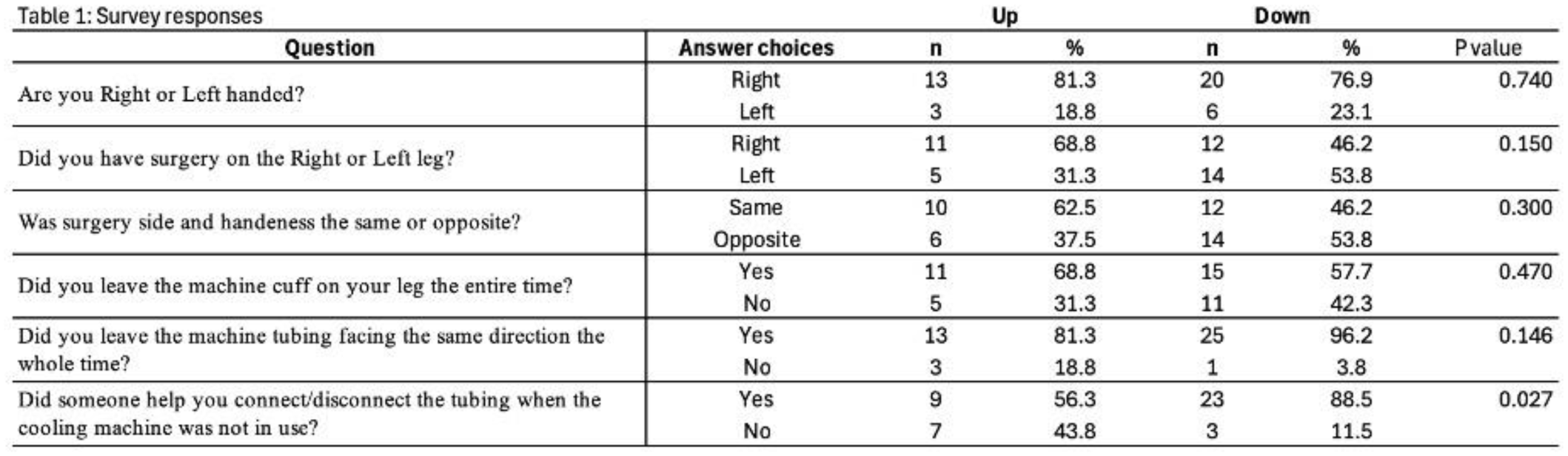
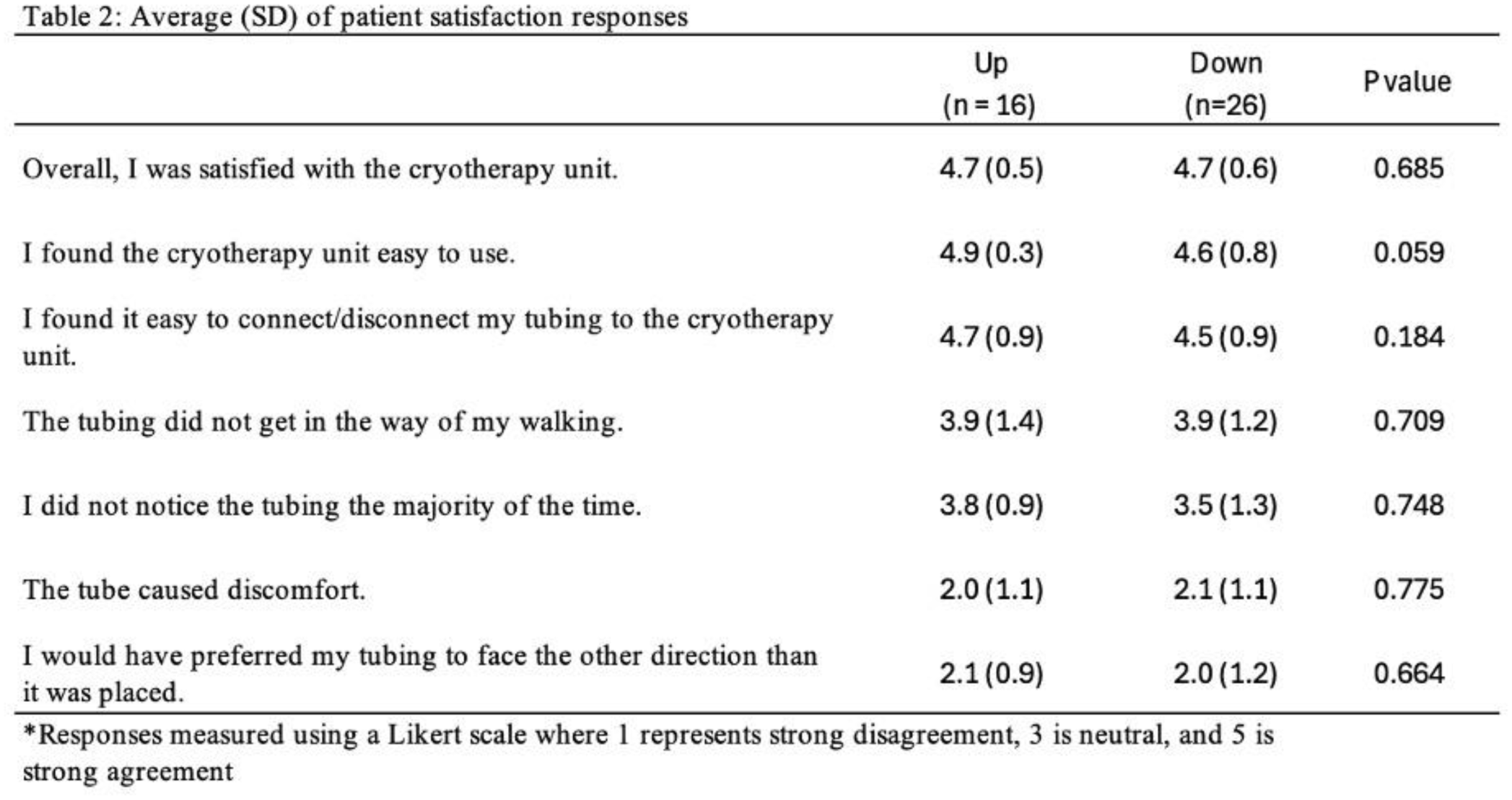
42 children were enrolled in the study (Up group: n=16; Down group: n=26). The distribution of handedness and laterality of surgery between groups did not differ significantly (Table 1). There were no significant differences between groups regarding satisfaction, preference, ease of use, or comfort (Table 2). However, there was a significantly greater number of patients in the down group who reported needing assistance in connecting/disconnecting the tube (p=0.027). There were no differences in pain scores for post-operative days one through six between groups (p>0.05).
Conclusion:
In children who utilize cryotherapy units in the week following ACL reconstruction or MPFLR, there appears to be no difference in satisfaction or comfort based upon the orientation of the cryotherapy unit tubing. However, ease of use may be affected as those with the tubing facing their foot reported needing help in connecting/disconnecting the tubing more frequently. Therefore, consider orienting the tube proximally towards the thigh, particularly in those who might not have assistance readily available in the early post-operative period.