




Abstract
Risk assessments for emerging infectious disease threats are often conducted independently of affected communities. Participatory approaches to risk assessment present an opportunity to integrate community knowledge early in the risk-based decisionmaking process. We conducted a scoping review to understand the breadth of evidence from human, animal, and environmental health disciplines for integrating community participation in steps of the risk assessment process. A systematic literature search in PubMed, Scopus, Ei Compendex, Embase, Web of Science, and Global Health Database identified 4993 articles, of which 138 met inclusion criteria for the review. The types of participatory approaches described in the risk assessment literature varied by degree of community involvement, types of communities engaged, and activities implemented to engage communities. There was substantial evidence from environmental contamination and climate change studies on conducting hazard and exposure assessments within a community-based participatory research model. However, examples of community participation in problem formulation, capacity assessments, data report-back, and pathway mapping were limited. Additionally, the limited examples of community-initiated and community-driven risk assessments suggest a need for improving community involvement from the earliest stages of research priority setting through all phases of data collection, analysis, and interpretation. Further research is also needed on adapting participatory approaches for emerging infectious disease risk assessments.
Keywords
Introduction
N
Yet, risk management for emerging infectious disease events often takes a “decide–announce–defend” approach to affected communities, despite lessons learned from past health emergencies on the critical need for community engagement throughout the risk management process. 6 Approaches that prescribe disease control measures to affected communities, without their participation in designing these measures, can lead to a breakdown in trust between frontline response workers and the community at risk during an epidemic. 7 Instead, a community-led response, involving the use of participatory approaches at the earliest stages of an outbreak, supports more effective implementation of disease control measures and response operations tailored to the local needs, practices, and beliefs.
Risk assessment is among the first steps in the risk paradigm that then informs risk management and risk communication decisions.8,9 Stages of human health risk assessment include problem formulation, hazard identification, dose-response assessment, exposure assessment, and risk characterization. 10 In addition to hazard characterization and exposure assessment, formulations used in disaster management also consider dimensions of capacity and vulnerability to determine risk. 11 Participatory methods to emerging infectious disease risk assessments support the use of a One Health framework to investigate issues at the intersection of human, animal, and environmental health as they avoid the use of a “one-size-fits-all” approach. 12 Participatory approaches also offer an understanding of animal, human, and environmental phenomena from the perspective of the affected community, unlike community-based surveys and rapid assessments that impose a conceptual framework through the use of a checklist or questionnaire.12,13 Key et al describe a continuum of community-engaged research activities that highlight the relationship of the researcher relative to the community in which the research is being conducted. The continuum spans from no community involvement in research to increasingly greater levels of engagement, such as community informed, community consultation, community participation, community initiated, community-based participatory research (CBPR), and community driven/led research.14,15 Participatory approaches are processes that exist along this spectrum of community involvement to engage the public, stakeholder groups, and/or individual members of a defined community, in an effort to bring focus to local priorities and perspectives. 16
Community-centered assessment methods have been applied in rural development and disaster risk reduction contexts since the 1970s.17,18 Participatory assessment approaches have highlighted the value of “indigenous technical knowledge” since the emergence of Rapid Rural Appraisal and Participatory Rural Appraisal (PRA) methodologies, which were developed to overcome the biases and limitations of questionnaire-based surveys. 17 Though distinct from qualitative research methods, the set of approaches used in PRA drew upon methodologies used in activist participatory research, applied anthropology, and field research on farm systems. 17 The Global Rinderpest Eradication Program, established in 1994, also attributes its successes to adopting participatory epidemiology for rinderpest surveillance efforts and to better understand local perspectives of the disease. 19 Practices were adapted from the international development sector’s participatory rural appraisal methodologies and were first piloted in eastern Africa. The main methods used in participatory epidemiology included semistructured interviews, focus group discussions, prioritization of disease observations, and participatory mapping techniques. 20 A combination of these techniques was also used to gain insights on disease prevalence, mortality, and high-risk areas. For example, key informant interviews on disease presence were used to inform qualitative risk maps and sample site selection. 20 Field investigators also used interview techniques to identify seasonal cattle migratory practices that spread rinderpest from endemic lowland ecological zones to cattle in highland ecological zones. 19 It was often found that formal surveillance methods were unable to provide adequate disease detection, while the additional use of participatory epidemiology helped to identify additional cases that typically went undetected.19,21 Lastly, proportional piling, whereby participants were asked to divide piles of counters such as beans across various categories, proved to be a useful method to assess disease risk factors, disease prevalence, and perception of disease impact. 20
Despite widespread recognition by public health organizations on the critical role of communities, community involvement across global health preparedness activities remained “grossly insufficient” according to a 2019 report on the state of public health emergency preparedness by the Global Preparedness Monitoring Board (GPMB). 22 This report, developed prior to the COVID-19 pandemic, called for “long-term, sustained community engagement” and highlighted that community needs must be understood and incorporated systematically into accountability and planning mechanisms. 22 The subsequent GPMB annual report considered the global response to the COVID-19 pandemic and stated an urgent call to action for engaged citizenship, due to the lack of community involvement and community empowerment observed in multiple countries. 22
In March 2021, WHO also convened an ad-hoc consultation on “community-centered approaches to health emergencies,” which recognized the need for methodological innovation and “research to strengthen community-centered initiatives” in order to advance evidence-based practice. 23 The importance of community participation is also acknowledged in numerous high-level frameworks and policies across the sustainable development and disaster disciplines. 23 Notably, the Sendai Framework (2015) highlights that reducing disaster risk and building resilience requires meaningful community and stakeholder participation. 11 The Health Emergencies and Disaster Risk Management Framework (EDRM), which integrates emergency and disaster management, epidemic preparedness and response, and health systems strengthening, also emphasizes that community participation in risk assessments can identify hazards, vulnerabilities, and actions in ways that reduce health risks prior to the onset of a public health emergency. 24 Although the Sendai Framework and Health EDRM Framework emphasize community participation in risk assessment during preparedness phases, as seen in other areas of health systems strengthening, reinforcing the need for community participation during a public health emergency remains a critical gap. 25
The purpose of this study is to identify and characterize participatory approaches used in risk assessment through a scoping review of literature from the human, environmental, and animal health evidence base.
Methods
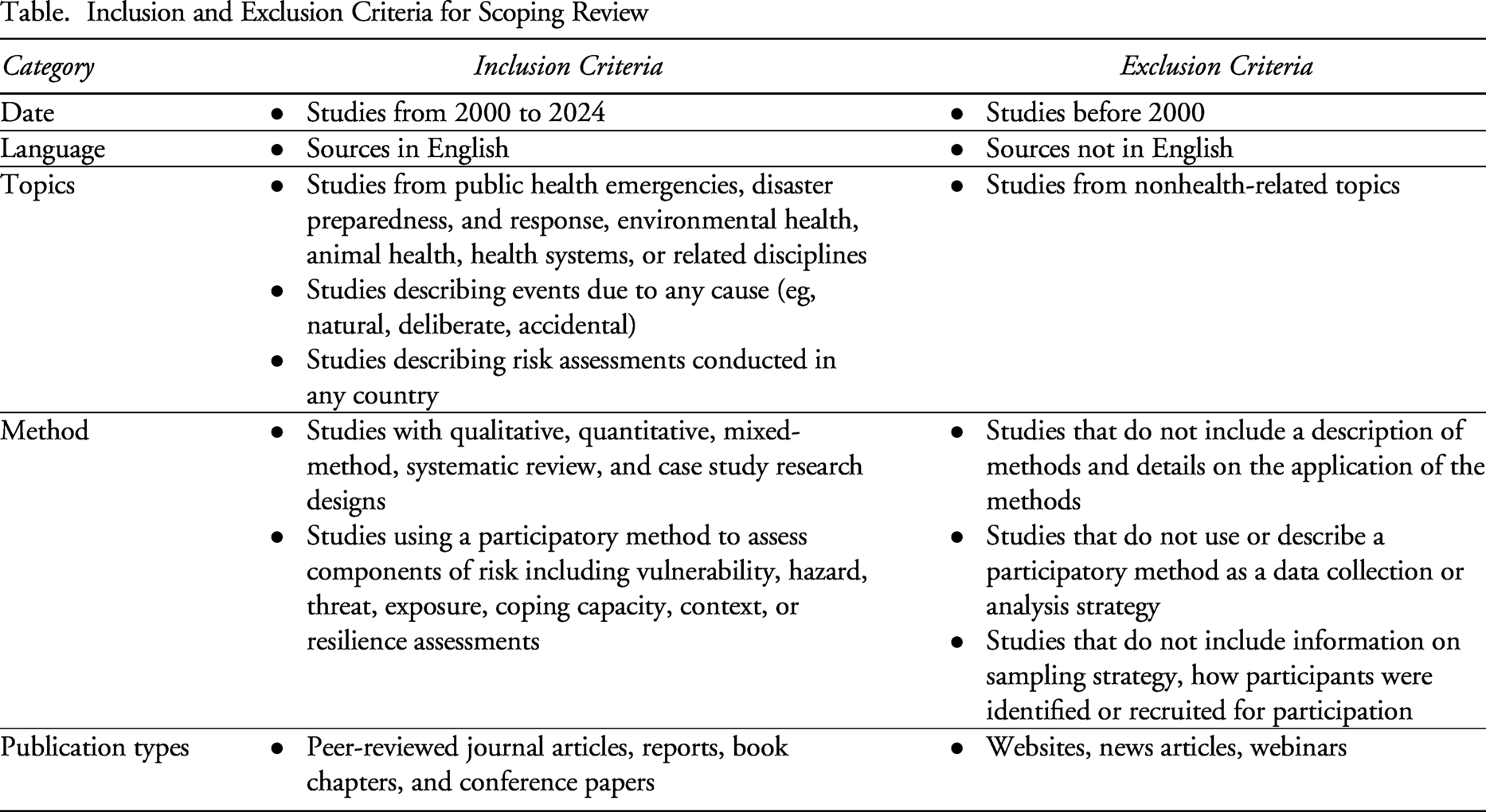
The scoping review followed the PRISMA Extension for Scoping Reviews Cochrane Rapid Reviews Methods Group interim guidance. 26 This study design was selected to as it provides an opportunity to understand the breadth of literature on conducting risk assessments through participatory approaches from a heterogeneous evidence base.26,27 We used an adapted Population, Intervention, Comparator, Outcome (PICO) criteria framework for risk assessment tools to conduct a systematic literature search in PubMed, Scopus, Ei Compendex, Embase, Web of Science, and Global Health Database with the assistance of an information specialist. 28 The PICO criteria were: (1) studies with populations affected by a threat or hazard being assessed for risk in any geographical context; (2) studies using participatory methodologies as the intervention to assess hazards, risks, capacities, exposures, vulnerabilities, resilience, impacts, context, or a related formulation of risk; (3) studies that review comparative participatory methods for risk assessment; and (4) studies describing outcomes of interest including conceptual frameworks, assessment methods, hazard prioritization methods, sampling and analysis strategies, and impacts on programs, policies, or projects. We determined studies for inclusion or exclusion based on the criteria outlined in the Table and tested the screening protocol against a subset of records with a second screener, and screening then proceeded with a single screener. 29
Inclusion and Exclusion Criteria for Scoping Review
Data Extraction and Analysis
Data was captured on the study population, risk assessment step (intervention), degree of participation (outcome), 14 primary participatory approach (outcome), participatory methods used for risk assessment (outcome), and sampling strategy (outcome) described in each article. We developed initial categories using deductive coding, based on the main research questions, and used inductive coding as a secondary strategy to capture specific approaches in more detail (eg, methods used for risk assessment, sampling strategy). We also coded degree of community participation according to Key’s continuum of community engagement (eg, community informed, community consultation, community participation, community initiated, CBPR, community driven/led). 14
Quantitative summaries were compiled to describe the breadth of articles according to the risk assessment components studied and participatory approaches that were applied. In addition, we compiled narrative summaries to detail themes in the literature according to the risk assessment stage. Due to a predominance of qualitative articles and research aims to detail all possible approaches, we determined it was appropriate to forgo a risk of bias assessment for this scoping review. 29
Positionality Statement
As a researcher with a background in community engagement and experience working with community-based organizations, the primary author and scoping review analyst recognizes that their perspectives are shaped by a commitment to participatory approaches and a belief in the value of grassroots knowledge. This orientation may introduce bias in interpreting and analyzing the scoping review literature in ways that emphasize narratives that describe greater community involvement or overlook those where community involvement is limited. To avoid bias, notes were taken to bracket existing assumptions during data collection and analysis. 30
Results
The literature search resulted in a total of 4,993 records, of which 138 were included in the review (Figure 1). Nearly two-thirds of the studies were published between 2010 to 2019, and most were conducted in the United States (50 out of 138). Risk assessments conducted in the African and Asia regions were described in 53 out of 138 articles (Figure 2).
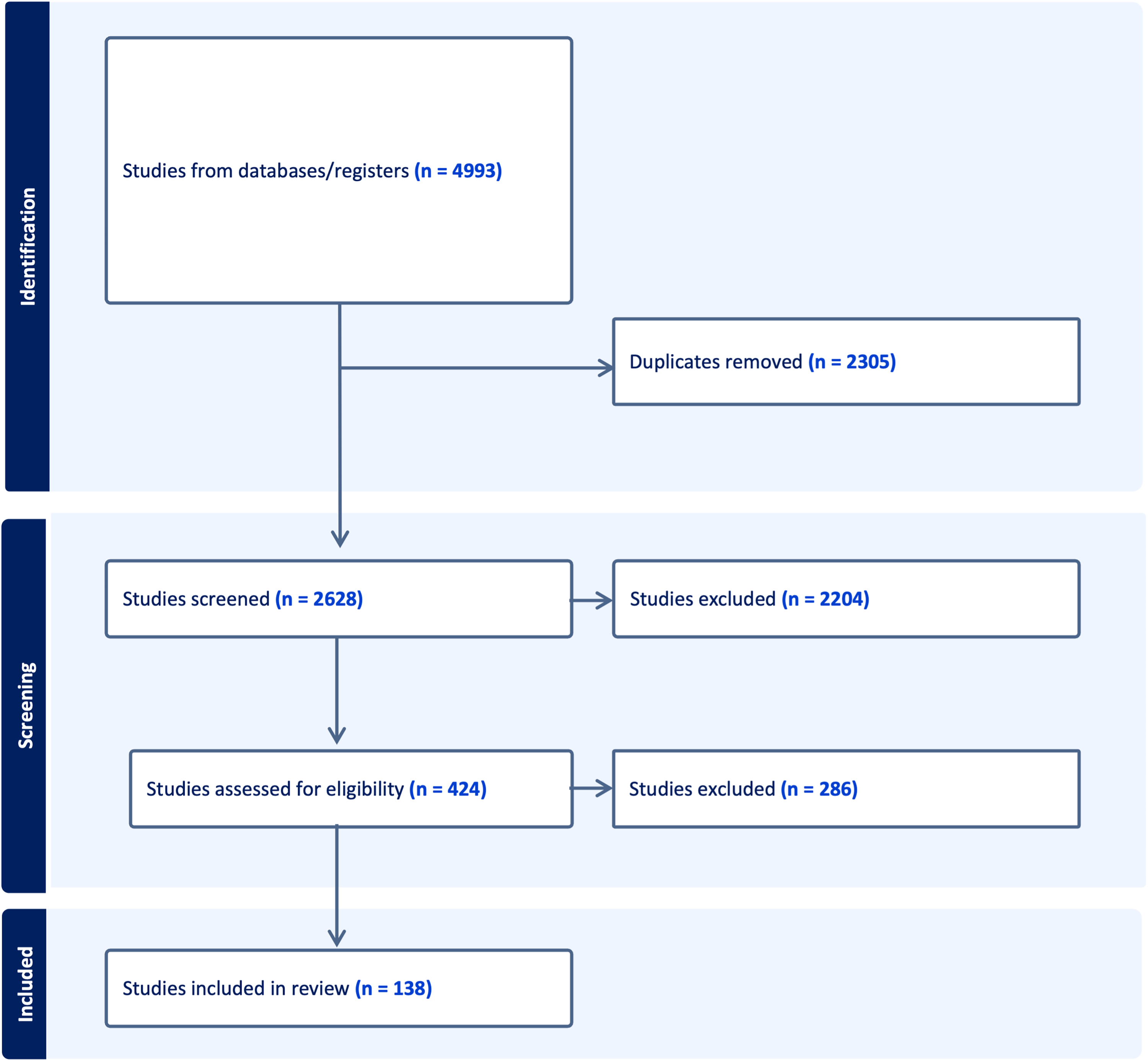
PRISMA diagram for scoping review.
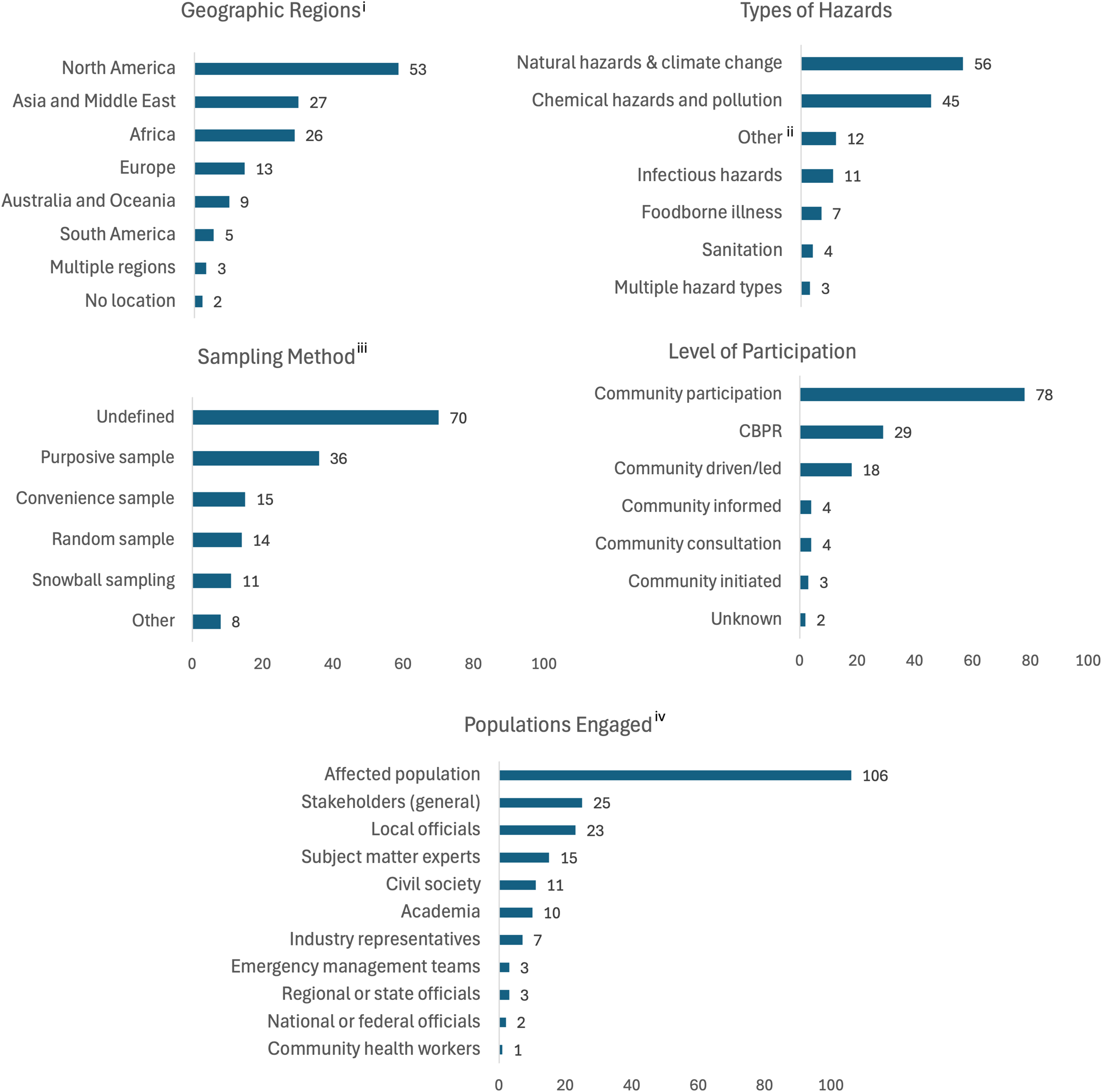
Summary of select characteristics for included studies (N=138). Studies conducted in Caribbean countries (ie, Grenada, Saint Lucia) were summarized as part of the North American region (i); Other hazard types include fishing bycatch, obesity, invasive species, occupational hazards, genetic modification, engineered nanomaterials, and nonchemical stressors (ii); 35 out of 138 studies engaged 2 or more groups, 13 studies engaged 3 or more groups (iii); 15 out of 138 studies used 2 or more sampling strategies (iv).
Types of Community Participation
For most risk assessments, the specific community engaged was from the affected population (106 out of 138 studies). Additional segments of the affected population included stakeholders; academia; civil society; national, state, regional, and local officials; and subject matter experts. Industry representatives and vendors participated in risk assessments for some studies (8 out of 138). 31 All studies involved members of the nonresearch community to some degree, as articles without any community involvement were excluded from this scoping review. However, some articles (9 out of 138) described methods that had limited community participation where the community was informed or consulted about research activities but did not have a defined and continued role for their participation throughout the risk assessment. For other studies, community members had a defined role typically as study participants and informants (76 out of 138) or within a CBPR model (27 out of 138).
Community Participation Across Multiple Risk Assessment Steps
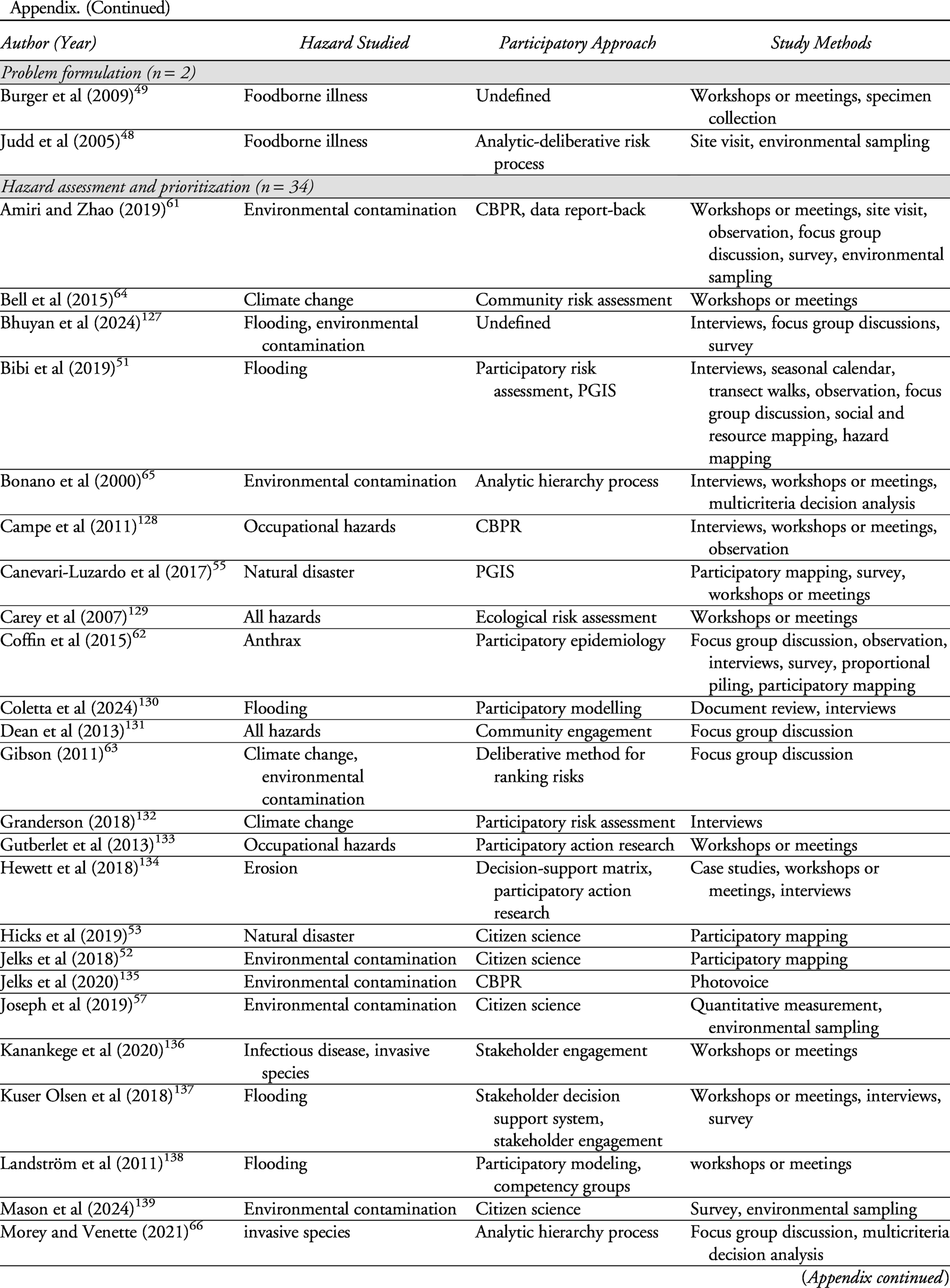
Participatory approaches implemented across multiple risk assessment stages that were community-initiated or community-driven (27 out of 138 articles) included Comprehensive Environmental Assessment, participatory risk assessment, and ecological risk assessment.32-34 Comprehensive Environmental Assessment was applied to identify research priorities and research questions across a diverse set of stakeholders (ie, subject matter experts, industry representatives, academia, local officials) that could be studied by the broader scientific community. Through multiple workshops, participants developed and prioritized research areas using nominal group technique. While this approach engaged a large group of stakeholders and consolidated their diverse perspectives to identify priorities, study authors noted participant attrition in subsequent workshops. 32 Multiple studies also conducted cumulative risk assessments through within a CBPR framework to assess environmental contamination risk35,36 and nonchemical stressors. 37 Approaches that incorporated community participation as study participants included community-based disaster risk assessment, participatory risk assessment, ecological risk assessment, rapid participatory assessment, qualitative risk assessment, and participatory modelling.31,38-43 However, how these approaches were implemented varied by the types of communities engaged and methods used to gather information (eg, site visits, workshops, storytelling, interviews, etc.). For example, participatory risk assessment approach was implemented by Oguttu et al to engage industry representatives and conduct focus group discussions, interviews, and food sampling to understand infection risks in the food value chain; 31 whereas, other applications of participatory risk assessment involved engaging broad groups of stakeholders, affected populations, or civil society in workshops and participatory mapping.33,43-45
Community Participation in Needs Assessments
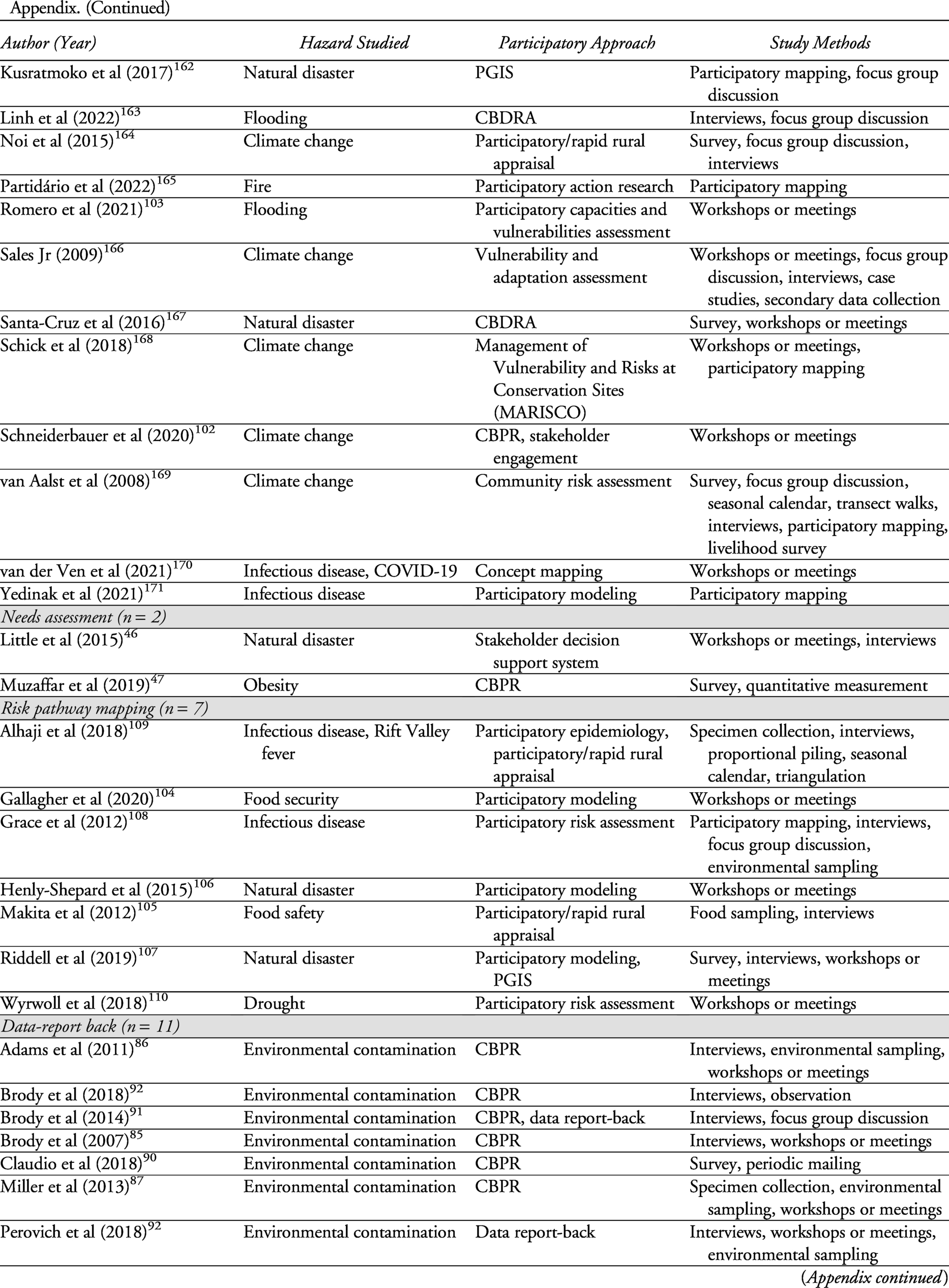
Two examples of participatory needs assessments were found in this scoping review. Little et. al, conducted meetings and interviews in an interactive stakeholder-involvement approach to better understand the needs of emergency response managers for a decision support platform. 46 Muzaffar et al conducted a needs assessment within a community-based participatory research program to understand nutritional needs and risk of obesity in children. This approach included collecting quantitative anthropometric measures and conducting a survey of demographic measures, dietary intake, and physical activity. 47
Community Participation in Problem Formulation
The scoping review identified 2 examples of community involvement in the problem formulation stage of risk assessment. These publications described engaging groups in the United States in the problem formulation stage to understand environmental contamination and food safety risks.48,49 Judd et al followed an analytic-deliberative risk process to engage local vendors and tribal communities in identifying environmental health concerns that shaped risk characterization, exposure evaluations, and research funding proposals. 48 Similarly, Burger et al involved affected indigenous communities in problem formulation and codesign of a research plan, as well as in data collection, analysis, and dissemination steps. 49
Community Participation in Hazard Assessments and Hazard Prioritization
We identified 34 publications that described community participation in hazard assessment and prioritization stages. Several approaches to hazard assessments involving community participation were semiquantitative in nature and sought engagement from the affected community. Approaches such as environmental sampling, participatory mapping, and citizen science paired with workshops, transect walks, and interviews provided greater clarity on the geospatial distribution of hazards affected a particular community.50-61 Nine studies described prioritization steps on topics related to anthrax, 62 climate change,63,64 fire, 38 environmental toxicants, 65 genetic modification, 39 invasive species, 66 and engineered nanomaterials. 67 Methods used to prioritize hazards included gathering information through interviews, stakeholder meetings, or focus group discussions as part of an Analytic Hierarchy Process, followed by multicriteria decision analysis for prioritization.65,66 Risk prioritization was also conducted as part of a comprehensive environmental assessment by following nominal group technique. 67
Community Participation in Exposure Assessments
Examples of participatory approaches to exposure assessments, or combined exposure and hazard assessments, largely derived from literature on environmental contamination and air pollution (23 out of 138 studies). Participatory approaches to personal exposure monitoring or environmental sampling were typically conducted through community-based participatory research activities.68-76 Models for community initiated and community driven approaches to risk assessment included participatory action research and activist-initiated research.77,78 Other approaches that engaged communities as study participants in exposure assessment included citizen science, comparative risk assessment, environmental health risk assessment, and multibarrier approach to understand exposure along the pathogen transmission chain.79-82 Participatory approaches to understanding geographic distribution of areas with greater exposure risks, like participatory mapping, transect walks, and interviews, were also used in fishing bycatch and sanitation system related studies.82-84
Community Participation in Data-Report Back
Community involvement in report back of exposure results was described in 11 out of 138 articles and exclusively in the context of US-based environmental contamination studies, published between 2004 and 2019. Most commonly, study teams conducted data report-back as part of a community-based participatory research study.85-91 Among studies that involved environmental sampling or specimen testing to understand exposures, investigators often conducted interviews with study participants or community leaders first to determine how best to share exposure results.86-88,91 Results were then shared in person or through mailed packets in conjunction with an opportunity to discuss results and concerns with the study team at a house visit or community meeting.86,92 While researchers found report-back to be time-consuming and challenging, the process strengthened their relationships with study participants. 91 Participants also found report-back beneficial and were motivated to take exposure reduction measures, identify new research questions, and communicate study results with their healthcare providers to access medical or governmental assistance.87,91-94
Community Participation in Vulnerability and Hazard Assessments
We identified 9 articles that described approaches to integrate community involvement for vulnerability and hazards assessments, including community-based disaster risk assessment, CBPR, participatory action research, participatory risk assessment, and rapid rural appraisal.76,95-100 These examples were found primarily in the environmental contamination, disaster risk, and climate change literature. Masri et al described leveraging an academic CBPR partnership to map quantitative vulnerability scores, derived from demographic indicators, and soil sampling results to locate areas of cumulative risk. 76 Comparatively, all other studies assessed vulnerability and hazard by combining approaches including workshops, transect walks, focus group discussions, site visits, and participatory mapping.95-101 Additionally, Fleming et al supplemented stakeholder engagement by establishing a partner advisory committee that was involved from conceptualization stage and consulted throughout the assessment process. 101
Community Participation in Capacity and Vulnerability Assessments
In total, 23 publications described participatory approaches to capacity and vulnerability assessments. Applications of participatory capacity and vulnerability assessments were primarily found in natural hazards and climate change literature. Most approaches engaged community groups as study participants in the assessments (20 out of 23 studies). Among examples that were community driven, CBPR and stakeholder engagement were integrated throughout all stages of a climate change vulnerability assessment by first formalizing a small group of subject-matter experts and stakeholders to manage assessment activities, and then by engaging a larger group of local stakeholders (ie, practitioners, policy makers, local nonprofit leaders) to provide input on the assessment results and proposed climate adaptation measures. 102 Participatory Capacities and Vulnerabilities Assessment (PCVA) was another methodology that encouraged a community-driven assessment approach whereby study participants acted as both researchers and subjects of their lived experiences in facing disaster risks. 103 Through a series of PCVA workshops, a small group of women from the affected community were empowered to collect, analyze, and synthesize narratives of their experiences with disasters and their community’s response.
Community Participation in Risk Pathway Mapping
Seven articles described participatory approaches to pathway mapping and implemented these methods to better understand foodborne illness, natural disaster, and infectious disease related risks.104-110 Specific approaches used were participatory epidemiology, participatory or rapid rural appraisal, participatory risk assessment, and participatory modelling. Most studies leveraged meetings, interviews, or focus group discussions to gather information.104-108,110 Uniquely, Alhaji et al triangulated data from qualitative interviews and semiquantitative participatory activities (ie, proportional piling, matrix scoring, seasonal calendar) with quantitative seroprevalence test results. 109 Study authors obtained general information on cattle diseases, perceived risk factors, and risk pathways for Rift Valley fever (RVF) through key informant and semi-structured interviews across nine pastoral communities. After reaching consensus on risk factors, participants engaged in proportional piling and matrix scoring to determine the relative impact of risk factors on RVF occurrence, as well as relative weight of occurrence in each calendar season. This information was then cross-checked with local veterinary offices and compared with serologic survey results from cattle in 3 agrogeographical zones to determine risk pathways for RVF occurrence. 109
Summary of Sampling Strategies
Descriptions of the sampling strategies used to identify or recruit community participation were lacking in many studies (70 out of 138 articles). Among articles that did describe sampling strategies, authors commonly used purposive sampling (36 out of 138) and convenience sampling (15 out of 138), with a few additionally employing snowball sampling. Less frequently described sampling strategies for community participation included random sampling, criteria sampling, stratified sampling, relevance selection, and probability proportional to size.
Discussion
According to the Sendai Framework, “risk reduction requires an all-of-society engagement and partnership. It also requires empowerment and inclusive, accessible and non-discriminatory participation, paying special attention to people disproportionately affected by disasters.” 11 For infectious disease risks, particularly those at the human–animal–environment interface, multisectoral engagement and interdisciplinary partnership is essential and supported through a One Health approach to risk assessment. 111 Although risk assessment methods have a robust evidence base, there is no comprehensive framework on how community participation can be integrated in each risk assessment step. Literature on participatory approaches to risk assessment that were identified through this scoping review highlighted various options for implementation based on the degree of community involvement, types of communities engaged, and methods used to engage communities. Additionally, most of the articles identified were published between 2010 and 2019, which spans with the time period when the Sendai Framework was published, emphasizing building community resilience to disasters. 11
A few important features emerged from the literature that could aid in improving community participation in risk assessment for an emerging infectious disease context. They are described next.
Engaging Diverse Communities in Risk Assessment
The term ‘community’ can be defined in a multitude of ways with an emphasis on collective, group-based elements. 112 Participatory approaches identified in this scoping review sought engagement from communities that included segments of the affected population, public and private sector stakeholders, and policy makers involved in risk-based decisionmaking. Impacts of broad community engagement supported in the literature include enriched decisionmaking through gathering diverse ideas, information, and resources for assessment and mitigating risks more sustainably. 113 Participatory approaches to risk assessment that involved greater community participation engaged community members in multiple roles and through iterative information gathering stages, for example as advisory group members to define risk assessment priorities and research questions, as study participants through interviews and group-based discussion methods, and as research analysts in synthesizing findings.32,49,102,103
Integrating Community Perspectives Throughout All Risk Assessment Phases
Involving the community in risk assessment steps provides an opportunity to incorporate local perspectives earlier in the risk management process, thereby improving the acceptability of risk management decisions. 113 For example, Community-Based Disaster Risk Management has broad applications before, during, and after a disaster, and recognizes community participation in each step of the risk assessment process. 114 While approaches like participatory risk assessment, ecological risk assessment, and participatory rural appraisal demonstrate that communities can be involved in multiple risk assessment stages, the degree to which the risk assessment is community-driven varies depending on how methods are implemented.33,34
Information Gathering and Report-Back Using Multiple Methods
One Health risk assessment frameworks, like the Joint Risk Assessment Operational Tool (JRA OT), further support operationalizing community participation in risk assessment, risk framing, and risk management. 115 The JRA framework establishes the key decisionmakers of the risk assessment within the first steps of the process. Within the first module, the main steps are to establish a national steering committee, identify a lead, establish a technical team, and establish and convene a stakeholder group. The role of the stakeholder group is to provide perspectives, relevant information, and support the implementation and communication of risk management decisions. The stakeholder group also does not have a technical or decisionmaking function. Although the JRA recommends a stakeholder analysis to determine the appropriate groups to involve as part of the stakeholder group, this framework does not explicitly discuss how to engage with each stakeholder or the stakeholder group. 115 Participatory approaches to risk assessment identified in this scoping review gathered information through a variety of quantitative and qualitative data generating activities, including workshops, interviews, surveys, observation, and sample testing. Approaches like participatory modelling, citizen science, participatory mapping, and methods stemming from rapid rural appraisal (eg, proportional piling, transect walks) in particular synthesized community perspectives to produce quantitative measures to inform risk assessment.53,55,62,106 Environmental sampling, specimen testing, and report-back were also paired with CBPR partnerships and activities to facilitate information exchange between risk assessment teams and affected communities.69,87,89,93
Limitations and Suggestions for Future Research
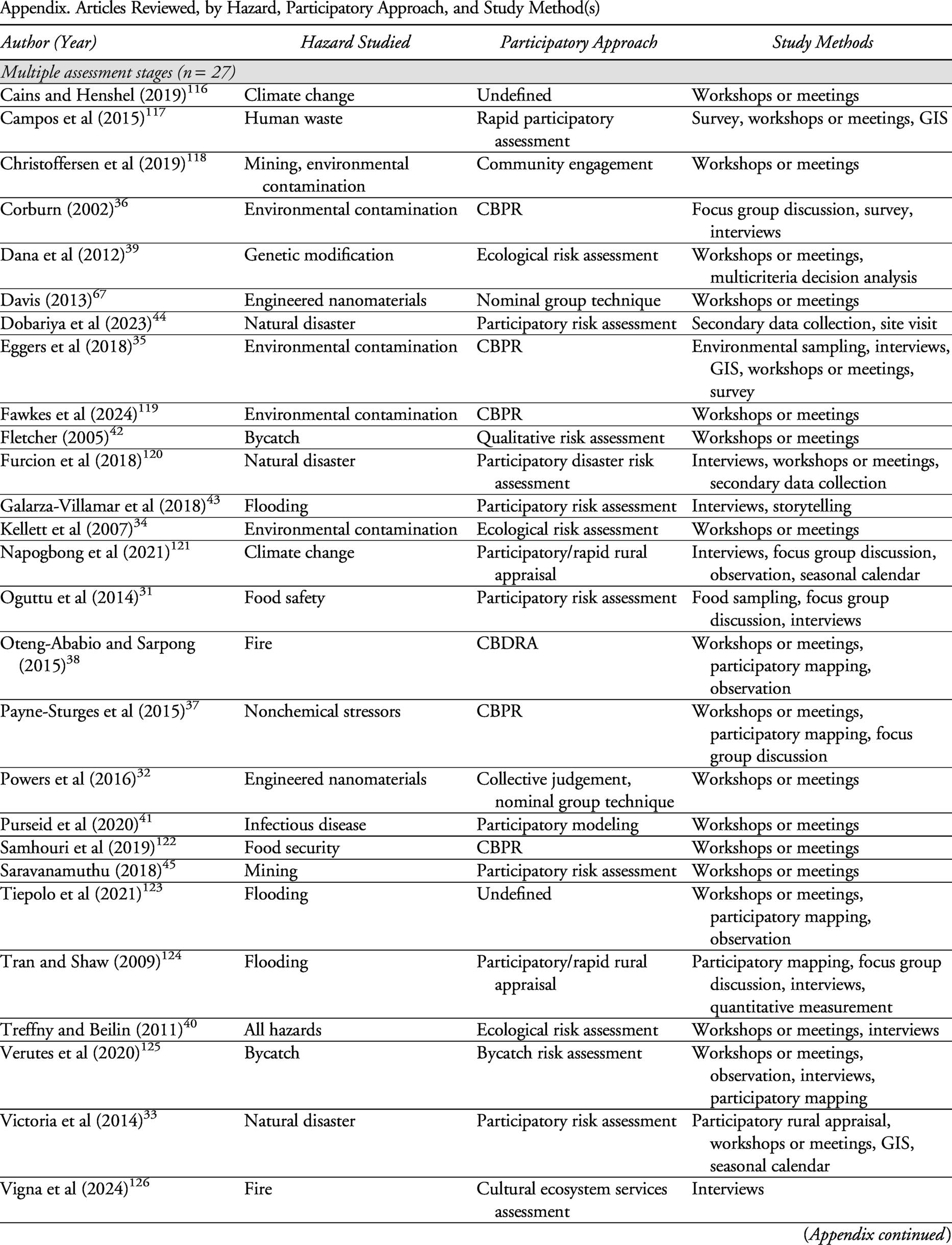
Limitations for this scoping review include geographical and temporal representation in the participatory approaches identified. Most of the literature identified in the scoping review described studies conducted in the United States, in addition to examples from the African and Asian regional contexts, demonstrating potential applicability of similar approaches across numerous cultural and health system settings. However, representativeness of the studies at local levels is unclear as more than half of the articles identified did not discuss the sampling strategy. Further analysis of subregional and subnational variation in where participatory methods have been applied may better inform potential acceptability of these methods. Evaluating the participatory approaches highlighted in this study against current day and potential future applications across a variety of contexts would be important. Lastly, as a separate search in grey literature was not conducted and only English language articles were included in the review, we recognize that other relevant literature may have been missed. All articles reviewed are located in the Appendix (located after the reference section).
Conclusion
The purpose of this scoping review was to assess the breadth of literature describing the use of participatory approaches in the risk assessment process. The review highlighted several variations on how participatory approaches were implemented for risk assessments. Notably, evidence describing the use of participatory risk assessment approaches for infectious disease related hazards at the human–animal interface was limited. Among studies that did use participatory approaches for infectious disease risk assessment, communities were primarily involved as study participants, whereas community-initiated and community-driven approaches were less commonly applied. Studies describing community participation in problem formulation, capacity assessments, hazard prioritization, data report-back and pathway mapping were also limited. The substantial evidence from environmental health and climate risk disciplines for conducting risk assessments through community-based participatory research demonstrates how established partnerships could be leveraged to involve communities in emerging infectious disease risk assessments.
Involving communities in risk assessment through participatory approaches provides an opportunity to build trust and incorporate local perspectives earlier in the risk management process. Although multiple risk assessment frameworks describe the significance of community engagement, there is limited guidance on the best practices and recommended approaches to effectively involve communities in early stages of risk assessment. Additionally, as demonstrated in this scoping review, participatory methods in risk assessment have been implemented to varying degrees of community involvement. These findings call for identifying further opportunities for community involvement and clarifying best practices for implementing participatory approaches in all stages of risk assessment—from conceptualization through data collection, analysis, and interpretation—to manage risks at the human–animal–environment interface.
Footnotes
Acknowledgments
The authors thank Jenna Slutsker for valuable contributions as a second-screener in this scoping review.
Appendix
Appendix. Articles Reviewed, by Hazard, Participatory Approach, and Study Method(s)



| Author (Year) | Hazard Studied | Participatory Approach | Study Methods |
|---|---|---|---|
| Multiple assessment stages (n = 27) | |||
| Cains and Henshel (2019) 116 | Climate change | Undefined | Workshops or meetings |
| Campos et al (2015) 117 | Human waste | Rapid participatory assessment | Survey, workshops or meetings, GIS |
| Christoffersen et al (2019) 118 | Mining, environmental contamination | Community engagement | Workshops or meetings |
| Corburn (2002) 36 | Environmental contamination | CBPR | Focus group discussion, survey, interviews |
| Dana et al (2012) 39 | Genetic modification | Ecological risk assessment | Workshops or meetings, multicriteria decision analysis |
| Davis (2013) 67 | Engineered nanomaterials | Nominal group technique | Workshops or meetings |
| Dobariya et al (2023) 44 | Natural disaster | Participatory risk assessment | Secondary data collection, site visit |
| Eggers et al (2018) 35 | Environmental contamination | CBPR | Environmental sampling, interviews, GIS, workshops or meetings, survey |
| Fawkes et al (2024) 119 | Environmental contamination | CBPR | Workshops or meetings |
| Fletcher (2005) 42 | Bycatch | Qualitative risk assessment | Workshops or meetings |
| Furcion et al (2018) 120 | Natural disaster | Participatory disaster risk assessment | Interviews, workshops or meetings, secondary data collection |
| Galarza-Villamar et al (2018) 43 | Flooding | Participatory risk assessment | Interviews, storytelling |
| Kellett et al (2007) 34 | Environmental contamination | Ecological risk assessment | Workshops or meetings |
| Napogbong et al (2021) 121 | Climate change | Participatory/rapid rural appraisal | Interviews, focus group discussion, observation, seasonal calendar |
| Oguttu et al (2014) 31 | Food safety | Participatory risk assessment | Food sampling, focus group discussion, interviews |
| Oteng-Ababio and Sarpong (2015) 38 | Fire | CBDRA | Workshops or meetings, participatory mapping, observation |
| Payne-Sturges et al (2015) 37 | Nonchemical stressors | CBPR | Workshops or meetings, participatory mapping, focus group discussion |
| Powers et al (2016) 32 | Engineered nanomaterials | Collective judgement, nominal group technique | Workshops or meetings |
| Purseid et al (2020) 41 | Infectious disease | Participatory modeling | Workshops or meetings |
| Samhouri et al (2019) 122 | Food security | CBPR | Workshops or meetings |
| Saravanamuthu (2018) 45 | Mining | Participatory risk assessment | Workshops or meetings |
| Tiepolo et al (2021) 123 | Flooding | Undefined | Workshops or meetings, participatory mapping, observation |
| Tran and Shaw (2009) 124 | Flooding | Participatory/rapid rural appraisal | Participatory mapping, focus group discussion, interviews, quantitative measurement |
| Treffny and Beilin (2011) 40 | All hazards | Ecological risk assessment | Workshops or meetings, interviews |
| Verutes et al (2020) 125 | Bycatch | Bycatch risk assessment | Workshops or meetings, observation, interviews, participatory mapping |
| Victoria et al (2014) 33 | Natural disaster | Participatory risk assessment | Participatory rural appraisal, workshops or meetings, GIS, seasonal calendar |
| Vigna et al (2024) 126 | Fire | Cultural ecosystem services assessment | Interviews |
| Problem formulation (n = 2) | |||
| Burger et al (2009) 49 | Foodborne illness | Undefined | Workshops or meetings, specimen collection |
| Judd et al (2005) 48 | Foodborne illness | Analytic-deliberative risk process | Site visit, environmental sampling |
| Hazard assessment and prioritization (n = 34) | |||
| Amiri and Zhao (2019) 61 | Environmental contamination | CBPR, data report-back | Workshops or meetings, site visit, observation, focus group discussion, survey, environmental sampling |
| Bell et al (2015) 64 | Climate change | Community risk assessment | Workshops or meetings |
| Bhuyan et al (2024) 127 | Flooding, environmental contamination | Undefined | Interviews, focus group discussions, survey |
| Bibi et al (2019) 51 | Flooding | Participatory risk assessment, PGIS | Interviews, seasonal calendar, transect walks, observation, focus group discussion, social and resource mapping, hazard mapping |
| Bonano et al (2000) 65 | Environmental contamination | Analytic hierarchy process | Interviews, workshops or meetings, multicriteria decision analysis |
| Campe et al (2011) 128 | Occupational hazards | CBPR | Interviews, workshops or meetings, observation |
| Canevari-Luzardo et al (2017) 55 | Natural disaster | PGIS | Participatory mapping, survey, workshops or meetings |
| Carey et al (2007) 129 | All hazards | Ecological risk assessment | Workshops or meetings |
| Coffin et al (2015) 62 | Anthrax | Participatory epidemiology | Focus group discussion, observation, interviews, survey, proportional piling, participatory mapping |
| Coletta et al (2024) 130 | Flooding | Participatory modelling | Document review, interviews |
| Dean et al (2013) 131 | All hazards | Community engagement | Focus group discussion |
| Gibson (2011) 63 | Climate change, environmental contamination | Deliberative method for ranking risks | Focus group discussion |
| Granderson (2018) 132 | Climate change | Participatory risk assessment | Interviews |
| Gutberlet et al (2013) 133 | Occupational hazards | Participatory action research | Workshops or meetings |
| Hewett et al (2018) 134 | Erosion | Decision-support matrix, participatory action research | Case studies, workshops or meetings, interviews |
| Hicks et al (2019) 53 | Natural disaster | Citizen science | Participatory mapping |
| Jelks et al (2018) 52 | Environmental contamination | Citizen science | Participatory mapping |
| Jelks et al (2020) 135 | Environmental contamination | CBPR | Photovoice |
| Joseph et al (2019) 57 | Environmental contamination | Citizen science | Quantitative measurement, environmental sampling |
| Kanankege et al (2020) 136 | Infectious disease, invasive species | Stakeholder engagement | Workshops or meetings |
| Kuser Olsen et al (2018) 137 | Flooding | Stakeholder decision support system, stakeholder engagement | Workshops or meetings, interviews, survey |
| Landström et al (2011) 138 | Flooding | Participatory modeling, competency groups | workshops or meetings |
| Mason et al (2024) 139 | Environmental contamination | Citizen science | Survey, environmental sampling |
| Morey and Venette (2021) 66 | invasive species | Analytic hierarchy process | Focus group discussion, multicriteria decision analysis |
| Mulopo (2020) 56 | Infectious disease | Undefined | Participatory mapping, transect walks, interviews |
| Nafee et al (2024) 140 | Natural disaster | Participatory rural appraisal | Participatory mapping |
| Nontapet et al (2022) 59 | Infectious disease | Participatory action research | Survey, home visits, environmental sampling |
| Okotto-Okotto et al (2021) 58 | Environmental contamination | PGIS | Survey, focus group discussion, participatory mapping |
| Oliver et al (2017) 141 | Environmental contamination | Stakeholder decision support system, stakeholder engagement | Workshops or meetings |
| Pasquier et al (2020) 142 | Flooding | Undefined | Workshops or meetings, interviews |
| Paulus et al (2019) 54 | Climate change | PGIS | Participatory mapping |
| Penningroth et al (2013) 50 | Fracking, environmental contamination | CBPR | Environmental sampling |
| Suwanbamrung et al (2021) 143 | Infectious disease | Participatory action research | Workshops or meetings, quantitative measurement |
| Tiepolo and Braccio (2017) 60 | Flooding, drought | Community risk assessment | Transect walks, workshops or meetings, GIS |
| Exposure and hazard assessments (n = 23) | |||
| Acker et al (2016) 84 | Human waste | Participatory rapid sanitation system risk assessment | Interviews, transect walks, participatory mapping, site visit, survey |
| Boniardi et al (2021) 80 | Air pollution | Citizen science | Environmental sampling |
| Brody et al (2005) 78 | Environmental contamination | Undefined | GIS, specimen collection, environmental sampling |
| Brugge et al (2006) 68 | Environmental contamination | CBPR | Survey |
| Commodore et al (2017) 69 | Air pollution | CBPR | Personal exposure monitoring |
| Costanza et al (2021) 83 | Bycatch | Bycatch risk assessment | Interviews, participatory mapping |
| DeLemos et al (2007) 70 | Mining, environmental contamination | CBPR | Environmental sampling |
| Downs et al (2010) 71 | Air pollution | CBPR | Environmental sampling |
| Grace et al (2008) 144 | Food safety | Participatory risk assessment | Interviews, observation |
| Huy et al (2014) 79 | Arsenic, environmental contamination | Australian EHRA | Survey, interviews |
| Johnston et al (2019) 72 | Environmental contamination | CBPR | Survey, workshops or meetings |
| Keeler et al (2002) 73 | Air pollution | CBPR | Personal exposure monitoring, environmental sampling |
| Kondo et al (2014) 74 | Air pollution | CBPR | Interviews, personal exposure monitoring, Photovoice |
| Chensheng (2013) 75 | Environmental contamination | CBPR | Environmental sampling |
| Masri et al (2021) 76 | Environmental contamination | CBPR | Environmental sampling |
| McCourt et al (2024) 145 | Environmental contamination | CBPR, health impact assessment | Workshops or meetings, interviews, social surveys, consumption diaries, environmental sampling |
| Ngo et al (2017) 146 | Air pollution | Undefined | Environmental sampling, interviews, focus group discussion |
| Peplow and Augustine (2012) 77 | Environmental contamination | Participatory action research | Specimen collection, workshops or meetings |
| Robinson et al (2010) 82 | Human waste | Multibarrier approach | Focus group discussion, interviews, participatory mapping, environmental sampling, survey |
| Ross et al (2013) 147 | Human waste | Participatory rapid sanitation system risk assessment | Workshops or meetings |
| Thomas et al (2018) 148 | Occupational hazards | Body mapping | Focus group discussion, survey |
| Walker et al (2018) 81 | Oil spill | Comparative risk assessment | Survey, workshops or meetings, advisory committee |
| Weed et al (2024) 149 | Environmental contamination | CBPR | Environmental sampling |
| Vulnerability and hazard assessments (n = 9) | |||
| Cronin et al (2004) 100 | Natural disaster | Participatory/rapid rural appraisal | Transect walks, hazard mapping, focus group discussion, storytelling |
| Fleming et al (2023) 101 | Climate change | Stakeholder engagement | Advisory committee, workshops or meetings, participatory mapping |
| Grohma et al (2024) 150 | Infectious diseases | Community engagement and vulnerability assessment in epidemics | Interviews, focus group discussions, desk review |
| Hossain et al (2008) 99 | Natural disaster | Participatory risk assessment | Survey, site visit, focus group discussion, participatory mapping, seasonal calendar |
| Kulatunga et al (2010) 97 | Environmental contamination | Community risk assessment | Transect walks, secondary data collection, workshops or meetings, participatory mapping |
| Masri et al (2020) 76 | Environmental contamination | CBPR | Environmental sampling |
| Meyer et al (2018) 96 | Flooding | CBPR, participatory action research, PGIS | Workshops or meetings, GIS, environmental sampling, site visit |
| van Riet et al (2012) 95 | Natural disaster | CBDRA | Workshops or meetings, transect walks, hazard-specific timeline exercise |
| Zweig (2017) 98 | Environmental contamination | Community risk assessment | Transect walks, workshops or meetings |
| Capacity and vulnerability assessments (n = 23) | |||
| Ahmed and Kelman (2018) 151 | Natural disaster | Participatory/rapid rural appraisal | Transect walks, vulnerability and dream mapping, SWOT analysis, social and resource mapping, survey, quantitative measurement |
| Antwi et al (2015) 152 | Flooding | Community vulnerability assessment | Transect walks, observation, interviews, survey, focus group discussion |
| Bele et al (2014) 153 | Climate change | Participatory action research | Focus group discussion, interviews, observation |
| Below et al (2015) 154 | Climate change | Participatory/rapid rural appraisal, participatory modeling | Survey, workshops or meetings, focus group discussion |
| Bhadwal et al (2013) 155 | Climate change | Undefined | Interviews, focus group discussion, participatory rural appraisal, analytical hierarchy process |
| Bitsura-Meszaros et al (2019) 156 | Climate change | PGIS | Survey, focus group discussion, participatory mapping |
| Derbile et al. (2022) 157 | Climate change | Participatory/rapid rural appraisal | Interviews, workshops or meetings, survey, focus group discussion |
| File and Derbile (2020) 158 | Climate change | Participatory/rapid rural appraisal, community risk assessment | Interviews, focus group discussion, seasonal calendar |
| Gumiran et al (2019) 159 | Natural disaster | Undefined | Workshops or meetings |
| Jones et al (2013) 160 | Natural disaster | Participatory action research | Workshops or meetings, interviews |
| Jonsson et al (2012) 161 | Climate change | Undefined | Workshops or meetings, interviews |
| Kusratmoko et al (2017) 162 | Natural disaster | PGIS | Participatory mapping, focus group discussion |
| Linh et al (2022) 163 | Flooding | CBDRA | Interviews, focus group discussion |
| Noi et al (2015) 164 | Climate change | Participatory/rapid rural appraisal | Survey, focus group discussion, interviews |
| Partidário et al (2022) 165 | Fire | Participatory action research | Participatory mapping |
| Romero et al (2021) 103 | Flooding | Participatory capacities and vulnerabilities assessment | Workshops or meetings |
| Sales Jr (2009) 166 | Climate change | Vulnerability and adaptation assessment | Workshops or meetings, focus group discussion, interviews, case studies, secondary data collection |
| Santa-Cruz et al (2016) 167 | Natural disaster | CBDRA | Survey, workshops or meetings |
| Schick et al (2018) 168 | Climate change | Management of Vulnerability and Risks at Conservation Sites (MARISCO) | Workshops or meetings, participatory mapping |
| Schneiderbauer et al (2020) 102 | Climate change | CBPR, stakeholder engagement | Workshops or meetings |
| van Aalst et al (2008) 169 | Climate change | Community risk assessment | Survey, focus group discussion, seasonal calendar, transect walks, interviews, participatory mapping, livelihood survey |
| van der Ven et al (2021) 170 | Infectious disease, COVID-19 | Concept mapping | Workshops or meetings |
| Yedinak et al (2021) 171 | Infectious disease | Participatory modeling | Participatory mapping |
| Needs assessment (n = 2) | |||
| Little et al (2015) 46 | Natural disaster | Stakeholder decision support system | Workshops or meetings, interviews |
| Muzaffar et al (2019) 47 | Obesity | CBPR | Survey, quantitative measurement |
| Risk pathway mapping (n = 7) | |||
| Alhaji et al (2018) 109 | Infectious disease, Rift Valley fever | Participatory epidemiology, participatory/rapid rural appraisal | Specimen collection, interviews, proportional piling, seasonal calendar, triangulation |
| Gallagher et al (2020) 104 | Food security | Participatory modeling | Workshops or meetings |
| Grace et al (2012) 108 | Infectious disease | Participatory risk assessment | Participatory mapping, interviews, focus group discussion, environmental sampling |
| Henly-Shepard et al (2015) 106 | Natural disaster | Participatory modeling | Workshops or meetings |
| Makita et al (2012) 105 | Food safety | Participatory/rapid rural appraisal | Food sampling, interviews |
| Riddell et al (2019) 107 | Natural disaster | Participatory modeling, PGIS | Survey, interviews, workshops or meetings |
| Wyrwoll et al (2018) 110 | Drought | Participatory risk assessment | Workshops or meetings |
| Data-report back (n = 11) | |||
| Adams et al (2011) 86 | Environmental contamination | CBPR | Interviews, environmental sampling, workshops or meetings |
| Brody et al (2018) 92 | Environmental contamination | CBPR | Interviews, observation |
| Brody et al (2014) 91 | Environmental contamination | CBPR, data report-back | Interviews, focus group discussion |
| Brody et al (2007) 85 | Environmental contamination | CBPR | Interviews, workshops or meetings |
| Claudio et al (2018) 90 | Environmental contamination | CBPR | Survey, periodic mailing |
| Miller et al (2013) 87 | Environmental contamination | CBPR | Specimen collection, environmental sampling, workshops or meetings |
| Perovich et al (2018) 92 | Environmental contamination | Data report-back | Interviews, workshops or meetings, environmental sampling |
| Ramirez-Andreotta et al (2016) 93 | Environmental contamination | Data report-back, environmental health literacy | Environmental sampling |
| Thompson et al (2017) 88 | Environmental contamination | CBPR | Workshops or meetings, interviews, home visits |
| Tomsho et al (2019) 94 | Air pollution, environmental contamination | Data report-back | Workshops or meetings |
| White et al (2004) 172 | Environmental contamination | Undefined | Workshops or meetings, periodic mailing |
Abbreviations: CBDRA, community-based disaster risk assessment; CBPR, community-based participatory research; EHRA, Environmental Health Risk Assessment; GIS, geographic information system; PGIS, patient global impression of severity; SWOT, strengths, weaknesses, opportunities, threats.