




Abstract
Leadership styles that promote upward and downward communication have been shown to foster a plethora of positive outcomes within the workplace, group collaborations, and team contexts. Similarly, supervisor-subordinate solidarity communication has been related to desirable workplace outcomes. The purpose of this study was to investigate leadership styles as related to solidarity communication. The authoritarian leadership style was associated with the lowest solidarity and consistently yielded the least job satisfaction and highest burnout in subordinates. Furthermore, subordinates with authoritarian leaders did not fit the supervisor-subordinate solidarity model. A more nuanced explanation of leadership communication as related to solidarity is discussed.
Over the past century, scholars have continuously demonstrated the positive and negative influences that communication has within the workplace. Workplace communication can have lasting impacts on employee psychological and physical health (Holdsworth & Cartwright, 2003). Much research in business communication had focused on the role of leadership in the workplace, identifying that leadership styles that encourage supervisor-subordinate communication are the most effective (Hackman & Johnson, 2013). Subordinates who feel comfortable communicating with their supervisor and who believe that their ideas are valued are more content than subordinates who are missing such a relationship with their supervisor.
Research has consistently identified positive outcomes associated with clear, open supervisor-subordinate communication (Barrett, 2013; Carter, 2002; Hackman & Johnson, 2013; Madlock, 2008; Schnake, Dumler, Cochran, & Barnett, 1990). However, little research has attempted to explain the psychological influence of this communication. Recently, the literature has given attention to solidarity and rapport between supervisors and subordinates (MacDonald, Kelly, & Christen, 2014; White, Campbell, & Kacmar, 2012). When communication fosters this type of psychological connection (i.e., solidarity) between supervisors and subordinates, subordinates have more positive intrinsic work dispositions, including higher motivation, lower burnout, and higher job satisfaction. In short, the same types of interpersonal exchanges needed to develop solidarity are those that distinguish leadership styles.
Therefore, this article will investigate the potential connection between leadership styles and solidarity. It is possible that leadership styles that promote supervisor-subordinate communication, those that are open to the interpersonal communication necessary for rapport to be built, will have higher levels of solidarity than those that do not. As such, the purpose of this article is to provide a more nuanced understanding of the important role of leadership in the supervisor-subordinate relationship.
Leadership
The study of leadership has received significant attention in organizational psychology research (Fairhurst, 2001), and with this increased attention, there has emerged an understanding of the centrality of communication within the construct of leadership (Fairhurst & Connaughton, 2014). The communicative nature of leadership has provided a perspective that does not solely focus on the leader as the influencing agent but instead sees leadership as a relational communication process between the leader and the follower. For individuals who desire to be more effective leaders and for organizations that have training programs dedicated to leadership development, understanding the antecedents of effective leadership, grounded in communication, is essential.
Each leader chooses the way in which he or she influences, interacts with, and facilitates task completion with their subordinates. Lewin, Lippitt, and White’s (1939) seminal research approached leadership by categorizing it into three different styles: authoritarian, democratic, and laissez-faire. Each style is characterized by the way in which leaders communicate with their followers, both in intention and skill.
Authoritarian
The first of these styles is authoritarian; leaders that utilize this style are particularly focused on control. To keep and maintain control, an authoritarian leader is quick to confirm the status quo by emphasizing hierarchical differences between the supervisor and subordinate; this is often accomplished through definitional reminders and the forced use of titles. An authoritarian leader’s desire to clearly establish and maintain control is a likely precursor to him or her utilizing abusive supervisory strategies (Aryee, Chen, Sun, & Debrah, 2007). These abusive tendencies include threats and punishments to those lower in power (Likert, 1961), which leads to poor communication and decreased team-work (Cole, 2004). Authoritarian leaders’ self-centered motives are often displayed through disregarding or discounting their subordinate’s ideas or contributions (Aryee et al., 2007; Farh & Cheng, 2000). From this perspective, communication between hierarchal levels comes from the top and feedback from the lower levels is neither desired nor appreciated. Subordinates perceive this type of leader to be overbearing, disrespectful, and self-centered (Chan, Huang, Snape, & Lam, 2012). These perceptions are also likely to induce retaliatory intentions and/or actions from subordinates (Blau, 1964), which can be targeted at either the leader or the organization that the leader represents (Harris, Kacmar, & Zivnuska, 2007; Levinson, 1965).
Democratic
The democratic leadership style is often contrasted with the authoritarian style because of their incompatibility (Eagly & Johnson, 1990). Where authoritarian leaders use their power and position to maintain control of their subordinates, democratic leaders utilize their power and position to encourage the shared decision making process with their subordinates (Bass, 2008). Democratic leaders are also called participatory leaders because of their encouragement of shared responsibilities and are characterized as having communication that is oriented on shared responsibilities with subordinates (Mullins, 1999). Leaders utilizing this style solicit the input of their subordinates (Kushalappas & Pakkeerappa, 2014), are seen as more helpful and friendly (Luthar, 1996; Wilson, George, Wellins, & Byham, 1994), and are open to subordinates communicating their ideas (Bhatti, Maitlo, Shaikh, Hashmi, & Shaikh, 2012). Democratic leadership is concerned with both productivity and with people; as such, it has been shown to induce employee productivity, satisfaction, and commitment (Puni, Ofei, & Okoe, 2014). Linski (2014) suggests that increased encouragement from subordinates provides a feedback loop that increases organizational ability to facilitate change across all its levels. Subordinates who share two-way communication with their supervisors are also less likely to experience role ambiguity than subordinates whose leaders do not promote two-way communication (Johlke & Duham, 2001).
Laissez-Faire
In contrast, laissez-faire leadership does not emphasis structure in any way, almost to the point of disregard. According to Lewin et al. (1939), laissez-faire leaders are physically present but absent in leadership. In more modern definitions, laissez-faire leadership has been defined as “marked by a general failure to take responsibility for managing” (Eagly, Johannesen-Schmidt, & Engen, 2003, p. 571) and as “leaders who avoid making decisions, hesitate in taking action, and are absent when needed” (Piccolo et al., 2012, p. 569). Absence of a leader’s guidance in this regard may go beyond a leader being neutral about his or her responsibilities to failure to perform the basic criteria of his/her position, such as absence during decision-making moments. Leaders of this type are characterized as keeping a low profile and seeking to not “rock the boat” (Puni et al., 2014). Laissez-faire leadership tendencies have been shown to decrease subordinate satisfaction and perceived leader effectiveness (Judge & Piccolo, 2004) as well as increase safety concerns among group members (Zohar, 2002). This type of leader is likely to avoid commanding or instructing her or his subordinates unless it is required or absolutely necessary. This lack of communication can lead to role conflict and role ambiguity of workgroup members (Johlke & Duham, 2001; Skogstad, Einarsen, Torsheim, Aasland, & Hetland, 2007), which can result in internal conflicts between members (Einarsen, 1999).
Bureaucratic
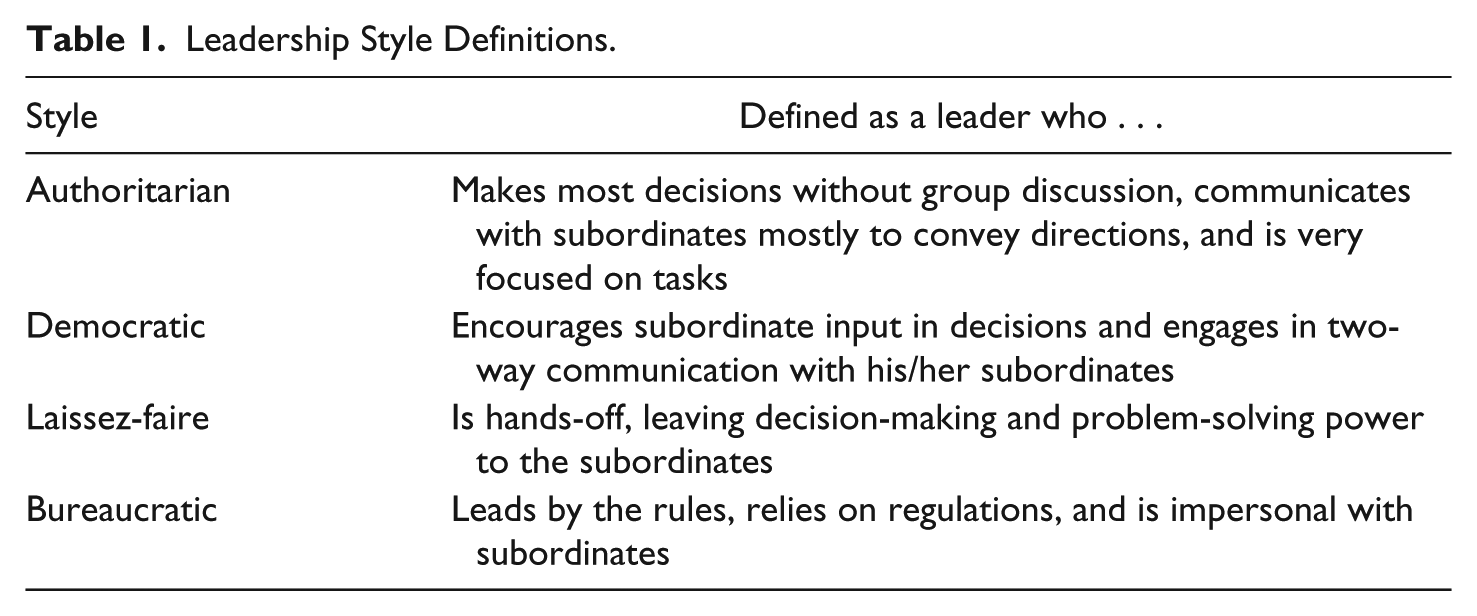
Decades later, the bureaucratic style of leadership was proposed (Yukl, 2002). Bureaucratic leaders tend to focus on workplace status and privilege and are not considered to be independently oriented (Brodbeck, Frese, & Javidan, 2002). Status and privilege focus increases this style’s reliance on workplace procedures and rules, leading to bureaucratic leadership also being labeled as the procedural style (Javidan, Dorfman, Howell, & Hanges, 2010). Organizations that desire their leaders to utilize independent thought to determine best practices within the workplace can be frustrated by a bureaucratic leader’s rule rigidness and view it as a detriment to effectiveness. Conversely, subordinates that desire lower uncertainty are more appreciative of leaders who follow established norms or procedures. Because creativity and innovation lead to greater uncertainty in the workplace, bureaucratic leaders guide their followers in ways that do not encourage independent thinking (Javidan, 2004). Communication within this type of dyad consists of the followers utilizing hierarchical structures to bring any issues or questions to their leader, and in turn the leader is expected to provide policy-based answers to their followers (Javidan et al., 2010). Each of the leadership styles have been summarized in Table 1.
Leadership Style Definitions.
Supervisor-Subordinate Solidarity Model
Understanding how to strategically use appropriate leadership styles is important for organizational success. Leaders who promote informal communication with their subordinates are more likely to induce positive attitudes from them (Sanders & Emmerik, 2004; Sanders, Flache, van der Vegt, & van de Vliert, 2006). These positive attitudes lead to positive workplace outputs. What is not evident is the psychological change that influences the outputs. A potential explanation is that the communication fosters supervisor-subordinate solidarity, which leads to the outputs associated with effective leadership.
MacDonald et al.’s (2014) supervisor-subordinate solidarity model explained the influence of supervisor-subordinate solidarity on subordinate’s job satisfaction, motivation, and burnout. In short, higher supervisor-subordinate solidarity as perceived by the subordinate results in higher job satisfaction, higher motivation, and lower burnout for the subordinate. The model (Figure 1) indicates that a subordinate’s contentment with their job (job satisfaction; Smith, Kendall, & Hulin, 1969) mediates solidarity and the outputs of being driven to perform (motivation; Martin, 2004) and emotional exhaustion (burnout; Malach-Pines, 2005).

The Supervisor-Subordinate Solidarity Model.
Solidarity has a plethora of definitions, including relationship intimacy (Baus & Allen, 1996), psychological closeness (Wheeless, 1978), and rapport (Gremler & Gwinner, 2000). Stretched across all of the definitions of solidarity is the explanation that solidarity is the psychological result of holistically perceiving interpersonal communication with, and self-disclosure of, another (MacDonald et al., 2014). So, while solidarity is not in and of itself a type of communication, it is the psychological result of interpersonal communication and self-disclosure, which develops trust and a sense of synchronicity among communicators.
Solidarity between a supervisor and subordinate is unique, in that it cannot be formed unless instigated by the supervisor (Sanders & Schyns, 2006). Business communication etiquette dictates that the party with most power is the one allowed to set the relational and communication norms with subordinates (MacDonald et al., 2014). Therefore, solidarity cannot be formed between supervisors and subordinates unless the supervisor invites the level of interpersonal disclosure necessary to establish it. Interpersonal communication must be present to form solidarity (MacDonald et al., 2014; Baus & Allen, 1996). However, not all interpersonal supervisor-subordinate communication is constructive, nor positive for the subordinate (Carter, 2002). Therefore, only leadership styles that promote open supervisor-subordinate communication have the potential to build perceptions of solidarity between those communicators, but the presence of that communication does not necessitate the formation of solidarity.
Rationale
There are a number of leadership typologies in the literature (e.g., transactional vs. transformational leadership [Burns, 2012], The Leadership Grid [Blake & McCanse, 1991], emotional styles (Goleman, Boyatzis, & McKee, 2013). While each of these typologies offer unique insight into leadership, the authoritarian, democratic, laissez-faire, and bureaucratic leadership typology has the most nuances that could be influence solidarity. Again, the presence of supervisor-subordinate communication does not guarantee the formation of solidarity, but solidarity cannot be formed without that open, two-way communication. As such, it is unlikely that authoritarian leaders, characterized by one-way communication, would develop solidarity with subordinates. Contrariwise, democratic leaders who are characterized by encouraging two-way communication are most likely to provide the foundation necessary to develop solidarity. In between these two leadership styles in terms of volume of supervisor-subordinate communication are laissez-faire and bureaucratic leadership styles, neither of which completely avoid two-way communication nor seek opportunities to instigate it. With the bureaucratic style of leadership, regular supervisor-subordinate communication is expected as long as it conforms to understood protocol, making task-based supervisor-subordinate communication regular but interpersonal communication minimal. Among laissez-faire leaders, supervisor-subordinate communication is minimal, typically instigated by the subordinate, but protocols are not strictly enforced that would forego interpersonal communication. Therefore, the quantity and context of supervisor-subordinate communication across these leadership styles provide differing communicative foundations for solidarity to form. The following research questions and hypothesis will be tested:
Method
Procedures
Snowball sampling was used to solicit participation using social media and e-mail. The study was described as an investigation in workplace communication and requested participation from anyone who was at least 18 years old and currently employed. These status requests also included a hyperlink to the online questionnaire. Participants who clicked the hyperlink were directed to an informed consent, which proceeded to the survey instrument. Completion of the survey took approximately 15 minutes. Eligibility to enroll in a drawing for a $25 gift card was presented as an incentive for participation. Those interested in entering the gift card drawing were asked to provide their phone number, which was stored and downloaded in a data file separate from participant responses.
Subjects
The sample consisted of 340 participants. On average, participants were 28.9 (SD = 10.33) years old and had worked at their current job for an average of 4.13 (SD = 6.20) years. Participants consisted of 127 males, 210 females, and 3 participants who chose not to identify their sex. The job description of participants broke down as follows: 23.8% sales, 12.9% skilled labor, 10.3% education, 9.1% managerial, 7.6% clerical, 2.6% factory, 2.1% transportation, 1.5% military, .9% nonfarm labor, 28.2% other, and .9% undisclosed.
Instrumentation
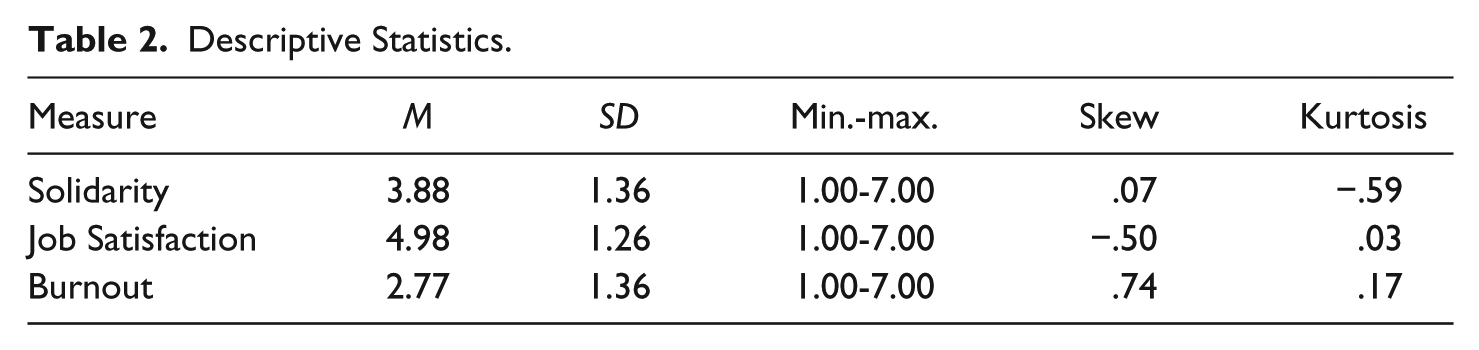
MacDonald et al.’s (2014) solidarity measure was used. This measure consisted of 12 items with a 7-point Likert-type response scale ranging from Disagree Strongly to Agree Strongly. The reliability score observed in the present study for this measure was α = .91. Table 2 summarizes the descriptive statistics for all continuous measures.
Descriptive Statistics.
Andrews and Withey’s (1976) assessment of job satisfaction was utilized. The measure is composed of five items with a 7-point Likert-type response scale with ranging from Terrible to Delighted. Reliability of the measure as observed in the present study was α = .88. Rentsch and Steel (1992) reported that the measure has strong convergent validity.
Malach-Pines’ (2005) assessment of burnout was utilized. The measure is composed of 10 items with a 7-point Likert-type response scale with ranging from Never to Always. Reliability of this measure as observed in the present study was α = .93. Malach-Pines (2005) found the measure to have good construct validity.
Supervisor leadership style was assessed through short, qualitative descriptions. Participants were asked to identify which description best matched their supervisor. The descriptions were chosen as assessment because no measure of bureaucratic leadership was available and because descriptions made the length of the questionnaire manageable. Prior to administering this questionnaire, the descriptions were pilot tested using Northouse’s (2012) measures of authoritarian, democratic, and laissez-faire leadership adapted so that respondents answered in accordance with their supervisors’ behavior instead of their own. There was a 100% match between description selection and measurement results for the three assessed leadership styles, whereas those who selected a bureaucratic style description did not strongly align with any of the three assessed styles. The descriptions were as follows:
Authoritarian: My supervisor makes most decisions without group discussion, communicates with subordinates mostly to convey directions, and is very focused on tasks.
Democratic: My supervisor encourages subordinate input in decisions, tries to be a leader, and engages in communication with his/her subordinates.
Laissez-faire: My supervisor is hands-off, leaving decision making and problem-solving power to the subordinates.
Bureaucratic: My supervisor leads entirely by the rules, relies on regulations, and is impersonal with subordinates.
Results
Research Question 1 asked whether particular leadership style(s) would coincide with higher level(s) of solidarity between supervisors and subordinates as perceived by subordinates. A one-way analysis of variance (ANOVA) with a Tukey post hoc was used to test the research question. Results indicated that democratic supervisors were perceived to have more solidarity with their subordinates than authoritarian supervisors with no other statistically significant differences between groups, F(3, 336) = 11.21, p < .05. Post hoc results are displayed in Table 3.
Solidarity Tukey.
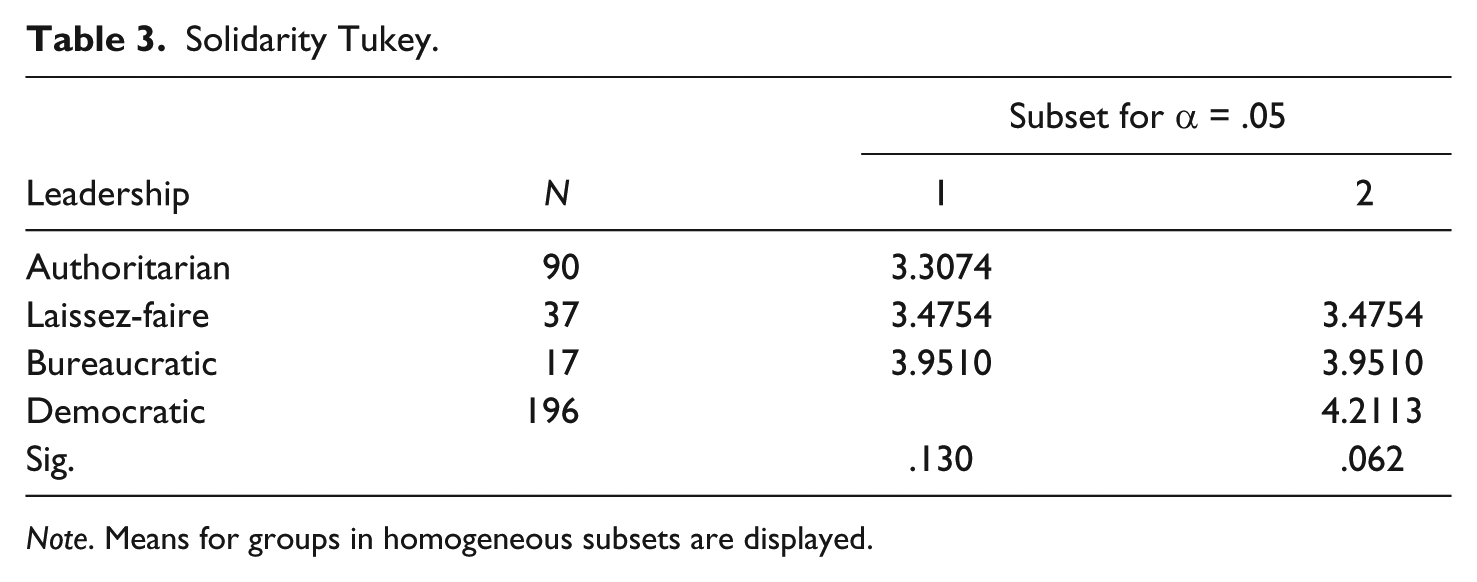
Note. Means for groups in homogeneous subsets are displayed.
Research Question 2 asked which leadership style(s) would coincide with the highest level(s) of job satisfaction among subordinates. A one-way ANOVA with a Tukey post hoc was used to test the research question. Again, the results indicated that democratic supervisors had supervisors who were more satisfied than authoritarian supervisors with no other statistically significant differences between groups, F(3, 336) = 8.71, p < .05. Post hoc results are displayed in Table 4.
Satisfaction Tukey.
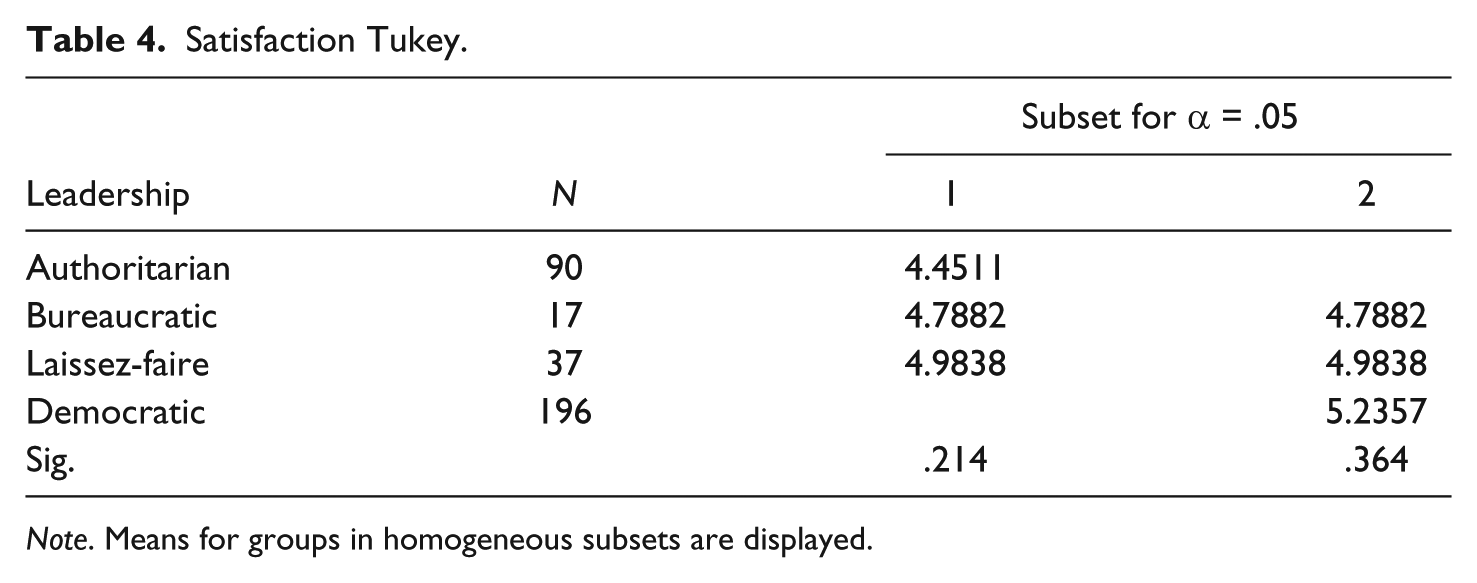
Note. Means for groups in homogeneous subsets are displayed.
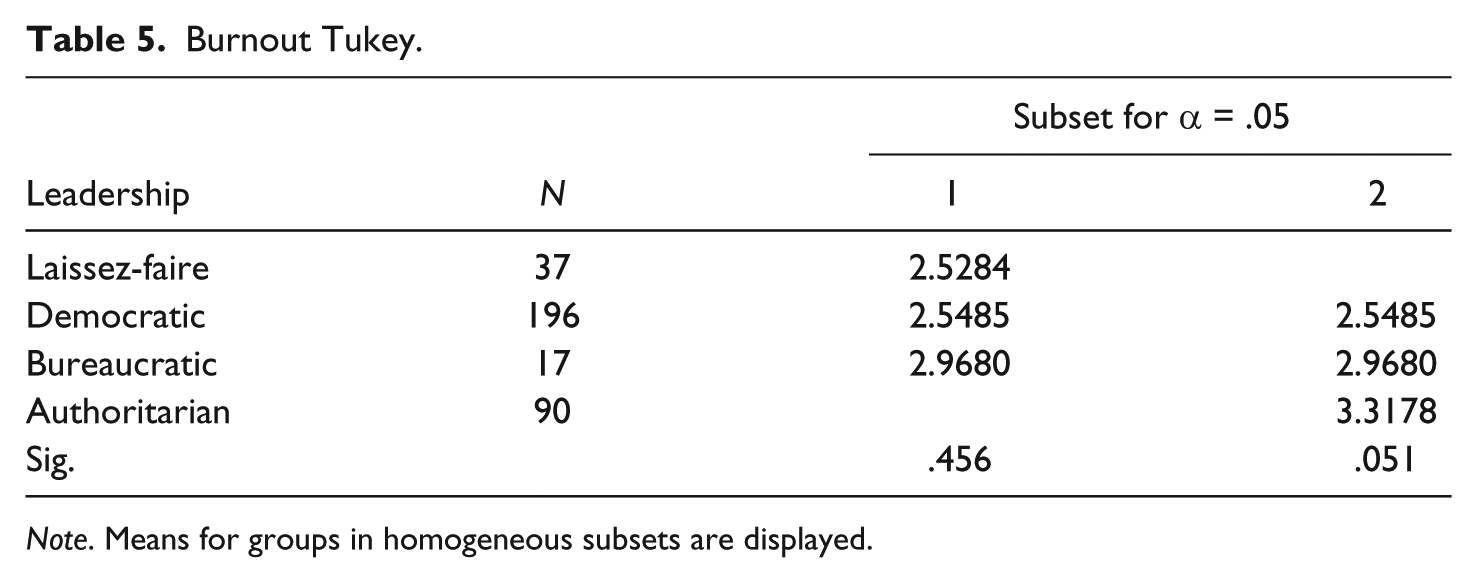
Research Question 3 asked which leadership style(s) would coincide with the lowest level(s) of burnout among subordinates. A third one-way ANOVA with Tukey post hoc was used to test the research question. Results were consistent with laissez-faire supervisors having subordinates that were less burnt-out than authoritarian supervisors with no other statistically significant differences between groups, F(3, 336) = 7.52, p < .05. Post hoc results are displayed in Table 5.
Burnout Tukey.
Note. Means for groups in homogeneous subsets are displayed.
Finally, the hypothesis predicted consistency in findings, such that leadership style(s) that yielded the highest perceived solidarity would also coincide with in the highest job satisfaction and lowest burnout among subordinates. Indeed, the results were consistent in that authoritarian supervisors were always the least effective, having subordinates with the least perceived solidarity and job satisfaction as well as the highest burnout. Interestingly though, while democratic supervisors had subordinates with the most solidarity and job satisfaction, laissez-faire leaders’ subordinates had the least burnout.
Supplemental Analysis
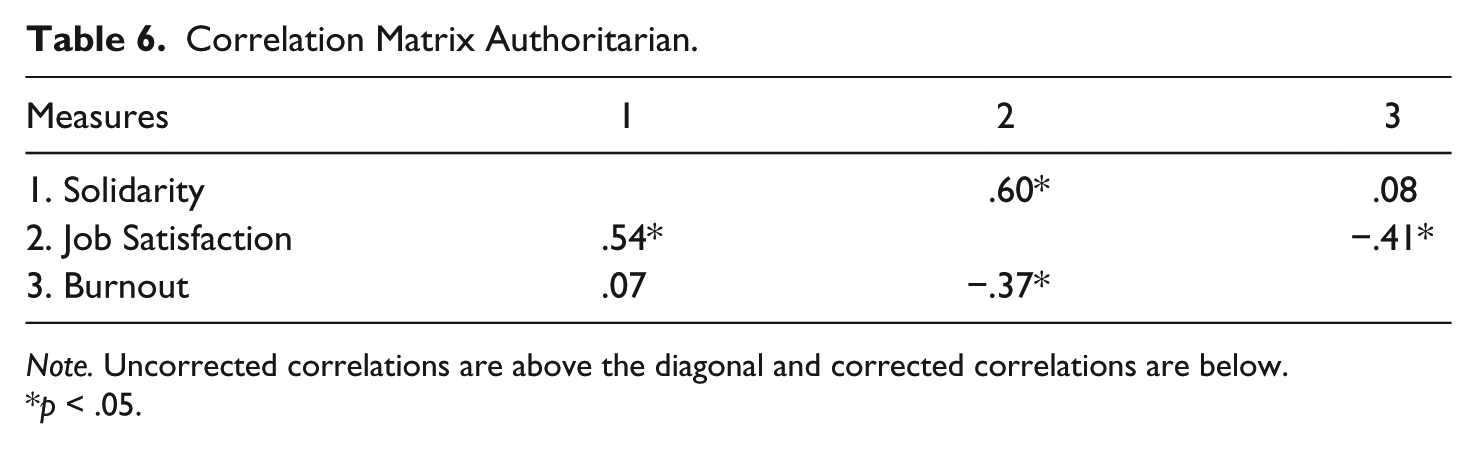
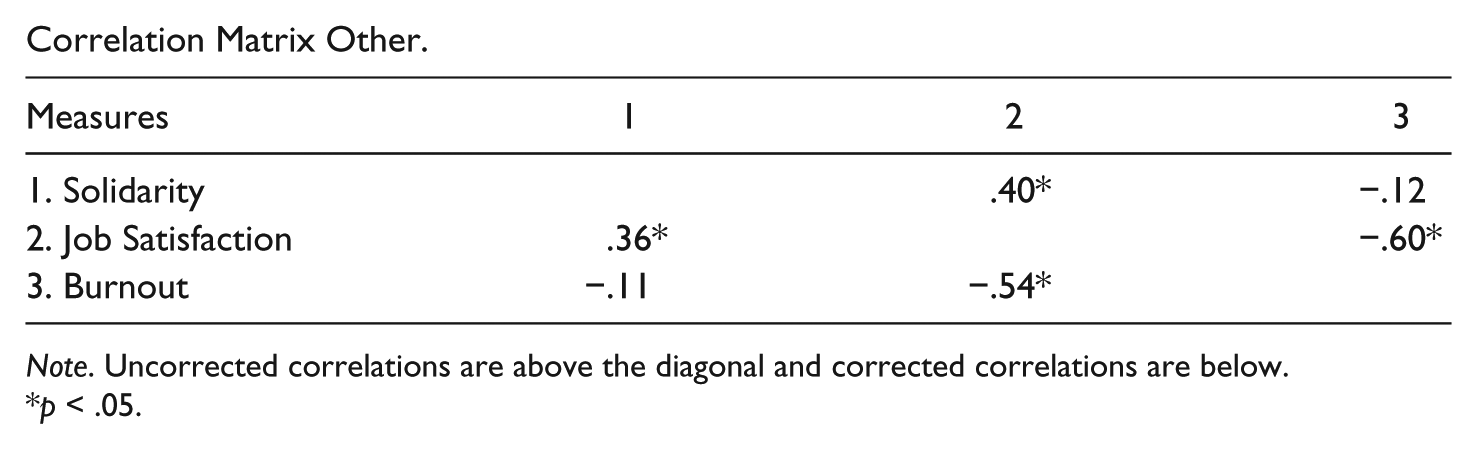
Given that subordinates with authoritarian supervisors were consistently moderated from at least one of the other types of leadership, it is worthwhile examining the simple causal string of solidarity to job satisfaction to burnout among authoritarian supervisors versus all other supervisors, as predicted by the supervisor-subordinate solidarity model (MacDonald et al., 2014). Ordinary least square (OLS) estimation will be used to test the causal chain because it is a conservative model test that examines fit both before and after correction for attenuation due to measurement error (Boster, 2003; Kelloway, 1995). Using OLS avoids a claim of model fit due to Type 1 error. Testing with OLS, if a simple causal chain fits then the observed indirect effect will be within sampling error of the predicted indirect effect. The correlation matrices for authoritarian supervisors and all other supervisors are listed in Table 6.
Correlation Matrix Authoritarian.
Note. Uncorrected correlations are above the diagonal and corrected correlations are below.
p < .05.
Correlation Matrix Other.
Note. Uncorrected correlations are above the diagonal and corrected correlations are below.
p < .05.
The model was first tested among the 90 participants with authoritarian supervisors. The observed relationship between solidarity and burnout was r = .07, which is beyond sampling error of the predicted relationship ŕ = −.20 (−.39 < ρ < .01). As such, for authoritarian supervisors, the patterns observed in MacDonald et al. (2014) are inconsistent with this data (see Figure 2).

Authoritarian model: Failed.
Second, the model was tested with the 250 participants who had democratic, laissez-faire, or bureaucratic supervisors. The observed relationship between solidarity and burnout was r = −.11, which is within sampling error of the predicted relationship ŕ = −.19 (−.31 < ρ < −.07). Correcting for attenuation due to measurement error, the observed relationship between solidarity and burnout was r = −.12, which is within sampling error of the predicted relationship ŕ = −.24 (−.35 < ρ < −.12). As such, the model fits among subordinates with democratic, laissez-faire, or bureaucratic supervisors (see Figure 3).

Other leadership styles model: Fit.
Discussion
It is unsurprising that authoritarian leaders had lower perceived solidarity with subordinates and lower job satisfaction than subordinates with democratic leaders. (Notably, authoritarian leaders had subordinates with the lowest perceived solidarity and satisfaction across all leadership types, but only statistically significantly less than democratic leaders.) Authoritarian leaders engage in minimal communication with subordinates, leaving little opportunity to foster solidarity. Additionally, what communication authoritarian leaders do engage in is often one-way, allotting little time to simply listen to subordinates (Aryee et al., 2007). This is in stark contrast to democratic leaders who solicit feedback from subordinates (Kushalappas & Pakkeerappa, 2014). Indeed, this lack of communication between authoritarian leaders and their subordinates likely explains why this portion of the sample did not fit the supervisor-subordinate solidarity model. Solidarity cannot be an influencing variable if it does not exist. The lack of two-way communication characterized by authoritarian leadership prevents the necessary interpersonal exchanges that form solidarity. Thus, the findings of this study shed some light on the ineffectiveness of authoritarian leadership.
Indeed, authoritarian leadership is recognized as one of the least effective leadership styles (Hackman & Johnson, 2013; Ley, 1966). Subordinates who must work with authoritarian leaders often find themselves feeling dissatisfied. Notably, supervisor-subordinate solidarity is a direct influence of job satisfaction and an indirect influence of burnout (MacDonald et al., 2014). As such, subordinates who are unable to form solidarity with their supervisor because their supervisor refuses to engage in interpersonal communication are disadvantaged in the workplace, as they are given fewer opportunities to achieve job satisfaction and avoid burnout.
Contrarily, subordinates who have democratic, laissez-faire, and bureaucratic supervisors may have the communicative prerequisites to achieve higher job satisfaction and lower burnout through solidarity. This provides a more nuanced insight into to why these leadership styles are more effective than authoritarian: the supervisor-subordinate communication provides opportunities for supervisor-subordinate solidarity to form, which in turn influences those outputs.
A shortcoming of this explanation is that democratic supervisors encourage the most two-way communication, therefore giving these leaders the most opportunities to foster perceived solidarity among subordinates. As such, they should also have the strongest impact on subordinates’ burnout, indirectly through that solidarity. Yet the findings of this study indicated no statistically significant difference in the amount of burnout experienced by subordinates of democratic, bureaucratic, or authoritarian leaders. The only statistically significant difference in the burnout findings was that subordinates of laissez-faire leaders were statistically significantly less burnt-out than subordinates with authoritarian supervisors. There are two potential explanations for this.
First, in leaving most of the work to subordinates, laissez-faire supervisors do allow subordinates a great deal of autonomy (Bass, 2008). This autonomy would allow subordinates to make changes to their routine and procedures to avoid burnout. However, this is an unlikely explanation because the higher autonomy should be associated with higher job satisfaction as well (Hackman & Oldham, 1976).
The more likely explanation rests in the development of burnout. Burnout is emotional exhaustion that often develops from interpersonal interactions (Malach-Pines, 2005). The legitimate authority of a supervisor allows them to greatly contribute to feelings of depersonalization and low personal accomplishment, which contributes to subordinate burnout. Because laissez-faire leaders are characterized by avoidance, lack of feedback, and low involvement (Bass, 2008), their subordinates feel ignored (Loi, Mao, & Ngo, 2009) but may not experience the emotional exhaustion that may be induced by greater interpersonal interactions with their supervisor.
Implications for Future Research
In short, the findings of this study reveal moderation in the supervisor-subordinate solidarity model, specifically that subordinates of authoritarian leaders do not fit the patterns of the model. Subordinates of authoritarian leaders were found to have statistically significantly less perceived solidarity with supervisors and job satisfaction than subordinates of democratic leaders and statistically significantly more burnout than subordinates of laissez-faire leaders. Although speculation is possible, the present data do not provide evidence to conclude why these specific differences occurred.
Simply more supervisor-subordinate communication is not panacea (Carter, 2002). If more supervisor-subordinate communication automatically resulted in higher supervisor-subordinate solidarity and its associated outputs, then the data would have likely shown democratic leaders as having the most desirable outputs throughout the data, at least juxtaposed to subordinates of authoritarian leaders. Instead, laissez-faire leaders, who engage in minimal two-way, supervisor-subordinate communication, had the subordinates with the least burnout, statistically significantly less than subordinates of authoritarian leaders. Given that, this study raises questions about the type of supervisor-subordinate communication that fosters solidarity and job satisfaction. It also raises questions of potential moderating variables, such as subordinate autonomy, which can be expected in abundance among subordinates of laissez-faire leaders, that should be explored in future research.
Furthermore, future research should test the soundness of the supervisor-subordinate communication model across cultures. The characteristics of effective organizational leadership varies across cultures as expectations of formality, communication frequency, and context differ (Bandyopadhyay, Robicheaux, & Hill, 1994; Barker & Gower, 2010). In this increasingly globalized workforce, understanding how to effectively engage in business communication, particularly being aware of practices that are not interpreted uniformly across cultures, is imperative (Fall, Kelly, MacDonald, Primm, & Holmes, 2013; Johnson, Lenartowicz, & Apud, 2006; Varner, 2000).
Limitations
This study was limited by the nominal data assessment of leadership styles. Though we had confidence in the validity of this method, the lack of variance in data limited the assessments available to test research questions and hypotheses. Furthermore, the study was limited by the age of participants, which represented primarily a young workforce with limited job descriptions. Future research should work toward a measure of bureaucratic leadership so that a more nuanced analysis can be performed as well as identifying a more diverse sample of participants with richer data on the nature of their jobs.
Conclusion
In sum, this research informs which leadership styles are more conducive to building solidarity. While it was not surprising that authoritarian leaders comprised the group of supervisors who built the least solidarity with their subordinates, and therefore miss the benefits of solidarity communication, this article gives more insight into how communication shapes leadership outcomes. It also builds upon the supervisor-subordinate solidarity model, showing authoritarian leadership as a moderation in the model. Notably, while authoritarian leaders had subordinates with the least desirable outcomes across leadership styles, the statistically significant differences were observed compared to democratic and laissez-faire leaderships, the two leadership styles that do not actively avoid interpersonal communication with subordinates through a need for control or to follow protocol. The implications of this study are that the solidarity formed through the communication, fostered specifically by rapport-building among supervisors and subordinates, is in and of itself partially responsible for those associated positive outcomes.
Footnotes
Declaration of Conflicting Interests
The author(s) declared no potential conflicts of interest with respect to the research, authorship, and/or publication of this article.
Funding
The author(s) received no financial support for the research, authorship, and/or publication of this article.