



Abstract
Focusing on channels used by members of the organization in different positions, this study aims to examine the antecedents of two-way symmetrical communication in an organization. Using two-way symmetrical communication model and media richness theory as theoretical frameworks, this study investigates what communication channels (e.g., face-to-face, e-mail, print media, social media, etc.) within an organization are effective at communicating with peers, managers, and CEO of a company, respectively. Results of an online survey conducted with 407 full-time employees in large-sized corporations in the United States showed that communication channels usage by different sources had distinct impacts on employees’ perceived symmetrical communication as well as the organization-employee relationship. Face-to-face meetings and videoconferencing are shown to be significant for symmetrical communication practices with managers and peers, while other communication channels (e.g., print media, e-mail) turned out to be more significantly related to symmetrical communication practiced by CEO. Theoretical and practical implications for corporate communication are discussed.
Keywords
Introduction
An increasing number of scholars and practitioners have argued that a critical component of organizational effectiveness is building and maintaining a good relationship with employees—one of the strategic constituencies of an organization (Berger, 2008; Coyle-Shapiro & Shore, 2007; J.-N.Kim & Rhee, 2011; Men & Stacks, 2014). Applied communication scholars have suggested that one of the most effective strategies for communicating with employees is symmetrical communication (L. A. Grunig, Grunig, & Dozier, 2002; Jo & Shim, 2005; J.-N. Kim & Rhee, 2011; Smidts, Pruyn, & Van Riel, 2001). Symmetrical communication has been characterized by understanding, collaboration, responsiveness, and the creation of long-term and mutually beneficial relationships (L. A. Grunig et al., 2002). In organizations, symmetrical communication with employees can be achieved through dialog-based feedback loops such as question and answer sessions with leaders, forums, and comment boards (Men & Bowen, 2016). Researchers have regarded it as an ideal communication model in public relations specifically because of its ethical approach, which contributes to meeting organizational goals effectively. Researchers have identified certain facilitators of symmetrical communication practices within organizations; these include organizational culture, structure, managerial behaviors, power distribution, and diversity (L. A. Grunig et al., 2002; Rhee & Moon, 2009). Until recently, scholars have attempted to explore contextual factors (e.g., leadership; Men, 2014), to understand their strategic significance.
Meanwhile, recognizing the importance of communication tools and channels within an organization to connect members, a large number of studies have examined how traditional channels (e.g., e-mail, phone, print media), as well as new communication channels (e.g., the Internet, social media, Intranet), are differently and concurrently used (Daft & Lengel, 1986; Dévényi, 2016; Men, 2014). Not surprisingly, most research has focused on which communication channels are preferred and commonly used within organizations to send and receive messages, and how it relates to employee productivity and organizational effectiveness (Rice, 1993; Sheer & Chen, 2004; Suh, 1999).
Recognizing that communication channels vary in their impacts on employees-related outcomes according to the sources or the parties who use certain channel within a hierarchy of an organization, several studies have explored communication channel usage by organizational members such as CEO (Men, 2014) and supervisors/leaders (Mikkelson, York, & Arritola, 2015; Steele & Plenty, 2015). Nonetheless, it remains unclear whether certain channels are effective at increasing employees’ perceptions of symmetrical internal communication depending on who uses it. The purpose of this study, therefore, is to identify the impacts of various communication channels used by different sources at varying levels of position on employees’ perceived symmetrical internal communication practices within an organization. Specifically, examining the different usage of communication channels by CEO, managers, and peers, respectively, is likely to provide insights into how to facilitate symmetrical communication in organizations as well as to build a good relationship with employees.
Literature Review
Symmetrical Internal Communication
A central concept in public relations and organizational communication literature has been organizations’ symmetrical communication efforts with its stakeholders. This is based on the assumption that individuals, organizations, and the publics use communication to manage their behaviors rather than control or manipulate how the other party thinks or behaves (J. E. Grunig, 1992, 2001; L. A. Grunig et al., 2002; J.-N. Kim & Rhee, 2011). Characterized by a dialogue, rather than a monologue, symmetrical communication emphasizes the use of “bargaining, negotiating, and strategies of conflict resolution to bring about symbiotic changes in the ideas, attitudes, and behaviors of both organization and its publics” (J. E. Grunig, 1989, p. 29). The nature of asymmetrical communication is a one-way and top-down approach, designed to sway or control publics’ behaviors according to management requirements. By contrast, symmetrical communication fosters a two-way conversation between an organization and its stakeholders. In terms of power, a symmetrical model of communication suggests that power is equally shared between an organization and its stakeholders based on reciprocal communication (Gower, 2006; J. E. Grunig, 1992). As such, scholars have argued that this model is the most ethical approach to public relations as it best represents the value of public relations in society and organizations (Colquitt & Greenberg, 2003), which enhances achieving organizational goals effectively ( J. E.Grunig, 1992, 2001; J. E. Grunig & White, 1992).
In the context of internal relations, researchers have suggested that organizations need to communicate with their employees in a similar way of interacting with other external strategic publics (J. E. Grunig, 1992; Men & Bowen, 2016; Mishra, Boynton, & Mishra, 2014): Excellent internal communication is achieved based on the concepts of two-way symmetrical model of public relations. In this sense, symmetrical internal communication is defined as the communication practices of an organization that emphasizes “trust, credibility, openness, relationships, reciprocity, network symmetry, horizontal communication, feedback, adequacy of information, employee-centered style, tolerance for disagreement, and negotiation” (J. E. Grunig, 1992, p. 558). J.-N. Kim and Rhee (2011) additionally noted that symmetrical internal communication is two-way communication with employees that aims for mutual benefit and is characterized by listening, opportunities for participation in decision-making process, and accessibility.
In such a communication system, members in organizations can gain mutual understanding by engaging in dialogues and listening to each other (Woodward, 2000). With reciprocal communication, fluid feedback upward and downward can be increased within an organization (Roberts, 2002). All members are prepared to adjust their attitudes and behaviors (Gower, 2006), and organizations and publics use research and dialogue to manage conflicts to improve understanding and build relationships (J. E. Grunig & White, 1992; McCown, 2007). Moreover, two-way communication increases employee motivations and organizational success as it provides continuous feedback, which is critical for learning and processing organizational change (Colvin, 2006). In relation to organizational systems, symmetrical internal communication fosters a participative culture and organic structure within organizations, whereas the asymmetrical communication model is often linked with mechanical and centralized organizational structure and authoritarian culture where employees have little opportunity to participate in a decision-making process, as it centers on persuading or controlling employees’ behavior for accomplishing organizational goals (J. E. Grunig, 1992; L. A. Grunig et al., 2002; J. E. Grunig & White, 1992).
Internal Communication Channels
Among diverse communication channels within an organization that members are utilizing for effective communication, the choice of channels by organizations depends on an organization’s size, profile, organizational culture, environmental culture, employees’ qualifications or the level of technical development (Dévényi, 2016). Moreover, the transactional nature of the process and how individuals and groups construct meanings within an organization are also important for channel selections (Harris & Nelson, 2008). The main channels used in organizations are categorized into two: written and oral communication channels. Written communication includes traditional forms of channels, including letters, memos, brochures, reports, manuals, posters, bulletin boards as well as computer-aided electronic forms such as e-mail, websites, the Internet, blog, podcasts, chat rooms, instant messaging systems, or Intranet that allows employees to transmit information. Oral communication channels, on the other hand, include face-to-face communication (e.g., team meeting, focus groups, social gatherings, etc.), telephone conversations, voice mail, online conversations, or online videoconferencing (Berger, 2008).
Regarding effective channels for communicating with employees, previous studies have extensively used media richness theory (Daft & Lengel, 1986) as a theoretical framework. With the aim of understanding interactions within organizations and effective communication channels, media richness theory suggests a continuum distinguishing lean and rich mediums. Along with this continuum, face-to-face interaction is considered as the richest medium, while written documents, statements, newsletters, reports, or posters are placed as less rich communication channels. In the middle of the continuum are videoconferencing, telephones, instant messages, and e-mails (Daft & Lengel, 1986).
In the context of organizational communication, using rich media channels such as face-to-face communication has been a strong facilitator for organizations’ effective communication. Such channels have the immediacy of feedback and dialogue, the use of both verbal and nonverbal cues, natural language (e.g., conversational style), and personal focus (e.g., ability to direct message to a specific individual; Johnson & Lederer, 2005; C. E. Lee, 2010; White, Vanc, & Stafford, 2010). C. E. Lee (2010) argued that face-to-face communication is perceived to be effective for relationship building with managers and dissemination of work-related information to colleagues. In a similar vein, White et al. (2010) suggested that face-to-face interpersonal interactions are preferred among all groups of employees, and Johnson and Lederer (2005) observed that rich media channels helped an interaction between CEOs to understand their roles and achieve mutual understanding. Braun, Hernandez Bark, Kirchner, Stegmann, and van Dick (2015) also indicated that employees perceived face-to-face communication to be of higher quality than telephone or e-mail communication, which had a positive impact on their attitudes toward the supervisor and the job.
Many studies have shown that communication channels have played a distinct role in connecting members of an organization, depending on the contexts (e.g., message contents, the hierarchy in the organization). For example, a rich medium such as face-to-face interactions is especially useful for nonroutine, difficult-to-understand messages, whereas leaner medium such as the written memo is bested used for routine messages in the workplace (Lengel & Daft, 1989). Additionally, e-mail is regarded as an efficient communication tool for information exchange, while meetings are valued for feedback and providing face time especially with top executives (White et al., 2010). Recognizing the significance of hierarchy within the organization in terms of usage of communication channels, Allen and Griffeth (1997) identified that the richest information exchange in an organization occurs between a supervisor and an employee, while senior-level executives (e.g., department heads) used the leanest media to convey information to employees. For communicating vertically with subordinates and laterally with peers, organizational leaders use a medium with a middle level of richness (Allen & Griffeth, 1997). White et al. (2010) specifically noted that electronic channels can flatten the traditional hierarchical structure of internal communication because it gives employees at all levels a sense of hearing things firsthand from the top. Linking it with symmetrical communication and leaders’ usage of communication channels, Men (2014) recently argued that transformational leaders use information-rich channels such as face-to-face communication, which in turn increases employees’ level of satisfaction with the organization.
With the emergence of new media channels, scholars have recently begun to recognize their potentials for communication effectiveness. For example, as a tool for empowering and engaging employees, social media is regarded as powerful dialogue-creating channels that might influence or alter traditional media (Berger, 2008). As employees are required more now to conduct interactions with customers and other stakeholders through new media channels, those channels can improve their listening skills and high-quality face-to-face communications (Rhee, 2004).
Despite the extensive literature on the effectiveness of communication medium within organizations, little attempt has been made to explore how channels used by different sources (e.g., CEO, managers, and peers) are related to symmetrical communication practices within an organization comprehensively. Therefore, the study proposes the following research question:
In addition to a media channel, Johnson and Lederer (2005) further noted that communication frequency affects mutual understandings. That is, both parties within an organization are able to develop common definitions of situations and build consensus through frequent communication (Van de Ven & Walker, 1984). As it also facilitates a gradual convergence of meanings and opinions about the situation with mutual adjustment process, further relationships are transformed over time between two parties (Johnson & Lederer, 2005). Assuming that employees perceive symmetrical communication differently with certain communication channels based on the sources using the channels, this study intends to explore whether the frequency of using effective channels for each party—CEO, managers, and peers—affect their perceived symmetrical communication. Therefore, the following hypotheses are suggested:
Symmetrical Communication and Organization-Employee Relationship
The effectiveness of symmetrical communication in nurturing positive public attitudinal and behavioral outcomes has been examined in many studies. In relation to employees, positive associations were found between internal communication efforts and employee outcomes, such as individuals’ job satisfaction, identification, and loyalty in the literature (Men, 2014; Smidts et al., 2001; Spreitzer, 1995). Building a link between symmetrical internal communication and excellent employee communication management, Grunig (2002) argued that excellent employee communications ultimately improve the quality of employee relationships and supportive employee behaviors toward the organizations. As such, applied communication scholars and researchers have specifically demonstrated the strong link between symmetrical internal communication and organization-employee relationships (H.-S. Kim, 2007; Men, 2014) as well as employees’ communicative behaviors (Jo & Shim, 2005; Kang & Sung, 2017; J.-N. Kim & Rhee, 2011; Y. Lee & Kim, 2017). Following this line of thinking, the study argues that symmetrical communication in an organization plays a vital role in building quality employee-organization relationships.
Regarding quality of the relationship between an organization and its employees, this study adopts organization-public relationship as theoretical framework developed by Hon and Grunig (1999), including four indicators: trust, control mutuality, commitment, and satisfaction. Trust indicates whether an employee is willing to open himself or herself to their organization and whether he or she is confident of the company’s abilities. Control mutuality refers to the degree to which an organization and its employees agree on who has the rightful power to influence one another. Commitment means the extent to which each party believes that the relationship is worth spending energy to maintain and promote. Satisfaction indicates the extent to which each party feels favorably toward the other because of enhanced positive expectations about the relationship. The study specifically draws upon Men and Stacks’s (2014) definition of organization-employee relationship, conceptualized as “the degree to which an organization and its employees trust one another, agree on who has the rightful power to influence, experience satisfaction with each other, and commit oneself to the other” (p. 307), and suggests the following hypothesis:
Figure 1 describes the conceptual model.
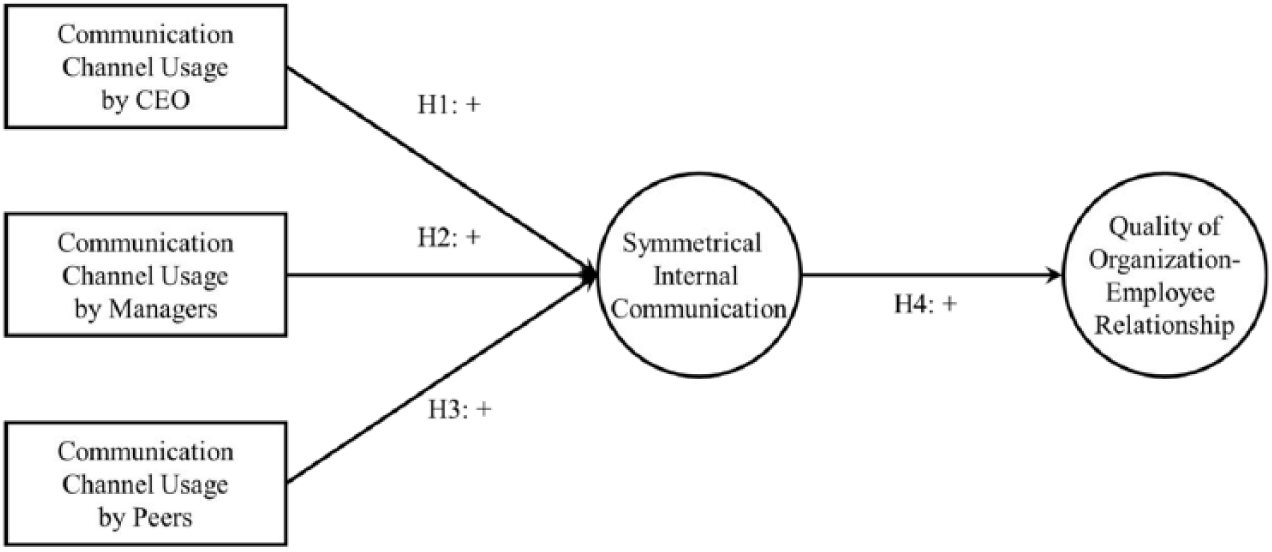
Conceptual model.
Method
Participants
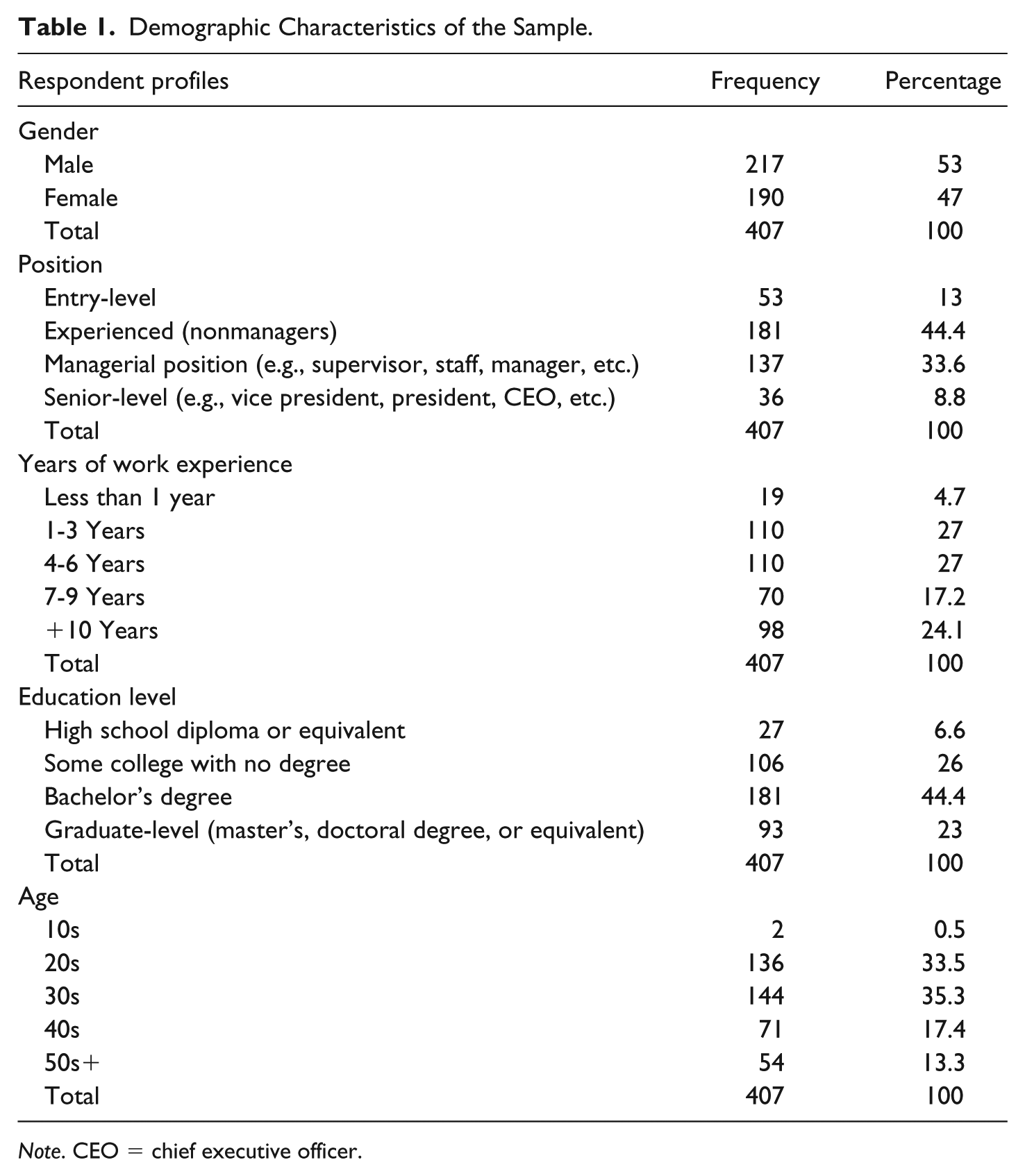
To answer the research question and test the hypotheses, an online survey was conducted through a research company based in the United States with access to over two million panelists. The participants, employees, were recruited from large-sized companies (i.e., more than 300 employees) across the various industries in the United States. As the study aims to obtain the sample at varying levels of age, gender, years of work, and education levels, stratified random sampling was carried out. A random sample of panelists was sent an e-mail invitation to participate in a 20-minute long survey. Following Stacks and Michaelson’s (2010) rules to determine the sample size, a sample size of 400 was considered sufficient. After eliminating surveys with insincere answers, the final sample consisted of 407 full-time employees. Table 1 summarizes the demographic characteristics of the participants.
Demographic Characteristics of the Sample.
Note. CEO = chief executive officer.
Measures
After answering questions regarding demographic information, respondents were guided to answer a series of questions about the usage of multiple communication channels across roles within their organization. Specifically, they were asked to identify the usage of the following communication channels by each source—CEO, managers, and peers: face-to-face meeting, e-mail, the Internet (e.g., bulletin board, corporate website), phone (e.g., calling, texting, voice mail), print media (e.g., memo, brochures, newsletters, manual, etc.), and social media (e.g., Intranet). An example of a question is as follows: “Within your company or organization, how often does your X use Y to communicate with you?” (X = sources, e.g., CEO, managers, peers; Y = communication channels). Responses ranged from 1 (rarely) to 5 (very often).
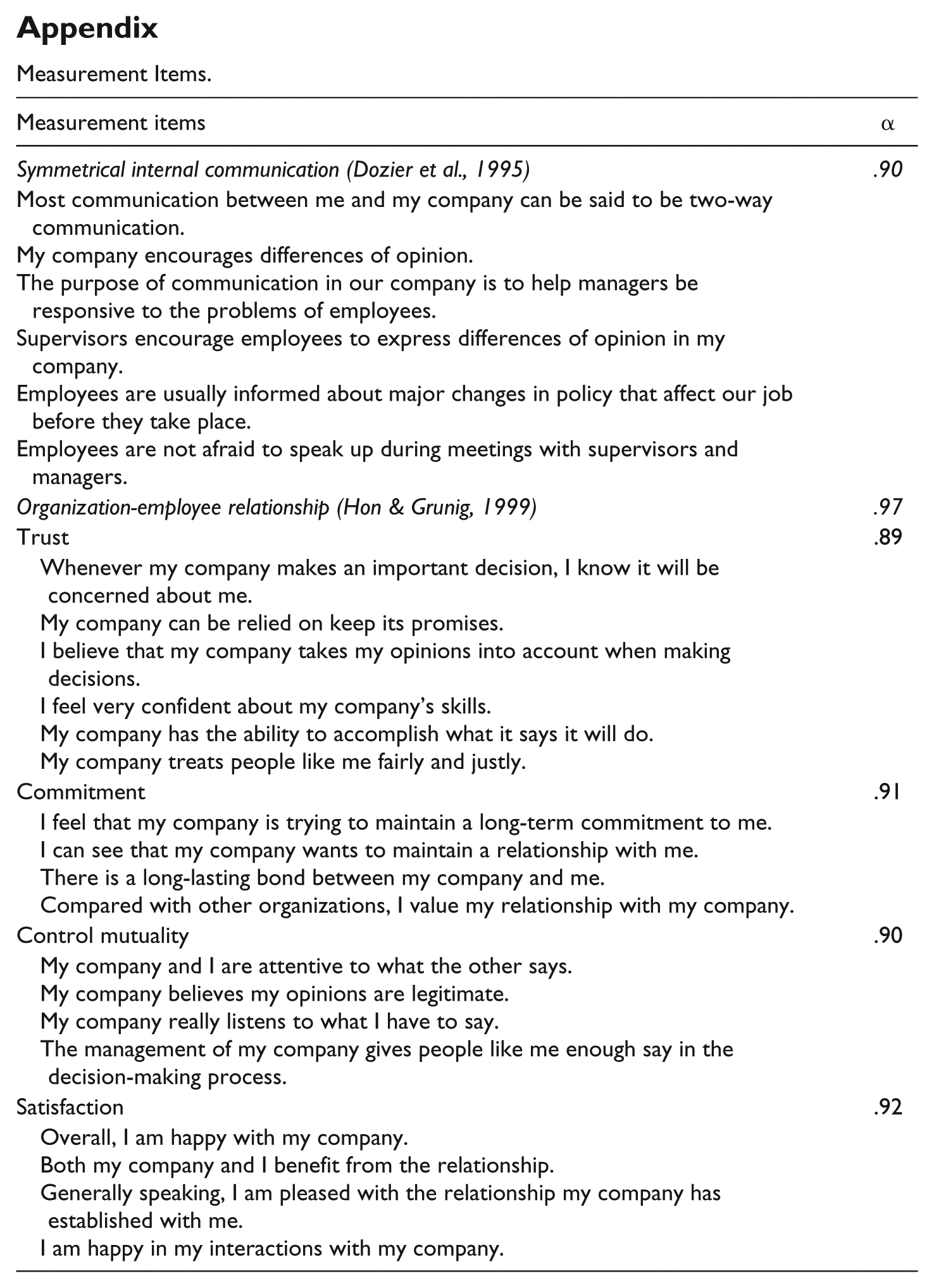
For dependent variables of this study, existing items from previous studies were adopted and 5-point Likert-type scales were used for all items, ranging from 1 (strongly disagree) to 5 (strongly agree). Quality of relationship between an organization and its employee was measured with 18 items (α = .97) by Hon and Grunig (1999): 6 items for trust (α = .89), 4 items for control mutuality (α = .90), 4 items for commitment (α = .91), and 4 items for satisfaction (α = .92). Six items were adopted from Dozier, Grunig, and Grunig, (1995) to measure perceived two-way symmetrical communication of an organization (α = .90). Measurement items are summarized in the appendix.
Analysis
Hierarchical multiple regression analysis was conducted for answering the Research Question 1, by testing three regression models: communication channel used by CEO, managers, and peers, respectively. Employees’ age, gender, education level, and years of work experiences were included as control variables in all three models, as those are considered as significant factors that may affect employees’ perceptions or behaviors (Koberg, Boss, Senjem, & Goodman, 1999).
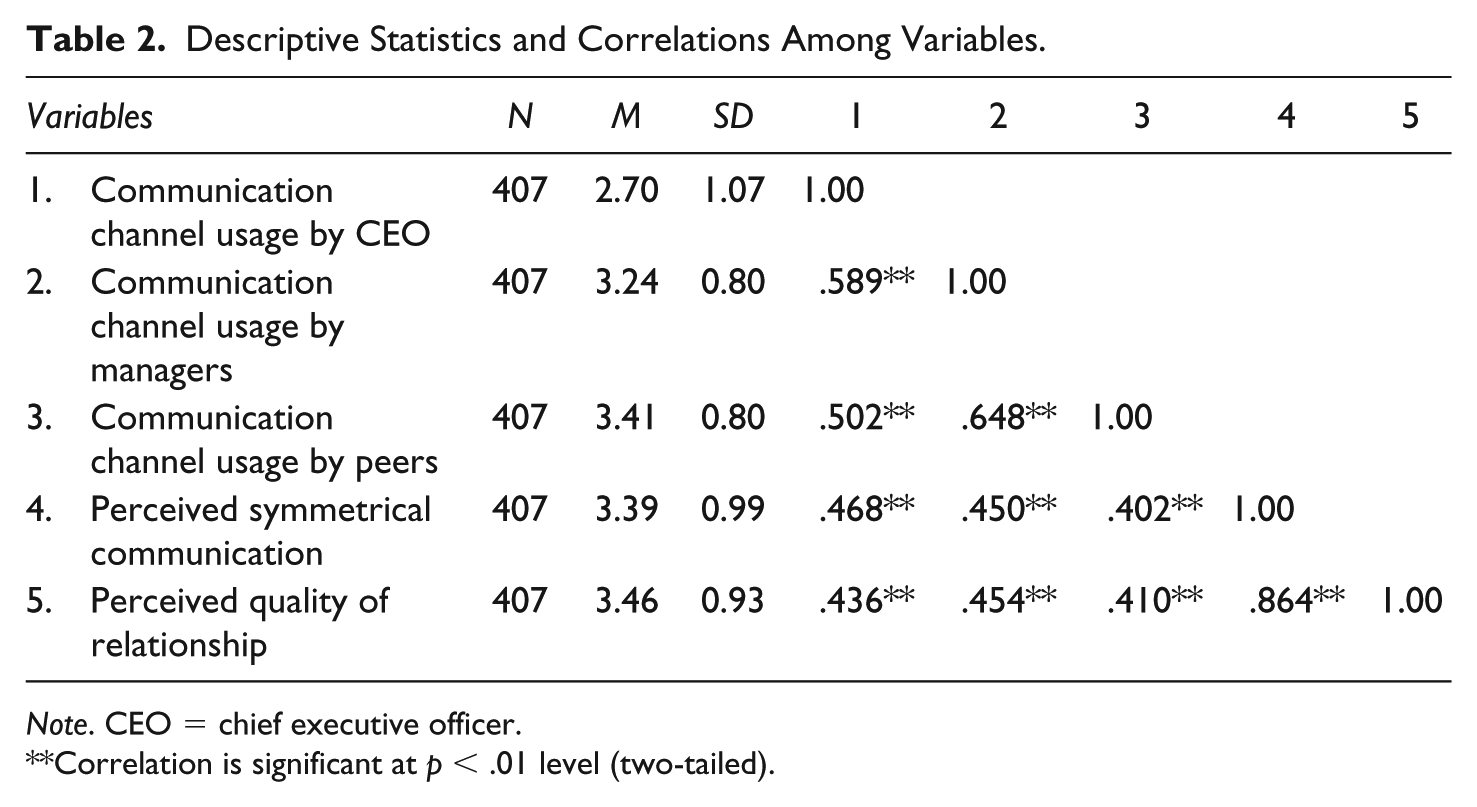
Next, to understand the linkage among frequent usage of corporate communication channels by CEO, managers, and peers, perceived symmetrical communication, and organization-employee relationship, the study selected communication channels that are specifically related to perceived symmetrical communication by each party—CEO, managers, and peers—based on the results of multiple regression. With the composite scores of communication channel usage by each source and latent variables (i.e., symmetrical communication, organization-employee relationship), the study tested the model using structural equation modeling (Byrne, 2012; Kline, 2011). Table 2 presents descriptive statistics and correlations among variables used in the structural model.
Descriptive Statistics and Correlations Among Variables.
Note. CEO = chief executive officer.
Correlation is significant at p < .01 level (two-tailed).
Results
Preliminary Data Analysis
Regarding corporate communication channel used by CEO of their organization, participants responded that their CEO frequently uses e-mail (M = 3.42, SD = 1.43), followed by the Internet (M = 2.91, SD = 1.52), print media (M = 2.48, SD = 1.47), face-to-face meetings (M = 2.42, SD = 1.50), phone (M = 2.22, SD = 1.42), videoconferencing (M = 2.20, SD = 1.33), and social media (M = 2.01, SD = 1.32). With managers, participants answered that the following channels are frequently used: e-mail (M = 3.91, SD = 1.20), face-to-face meetings (M = 3.83, SD = 1.01), phone (M = 3.10, SD = 1.14), the Internet (M = 2.61, SD = 1.41), print (M = 2.32, SD = 1.35), videoconferencing (M = 2.13, SD = 1.38), and social media (M = 2.00, SD = 1.31). In addition, respondents answered that face-to-face meetings (M = 4.15, SD = 0.90), e-mail (M = 3.91, SD = 1.33), phone (M = 3.49, SD = 1.30), the Internet (M = 2.54, SD = 1.42), print media (M = 2.12, SD = 1.38), social media (M = 2.43, SD = 1.44), and videoconferencing (M = 2.18, SD = 1.38).
Hypotheses Testing
In relation to Research Question 1, the study examined what communication channels used by different parties within an organization have impacts on employees’ perceived two-way symmetrical communication.
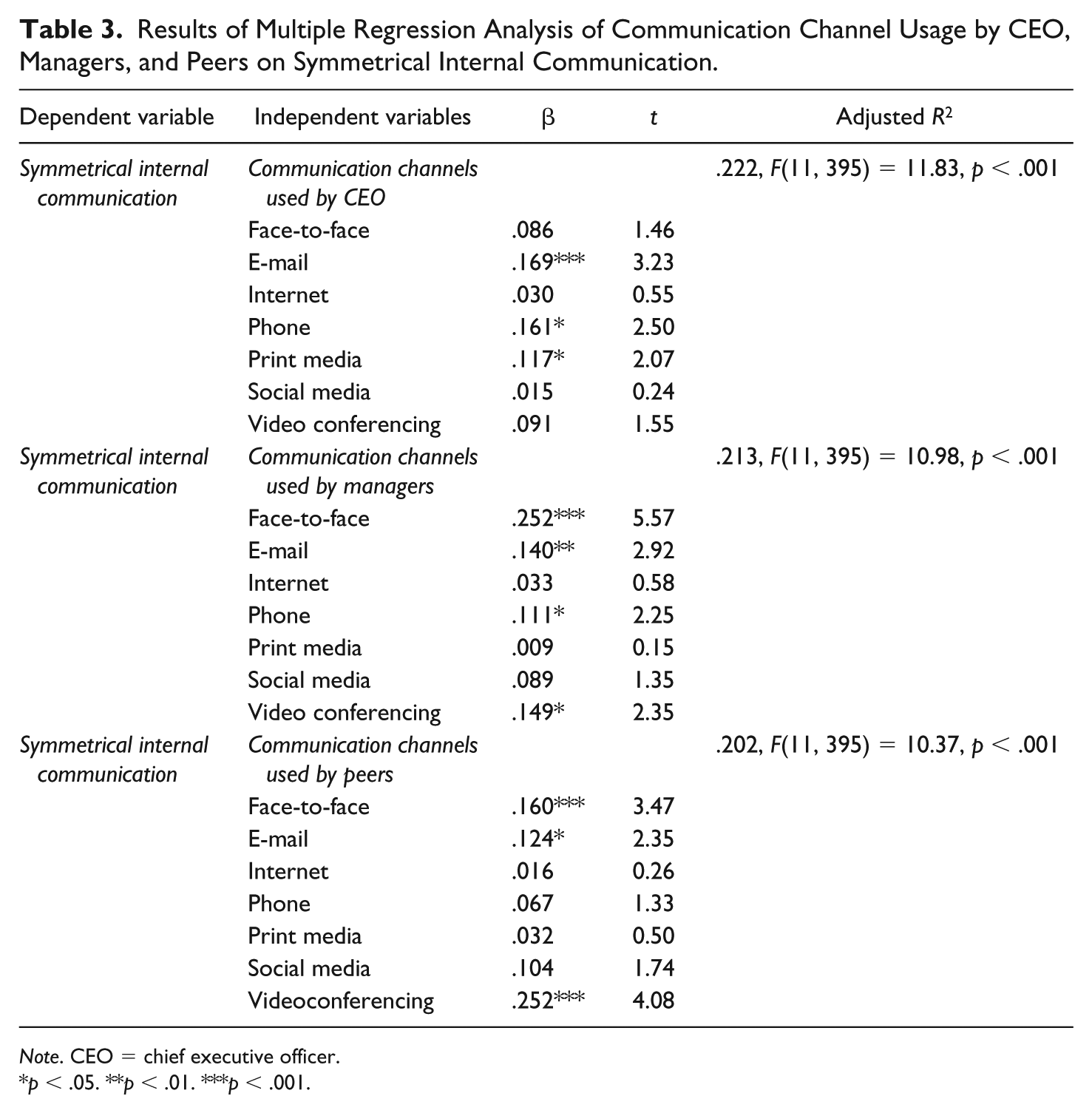
The results of multiple regression showed that CEO’s usage of e-mail (.169, p < .001), phone (.161, p = .013), and print media (.117, p = .039) turned out to be increasing symmetrical internal communication perceived by employees. In terms of managers’ usage of communication channels, the effects of face-to-face meeting (.252, p < .001), e-mail (.140, p = .004), phone (.111, p = .025), and videoconferencing (.149, p = .019) also increased symmetrical communication. Last, face-to-face meetings with peers (.160, p = .001), e-mail interactions (.124, p = .019), and videoconferencing (.252, p < .001) increased symmetrical communication within organizations (see Table 3). Depending on sources who use specific channels, employees’ perceptions of internal symmetrical communication within their organization varied.
Results of Multiple Regression Analysis of Communication Channel Usage by CEO, Managers, and Peers on Symmetrical Internal Communication.
Note. CEO = chief executive officer.
p < .05. **p < .01. ***p < .001.
Next, as the structural model presented in Figure 2 reached a good model fit based on Hu and Bentler’s (1999) joint criteria, χ2 df (314) = 812.258, comparative fit index = .942, standardized root mean square residual = .034, root mean square error of approximation = .062 (.057, .068), the study proceeded the interpretation of hypotheses. From Hypothsis 1 through Hypothesis 3, the study tested the impacts of frequent usage of communication channel by each parties on symmetrical internal communication. CEO’s usage of e-mail, phone, and print media were positively related with symmetrical communication (.287, p < .001), and managers’ usage of face-to-face meeting, e-mail, phone, and videoconferencing were also significantly related with symmetrical communication (.209, p < .001). Communication channels with peers, face-to-face meeting, e-mail, and videoconferencing also increased symmetrical communication (.160, p < .01). Last, an association between employees’ perceived symmetrical internal communication within an organization and perceive relationship was positive (.932, p < .001). Thus, all the hypotheses was supported.
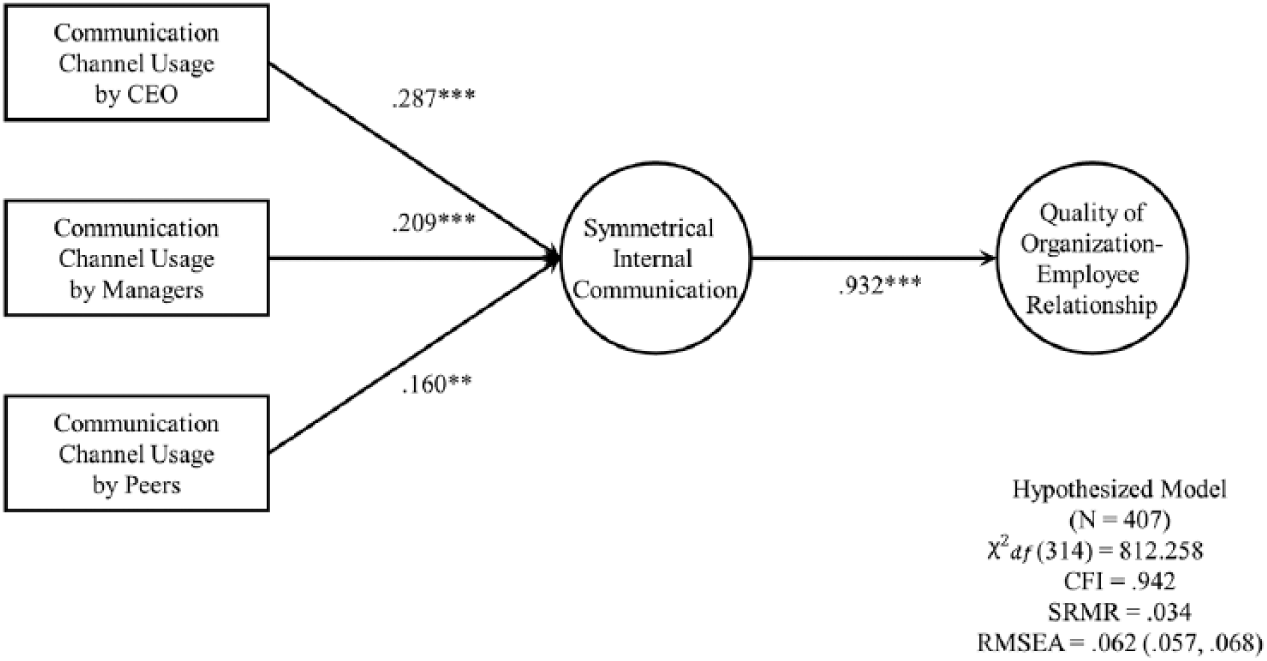
Results of hypothesized model.
Discussion
As the study builds a linkage among organizations’ symmetrical internal communication, communication channels, and employee-organization relationships, the study has significant implications for business and organizational communication research and practice.
First, this study has contributed to understanding the two-way symmetrical communication approach in the context of employee relationships, in relation to communication channels within organizations. Scholars and practitioners have long believed that the two-way symmetrical communication effort is an ideal and ethical communicative practice for organizations. In asking what makes two-way symmetrical communication feasible for an organization, the study attempted to examine diverse patterns of communication channel usage by different sources. Many studies have suggested specific communication channels are useful for organizational effectiveness (e.g., media richness theory). This study, though, has centered on sources using a specific channel and identified its significance to understand symmetrical internal communication. The results showed that channels used by different parties within an organization distinctively affect employees’ perceptions of two-way symmetrical communication.
To be more specific, supporting previous studies, a richer medium such as face-to-face interactions turned out to be a significant factor for employees to perceive the effectiveness of symmetrical communication within their organization, especially when an individual communicates with his or her managers or peers. This suggests that the symmetrical internal communication practices within an organization may be increased by regular one-on-one or team meetings with managers as well as interactions with peers in person in the workplace. Additionally, a digital channel such as videoconferencing was found to be a useful symmetrical communication way with managers and peers. This may suggest that videoconferencing system (e.g., Skype, Google Hangout) is increasingly recognized as an effective and high-richness internal communication tool for many organizations. Although videoconferencing may not have the same richness as face-to-face conversations, its potential to become a corporate channel for reciprocal communication in the dynamic organizational environment is increasing. By allowing more visual social cues (e.g., gestures) than mere audio conversations, videoconferencing enhances employees’ concentration levels in the communication process, resulting in their perceptions that communication is rather “symmetrical” than asymmetrical. E-mail, which is commonly used within organizations, is also closely connected with symmetrical internal communication. In recent years, as the general population has become more e-mail savvy, the lines have blurred between face-to-face and e-mail communication. E-mail is thus now thought of as a verbal tool, with its capacity to enable immediate feedback, leverage natural language, and embed emotions (O’Kane & Hargie, 2007), which makes it an indispensable and preferable tool for employees (Men, 2014). Given that, regardless of sources, e-mail itself contributes to increasing symmetrical communication within organizations in today’s organizations.
Interestingly, phone communication with managers and CEOs was significantly related to symmetrical communication, while it was not the case for communicating with peers through the phone. In today’s business environment, the advent of the mobile technology such as a smartphone has changed the internal communication of companies significantly (Burg, 2013). In previous work environments, the phone was considered to be a main oral communication tool and less rich medium than videoconferencing. With the functions and utilities embedded with the smartphone, employees are now expected not just to receive the calls but also to respond to texts, send e-mails, leave voice mails, and deal with work issues even at nonworking hours. Given that, employees may feel closeness, openness, or receive immediate feedback from their direct supervisors or the CEO, when they attempt to communicate through the phone for a variety of reasons (e.g., asking for help, sending reminders, conveying information, etc.), although it is rather less rich medium. In contrast, when the communication is rather horizontal (i.e., communication with peers), the phone does not necessarily affect whether employees perceive that their organization is, in general, practicing symmetrical communication. Texting or calling may be a more appropriate tool for personal interactions rather than business conversations with peers. As far as the phone is concerned, the findings of the study suggest that managerial efforts are crucial for making internal communication as symmetrical.
Moreover, print media and the Internet channel used by managers and peers did not encourage employees to perceive a symmetrical communication within an organization. It suggests that those tools (e.g., corporate website, brochures, newsletters, etc.) are rather one-way and vertical in nature, and thus, there is little chance for employees to engage in the communication process and express their ideas or suggestions. Additionally, compared with other channels, employees are more likely to receive little feedback and inadequate information with those channels from managers or peers. Regarding social media channels, the study showed that it is not significantly related to symmetrical communication practices. This may be affected by the small sample of employees who uses social media in their organization in this study as social media has not been fully integrated into internal communication systems across the organizations (Men, 2014). However, as internal social media is recently shown to be improving employee engagement and collaboration within organizations (Haddud, Dugger, & Gill, 2016), the study believes that its potential for increasing symmetrical communication and enhancing relationships with employees will be significant if the study is tailored to understand social media channels specifically.
More important, an interesting pattern was found with the usage of the communication channel by the CEO of an organization. Communication channels such as e-mail, phone, and print media turned out to be significant for increasing employees’ perceived symmetrical communication, while richer media such as face-to-face meetings or videoconferencing did not have any significance. This is mainly because employees in larger corporations may not have sufficient opportunities to communicate with the company’s CEO directly through face-to-face meetings as often as they do with their managers or peers. As shown in the result, most employees in an organization are more likely to receive information from the CEO through written channels (e.g., e-mail, the Internet). This may be because, in some circumstances, employees prefer to receive certain types of information via the Internet or company newsletters (Mishra et al., 2014), as CEO’s messages through written documents (e.g., letters, memos, bulletin boards) are tangible and verifiable. Another possible explanation is that written documents are sometimes more effective as they are less distorted and clear and concise instructions are provided, while oral communication channels are rather complicated as the message has to be passed through a number of people (Robbins, Judge, & Breward, 2003). Therefore, employees do not always see face-to-face communication as the easiest, fastest, or the most effective method, when communicating with the CEO of a company. In terms of phone usage, although most employees see that the CEO does not really use the phone for communicating with employees, it still has significant effects on symmetrical internal communication practice by the CEO. It thus suggests that a CEO’s communicative efforts through even less rich media (e.g., print media) help employees perceive communication as symmetrical. In this sense, adding a large number of studies focusing on a communication channel used by direct supervisors or managers, this study emphasizes the role of CEO in terms of using diverse types of communication channels.
Furthermore, the current study extended a growing body of literature on organization-employee relationships by exploring communication channels and its association with symmetrical internal communication. In line with previous studies, this study also found that symmetrical communication increases the quality of relationship between an organization and its employees. That is, employees are more likely to feel a good relationship with the organization when they recognize that symmetrical communication is practiced within the company. By adopting the framework of media richness theory, the study explained that certain channels used by the sources (i.e., CEO, managers, or peers) differently contribute to making employees perceive symmetrical internal communication, which will eventually increase relationship.
Practically, corporate communication managers or public relations practitioners can build relationship building strategies with employees strategically by knowing the importance of which communication channels are especially effective for certain members in organizations. It is recommended for managers—those who communicate with employees most often—to use rich-media channels by blending new and traditional media in ways that help organizations achieve goals and build favorable relationships with their employees. To make employees engage in dialogues, for example, it would be helpful for managers to not only engage in face-to-face interactions and exchange frequent e-mails but also participate in videoconferencing or leave texts or voice mail in the case of a business trip. Moreover, a company’s CEO’s active communication with employees through diverse channels is especially significant for achieving symmetrical internal communication for an organization. It may thus be helpful to provide practical guidelines for CEOs on how to incorporate channel usage to convey messages to the internal communication management. Organizations can also provide spaces for encouraging interactions between peers within the company, in order to make the two-way communication vertically as well as laterally valuable.
This study has also several limitations that should be addressed. Depending on types or contents of messages, whether it includes a crucial organizational decision or routine messages or whether the message is either positive or negative, the effectiveness of a certain communication channel will differ. Future study should thus explore how communication channels used by different sources will be effective in different contexts or situation, using other types of methods such as content analysis or interviews. The present study also selected the channels frequently used by each source that is significantly related to symmetrical communication, when testing a structural model. This approach is limited in being able to comprehensively grasp the impacts of all types of communication channels used by each party. For example, it remains unclear whether the CEO’s usage of a face-to-face meeting or managers’ usage of social media for communicating with its employees has significant effects on increasing organization-employee relationship. Future study may examine dynamic consequences on traditional as well as new communication channels for internal communication management.
In conclusion, the current study offers theoretical and practical insights in business communication research and practice by comparing organizations’ communication channel usage with their employees in a comprehensive way. As shown, symmetrical internal communication can be practiced by diverse members of organizations using different channels and knowing the benefits of each channel. By assessing multiple communication channels across roles within organizations and finding what is most positively regarded, organizations can listen to employees’ interests and concerns carefully and build a trustful relationship with their employees.
Footnotes
Appendix
Measurement Items.
| Measurement items | α |
|---|---|
| Symmetrical internal communication (Dozier et al., 1995) | .90 |
| Most communication between me and my company can be said to be two-way communication. My company encourages differences of opinion. The purpose of communication in our company is to help managers be responsive to the problems of employees. Supervisors encourage employees to express differences of opinion in my company. Employees are usually informed about major changes in policy that affect our job before they take place. Employees are not afraid to speak up during meetings with supervisors and managers. |
|
| Organization-employee relationship (Hon & Grunig, 1999) | .97 |
| Trust | .89 |
| Whenever my company makes an important decision, I know it will be concerned about me. |
|
| Commitment | .91 |
| I feel that my company is trying to maintain a long-term commitment to me. |
|
| Control mutuality | .90 |
| My company and I are attentive to what the other says. |
|
| Satisfaction | .92 |
| Overall, I am happy with my company. |
Declaration of Conflicting Interests
The author declared no potential conflicts of interest with respect to the research, authorship, and/or publication of this article.
Funding
The author received no financial support for the research, authorship, and/or publication of this article.