



Abstract
This article proposes and tests a dual-process model of corporate social responsibility (CSR) communication. Building on the framing theory and associative network theory, the authors examine how including statements about a company’s CSR fit and CSR history in apology statements can affect purchase intention and negative word of mouth (NWOM). Perceived integrity, attitude toward the apology statement, and attitude toward the company are sequential mediators that will subsequently affect purchase intention and NWOM. The results show that CSR fit will positively affect purchase intention and negatively affect NWOM through increased perceived integrity and attitude toward the apology statement, which will positively affect their attitude toward the company. The findings also show that CSR history will positively affect purchase intention and negatively affect NWOM through increased perceived integrity and attitude toward the apology statement, which will positively affect their attitude toward the company.
Negative publicity can adversely affect consumer perceptions of a company (Monga & John, 2008). Therefore, it is important for companies to come up with strategies to better respond to bad publicity to protect the company’s reputation and minimize the negative impact. One of the things companies can consider during times of negative publicity is communicating corporate social responsibility (CSR) activities that may work as a buffer and minimize the negative impact. Now more than ever, corporate involvement in social causes is a mainstream and commonplace practice (Skarmeas & Leonidou, 2013).
However, even good intentions can lead to negative reactions if they are not communicated effectively. While it has become increasingly important for companies to behave in a socially responsible way, companies must be aware that not all CSR activities are received favorably. CSR is generally perceived positively but it can also lead to negative reactions when consumers question the sincerity of a company’s CSR engagement (Blombäck & Scandelius, 2013). Therefore, it is necessary for companies to understand how consumers perceive information about their CSR activities so they can be strategic when communicating these activities to the public.
Many empirical studies have been conducted regarding CSR communication and found that it may enhance consumer evaluations of companies and lead to positive relational outcomes (Du, Bhattacharya, & Sen, 2010; Sen, Bhattacharya, & Korschun, 2006). However, there are limited studies examining how companies can effectively communicate CSR (Blombäck & Scandelius, 2013; Du et al., 2010). Though the effects of CSR history and fit have been tested (Becker-Olsen, Cudmore, & Hill, 2006; Chung, 2018; Chung & Jiang, 2017; Du et al., 2010; Elving, 2013; Zhou & Ki, 2018), there have been few studies examining the effects of mentioning the two CSR components in terms of apology statements and what factors can work as mediators for important behavioral measures. To fill this gap, this article examines the effects of corporate communication when a company includes CSR-related remarks in its apology statement after receiving negative publicity. We propose and test a dual-process model of CSR tactics. In particular, the dual-process model tests the effects of CSR fit and CSR history on purchase intention and negative word of mouth (NWOM) through the following mediators: perceived integrity, attitude toward the apology statement, and attitude toward the company.
Framing and CSR Communication
Many companies are vulnerable to negative publicity because there exist myriad factors that can affect their good name. The term apology is used extensively for different contexts, ranging from expressing concern to accepting responsibility for a negative event (Coombs & Holladay, 2012; Kellerman, 2006). A sincere apology at the right time can prevent generating negative responses toward the offender. An effective apology is not only important for relationships among humans, but it is also important for relationships between companies and their audiences.
Many factors influence the effectiveness of a corporate apology. Whether an apology includes necessary components such as expression of sympathy, acceptance of responsibility, or provision of compensation can affect corporate reputation and how the public feels about the company (Benoit & Drew, 1997; Coombs & Holladay, 2008; S. Lee & Chung, 2012). If an apology does not include the proper components, consumers may perceive it as insincere and superficial (S. Lee & Chung, 2012). For example, the athletics apparel company Lululemon received enormous criticism in 2013 when the founder Chip Wilson’s apology for blaming overweight customers for the issues with the company’s pants was directed only at his employees who had to deal with the repercussions of his comments, not at the customers who had been offended by his actions (S. Kim, 2015; Petri, 2013).
How companies communicate their apology during times of negative publicity can affect receivers’ perception and understanding of an issue (Nelson, Oxley, & Clawson, 1997) and also may affect consumer reactions (Nelson & Kinder, 1996). Framing theory can explain the potential effects of employing CSR communication in apology statements. According to Entman (1993), to frame is “to select some aspects of a perceived reality and make them more salient in a communicating text” (p. 52). Framing happens when a person tries to make a piece of information more meaningful, noticeable and memorable to an audience (Entman, 1993). It is the process of defining and constructing an issue for its receivers (Nelson et al., 1997). When used effectively, framing can be used to enhance persuasion (Hallahan, 1999).
It is important to create a positive image about a company’s products and services. Thus, a common strategy used is the framing of attributes—emphasizing certain aspects of an issue or an organization can affect the way individuals think about them (Hallahan, 1999). In other words, frames guide how individuals perceive an issue and form judgments (Wang, 2007). For example, today’s corporations strive to emphasize their socially beneficial activities such as supporting the arts and education and engaging in community involvement (Hallahan, 1999). By highlighting certain aspects of an issue, companies can influence individuals to believe that aspect is more important than other aspects and accordingly, the aspect that received more attention can have a great impact on the individuals’ attitude (Nelson et al., 1997; Wang, 2007).
When faced with negative publicity, companies try hard to minimize the negative impact and frame the company in a positive manner. One of the things corporations can consider is providing information related to their socially responsible behaviors in apology statements. While the primary business objective for corporations is to create value for customers and be profitable, companies must also focus on their social impact and responsibilities. Increasingly, companies are required to be more transparent and ethical. After a series of corporate accounting scandals such as Enron and WorldCom, the Sarbanes-Oxley Act of 2002 was enacted, which required companies to be more transparent and reliable in their reporting practices (Kalelkar & Nwaeze, 2011; Small, Ionici & Zhu, 2007). The U.S. Sentencing Commission also significantly modified the federal sentencing guidelines in 2010 and more clearly emphasized the need for companies to have a more effective compliance and ethics program (Tuffin, 2010; “U.S. Sentencing Commission,” 2010). Positioning a company as a socially responsible one is also one of the most effective ways to competitively differentiate a brand in today’s marketplace (Bigné, Currás-Pérez, & Aldás-Manzano, 2012; Drumwright, 1996).
The growth in corporations’ involvement in CSR activities may be explained by their shared belief that engaging in social activities can lead to more positive evaluations of customer-related outcomes (Eisingerich, Rubera, Seifert, & Bhardwaj, 2011). Generally, negative news leads to unfavorable reactions toward the company, but through effectively communicating its CSR activities, it can minimize the negative impact of bad publicity (Cho & Kim, 2012).
Effects of CSR on Purchase Intention and Negative Word of Mouth
It is important for companies to minimize the impact of bad publicity on consumers’ behavioral intentions. One of the many benefits of CSR is that it can positively affect purchase intentions and reduce NWOM. Many studies in the field of marketing and advertising have found that consumers’ attitudes toward a company affect their purchase intentions (Y. S. Kim & Choi, 2012). Purchase intention is a good indicator of actual purchasing behavior (Morrison, 1979) and increases when consumers think highly of the company (Kumar, Lee, & Kim, 2009). Consumers’ self-reported purchase intention cannot be a perfect indicator of future purchase behavior (Chandon, Morwitz, & Reinartz, 2005), but it may give an idea of the effectiveness of a public relations message on consumers’ behavioral intentions.
According to a Nielsen study (Nielsen, 2014), it was a global trend that companies’ socially responsible activities influence consumers’ purchase decisions. The survey, conducted with 30,000 consumers in 60 countries, showed that 55% of the respondents were willing to pay more for products and services provided by companies that are socially responsible and environmentally friendly (Nielsen, 2014). A survey conducted by a Nashville-based marketing firm with 1,015 Americans also showed that a growing number of consumers want to buy products from socially responsible companies (Field, 2013).
CSR may also reduce NWOM intentions (Chung & Jiang, 2017; Joireman, Smith, Liu, & Arthurs, 2015; Vo, Xiao, & Ho, 2019). NWOM refers to “interpersonal communication among consumers concerning a marketing organization or product which denigrates the object of the communication” (Richins, 1984, p. 697). It occurs when consumers want to express their dissatisfaction toward the company. How companies respond to crisis situations can affect NWOM intentions (Coombs & Holladay, 2008). NWOM is known to spread quickly and can have a bigger impact on consumer evaluations than positive word of mouth (Coombs & Holladay, 2007; Laczniak, DeCarlo, & Ramaswami, 2001). Therefore, it is necessary for companies to have a good understanding of how to respond to negative publicity effectively using CSR communication and reduce the possibility of consumers to engage in NWOM behavior.
Proposed Dual-Process Model of CSR Fit and CSR History
Earning customers’ trust is an important asset for any company. When consumers believe a company is trustworthy, they tend to have more positive attitudes toward the company, leading to an increase in their purchase intention (Hwang & Lee, 2012; Komiak & Benbasat, 2004; Koufaris & Hampton-Sosa, 2004; Lu, Zhao, & Wang, 2010) and willingness to spread positive word-of-mouth (De Matos & Rossi, 2008; W. G. Kim, Han, & Lee, 2001).
One of the important components of trust is integrity (Chun & Davies, 2010; Komiak & Benbasat, 2004). Stakeholders will perceive higher corporate integrity when they believe the company is reliable—factors such as honesty, sincerity, trustworthiness (Chun & Davies, 2010), commitment, and consistency (Maak, 2008) are associated with integrity. Additionally, engagement in CSR activities can have a powerful impact on one’s perception of corporate integrity. Swaen and Vanhamme (2004) conducted an experiment and found that people who read a press release with CSR components will more highly rate the company’s level of integrity than those who read a press release without any CSR components. As such, effectively communicating that a company has been consistently engaged in socially responsible behaviors can enhance perceived integrity (Maak, 2008). Skepticism also influences the effects of CSR. There have been studies that examined how consumers evaluate a company’s CSR efforts, and one major factor was consumer skepticism (Elving, 2013). Skepticism refers to one’s tendency to disbelieve and question (Forehand & Grier, 2003; Skarmeas & Leonidou, 2013). Skepticism toward CSR occurs when consumers believe a company is engaging in CSR activities for self-interest (e.g., to improve its image) rather than for the benefit of the society (Elving, 2013).
When consumers think a company has an ulterior motive for engaging in CSR activities, it is likely that such suspicion can lead to less favorable CSR evaluations (Menon & Kahn, 2003). In other words, consumers are likely to have negative attitudes toward the CSR activities when they regard the companies as opportunistic and profit-driven (Bloom, Hoeffler, Keller, & Meza, 2006).
Many companies engage in CSR communication because it is generally perceived as positive (Morsing, 2006), but companies need to understand the factors that may influence how consumers perceive their CSR activities. CSR can create a buffering effect after bad publicity (H. S. Kim & Lee, 2015; Klein & Dawar, 2004), but only when used effectively. Sometimes not mentioning a company’s CSR efforts can lead to more positive results (Chung, 2018) because CSR communication will be received favorably when consumers believe companies are engaging in the CSR activities for social good rather than profit-motivated reasons. Thus, based on prior research, we propose the dual-process model of CSR fit and history and examine how these two factors influence consumers’ evaluations of CSR communication.
Duality of CSR Fit
One of the factors that can either positively or negatively affect consumers’ evaluations of CSR communication is CSR fit. Fit refers to the degree of compatibility that customers perceive exists between a brand and the CSR activities it supports (Lafferty, 2007). Consumers will believe that the company’s CSR fit is high when they believe the CSR activities are closely related to the company’s products, image, or values (Becker-Olsen et al., 2006). CSR fit is known to affect consumers’ overall attitude toward CSR activities, which can subsequently influence their behaviors toward the company (Oh, Chen, & Hung-Baesecke, 2017).
Understanding the association process can be helpful in understanding attitude transfer after being exposed to CSR communication. How the attitude toward one issue can affect the attitude toward another can be explained by the association network model (Chapman & Aylesworth, 1999). Associative network theory has been applied widely in marketing and public relations to explain the effects of associated subjects, such as the effects of co-branding, partnerships, or CSR efforts (Baxter & Ilicic, 2015; Elving, 2013; S. Y. Lee & Rim, 2017). According to associative network theory, associations may occur when similar mental elements, mental nodes, or ideas are associated in one’s mind through experience (Anderson & Bower, 1973). How one feels about an event or issue has a specific unit in memory that is linked by associated connections (Bower, 1981). An event or experience is recorded in one’s memory by different descriptive propositions, and afterward, is represented in one’s memory by establishing associative links (Bower, 1981). Activation spreads from one node to another by these links. Associative strength between the nodes is affected by how similar or related the nodes are to each other (Chapman & Aylesworth, 1999).
There have been mixed results regarding the effects of high and low CSR brand fit (de Jong & Meer, 2017; Yoon, Gürhan-Canli, & Schwarz, 2006). Some research shows that under certain circumstances, high CSR fit can backfire, and low CSR fit can lead to better results (Bloom et al., 2006; Ellen, Mohr, & Webb, 2000). However, many researchers and practitioners argue that companies engage in high-fit CSR activities (Ellen et al., 2006; Sohn, Han, & Lee, 2012) because a high-fit between a company’s business and the CSR activities it supports causes customers to perceive the company as having greater expertise, thus giving customers a positive attitude about the company (Hoeffler & Keller, 2002).
Companies that understand how to effectively communicate their CSR engagement can expect more CSR-related benefits—CSR beliefs are positively associated with greater purchase intentions, loyalty, and advocacy (Du et al., 2007). When there exists a high fit between the company and the CSR activities it supports, this positive association is more easily integrated into one’s existing schema (Sohn et al., 2012). High-fit CSR activities will not induce many elaborations compared with low-fit CSR activities, which can minimize consumers’ skepticism about the activities the company supports (Rifon, Choi, Trimble, & Li, 2004). Accordingly, this association will have a positive impact on consumers’ attitude toward the company (Drumwright, 1996), which can lead to positive reactions, such as higher purchase intention (Du et al., 2010; Sohn et al., 2012). In contrast, low-fit CSR activities are likely to generate consumer skepticism about the sponsorship motives (Rifon et al., 2004), which can lead to negative consumer reactions and reduce purchase intention (Becker-Olsen et al., 2006).
Based on the above reasoning, we propose the below hypotheses (see Figure 1):
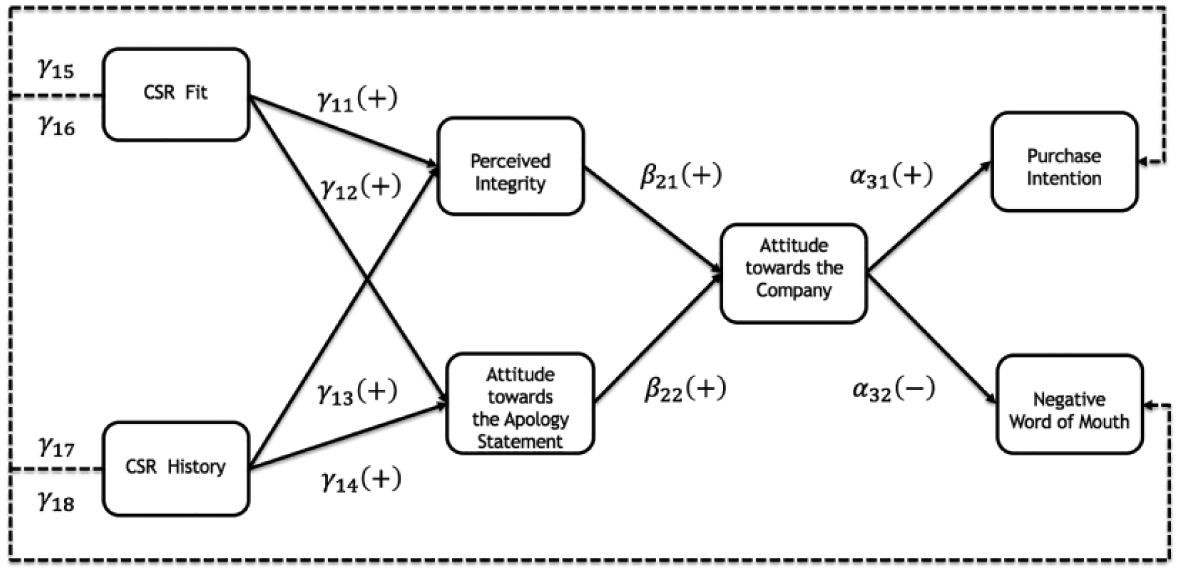
A dual-process model of CSR fit and CSR history on purchase intention and negative word-of-mouth. CSR = corporate social responsibility.
Duality of CSR History
One of the factors that may influence how consumers perceive CSR activities is CSR longevity (Blombäck & Scandelius, 2013; Vanhamme & Grobben, 2009), which refers to consistent engagement with socially responsible behavior for an extended timeframe (Porter & Miles, 2013). Social campaigns such as engaging in environment-related CSR activities usually have long-term objectives, which means that achieving success with CSR often requires a long-term commitment (Drumwright, 1996; Haugh & Talwar, 2010; Porter & Miles, 2013). Investing time in CSR activities can show a company’s commitment to the endeavors, which can be a sign of supporting the cause to serve the public rather than for profit-driven motives (Lacey & Kennett-Hensel, 2010; M. S. Lee, Motion, & Conroy, 2009).
The notion of time can be important when consumers evaluate CSR activities because consistently supporting social activities over time can help build trust and gain consumer support (Vanhamme & Grobben, 2009). Institutionalized CSR (i.e., long-term CSR involvement) positively affects customer loyalty, improves attitude toward the company, and generates less skepticism as opposed to short-term, promotional CSR (Pirsch, Gupta, & Grau, 2007). Consumers may think companies with short CSR history lack the kind of goodwill that companies with long CSR history have, and thus, they are more likely to question the self-serving motivations for companies with short CSR history (Vanhamme & Grobben, 2009). Therefore, it may not be a good idea to actively communicate newly initiated CSR activities after negative publicity because consumers may have skepticism about a company’s underlying motives and have doubts about the company’s integrity, which in turn could negatively affect consumers’ perceptions of the company and its product (Vanhamme & Grobben, 2009). Based on the above reasoning, we propose the following hypotheses (see Figure 1):
Method
The total of 252 respondents who participated in this study represents the U.S. general consumer population aged between 18 and 65 years. The respondents were recruited via Qualtrics survey software. Nearly 69% were female and 31% were male. Ages ranged from 18 to 65 years with a mean age of 46 years (M = 45.8, SD = 12.43). The respondents were asked to indicate whether they thought the news article seems realistic. To enhance the reliability of the empirical findings, we dropped the respondents who answered from strongly disagree to neutral, which eliminated 43 respondents. As a result, 209 (N = 209) respondents were examined to test the hypotheses.
Materials and Procedure
The present study employed a 2 (high CSR fit vs. low CSR fit) × 2 (long CSR history vs. short CSR history) between-subject experimental design. Participants of this study were randomly assigned to the following four conditions: (1) high CSR fit/long CSR history (N = 56), (2) low CSR fit/long CSR history (N = 54), (3) high CSR fit/short CSR history (N = 48), and (4) low CSR fit/short CSR history (N = 51). During the experiment, the respondents read a negative news article about a fictitious company, Drotean. Then they were randomly assigned to one of the four conditions and read the company’s apology statement. After reading the apology statement, the participants filled out a questionnaire examining perceived integrity, attitude toward the apology statement, attitude toward the company, purchase intention, and NWOM.
Stimulus Materials
A fictitious company name and newspaper name were employed to exclude any possible confounding of preexisting attitudes. The stimuli were based on several actual examples. The negative news article titled “Drugmaker Droteon fails to report side effects linked to its pain reliever” reported that the company was under investigation because the company failed to inform the government of at least 15 suspected cases of critical side effects, and that the FDA (Food and Drug Administration) ordered it to shut down most of its operations for 15 days. The article stated that it was the first time the FDA has issued a suspension for failure to report side effects.
In developing the stimuli for the apology statement, a pretest was conducted on Mechanical Turk (N = 119) to learn what type of CSR activities are considered high-fit and low-fit for a pharmaceutical company. In the pretest, the participants were randomly assigned to read an apology statement that included remarks related to one of the four different types of sponsored activities (i.e., environmental, health and well-being, education, human rights). A six-item 7-point scale modified from Menon and Kahn’s (2003) perceived congruence measure was used. Sample items included, “How relevant are the sponsored social issues to this company’s customers?” and “Overall, how good is the match between the sponsored social issues and this company?” The six items were combined to create a perceived congruence index (α = .88, M = 4.00, SD = 1.21). A one-way analysis of variance revealed significant differences in perceived congruence for the four CSR activities, F(3, 115) = 15.56, p < .001. The health and well-being condition that mentioned that the company supports tuberculosis research and vaccination programs showed the highest perceived congruence; the environmental condition that mentioned that the company supports clean energy projects had the lowest perceived congruence.
The apology statement from Droteon mentioned that the company is truly sorry for failing to report side effects of its pain reliever and that it offers its deepest apologies to those who had been affected. It acknowledges in the statement that it did not handle the case correctly and mentions that it has submitted corrective measures to the FDA and has bolstered employee education to make sure that safety reports are properly submitted.
In addition to the above, the apology statement in different conditions included a paragraph that provided information about the company’s CSR efforts. Based on the pretest results, the apology statement shown in the high CSR fit condition included health and well-being–related remarks; the apology statement shown in the low CSR fit condition included environmental-related remarks. Specifically, the high CSR fit condition mentioned that the company has launched several CSR initiatives to improve the health and well-being of the public, including donating $2 million every year to tuberculosis research and treatment, being the official partner for the WellB Foundation, and collaborating on AIDS prevention and care. The low CSR fit condition mentioned that the company has launched several CSR initiatives to support environmental sustainability, including donating $2 million each year to clean energy projects, being the official partner for the ESave Foundation, and partnering on efforts to reduce carbon dioxide emissions.
For the long CSR history and short CSR history manipulation, we followed Vanhamme and Grobben’s (2009) CSR history manipulation. The apology statement in the long CSR history condition said that the company has been supporting the CSR activities for 10 years; the apology statement in the short CSR history condition said that the company began supporting the CSR activities this year (Vanhamme & Grobben, 2009).
Measures
Perceived Integrity
This measure used a three-item 7-point Likert-type scale ranging from 1 (not at all) to 7 (very much) on the following items, adapted from Gurviez and Korchia’s (2002) study: “the company is sincere toward its customers,” “the company is honest toward its customers,” and “the company clearly shows interest toward its customers.” These items were averaged to create an index (α = .95, M = 0.007, SD = 1.017; standardized measure).
Attitude Toward the Apology Statement
This measure used a five-item 7-point semantic differential scale, slightly modified from Priester and Petty’s (2003) attitude scale. The items included “bad/good,” “not likable/likable,” and “negative/positive.” These items were averaged to create an index (α = .96, M = 0.036, SD = 1.031; standardized measure).
Attitude Toward the Company
This variable was also measured by slightly modifying Priester and Petty’s (2003) attitude scale. This measure used a five-item 7-point semantic differential scale. The items included “negative/positive” and “bad/good.” These items were averaged to create an index (α = .96, M = 0.005, SD = 1.021; standardized measure).
Purchase Intention
Participants’ likelihood to buy the company’s products in the future was assessed with two items from Coombs and Holladay’s (2007) measure using a 7-point Likert-type scale: “The likelihood of my buying products made by the company is quite high” and “I would buy products made by the company in the future.” These items were averaged to create an index (α = .93, M = 0.009, SD = 1.013; standardized measure).
Negative Word-of-Mouth Intention
The likelihood that respondents would spread unfavorable information about the company was measured by a three-item, 7-point Likert-type scale, adopted from Coombs and Holladay’s (2008) study. The items were: “I would encourage friends or relatives not to buy products from the company,” “I would say negative things about the company and its products to other people,” and “I would not recommend the company’s products to someone who asked my advice.” These items were averaged to create an index (α = .74, M = 0.008, SD = 0.991; standardized measure).
Manipulation Check
To check whether the respondents read the apology statement carefully, the respondents were presented with two questions—one question regarding how long the company has been involved in the social activities and one question regarding what type of social issues it supports. The survey system excluded the respondents who did not answer the questions correctly.
Results
Because of the multistage nature of our research model, the use of structural equation modeling (SEM) analysis to test the aforementioned hypotheses is advisable. However, a critical factor inherent to SEM analysis precludes the usage of such a system of equation approach. Thus, the use of the seemingly unrelated regression (SUR) analysis is suggested (Autry, Grawe, Daugherty, & Richey, 2010). The SEM approach requires all variables to be unobserved (i.e., latent) and measured using multiple item scales, rather than being observed (Anderson & Gerbing, 1988; Ping, 1995). When the underlying distribution of observed data is nonnormal (e.g., dummies, discrete variables), the classical SEM approach may encounter serious difficulties for deriving the covariance structure (Penny, Stephan, Mechelli, & Friston, 2004).
The control of respondents’ demographic (observable) variables was necessary to evaluate the effects of CSR fit and history on purchase intention (or NWOM) in this study because prior research shows that demographic factors affect how consumers react to CSR activities (McWilliams & Siegel, 2001; Panwar, Han, & Hansen, 2010). When these demographic variables are omitted from the regression model, the parameter estimates suffer from bias and larger errors (Greene, 2003). For this reason, we included income, education, gender, age, Black, and White in the empirical analysis (see Tables 1 and 2). Since control variables are observable measures that use single and binary dummy variables, an SEM approach was not desirable (Autry et al., 2010; Ping, 1995). Thus, we adopted a series of SURs, as originally posited by Zellner (1962) and updated by Greene (2003), to analyze the model in each stage using SURs (Autry et al., 2010). The estimation of which models capture mediating conditions is effectively realized using the SUR model (Preacher, Rucker, & Hayes, 2007), which can also handle the simultaneous evaluation of equations involving both observed and unobserved variables (Greene, 2003). Furthermore, the SUR model provided a better fit because it makes use of the correlation structure across error terms, when conventional separate regression (e.g., ordinary least square) could have been conducted in this study to estimate each of the equations (Knott, 2001). The Breusch-Pagan test was performed to determine whether or not the use of the SUR model was appropriate in the present study. Statistically significant evidence was found to reject the null hypothesis that residuals from the equations were independent (p = .017). Therefore, the SUR model was the most appropriate model to evaluate the aforementioned hypotheses in this study. The evaluated equations during SUR analysis are shown in Table 2.
Descriptive Statistics.

Note. PI = purchase intention; NWOM = negative word-of-mouth; ACO = attitude toward the company; PINT = perceived integrity; APS = attitude toward the apology statement; Fit = corporate social responsibility fit; HIST = corporate social responsibility history; INC = income; EDU = education; GEN = gender; AGE = age; BLK = Black; WHT = White; M = mean; SD = standard deviation.
Seemingly Unrelated Regression Equations.

Note. PI = purchase intention; NWOM = negative word-of-mouth; ACO = attitude toward the company; PINT = perceived integrity; APS = attitude toward the apology statement; Fit = corporate social responsibility fit; HIST = corporate social responsibility history; INC = income; EDU = education; GEN = gender; AGE = age; BLK = Black; WHT = White.
Test of the Indirect Effect Hypotheses
To test the indirect effects of interest, we included direct effects from the CSR attributes to purchase intention and NWOM and estimated direct and indirect effects simultaneously (Iacobucci, Saldanha, & Deng, 2007). One of the assumptions necessary for the estimation of standard errors inference through the delta method is that of multivariate normality. But, in finite sample, the total indirect effect rarely follows well-known distributions such as the normal distribution (Preacher et al., 2007). To mitigate this problem, we used a bootstrapping method to design the multiple mediations (Shrout & Bolger, 2002). Using a bootstrapping approach that relied on Hayes (2009), our analyses involved resampling 5,000 times. The results offer support for all of four proposed indirect effects; the result confirm Hypotheses 1a, 1b, 3a and 3b in that they revealed that CSR fit (γ11β21α31 = .146, p < .01, Hypothesis 1a) 1 and CSR history (γ13β21α31 = .081, p < .05, Hypothesis 3a), all have a significant, positive indirect effect on purchase intention that is mediated first by perceived integrity and subsequently by attitude toward the company. We also found that CSR fit (γ12β22α31 = .086, p < .05, Hypothesis 1b) and CSR history (γ14β22α31 = .081, p < .01, Hypothesis 3b), all have a significant, positive indirect effect on purchase intention that is mediated first by attitude toward the apology statement and subsequently by attitude toward the company.
Similarly, the results support the hypotheses, Hypotheses 2a, 2b, 4a, and 4b. We find that CSR fit (γ11β21α32 = −.086, p < .05, Hypothesis 2a) and CSR history (γ13β21α32 = −.048, p < .05, Hypothesis 4a), all have a significant, negative indirect effect on NWOM that is mediated first by perceived integrity and subsequently by attitude toward the company. We also find that CSR fit (γ12β22α32 = −.051, p < .05, Hypothesis 2b), CSR history (γ14β22α32 = −.107, p < .05, Hypothesis 4b), all have a significant, negative indirect effect on NWOM that is mediated first by attitude toward the apology statement and subsequently by attitude toward the company.
Finally, we do not find significant direct effects from CSR fit and CSR history on purchase intention (γ15 = .113, p = .031; γ17 = .011, p = .111) or on NWOM (γ16 = .037, p = .346; γ18 = .108, p = .316). The results indicate that the impact of CSR fit and CSR history on purchase intention and NWOM are fully mediated by perceived integrity, attitude toward the apology statement, and attitude toward the company (Zhao, Lynch, & Chen, 2010). Tables 3 and 4 summarize these results.
Seemingly Unrelated Regression Results.

Note. Results are based on two-tailed t tests; all path coefficients are reported in a standardized form. NWOM = negative word of mouth.
p < .1. **p < .05. ***p < .01.
Bootstrapped Seemingly Unrelated Regression Indirect Effect Estimates.

Note. Results are based on two-tailed t tests; all path coefficients are reported in a standardized form.
p < .1. **p < .05. ***p < .01.
Discussion and Conclusion
In this study, we assumed that framing can be a useful paradigm for testing the effectiveness of public relations messages (Hallahan, 1999) and examined how framing apology statements with CSR communication affects purchase intention and NWOM. Specifically, based on the associative network theories that have been widely applied to examine the attitude transfer process (Chapman & Aylesworth, 1999), we proposed a dual-process model and hypothesized that CSR fit and CSR history have a positive impact on purchase intention and also a negative impact on NWOM. The results support our hypotheses that high CSR fit and long CSR history help increase purchase intention and also mitigate NWOM through the sequential mediators—perceived integrity and attitude toward the apology statement that subsequently affects attitude toward the company. To state this differently, including CSR-related information in an apology statement may lead to negative consumer reactions, such as reduced purchase intention or increased proclivity toward NWOM, through the sequential mediators when CSR fit is low and the company has a short history of CSR involvement.
Practical Implications
The results of this study provide important implications regarding how companies can use CSR communication strategies more effectively. The findings show that including CSR-related information in an apology statement can either work positively or negatively, and that perceived integrity, attitude toward the apology statement, and attitude toward the company are the important mediators that affect this dual process. Previously, many studies have examined the direct effects of CSR on final outcomes (e.g., purchase intention and NWOM) after negative publicity, but this study adds to the existing CSR literature because it shows that to achieve the positive desired effects of employing CSR communication after bad publicity, consumers should highly rate the company’s level of integrity, have a positive attitude toward the apology statement, and have a positive attitude toward the company. Furthermore, we argue that the existence of the significant mediating effects shows that even during quiet times (before bad publicity), it is necessary for companies to create a positive image that may influence consumers’ attitudes, as this can ultimately affect important behavioral measures after negative publicity.
Limitations and Suggestions for Future Research
Effective apology is more than saying “sorry” (Kador, 2009). There are many factors that need to be included in an apology statement such as offering meaningful restitution and accepting responsibility (Kador, 2009). If an apology statement mentions the company’s CSR activities without including important components for a sincere apology, it is likely that receivers will think it is an opportunistic apology. Therefore, future research should consider how other important components of an apology affect its acceptance when combined with CSR-related comments.
It would also be interesting to examine how respondents’ emotions affect their evaluations of the apology statement that employs CSR communications. The impact of emotions on cognitive processing has been extensively examined in the field of psychology, but it was only recently that the role of emotions received attention in the field of crisis communication, media framing, and public relations (H. J. Kim & Cameron, 2011). There are many different types of negative emotions including sadness, contempt, disgust, and embarrassment (Keltner & Lerner, 2010)—it would be interesting to examine how consumers’ negative emotions affect their evaluations of the company’s apology statement employing CSR communications after negative publicity.
Understanding the cultural context is important for effective CSR communication (Birth, Illia, Lurati, & Zamparini, 2008). Therefore, it would be meaningful to conduct this study in different cultures. When practitioners use CSR communication to develop relationships with stakeholders in a new cultural environment, they need to have a good understanding of how CSR is perceived and delivered in those cultures (Y. J. Lee & Kim, 2010). Thus, it would be informative to examine whether there exist any cultural differences in evaluating apology statements that include statements related to a company’s CSR activities.
Footnotes
Declaration of Conflicting Interests
The author(s) declared no potential conflicts of interest with respect to the research, authorship, and/or publication of this article.
Funding
The author(s) received financial support for the research, authorship, and/or publication of this article: This study was funded by a grant from Syracuse University.