




Abstract
This study tests arguments from expectancy violations theory (EVT) to examine the effect of corporate social advocacy (CSA) expectancy, company actions, and employee pressure on companies to take a stance, on positive and negative behavioral intentions among Gen Zs using a 2 (CSA expectancy: higher vs. lower) × 2 (Company action: supportive vs. against) × 2 (Employee pressure: present vs. absent) factorial between-subjects online experiment (N = 387). Results reveal a significant interaction effect between company actions and CSA expectancy on positive word-of-mouth (PWOM) intention and career intention, but not boycott intention. Positive expectancy conformity yielded more positive and less negative responses than negative expectancy violation. Negative conformity led to more negative and less positive responses than when the company’s actions positively violated Gen Z’s lower CSA expectancy. Employee pressure moderated the impact of company actions on career intention. Results offer theoretical and practical guidance for business communication.
Keywords
Introduction
It is no secret that consumer expectations for brands have shifted. Consumers want brands to solve society’s problems and advocate for change (USC Annenberg Center for Public Relations, 2022). Gen Z consumers (ages 18–25) are at the heart of the push for change. According to a Harvard Business Review article, “this generation has also been influenced by, and is influential in, the macro social movements and systemic issues that have shaped who they are and what they stand for in the workplace and society” (Fernandez et al., 2023). They demand more and expect companies to take stances on controversial societal issues. Gen Z’s demands are changing how businesses are behaving, which will impact their expectations for the brands they favor—and especially those they won’t. Beyond the already-known reality that consumers “vote” with their wallets, the 2022 Edelman Trust Barometer Special Report: Trust in the Workplace found that 69% of individuals indicated that having societal impact is a strong expectation or deal breaker when considering a job. Gen Zs, in particular, have high expectations for companies (as consumers and employers) and are channeling their energies into holding them accountable (Deloitte, 2021).
This study aims to contribute to a growing body of literature examining the concept of corporate social advocacy (CSA), broadly defined as a company taking a stance on a controversial social-political issue (Dodd & Supa, 2014) outside a company’s “normal sphere of corporate social responsibility (CSR) interest” (Dodd & Supa, 2015, p. 288; Rim et al., 2020) that, unlike CSR, risks alienating some stakeholders (Browning et al., 2020). Specifically, this study empirically tests arguments from expectancy violations theory (EVT) to examine the effect of CSA expectancy, company actions, and employee pressure on companies to take a stance, on both positive and negative behavioral intentions among Gen Zs.
Literature Review
Gen Z Expectations and Advocacy
Members of Gen Z include people born approximately between 1995 and 2010 (Fernandez et al., 2023). One of the defining features of Gen Z is its involvement in social movements (Fernandez et al., 2023). In fact, the 2021 Deloitte Global Millennial Survey suggested that “the pandemic, extreme climate events, and a charged sociopolitical atmosphere may have reinforced people’s passions and given them oxygen” (p.1). Gen Z aims to hold themselves and others accountable for congruency between personal values and company actions (Deloitte, 2021). They believe that individuals can make societal and institutional changes, and generally members of Gen Z want to be involved in making pro-social changes.
Gen Z cares about many social and global issues. For example, many Gen Z individuals (6 in 10, according to Deloitte’s, 2021 survey) see systemic racism as “very or fairly widespread in general society” (p. 4). Gen Z is also highly interested in and concerned about climate change. Prior to the pandemic, 50% of Gen Z reported thinking that the “environment had passed the point of no return and it was too late to repair the damage caused by climate change” (Deloitte, 2021, p. 21). They are troubled by wealth inequality and “two-thirds of millennials and Gen Z believe that wealth and income is distributed unequally” (Deloitte, 2021, p. 22).
To address societal and global issues, Gen Z individuals often change their consumer behavior depending on a company’s values, environmental policies and impact, and how a company protects personal data (Deloitte, 2021, p. 28). They also look for employers who care about their wellbeing, companies that have high ethical standards in how they treat people and the planet, and companies and leaders who want to develop and coach them (O’Boyle, 2021). Gen Z individuals “demand respect, equity, and inclusion—and they are voting with their consumer and employment choices” (O’Boyle, 2021). This generation desires openness, transparency, and more information sharing. For example, Tik Tok accounts like Salary Transparent Street have more than 1 billion views of people sharing their salaries, cities, and professions (Fernandez et al., 2023).
Gen Z is also influencing management styles, as they wish to understand how their unique contributions in the workplace fit into larger organizational goals and projects. They want regular feedback about work performance and autonomy to make changes and even work schedules that may improve their performance (Fernandez et al., 2023). Gen Z wants employers and businesses to really care about their wellbeing (Fernandez et al., 2023; Galarza, 2023; O’Boyle, 2021), while also taking stances on socio-political issues that impact the wellbeing of society.
Walking the Talk: CSA Expectations, Actions, and Employee Pressure
Gen Z has been described as a “powerful demographic group that represents growing pressure and evolving expectations for companies’ engagement in the public agenda” (Coman et al., 2022, p. 2). Industry reports such as the 2024 Edelman Trust Barometer Special Report: Brands and Politics have highlighted Gen Z’s high expectations for company stance-taking, reporting that “nearly 6 out of 10 Gen Z assume the worst when brands stay silent” (p. 16). While few empirical studies have examined Gen Z’s expectations for companies’ CSA specifically, a recent study found that Gen Z adults expect companies to take a stance on all or at least most issues, especially those related to diversity, racial and gender justice, climate change, and rights issues (Coman et al., 2022). The authors point to evolving societal expectations of how young audiences perceive companies’ responsibilities in society, which now involves companies finding solutions to socio-political issues—an expectation that many Gen Z individuals hold.
As previously noted, Gen Z’s expectations for companies also translate to the workplace. Extant CSA literature has examined various aspects of company stance-taking, including individuals’ expectations about company engagement with social issues (Rim et al., 2020; Song & Lan, 2022; Tsai et al., 2023), aspects of company stance-taking and subsequent company actions (Zhou & Dong, 2022), and the role of employees as stakeholders who exert pressure on companies to take stances (Yang et al., 2022). For example, in 2022, thousands of Salesforce employees signed an open letter urging the co-CEOs to cease doing business with the National Rifle Association (Cerullo, 2022). Another well-known example is when Disney employees participated in a walkout, which led to the company issuing a statement denouncing anti-LGBTQ+ legislation that had impacted the state of Florida, despite originally refraining from taking a public stance (Barnes, 2022).
These examples are highlighted in extant literature, with some scholars arguing that “a theory of companies responding to their external environment is insufficient to explain corporate activism” (Maks-Solomon & Drewry, 2021, p. 126). Rather, they argue that pressure from employees, or employee resource groups, on management to take stands advocating for issues of importance to a company’s workers is a more powerful motive of action. Furthermore, Lim and Zhang (2025) highlight how “pressures from the ever-changing institutional environment are significant in shaping an organization’s decisions, including its stance on sociopolitical issues” (Lim & Zhang, 2025, p. 4). In their study, Troy et al. (2025) point to internal stakeholder pressure as an explanation for companies taking action to support LGBTQ+ rights. However, extant literature has not empirically tested the role of employee pressure in CSA or related contexts. Scholars have more broadly examined the concept of employee advocacy, which has been defined as “voluntary expressions of support, endorsement, or protection of an organization or its products by an employee, whether conveyed verbally or nonverbally to internal or external audiences” (Yim, 2024, p. 4). Yim found that factors such as empowered engagement, value congruency, and moral elevation influence employees’ inclination to engage in advocacy. Yang et al. (2022) found that the quality of the employee-organization relationship played a central role in fostering employee advocacy. However, as Men (2014) and Walden and Kingsley Westerman (2018) point out, employee advocacy is more about an employee proactively defending an organization against criticism for its advocacy efforts, which differentiates it from employee pressure, which the current study argues is more focused on encouraging the organization itself to take a stand on an issue first and foremost.
Broadly, CSA literature has examined both positive and negative stakeholder responses to CSA, particularly related to individuals’ behavioral intentions toward a company, such as positive word-of-mouth intention (J. K. Kim et al., 2023; Liu & Wang, 2024), negative word-of-mouth intention (J. K. Kim et al., 2020), purchase intention (Alharbi et al., 2022; Dodd & Supa, 2015; Liu & Wang, 2024), boycott intention (Alharbi et al., 2022; Hong & Li, 2020; Xu et al., 2024 ), buycott intention (Hong & Li, 2020; Xu et al., 2024), and brand preference (J. K. Kim et al., 2024), among other outcomes. However, extant literature has largely examined responses among a general population. That is, extant CSA literature has not empirically investigated whether or how Gen Z’s expectations and companies’ different CSA actions have impacted outcomes, nor whether or how employee pressure on companies to take a stance plays a role.
With more companies negotiating when and how to take a stance or not, especially when expectations from employees are high, this study focuses on filling a gap in CSA literature by examining Gen Z’s expectations, company actions, and the role of employee pressure, based on another real-world example: Starbucks and supporting LGBTQ+ rights. Theoretically, this study tests arguments of EVT to examine how higher and lower levels of expectancy among Gen Z individuals impact both positive and negative behavioral intentions (PWOM and boycott intention, specifically), as well as the impact on Gen Z’s interest in working at a company (career intention) depending on the company’s action toward the issue and how the action confirms or violates expectations. Given industry reports that Gen Z individuals are voting with both their consumer and employment choices (O’Boyle, 2021), this study aims to empirically investigate how expectations impact outcomes in both contexts.
Expectancy Violations Theory
It is true that stakeholders generate expectations on how corporations behave (Rim et al., 2020). Expectancy management is vital for corporations as it influences how they are perceived by the public (Park et al., 2021). Burgoon (2015) defined expectations as “enduring cognitions about the behavior anticipated of others,” (p. 2) which is a product of social norms. Social norms include the evaluation of the appropriateness and feasibility of a behavior in a given setting, which is based on the factors of characteristics of the behavior actors, relationship, and contexts (Burgoon & Hale, 1988). As a theory that originally emerged from interpersonal communication that is now widely applied to various contexts in strategic communication, EVT proposes that expectations are crucial in impacting consumers’ evaluation of and behavior toward an individual or an organization (Burgoon, 2015).
Expectancies can either be violated or confirmed. Expectancy violation occurs when a behavior performed is different from a behavior expected, while expectancy confirmation is considered as having met one’s expectations (Burgoon, 2015). Depending on the communicator’s reward valence (i.e., an evaluation of the initiator or violator), expectancy violation and confirmation can be either positive or negative (Burgoon, 2015). Within the context of CSA, a negative expectancy violation occurs when an organization’s action fails to meet a stakeholder’s high expectation, while a positive expectancy violation appears when an organization’s action exceeds the stakeholder’s low expectations. In contrast, a negative expectancy confirmation takes place when an organization’s unfavorable action meets stakeholders’ low expectations, whereas a positive expectancy confirmation is aroused when an organization’s favorable action fulfills what the stakeholders expected (Burgoon, 2015; Burgoon & Hale, 1988). According to the EVT, both confirmations and violations can affect communication outcomes, such as attitude, persuasion, and attraction to the violator. However, a proposition of the EVT is that expectancy violation, in either a positive way or negative way, has a more significant impact on these outcomes, rather than expectancy confirmation (Burgoon, 2015). In other words, EVT predicts that positive expectancy violations are more powerful in triggering favorable evaluations of and behaviors toward an organization than positive confirmations, while negative expectancy violations have stronger influence in achieving less favorable pro-organizational outcomes than negative confirmations.
A line of studies in public relations literature has tested and confirmed the greater effects of expectancy violation over confirmation—primarily in the context of CSR communication. For instance, Rim et al. (2020) examined how presentation orders affect consumers’ response on CSR commitment, guided by the EVT. They argued that positive expectation violations, caused by presentation order of CSR messages, led to greater favorable attitudes and less perceived altruism, when compared with negative expectation violations. In the similar vein, applying the EVT to a sustainability communication context, Cho et al.’s (2021) study confirmed that regardless of whether expectations were violated positively or negatively, these outcomes have more significant effects on attitudes and supportive behavioral intentions toward organizations than positive and negative expectancy conformity. Park et al. (2021) tested the similar hypotheses in the context of CSR practices, showing that consumers have less favorable attitudinal and supportive behavioral intention toward the organization when negative expectancy violation happened, than did negative expectancy conformity. However, their results showed that in the context of good CSR practices, positive expectancy violation produced less favorable responses than positive expectancy conformity because of confirmation bias, which is partially inconsistent with EVT’s propositions but shows contrasting findings related to expectancy versus conformity effects (Burgoon, 2015).
While extant literature testing EVT’s propositions in a CSR communication context has offered important insights for scholarship and practice, empirical investigations in a CSA context are lacking. While scholars have not yet fully agreed on conceptual definitions of CSR and CSA or whether CSA or a function of CSR or its own independent concept (Browning et al., 2020), the idea of offering general support to societal good (CSR) versus stance taking on controversial issues (CSA) that risks alienating some stakeholders (Browning et al., 2020) is a clarifying distinction between terms (Overton et al., 2021). Furthermore, scholars have long argued that CSA is worthy of “independent exploration” (Dodd & Supa, 2014, p. 13) and argue that it has become a “timely and meaningful topic” for research (Hong & Li, 2020, p. 160). That said, with CSA being described as a “fledgling concept,” (Waymer & VanSlette, 2021, p. 271), scholars often consult CSR literature—a longer studied construct—to inform arguments related to CSA’s potential impact on outcomes. As such, the current study tests the propositions of EVT in a CSA context, specifically with regard to company actions related to CSA and how employee pressure moderates the relationship between expectancy and action. Given the focus on these two variables, this study tests EVT propositions through the interaction of expectancy levels and company action. This approach is informed by Park et al.’s (2021) study that tested the effects of CSR expectancy and CSR practice. The current study attempts to extend their research through an empirical investigation in a CSA context and therefore models much of Park et al.’s (2021) methodology. Therefore, based on arguments from extant literature, this study hypothesizes the following:
Method
Design and Stimuli
To test our hypotheses, we conducted a 2 (CSA expectancy: higher vs. lower) × 2 (Company action: supportive vs. against) × 2 (Employee pressure: present vs. absent) between-subjects online experiment via Qualtrics, expanding the approach from Park et al. (2021). The study consisted of two independent variables: company action, which was manipulated experimentally, and CSA expectancy, which was first measured and then, following extant literature, was dichotomized into higher versus lower expectancy groups using a median split (Park et al., 2021). Employee pressure was manipulated experimentally and served as a moderating variable.
We selected LGBTQ+ rights as the CSA issue for this study since the Gen Z population is more concerned with the issue than other generations (Pew Research Center, 2020). Of the companies engaging in LGBTQ+ rights issues, Starbucks was chosen because of its history of LGBTQ+ issue involvement and controversies over its store Pride month decorations in recent years (Tumin & Holpuch, 2023). To account for potential biases that could arise from participants’ pre-existing attitudes toward Starbucks, we measured prior attitudes as a control variable in the study. Participants’ involvement with LGBTQ+ issues was also measured as a control variable.
The stimulus was a manipulated message presented in the form of a fictitious company memo from Starbucks’ Chief Global Inclusion Officer that was sent to Starbucks’ employees. Four versions of the company memo were created (company action against/employee pressure; company action in support/employee pressure; company action against/no employee pressure; company action in support/no employee pressure). For the company action conditions, participants who viewed a message that showed Starbucks’ actions against the issue, saw a message where the related portion of the message read, “However, in light of the recent surge in anti-LGBTQ+ legislation, we will not be permitting Pride decoration displays in our stores this year. This decision was made by our regional manner, and all stores are asked to comply.” Participants who viewed a message that showed Starbucks’ actions in support of the issue saw language that read, “As we have consistently done in celebration of our heritage months, we have proudly displayed Pride decorations in our stores, and I am pleased to say that this year will be no exception.” For the employee pressure conditions, participants who viewed a message that included employee pressure saw the following text: “Thank you to all of you, our employees, who have demonstrated your strong support of the LGBTQIA2+ community. Your messages, petitions, and strong advocacy are all noticed and appreciated” whereas conditions with no employee pressure did not include any language referencing employees’ actions related to the issue. It is important to note, however, that the stimuli were created in a manner that presented only a pro-LGBTQ+ direction of the issue. Therefore, the stimuli did not offer a conceptually-consistent, logical alternative stimulus to present both positive and negative employee attitudes and whether the company will allow employee activity (both positive or negative) regarding the issue. All additional text in the fictitious memo remained consistent across conditions. See Supplemental Appendix A for stimuli examples.
Procedure and Participants
A full-study pretest was first conducted (N = 78) to test manipulations and question/item wording. Minor adjustments were made to strengthen the questionnaire. The pretest sample (between the ages of 18–25) was recruited from CloudResearch Connect, a platform that has been shown to be a source of high quality data (e.g., Berry et al., 2022; Chapkovski et al., 2024; Douglas et al., 2023). Recruitment specifications only permitted individuals who were 18 to 25 years old to complete the study, and the survey instrument also included an age screener question where anyone who answered that they were 26+ was disqualified. To check the manipulation of the company’s action, participants were asked to answer the question: “Rate the degree to which the company memo about Starbucks’ actions related to LGBTQ+ rights focuses on a supportive organizational response versus an unsupportive organizational response” with answer options ranging from very negative (1) and very positive (7). Participants who viewed the company’s supportive actions indicated that the company’s action was more supportive (M = 6.13, SD = 1.44, n = 40) than those viewed the company’s action against supporting employee rights (M = 4.37, SD = 0.88, n = 38), t(76) = 8.75, p < .001, Cohen’s d = 1.19. To check the manipulation of employee pressure, participants were asked to answer the question: “to what extent do Starbucks employees advocate for the company to support LGBTQ+ rights?” Answer options ranged from 1 = not at all and 7 = a great deal. Participants in the employee pressure conditions reported higher employee pressure (M = 5.60, SD = 1.09, n = 35) than those viewed no employee pressure (M = 3.33, SD = 0.87, n = 42), t(76) = 10.13, p < .001, Cohen’s d = 0.98. Pretest participants were not included in the final study.
We performed a power analysis using G*Power to determine sample size for this study (Faul et al., 2009). The results of the power analysis indicated that a sample size of 150 is needed to obtain the power of 0.80 to detect the medium effect size of 0.0625. Using the power analysis results, 387 Gen Z (between the ages of 18–25) participants were recruited from CloudResearch Connect. The same age screening question was used. Table 1 shows full sample characteristics.
Participant Characteristics (N = 387).
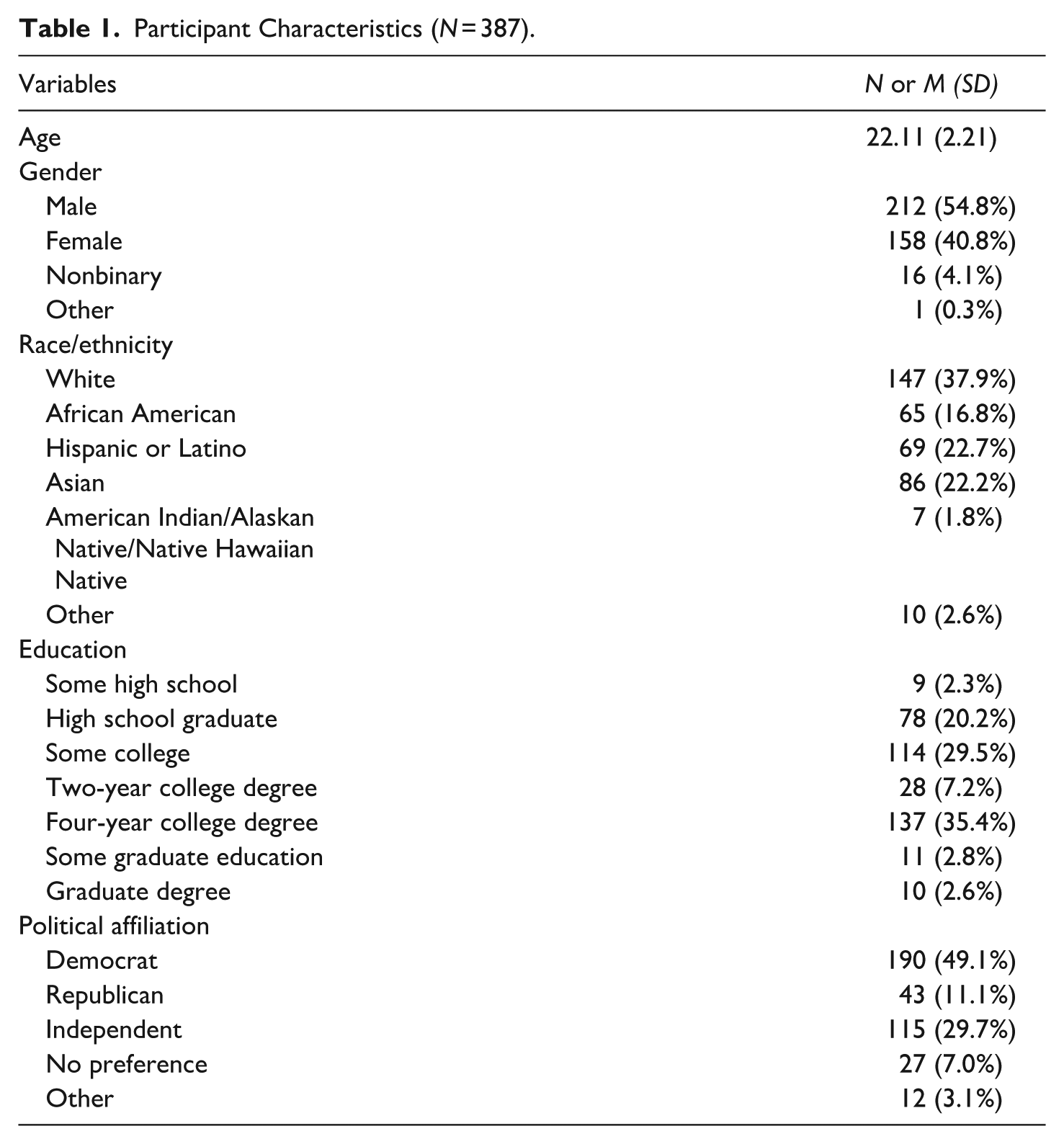
Participants in the final study completed a pre-stimulus questionnaire measuring their prior attitudes of Starbucks, as well as their level of issue involvement with the issue of LGBTQ+ rights. They also were asked to indicate their expectations regarding Starbucks’ engagement in advocating for issues. Next, participants were randomly exposed to one of the four experimental conditions. Post-stimulus survey questions measured their positive word-of-mouth (PWOM) intention, boycott intention, and career intention toward the organization (e.g., their interest in working at Starbucks). Participants also answered demographic questions including age, gender, race, ethnicity, education, political views, and political affiliation. Participants in both the pretest and main study indicated written consent to participate in the study.
Measures
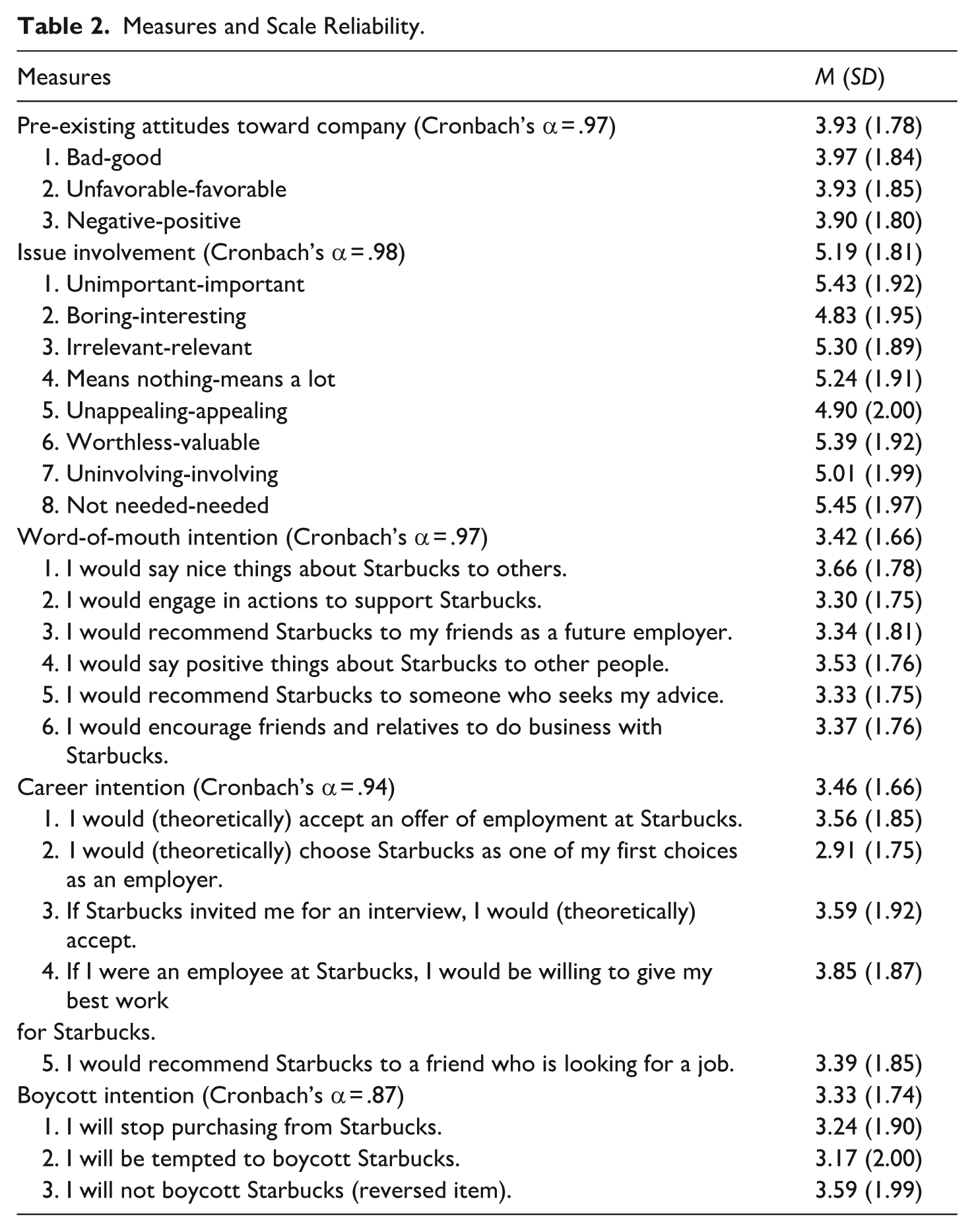
All measured variables used seven-point Likert-type scales (1 = strongly disagree; 7 = strongly agree) unless otherwise stated in the descriptions below. Sample items for each measure are included below. Table 2 includes a full list of study measures and reliability statistics. All items on each scale were averaged to form a reliable index for each respective measure.
Measures and Scale Reliability.
Independent Variables
Manipulation of Company Action
Company action was operationalized as “supportive” or “against.” The messages were manipulated and presented as a company memo to employees where the company either supported or did not support allowing employees to display Pride decorations in stores—an action related to the issue of LGBTQ+ rights.
CSA Expectancy
As previously mentioned, expectancy was measured pre-stimulus and then dichotomized into higher versus lower groups using a median split, following approaches from extant literature (Park et al., 2021). The measure included three items adapted from Park et al. (2021) that asked participants to indicate expectations for Starbucks related to socially responsible operations, fair labor practices, and supporting its employees. An example item included, “I expect Starbucks to operate its business in a socially responsible way.”
Dependent Variables
Positive Word-of-Mouth (PWOM) Intention
Participants’ PWOM intention was measured using six items adapted from J. K. Kim et al. (2020). An example item included, “I would say positive things about Starbucks.”
Boycott Intention
Participants’ boycott intention was measured using three items adapted from Hong and Li (2021). A sample item included, “I will stop purchasing from Starbucks.”
Career Intention Toward Starbucks
Five items adapted from Santiago (2019) were used to measure participants’ career intention toward Starbucks. Participants were asked, “Based on Starbucks’ actions related to LGBTQ+ rights. . .” and a sample item included, “I would choose Starbucks as one of my first choices as an employer.
Moderating Variables
Manipulation of Employee Pressure
Employee pressure was operationalized as “present” or “absent.” The messages were manipulated and presented as a company memo to employees where there was either language indicating that the company’s actions regarding Pride decorations in stores followed pressure from employees for the company to support LGBTQ+ rights by allowing Pride decorations (present) or the omission of such language (absent).
Control Variables
Prior Attitudes Toward the Company
Participants’ prior attitudes toward Starbucks were measured pre-stimulus using three items adapted from MacKenzie and Lutz (1989) measured using a seven-point semantic differential scale. Participants were asked to indicate their thoughts about the company (good-bad, favorable-unfavorable, and positive-negative).
Issue Involvement (LGBTQ+ Rights)
Eight items were adapted from Zaichkowsky’s (1994) 10-item personal involvement inventory scale. Two items were not included in the measurement because of lack of face validity in this research context. Participants were asked to indicate which bubble best represents their thoughts about LGBTQ+ rights. An example item included irrelevant-relevant.
Demographics. Participants’ age, gender (1 = female, 0 = male), education levels, ethnicity (White = 1, other = 0), political views (1 = extremely liberal, 7 = extremely conservative) served as covariates in addition to LGBTQ+ issue involvement and pre-existing attitudes toward the company.
Data Analysis
Preliminary analyses, including removing invalid responses, computing descriptive statistics, calculating reliability coefficients, and multivariate analysis of covariance (MANCOVA) tests were performed in SPSS (version 29).
Results
Manipulation Checks
Adopting from Park et al.’s (2021) approach, we used a median-split to code a “higher” CSA expectancy group (M = 6.46, SD = 0.43, n = 240) and a “lower” CSA expectancy group (M = 4.41, SD = 1.32, n = 147). The result of an independent sample t-test showed that the difference in CSA expectation between the two groups was statistically significant, t(385) = 18.25, p < .001.
To check the manipulation of company’s actions and employee pressure, we used the same questions used in the pretest. After viewing the experimental stimulus, participants were asked to answer the two manipulation check questions. We performed a series of independent samples t-tests to check our manipulation. The results showed that participants in the supportive action condition (M = 6.30, SD = 0.86) had higher levels of support for employee rights than those who viewed the company’s action against supporting employee rights (M = 3.42, SD = 1.79), t(385) = 20.12, p < .001, Cohen’s d = 1.40. Participants in the employee pressure condition (M = 6.25, SD = 0.90) reported higher levels of employee pressure than those who viewed the company’s action without employee pressure (M = 4.69, SD = 1.84), t(385) = 10.66, p < .001, Cohen’s d = 1.44. The results indicated that our manipulations were successful.
Hypothesis Tests
The results of the test confirmed that there were no significant three-way interaction effects on the combined dependent variables after controlling for the covariates, Wilks’ Lamba = 0.90, F(3, 372) = 0.90, p = .44, partial η2 = 0.01.
To test the hypotheses, we performed a three-way MANCOVA test. Participants’ preexisting attitudes toward the company, issue involvement, and demographic variables served as covariates. The results of the tests confirmed that there were no significant three-way interaction effects on the combined dependent variables after controlling for the covariates, Wilks’ Lamba = 0.90, F(3, 372) = 0.90, p = .44, partial η2 = 0.01.
There was a significant interaction effect between company actions and levels of CSA expectancy on PWOM intention, F(1, 376) = 16.93, p < .001, partial η2 = 0.03, and career intention, F(1, 376) = 3.92, p < .05, partial η2 = 0.01. However, there was no significant interaction effect on boycott intention, F(1, 376) = 2.61, p = .11, partial η2 = 0.007.
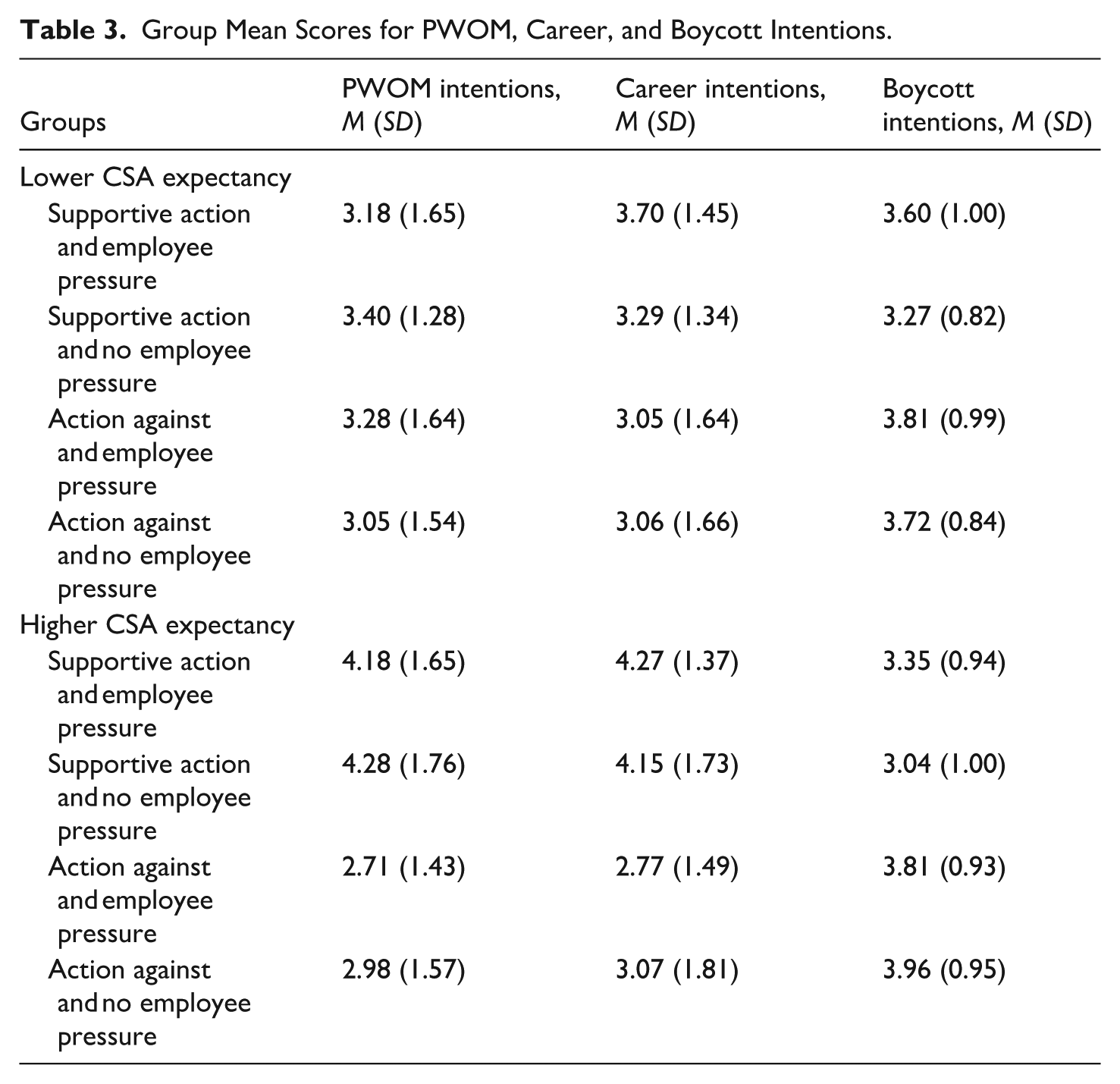
Gen Zs with higher CSA expectancy who viewed the company’s supportive actions toward employee rights (positive conformity) showed higher PWOM intention (M = 4.23, SD = 1.70) and career intention (M = 4.21, SD = 1.55) than those who viewed the company’s action against employee rights (negative violation, PWOM: M = 2.85, SD = 1.51; career intention: M = 2.92, SD = 1.66).
Gen Zs with lower CSA expectancy showed lower PWOM intention (M = 2.85, SD = 1.51) and lower career intention (M = 3.05, SD = 1.63) when the company took action against employee rights (negative conformity) than when the company took action supporting employee rights (positive violation, PWOM: M = 3.17, SD = 1.54; career intention: M = 3.49; SD = 1.40). H1a and H1b were supported. H1c was not supported. Figures 1 and 2 present the results of the interaction effect tests. Table 3 shows the group means of the dependent variables.
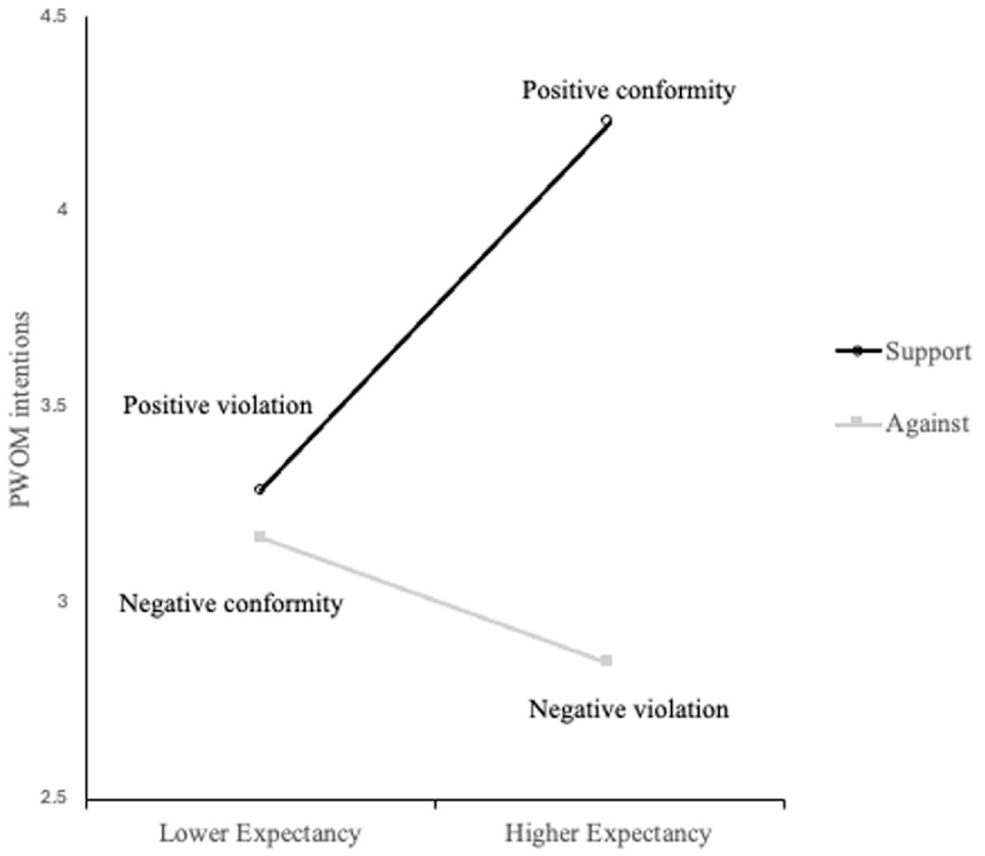
Interaction effect of CSA expectancy and company actions on PWOM intention.
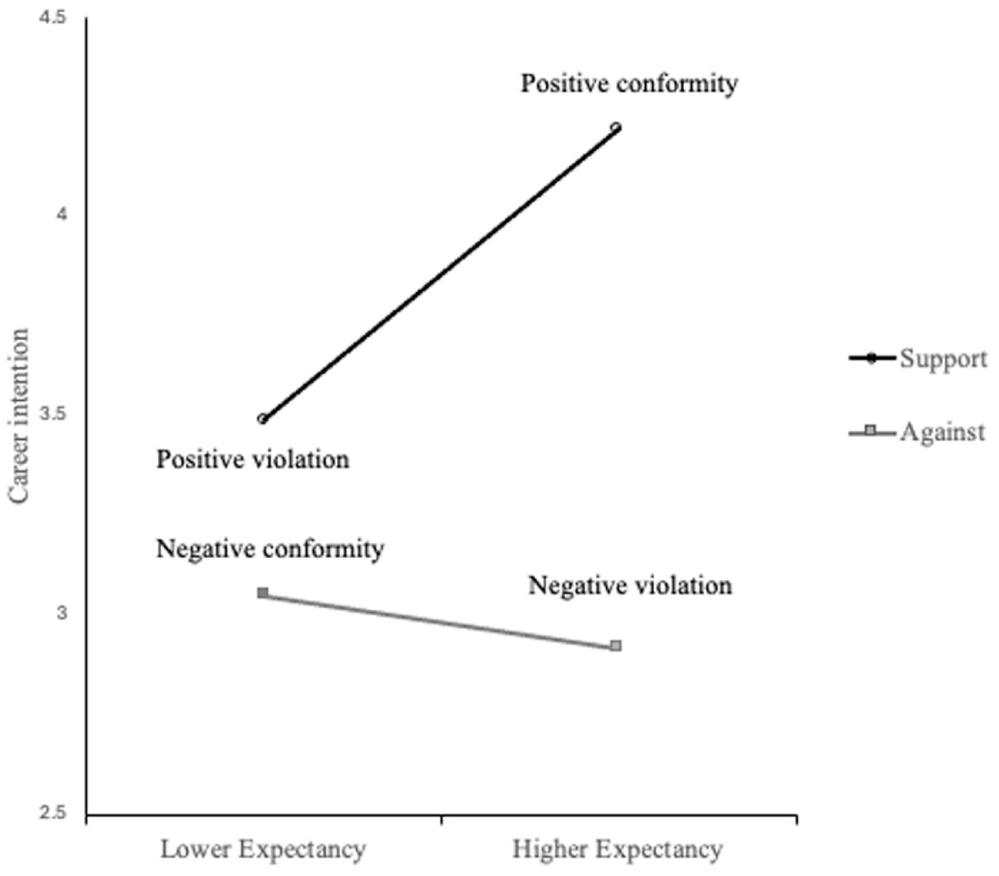
Interaction effect of CSA expectancy and company actions on career intention.
Group Mean Scores for PWOM, Career, and Boycott Intentions.
Employee pressure moderated the impact of company actions on participants’ career intention, F(1, 376) = 5.68, p < .05, partial η2 = 0.02. When the company took supportive actions, participants in the employee pressure condition (M = 3.82, SD = 1.64) displayed lower career intention than those who viewed no pressure (M = 4.06, SD = 1.42). When the company took action against, those who viewed employee pressure (M = 3.06, SD = 1.74) reported higher career intention than those who viewed no pressure (M = 2.88, SD = 1.55). H2b was supported. Figure 3 shows the moderation effect test result. However, there was no interaction effect between company actions and employee pressure on PWOM intention, F(1, 376) = 0.44, p = .51, partial η2 = 0.001, and boycott intention, F(1, 376) = 0.50, p = .48, partial η2 = 0.001. H2a and H2c were not supported.
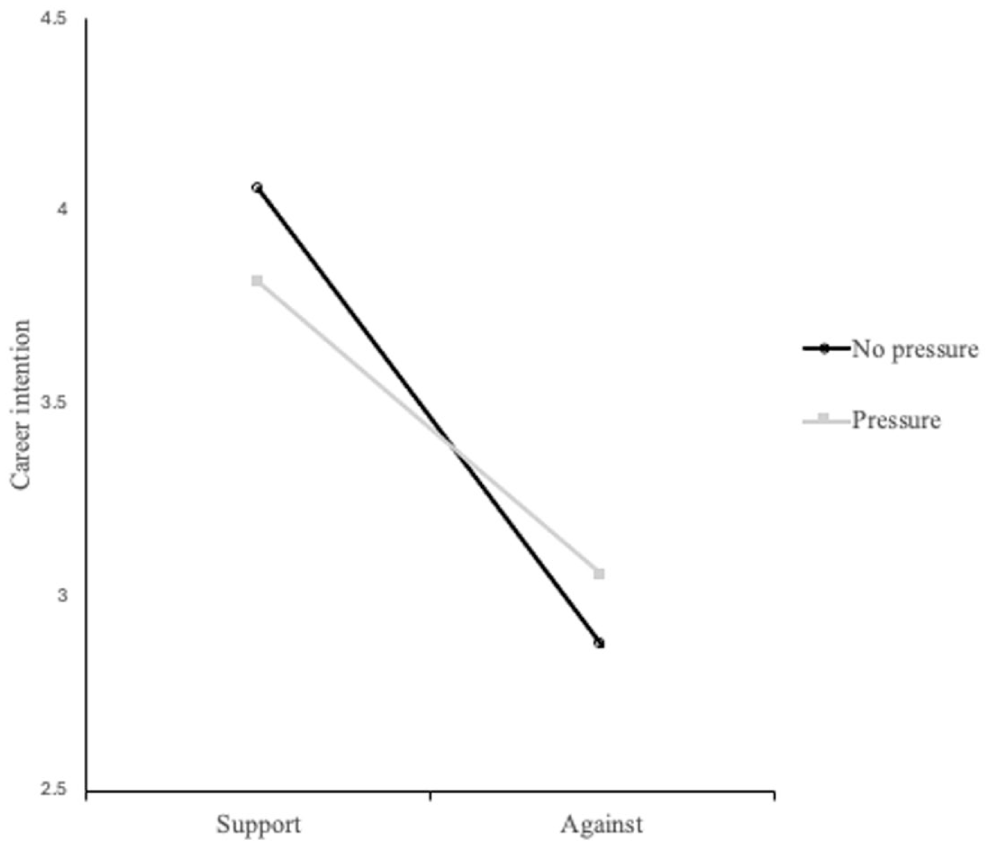
Interaction effect of company actions and employee pressure on career intention.
Employee pressure did not moderate the impact of CSA expectancy on the combined dependent variables, Wilks’ Lamba = 1.00, F(3, 372) = 0.90, p = .71, partial η2 = 0.004. H3a, b, and c were not supported.
Discussion
Much like extant literature that has recognized expectations as “central to how individuals experience their relationships with corporations and treating expectations as positive and negative constructions” in CSR or related contexts (Park et al., 2021, p. 14), this study explored differential effects of expectancy violations and conformity in a CSA context. This study fills a gap in CSA literature, as it is one of the first to examine the interplay of CSA expectations, action, and the role of employee pressure as a moderating variable and perhaps the first to examine these variables with Gen Zs. Given that Gen Zs are at the heart of a push for change in society, more research is needed to empirically examine Gen Z’s expectations and behavioral intentions in a CSA context rather than on a general population (as most research has done).
When comparing violation versus conformity broadly, results from this study do not allow us to make any sweeping claims that violation (whether positive or negative) has more significant effects on behavioral intentions than conformity (whether positive or negative). However, consistent with findings in previous studies applying EVT arguments (S. Kim, 2014; Park et al., 2021; Sohn & Lariscy, 2015), this study found that negative expectancy violation led to less favorable outcomes than negative conformity did, as results from H1 confirms. That is, Gen Z individuals who had higher expectations appeared to be more disappointed in the company’s lack of support of employee rights and thus were less likely to talk favorably about the company or to display interest in working with the company (career intention) than those whose expectations were lower from the start. However, expectancy violation did not affect boycott intentions. The result may indicate the negative expectancy violation is not necessarily strong enough to increase individuals’ negative behavioral intentions toward companies while it significantly decreases positive behavioral intentions. As Sohn and Lariscy (2015) argued, higher levels of expectancy can, indeed, harm an organization—otherwise known as the boomerang effect.
This study’s results related to the effect of positive violation are also consistent with Park et al.’s (2021) findings regarding positive conformity. That is, Gen Z individuals with higher CSA expectancy who viewed the company’s supportive actions toward employee rights indicated more positive behavioral intentions (PWOM and career intention) than participants in any other condition. This finding also runs contrary to the argument early EVT scholarship (e.g., Burgoon & Hale, 1988) has proposed regarding positive violation leading to more favorable outcomes than positive conformity. Perhaps the findings in recent scholarship that focuses on CSR (e.g., Park et al., 2021) and in the current study, which focuses on CSA, point to the expectancy factor as it relates to companies’ role in society. That is, it is important for companies to take actions related to societal issues in alignment with stakeholder expectations (and in this case, Gen Z’s expectations, specifically). This is further reinforced through this study’s results as they relate to higher versus lower levels of expectancy. While there is a notable impact of the company’s actions on positive behavioral intentions when expectancy levels are higher, such differences become significantly smaller for those with lower expectancy levels.
It is also notable that Gen Z individuals with lower CSA expectancy displayed higher levels of positive behavioral intentions (PWOM and career intentions) when they saw the company’s supportive action (positive violation) compared to participants whose CSA expectation was met (negative conformity). This result may indicate that negative conformity simply reaffirmed that the company performed as expected, which is less likely to drive individuals to take more drastic actions. However, not surprisingly, a negative violation did lead to lower PWOM and career intention, which again points to the importance of meeting expectations regardless of whether they are higher or lower.
This study also examined the role of employee pressure, given the increasing number of examples of employee advocacy in the workplace. While Gen Z expectations and company actions appear to directly impact positive and negative behavioral intentions, employee pressure moderated the impact of company actions on career intention (interest in working at the company), but not on other company-focused outcomes (PWOM and boycott intentions). This suggests that while employee pressure doesn’t impact Gen Z’s intentions to talk or act positively or negatively toward the company from a consumer standpoint, it may very well make a difference when they think about what type of company they would want to work for—or not. When the company did not support employee rights, Gen Z individuals reported higher levels of career intention when there was employee pressure. However, it is important to note that while there was a statistically significant moderation effect, Gen Z’s career intentions were still below the midpoint. We suggest that perhaps, despite the outcome, Gen Z individuals recognize employees’ commitment to advocacy and making their voices heard in the workplace despite the outcomes. Likewise, they may perceive the company more favorably in this context because, despite the outcome, the employee pressure element suggests that the company was at least aware of employees’ desires, acknowledged them, and demonstrated care and concern despite having to make the decision to not take supportive actions. This may resonate with Gen Z more than a condition where employees’ voices (i.e., employee pressure) were absent from the conversation altogether. Extant CSA literature has emphasized the importance of authentic CSA and its impact on employees’ supportive behaviors (Y. Lee et al., 2024). In the context of this study, Gen Z individuals displayed lower career intention levels when they saw a message of a company taking supportive actions after employees put pressure on the company to take a stand. It is possible that the presence of employee pressure led to perceptions of less authentic CSA (e.g., stakeholder-driven CSA)—that the company took actions to support employees only because they were pressured to do so.
Theoretical Implications
This study’s application of EVT in a CSA context offers both theoretical and practical guidance for how companies can approach CSA among Gen Z stakeholders who have varying levels of expectations—either as consumers and/or employees. By using EVT as a theoretical framework to examine Gen Z individuals, this study advances CSA literature, which scholars continue to argue is theoretically fragmented (e.g., Browning et al., 2020; Dodd & Supa, 2014) or “offers only a fragmentary glimpse” of how publics perceive CSA and the subsequent effects because of scholarship’s focus on only a limited range of publics (S. Y. Lee & Chung, 2023).
As business communication scholarship aims to inform and reflect best practices in the profession, conducting empirical research to theoretically test how stakeholder expectations impact behavioral intentions is a necessary step toward advancing that mission. Furthermore, given the argument that CSA is tangentially related yet conceptually different from CSR and other related constructs (Dodd & Supa, 2015), this study adds important empirical evidence to contribute to discussions and research investigations aimed at disentangling the constructs. In addition, this study focuses on an often under researched stakeholder group: employees. By focusing attention on this important internal public, this study offers insights about Gen Z specifically rather than a general population. This study also offers a valuable contribution to the literature by examining career intention toward a company, as most CSA studies have measured outcomes that are primarily bottom-line focused (e.g., purchase intention).
Using a corporation’s internal messages as stimuli, the findings of this study further extend EVT. While most previous studies examined individuals’ attitudinal and behavioral responses to CSR or CSA targeted external stakeholders (e.g., consumers), this study investigated whether corporations’ CSA intended to support internal stakeholders (i.e., employees) affects external stakeholders with varying CSA expectancy levels. The results of our study demonstrate that individuals’ expectation of a company’s internal CSA plays an important role in shaping their behavioral intentions to the company. Thus, this study adds an important contribution to the body of EVT literature by offering empirical evidence that individuals expect corporations to support their internal stakeholders via CSA and their internal CSA expectation plays an important role in shaping their positive and negative behavioral intentions toward corporations.
Practical Implications
To our knowledge, this study is one of the few studies to examine how organizations’ CSA actions and communication with employees about these actions affects external stakeholders’ attitudes and behavioral responses to companies engaging in CSA. The results of this study demonstrate that companies’ CSA on employees affects the public, specifically Gen Z individuals who tend to have higher CSA expectations than the general public. Using EVT as a theoretical framework, this study demonstrates that individuals’ levels of CSA expectancy amplify the positive and negative outcomes from companies’ CSA involvement. As extant literature has argued (Lim & Zhang, 2025), pressure from internal stakeholder groups (e.g., employees) on management to take stands advocating for issues has become a very powerful motive of action. Gen Z as a demographic has increasingly high expectations of companies’ role in society, as this study demonstrates. Companies seeking to appeal to Gen Z consumers and prospective employees should make genuine efforts to understand Gen Z’s expectations and ensure that their organizational practices meet these expectations to yield the most favorable outcomes. Pointing to the study findings about CSA actions and employee pressure, it is important for companies to demonstrate that they are actively listening to employees and involving internal stakeholders in decision-making processes. While employees may not always agree with the actions companies take, this study suggests that companies would benefit from prioritizing employee engagement, as it may create buy-in, understanding, and support, even when the company is not always able to accommodate employee requests. Ultimately, the results from this study shed light on the notion of employee advocacy and how it may impact hiring and talent recruitment. Consistent with industry reports (e.g., Deloitte, 2021; Edelman, 2022), this study suggests that, indeed, having societal impact is a strong expectation or deal breaker for Gen Zs when considering a job—and that they will hold companies accountable.
Practically, this study also points to the value of conducting environmental scanning and conducting thorough situation and audience analyses to create and execute strategies that align with a company’s mission and values. Perhaps more than any generation before them, Gen Z expects authenticity and congruence in company values and actions, which in part may contribute to a revolutionization of not only how companies think about brand image, but also how to approach effective hiring practices and how to foster a transparent, inclusive workplace where employees feel their voices are heard.
Limitations and Future Directions
This study has limitations upon which future research can be developed. Study limitations include a singular company/issue focus, which limits generalizability of findings. Similarly, as this study focused on examining one issue, future studies could examine more and different types of issues such as racial justice, immigration, or gender identity, among others. There are also limitations related to measurement. While the career intention measure was adapted from extant literature, it may be difficult for participants to hypothetically envision their interest in working at a company, which inherently weakens the external validity of the measure.
We also note that while this study controlled for prior attitudes toward the company, as well as issue involvement, we did not measure individuals’ personal attitudes toward LGBTQ+ rights. Individuals’ issue involvement is not necessarily equivalent to their attitudes toward the issue, and its measurement only offers a non-exact head-to-head comparison. It is possible that some individuals who are against LGBTQ+ rights also view LGBTQ+ rights as an important issue and feel high levels of involvement with the issue. Therefore, study results do not capture the potential interaction effects between attitudes toward the issue and the independent variables tested in the study. While the aim of the study was to examine expectancy conformity or violations regarding a company engaging on social-political issues, focusing on individuals’ personal stances on a given issue would add further insights and opportunities to test EVT dimensions. Furthermore, as previously noted, the stimuli presented only one side of employee attitudes toward the issue. With employee pressure being presented in one direction in the stimuli, it is difficult to separate potential effects of employee support versus whether participants’ reactions were actually a reflection of their own attitudes of the issue. Future research should capture all stimulus angles (both positive and negative), which would protect against confounding results in measuring the outcome of employee support.
There is also a limitation with the expectancy measure, which was also adapted from EVT literature. It is arguable that the measure itself is not a direct measure of advocacy per se; rather, it is a baseline measure about individuals’ expectations about companies’ role in society and to its employees more broadly. Future research could test CSA expectancy more explicitly and/or from a more specific standpoint. In addition, while we were able to obtain “higher” and “lower” CSA expectancy groups using prior studies’ median-split approach, it should be noted that our sample in general has a relatively high level of CSA expectancy. Given the study’s focus on Gen Z, it would be difficult to develop a truly low expectancy group, as expectations for CSA are generally high in our society, especially among this demographic (O’Donnell et al., 2025; Pew Research Center, 2020). Thus, this may point to a potential limitation in the application of EVT in a CSA context. However, as this study demonstrates, there is value in comparing differences in expectation levels among Gen Z individuals, even if they are generally higher than the general population. Furthermore, future studies could include cross-cultural comparisons, longitudinal research on the evolution of CSA expectations, or investigations into how different sociopolitical contexts shape expectancy violations. Finally, while this study focused on testing EVT and employee pressure as a moderating variable, other potential independent variables and moderating variables that could affect Gen Z’s behavioral responses to CSA might be overlooked. Future research could examine structural antecedents of expectancy violation and additional moderating variables such as CSA skepticism. Continued theory-driven investigations in CSA literature are necessary to advance this body of literature.
Supplemental Material
sj-docx-1-job-10.1177_23294884261437405 – Supplemental material for Gen Z and Social Change: Examining the Effect of Corporate Social Advocacy Expectancy Violations on Positive and Negative Behavioral Intentions
Supplemental material, sj-docx-1-job-10.1177_23294884261437405 for Gen Z and Social Change: Examining the Effect of Corporate Social Advocacy Expectancy Violations on Positive and Negative Behavioral Intentions by Holly Overton, Joon Kyoung Kim, Carrie Sipes and Yanan Wu in International Journal of Business Communication
Footnotes

Ethical Considerations
The Human Research Protection Program at Penn State University determined that the proposed activity (Study 00023867) does not require formal IRB review because the research met the criteria for exempt research according to the policies of this institution and the provisions of applicable federal regulations.
Consent to Participate
The study was approved as having met the criteria for exempt research by the Human Research Protection Program at Penn State University (Study 00023867) on January 9, 2024. All participants provided written informed consent prior to participating.
Funding
The authors received no financial support for the research, authorship, and/or publication of this article.
Declaration of Conflicting Interests
The authors declared no potential conflicts of interest with respect to the research, authorship, and/or publication of this article.
Data Availability Statement
The datasets generated during and/or analyzed during the current study are available from the corresponding author on reasonable request*.
Supplemental Material
Supplemental material for this article is available online.