




Abstract
One business school addressed the “zeitgeist” of the financial crisis by introducing in its inaugural seminar the cultural and ethical values too often absent from the types of transactions students are trained to manage. Drawing from cross-cultural and communication studies, the author tested “serious games”—cultural situations and personal development exercises aimed at rewarding rule-based cooperation, interpersonal communication, and cultural empathy. Observations made during the games fostered curriculum reform by integrating humanistic concerns considered vital for international finance careers. Linking such training to business learning objectives enhances accountability, rule-based action, and cultural awareness reform.
Keywords
The Educational Context
EDHEC Business School is a fully accredited degree-conferring institution in France specializing in management science. Its 5-year continuous bachelor through master cycle builds on a 2-year prebusiness administration general education sequence, followed by a 3-year accelerated management program and a year of internship. A master of management (referred to as the Bac +5 level in the European Union) ensures high academic standards, prestigious company placements/internships, and internationalized curricula (http://www.edhec.edu).
The traditional majority of full-time matriculated students attending EDHEC Business School are French nationals educated in France. They have had extensive experience with competitive exams during high school (A-Level), in prebusiness preparatory schools (lower bachelor level), and once again by selective exams to enter the master track. One positive outcome of these educational formats is a student body with strong academic foundations, capable of high-level thinking and good graduate-level reading, writing, and numerical abilities. A less positive outcome from the point of view of professional and civic objectives has to do with the strong “in-group” mentality socialized. They tend to set themselves apart from other international academic profiles, and they come to expect certain entitlements. They are drawn to alumni clubs where they can communicate among peer “elite,” and many remain in lifelong networks based on past school experiences. In fact, a major feature of attending this type of school is the possibility of creating the relationships and social capital that enhance career prospects. These features have been fully documented in sociological studies of the French educational system (Bourdieu, 1989;Bourdieu & Passeron, 1964).
The appeal of Master of Science in Finance programs offered over the past 5 years has created a situation where international students now comprise half of the degree seekers. At the same time, the number of international faculty and administrative personnel has substantially increased to enhance the school’s program portfolio and manage an English-speaking population. These factors have created a new school culture, responding to the needs of a diverse international academic community.
In 2009, EDHEC had 5 years of experience combining international groups in the classroom (comprised primarily of European exchange students and international admissions from all over the world, particularly China and India). All faculty felt that something needed to be done to enrich the interactions between French and international students. In particular, faculty teaching in the main finance program wanted to resolve the classroom communication “malaise” that cultural segregation necessarily creates, a tendency also observed by the career center during assessment center team simulations and confirmed by anecdotal evidence offered by administrators working with international students. These field reports surfaced at the senior management level and were declared unproductive to teaching and learning and a potential hazard for international recruitment. Nonfinance faculty were invited to contribute to a problem-solving mission set on improving cross-national synergy in the context of an inaugural seminar. Volunteers from communication, sociology, culture, and foreign languages held preliminary meetings and conducted field interviews to define the exact situations to be corrected. Three problematical areas were identified based on this field study: (a) French student behavior, (b) negative experiences of international students, and (c) cognitive teaching policies specific to finance faculty.
Problem 1: French Student Behavior
For the purpose of this article, which focuses on problem-solving in the international classroom, I will now focus on some of the downsides of the French classroom. (There are, of course, many, many upsides!)
French students tended to sit in the back of the classroom whispering and using their computers. They acted like “spectators” rather than participants and expected professors to lecture rather than interact with students.
Although English was the language of instruction, students used French between themselves, excluding international listeners. This was further reinforced by an inhibition of French students to speak in English in class, as the French accent in English tends to produce mirth among the French. Such shyness may be an unintentional product of secondary school teaching methods in France, where students are encouraged to produce “perfect” English in grammatical and sound reproduction terms.
International students actively participating in the class felt mocked by French students who thought they were “uncool” and trying to be teacher’s pet.
Problem 2: Negative Experiences of International Students
International students were unsuccessful at striking up relationships with French students.
Teams tended to be dysfunctional, primarily based on friendship, with little cultural or disciplinary admixing.
Opinions about role attributes and differing motivation divided groups.
International students were dismayed by the tendency to negotiate rules that seemed to predominate among French students. Many reported feeling uneasy in contexts where rules were challenged, a French cultural particularity noted in professional contexts (Overby, 2005). The notions of fair/unfair, cheating/sharing, and right/wrong seemed particularistic to each nationality.
Group identity, shared educational goals, empathy toward difference, and the challenging of competitive ideas seemed stifled. International students (and teachers) felt stigmatized by nationality, age, and disciplinary labels.
Problem 3: Cognitive Teaching Policies Specific to Finance Faculty
A standard classroom “protocol” for starting and ending on time, timeliness in handing in papers, ways of asking questions, and inducing cooperation with the learning process seemed to be lacking.
The mix of faculty educational cultures from France, the United Kingdom, Israel, India, China, Greece, and Mexico created ambiguity about common ground rules and inhibited any harmonization of the deep learning goals that would offer a school “brand” of pedagogy.
Student participation was inhibited by strong authoritarian teaching styles of certain faculty who expected little interaction with students and focused on delivering content rather than opening the floor to discussion.
Assessment emphasized rationalist and mechanistic cognitive performance to the detriment of experiential and deep learning.
The notion of accountability to a group or collective action was not a visible academic objective, nor was it evaluated.
The curriculum and its evaluation priorities tended to reinforce quantitative bottom-line thinking rather than the critical and systemic analysis needed to develop ethical thinking, nuanced communication skills, and cross-cultural empathy.
Learning Style and Motivational Analysis: An Intercultural Overview of Student Population
Identifying the problems described above was not enough to offer corrective action. A deeper understanding of this learning situation was now needed. From the sociological and educational perspectives, it is possible to explain why disregard for certain school rules, lack of enthusiasm for intercultural exchange, and low collaborative, participative learning were manifest in the classroom. At least three different student learning profiles are representative of the population at EDHEC. Managed by international faculty with a focus on finance, classrooms lacked common references and communication cues, which created a somewhat dysfunctional educational environment. In the following section, I take a closer look at these different learning profiles and then examine the faculty and disciplinary particularities.
The first student learning cohort comprises French students recruited from similar educational backgrounds, the majority from Paris and its closest towns. These students come from predominantly middle class, upper middle class, and wealthy families (Bourdieu & Passeron, 1964). They represent (or believe they are entitled to represent) the ruling class. Many of these local students actually have known each other for more than 2 years and have already shared personal, academic, and professional experiences, some even creating businesses and associations together by the time they reach their final year of study. They are 22 to 23 years old with about 12 months of internship experience.They are network driven.
French students can sometimes be prone to exhibit certain unproductive behaviors that have been documented in the literature of cross-cultural analysis based on France. Their distrust of authority (Fukuyama, 1995) played out in their unwillingness to maintain dialogue with professors directly, preferring to interact with peers at the back of the class. One Swedish study has asserted that French students exhibit a low level of commitment to group learning and medium to low degrees of cooperation with educational authority in comparison to other national groups (Kragh & Djursaa, 2006). The high-power distance of the French is encoded in their rejection of peers not having the same educational background, reflecting their documented pyramid preference in organizational situations (Hofstede, 1980). Finally, the reluctance to speak in English and risk losing face in front of peers because of accent or grammar mistakes reveals a coping mechanism for saving face. This reluctance also reflects a defensive national position of resisting unfair “linguistic imperialism,” manifested by open resentment of “Anglo” incursions within the local space, a feature of French national press discourse studied recently (Hellman, 2011).
The second learning and motivation profile includes international students from Asia and the Americas unfamiliar with Europe, who barely speak the local language and rely on English as their only means of communication. EDHEC admissions data reveal that this group of international students holds bachelor degrees in social sciences and management. Their ages range from 23 to 27 years, and students often have 18 to 24 months of job experience. Online surveys of student motivation reveal that they are attracted to EDHEC for its educational reputation and competitive tuition fees, and they are often embarking on a study-abroad program for the first time. This subgroup is extremely concerned about grades and focused on authority cues (the teacher, the book, the rules). They are eager to be accepted by the French and to succeed in the French business environment. This group tends to voice the greatest disappointment to our international office, especially concerning the social aspects of their learning experience. For these international students, the potential cultural and social benefits to be derived from their experience prove hard to reach. Some report feeling ostracized both within the school and in the larger community, largely because of insufficient ability to speak French. Internationals have reported that French students tend not to consider foreign students as bona fide members of their in-group, and although they are not hostile to them, they do not include them in social events. The Asia/America group is focused on building global employability measured by disciplinary expertise and a positive trade-off between their educational investment and professional opportunity.They are employment driven.
A third learning profile comprises European exchange students, who are frequent travelers with prior study-abroad experience. They are focused on obtaining the best grades possible so that they can market themselves in a competitive job arena using the brand name of a prestigious degree combined with bilingual, often trilingual credentials. Although job experience might sometimes be lacking (less than 12 months), many have exceptional academic credentials and hold demanding bachelor degrees in economics and finance obtained in their home countries. The international office has observed that this group tends to consolidate into an “international student” community operating in parallel circuits to French networks, although they occasionally mix. They are proactive in negotiating and communicating with faculty, highly motivated to create efficient teams, and deeply committed to their educational results. Interviews reveal that these students do not seem to have the same sensation of being “ostracized,” suggesting Europeans in general suffer less culture shock compared with other groups studying in France. Viewing EDHEC as an educational and personal opportunity, they often engage in a high level of sports activities (mountain climbing, biking, rafting) unique to the region. They are not indifferent to the locals, but live in a world independent of France. This group tends to focus on personal experience and intercultural expertise.They are self-development driven.
Other factors explaining an educational “disconnect” come from the faculty themselves. The rush to consolidate a core faculty with exceptional finance credentials from around the world brought together vastly different teaching and research profiles. Depending on prior national training, teaching practices diverged and there was no program-wide teaching and learning philosophy. As a result, students experience vastly different teaching styles, disciplinary demands, and grading policies during their academic year with some faculty lenient on deadlines, some grading participation, and others setting standards above the degree level. Although heterogeneous faculty is something most schools experience, the sheer number of different international profiles, ages, core disciplines, and nationalities seemed to make a teaching “brand” difficult to forge. Understandably, performance in numeracy has always outweighed all other learning objectives.
The educational focus on finance is yet the final factor that might help explain the complicated problem EDHEC faced. Finance faculty and students choosing finance as their academic concentration tended to share disciplinary mind-sets and career objectives that were not necessarily conducive to team work, international communication, empathy, citizenship, and cultural awareness. Finance students are reputed to be naturally disposed toward a preferred expression through numeracy rather than verbal or emotional communication with peers and teachers, sparking research based on improving the communication skills of finance students (Carrithers, Ling, & Bean, 2008). More important, the desire to work in the financial sector requires a certain type of discipline and attitude. Standards for excellence and employability tend to be established based on numerical problem-solving and statistical analysis, downplaying environmental, social, and situational competency. It is probably not too adventurous to wonder if most students in finance programs are motivated by the lure of gain, status, and worldly affluence so characteristic of the promise surrounding high-flying careers in finance. These conscious and unconscious dispositions were not conducive to reaching other ethical, cultural, or communication goals.
Learning Strategy Methods
The problem-solving team had taken stock of the 2008 financial crisis and its enduring repercussions on the job market. Introducing ethics, intercultural communication, and ground rules seemed a justifiable point of departure for an inaugural seminar in finance as these themes allowed participating faculty to address the core problems encountered. Furthermore, documentaries such asInside Job(Ferguson, 2011) and books such asAnimal Spirits(Akerlof & Shiller, 2009) brought to the mainstream an awareness of character flaws in people involved in financial decision-making. Hostility toward regulation, a sense of entitlement, and bottom-line thinking were the darker sides of the finance “profile” resonant with reported observations of student behavior. With a view to taking corrective measures for moral, communicative, and collaborative skills of future finance experts, faculty identified three priority areas of focus:
Introducing experiential interpersonal learning as vital preparation for finance careers
Promoting the interest of a rule-based environment in which success implies fair play
Developing a collaborative school spirit that transcends difference and builds a virtuous cycle of cooperation (Witte, in press)
For reasons linked to cost, timeliness, and availability of competent faculty, it was decided to create a 2-day opening seminar involving students in meaningful and memorable personal exchanges with peers by addressing these three goals, which were encapsulated into three themes: “cooperative learning,” “global mind-set,” and “rule-based” culture (seeFigure 1). The challenge before faculty assigned to address these difficulties in the finance program involved the creation of a noncredit, but compulsory inaugural activity run over 2 days involving more than 200 students (approximately 16% internationals), at the lowest cost (of course!). The plan included the mentoring of eight faculty (from Germany, the United Kingdom, the United States, Ireland, and France). The integration of teaching techniques used in communication, management, language, and culture, entirely in English (a foreign language for the great majority), was incorporated to maximize student motivation at the start of their finance education. This colossal task was set 3 months before launch.
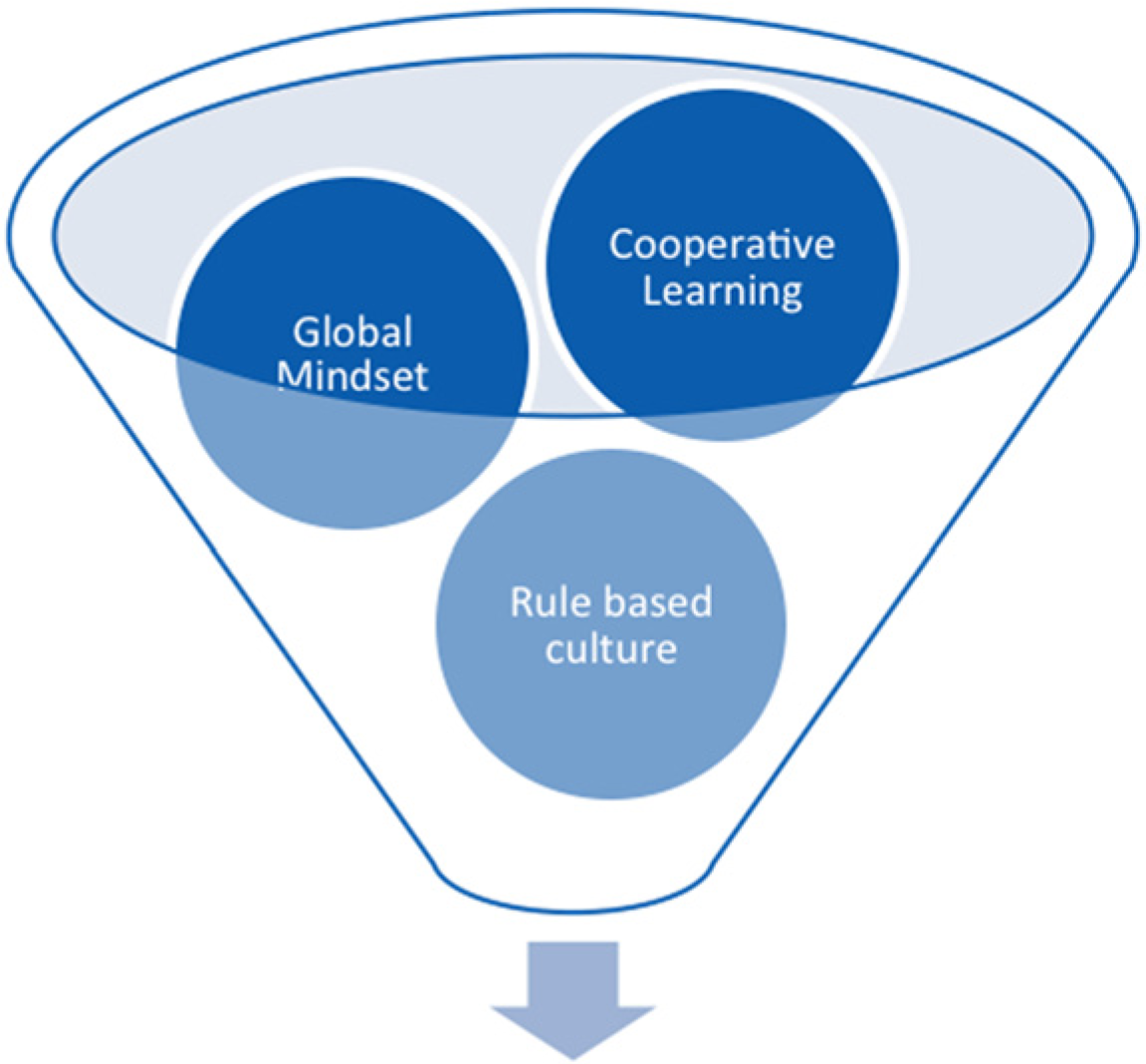
Targeted teaching and learning goals.
It was recognized that the target school culture and ethos that needed to be created could not be inculcated through courses, reading, and lectures. Instead, the faculty involved in the inaugural seminar wanted a context that was less rational and systemic, building on a recommendation about using “messy structures” for finance students (Carrithers et al., 2008). Teachers needed a format where students “discovered” key concepts on their own and where they felt that they were “empowered” (Kragh & Djursaa, 2006) to create a community consensus about the way students dealt with each other, with faculty, and with the environmental pressures of a changing world finance environment. In seeking an experiential context that would privilege “creative judgment” and “synthesis,” relying heavily on communicative exchange and social complexity, EDHEC aimed for the type of learning event that would resonate with Bloom’s highest level of learning—the holistic synthesis of the cognitive, affective, and the psychomotor (Bloom, 1956).
The faculty cohort, after ample debate and exchange, opted for a uniquely “learning-by-induction” method to achieve a bottom-up behavior “contract” from students. Together, the seminar teaching team hoped that the opening activity would serve as a catalyst to forge ties between French and international students, solicit a global mind-set whereby things were no longer labeled “French” or “international,” and introduce a climate of studious cooperation between students and faculty based on rules identified and accepted by all participants. The faculty rejected any formal teaching about financial ethics and avoided the stigmatization of national differences.
The three educational goals were now broken down into three key seminar objectives (seeFigure 1), which informed the choice of the thematic exercises used in our seminar blueprint.
These three themes were then associated to a related pedagogical activity, drawn from broad theoretical concepts that participating faculty decided to accept as important. The faculty team was also concerned from the outset about the problem of assurance of learning, choosing activities that would lend themselves to some form of measure that could be used to improve or change the seminar in the future.
The Learning and Teaching Blueprint
Table 1outlines how learning goals and related objectives, institutional framework, theoretical research, seminar exercises, and debriefing activity coalesced in seminar planning.Table 1provides the blueprint for the entire seminar, listing the three thematic areas of focus and mapping out the faculty tasks associated for each one.
A Learning and Teaching Blueprint.
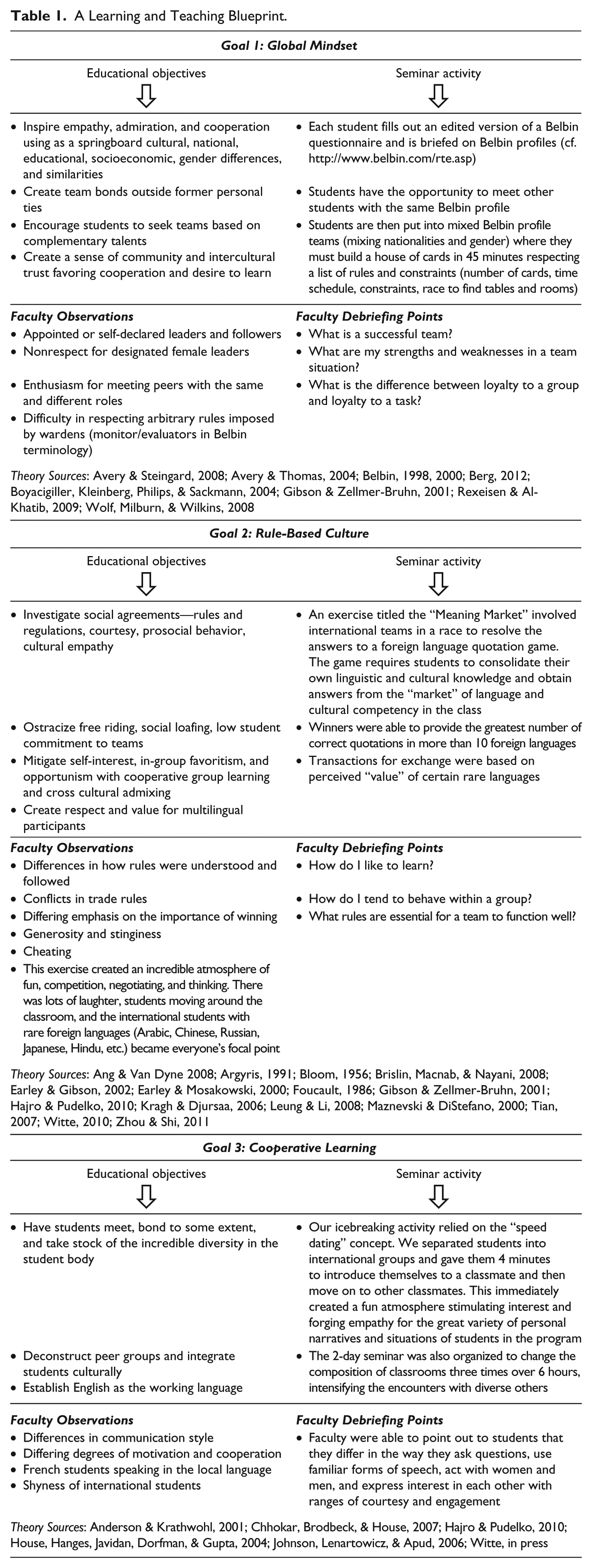
This learning map was informed by learning theory (Bloom, 1956), experiential education (Goby & Lewis, 2000), and the model of playful learning and serious games (Kolb, 1984;Kolb & Kolb, 2005,2010;Michael & Chen, 2006). In designing this blueprint, I aimed to avoid rote learning and lecture, following recommendations made byVerzat, Byrne, and Fayolle (2009), in order to privilege an imaginative and playful experience with little faculty intervention, as recommended byMichael and Chen (2006). I hoped to emulate the innovative Lego-building blocks for teaching strategy developed byRoost and Victor (1999);Linder, Roost, and Victor (2001);Roost, Victor, and Sattler (2004); andSattler, Roost, and Victor (2009). To do this, I divided seminar faculty into subgroups, each focusing on translating one of the three learning goals into an experiential event drawing from serious game models and learning theory. This interdisciplinary faculty produced activities drawing from management, communication, intercultural, and language teaching techniques, which were then refined by all members of the seminar teaching and learning committee. The combination of these activities was improved over 3 years based on student satisfaction surveys (which are shown inFigures 2 -7) and faculty observation (embedded inTable 1) as an integral part of the seminar map. The final “product” of the inaugural event responded to three learning goals (global mind-set, rule-based culture, and cooperative learning), as illustrated inFigure 1. It resulted in a speed-dating activity (bonding through a playful but forced interaction with unknown others), a Belbin self-development exercise (Belbin, 2010a,2010b;Goby & Lewis, 2000;Jameson, 2009) preliminary to a team challenge (building self-awareness and empathy), and finally a proverb game requiring groups of international students, placed within material and time constraints, to resolve collectively a problem dependent on the unique language abilities of members to emphasize the added value of cooperation, trust, and fair play (Witte & Daly, 2014).
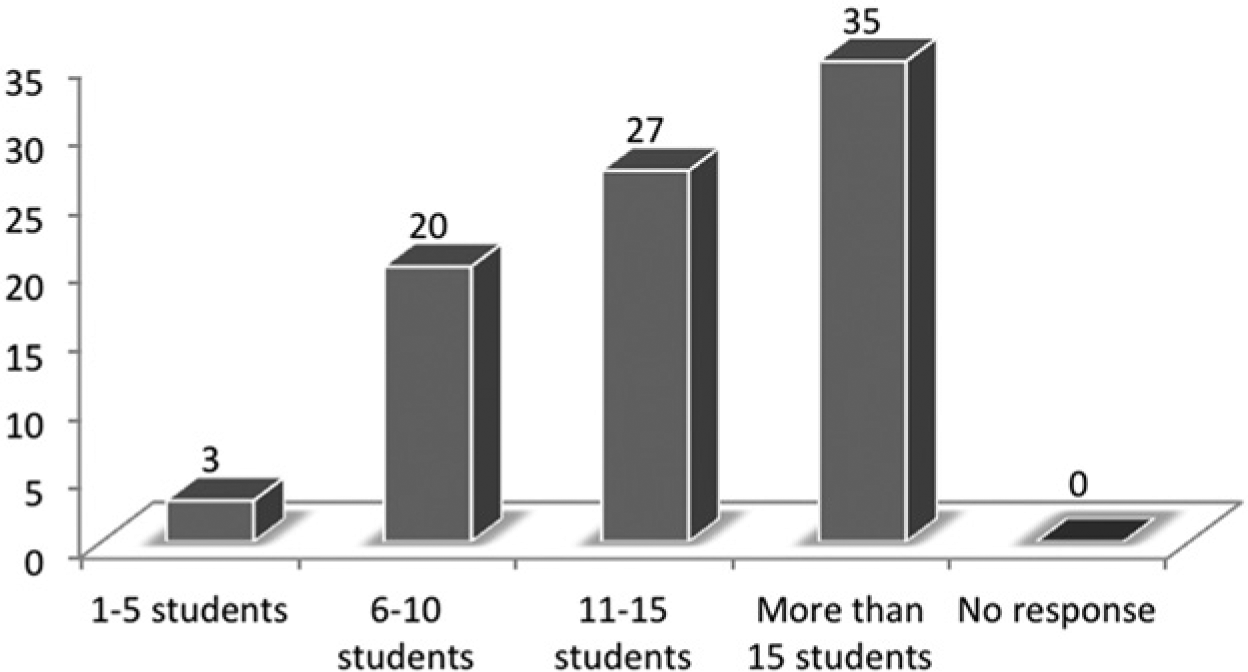
During this seminar, I met (even if only briefly).
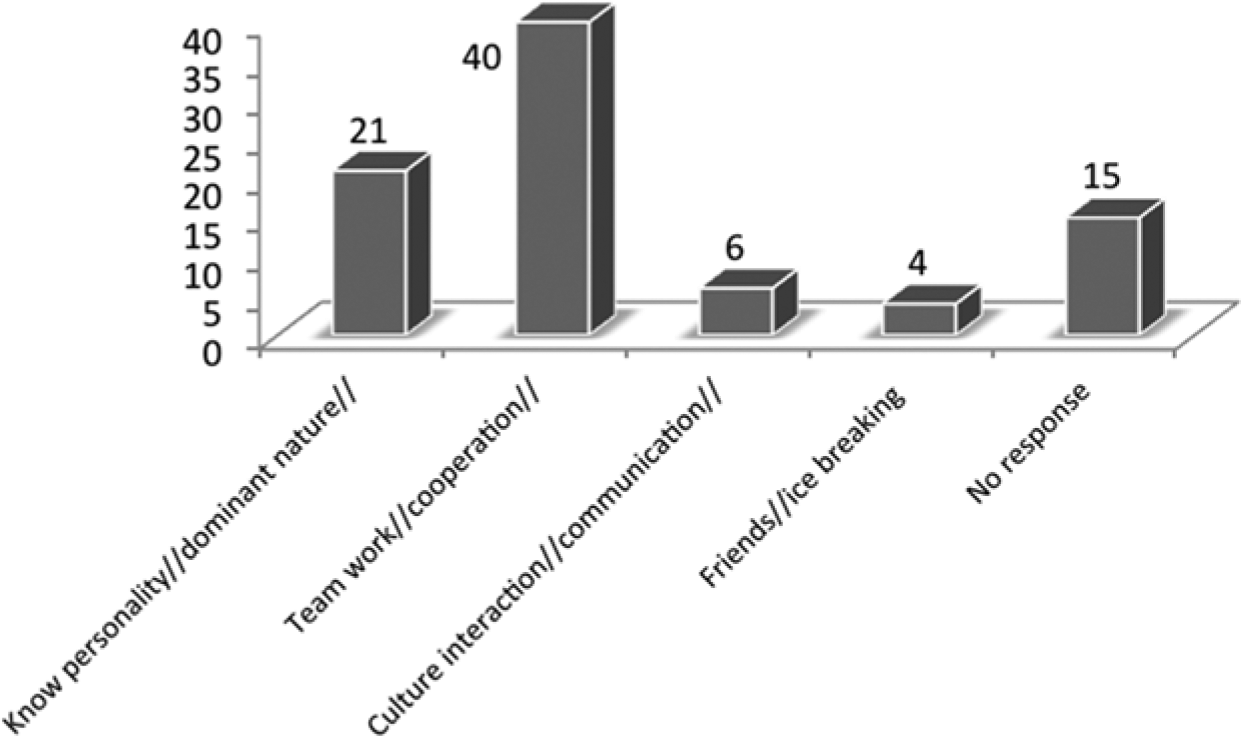
What do you think was the real purpose behind the card building game?
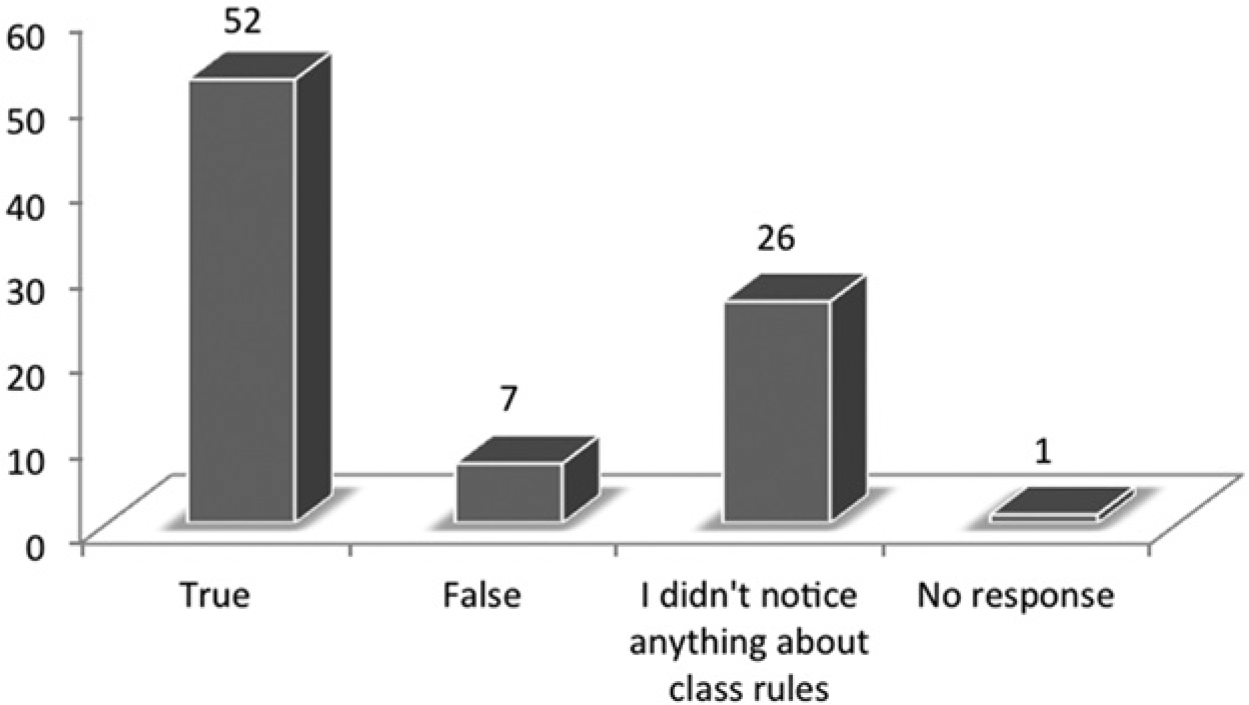
This seminar made me realize that class rules are important when there are so many nationalities.
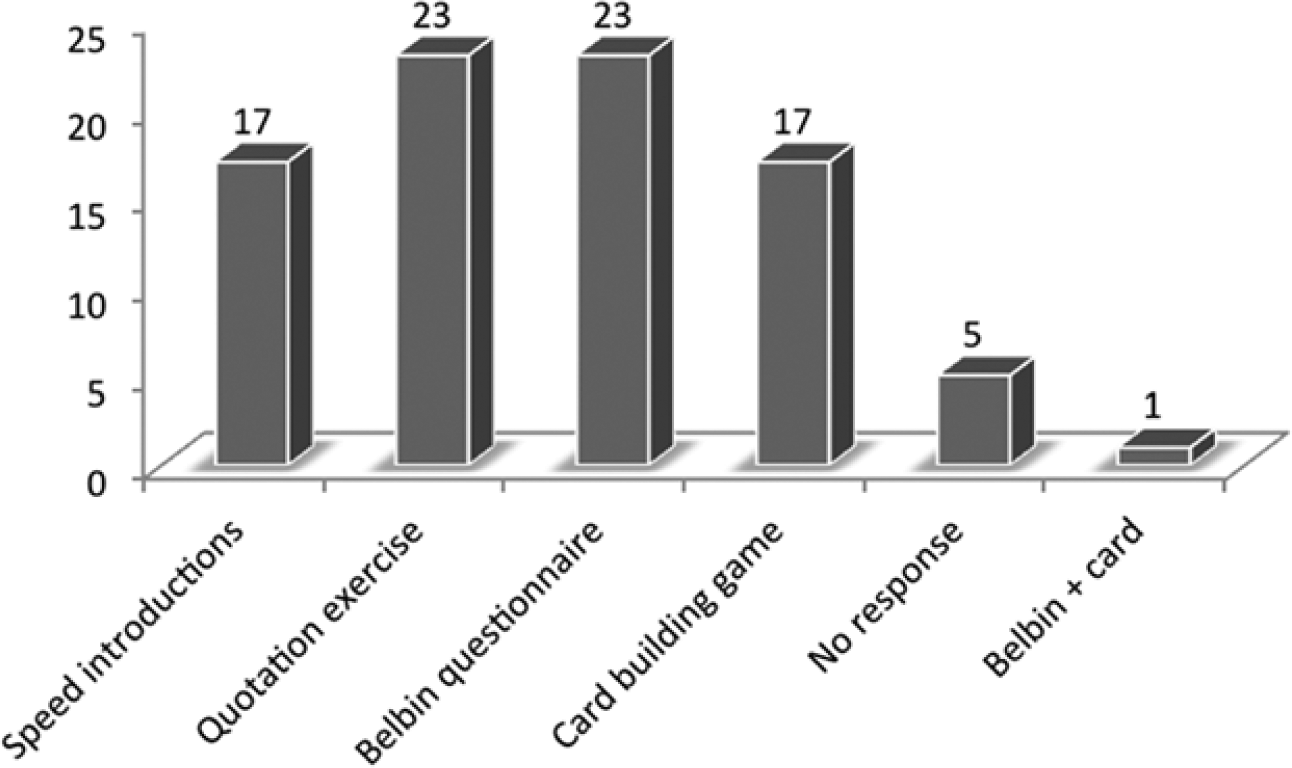
Choose which activity brought you the most personally (helped you learn about yourself and others).
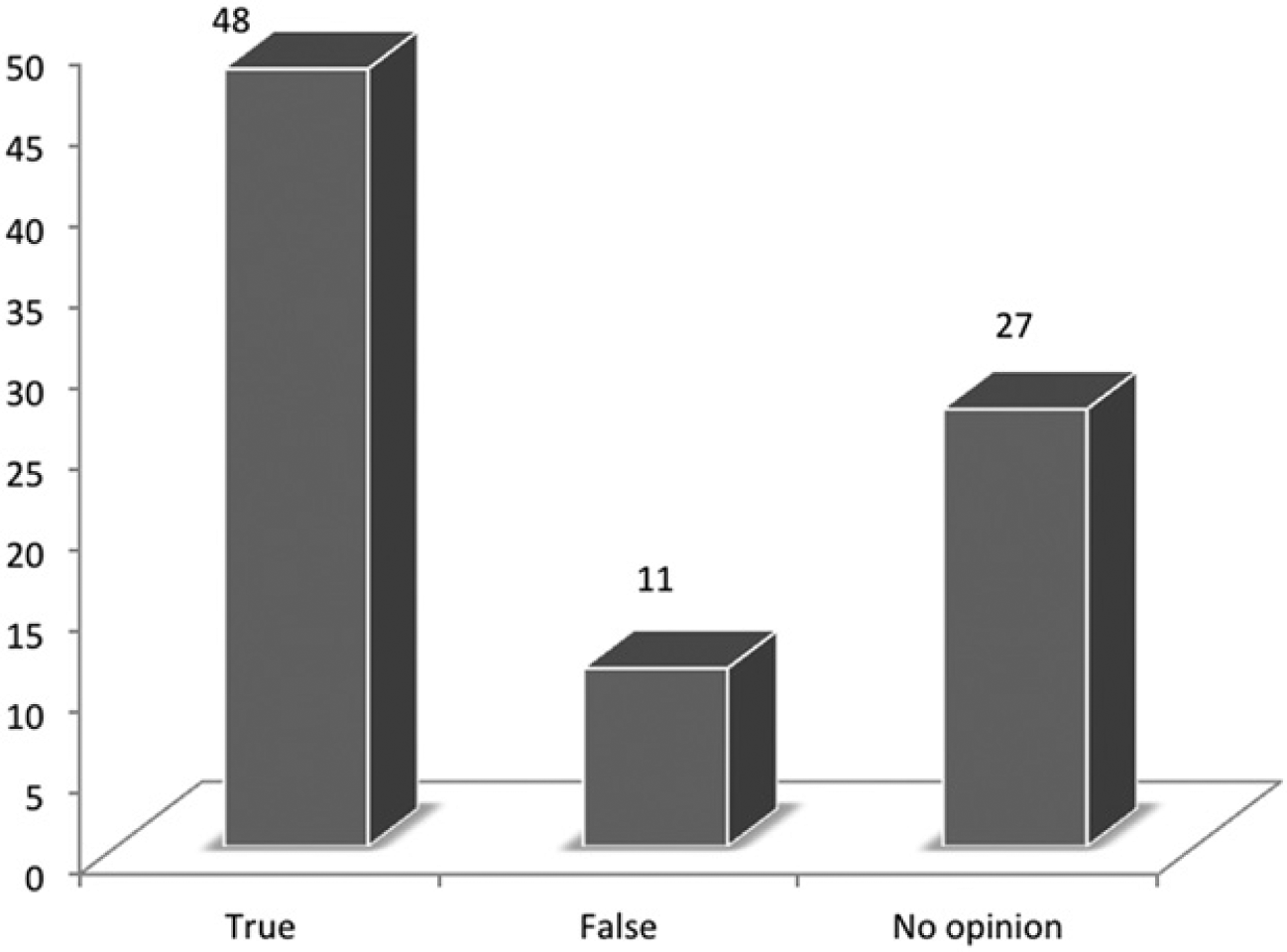
I am now more likely to seek teams which complement my own team profile (rather than teams based on friendship).
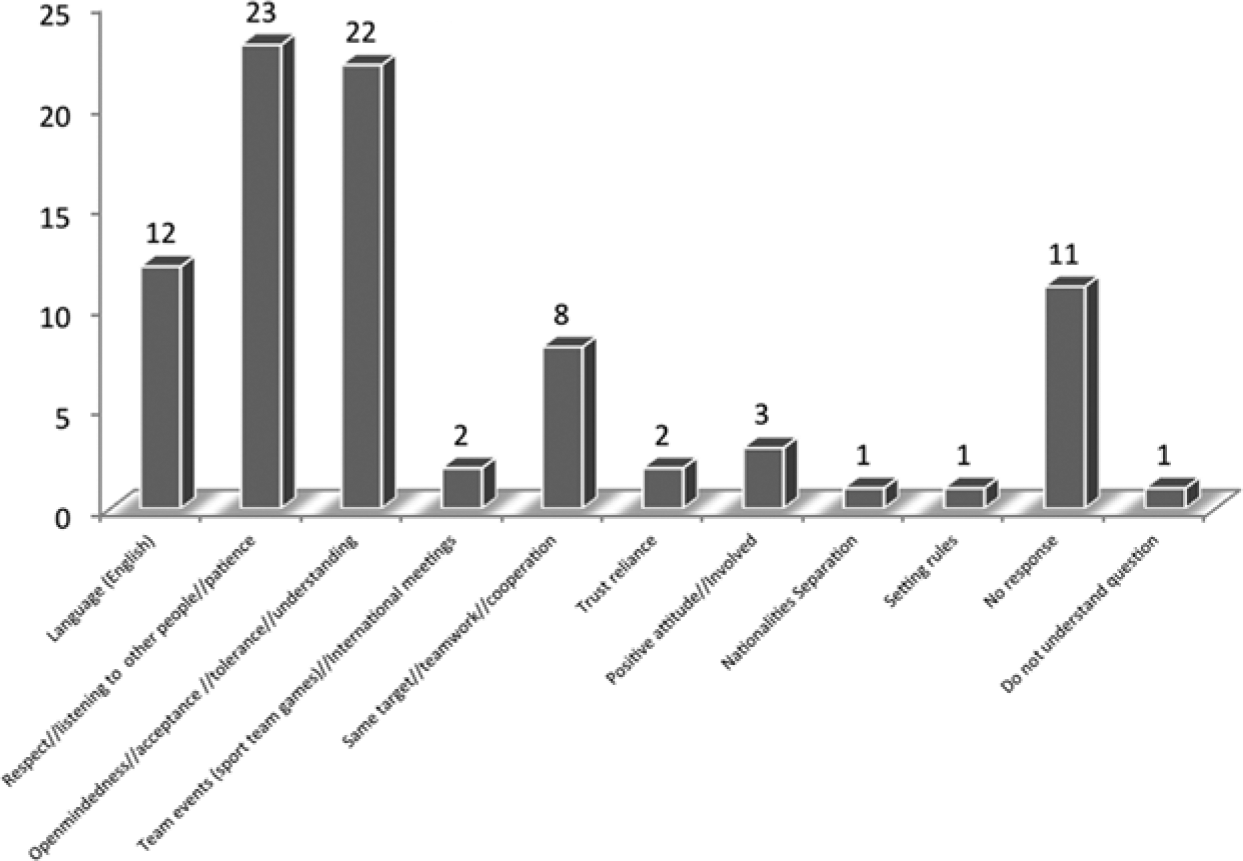
In your view, what is the most important dimension of successful international communication for the classroom?
A final step in seminar planning involved an assessment of seminar efficiency and satisfaction. Activities chosen for the seminar had to lend themselves to a variety of measures that we could use to improve the seminar and measure impact. A longitudinal study involving faculty, administrative, and professional perception of student behavior postseminar was operationally impossible. To obtain some quantitative data, we decided to measure each of the three learning outcomes using two subjective criteria:
Assurance of Learning Measures
Learning Measure 1 (Global Mind-Set)
A postseminar questionnaire with a 34% response rate for 252 participants asked students to quantify how many different students they met.
Student Survey
The majority of respondents declared that they had met over 15 different students (seeFigure 2). This was a significant number in our view and confirmed that the goal of “meeting and bonding” with an international cohort was met. In future editions, the seminar could be improved by raising this benchmark.
Faculty Debriefing
Faculty observed that students were proactive in seeking out unknown others, using English and enjoying the opportunity to investigate “diversity.”
Learning Measure 2 (Rule-Based Culture)
It was crucial to measure if the seminar increased students’ awareness about the importance of rules, norms and standardized behavioral policies for the success of the program and as practice for their future career (seeFigures 3and4). Measuring student awareness on this point was vital.
Student Survey
Figure 3demonstrates that a significant number of students were unaware of the rule-based objectives the seminar sought to inculcate. More than 50% of the participants did recognize the importance of rules in the games but 30% of the respondents stated that they did not realize the games were about rules (seeFigure 4). This provides an opportunity to reflect on how a future version of the seminar can enhance this aspect so that it becomes more visible in the exercises and in the debriefing. Apparently, for some participants, the “games” obscured the “rules.”
Faculty Debriefing
Faculty reported that students complained to them that certain individuals were “cheating” during the “meaning market” games—stealing quotation ideas from other groups in the open market where there were no ground rules. In the debriefing, students overwhelmingly emphasized the need for rules in order for any group to cooperate and “winning” to be meaningful. They also said that competition without rules is insupportable. This petition by the finance students for more regulation and control was a robust indication of rule awareness and allowed for a rich debriefing.
Learning Measure 3: Cooperative Learning
The postseminar questionnaire inquired as to how students felt about their Belbin role and the impact of the seminar on their future communicative choices, classroom and team behavior (as shown inFigures 5,6, and7;Cockburn-Wootten, Holmes, & Simpson, 2008). Students were also asked if the card-building task was likely to have modified their attitudes and interaction with teams.
Student Survey
Students reported that the Belbin exercise was a favorite and its application in the card house game led them to change their perception of their own role in a team (seeFigure 5). Students reported that having taken the seminar, they were now likely to scrutinize team member choices and they were favorable to seeking difference rather than similarity in composing the team (seeFigure 6). Students named many criteria for successful teams in an open response question (seeFigure 7). This feedback boosts the credibility of the proposed seminar to induce change in student team practices by introspection and improved interpersonal communication.
Faculty Debriefing
Faculty observed many team arrangements that were both productive (listening) and unproductive (not respecting designated leaders). They noticed that increased interaction with diverse others enabled students to take the risk of working with difference and increased confidence and trust—catalysts for cooperation (Witte, in press). They had the opportunity to debrief on these elements directly after the exercise and to help students transpose their student team behavior to professional team situations and group performance. Faculty felt that this area could be usefully expanded to explore the philosophy of teams and cooperation more deeply.
Conclusion
The training of finance students has become a subject of industry-wide scrutiny since the social conditions in which education takes place are likely to be replicated in the work place. By enacting a school culture valuing a stronger indebtedness and emotional attachment to diverse groups, by downplaying in-group favoritism (a form of moral and social segregation), by underplaying individualism and learning attitudes based solely on the rationalistic and mechanistic dimensions of knowledge, one can make headway toward the ethical and civic standards the international community expects of future finance professionals.
The future of finance needs a firm educational foundation in ethical, prosocial, and cooperative learning that will be conducive to mixed culture team dynamics and problem-solving. To prepare students for careers where codes of conduct, rules, and regulations must become ingrained, finance programs need to develop critical analysis and a sense of commitment to collective goals, fair play, and intercultural communication. These objectives do not necessarily have to be addressed in courses, lectures, or reading materials. They can be enacted though “serious games” forums where human agency and action can be safely investigated and simple social transactions are open to scrutiny, allowing participants to fully apprehend the advantages of regulation, citizenship, and cross-cultural cooperation.
There are limitations to these recommendations for business education. The exercises were devised in a unique educational context, which may not be reflective of many business schools. The combination of a finance concentration, finance faculty, international cohorts, and French business students led by an initiative of communication, sociology, language, and cultural professors might also not be indicative of educational contexts in many business schools. Furthermore, the lack of a longitudinal analysis tracking actual practice of these learning objectives in professional situations postseminar leaves its ultimate value for the business community still up for speculation. Finally, these “serious games” involved students and not the finance faculty themselves. Working more with the finance faculty is likely to enhance the impact of these efforts.
Our opening seminar provided an opportunity to integrate international students into French teams, develop prosocial classroom ethics, and induce from simple classroom rules a foundation for citizen behavior and a virtuous cycle of productive rule-based mind-sets. I consider these results promising and recommend “serious games” for similar situational dilemma in the classroom.
Footnotes
Acknowledgements
The author would like to thank Liz Borredon, Peter Daly, Annette Lang, and Monique Valcour for their participation in the program and contribution to its quality review over 3 years. This study was considered exempt from review and was conducted postseminar, independent of any formal student grading practices.
Declaration of Conflicting Interests
The author(s) declared no potential conflicts of interest with respect to the research, authorship, and/or publication of this article.
Funding
The author(s) received no financial support for the research, authorship, and/or publication of this article.
Author Biography