



Abstract
Research suggests that the nondisclosure of relationships may cause adverse psychological stress; however, no studies have empirically examined the impact of secret workplace romances (WRs) on employee well-being. This article uses the communication privacy management theory as a framework to test workplace romance nondisclosure on job and life satisfaction. Relationship nondisclosure predicted differences in both projected job and life satisfaction. Additionally, individual differences (i.e., gender, age, work experience, conscientiousnes and emotional stability) were tested as moderators of the relationship between WRs and job and life satisfaction. Implications for practitioners (e.g., communication training) about WRs on employee outcomes are discussed.
Keywords
Workplace romances (WRs) are a prevalent and evolving aspect of modern work environments. They are nonplatonic, consensual relationships that involve mutual sexual attraction between two members of an organization, characterized by passion, affection, and physical arousal (Pierce & Aguinis, 2009; Pierce et al., 1996; Powell & Foley, 1998; R. E. Quinn, 1977). Despite the #Metoo movement and the changing landscape of work, reports of WR engagement have been on the rise, increasing by 10% from 2013 to 2023 (Milligan, 2022; Society for Human Resource Management [SHRM], 2013). This trend is particularly pronounced among younger Millennial and Generation Z workers, who are more open to being in a WR than other generations (Society for Human Resource Management [SHRM], 2023).
However, employees may choose not to disclose WRs to avoid negative social and professional consequences (Elsesser, 2019; Foster et al., 2010; Mainiero, 1989; Pierce et al., 1996). For example, although 75% of U.S. workers report accepting coworkers who engage in romances, many organizations, employees, and stockholders view the behavior negatively (Baker et al., 2021; Pierce & Aguinis, 2009; SHRM, 2023). The negative view of WRs within the workplace may help explain why, although engagement in WRs is increasing, many remain nondisclosed (Elsesser, 2019; Milligan, 2022; Society for Human Resource Management [SHRM], 2019). Although estimates range widely, 33% to 72% of employees across the United States and the United Kingdom report having engaged in a WR at some point in their career; however, about 64% of those relationships are nondisclosed, with only 18% of employees reporting being comfortable enough to tell coworkers and supervisors about their relationships (Adams, 2012; Clarke, 2006; Elsesser, 2019; Milligan, 2022; SHRM, 2023).
Additionally, the sparse research on the effects of secret romances within the traditional relationship literature suggests WR participants may experience adverse physical and psychological effects (Foster & Campbell, 2005; Foster et al., 2010; Lehmiller, 2009; Slepian et al., 2020). As the workspace has specific environmental factors that may not be found in other settings (e.g., policies prohibiting WRs, potential loss of employment, esteem from coworkers), engaging in nondisclosed romances has unique antecedents and consequences. Other studies have explored private and general disclosures at work (Frampton & Child, 2013; McBride et al., 2020; Smith & Brunner, 2017) and the effect that WRs have on disclosures between coworkers (Chory & Hoke, 2020), but the effects of being in a nondisclosed relationship on aspects of participant well-being (e.g., job and life satisfaction, and how individual differences may moderate the relationship remains a gap in the literature).
This study begins by introducing the communication privacy management theory (CPM) (Petronio, 2002, 2013) to frame the context in which individuals may be affected by nondisclosed WRs. The second section of the article describes results from an experimental study that tests the consequences of nondisclosed (aka secret) WRs on job and life satisfaction, then tests interactions between individual differences (i.e., gender, age, work experience, conscientiousness, and emotional stability) and nondisclosed (vs. disclosed) on job and life satisfaction. The findings of this study have implications for WR policies and training.
Literature Review and Research Questions
Communication privacy management theory
CPM theory (Petronio, 2002) provides a theoretical frame for the discussion of managing personal information. As detailed in Petronio and Child’s (2020) review, CPM presents three assumptions of private information management (i.e., ownership, control, and turbulence). First, individuals assume they have ownership over their private information. Thus, they can control with whom they share their information (i.e., employees may choose to disclose a WR to a coworker but not a leader). Finally, CPM assumes turbulence arises when privacy rules break down, which introduce risks to the individual (e.g., negative employment actions like written warnings, transfers to other departments, or termination). CPM also introduces the importance and role of privacy rules (i.e., how individuals internalize what they, their family, or society believe should be kept private/disclosed) and privacy boundaries (i.e., how the individual defines which information is shared and with whom). Thus, an employee working for an organization with a strict WR policy may be less likely to share information about WRs with coworkers. Similarly, CPM theory discusses the importance of “collective coordination,” which states that there are some cases of collectively owned privacy rules and privacy boundaries (organizational policies and expectations about what information employees will disclose, keep private, etc.).
Nondisclosure of WRs
Slepian (2022) defines a secret as an “intention to keep information unknown by one or more others” (p. 542). Romantic nondisclosure occurs when employees deliberately conceal their romantic relationship from others (Wilson, 2015). Thus, the current article builds upon previous definitions of WRs (Horan & Chory’s, 2011; Pierce, 1996) and defines nondisclosed WR as an ongoing, nonplatonic, and consensual relationship between two members of an organization that involves mutual sexual attraction and that is unknown by one or more others. According to SHRM (2023), 82% of employees who engaged in WRs never disclosed them to their employers, and only 40% disclosed them to their coworkers. As some contexts are inhospitable to WRs, it is likely that the prevalence of nondisclosed WRs is underestimated (Foster et al., 2010). It should be noted that WR secrecy can take various forms (e.g., employees stating that they are single, concealing their partner’s identity, and concealing how emotionally involved in the relationship they are).
As employees have ownership over their private information, they may choose not to disclose WR for several reasons (e.g., marital infidelity, single-parent romances, interracial romances, and same-sex romances) (Foster et al., 2010). Additionally, many employees may choose not to disclose their WR owing to the collective coordination of organizations attempting to minimize the discussion of, and participation in, WRs. For example, research has found that visible relationships are more likely to affect coworker morale (Pierce et al., 1996), and WR participation affects levels of trust between coworkers (Chory & Hoke, 2020; Cowan & Horan, 2014). Overall, the expected risks of future turbulence from disclosing participation in a WR may result in fewer WR disclosures.
What has not been explored is how nondisclosure affects outcomes for WR participants and how individual differences may affect felt outcomes to WR nondisclosure. Specifically, this paper tests the effects of individual characteristics (i.e., gender, age, work experience) and personality traits (specifically, conscientiousness and emotional stability) as moderators of the relationship between nondisclosed WRs and both job and life satisfaction to expand this area of the literature and to provide guidance to employees and human resource leaders grappling with how to address WRs.
The Impact of Nondisclosed Workplace Romances on Employee Outcomes
Research on secret-keeping has begun to document its adverse impacts on well-being (Slepian, 2022; Slepian & Moulton-Tetlock, 2019). For instance, in a study of over 800 participants—with over 10,0000 secrets—Slepian and Moulton-Tetlock (2019) found that disclosing secrets increases feelings of social support, which predicted higher levels of well-being. Additionally, keeping secrets that are personally shameful may lead to intrusive thoughts about them, resulting in repetitive thinking, coping efforts, expressive inhibition, monitoring, etc. (Slepian, 2022; Slepian et al., 2020). In the context of WRs, nondisclosure may negatively affect organizational members’ well-being.
The effect of WR nondisclosure on employee job and life satisfaction has not been empirically studied. However, some research has examined nondisclosed relationships in other contexts (Lane & Wegner, 1994; Wegner et al., 1994). This research suggests that nondisclosed relationships can be thrilling for participants and may increase the amount of romantic attraction between partners. For example, Wegner et al. (1994) found that the frequency with which participants remembered relationships was positively associated with the level of secrecy attributed to the relationships. Additionally, participants were more likely to report being attracted to their partner if instructed to communicate secretly than those who communicated through nonsecret means.
However, other studies suggest that most nondisclosed relationships tend to afford individuals with more problems than benefits (Foster & Campbell, 2005; Lehmiller, 2009). Foster and Campbell (2005) investigated differences in relationship quality among couples engaged in ongoing secret romantic relationships (as opposed to those who were strangers or those who were reflecting on past relationships). They suggested that while romantic secrecy can be tempting, constraints on the situation lower relationship quality by hindering positive outcomes typically associated with being in a relationship (e.g., spending time together at work may be difficult because the relationship is being hidden from coworkers). They found that relationship secrecy was negatively correlated with relationship quality, perceived physical attractiveness, and love for the partner. Furthermore, the relationship between secrecy and indicators of relationship quality was partially mediated by the perceived burden of the relationship (e.g., participants could not engage in the activities they would like to do with their partner and felt that the relationship could be challenging to coordinate).
Building upon these findings, Lehmiller (2009) tested the relationship between secrecy and commitment in relationships and both physical and psychological health. Over 350 participants completed measures of romantic secrecy, relationship commitment, and psychological and physical well-being. Relationship secrecy was negatively associated with relationship commitment and was positively associated with relationship burdens, psychological symptoms, and physical symptoms. Lehmiller also demonstrated that the relation between romantic secrecy and adverse health effects is likely mediated by negative feelings (i.e., nervousness and stress) generated by the relationship.
While it seems reasonable to extend these findings into the work environment context, no known studies have examined the effects of nondisclosed WRs on aspects of employee well-being. Khan et al. (2017) demonstrated that WRs could positively affect employee well-being (e.g., job and life satisfaction) and job performance; however, it is unclear whether the positive effects on employee well-being hold true for nondisclosed WRs. The work environment is unique because it has a specific culture, provides for an individual’s livelihood, and may have policies regulating WRs. Thus, it seems reasonable that feeling unable to disclose a relationship at work may result in additional anxiety and stress for employees. As experienced stress, anxiety, tension, and work-related stressors may negatively affect job satisfaction (Pugliesi, 1999; Sveinsdóttir et al., 2006; Sullivan & Bhagat, 1992), non-disclosed WRs may negatively affect job satisfaction.
Job satisfaction
Job satisfaction is an affective reaction to one’s job that stems from comparing desired outcomes with actual outcomes (Cranny et al., 1992) and is related to job performance (Iaffaldano & Muchinsky, 1985; Katebi et al., 2022). The relationship between engaging in a WR and job satisfaction has been studied to some degree (Dillard & Broetzmann, 1989; Pierce, 1998; Pierce et al., 1996). Pierce et al. (1996) proposed that because both WRs and job satisfaction include an affective component, those engaging in a WR may experience some “affective spill-over,” where good feelings generated by the romance spill over into evaluations of one’s job (Clore & Byrne, 1974; Pierce, 1998). Pierce (1998) also reported that engaging in a loving WR is positively associated with job satisfaction and job involvement. Similarly, Khan (2023) found that job involvement, an antecedent of job satisfaction, fully mediates the relation between WR and job effort.
However, nondisclosed romances have a unique characteristic. They require participants to expend effort to keep them a secret, and this work is often burdensome (Foster & Campbell, 2005; Lehmiller, 2009). Almost by definition, maintaining a nondisclosed WR will require employees to engage in some forms of emotional labor (i.e., how employees actively manage, modify, and mask emotions when interacting with others at work) (Thoits, 1989). Experiencing emotional labor is related to increased job stress, distress, and decreased job satisfaction (Hassan et al., 2020; Pugliesi, 1999). As participants in nondisclosed WRs may experience anxiety, nervousness, tension, and engage in emotional labor, the following hypothesis is tested:
Hypothesis 1 (H1): Employees engaged in a disclosed workplace romance will score higher on measures of predicted job satisfaction than employees engaged in a nondisclosed workplace romance.
In addition to job satisfaction, nondisclosed WRs may negatively affect life satisfaction.
Life satisfaction
Understanding whether engaging in nondisclosed WRs decreases life satisfaction is also missing from the literature. Satisfaction with life is the overall evaluation of the quality of one’s life (Pavot & Diener, 1993) and is a component of the multifaceted concept of subjective well-being. Subjective well-being includes both cognitive and affective evaluations of one’s level of happiness (Diener et al., 1999) and may be affected by engaging in nondisclosed WRs.
Judgments about life satisfaction are partially based on information that is currently available or easily called to mind, including moods, emotions, and important life domains (e.g., romantic relationships or job satisfaction) (Pavot & Diener, 2008; Schimmack et al., 2002). According to Schimmack and Oishi (2005), satisfaction with an important domain is assumed to be “the most proximal determinant of life satisfaction, and examining the determinants of domain satisfaction can provide important information about the determinants of life satisfaction” (p. 404). While Khan et al. (2017) found that well-being mediated the relation between WRs and performance, the impact of nondisclosed WRs on life satisfaction has not been examined. As romantic relationships and job satisfaction are likely salient to most people, they may affect an individual’s life satisfaction. Therefore, it seems reasonable to suspect that if WRs are nondisclosed, it may negatively affect an individual’s life satisfaction. Thus, the following hypothesis is tested:
Hypothesis 2 (H2): Employees engaged in a disclosed workplace romance will score higher on measures of predicted life satisfaction than employees engaged in a nondisclosed workplace romance.
Additionally, individual characteristics and personality traits may affect the degree to which nondisclosed WRs affect job and life satisfaction.
Individual differences as moderators of the effects of nondisclosed WRs
Individual differences affect how people see and experience the world, differences in demographic characteristics (i.e., gender, age, and work experience) and personality traits (i.e., conscientiousness and emotional stability) may affect differences in reported job and life satisfaction for individuals involved in nondisclosed WRs. For example, Chory et al. (2022) recently reported that men were more likely to predict comfort engaging in WRs than women. Additionally, they found that women are more likely to believe that engaging in WRs was more damaging to women’s careers than men’s careers. As women tend to report experiencing anxiety disorders and fear at a greater rate than men (Grenier et al., 2019; Hoyt et al., 2023; McLean & Anderson, 2009), women in nondisclosed WRs may be more likely to experience stress—and consequently negative job and life outcomes—than men. Therefore, it seems likely that gender may affect the relation between WR nondisclosure and both job and life satisfaction.
Research Question 1 (R1): Gender will moderate the relation between WR nondisclosure and both job and life satisfaction.
Similarly, Chory et al. (2022) found that younger, as opposed to older, adults were more likely to predict feeling comfortable engaging in WRs. As anxiety becomes more common with older age (Lenze & Wetherell, 2011) and is most common in middle-aged adults (Guarnotta, 2020), it older adults may be more likely to experience stress within nondisclosed WRs than younger adults. Additionally, as employees gain more work experience, they may be socialized to believe that WRs are inappropriate. Individuals with more work experience are also likely to have a higher organizational status, making engagement in WRs riskier. As older adults and those with more work experience may have more to lose from disclosing WRs, engaging in nondisclosed WRs may decrease both job and life satisfaction. Consequently, understanding whether age or work experience moderates the relationship between WRs and job and life satisfaction warrants exploration.
Research Question 2 (R2): Age will moderate the relation between WR nondisclosure and both job and life satisfaction.
Research Question 3 (R3): Work experience will moderate the relationship between WR nondisclosure and both job and life satisfaction.
Additionally, personality traits may affect the degree to which nondisclosed WRs affect job and life satisfaction.
Personality traits
Although a seemingly endless number of personality traits have been introduced into the body of psychological literature (Allport & Odbert, 1936; Cattell, 1943; Norman, 1963), the Five-Factor Model (FFM) (or “The Big Five”) of personality domains is a widely accepted taxonomy of general and universal personality dimensions (Church, 2010; Costa & McCrae, 2009; McCrae et al., 1996) and has demonstrated the ability to predict attitudes, behaviors, and organizational outcomes like leadership behaviors (Bono & Judge, 2004), team performance (Kickul & Neuman, 2000), job productivity, and job satisfaction (Ones et al., 2007). Within the context of WRs, of the five factors, only conscientiousness (i.e., the degree to which individuals are achievement-orientated, organized, task-focused, planful, and dependable) has been examined. Doll and Rosopa (2015) demonstrated that conscientiousness is negatively related to the willingness to engage in a WR, particularly when organizations have strict WR policies. Thus, for individuals high in conscientiousness, engaging in a nondisclosed (vs. disclosed) WR may be undesirable as they may worry about negative perceptions of performance, policy and norm violations, and coworker gossip.
Hypothesis 3 (H3): Conscientiousness will moderate the relation between WR nondisclosure and job and life satisfaction, such that individuals engaged in nondisclosed WR that are high in conscientiousness will experience lower job and life satisfaction.
While information about how other personality traits may predict outcomes for those in WRs is absent in the literature, emotional stability (i.e., the degree to which individuals tend to be secure, emotionally well-adjusted, and calm) may also play a role in moderating the relationship between WR nondisclosure and both job and life satisfaction. When the organizational climate is unsupportive of WRs, employees may go to great lengths to keep WRs a secret (Mainiero, 1989). Being involved in a nondisclosed relationship can also generate great stress (Lehmiller, 2009). As individuals high (vs. low) in emotional stability tend to be less anxious/worried and more tolerant of stress, they may be better at mitigating feelings of anxiety arising from engagement in nondisclosed WRs. For example, studies have documented that emotional stability may moderate the relationship between stress and psychological well-being (Strizhitskaya et al., 2018), predict subjective well-being (Galkin et al., 2022; Vittersø, 2001), and predict life satisfaction (Muntean et al., 2022); in addition, an individual’s level of emotional stability may modulate the emotional highs, lows, and strain experienced in nondisclosed WRs and thus moderate predicted job and life satisfaction.
Hypothesis 4 (H4): Emotional stability will moderate the relation between WR nondisclosure and job and life satisfaction such that individuals engaged in nondisclosed WR who are high in emotional stability will experience higher levels of job and life satisfaction.
Methodology
Participants
Data were collected from full-time workplace professionals, most of whom were employed by either a small technical college or a midsized university in the southeast. Using a snowball sampling method, data were also collected from employees via LinkedIn, an online professional networking site. In total, 172 people started the survey. After examining responses for completeness and accuracy against manipulation checks, data from 146 participants were included in the study. Participant age ranged from early 20s to over 65 years (12% were 21-30 years, 24.7% were 31-40 years, 29.4% were 41-50 years, 20.5% were 51-60 years, and 12.3% were 61 years of age and above). The majority of the participants were also female (68%), White (91%), heterosexual (98%), and had either a bachelor’s (23%) or master’s degree (44%). Additionally, 80% of the participants reported that they were either married or in a serious relationship. Participants had a range of work experience: 2.7% had 2-4 years of experience, 14.4% had 5-10 years of experience, 13% had 11-15 years of experience, 13% had 16-20 years of experience, and the majority (56.7%) reported having over 21 years of work experience. Close to half (45.2%) of the participants reported having engaged in at least one WR.
Procedure
A between-subjects experimental design with two levels (nondisclosed vs. open WR) was used, and participants completed the following procedure electronically. Participants were contacted via email, invited to participate in a study about WRs, and subsequently directed to the study via an email link that opened to an informed consent page. After indicating informed consent, participants completed personality measures. Then, they were presented with one of two vignettes describing a hypothetical WR scenario between the participant and a romantic interest (see Appendix for vignettes). The scenarios were constructed to systematically vary the degree of relationship disclosure (nondisclosed vs. open). Instructions to participants read as follows, “This part of the survey requires your imagination. Imagine that you were not previously in a relationship but that you are now experiencing the situation described. After reading the description, take a few minutes to imagine how you would feel if you were in the situation.” After reading the scenarios, participants were asked to complete a manipulation check, projected job and life satisfaction measures, and a demographic measure. After the participants completed the measures, they were thanked for their participation and exited from the survey.
Instrumentation
Conscientiousness and emotional stability
Conscientiousness and emotional stability were measured using 10-item scales from the International Personality Item Pool (IPIP) (Goldberg et al., 2006). The items in the scale correspond to items in Costa and McCrae’s (1992) NEO Personality Inventory (NEO-PI-R). Items assess how much participants agree with each statement on a scale from 1 (strongly disagree) to 5 (strongly agree). Sample items for conscientiousness include “I am always prepared” and “I carry out plans.” Sample items for openness to experience include, “I have a vivid imagination” and “I enjoy hearing about new ideas.” Sample items for emotional stability include “I often feel blue” and “I dislike myself.” The conscientiousness and emotional stability measures demonstrated good internal consistency reliability for both student and employee samples. The average reliability across samples for each scale was α = .78 and α = .85, respectively.
Projected job satisfaction
As Wanous and Reichers (1996; Wanous et al., 1997) suggested, when questions about job satisfaction can be addressed using a single-item measure, they may be more appropriate than multiitem measures. Additionally, as Nagy (2002) reported, single-item measures of job satisfaction take less time to complete and may have more face validity than multi-item scales. Dolbier et al. (2005) conducted further analyses of single-item measures of job satisfaction and reported that the minimum reliability estimates were high, and that correlational tests of validity were significant. Nagy (2002) also reported that single-item measures of job satisfaction may sometimes account for incremental variance in self-reports of job behavior. As the present study was not concerned with satisfaction with several job facets, job characteristics, or working conditions, it seemed most appropriate to use a one-item measure of overall job satisfaction. Thus, the item was adapted from R. P. Quinn and Staines’s (1979) item on global job satisfaction, which asked participants, “If you were experiencing the situation described in the scenario, rate the degree to which you would be satisfied with your job.” Answer choices range from 1 (very dissatisfied) to 5 (very satisfied).
Projected life satisfaction
Participants completed a measure of projected life satisfaction using an adapted version of Diener et al.’s (1985) five-item Satisfaction with Life Scale, which is designed to measure global judgments of satisfaction with one’s life (α = .90). The adapted version of the scale asked participants to predict how satisfied they thought they would be with their lives if experiencing the scenario they had just read. Sample items include “In most ways my life would be close to my ideal” and “The conditions of my life would be excellent.”
Demographic questions
Participants also provided demographic such as gender, age, race, experience/success with WRs, cultural background, sexual orientation, and attitudes about WRs.
Results
Preliminary Analyses
A MANCOVA was conducted in SPSS version 28 to examine the moderating effects of individual differences and nondisclosure of WRs on both job and life satisfaction. Box’s test was nonsignificant. Despite the experimental nature of the study, as attitudes about WRs have demonstrated correlations with variables in the current study (e.g., Doll & Rosopa, 2015), and there was a significant effect for attitudes about WRs in the full model, Pillai’s trace = .140, F(2, 130) = 10.600, p < .001, attitudes about WRs were controlled for during the remaining analyses. Correlations between study variables means, and standard deviations for variables measured on continuous scales are presented in Table 1.
Pearson Correlations Among Study Variables.
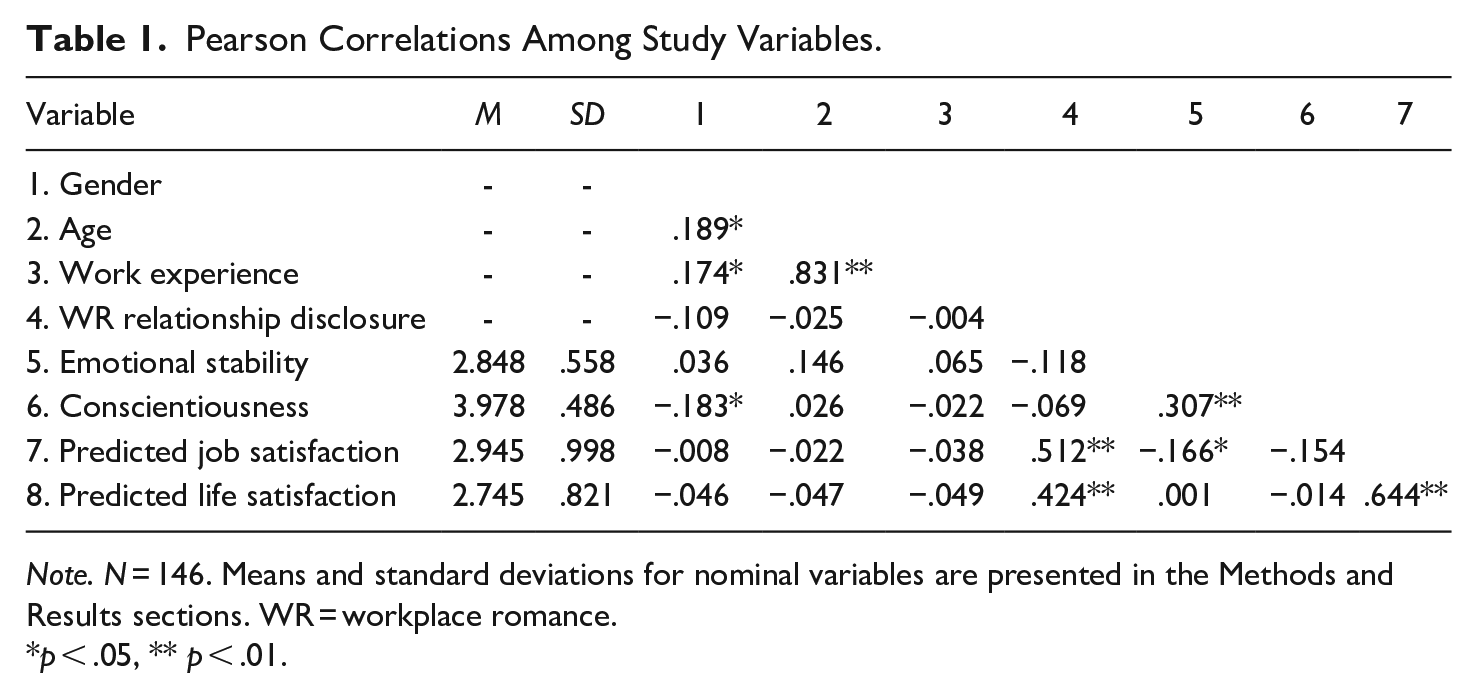
Note. N = 146. Means and standard deviations for nominal variables are presented in the Methods and Results sections. WR = workplace romance.
p < .05, ** p < .01.
Hypothesis 1 and 2: The Effect of WR Nondisclosure on Predicted Job and Life Satisfaction
There was a significant main effect for nondisclosure of WR, Pillai’s trace = .090, F(2, 130) = 6.453, p < .005, such that nondisclosed vs. open WRs predicted differences in predicted job satisfaction, F(1, 132) = 13.002, p < .001, and approached significance for life satisfaction, F(1, 132) = 3.258, p = .073. Examining pairwise comparisons, participants predicted being more satisfied with their jobs in open (M = 3.461, SE = .115) vs. nondisclosed relationships (M = 2.484, SE = 2.484), F(1, 132) = 43.050, p < .001, ŋ = .246. Additionally, participants predicted being more satisfied with their life in open (M = 3.082, SE = .103) vs. nondisclosed relationships (M = 2.389, SE = .085), F(1, 132) = 27.083, p < .001, ŋ = .170. Thus, H1 and H2 were supported. Summarized data for the tests of the main effects of relationship disclosure are presented in Table 2.
Tests of Between-Subject Main Effects for Study Variables.

Note. N = 146. Nondisclosed workplace predicted significant differences in predicted job satisfaction, and approached significance for life satisfaction. WR = workplace romance.
R1-3 and H3-4: Interactions Between Individual Differences and WR Nondisclosure on Predicted Job and Life Satisfaction
To examine R1-3 and H3-4, interactions between individual difference variables (i.e., gender, age, work experience, conscientiousness, and emotional stability) were tested (see Table 3).
Tests of Interactions Between Workplace Romance Nondisclosure and Study Variables.

Before examining follow-up analyses of variance, the homogeneity of variance assumption was considered satisfied as Levene’s test was nonsignificant. The interaction between gender and WR nondisclosure in predicting differences in job and life satisfaction was not significant; thus, R1 was not supported. The interaction between nondisclosure and age did not predict differences in job satisfaction, but did predict differences in life satisfaction t(145) = −1.996, p = .048, such that as participant age increased, predicted life satisfaction in a closed WR relationship decreased (B = −.188, SE = .094), (see Figure 1). Thus, R2 was partially supported. Similarly, the interaction between nondisclosure and work experience did not predict differences in job satisfaction. However, it did predict differences in life satisfaction, t(145) = 2.072, p = .040, such that for participants with more work experience, predicted life satisfaction was greater in the disclosed WR condition (B = .278, SE = .134) (see Figure 2). Thus, R3 was partially supported.
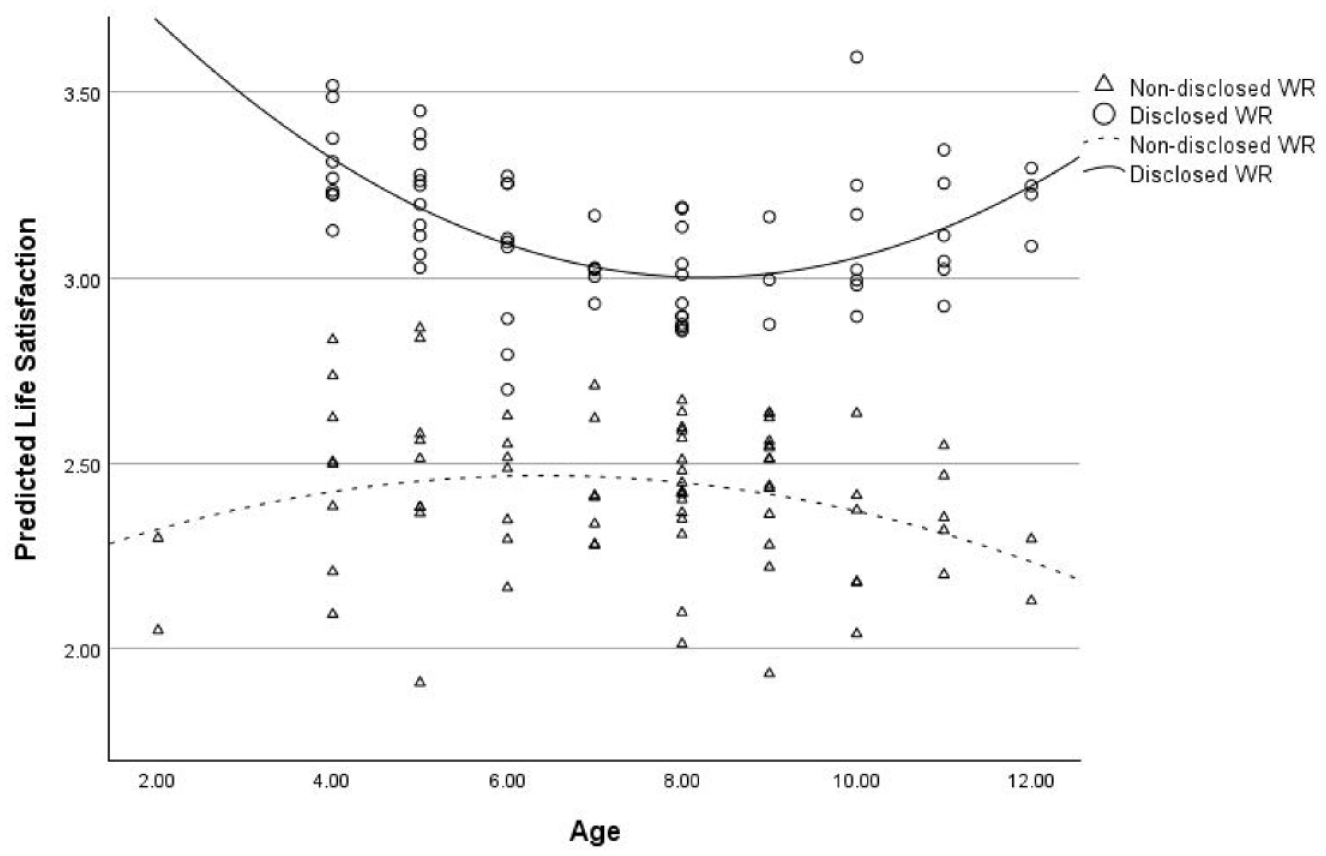
Interaction between age and workplace romance disclosure on predicted life satisfaction.
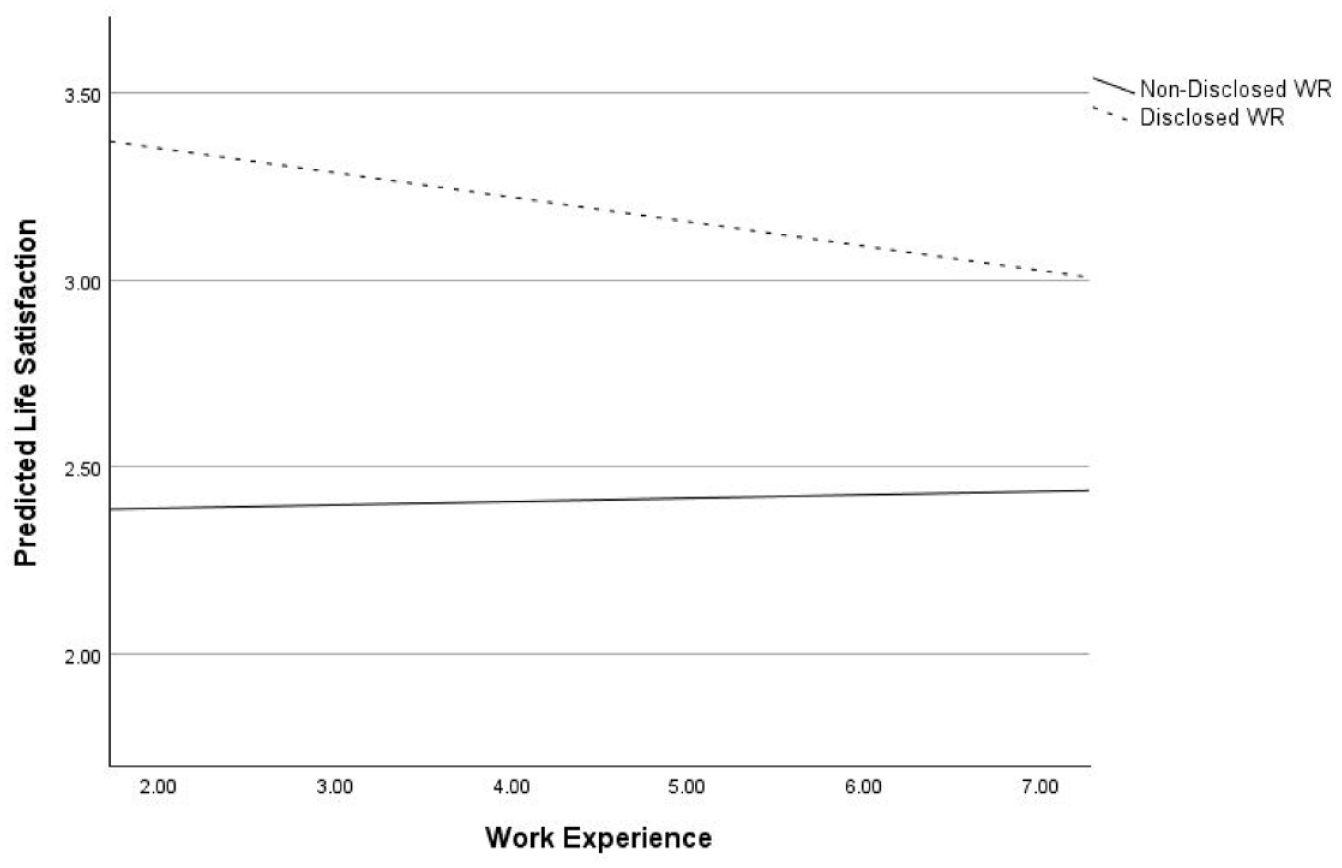
Interaction between work experience and workplace romance disclosure on predicted life satisfaction.
Additionally, while the interactions between conscientiousness and both job and life satisfaction were not significant, the interaction between WR nondisclosure and emotional stability approached significance for job satisfaction, B = .428, t(145) = 1.736, p = .085, SE = .247, and was significant for life satisfaction, B = .607, t(145) = 2.751, p = .007, SE = .221, indicating that participants predicted greater life satisfaction in the disclosed WR condition (see Figures 3 and 4). Thus, while H3 was not supported, H4 was supported. A summary of the interactions between relationship disclosure and study variables are presented in Table 3. Table 4 presents a summary of the hypothesis and research question tests. It should be noted that for non-significant results, a power analysis determined that detecting an effect with this model may require a sample of over 1300 participants to detect a small effect.

Interaction between emotional stability and workplace romance disclosure on predicted job satisfaction.
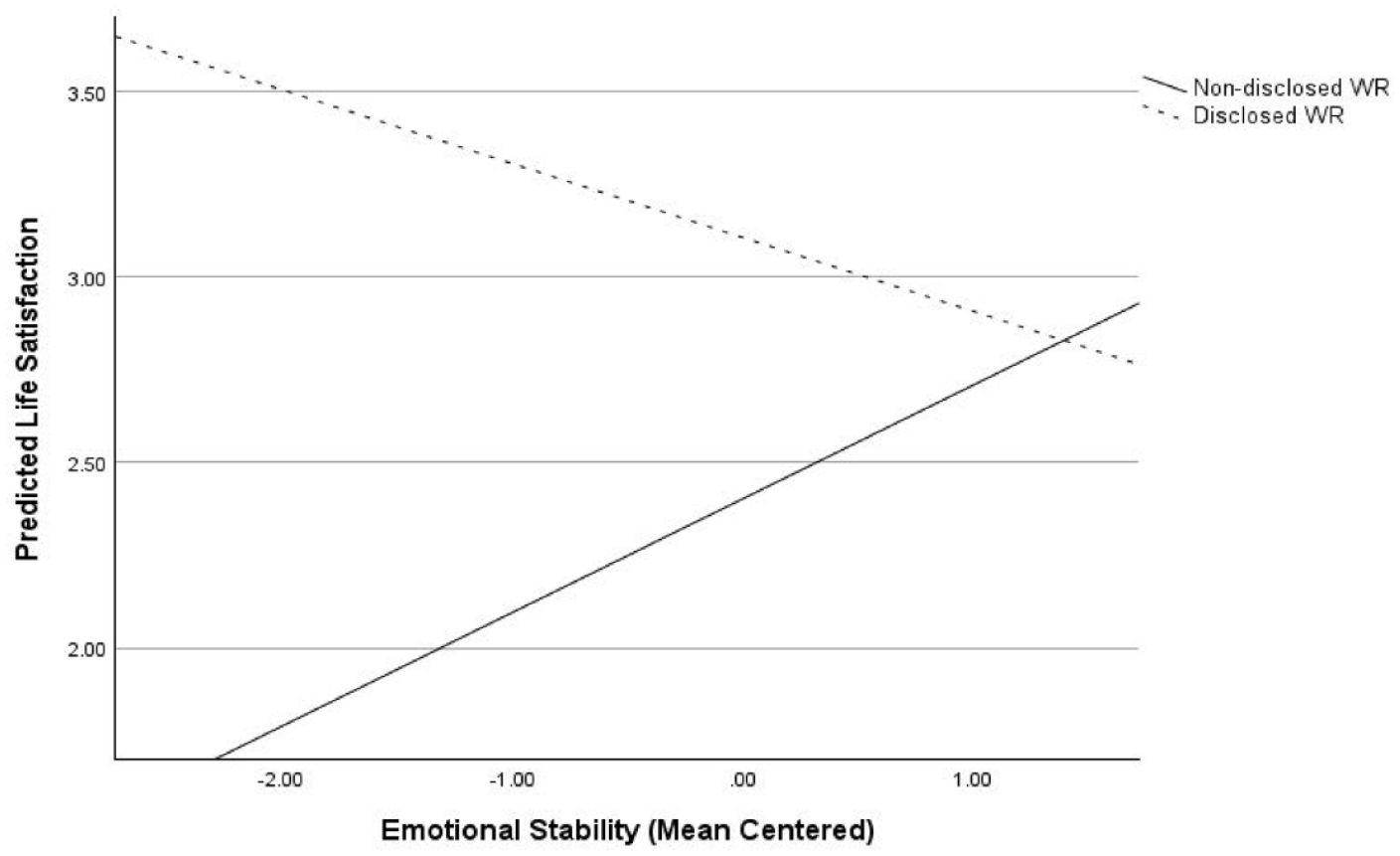
Interaction between emotional stability and workplace romance disclosure on predicted life satisfaction.
Results Table.
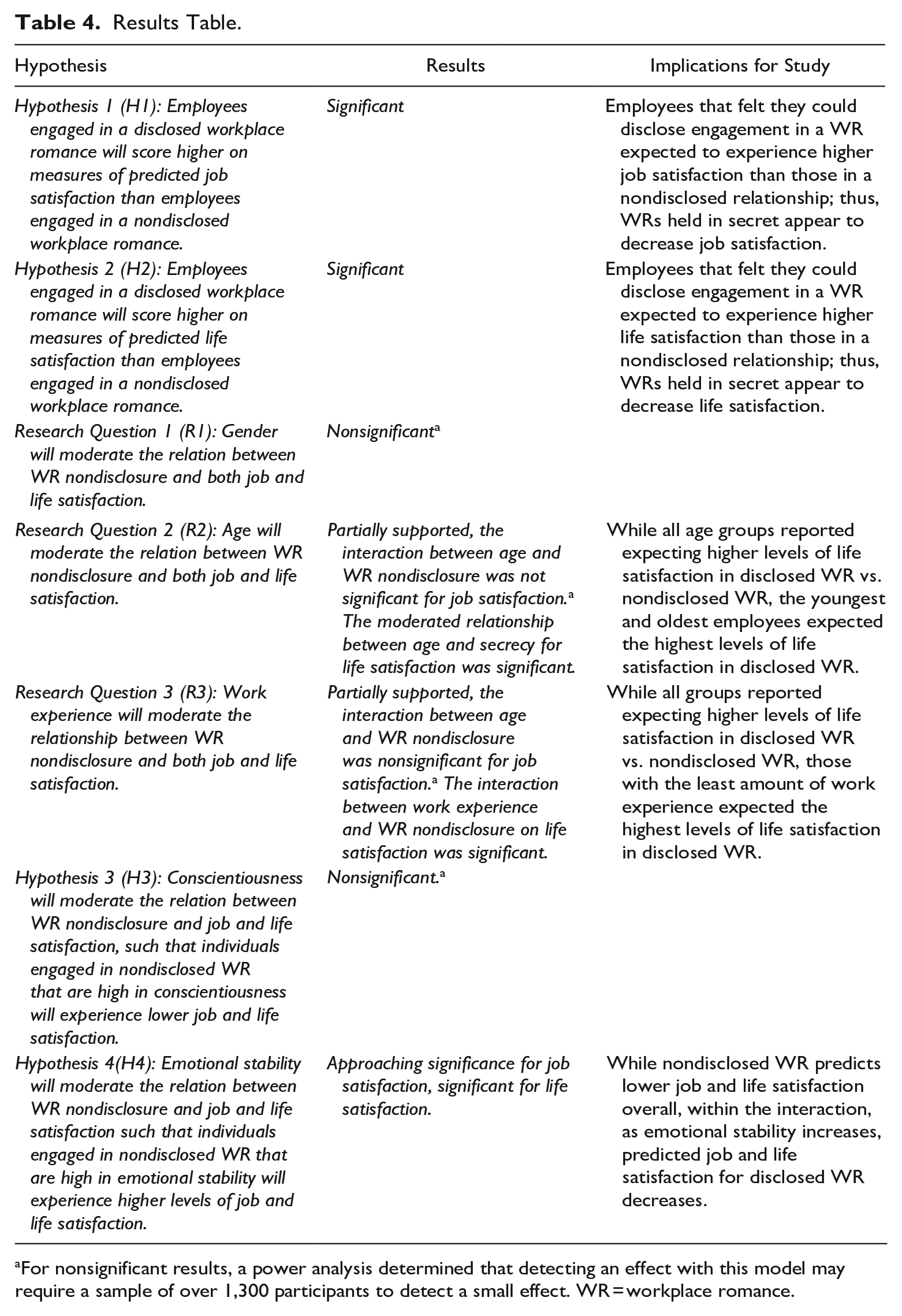
For nonsignificant results, a power analysis determined that detecting an effect with this model may require a sample of over 1,300 participants to detect a small effect. WR = workplace romance.
Discussion
Prior research presents conflicting arguments about the effects of nondisclosed romances (Lehmiller, 2009; Wegner et al., 1994), and no attempt has been made to understand the effects of nondisclosed (i.e., secret) WRs. WRs, vs. other types of romances, are unique in that there is a potential for additional consequences, such as negative peer reactions (Chory & Hoke, 2020) and employment actions (Gurchiek, 2020; SHRM, 2013). Thus, the choice to disclose WRs may be influenced by organizational factors (e.g., organizational policies and culture, potential coworker reactions, motive, relationship type, status, and gender). Examining the effects of WR nondisclosure on both job and life satisfaction is the first step in understanding the role of secret WRs on employee well-being.
Thus, the purpose of this study was to test whether (a) employees engaged in a disclosed WR scored higher on measures of job and life satisfaction, and (b) individual differences (i.e., gender age, work experience, conscientiousness, and emotional stability) affected the relation between WR disclosure and both job and life satisfaction. The results of the current study suggest that WR disclosure predicts differences in employee job and life satisfaction, such that employees engaged in nondisclosed (i.e., secret) WRs expect to be less satisfied with their jobs and lives than employees in disclosed WRs. Additionally, it seems that individual differences play a role in moderating the effects of WR disclosure on job and life satisfaction. Across all conditions, those engaged in nondisclosed WRs predicted the lowest levels of job and life satisfaction, yet individual differences predicted differences in the outcomes of WR disclosure. For example, the youngest and oldest workers in the sample predicted higher life satisfaction in disclosed WRs—and lower life satisfaction in nondisclosed WRs—than middle-aged employees. Additionally, while nondisclosed WRs predicted lower life satisfaction overall, having more work experience decreased predicted life satisfaction for disclosed WRs. Regarding personality traits, while the effect of conscientiousness was not significant, as emotional stability increases, predicted job satisfaction in disclosed WR decreased. Similarly, engaging in nondisclosed WR predicted lower life satisfaction overall. As emotional stability increased, predicted life satisfaction in disclosed WR decreased. These findings have several implications for both researchers and practitioners.
Implications for Research
The current study’s findings may be best contextualized within the framework of CPM theory (Petronio, 2002; Petronio & Child, 2020), as ultimately, the disclosure (or nondisclosure) of WRs may depend on core and catalyst privacy rule criteria. Core privacy rule criteria (i.e., “stable and predictable factors”) affect individual privacy management decisions over time, while catalyst privacy rule criteria are often variable factors that may be motivated by situational conditions (e.g., momentary emotional needs, organizational culture) (Communication Privacy Management Center [CPMC], 2016; McBride et al., 2020; Petronio, 2013, 2018; Petronio & Child, 2020). As privacy rule criteria increase, individual decisions to disclose private information become more complex (Petronio, 2013).
Regarding WR disclosure decisions, core and catalyst criteria influence individual decisions to disclose private information within the workplace (McBride et al., 2020; Smith & Brunner, 2017). Core criteria (e.g., personality, family socialization, and cultural expectations) interact with catalyst criteria (e.g., level of coworker trust, organizational culture, and policies), driving individuals to determine what—and how much—information to share with others in their organizations (Child et al., 2012; McBride et al., 2020; Petronio, 2013, 2018; Smith & Brunner, 2017). For example, trust in colleagues, organizational culture, and hierarchy impact the extent and nature of disclosure, as evidenced in the context of work-spouse relationships (i.e., professional relationships marked by openness, support, honesty, loyalty, and respect (McBride & Bergen, 2015; McBride et al., 2020).
Like work-spouse relationships, choosing to disclose WRs may depend on these core and catalyst criteria. For example, the current study demonstrates that individual differences—like emotional stability—may affect the relationship between WR disclosure and job and life satisfaction. Future research should explore the impact of core and catalyst criteria in disclosing WRs. Future research should also continue to examine the relation between nondisclosed WRs within the contexts of both CPM by gaining a better understanding of what types of perceived turbulence and risk are most impactful for those choosing to disclose or not disclose, WRs as this information may prove useful in predicting well-being outcomes for employees.
The current study’s findings have practical implications for communicatively restricted organizational stress (CROS) research. The current research suggests that if individual employees believe that they have control over the choice to disclose information about engaging in a WR, they may weigh the perceived risks of incurring negative judgments from coworkers and employment actions. This is particularly relevant in organizations with different privacy rules, where employees may perceive higher risks in organizations with strict policies against WRs. According to CROS (Boren & Veksler, 2015), if individuals feel unable to communicate about stressors (e.g., engaging in a WR), employees may experience adverse outcomes related to that stressor. The study’s findings support this theory, showing that engaging in nondisclosed WRs is a stressor that decreases an employee’s predicted job and life satisfaction. This underscores the importance of understanding the degree of stress that nondisclosed WRs create for employees and other well-being-related outcomes (e.g., directly measuring well-being, emotional labor, an expanded measure of job satisfaction, and understanding how nondisclosed WR affects employee experience).
The current study also contributes empirical evidence to understand better the effects of engaging in nondisclosed vs. open WRs on employee well-being—specifically projected job and life satisfaction. Khan et al. (2017) found that WRs positively contribute to psychological well-being, positively impacting work performance. However, other studies detail the adverse effects of nondisclosed relationships and secrets on individual outcomes (Foster & Campbell, 2005; Lehmiller, 2009; Slepian, 2022). The results of the current study suggest that nondisclosed WRs may have deleterious effects on employee well-being via job and life satisfaction. These findings are unique to the workspace and advance the understanding of the outcomes of nondisclosed WRs. The findings are also novel in that they demonstrate that specific individual differences (i.e., emotional stability) may heighten/lessen the effects of WR nondisclosure on job and life satisfaction. Future research should uncover additional individual differences and personality variables that may moderate the relation between WR disclosure and employee well-being.
Finally, this article hopes to add to the current conceptualization of secret WRs in literature. Currently, a few articles in the WR literature discuss relationship visibility (i.e., the degree to which the WR is visible to other members of the organization; Pierce, 1996) and WR secrecy; however, by including WR nondisclosure in literature, additional instances of romantic behavior at work that may not be visible to other members of the organization will be addressed. This article is also one of only a handful of articles that directly raises questions about the unique characteristics of nondisclosed relationships in the workspace—visible, secret, or otherwise. Future research should continue to explore both antecedents and consequences of nondisclosed WRs on participants. Additionally, it may be challenging to gather a sufficiently large sample size of nondisclosers for quantitative analysis, for a deeper understanding of the differences and experiences between WR disclosers and nondisclosers, future research should consider qualitative studies, such as ethnographic research.
Implications for Practitioners
The purpose of this article was to broaden the literature and provide a deeper understanding of the effects of WR nondisclosure on employee well-being (i.e., job and life satisfaction). As more organizations implement policies regulating and prohibiting WRs (SHRM, 2019), practitioners should consider that implementing policies to deter WRs may not stop the behavior. In fact, within the context of CPM and CROS, strict policies and stern consequences for engaging in WRs may only encourage employees to conduct their relationships secretly. Thus, other practical and flexible approaches may be better for both organizations and employees (see Anand et al., 2023; Pierce & Aguinis, 2009; Sethi & Srivastava, 2024, for suggestions). For example, while organizations may wish to regulate hierarchical romances formally, practitioners should consider how to create supportive environments to help employees navigate/minimize negative outcomes of lateral WRs and examine and eliminate organizational variables that inadvertently encourage employees to maintain relationship secrecy (e.g., the “Don’t Ask Don’t Tell” policies of the 1990s in the U.S. military).
Frei et al. (2023) also called for a focus on communication training to enhance business skills and behaviors. For example, it may be useful to train HR practitioners about CPM and CROS, how employees make decisions about disclosing information about WRs, and the effect nondisclosure may have on their well-being. At the interpersonal level, communication training may help practitioners reduce the uncertainty they may feel when communicating expectations about WRs and addressing WRs issues with employees. For example, practitioners could practice role-playing conversations that set expectations for WRs and address negative consequences related to lateral WRs (e.g., negative effects on the team if they arise) with other practitioners before engaging in live conversations with employees. This training may also help employees better understand expectations and navigate WR disclosure. Within the context of CPM and CROS, if employees believe that catalyst criteria are supportive vs. punitive and can communicate to others about WRs without fear of punitive actions, the adverse effects on job satisfaction and well-being may be minimized.
Communication training, particularly in the context of WRs, is highly effective during the onboarding and new employee socialization process (Frei et al., 2023). This training sets clear expectations about WRs and disclosure/nondisclosure for new employees. For instance, Sethi and Srivastava (2024) suggest that to desensitize employees to the stigma around WRs, practitioners should raise the issue during training programs by using case studies and discussion. This approach can help raise awareness of the prevalence of WRs and the potential consequences individuals may face if pressured to keep such a relationship a secret.
Additionally, the findings that engaging in nondisclosed WRs may decrease job and life satisfaction should be considered by employers. Pierce and Aguinis (2009) suggest that although managers and human resource professionals often regulate WRs due to concerns about potential sexual harassment claims, their fears may be mostly unfounded (Pierce & Aguinis, 2009). Additionally, they state that a very small percentage of sexual harassment claims stem from WRs. Thus, implementing policies and creating an organizational culture that is intolerant of WRs to deter sexual harassment claims may be misguided. Additionally, if strict policies and intolerant cultures lead to employees maintaining nondisclosed WRs, policies and culture may indirectly affect employee job and life satisfaction. Organizations offering counseling services should train practitioners to look for signs of employee distress, so referrals to counseling services can be made. Additionally, organizations may want to consider contracting with relationship counselors as a part of employee assistance programs so that employees can seek help if they feel uncomfortable with relationship disclosure. At some point, organizations may want to determine whether strict WR policies and intolerant cultures are worth the risk of decreasing employee well-being for those employees who choose to keep their relationships secret.
Limitations
The current study has some limitations worth noting, and thus, the study’s results should be interpreted cautiously. First, the current study asked participants to engage in affective forecasting (i.e., predictions of job and life satisfaction) after reading hypothetical scenarios. Thus, participants may be overestimating a nondisclosed relationship’s impact on their actual job and life satisfaction. If this is the case, the effect size of relationship secrecy for both job and life satisfaction may be smaller than reported. Furthermore, although the initial contact email and informed consent form notified participants that they would be participating in a study about “workplace romances” and that their involvement would entail reading a description of such romances, participants may have had varying interpretations of WR when reading the scenario. Additionally, as most participants reported currently being “married or in a serious relationship,” their responses may have differed from those who were not married or in a serious relationship. Nonetheless, post hoc analyses showed no significant differences between the groups regarding life or job satisfaction, likely attributable to the effectiveness of the experimental design.
Another limitation of the current study is the binary nature of the scenarios describing an “open vs. secret” relationship. The current study attempted to identify whether secret vs. open relationships impacted employee well-being overall; however, many additional variables could moderate and mediate the relationship between WR and well-being, which could add more nuance to the findings. For example, as many WRs may be disclosed to some people in the workplace (e.g., a coworker may be aware of the relationship while a manager may not), understanding the effects of whether varying degrees of openness have varying effects on well-being should be explored. The type of relationship (i.e., lateral vs. hierarchical) could also be considered, as understanding whether status differences between and within couples mediate the relationship between nondisclosure and well-being should be explored. As motives for WR may also affect the nondisclosure–well-being relationship, measuring and understanding the interactions between additional variables would also be helpful. (i.e., Are there more negative impacts on employees keeping a hierarchical relationship a secret because they are trying to get job benefits than for employees keeping secret lateral relationship based on love motives, and do previous WR experiences affect nondisclosure and subsequent satisfaction and well-being?)
Future studies should gather data from employees engaged in nondisclosed WRs to understand better the relationship between relationship secrecy and life/job satisfaction. However, if affective forecasting is used in the future, asking participants to imagine the impact that engaging in a nondisclosed relationship would have on their job and life satisfaction, within the context of all other daily life activities, may decrease the participant’s focus on the nondisclosed relationship and thus provide a more accurate estimate of the relationship’s effect on both job and life satisfaction (Ayton et al., 2007). Additionally, only self-report data were collected. As a result, the findings could suffer from common method bias and result in illusory correlations (Podsakoff et al., 2003). However, it should be noted that collecting data on nondisclosed WRs may not lend itself well to other types of data collection. Future studies could examine the relationships discussed in the current study with additional methods (e.g., implementing various WR policies and training methods and then measuring their effects on romantic behavior at work). It should also be noted that for nonsignificant results, a power analysis determined that detecting an effect with this model may require a sample of over 1,300 participants to detect a small effect. Thus, future studies should also attempt to replicate the findings of this study using a more comprehensive sample of participants from various organizations.
Finally, this article did not consider WRs that are not disclosed owing to sexual preferences, sexual orientation, or extramarital relationships. However, some of the antecedents and consequences of nondisclosed relationships discussed in this article may certainly be applicable to these situations.
Conclusion
The investigation of nondisclosed WRs is an underdeveloped area of the literature. Thus, the current article attempted to place nondisclosed WRs in the context of other theoretical and empirical research to help promote future investigation of these relationships. Specifically, the article attempted to help increase understanding about the effects of nondisclosed WRs on aspects of employee well-being (i.e., job and life satisfaction), and how individual differences may mediate those effects. In examining these relationships, this article has added to the literature by providing evidence for the acceptance of WRs.
The antecedents and effects of these relationships should be considered when determining WR policies. The purpose of the current article was to help researchers and practitioners consider the effects of nondisclosed WRs on employees. Addressing these issues will help advance our scientific and practical knowledge of nondisclosed WRs. Although WRs are challenging to study because of their sensitive nature—and thus nondisclosed WRs are even more problematic—it seems that as WRs are so prevalent and impact both employees and their organizations, it is an area rife for future study.
Footnotes
Appendix
Declaration of Conflicting Interests
The author declared no potential conflicts of interest with respect to the research, authorship, and/or publication of this article.
Funding
The author received no financial support for the research, authorship, and/or publication of this article.
