




Abstract
Background
Coffee is one of the most popular beverages in the world. Most people drink a cup of coffee to start and wrap up their daily tasks. Bioactive compounds of coffee such as caffeine, diterpenes, and chlorogenic acids are known to stimulate physiological processes. Students also ingest coffee in an attempt to stay up late reading. We aimed to determine the effect of chronic consumption of coffee on complete blood count and liver histology in Wistar rats.
Methods
Wistar rats were divided into control Group 1, Group 2, Group 3, and Group 4 and were fed with water and feed, 100 mg/kg body weight, 200 mg kg/body weight, and 300 m/kg body weight of coffee, respectively, for 3 weeks. Blood samples were analyzed for hematological parameters, and liver tissues were histologically examined for structural changes.
Result
There was a dose-dependent increase in the body weight of coffee-treated animals. The hemoglobin, pack cell volume, and red blood cell count also significantly increased in animals administered with coffee compared to controls. However, chronic ingestion induces apoptotic changes in the liver.
Conclusion
Our data suggest that coffee has a positive effect on hematological indices. However, chronic consumption is injurious to the liver in rats.
Background
Since at least 1200 years ago, coffee has played a significant role in human civilization. Its consumption, which most likely began in northeast Africa, moved to the Middle East and ultimately Europe in the fifteenth century. Coffee is now the second most valuable commodity globally, after oil. It is one of the most popular pharmacologically active drinks drunk today, and its usage has ingrained itself into people’s everyday lives all over the world. 1 Over half of Americans are thought to regularly consume coffee. The average annual consumption of 5.1 kg per person in the European community is comparable to that of the United States. For many people, coffee serves as their primary supply of caffeine, which is a complex cocktail of molecules. 2
Coffee is one of the most popular beverages in the world. 3 Coffee contains several species of xanthines such as caffeine, theobromine, theophylline, and polyphenols. 4 Caffeine is a central nervous system (CNS) stimulant that has the effect of temporarily warding off drowsiness and restoring alertness. 5 It has diuretic properties when administered in sufficient doses to subjects who do not have tolerance for it. 6 The most commonly used sources of caffeine are coffee, tea, and to a lesser extent cocoa. 7 In recent years, some manufacturers of products like shampoo and soap claim that caffeine can be absorbed through the skin. The effectiveness of such products has not been proven, and they are likely to have little stimulatory effect on the central nervous system because caffeine is not readily absorbed through the skin.
Caffeine stimulates both the central nervous system and the metabolism. Used recreationally and medicinally to lessen physical exhaustion and improve mental clarity in cases of unexpected weakness or sleepiness. 8 The main way that caffeine works in the brain is via blocking adenosine receptors. The blood–brain barrier, which divides the bloodstream from the inside of the brain, is easily crossed by caffeine. Because of their structural similarity, caffeine binds to cell surface adenosine receptors without activating them. Caffeine therefore functions as a competitive inhibitor. 9 Since drinking coffee is a significant aspect of contemporary daily life, its common knowledge that acting irrationally or using excessive amounts of any substance can have fatal consequences. Moreover, coffee has long been associated with indigestion, heartburn, and other gastrointestinal symptoms. 10 Therefore, we aimed to determine the effect of chronic consumption of coffee on blood cells and liver histology using an animal model.
Experimental animals
A total of 12 Wistar rats were used according to the method described by Gamde et al. 11 The rats were purchased from NVRI Vom, Plateau State, and kept in the animal care unit of Bingham University Nasarawa State. They were given 2 weeks to acclimatize to the environment before the commencement of the experimental procedure in a well-ventilated cage that was swept every day and the rats were housed in well-aerated plastic cages, alongside wood dusts as beddings. The beddings of the animals were changed every 2 days. They were kept under the temperature of 27°C under 12 h of light and 12 h of darkness periodically. The rats were housed following the principle for animal care as recommended in Helsinki’s 1964 declaration.
Ethical approval
Ethical approval BHU/FHS/CO/003-12 was granted by the Ethical Committee for the use of Laboratory animals, Bingham University, Karu.
Beverage
The brand of coffee (GOLD Premium KLEO CAFÉ, Poland) is a natural instant freeze-dried coffee with its ingredients 100% natural instant coffee and a net weight of 100g.
Experimental design
The 12 male Wistar rats acclimatized for 2 weeks and were fed with vital feed and water, and were divided into four groups of three rats each. The treatment began and lasted for 21 days. Group 1: Control group (feed + water) Group 2: 100 mg/kg body weight of rat + feed + water Group 3: 200 mg/kg body weight of rat + feed + water Group 4: 300 mg/kg body weight of rat + feed + water
Experimental measurements
Body weight: The weight of the animals was taken from the beginning of the experiment as its initial weight and after 21 days of administration as its final weight to decipher the effect coffee consumption may have on it.
Collection of blood
At the end of the experiment, the rats will be made unconscious via cervical dislocation, blood samples will be collected through cardiac puncture into EDTA sample bottles, stored, and transported to the laboratory for analysis.
Tissue assessment
Complete blood count were measured using an auto-analyzer machine (GenesisTM HA6000) following protocols from the Manufacturer. Using hydrodynamic focusing, the cells are sent through an aperture one cell at a time. During this, a laser is directed at them, and the scattered light is measured at multiple angles. The absorbance is also recorded. The cell can be identified based on the intensity of the scattered light and the level of absorbance. 12 A 5-part cell counter can differentiate all WBC types (neutrophils, lymphocytes, basophils, eosinophils, and monocytes). 5-part analyzers are more expensive than 3-part analyzers but provide more in-depth information about the sample. Specific jobs, such as allergy testing, require a 5-part differential analysis. However, most medical tasks can be completed with the 3-part analyzer.
In the histology, cut liver sections using a microtome (Surgcare Microtome, Model 335A USA) were processed by the paraffin wax method as described by Gamde et al. 13
Data analysis
Statistical values obtained from the experiment were presented as mean ± standard deviation (SD) and analyzed using Way Analysis of Variance (SPSS version 25.0 Software USA) followed by the Bonferroni post hoc test and P < 0.05 was statistically significant.
Results
The white blood cell (WBC) count shows a noticeable decrease in Group 2 (4.2 ± 1.13) compared to the control (8.8 ± 0.62) but rises again in Groups 3 (6.6 ± 1.01) and 4 (8.5 ± 2.73), although the p-value of 0.065 suggests this difference is not statistically significant. The red blood cell (RBC) count is highest in Group 3 (8.9 ± 0.17), and the difference between groups is significant (p = 0.0026). Hemoglobin (HB) and packed cell volume (PCV) follow a similar pattern, with Group 3 showing higher values, but only the PCV shows marginal statistical significance (p = 0.050).
The platelet count (PLT) is notably lower in Group 2 (44.0 ± 2.83) compared to the control group 1 (658.7 ± 42.29), with a significant difference (p = 0.027). Neutrophils (NEU) increase substantially from the control (13.3 ± 2.87) to Group 4 (53.0 ± 6.98), with high statistical significance (p = 0.0004), while lymphocytes (LYM) decrease as the groups progress, especially in Group 4 (42.3 ± 6.60), with a p-value of 0.0002. Other parameters like monocytes (MON), eosinophil (EOS), and MCHC do not show significant differences across groups, as indicated by their higher p-values. The mean corpuscular volume (MCV) is lowest in Group 2 (59.0 ± 0.82), with a significant p-value of 0.036, suggesting differences between the groups in terms of red cell size.
Hematological effect of coffee.

The control group steadily increased in weight, reaching 150.90 g by Week 3. Group 2 had a slight dip in Week 2 but rose to 209.37 g by Week 3. Group 3 saw an increase through Week 2 but declined to 239.03 g in Week 3. Group 4 experienced a sharp drop in weight, falling to 161.90 g by Week 3, suggesting a potential weight-reducing effect of coffee on this group. The F-statistic of 48.17 and the p-value of 0.000 indicate a statistically significant difference in weight changes between the groups over the 3 weeks. This suggests that the differences in the rats’ weights are unlikely to be due to random variation, implying that coffee administration had a significant effect on their weight. The differences in trends across the groups, especially the sharp weight loss in Group 4, suggest that the impact of coffee might vary depending on dosage or other factors, requiring further investigation (Figures 1 and 2). Effect of coffee on body weight (g). Effect of coffee on liver weight (g).
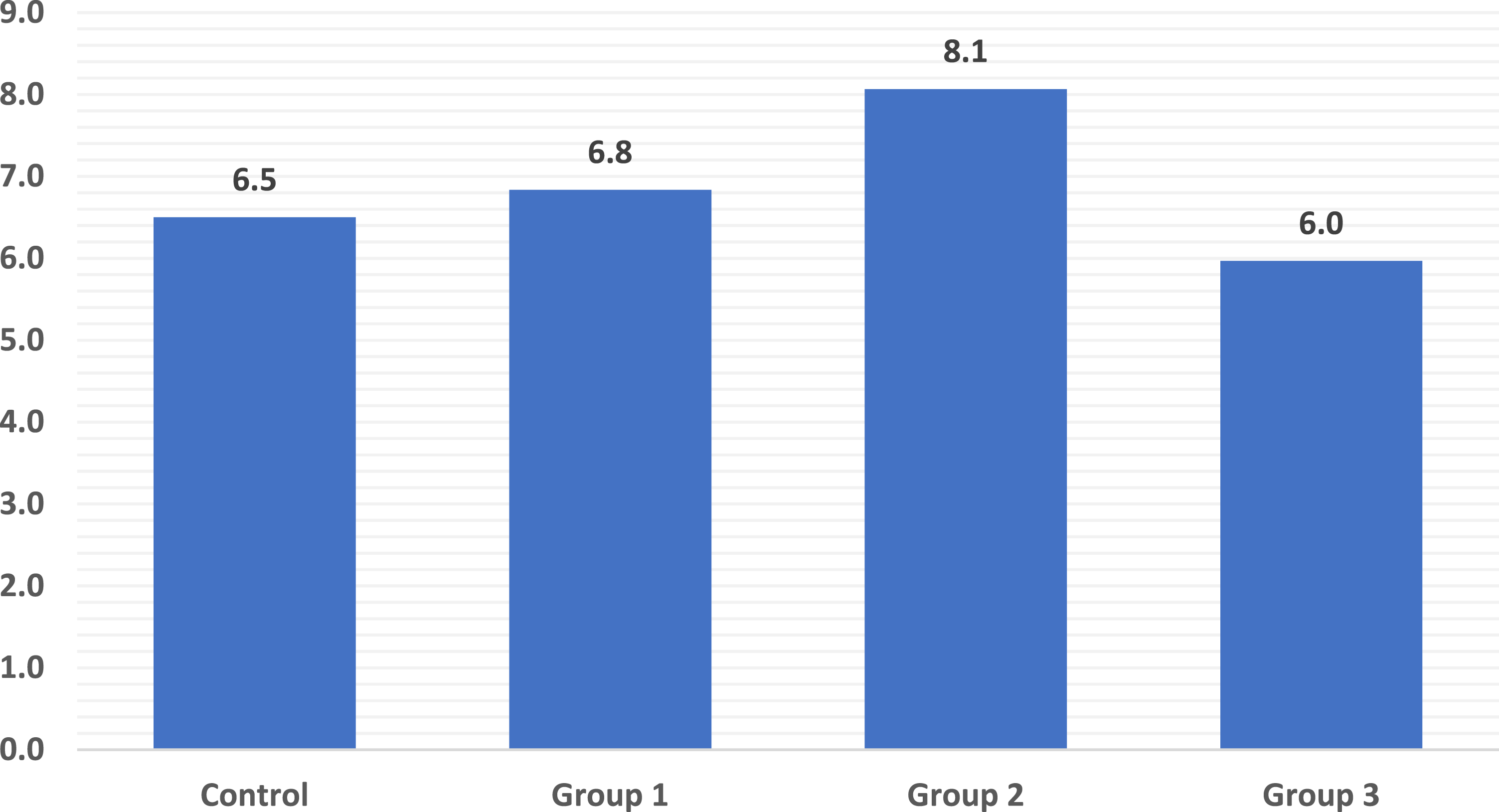
Group 1 Control, Group 2, Group 3, and Group 2. The F-statistic of 0.833 and p-value of 0.512 indicate that the differences in liver weights between the groups are not statistically significant, suggesting that coffee administration did not have a notable effect on liver size across these groups.
Histopathological summary
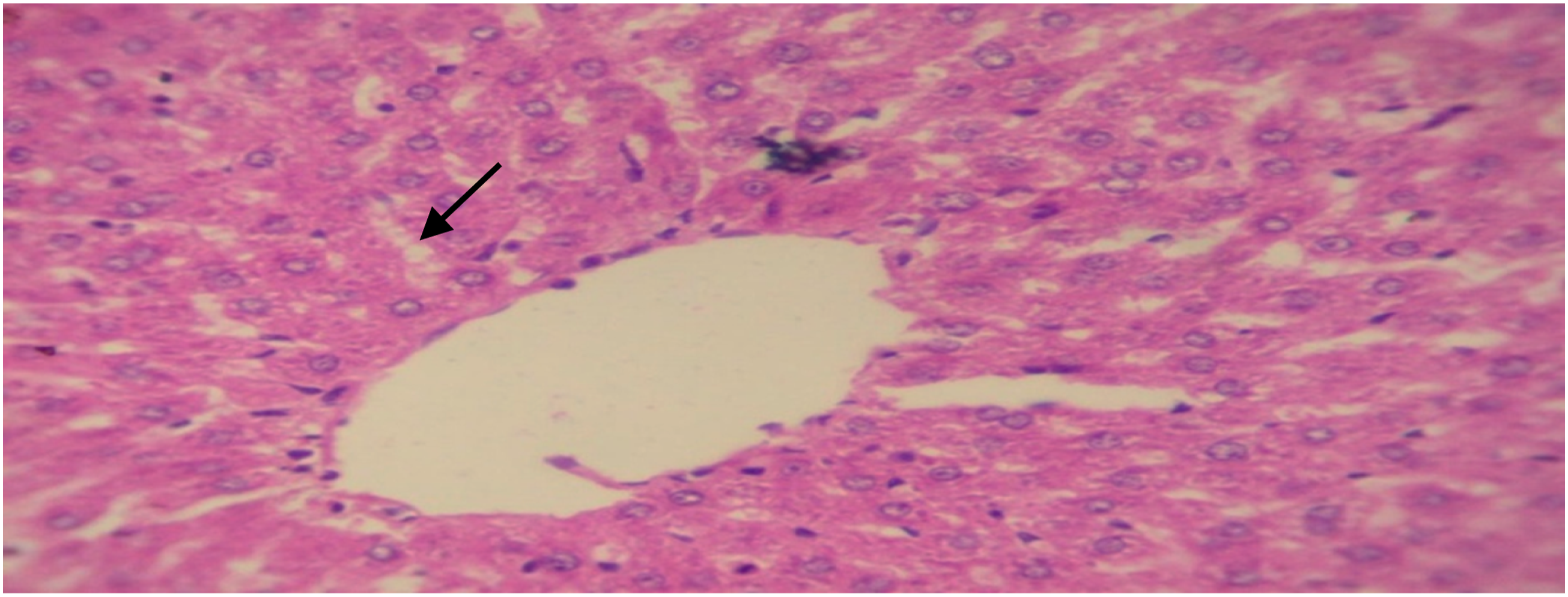
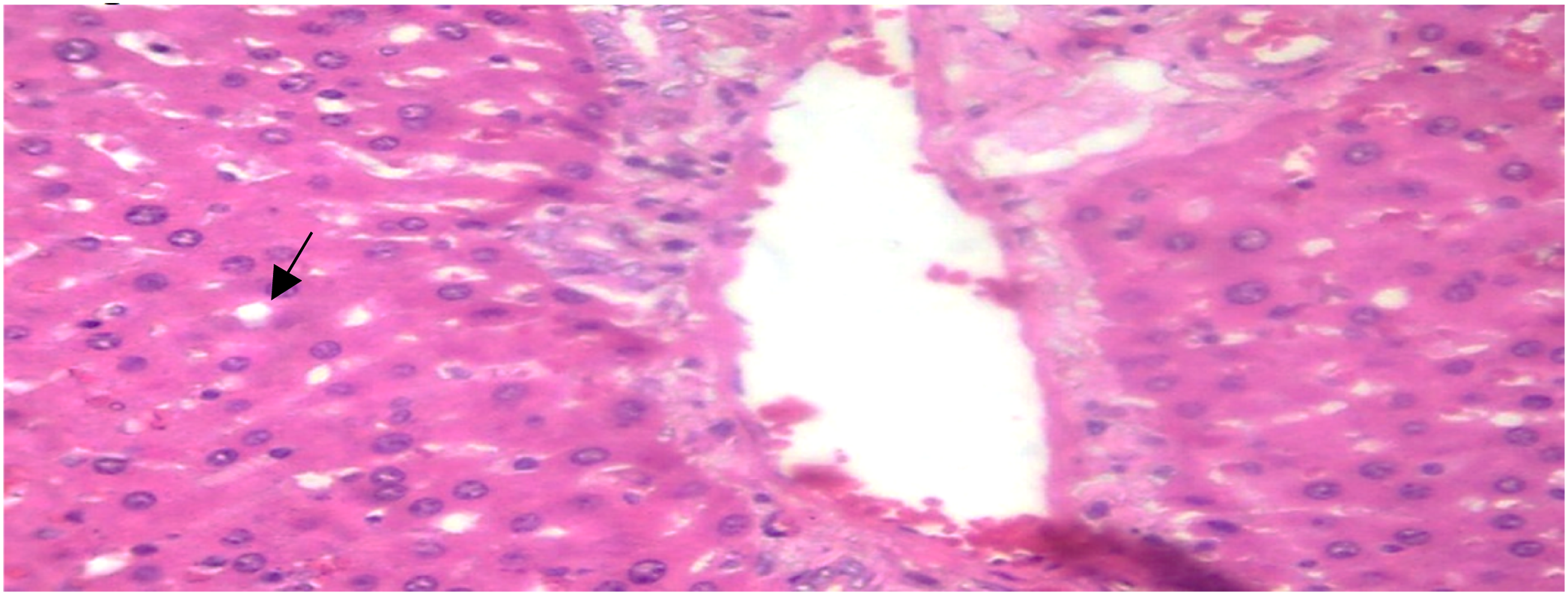
In the Figures 3–6, Animals administered with different doses of coffee showed a dose-dependent effect. Compared to the normal control, the liver showed noticeable apoptotic cells and vesicular hepatic nuclei with increased concentration of the brand of coffee (GOLD Premium KLEO CAFÉ, Poland). The normal control group showed a normal central vein (green arrow) and radiating chords of hepatocytes (black arrow) (H&E. X Mag. 400). Animals administered with 100 mg/kg coffee showed degenerated hepatocytes (black arrow) (H&E. X Mag. 400). Animals administered 200 mg/kg coffee showed apoptotic cells (black arrow) with enlarged hepatic nuclei (H&E. X Mag. 400). Animals administered 300 mg/kg coffee showed apoptotic cells (black arrow) and vesicular hepatic nuclei (green arrow) (H&E. X Mag. 400).

Discussion
Our data indicated notable changes in the hematological parameters of the rat groups following coffee administration. The most prominent changes were observed in the white blood cell, red blood cell counts, platelet counts, neutrophils, and lymphocytes of coffee-treated animals, particularly in 200 and 300 mg/kg dosages. These findings are consistent with previous studies that have demonstrated the effect of caffeine on hematological parameters 14 but differ with a significant increase in monocytes and lymphocytes that was reported from their study. Furthermore, the significant increase in RBC count in Group 3 (p < 0.05) and the corresponding rise in hemoglobin (HB) and packed cell volume was in contrast with the study of Nonso Odikpo et al. 15 that reported a significant decrease in RBC and PCV. A decrease in platelet count could indicate that coffee has a mild anticoagulant effect at lower doses, which is consistent with the findings of Bhaska et al., 16 who found that coffee intake decreased platelet aggregation and reduced markers of platelet activation in rats. This anticoagulant effect may explain the significant reduction in PLT, particularly at 100 mg/kg, the coffee dosage might inhibits platelet production or function.
Furthermore, the raised neutrophil and lymphocyte reduction mirrors the report of Ramanavičienė et al. 17 who observed that higher caffeine doses increase neutrophil counts. The corresponding decrease in lymphocytes could reflect a stress-induced shift in immune response, with fewer lymphocytes being recruited during the early inflammatory phase. Moreover, the immunomodulatory effect of coffee is well-documented, and Prabowo et al. 18 previously reported that caffeine alters immune cell ratios, promoting neutrophil activation while suppressing lymphocyte production. Interestingly, other parameters such as monocytes, eosinophils, and mean corpuscular hemoglobin concentration did not show significant changes which is consistent with the study by Nonso Odikpo et al. 15 Furthermore, the mean corpuscular volume was significantly lower in animals treated with 200 mg/kg coffee, suggesting changes in red cell size produced in response to coffee-induced stimulation of erythropoiesis. The report of Zhang et al. 19 supports this observation, noting that caffeine can influence red blood cell morphology and volume under certain conditions. 20 In addition, there was a dose-dependent increase in the platelet count of animals treated with coffee for the period of study. In line with our data, the anti-Platelet aggregation and anti-cyclooxygenase activities for a range of coffee extracts 19 and its vascular effects have been reported.21,22
Similarly, coffee administration has a significant effect on the weight of rats over 3 weeks. Our data aligns with findings from Enaohwo, 23 and Ismail et al., 24 where higher doses of coffee led to reduced body weight in animal models due to caffeine’s metabolism-boosting and appetite-suppressing properties. Coffee has long been associated with indigestion, heartburn, and other gastrointestinal symptoms. 10 However, further study is needed to explore the dose-dependent mechanisms through which coffee affects body weight and to determine whether these effects are sustained over longer periods. A study by Enaohwo, 23 showed that the impact of coffee on liver weight appears to be dose-dependent while low doses of coffee did not significantly affect liver weight, higher doses increased the relative liver weight compared to controls. Further study is needed to elucidate the exact mechanisms through which coffee affects the blood parameters, and how these findings could be translated to other biological models.
Conclusion
Coffee has a positive effect on hematological indices. However, chronic consumption is injurious to the liver in rats.
Footnotes
Acknowledgments
The authors thank the Animal House of the Bingham University Karu for providing the ethical clearance for the use of experimental animals to perform the research.

Ethical considerations
Approved by the Bingham University Research Committee.
Funding
The authors received no financial support for the research, authorship, and/or publication of this article.
Declaration of conflicting interests
The authors declared no potential conflicts of interest with respect to the research, authorship, and/or publication of this article.
Data Availability Statement
Data are available from the corresponding author upon request.