




Abstract
Mitigating physical inactivity is vital for public health. Neighborhoods that include visually engaging, eye-catching objects and locations increase the frequency, duration, and vigorousness of resident and visitors’ exercise. Three findings are key: First, individuals in neighborhoods that include features directly relevant to exercise—including dense mixed-use developments, greenspaces, parks, sidewalks, and connected streets—are more active and maintain better health. Second, when neighborhoods include visually interesting contents that are indirectly relevant to exercise, individuals believe exercise is more feasible, and this change in psychological mindset predicts increased physical activity. Third, as individuals become more physically active, they are less tempted by unhealthy food, which may counteract the detrimental effects on healthy eating that having proximal fast-food restaurants in neighborhoods poses. Race and socioeconomic disparities co-exist with the contents of neighborhoods. We highlight implications for urban planners, developers, community groups, and individuals selecting and designing public spaces that are conducive to healthy lifestyles.
Tweet
Neighborhoods with visually interesting objects and locations increase residents’ and visitors’ beliefs in the feasibility of engaging in physical activity, which then mobilizes more frequent, vigorous, and longer bouts of exercise. Prioritizing investment in aesthetics of built spaces serves public health.
Key Points
When environments contain visually engaging objects and locations, residents and visitors exercise more often, for longer periods of time, and more vigorously.
Neighborhoods, environments, and surroundings that include eye-catching contents foster psychological mindsets that are conducive to better exercise, including strengthening appraisals of the feasibility of engaging in physical activity.
Children who live in neighborhoods that contain a greater number of visually interesting destinations experience decreased body mass indices (BMI) over time.
Elderly adults who live in neighborhoods conducive to physical activity for residents of all ages experience fewer mental health issues.
Residents of neighborhoods that contain fewer convenience stores and fast-food restaurants consume fewer nutrition-poor meals and weigh less.
Investing resources in creating interesting neighborhoods where the visual appeal of the surroundings is most impoverished holds the potential to address race and socioeconomic disparities in physical activity.
Rates of physical activity in the United States are low. Only about 20% of U.S. adults and high-school-aged youth meet the current federal guidelines for both aerobic and muscle-strengthening physical activity (U.S. Department of Health and Human Services, 2020). Less than one quarter of children aged 6 to 17 years participate in 60 min of physical activity every day (The Child & Adolescent Health Measurement Initiative, 2016).
Unfortunately, this sedentary lifestyle contributes to poor health. A meta-analysis of 235 studies, with 194 unique samples, representing more than 1.6 million unique school-aged children from 71 different countries found that behaviors associated with a sedentary lifestyle were associated with poorer body composition, greater cardiometabolic risk, and lower fitness (Carson et al., 2016). In the United States, physical inactivity is associated with a wide range of health costs (Powell et al., 2019). For adults of all ages, physical inactivity predicts higher risk of mortality in addition to higher odds of cardiometabolic conditions, cancer, dementia, and mental illness. Among pregnant women, physical inactivity increases the risk of diabetes and increases the odds of post-partum depression after delivery. Among adults with pre-existing conditions, physical inactivity increases the risk of mortality, increases the aggressiveness of the progression of chronic diseases, increases felt pain, and impairs mental function. For children aged 6 to 17 years, physical inactivity predicts poorer cognitive function, unhealthy weight status, and poorer mental health, in addition to impaired cardiorespiratory, cardiovascular, and muscular fitness. For children as young as 3 years of age, physical inactivity relates to weaker bone health.
In 2018, the U.S. Physical Activity Guidelines Advisory Committee (2018) generated a report that included a comprehensive review of strategies meant to promote physical activity and identified several effective interventions (Powell et al., 2019). In particular, it noted interventions that go beyond the individual and instead focus on what families, communities, and city planners can do to encourage more activity. Likewise, over the last 4 years, the Community Preventive Services Task Force (2016) has also suggested physical activity campaigns focus on programs outside the individual. The task force encourages programs that focus on land use and environmental design interventions aimed at increasing the diversity and proximity of local destinations where people live, work, and spend their leisure time, in addition to enhancing access to parks and other recreational facilities. Addressing physical inactivity and promoting public health, these committees recognize, requires environmental design innovation.
Promoting physical health needs to focus on environmental interventions (Ding et al., 2020). Intrapersonal factors—including biological and psychological factors that predict individual behaviors—are the result of multilevel, interacting influences (Sallis et al., 2015). As a result, environmental modifications may be more likely to generate far-reaching, sustainable behavioral change; these modifications can scale up to positively impact the health of communities as a whole rather than just a few individuals within them (Sallis et al., 2015). Indeed, environmental psychologists have for decades focused investigations on the effects of environmental features on individuals’ physical health (e.g., B. B. Brown et al., 2009). And, the Lancet physical activity series has advocated for prioritizing environmental over individual approaches for physical activity promotion (e.g., Pratt et al., 2012).
We propose that features of constructed environments within neighborhoods in which people reside can shape public health, including the number of exercise options and food choices. We combine macro-perspectives from environmental psychology and public health with micro-perspectives from social psychology to offer evidence that built environments can promote better health, with a focus on physical activity and consequences for healthy eating. The visual contents of individuals’ surroundings shape what they do and what they eat. As a result, governments, city officials, urban planners, and developers can promote good health by investing in features of people’s immediate neighborhoods.
The Public Health Effects of Neighborhood Walkability
Features of constructed environments can promote physical activity. Destinations like retail stores and parks, as well as sidewalk access, increase the desirability and feasibility of walking through neighborhoods. In six major U.S. cities, neighborhoods with a higher density of street trees, narrower streets, and lower speed limits were associated with greater walkability (Lee et al., 2018). Greater diversity of destinations (such as office, retail, industrial, service, entertainment, education, health, and public development) across a metropolitan area correlated with a greater percentage of trips made by foot or bicycle (Ding et al., 2011; Ferdinand et al., 2012).
Children experience physical health consequences of the walkability of their neighborhoods. Researchers used geocoded residential address data from the electronic health records of children (aged 4–18 years) associated with 14 pediatric practices in Massachusetts (Duncan et al., 2014). The number of recreational open spaces predicted change in BMI over time. Children with fewer recreational open spaces in their neighborhood showed increases in BMI over 3 years. Built environments that promote walkability may help increase physical activity, with consequences for health and fitness.
Psychological Factors That Improve Health in Walkable Neighborhoods
Walkable neighborhoods not only offer destinations that entice–residents to explore them by foot or bike but they also affect the psychological experiences of residents in ways that are conducive to improved fitness. For instance, features of neighborhoods affect attitudes toward fitness. Residents in the more walkable neighborhoods in Portland, Oregon–those that are relatively flat with a tightly spaced grid street pattern and more destinations–hold more positive attitudes about walking and biking than do residents in less walkable neighborhoods—those that include hills and fewer destinations; they also reported more frequent biking and walking in the past month (Dill et al., 2014).
In addition, walkable neighborhoods feel safer, and this psychological by-product increases physical activity (Cradock & Duncan, 2014). Researchers surveyed more than a 1,000 residents of 12 urban low-income housing complexes in metropolitan Boston (Bennett et al., 2007). Although most participants reported feeling safe during the day, only a third reported feeling safe at night, and the consequences of such feelings affected the health of women in particular. The research team asked participants to wear a pedometer all day for 5 days except when the device could get wet. From these data, the team found that women who reported feeling safe rather than unsafe at night took about 875 more steps per day.
Walkability also indirectly affects the health of older residents with physical mobility complications. Older male residents in Seattle living in walkable rather than less walkable neighborhoods experienced fewer depressive symptoms (Berke et al., 2007). Likewise, Hispanic elders in East Little Havana, Florida living in walkable neighborhoods also experienced less anxiety and depression, particularly when their homes included a front entrance or small setback, which promotes more frequent social interaction with the other residents walking, running, or biking in front (S. C. Brown et al., 2009).
Visual Experiences Encourage Physical Activity in Walkable Neighborhoods
Although we argue that features of built environments shape the activity of residents, a common retort claims instead that individuals self-select the residential spaces in which they best fit. Residents of walkable neighborhoods may have selected those environments because those neighborhoods support the lifestyle that they wish to maintain. That is, physically fit individuals may choose to reside in places in which they can walk or bike to amenities. We also acknowledge that the density of residential and commercial developments may prohibit easy access to vehicular travel.
However, while walkable neighborhood features are appealing to specific demographics or may require more active travel among those who live there, walkable neighborhoods also contain certain design features that create a unique visual experience that promotes better health for all people. In particular, the features of built environments that promote walkability are also features that individuals consider to be visually interesting; these differences in visual appeal are conducive to physical activity.
Among a primarily Black sample of New York residents living in low-income housing developments, those who reported that their neighborhoods contained more visually interesting things that caught their attention were more physically active than those who believed their neighborhoods contained fewer interesting things (Balcetis et al., 2020). This was true among residents in San Francisco, Washington, D.C., Boston, and other New York City neighborhoods as well.
Moreover, eye-catching environments improve the intensity of physical activity (Balcetis et al., 2020). We told survey respondents about two different styles they might use when they exercise. One style involves creating imaginary finish lines or destinations, choosing things like stop signs or buildings as goals when walking or running outside. In this style, they might think of their attention like a spotlight shining just on that spot and then focus on that spot until they reach it. We juxtaposed this against a wider style of attention in which they might look around broadly, taking notice of the people on the street and the environment around them until they reach their destination, perhaps letting their attention wander. We asked how often they use each attention style when walking or running through their neighborhoods. We found that individuals who lived in neighborhoods in which they tended to focus narrowly on specific environmental features reported walking a mile 5.5 min faster than people who never created their own finish lines and who instead often found their attention wandering broadly.
Although more active people likely do move farther from home on a given day, it was not the case that simply moving within a larger space exposed people to more interesting things they could report. Instead, the visual features of neighborhoods promote activity, rather than physical activity being the means by which neighborhood size increases and as a result exposure to interesting visual features increases. We gathered information from global positioning system tracking units which residents of New York City low-income housing wore on their body for 1 week (Balcetis et al., 2020 Study 1a). These data provided insights into the square area they traversed on foot each day. When we accounted for the size of residents’ daily activity space, we continued to find that having interesting things in one’s neighborhood predicted more physical activity among residents who were trying to lose weight.
Next, we tested whether we could induce that visual experience for people who may not otherwise experience it and improve the quality of their physical activity. We designed an intervention that would teach people how to visually attend to their surroundings in ways that would promote fitness. In particular, we encouraged half of our experimental participants to use a narrowed style of attention when exercising by focusing on a destination they could see up ahead. We juxtaposed this strategy against a more natural style of attention in which we encouraged other participants to look around, taking notice of the things in the environment around them until they reach their destination. We found that individuals who narrowed rather than widened their attentional focus walked 23% faster and reported it required 17% less exertion despite the distance they walked being held constant (Cole et al., 2014). Moreover, New York City residents who implemented this narrowed attention strategy when exercising outside on their own for the week and who tracked their activity on a smart phone app went out for .75 more walks in the next 5 days purely for the sake of exercise (Balcetis et al., 2020). Individuals also went 60% farther on each walk and took about 85% more steps per walk because they moved faster than individuals who simply attended naturally. While individuals normally took about 800 steps in each 15-min walk, narrowing their attentional focus increased the number of steps to about 1500.
The Motivational Consequences of Interesting Neighborhoods
The visual experiences that walkable neighborhoods elicit bear directly on the psychological mindsets of residents. These shifts in psychological mindsets then hold implications for exercise habits. When neighborhoods contain interesting things that hold attention, individuals’ visual experiences of distance shift; distances to places, objects, and events happening around them do not look as far. When features of environments capture attention, individuals process a limited set of distance cues; they see fewer features in peripheral vision. That limited set of cues to distance and depth give rise to perceptions of proximity (Wardak et al., 2011; Wu et al., 2004). Moreover, feeling that a target or location is closer facilitates individuals’ personal beliefs that they are up to the challenge of walking to those places, and as a result motivates more efficient and frequent exercise. Simply put, interesting things catch attention, look closer, and seem easier to reach, and as a result people move toward them, thereby increasing physical activity.
We documented the shifts in psychological mindsets that this narrowed focus on environment contents creates and found beneficial consequences for physical activity even among individuals experiencing challenges to maintaining a healthy body composition. We gave patrons of a local gym a moderately challenging exercise task (Balcetis et al., 2015). Some followed instructions to narrow their visual attention on a cone marking a finish line at the end of the room, while others looked around their surroundings in a natural and relatively broader manner. Patrons with higher waist-to-hip ratios who focused their visual attention narrowly judged the distance to the cone as shorter than those who looked around their surroundings. Moreover, the closer participants felt the finish line was, the faster they walked to it. Importantly, their quickened pace was the result of a change in mindset; those who saw the cone as closer thought the exercise would be easier to complete and held stronger expectations that they would succeed at the exercise. Judgments of proximity increased appraisals of feasibility, which in turn facilitated faster walking.
How to Assess Neighborhood Features
Individuals and families considering where to move, developers planning urban renewal considering features that could best serve the health and well-being of residents, and city planners deciding where and in what to invest tax-payer dollars might consider features that promote walkable neighborhoods. As a first step, the Walk Score of a neighborhood might offer direction for investment. The Walk Score indexes the distance and ease of getting to amenities like schools, stores, parks, and libraries. Based on dynamic, up-to-date data, validated using geographic information systems, Walk Score accurately predicts the density of retail, service, cultural, and educational destinations (Duncan et al., 2011). Users can enter any location into the online interface on the Walk Score publicly available website (www.walkscore.com) and receive the Walk Score assigned to that location. Neighborhoods that are more walkable have amenities that can be accessed with more direct routes or through a more connected network of pathways. For instance, Walk Score predicted access to primary care; newly enrolled Medicaid recipients in Philadelphia who lived in neighborhoods with low Walk Scores reported 84% decreased odds of having access to doctors, clinics, or health centers they could go to if sick or in need of advice relative to residents of high Walk Score neighborhoods, after accounting for socioeconomic factors, self-rated health status, and area-level crime (Chaiyachati et al., 2018). This freely available tool can provide users with useful and accurate diagnostic feedback about the features of a neighborhood that are conducive to promoting physical activity for residents.
Examples of Visually Engaging Features of Walkable Neighborhoods
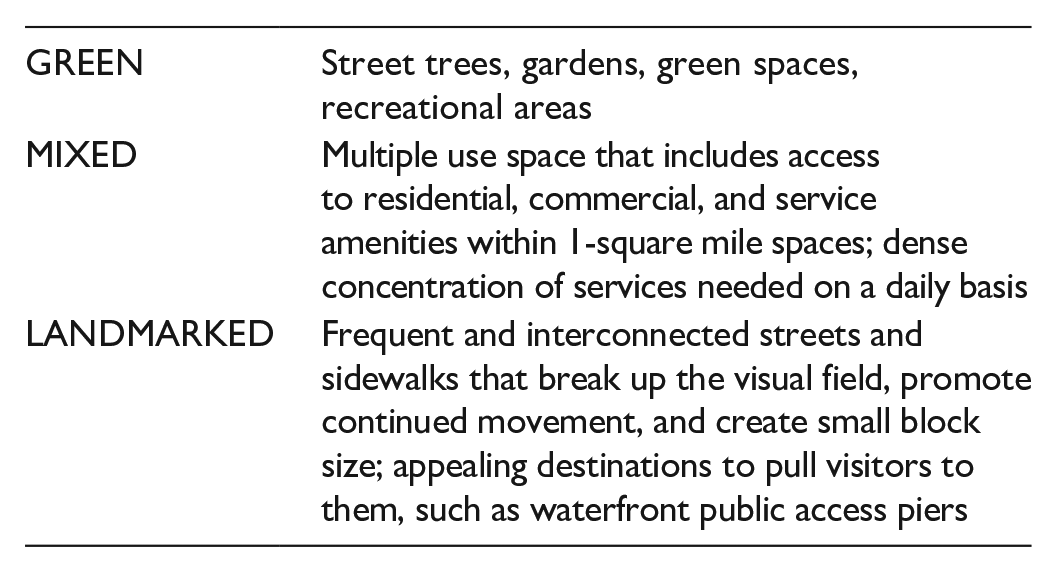
Implications for Lowering Healthcare Costs
There are financial advantages to investing in walkable neighborhoods. Public health researchers quantified the health care saving advantages associated with neighborhood walkability in Australia’s capital city of Canberra (Yu et al., 2017). They analyzed more than 30,000 public hospital admissions where the primary medical diagnosis was cancer, endocrine, nutritional, metabolic, circulatory, or respiratory disease—the chronic conditions contributing the greatest burden to hospital costs. They collated costs experienced with these hospital visits with the Walk Score of the neighborhood in which each admitted patient resided. After taking into account age, sex, and socioeconomic status, residents of neighborhoods where Walk Scores were 20 units higher experienced lower hospital costs and fewer number of admissions of person. For example, living in “somewhat walkable” neighborhoods rather than “car-dependent” neighborhoods lowered annual hospital costs by an average of 12.1% and the number of admissions by an average of 12.5%.
Implications for Mitigating Race-Based Disparities in Neighborhood Walkability
Tracking and improving the walkability of neighborhoods may also serve as one means to address issues of race-based disparities in urban development and health. For example, the highest levels of physical inactivity occur among racial and ethnic minorities (Ford et al., 1991; U.S. Centers for Disease Control and Prevention, 2004, 2005a, 2005b). Part of the reason for this disparity may be due to people’s constructed environments. In Boston, neighborhoods in which, according to census track data, more than 60% of residents were non-Hispanic Black people were also neighborhoods in which the recreational open space was sparse (Duncan et al., 2013). That is, Black neighborhoods in Boston were less likely to have recreational open spaces than neighborhoods where the majority of residents were not Black. Likewise, in a survey of more than 15,000 residents in the San Francisco Bay area, data combining neighborhood Walk Scores with U.S. Census data found that the neighborhoods scored least walkable were often those with the greatest share of African Americans (Riggs, 2016). The association between race and walkability held even after controlling for other factors like housing attributes, access to a car, and proximity to public transit. As features of neighborhoods that promote walkability also promote more efficient and frequent exercise, investing in walkability also invests in public health that may serve minority groups.
Implications for Economic Growth
Investing in neighborhood walkability may also lead to economic growth. Neighborhoods that in 2010 were identified as vibrant—those that, for instance, had a higher Walk Score, were laid out in a connected grid, and had more eye-catching landmarks like parks, water, and mountains—had higher employment, greater expansion of rentable residential and commercial space, and higher median household income 5 to 7 years later (Malizia & Chen, 2019). Likewise, hotels located in neighborhoods with higher rather than lower Walk Scores sold for higher prices (Liu & Corgel, 2017). Of course, the reasons for the economic gains that walkable neighborhoods confer are multiple, but these outcomes do suggest that physical features of environments that are conducive to better health are also considered valuable opportunities for investment.
Optimizing Investment in Neighborhood Walkability and Public Health
An investment in walkability additionally promotes healthier eating. Individuals who engage in greater physical activity also experience changes to their neural responses to food. Overweight and obese men and women who exercised for 6 months, progressively scaling up their workouts, showed a reduction in the neuronal response to visual images of tasty foods, primarily in the posterior attention network and insula (Cornier et al., 2012). These brain regions relate to attention to food cues and motivation to eat. Moreover, those people who experienced the biggest decreases in fat mass also showed the greatest reductions in insula response to food cues. As a result, the development of walkable neighborhoods can increase the amount of exercise residents receive, but also tamp down the neuronal response to food cues, producing changes that could lead people to notice food less and experience less urge to eat.
Of course, some forms of retail and development of infrastructure increase walkability but are not conducive to fitness or healthy eating. Those would include among other things convenience stores and fast-food restaurants. When developers increase walkability by investing in infrastructure that supports these food options, the health of area residents is negatively affected, and data suggest those residents tend to be of lower income and minority race and ethnicities. In 156 New Orleans census tracts, fast-food restaurant density is correlated with median household income and percent of Black residents in the census tract (Block et al., 2004). Predominantly Black neighborhoods have 2.4 fast-food restaurants per square mile compared to 1.5 restaurants in predominantly White neighborhoods. Moreover, as proximity to such calorie-dense foods increases, so too does consumption. Among about 2,400 individuals at the point-of-purchase at fast-food restaurants in Baltimore and Philadelphia (Athens et al., 2016), having at least one chain fast-food restaurant within one mile was associated with a 21.2% increase in frequency of fast-food meals, or having about one additional fast-food meal per week. Even with at least one supermarket within one mile of home, if at least one fast-food chain restaurant also lies within that radius, fast food dining frequency increased 37.9%, which equates to about two additional fast-food meals per week.
The effect of proximity to unhealthy foods within one’s neighborhood bears on the health of children as well. Health record data from 14 pediatrics practices in eastern Massachusetts from well-child visits were coupled with most recent residential address for about 40,000 pediatric patients (Fiechtner et al., 2015). Pediatric patients’ proximity to stores selling less healthy foods predicted BMI. Moreover, this difference was more pronounced in lower income neighborhoods. For example, those living less than a half mile from a convenience store in a census tract with a neighborhood median income <$50,000 had a standardized BMI score that was 1.28 units higher than those living more than 2 miles away; for an average height 11-year-old boy, that difference equated to a difference in weight of 22 pounds.
As a result, because what people see in their neighborhoods influences what they eat, paying particular attention to and limiting the placement of these retail services relative to residential developments is one means by which urban planners can address disparities that disproportionally impair the health of economically disadvantaged groups and minority populations. When options arise for separating residential development from calorie-dense, nutrition-poor food purveyors, increasing the physical distance between where people live and where people can purchase unhealthy foods can improve public health.
Implications for Design and Renewal
How can people, organizations, and institutions advocate, promote, and create neighborhoods that foster public health? During opportunities for development, architects, city planners, politicians, and investors can consider how construction might create and promote opportunities for physical activity. For example, to promote public access and connect the city center to the waterfront in Houghton, Michigan, the town gradually acquired a stretch of shoreline property and replaced industrial ruins with parks, marinas, and paved trails for fitness. Portland, Oregon’s Mayor, Sam Adam, began assessing the environmental elements of his city’s neighborhoods to evaluate how they are conducive to physical activity. In particular, he aimed to create what he called the “20-minute neighborhood.” He encouraged the design of mixed-use development in which residents could walk or bike to places and services needed on a daily basis—including transit, shopping, quality food, school, parks, and entertainment (Camner, 2010). Inspired by this ambition, Melbourne’s Ministerial Advisory Committee advocated for similar mixed-use space. Likewise, Singapore is moving forward on a land transport plan that includes 20-min towns (Land Transport Master Plan 2040, 2020).
When redesigning interiors of built spaces and considering human traffic flow, teams can consider how visuals like signs can motivate physical activity. The Hartsfield–Jackson Atlanta International Airport—the world’s busiest passenger airport—used thermal sensors to monitor the proportion of travelers who chose to walk instead of ride the train among terminals. After installing signs with motivational language, a visual of a person walking, and an infographic of the location and time to walk to each terminal at decision-points including at the entrance to the trains and start of the transportation mall walkway, the proportion of travelers and employees choosing to walk increased by 10% (Frederick et al., 2016).
Developers can prioritize multi-use space not only as a means to increasing and diversifying revenue streams but also creating a healthier live–work environment for users. Community members can review proposed plans and weigh in during public hearings to advocate for features of to-be constructed environments that promote physical activity of area residents. For example, in 2002, when new data revealed 1 in 5 North Carolinians were classified as obese, rural Granville County formed a Health Promotion Workgroup and initiated a plan to increase physical activity among its residents by developing more walkable communities (Granville County Greenway Master Plan, 2012). Rather than creating trails one by one, the Granville master plan involved the development of “greenways”—corridors of open green space that linked parks, recreational areas, residential neighborhoods, employment, schools, and shopping districts.
During opportunities for renewal, neighborhood organizations can create visually engaging destinations, such as community gardens open to the public. Schools can foster collaborations between students and artists to create eye-catching murals. Home owners and renters can consider the exteriors of their properties as opportunities for public service by creating gardens, installing sculptures, or ornamenting in ways that act as visual landmarks or beacons to entice those walking or running through the neighborhoods. In the Village of Cuba, New Mexico, community members worked together to improve their walking trails. More than 100 community volunteers, including the mayor, together enhanced 9.5 miles of trails with landscaping, including shade trees, benches, and signage.
Mitigating Unintended Consequences for Low Socioeconomic Status Groups
From 1994 to 2002, officials of all counties in the United States with higher levels of poverty and lower rates of education allocated less federal funding for sidewalk and bike projects—features of neighborhoods conducive to walkability (Cradock et al., 2009). While this disparity warrants remediation, investing in walkability must simultaneously take into consideration other factors that impact members of disadvantaged groups. For instance, low socioeconomic status groups may be financially pushed out of their neighborhoods if development increases walkability, as more walkable neighborhoods increase market demand and command price premiums (Cortright, 2009; Gilderbloom et al., 2015).
To combat such intended consequences, city officials and developers can negotiate equity plans in advance of breaking ground. In Washington, D.C., for instance, developers of the Bridge Park project collaborated with investors, researchers, community experts, and the general public to design equitable and inclusive solutions. Their agreement included provisions for affordable housing in addition to workforce and small business development. For instance, developers committed to working with city agencies and non-profits to leverage existing public and private resources to build new affordable housing near Bridge Park, to provide down payment assistance, to maximize the number of surrounding residents placed on construction jobs, and to create infrastructure to expand food services in the park offered by local restaurants (Bogle et al., 2016).
Conclusion
The physical construction of space bears directly on its usability by those traveling outside of vehicles and serves as a means to promote greater activity. The construction and contents of environments also affect the psychological experience of those living, working, and moving through those spaces. These psychological experiences serve as indirect means to promoting health. When space contains things that individuals find interesting, they experience a cascade of psychological consequences that facilitates more frequent and vigorous exercise. When neighborhoods include interesting things that catch the eye, destinations that might otherwise seem too far away now appear closer, which leads people to believe it is feasible to walk or run to them, and that shift in personal assessment of feasibility promotes better exercise.
By considering the features of the spaces where we live, work, and play, we might gain traction on the growing problems related to poor physical fitness. Our intention is to increase awareness of the macro and micro effects of the environments we construct and to empower individuals, organizations, and institutions to create beautiful spaces as a means to improving their own and others’ health.
Footnotes
Acknowledgements
We would like to acknowledge Susan Fiske and E. Blair Cox for their assistance.
Declaration of Conflicting Interests
The author(s) declared no potential conflicts of interest with respect to the research, authorship, and/or publication of this article.
Funding
The author(s) disclosed receipt of the following financial support for the research, authorship, and/or publication of this article: This work was supported, in part, by grants from the National Science Foundation: 1460626 (SBE) and 1147550 (BCS).
