



Abstract
While academic internships can play irreplaceable roles by providing students hands-on learning opportunities, allowing them to collaborate with faculty, and strengthening ties between colleges and their communities, continued assessment of these experiences is still imperative. An academic internship has been described as a three-way partnership among a college or university, the internship site, and the student, but the role the institution plays can differ significantly. Several years ago, the Association of Schools of Public Health included field experience (such as internships) as a Critical Components Element of an Undergraduate Major in Public Health. Hence, this study investigates not only how Public Health students evaluate their internship site but also their experience with their school during the internship process. Survey data from 219 undergraduate students, on completion of their internships from Fall 2012 to Spring 2016, were collected. Results posit that public health students report the academic institution provided support and guidance, while their internship site provided a valuable learning experience both interpersonally and professionally. Also, students recommend this experience and provide valuable feedback for future internship partnerships. Considering internships are integral parts of many preprofessional degree programs, it is imperative that programs develop and implement systematic ways to assess these programs. This study provides valuable insight into this process along with identifying students’ perceptions of the academic internship and the role that both the site and the institution played in facilitating their learning.
Internships are integral parts of many academic programs that contribute significantly to students’ educational and personal growth in numerous ways. Specifically, internships are a graduation requirement for many universities and colleges because they increase students’ employability as well as provide educational value (Galvan, Fisher, Casman, & Small, 2013). An academic internship has been described as a three-way partnership among an institution of higher education, the internship site, and the student, but the role the institution plays can differ significantly. Thus, the purpose of this study is twofold: first, to investigate students’ perception of their internship site as related to their academic growth; and second, identify students’ perception of the role their institution plays during their internship process. This study provides insight into the impact the internship experience had on their personal skills along with their professional development. In addition, this study goes one step further by also including the impact the institution played in facilitating students’ internship experience and ultimately their learning. Specifically, to obtain a more holistic evaluation of the entire process, public health students provide self-assessment of their experiences while at the internship site, along with assessing the internship coordinator and added classroom components and assignments associated with their required semester-long internship.
Literature Review
Academic Internships
Academic internships are defined as an opportunity to integrate work-related experience into graduate education by participating in scheduled and supervised work (Gault, Leach, & Duey, 2010). These real-world experiences are an integral component of an academic program and provide students with the opportunity to develop not only work skills but also an understanding of the workplace (Gerken, Rienties, Giesbers, & Könings, 2012). An internship experience, due to its very nature, is as different as the disciplines in which students are obtaining their major and the school in which they are attending. In support, the National Association of Colleges and Employers has found that only 28% of colleges in the United States associate classroom experience with academic credit for internships, while 25% do not require any kind of written assignments, 15% do not require any faculty supervision, and 6% require nothing at all (as cited in Ross, 2011). In addition, the study reports that university policies on credit vary widely with respect to internships, study abroad, and coursework at other accredited institutions, and the value of their credits are more highly guarded by elite college versus more permissive institutions.
Numerous past studies provide solid evidence on the benefit of internships reporting a variety of added value from experience-based learning activities associated with academic internships. Galvan et al. (2013) provide an excellent review of these benefits, and although they are not specifically internships in the field of Public Health, results paint a clear picture of these benefits. Specifically, completion of an academic internship has been positively correlated with characteristics that future employers seek: essential skills and attributes (Knouse, Tanner, & Harris, 1999; Siegel, Blackwood, & Landy, 2010; Taylor, 1988), personal competencies (Knechel & Snowball, 1987; Scholz, Steiner, & Hansmann, 2004), transferable skills (Gault et al., 2010; Jiusto & DiBlasio, 2006; Knouse et al., 1999; Koehler, 1974; Scholz et al., 2004; Taylor, 1988), job qualifications (Siegel et al., 2010; Taylor, 1988), work knowledge (Callanan & Benzing, 2004; Knechel & Snowball, 1987), professional development (Siegel et al., 2010), and adaptability and mobility to a new position (Callanan & Benzing, 2004; Scholz et al., 2004; Siegel et al., 2010; Tovey, 2001). In addition, previous studies indicate the following benefits to students who engaged in academic internships: improved their academic performance (Blair, Millea, & Hammer, 2004; Knouse et al., 1999; Koehler, 1974; Siegel et al., 2010), students come back to the university after an internship with more motivation (Blair et al., 2004; Knouse et al., 1999; Koehler, 1974; Siegel et al., 2010), and provided real-life professional experience (Knechel & Snowball, 1987). Furthermore, these studies posit that internships foster employability characteristics: (a) essential attributes such as self-discipline, positive attitude and performance at work, and ability to reconcile conflicts of interest; (b) association with personal competencies such as motivation and autonomy; (c) assessment of transferable skills, such as interpersonal communication, oral presentations, computer, research, critical thinking, creative thinking, time management, report writing, problem-solving abilities, and organization of work. Finally, these results reveal that students participating in internships are more likely to have an attitude to improve the status quo; better job qualifications such as professional training for specific jobs; better ability to deal with ambiguous situations; increases likelihood of obtaining the first job after graduation; more equipped to evaluate and accept job opportunities as a result of socialization and acculturation gained during the internship; a better starting salary; better current salary; better job satisfaction; and higher promotion rates. 1 Overall, the above lends support, regardless of discipline, to Narayanan, Olk, and Fukami’s (2010) claim that internships are one of students’ most important curricular experiences to learn about occupational environments. However, although the potential value of an academic internship can be limitless, there is still a need for a systematic process to be implemented to evaluate the internship and the roles that each party plays in the process.
Assessing Internships
According to Walvoord (2010), by definition “assessment is the systematic collection of information about student learning, using the time, knowledge, expertise, and resources available, in order to inform decisions that affect student learning”(p. 2). In a more simplistic understanding, it is a way to measure the effectiveness of the course being taught and the methods of doing so; or as a whole—an academic program. It holds the purpose to constantly improve instructing methods and student learning. A recent study conducted by the National Institute for Learning Outcomes Assessment (Glenn, 2011) discovered that there was an evident difference in the types of assessment depending on the academic program. The types of assessment considered in their study were as follows: locally developed, licensure, and standardized exams; alumni and employer surveys; student interviews or focus groups; capstone courses; culminating projects or demonstrations; and portfolios. Assessment, in its various forms, has become a standardized tool to continuously evaluate and reevaluate instructional methods and student learning. Thus, given the internship may be one of academia’s most valuable learning experiences, it is reasonable to question how this may be validated.
The value of an internship experience is enhanced when that experience is carefully and systematically assessed (Weimer, 2010). For example, Beard (2007) notes that the evaluations of the accounting internship experience she describes “provide information about students’ traits, knowledge, skills, and behaviors as well as perspectives on coursework, activities, and suggested curriculum changes” (p. 211). Thus, the challenge is finding those assessment mechanisms that work well to assess internship experiences. For the current study, the undergraduate Public Health Program began by identifying a set of goals and objectives for their internship experience. These goals are used to help place students in appropriate internships and provide the overarching framework for the assessment of their performance in the internship. In the current study, the goal of this student evaluation is to assess students’ perceptions of not only the benefits of their internship to their personal, academic, and career growth but also assessing the role their institution played in this process. The following gives a brief overview of this internship along with specific research questions.
Public Health Internship
As a result of a growing interest in undergraduate for public health, the Association of Schools of Public Health charged an expert panel with providing guidance for those seeking to start a new undergraduate program in public health or to expand or improve an existing program. A broad cross-section of experts from the practice sector, from academia, and from a range of partner organizations developed a set of critical component elements for bachelor degrees in public health that would prepare students to enter the workforce and/or to pursue advanced studies in public health or other health professions. As part of this Critical Components Element of an Undergraduate Major in Public Health,
2
there is a Capstone and Field Experience component. Specifically, this document states,
Students should have opportunities to integrate, apply, and synthesize knowledge through cumulative and experiential activities that include: 1) Capstone: Students should have a cumulative, integrative, and applied experience or inquiry project that serves as a capstone to their educational experience; and 2) Field Experiences: As an integral part of their education, students should be exposed to local level public health professionals and/or to agencies that engage in population health practices.
The Public Health Program at Stockton University offers undergraduate students an opportunity obtain these critical component elements by taking PUBH 4950. Stockton University, founded in 1969, is a comprehensive university with a strong liberal arts tradition. It currently enrolls 8,674 undergraduate and graduate students on its main campus situated on 1,600 forested acres within a 1.1 million acre Pinelands National Reserve, 12 miles from the Jersey shore. Stockton has been recognized as a key educational leader in the region. The University is ranked as one of the top 10 public colleges and universities in the North by U.S. News & World Report, as a “Best in the Northeast” college by The Princeton Review, and as sixth in the nation by the Military Times “Best for Vets: Colleges 2016.” It has also been designated as an anchor institution for the state of New Jersey.
PUBH 4950 Internship and Fieldwork is four credits and is required for all public health majors. This course is a traditional internship with an additional classroom element to expose students to both fieldwork and a “senior-capstone” experience geared toward starting a career in the field of public health. In the past, students were required to complete 200 hours at their chosen organization. Students are still required to complete 200 hours; however, 175 hours will be completed on-site, while the other 25 hours are made up of traditional classroom time (5-6 classes) and completion of several assignments relating to their internship and future career in the field of public health (see Appendix A for full description, including core and track competencies and student assignments).
The objective of the current study is to obtain data regarding students’ perception of the above internship experience. Specifically, the following research questions were posed:
Methodology
Weimer (2010) states that the value of an internship experience is enhanced when that experience is carefully and systematically assessed. Specifically, Beard (2007) notes “that the evaluations of the accounting internship experience she describes provide information about students’ traits, knowledge, skills, and behaviors as well as perspectives on coursework, activities, and suggested curriculum changes” (p. 211). Similarly, a blog on the best practices in assessment states that assessment of an internship experience is important, not only for evaluating the performance of specific students and assigning grades but also for determining whether the characteristics of a given internship (e.g., the experiences provided at a given site, or the timing of the internship within the context of the academic program) adequately address a program’s student learning outcomes. However, the challenge is finding those assessment mechanisms that work well to assess internship experiences. Given this challenge, the author researched other types of internship evaluations and developed the current survey with questions specifically tailored to public health students’ experiences with regards to their internship experience.
The survey (see Appendix B for the complete survey) is compiled of three different sections: (a) site identification information, including how students obtained their site; (b) questions regarding the internship site; and (c) questions focusing on the students’ perception of the role the institution played in the process. Specifically, a 5-point Likert-type scale, strongly disagree to strongly agree, was used to ascertain both students’ perception of how their internship opportunity helped facilitate personal skill development along with a variety of tasks interns may have performed. For the 6 items assessing the role in internship played in developing personal skills, a Cronbach’s alpha of .81 was found. For the 11 items assessing interns’ task behavior, a Cronbach’s alpha of .90 was found. In addition, a similar format was used to obtain students’ perception of the role the internship coordinator played in setting up the internship and during the internship. Reliability for questions assessing students’ perception of the role of the internship coordinator a Cronbach’s alpha on 9 questions (the question on site visits was not used, given the lower number of responses on this item) reports a .84 reliability. Next, students provided information regarding the classroom element that goes along with their internship site hours. These six questions were designed using a 10-point systematic differential scale from 1 (not beneficial) to 10 (very beneficial). For the 6 items use to assess students’ perception of the classroom component of the internship, a Cronbach’s alpha of .89 was found. Finally, the survey ended with several open-ended questions to allow students the ability to provide some qualitative feedback about their experience, along with whether the internship was paid and if a job offer was made. Given that scale development was not the purpose of this study, issues of validity are not addressed, although face validity can be seen. In support, Artino, La Rochelle, Dezee and Gehlback (2014) posit that survey instrument validation may be the most difficult task for a scientist starting to conduct educational research.
In the fall of 2007, the Public Health Program was approximately 65 students, a rather small program at a mid-size liberal arts college. However, over the years, as the college grew, so did the Public Health Program, averaging approximately 150 students in this one major (during which time, Stockton also became a university). Since Fall 2007, the Public Health Program has offered undergraduate students the opportunity to engage in internship/fieldwork experience. Given the commitment by the institution, the Public Health Internship was redesign to help meet the needs of the students. Specifically, 4 out of 12 teaching credits each semester were designated toward the internship—creating the internship coordinator position. The internship coordinator meets with each student the semester prior taking their internship. The internship coordinator verbally discusses the internship process with the students and provides them ample corresponding written documentation regarding both the academic and administrative aspects associated with the internship. In addition, the internship coordinator provides a lengthy (continuously growing) list of possible internship site with job descriptions and contact information. This not only allows students a starting point when determining their possible internship site and creates a process for possible future sites. Specifically, when individuals from new organizations contact the institution, they are forwarded to the internship coordinator. A standard form requesting internship description and contact information are obtained, and if approved, sites are added to the list.
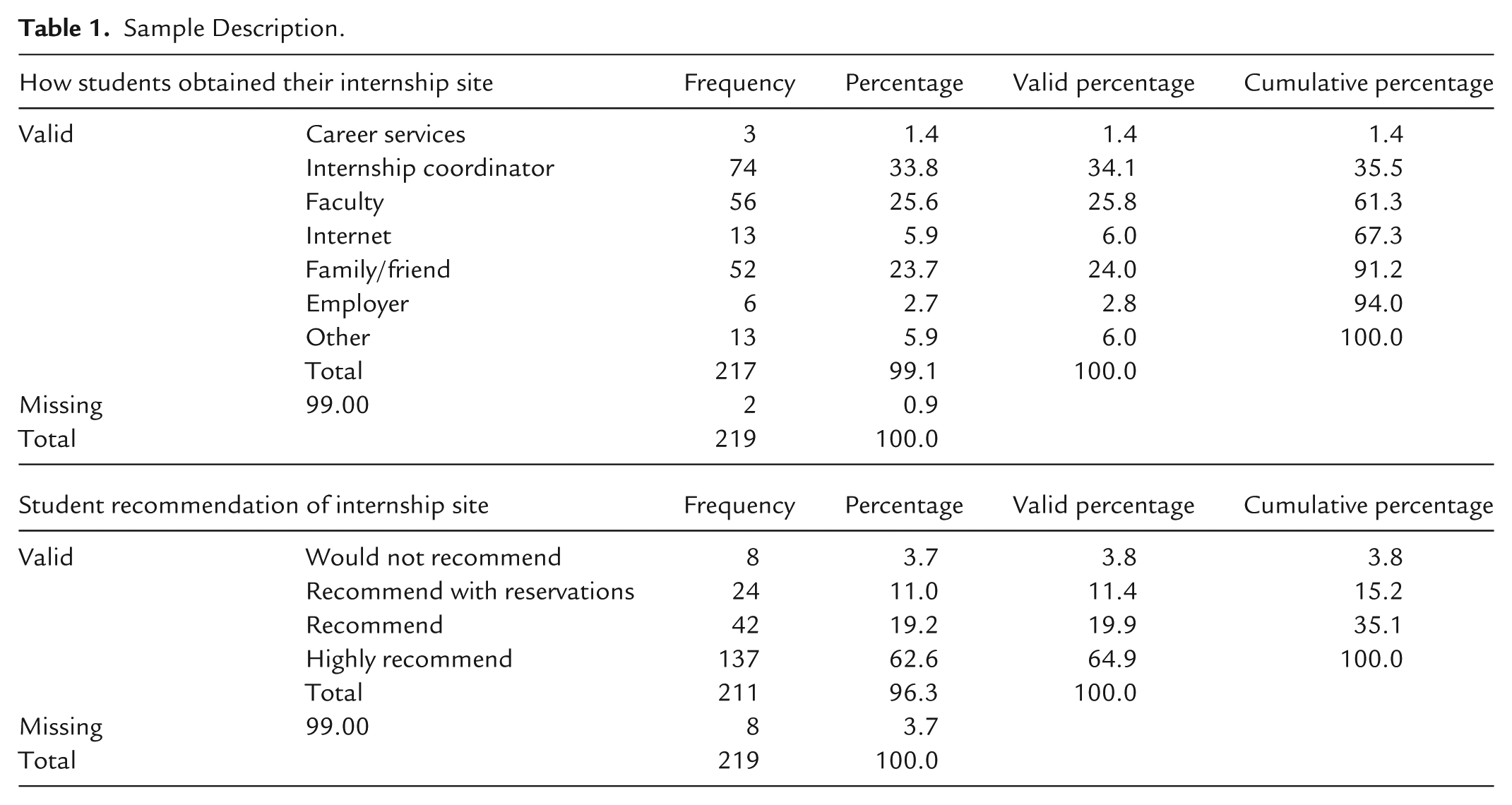
Starting in the Fall 2012, till Spring 2016, the public health internship coordinator began collecting student assessment data to identify students’ perceptions regarding their experience with their internship site, along with the role their institution played in the academic internship process. During these 4½ years, assessment data were collected on a total of 219 students, 169 (77%) female, and 50 (23%) male, interning at a little over three dozen different sites—health care, government, nonprofit, and corporate organizations. Students were in the following academic tracks within the public health major: 33% Community Education Track; 27% Administrative Track; 10% Environmental Track; and the remaining 30% of students were in Pre-OT (Occupational Therapy) and Pre-PT (Physical Therapy). In addition, data indicate that in almost 61.3% of the cases, students obtained their internship site from institutional resources, with internship coordinator and faculty accounting for almost 60%. Additional demographics regarding students’ internship site indicate that while only 9.3% of interns received monetary compensation, 21% of students were offered a full- or part-time position from their internship site. In addition, just over 80% of students recommend or highly recommend their internship site to other students (see Table 1).
Sample Description.
Results
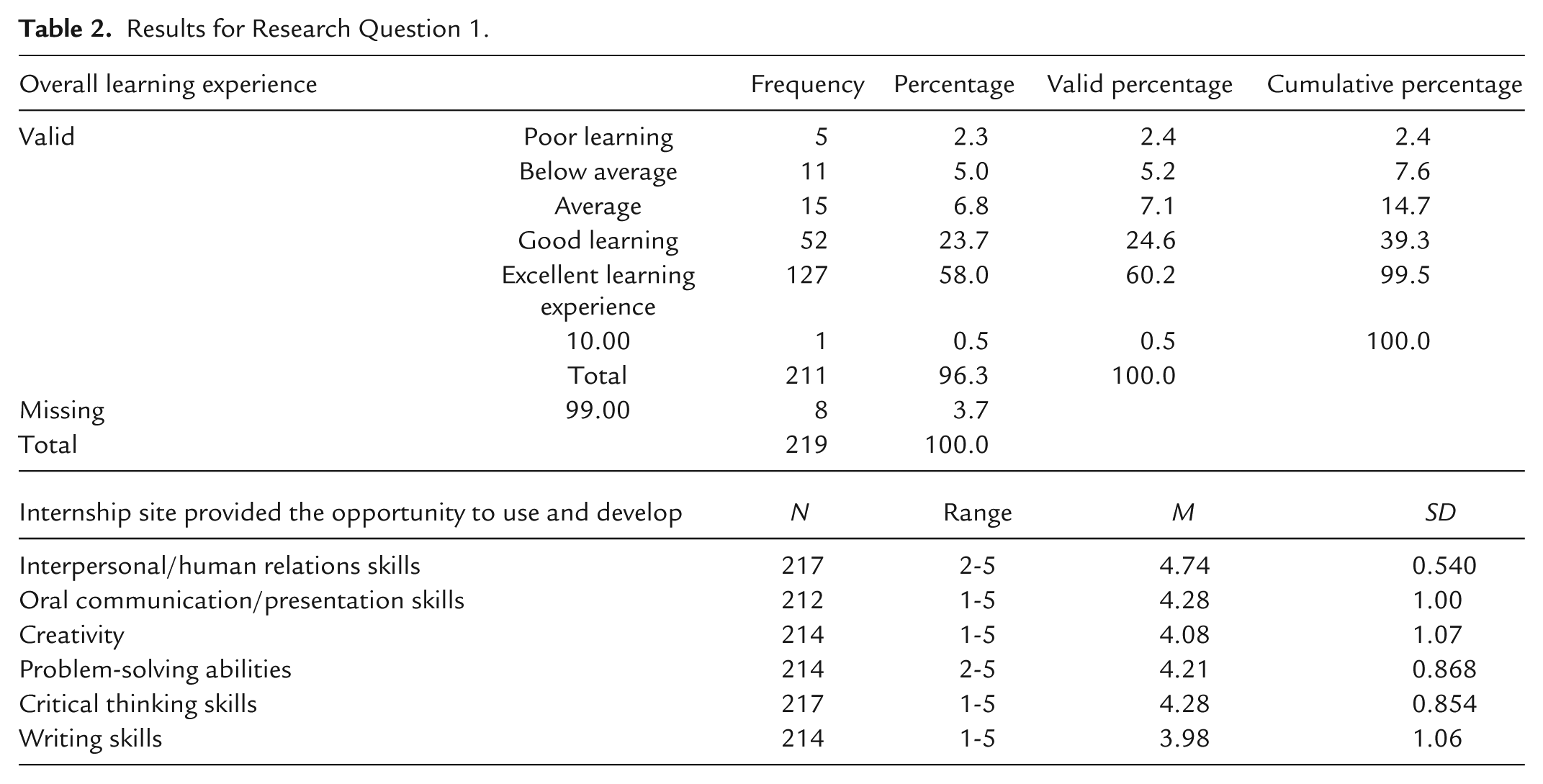
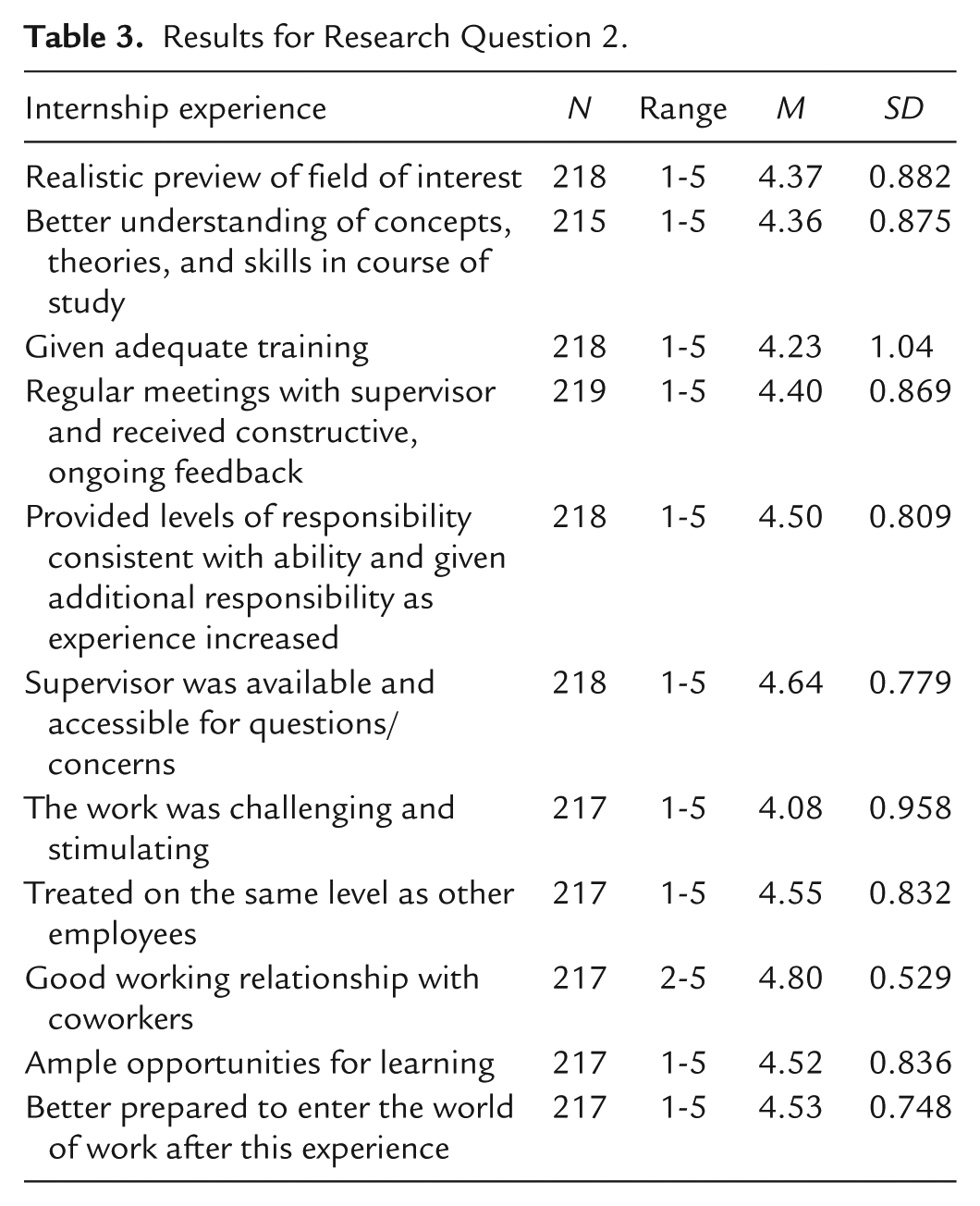
In order to answer Research Question 1 regarding students’ perceptions of their academic internship experience with regards to facilitating their learning, the author ran several descriptive statistics. Results indicate high levels of learning, skill development, and positive experience. Tables 2–4 show specific results.
Results for Research Question 1.
Results for Research Question 2.
Results for Research Question 3.
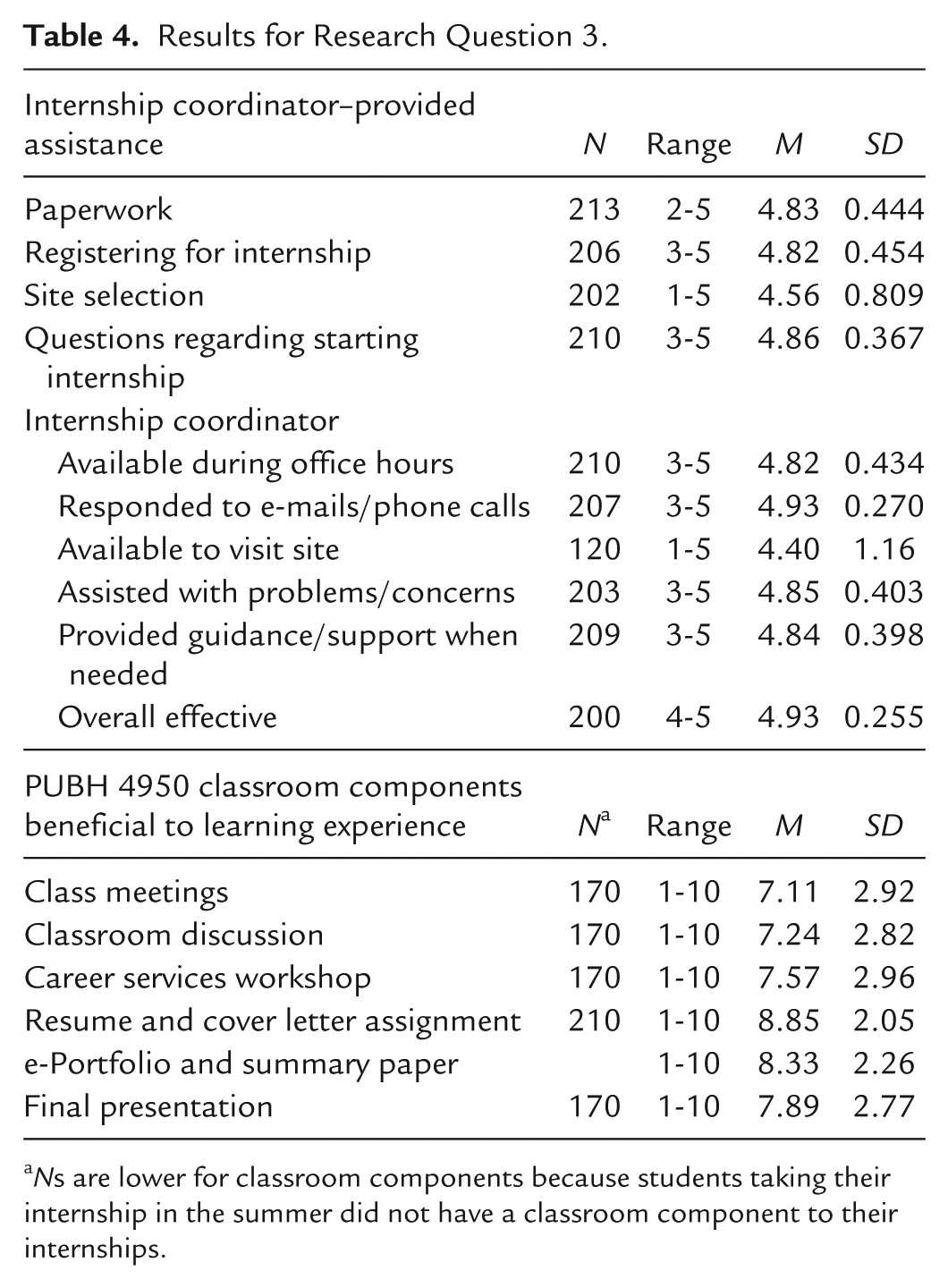
Ns are lower for classroom components because students taking their internship in the summer did not have a classroom component to their internships.
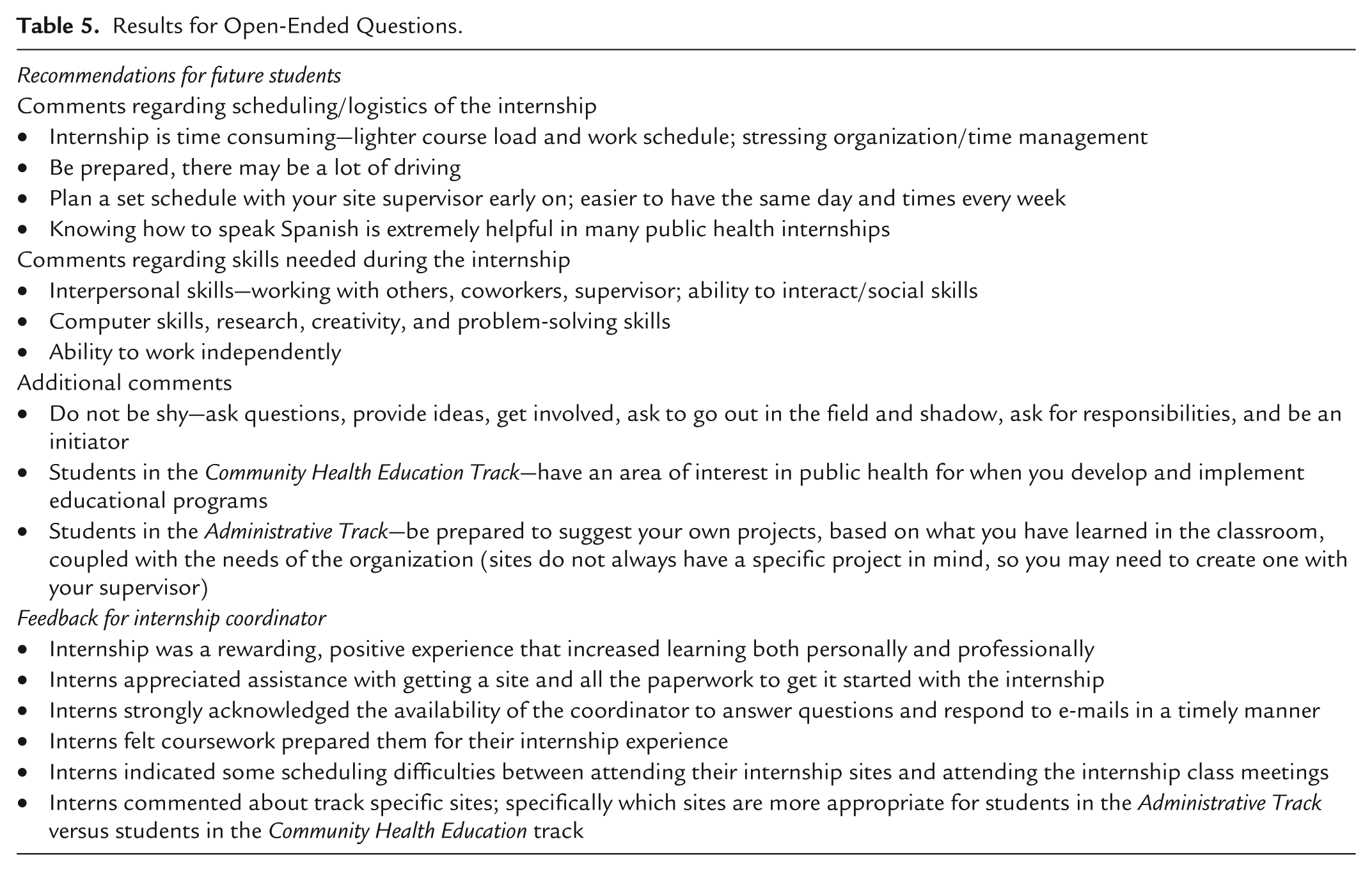
Finally, students responded to open-ended questions in order to receive additional feedback with regarding suggestions for future interns and the internship coordinator. Table 5 shows the general themes that were present from these responses.
Results for Open-Ended Questions.
Discussion
Academic internships play a critical role in students learning and can serve as a bridge for students to connect classroom learning to personal fields, while facilitating both personal and career-related skills. However, this three-way relationship among students, academic institutions, and organizations can be complex and should be designed and implemented in a systematic format. This study assesses students’ perception of their academic internship from both the organizational and institutional level. Results of this study indicate that students positively evaluate their academic internships at both levels.
Specifically, results of descriptive statistics indicate that the academic institution was the predominant factor in securing their public health internship site. In addition, over 80% of the students report that they would recommend or highly recommend their site and it was a good or excellent learning experience. Students posit high personal skill development too, specifically ranking interpersonal and human relations skills the highest, followed by oral presentation, critical thinking and problem solving skills, and creativity and writing skills just a bit lower. Although these results are consistent with past studies indicating the numerous benefits to students from academic internships (see Note 1), it is important to continue to evaluate internships to ensure benefits remain consistent. In addition, this study now extends the benefits of internships to public health students; this is especially pertinent given that fieldwork has been defined as a critical component of the undergraduate public health curriculum.
Similar to the above results, public health students also rate their internship experience favorably with regard to development of career and professional skills. Specifically, students indicate that their internships provided high opportunity for all aspects. Among the highest were that the internship site provided students responsibility consistent with their ability and then they were given additional responsibility as their experience increased. Also, students report that supervisors were available and accessible for questions, they were treated on the same level of other employees, and had a good working relationship with coworkers, ample opportunity for learning, and that the experience prepared them to enter the work force. Students also posit that they were provided adequate training, a realistic preview of the public health field, and a better understanding of the discipline’s theories, concepts, and skills. Finally, although still high, students ranked the work they performed at their internship as challenging and stimulating the lowest.
Further findings of this study reveal students positively evaluated their academic institution, specifically the role of the internship coordinator and the classroom components. Public health students indicate the overall effectiveness of the internship coordinator very high. Specifically, students report that their internship coordinator was helpful in their site selection, internship paperwork, internship registration, and available to answer questions prior to starting their internship. In addition, during the time the students were completing their internship, the coordinator also was available for office hours, responded to e-mails and phone calls, was available if/when problems or concerns arose and was available for site visits. As for the classroom component, students posit slightly lower scores for these, although still fairly high. Specifically, students ranked elements they perceived as more directly related to their internship and future career, such as their internship portfolio, resume and cover letter assignment, and final presentation, slightly higher than more traditional classroom components, such as class meetings and discussions.
A study that evaluated students’ perception of the value of business internships found similar results. Overall findings reveal that internships are an important part of the business school curriculum (Hergert, 2009). Specifically, results reveal that internships play a crucial role in helping students make the connections between their traditional coursework and the workplace. This study found that students place a great value on the internship experience when the internship has a direct connection to their ultimate career goals, relates to the institution’s pedagogical approach, and when educators provide the appropriate structure for the internship. In comparison, one study found students indicated negative feedback on the overall structure of the internship program. Specifically, students were dissatisfied with this program when it failed to provide overall training for different departments and when certain elements of the institutional internship format were subpar (Karunaratne & Perera, 2015). Results indicate a need for more dialogue between the university and the internship sites, along with a more defined and supportive structure of the institution’s internship program. In short, these results support the positive benefits that come from a well-defined and supported public health internship component to their curriculum. In addition, continuing to collect student evaluations of internships can helps with identifying possible needs for specific public health curriculum development, classroom preparation, program assessment, and assessment for accreditation bodies.
Finally, qualitative data reveal insightful student feedback for both the program and to future public health students. Students’ feedback to future interns provided valuable suggestions on numerous aspects of the internship process. First, regarding the specific logistics of the internship, students recommend having a lighter course load and work schedule because the internship is very time consuming. Students stress time management and organization, along with having a set weekly schedule are highly advisable. Also, during the internship, students may need to factor in time and gas for driving and be advised that there is a great need for those in the public health field to speak Spanish. Second, students indicated that future interns will need the following skills while participating at their internship site: strong interpersonal and social skills to work with others, along with ability to work independently. In addition, students identify several skills that interns will need to possess: computer, research, problem solving, and creativity. Last, students provided several other comments to help guide future interns such as, the importance of being outgoing, asking questions and seeking ways to get involved, and the importance of having your own ideas and topics in mind to help maximize your learning experience.
Students’ qualitative feedback to the internship supports a positive learning experience and illustrates students’ appreciation for strong administrative and academic institutional support. Specifically, students felt their academic coursework prepared them for their internships and valued their guidance both before and during their internship experience; students commented most frequently about responses to e-mails in a timely manner and availability for questions and problems. In addition, students’ feedback about track-specific internship sites that would help guide appropriate placement for future internships are especially helpful. Finally, students provide helpful administrative comments regarding some of the logistics of the class meetings during the semester.
In conclusion, although this study is limited by only addressing one internship program at one academic institution, nonetheless it provides valuable insight. Specifically, public health students assess both the internship site and the academic institution and provide helpful feedback for future students. Overall, both quantitative and qualitative data support the positive benefits for students on both a personal and professional level and contribute to the body of research on internships, by identifying the value of experiencing a strong, systematic internship component during their academic career. The public health field pinpoints the inclusion of field work as a critical component to undergraduate institutions and this study chronicles the values of developing, implementing, and assessing these field work experiences.
Footnotes
Appendix A
Appendix B
Declaration of Conflicting Interests
The author declared no potential conflicts of interest with respect to the research, authorship, and/or publication of this article.
Funding
The author received no financial support for the research, authorship, and/or publication of this article.