



Abstract
An experiential interprofessional learning opportunity for university students was developed to demonstrate core competencies (CC) based on the Interprofessional Education Collaborative and to foster a deeper understanding of the interaction between literature, health care, and social justice. Faculty members in the Schools of Professional Development, Public Health, Medicine, and Social Welfare at Stony Brook University contributed to the program including use of the book, The Immortal Life of Henrietta Lacks by Rebecca Skloot (2010). The book was a springboard to combine John Dewey’s educational ideas of constructivist learning with select CC. Invitations for participation were extended to faculty and students enrolled in graduate programs in Teaching, Public Health, Medicine, Social Work, and Physician Assistant Education as well as undergraduate health science majors. The ultimate learning event was a 4-hour evening program that facilitated teamwork and collaboration among the 250 participants. The event presented information and context in multiple ways: The book inspired an innovative presentation, followed by pointed questions, discussion, problem solving and reflection. Topics explored included communication across cultures and diverse populations, privacy and patient rights, professional roles and responsibilities, and advocacy for self and others. Following the event course, instructors collected post-event reflective essays submitted by the master of public health student participants, which were analyzed using qualitative methods. This article describes the experiential learning program and the evaluation of its impact on students, with the purpose of enhancing the potential for other institutions to replicate this novel educational structure and achieve Interprofessional Education Collaborative CC.
Keywords
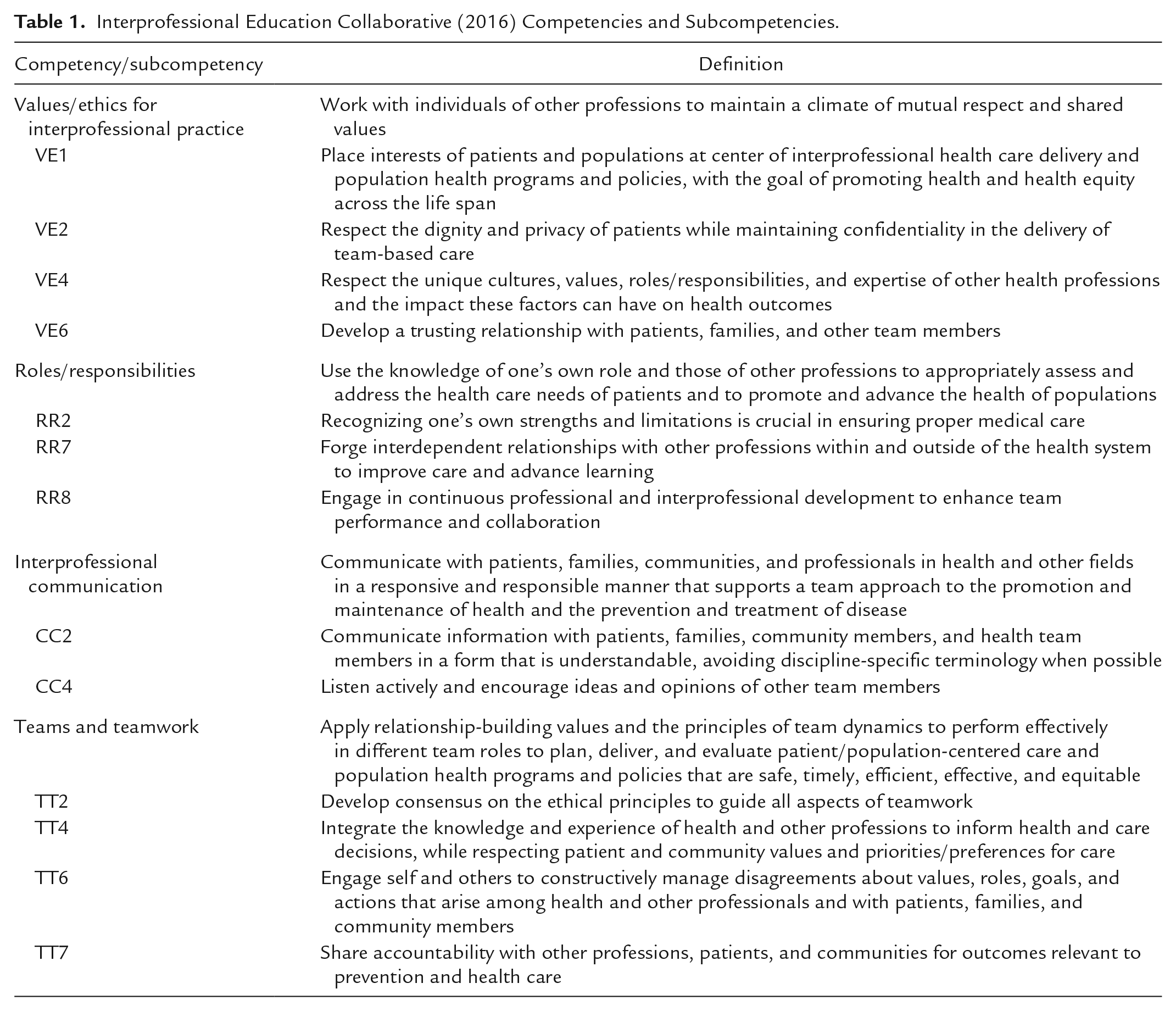
Professional degree programs in health promotion and health care fields in the United States (such as master of public health, doctor of medicine, doctor of dental medicine, and physician assistant) are now required by their respective accreditation bodies to demonstrate interprofessional (IP) learning experiences that will achieve competence in four core domains: (1) values/ethics for IP practice, (2) roles/responsibilities, (3) IP communication, and (4) teams and teamwork (Interprofessional Education Collaborative [IPEC], 2016, see Table 1). There is a lack of literature related to curriculum design and evaluation for successful IP education that are tested for learning impact among students brought together from two or more health profession degree programs in an interprofessional education (IPE) program. This dearth of resources leaves faculty with the challenge of developing new curricula to achieve IPEC core competencies (2016).
Interprofessional Education Collaborative (2016) Competencies and Subcompetencies.
The book The Immortal Life of Henrietta Lacks by Rebecca Skloot (2010) is a powerful description of the emotional rollercoaster experienced by Henrietta’s family as a result of the scientific importance of Henrietta’s cells, including how they were acquired, dispersed, and studied worldwide. The book has sold more than a million copies and has won a multitude of literary awards. At this time, academic programs at more than 150 universities in the United States have used this book as a teaching tool to address ethical principles in medicine and research (Skloot, n.d.). Despite the popularity of using the Lacks case in health care professional education programs, our team identified only four publications that give an analysis of a Henrietta Lacks case study. We conducted a review of literature from the date of Skloot’s publication in 2010 to the present, using the search terms “Henrietta Lacks” and “Interprofessional Education.” The majority of articles mentioned Henrietta Lacks as an important case study but did not include an analysis of how the case was used in an educational setting to achieve IPEC core competencies.
One article described 215 pharmacy and 205 medical students in an analysis using pre–post surveys and focus groups (Van Winkle et al., 2012). The authors reported an increase in self-reported collaboration scores among participants. Another article reported that a common reading experience using the Skloot novel (2010) provided a hub for discussion for health literacy and ethical foundations in health care among PharmD students (Black, Policastri, Garces, Gokun, & Romanelli 2012). In addition, a third article provided an in-depth curriculum description using methods such as online group discussion (Bridges & Hanson, 2012) in which Master of Health Administration students who were also enrolled in joint degrees were grouped in an ethics-focused book discussion, and the final article used journal entries to demonstrate reflection on the novel (Nagel, Ludwig, & Lewis, 2017). The literature supports book discussion and reflection as an approach to teach competencies established by an academic program. Although the methods were compelling, these studies did not provide an analysis of predetermined IPE learning objectives or an in-depth analysis of IPEC core competencies (2016) achieved using the Lacks case.
In summary, prior pedagogy research has demonstrated that the case of Henrietta Lacks is a popular teaching tool, though the wide use of it far exceeds the availability of literature to assess its impact on IPE.
Method
Overview
In the spring of 2018, the two authors who are faculty members at a large suburban state university developed an IPE learning experience, which was integrated into the MPH curriculum and brought together students enrolled in a Master of Arts in Teaching (MAT) program offered by the School of Professional Development along with Undergraduate Health Science students and graduate students in MD, MSW, and PA programs. The learning experience was a 4-hour program that included more than 250 students, faculty and staff from five schools or programs within the university (the Program in Public Health, and the Schools of Medicine, Social Welfare, Professional Development, and Health Technology and Management). Participation in the IPE event was required of all students enrolled in the MPH program as well as students enrolled in a participating MAT class, an Undergraduate Health Science class, and a PA Education class; it was voluntary for students enrolled in other degree programs. The program involved a variety of teaching tools to foster IP collaboration, discussion, problem solving, and reflection. All students were instructed to read The Immortal Life of Henrietta Lacks (Skloot, 2010; between January and April 2018), which served as a springboard to explore IPEC core competencies in four domains: values/ethics, roles/responsibilities, communication, and teamwork. The MPH student participants (n = 65) were required for course credit and a percentage of their course grade to prepare post-event reflection papers (2-3 pages in length, instructions provided below) to describe the transformative impact of the learning experience on IPEC core competencies; the other courses did not require students to complete the reflection assignment. These reflection papers were analyzed using thematic analysis coded by two trained student assistants (Braun & Clarke, 2006).
Experiential Learning Design
The program was created to challenge participants with questions regarding patient–practitioner communication, ethics, socioeconomic disparities, race and relationships, and medical practices through both discussion and role-play. Experiential learning does not come without its challenges, particularly with an event involving more than 250 participants of various ages, professions, experiences, and knowledge. We designed the program to engage the participants in conversation, inquiry, collaboration, problem solving, and reflection inspired by the life of Henrietta Lacks and her family.
Theoretical Framework
We developed pedagogy based on the progressive constructivist theory of John Dewey (1900). John Dewey’s philosophy stated that school must reflect “an embryonic community life, active with types of occupations that reflect the life of the larger society and permeate throughout with the spirit of art, history and science” (Dewey, 1900, p. 44). Dewey’s belief and commitment to democracy reflected his ideas of how to organize the educational environment. Dewey’s hypothesis was that from democratic activity participants would be invested and engaged in work that was both relevant and meaningful. “It is through what we do in and with the world that we read its meaning and measure its value” (Dewey, 1900, p. 33). We organized the educational environment by defining the goals of our experiential learning with a team of faculty across the professions that participated in the event.
Demonstration and Audio/Visual Methods
The program began with opening remarks provided by a senior prominent member of the faculty, who shared her personal account of growing up as an African American woman in the 1950s, similar to the era of Mrs. Lacks. This speaker provided an authentic experience, which served as a preamble of historic relevance, being that the speaker was both a woman and a person of color. Her remarks influenced subsequent discussions and a role-play activity that focused on issues of race, class, and patient-provider communication from the time of Mrs. Lacks through today.
Following these personal accounts, the program included a 30-minute Readers Theater in which student actors performed a scripted theatrical performance to demonstrate imagined interactions between main characters portrayed in the book (scripted by author L. Kaushansky, 2018). The dialogue intentionally focused on IPEC core competencies (2016) that we wanted the participants to explore. The script highlighted four characters who held very different perspectives. The first character was the patient, Henrietta Lacks, who died in her 30s of cervical cancer. The second character was the physician scientist, Dr. George Gey who used a part of Mrs. Lack’s resected tumor to develop an immortal cell line, which he named HeLa (after Henrietta Lacks). He was passionate about science and his perspective was that through research, “he would be able to learn a way by which cancer cells can be damaged or completely wiped out” (Skloot, 2010, p. 57). The third character was Henrietta’s daughter, Deborah Lacks, a family member who wrestled with the widespread use of her mother’s cells in research laboratories worldwide and her family’s rights. Last, the fourth perspective was that of the writer, Rebecca Skloot, a journalist seeking truth and facts. This character posed questions about patients’ rights to privacy concerning their medical and personal history as it relates to HeLa cells.
The four characters (as portrayed by medical student actors reading a script, volunteers were in Year 1) engaged in dialogue that highlighted each character’s perspective. After the performance, participants engaged in a large audience discussion prompted by the intersection, conflict, and compassion of the various perspectives and then moved into small groups for more discussions. Group discussion leaders were either Master of Teaching or MPH students (Year 2) and were responsible to facilitate the conversations. Following the group work, participants returned to the theater to participate in two lecture-style presentations by content experts: one, on the scientific impact of HeLa cells, the other on health literacy and a patient’s rights to informed consent. These presentations were followed by a second small group break-out session with facilitators who challenged the participants to consider professional roles and responsibilities to protect a patient’s privacy. Discussions involved role plays of conversations imagined between patients, providers, and family members to promote competence in communication for improved health care. Considering that the goals of the evening were to address IPEC competency topics with a memorable, relevant, experiential program, we mapped the evening curriculum onto the learning pyramid from the National Training Laboratories in Bethel, Maine (National Training Laboratories, n.d.), which illustrates the average learning retention rates by specific methods of instruction (including lecture, reading, audio visual, demonstration, discussion group, practice by doing, and teaching others).
In referring to the pyramid shown in Figure 1, we organized the evening less on lecture and more on small and large group discussion (24 groups of up to 10 participants), teaching others by sharing acquired knowledge, life experiences and evening’s inspired insights, as well as audio visual, readings and role playing (practice by doing). Participants in each group were assigned by a staff assistant using pre-event registration data collected using an online registration survey. The group assignments were done to intentionally have diversity with regard to academic training program affiliation, and groups consisted of one or more student representatives from each of at least three different graduate educational programs (the largest number of participants being among MAT, PA, MPH, and MD programs).
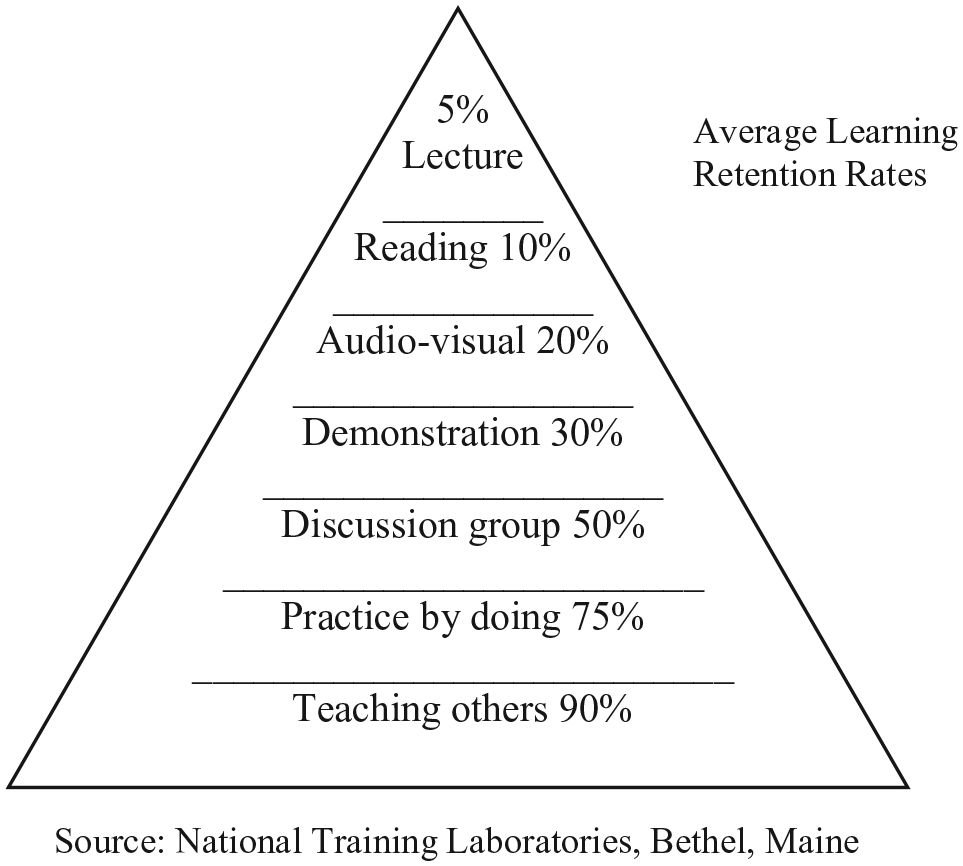
Learning retention rates by method of instruction.
The final portion of the evening program was a small group reflection report whereby one volunteer representative from each group shared with the larger body of participants the consensus of their group process. Reflecting on the evening opener with the Readers Theater invoking voices from the book, the final reporting out by these participants provided the bookend voices to close the evening. Participants highlighted the movement from the past experience of the Lacks case to their own present thoughts, opinions and commitments to social justice and ethical conduct particularly as themes related to IPEC core competencies.
Following the evening program, the MPH students continued to use post-event class time for two subsequent class sessions to critically discuss themes around race, institutional racism, and privilege raised by reading the book and participating in the collaborative learning experience. These in-depth discussions were intended to create an opportunity for students to voice concerns about topics such as the stereotypic way that the book’s author depicted the Lacks family as uneducated, poor, and victimized, as well as the social, economic, and health care systems that contributed to Henrietta’s care experience and subsequent events that affected her family.
Student Reflection Assignment
The MPH student participants reflected on the following prompt as part of a graded written assignment that was only required of the MPH students: First, there should be a brief summary, in your own words, of what you will take away from having read the book with respect to Henrietta’s legacy (such as with respect to science and medical advances, to policy and changes in privacy and informed consent procedures, and/or to racial disparities and health care systems). What actions might you take (and why) as a result of new insights or inspiration from this collaborative group learning activity? Second, there should be a summary of your experience with the group discussion portion of the event, especially focused on inter-professional competencies while communicating with other health care professional students in programs (each group had representatives such as PA Education, social work, and medicine). Third, which of the IPEC did you integrate into your group’s discussion, specifically? Consider competencies related to communication, ethics, and professional roles/responsibilities.
Results
Of 65 MPH students, 54 written reflection papers were submitted to meet a course requirement. Names and any other unique identifiers were removed to ensure anonymity. Papers were assigned an anonymous identification number that included a component to indicate year of study in the public health program (1st, 2nd). The Committee on Research Involving Human Subjects at Stony Brook University determined that this educational project did not meet the definition of research and therefore was exempt from review. Our analysis plan used qualitative methods to explore the following educational outcomes: (1) Students’ personal, emotional, and professional response to the experiential learning experience; (2) Students’ reflections on group dynamics having participated in an IP discussion; (3) Students’ self-reported IPEC competencies addressed.
There were a total of 50 papers included in the analysis from the original 54 papers, with 4 papers excluded due to lack of attendance, which was detected during the initial read of each paper. To analyze reflections focused on educational Outcomes 1 and 2, qualitative data were analyzed using the six steps of thematic analysis (Braun & Clarke, 2006). To analyze outcome 3, we examined all papers for the four predetermined IPEC core competencies (2016): Value/Ethics, Roles/Responsibility, Communication, and Teamwork.
Two coders independently read the reflection papers. The coders created a code book based on emergent themes (Braun & Clarke, 2006). Coders were able to find these emergent themes via memoing and then consolidate these themes after reading through the sample several times. Once these themes were consolidated, both coded all reflection papers. The coders met throughout the process to compare decisions and reach consensus via the process of negotiated consensual validity (Belgrave & Smith, 1995). The coders kept a shared Excel spreadsheet detailing codes applied to each reflection paper. The coders compared all of their respective numerical data after reading the papers for a third and final time. Data were analyzed to allow for comparisons among MPH students in Year 1 versus Year 2. The number and percentage of papers that contained the agreed-upon themes were calculated.
Participant Characteristics
Attendees were asked to indicate their departmental or academic program affiliation as part of a pre-event online registration survey (n = 232 completed this question). Respondents were from a variety of departments with undergraduates in the health sciences major (n = 76, 27.5%), MPH (n = 65, 23.6%), PA (n = 42, 15.2%), MD (n = 18, 6.5%), MA in Teaching (n = 13, 4.7%), DPT (n = 3, 1%), MSW (n = 2, 0.7 %), other (n = 13, 6%) and unanswered (n = 44, 16%).
With regard to self-reported race/ethnicity, responders (n = 142 completed this question) were primarily Caucasian (White non-Hispanic, n = 84, 30.4%), Asian (n = 27, 9.8%), 10% were African American (n = 14, 5.1%), 8% were Hispanic (n = 11, 4%), mixed (n = 5, 1.8%), other (n = 1, 0.8%), and no response (n = 134, 48.6%).
The sex of attendees (n = 189 completed this question) were unequally split with a majority identifying as Female (n = 130, 47.1%) and a minority being male (n = 59, 21.4%) and no response (n = 87, 31.5%). The participant characteristics are summarized in Table 2.
Participant Characteristics.
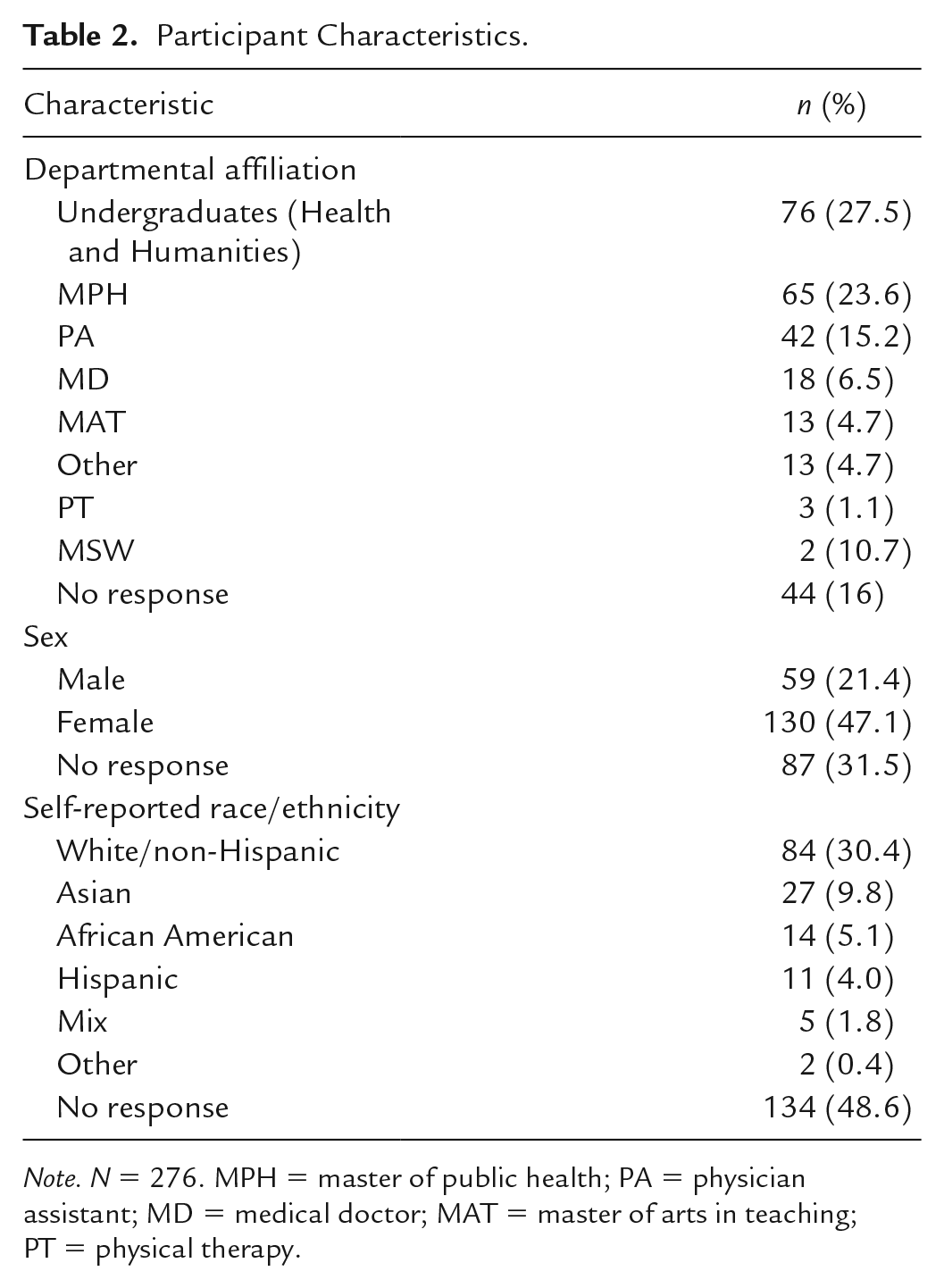
Note. N = 276. MPH = master of public health; PA = physician assistant; MD = medical doctor; MAT = master of arts in teaching; PT = physical therapy.
Analysis of Student’s Reflections, Themes, and IPEC Learning Outcomes
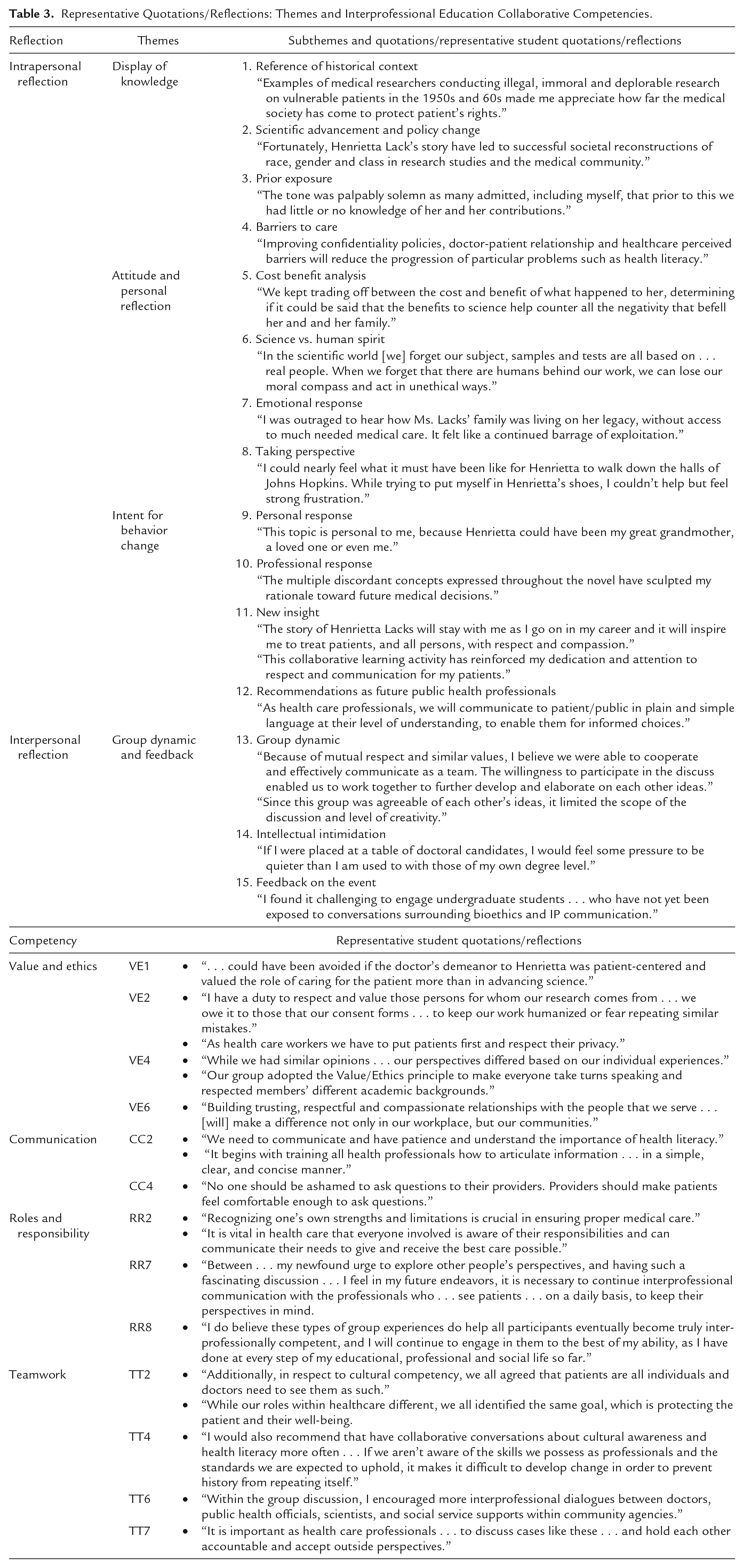
The qualitative analysis resulted in the identification of several emerging themes and subthemes. An explanation of the themes regarding personal/professional response and group dynamic is best represented by direct quotations from the reflection papers. The summary of themes related to themes and representative quotes is provided in Table 3. In addition, IPEC core competencies (2016) were identified through direct citation or implied understanding of the competency in student reflection papers. Themes related to the IPEC core competencies and representative quotes also are provided in Table 3.
Representative Quotations/Reflections: Themes and Interprofessional Education Collaborative Competencies.
Discussion
Interpretation of Findings
The themes identified in the student reflection papers were organized around the IPEC competencies, as well as subthemes related to knowledge acquisition, attitudes and beliefs, and behavioral intentions (Bettinghaus, 1986). The authors identified 4 major themes with 15 subthemes in total, which are thoroughly described in Table 3 and include verbatim quotes to illustrate each theme. The subthemes were further organized under an umbrella theme of either Intrapersonal or Interpersonal Reflection. Intrapersonal themes reflect students’ acquisition of knowledge, attitude and personal reflection, and intent for behavior change. Interpersonal themes reflect students’ feedback on the logistics of the event and thoughts on their interaction with students from different professions within their assigned discussion groups.
With regard to IPEC core competencies related reflections, we calculated the percentage of papers that included an identified theme and the total number of times each theme appeared. Students most frequently identified the competency for values/ethics followed by communication. While all four competencies were identified by students, we noted that the Henrietta Lacks case most frequently generated reflection on values/ethics while encouraging IP communication. Responses from first- and second-year MPH students were compared. We assessed class differences by comparing the percentage of themes identified per group. Although the first-year students appeared to reflect on more IPEC core competencies (2016) overall, the second-year students more frequently reflected on competencies relevant to teamwork. Teamwork and collaboration are competencies that are emphasized in the second-year curriculum, while professional roles, responsibilities, ethics and communication are emphasized more in year one. When examining the papers collectively, the IPEC competencies themes were identified 109 separate times. Out of this total (n = 109), 45% were ethics competencies (n = 49), 30% were communication competencies (n = 33), 16% were professional roles and responsibilities competencies (n = 17), and 9% were teamwork and collaboration competencies (n = 10).
Strengths and Limitations
The study has several strengths. There were several health professions represented in the educational program that allowed for a diverse learning experience. The book selected has wide popularity for use as an educational tool and this study is one of very few available in the literature on evaluation of learning outcomes. Data collected included self-reported demographic data of participant characteristics and qualitative data derived from student’s reflection papers. The methods used included two trained coders who analyzed the qualitative data and agreed upon emerging themes that were organized using a theoretical framework. However, the study had several limitations. First, the analysis was limited to MPH student reflections of the book and attending the event, noting that other participating programs did not require students to submit a reflection paper as part of a course grade and thus we did not capture the learning outcomes of other health professions. Second, the MPH participants were provided with instructions and a page limit to organize the reflection assignment, which may have inhibited the extent of reflections and thus the themes identified. Last, the majority of students were female (68.7%), which reflects enrollment in the health professional graduate programs represented at this university.
Conclusions
In the weeks following the evening program, the MPH students participated in a postevent critical discussion of the book and collaborative experience during class time, which provided an important opportunity for students to reflect and share concerns in greater depth than could be addressed in a large group format. For example, one MPH student stated that he appreciated the chance to discuss “the elephant in the room” referring to issues of institutional racism, discrimination, and white privilege that emerged as a critique of the book. Students who identified as being raised in the South, as well as students who identified as African American, most notably voiced anger and frustration with the stereotypical depiction of the Lacks family as poor uneducated and engaging in undesirable sexual practices within families. Several MPH students noted in course evaluations and other feedback that these post-event critical discussions were among the most memorable and impactful of the entire MPH curriculum.
In addition to discussions happening in the MPH classrooms, the event also triggered additional reflections for the students in the MAT program. The learning curve for these students was steep and twofold: (1) they needed to know and understand the book and life story of Henrietta Lacks and (2) they needed to learn how to participate as facilitators in small groups. In post-event classroom discussions and observations, the course instructor observed an endearing and deeper collegiality and camaraderie not previously seen among the participants (though not measured). This occurred because the MAT students participated in a difficult and clinically rich event, which allowed them to practice their skills as facilitators dealing with material outside their usual curriculum. The MAT students commented during post-event feedback to the instructor that it was challenging to work with the medical and scientific content. However, as we encourage collaborative and respectful discussions, the MAT students understood learning from others is as important as the responsibility to participate in and encourage conversation. The students were inspired by this experience and expressed a continued need and desire to learn more about the complexities of Henrietta Lack’s life story and that of her family. Subsequent iterations of the event are strongly encouraged to include a follow-up session with ample time for critical reflection and group discussion and perhaps include pre- and post-event measures to assess changes in group dynamics.
The evening provided not only an experiential learning event but also a bonding among IP, multidisciplinary and multiyear student participants. The interprofessional learning event challenged and demanded teamwork and collaboration among the 250 student and faculty participants. The Immortal Life of Henrietta Lacks by Rebecca Skloot (2010) inspired an innovative Readers Theater presentation, discussion, and problem solving, exploring such issues as communication across cultures and diverse socioeconomic populations, privacy and patient rights, and advocacy for self and others. We believe this approach can be replicated and can be a teaching tool to achieve IPEC core competencies (2016). More research is needed to provide evidence of teaching strategies and tools that effectively achieve IPE learning outcomes to promote effective interprofessional collaboration in the health professions.
Footnotes
Acknowledgements
We thank the faculty, content experts, student actors, and the Henrietta Lacks family who inspired this event. We also thank the students who participated in this event. We also acknowledge  whose mission is to “provide financial assistance to individuals in need, and their families, who have made important contributions to scientific research without personally benefiting from those contributions” (Henrietta Lacks Foundation, 2018).
Authors’ Note
Lead authorship is shared by Lydia Hunt and Nicholas Tkach, listed alphabetically, due to equal contributions to the project.
Declaration of Conflicting Interests
The authors declared no potential conflicts of interest with respect to the research, authorship, and/or publication of this article.
Funding
The authors disclosed receipt of the following financial support for the research, authorship, and/or publication of this article: This educational event was sponsored in part by resources provided by the Office of the Chief Diversity Officer at Stony Brook University, the Cancer Center at Stony Brook Medicine, and the Program in Public Health.