



Abstract
Universities are undergoing rapid and unprecedented changes due to the COVID-19 pandemic, and the needs of learners during this transition are not necessarily well understood or addressed. This study aimed to examine the impact of the “remote internal” unit delivery in a large Western Australian university, as experienced by students and teaching staff within a department of health promotion and sexology (DHPS). In the remote internal mode, previously “internal” (face-to-face) students received prerecorded lectures and attended workshops and seminars in real time through use of the learning platforms. The mixed methods study was conducted across three phases in 2020. A quantitative online student survey was followed by student and teaching staff focus groups and document analysis. Six themes were uncovered regarding the student experience of the remote internal mode: (1) face-to-face contact provides a sense of community, (2) online learning is better when it is interactive, (3) online learning is convenient, (4) delivery mode affects student willingness to contribute to discussions, (5) students enjoy a mixture of teaching patterns, and (6) technological issues create barriers to effective learning. Five themes were revealed regarding teaching staff experience of the remote internal mode: (1) connections matter, (2) face-to-face delivery enhances engagement, (3) learning outcomes are a priority for teaching staff, (4) online delivery needs effective supports, and (5) students have online privacy concerns. Considerations for course modalities, methods to enhance interactivity, and supportive technology and infrastructure are recommended to ensure that the technological, demographic, and socio-environmental needs of students are adequately met.
Since the outbreak of the novel coronavirus disease 2019 (COVID-19) was classified as a global pandemic in March 2020 (World Health Organization, 2020), the public health emergency has evolved into an economic, cultural, and social crisis. Governments have imposed a range of measures to contain transmission due to the highly infectious nature of COVID-19 and the related burden of disease and mortality (Cucinotta & Vanelli, 2020; Han et al., 2020). The pandemic is placing significant pressure on global economies, health systems, and education institutions as it continues to spread through communities worldwide (Cash & Patel, 2020; Chakraborty & Maity, 2020).
The higher education sector faces unprecedented challenges due to border closures and other restrictions imposed by countries in a bid to slow the advancement of COVID-19. The resulting reduction in international student mobility and campus closures led teaching staff across the globe to move to face-to-face delivery online in a matter of weeks (Schleicher, 2020). Key findings from the International Association of Universities Global Survey on the Impact of COVID-19 on Higher Education Around the World (Marinoni et al., 2020) indicated that a majority of responding institutions replaced classroom teaching by distance/online teaching in the first half of 2020. Subsequent equity and quality issues have been reported as a result of this rapidity (Mohamedbhai, 2020) limiting the ability of teaching staff to understand and address the diversity of student needs, build connections, and provide access to the usual support for students (Crawford & Stone, 2020). A contemporary investigation of online teaching practices is therefore warranted, particularly in relation to swift changes to delivery modes caused by the COVID-19 pandemic, to inform recommendations for future course 1 design and delivery.
The Western Australian Context
In Australia, the federal and state/territory governments began implementing restrictions on overseas travelers returning to Australia, movement between jurisdictions, and limiting the size of gatherings from March 2020. This resulted in general containment of COVID-19 transmission. However, significant changes consequently occurred in the way that teaching was delivered, with methods varying depending on restrictions imposed in each jurisdiction. In Western Australia (WA), the government closed its borders to interstate and international travelers in April. Although these borders remained in place throughout 2020, the usual learning and teaching activities and assessment processes across five WA universities were changed in a matter of weeks as everything was transferred online.
This article examines teaching practices and student experiences in one large, public university in WA. All teaching was transferred online by March and the main campus closed. Consequently, students who were enrolled in units 2 via an “internal” mode of delivery (face-to-face) were no longer able to physically attend classes on campus during Semester 1 of 2020 (March to June), instead continuing their learning through various online methods in the newly termed remote internal mode. In this mode, previously “internal” students received prerecorded lectures and attended workshops in real time through use of the learning management system Blackboard and its virtual classroom platform Collaborate Ultra (Blackboard Inc., 2021).
The aim of this study was to examine the impact of the remote internal unit delivery in a large WA university, as experienced by students and teaching staff within a DHPS, in a School of Population Health, necessitated by the COVID-19 pandemic. Teaching staff in the DHPS have extensive experience in online and blended unit delivery and endeavored to maintain the student-centered approach during the early stages of the pandemic. However, the impact of the precipitous changes to teaching methods on the learning and teaching experiences of students and teaching staff is not well understood. Study objectives were to (1) summarize the experience of remote internal unit delivery from the perspective of undergraduate and postgraduate health promotion and sexology students, (2) summarize the experience of remote internal unit delivery from the perspective of teaching staff within the DHPS, and (3) provide recommendations regarding future online delivery of content for use by health promotion and sexology courses and those in similar areas.
Methods
Study Design
The study was conducted across three phases during Semester 2 (August to October) in 2020 using a mixed methods design. A quantitative online student survey (Phase 1) was followed by student and teaching staff focus groups (Phase 2) and document analysis of student reflections (Phase 3). Data collection tools were developed and piloted by a member of the research team for an in-class project during Semester 1, 2020, and adapted for the present study. Qualitative instrument design and reporting was guided by the Consolidated Criteria for Reporting Qualitative Research (COREQ; Tong et al., 2007). Trustworthiness was maintained during the study via regular team meetings to discuss perspectives and biases (Tong et al., 2007). The study received ethical approval from the university Human Research Ethics Committee (HRE2020-0345).
The research team comprised two Masters of Public Health students and five academics from the DHPS in the School of Population Health. All academics were health practitioners, teaching academics, and mixed methods researchers.
Context
The study was conducted at the main campus of a large university located in Perth, WA. The university operates nine campuses across five countries, with a staff of more than 3,000 delivering courses to more than 50,000 students. The School of Population Health is a pioneer of health promotion studies in Australia, offering courses since 1980. Courses are accredited by the International Union for Health Promotion and Education, the first in Australia to receive this designation. Sexology has been taught at the university since 1978, and postgraduate students are eligible for accreditation with the Society of Australian Sexologists or equivalent organizations overseas. It was the first university program to be awarded the World Association for Sexual Health’s Award for Excellence & Innovation in Sexuality Education.
During 2020, the DHPS employed 14 permanent teaching staff (12.4 full-time vaccination [FTE]) and 12 casual teaching staff. Teaching staff coordinated two undergraduate health promotion courses delivered to 162 students, two postgraduate health promotion courses delivered to 30 students, and two postgraduate sexology courses delivered to 106 students. DHPS teaching staff coordinated 45 undergraduate and postgraduate units within the university during this period.
In a typical semester, DHPS teaching staff employ a combination of teaching methods shown to enhance student learning outcomes (Godley et al., 2020), such as flipped classroom, problem-based learning, practice-based learning, case studies, and peer-to-peer instruction. The combination of active and collaborative learning approaches to enhance the interaction between students and teaching staff (Godley et al., 2020) is a critical element. Taking this student-centered approach to teaching delivery allows for active participation in learning and has been shown to be an empowering and effective method for teaching these types of courses (Berić-Stojšić et al., 2020).
The DHPS currently offers courses in both “fully online” and internal modes, with the majority of students enrolled internally. At the time the study was conducted, postgraduate sexology courses were offered via internal mode only, with a mix of fully online and internal tuition patterns available for individual units. To accommodate sexology students living interstate or overseas, internal units are offered in either a blended synchronous format (remote students connect to campus sessions in real time or watch a recording) or a block-intensive format (remote students travel to Perth for 1 full week of instruction during the semester). When COVID-19 restrictions affected campus attendance, internal delivery changed to remote internal delivery for all courses. Block-intensive sexology units changed to blended synchronous delivery when students were permitted to return to campus, but international and interstate travel was still restricted.
Phase 1: Online Survey
The first phase of the research was an online survey to collect data regarding student experiences of the remote internal mode during March to June in 2020.
Participants
Students were eligible to participate if they were enrolled in one of the following courses or units in Semester 1, 2020: Bachelor of Science (Health Promotion) (n = 119), Graduate Certificate and Graduate Diploma in Health Promotion (n = 30), Graduate Diploma and Master of Sexology (n = 106), and the Introduction to Sexology Attitudes and Values unit (n = 81). Eligible students were invited to complete an online survey, via an announcement sent through Blackboard.
Data Collection
The online survey utilized Qualtrics (Qualtrics, 2021). Survey questions included demographic and enrolment data (gender identity, age, course, usual attendance mode [internal/fully online] and study load [full time, part time]), experiences with online learning technology, attitudes toward remote internal unit delivery, challenges encountered during remote internal unit delivery, and successes with specific platforms or techniques. Question types included closed (dichotomous, Likert-type scales) and open-ended questions.
Data Analysis
Quantitative data were stored and analyzed in SPSS (IBM, 2021) and summarized using descriptive statistics by course of study. Comparisons were also made between students who had studied online previously versus students who had not studied online previously. Open-ended responses from the survey were analyzed using NVivo (QRS International, 2021). Exploratory analysis was conducted using Braun and Clarke’s (2006) method of thematic analysis. A member of the research team read through the data set to become familiar with the content and identify broad similarities and differences in the data. Three members of the research team met to discuss categories, and data were then coded into themes using a general inductive approach (Thomas, 2006).
Phase 2: Focus Groups
Focus groups were conducted during the second phase of the study to gather in-depth information regarding student and teaching staff experiences with the remote internal mode.
Participants
Convenience sampling was used to recruit participants. Phase 1 eligibility criteria was applied to Phase 2 student recruitment. Students were notified about the project and invited to participate via an announcement sent through Blackboard. Teaching staff were eligible to participate if they were employed in one of the following roles: teaching academic (TA), teaching and research academic (TRA), or casual academic (CA). Eligible teaching staff were emailed directly and invited to participate.
Data Collection
Student focus groups were segmented according to discipline (health promotion or sexology) and teaching staff focus groups according to employment type (continuing/tenured/permanent [TA/TRA] or casual [CA]). The desired size for each focus group was 6 to 10 participants each, consistent with guidelines for appropriate sample size for focus groups (Liamputtong, 2015). Semistructured discussion guides were developed for the focus groups. Students were asked to share their experience of remote internal course delivery as well as barriers and enablers to effective learning online. The discussion guide used for teaching staff focus groups was adapted from the student focus group discussion guide to consider the teaching perspective. Demographic information was also collected from each participant. Student focus groups were conducted online via Blackboard Collaborate Ultra (Blackboard Inc., 2021), and teaching staff focus groups were conducted via Microsoft Teams (Microsoft, 2021). Each focus group was for 30 to 45 minutes and facilitated by a member of the research team. Participants were given the option to turn their cameras on. All discussions were recorded and transcribed verbatim and reviewed alongside the audio for completeness and accuracy.
Data Analysis
Qualitative data were analyzed using NVivo (QRS International, 2021). Exploratory analysis was conducted using Braun and Clarke’s (2006) method of thematic analysis. A member of the research team read through the data set to become familiar with the content and identify broad themes in the data. Three members of the research team met to discuss categories, and data were then coded into themes using a general inductive approach (Thomas, 2006).
Phase 3: Document Analysis
The third phase of the study involved document analysis of reflection papers written by undergraduate students enrolled in Introduction to Sexology Attitudes and Values.
Participants
Enrolled students (n = 81) were required to submit two reflection papers as separate routine assessment tasks. At the time of the study, the unit was offered as an option to students throughout the university.
Data Collection
The one-page reflection task asked students questions about unit likes and dislikes and plans for application of unit learning. The request to conduct document analysis was made to students after the normal assessment task had been submitted, graded, and marks released to students. An announcement was posted in the requisite Blackboard unit site. Students were invited to edit their second (final) reflection paper by removing all identifiable information and submitting it anonymously via a Qualtrics link (Qualtrics, 2021). These submissions were entirely separate from the usual process of submitting this assessment piece for grading.
Data Analysis
Qualitative data were analyzed using NVivo (QRS International, 2021). A member of the research team read through the data set to become familiar with the content and identify broad similarities and differences in the data. Deductive analysis was used to summarize and organize data based on study objectives (Hsieh & Shannon, 2005).
Ethical Considerations
Research involved collecting and analyzing data from teaching staff and students. To mitigate risk and to address issues related to coercion or power by academic staff involved in the project, data were collected by two student researchers who did not collect or analyze any data from their peers.
Names discernible from audio transcripts were changed to pseudonyms during transcription and video files permanently deleted. While members of the research team were able to access digital files containing consent forms for focus groups, the respective feedback from each participant was not identifiable. Furthermore, no identifiable information was collected from the online survey or reflection papers. Students who consented to submitting a de-identified reflection paper for document analysis were asked to do this after the assessment task had been submitted for grading, marked, and results released.
Participant information sheets were provided for all research stages, which clearly detailed that participation would not affect student enrolment or staff employment. Separate focus groups were conducted for continuing/tenured and casual teaching staff to mitigate any potential power imbalances and to ensure casual teaching staff could speak freely.
Results
Results are presented in three sections: (1) participant characteristics, (2) findings for Study Objective 1, and (3) findings for Study Objective 2. De-identified verbatim quotes from participants provide thick, rich description (Polit & Beck, 2010). Teaching staff quotes are attributed by participant type (TA/TRA or CA), and student quotes are attributed by discipline (health promotion [HP] or sexology [SX]).
Participant Characteristics
During Phase 1 (Table 1), 32 participants completed the survey (9.6% response rate). The majority were aged 18 to 24 years (31.3%, n = 10), female (90.6%, n = 29), enrolled in the bachelor of science course (health promotion) (46.9%, n = 15), and studying full time (56.3%, n = 18). Two teaching staff focus groups and two student focus groups were conducted during Phase 2. Student focus group participants (n = 7) included Bachelor of Science (Health Promotion) students (n=4) and Master of Sexology students (n = 3). The majority were female (85.7%, n = 6), located in WA (85.7%, n = 6), and domestic students (Australian or New Zealand citizens, Australian permanent residents, or permanent humanitarian visa holders) (85.7%, n = 6). Staff focus group participants (n = 7) included teaching staff from health promotion (n = 3) and sexology (n = 4). The majority were female (71.4%, n = 5), TA/TRA (57.1%, n = 4), and located in WA (100%, n = 7).
Phase 1 Participant Demographics (n = 32).
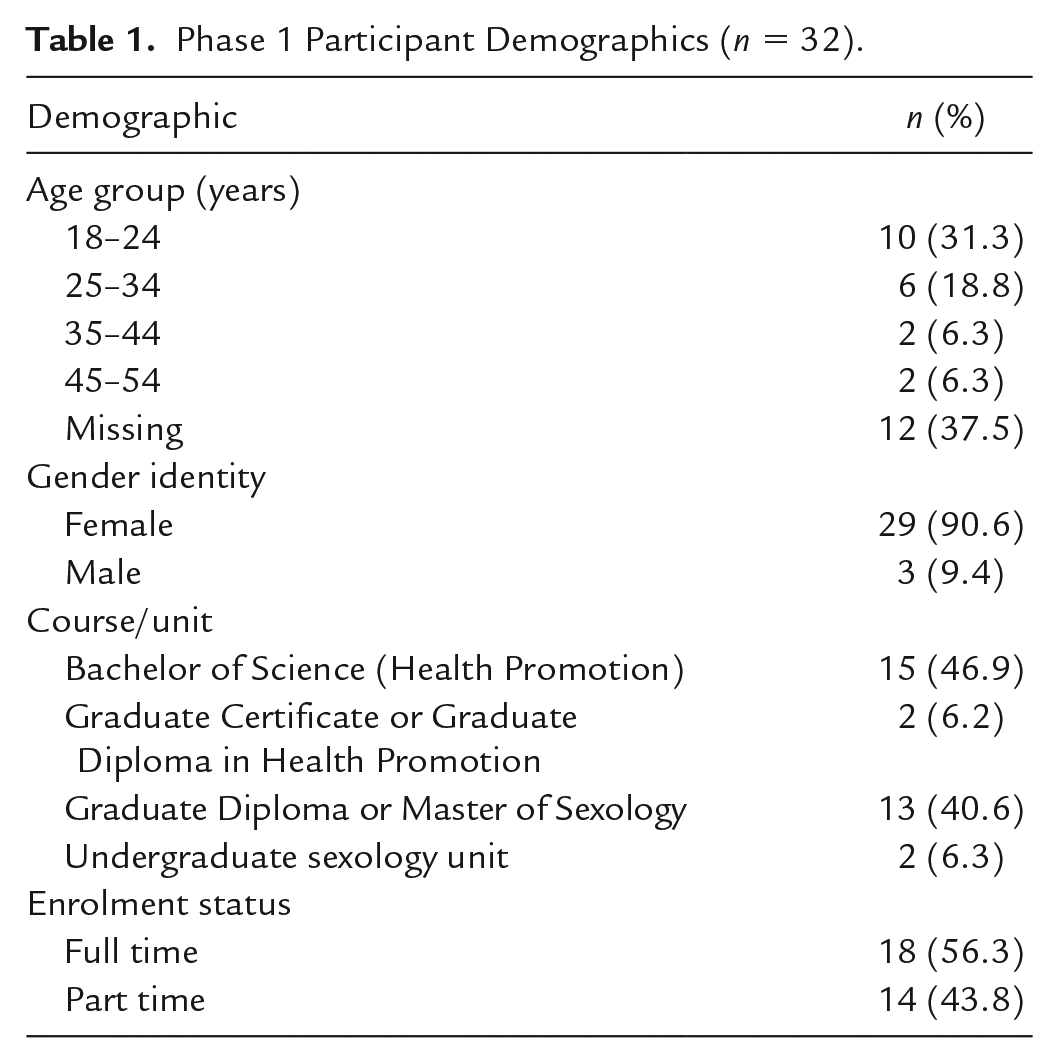
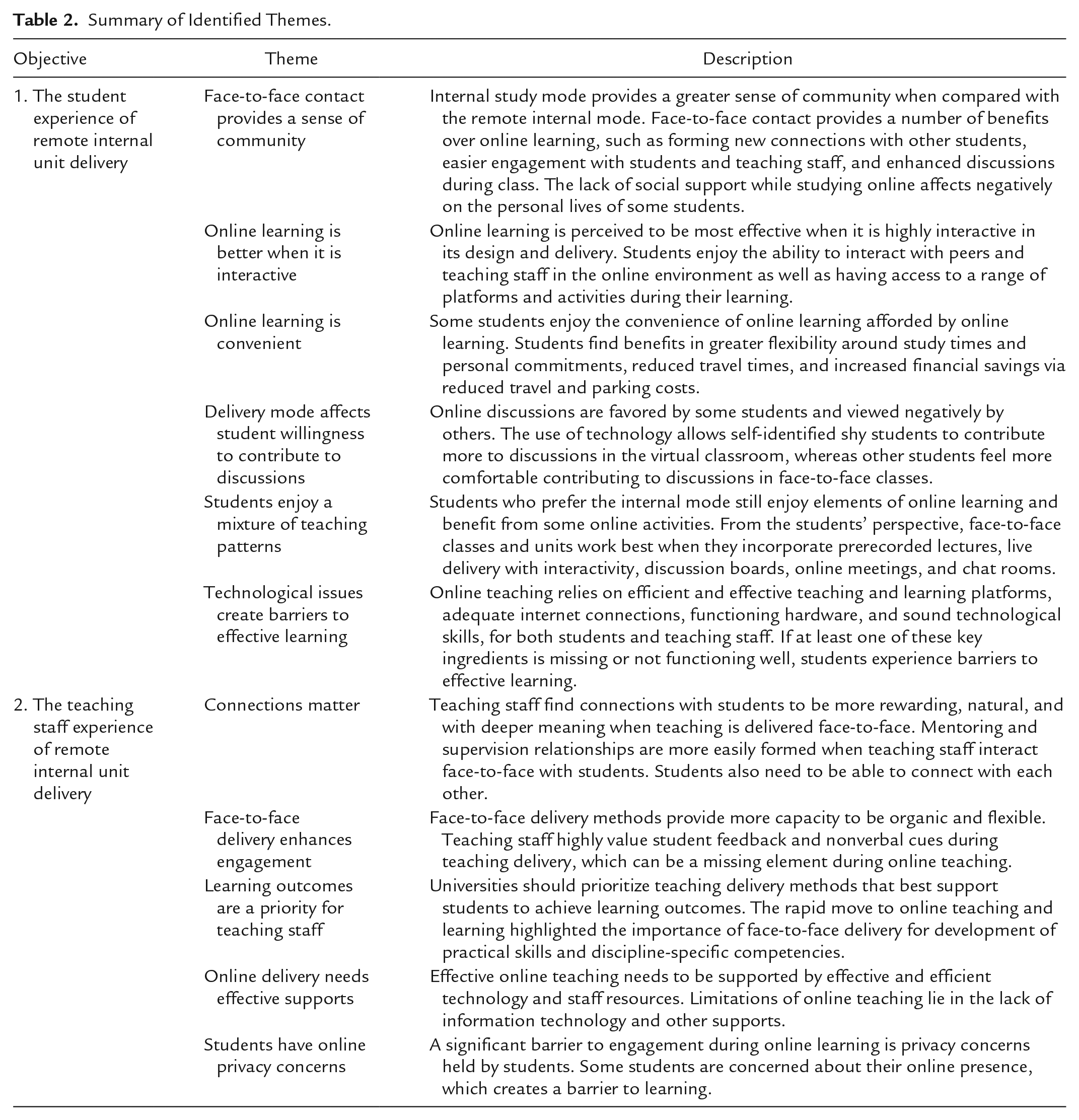
Table 2 provides a summary of themes identified for each study objective. Each theme is described in detail in the following section.
Summary of Identified Themes.
Objective 1: The Student Experience of Remote Internal Unit Delivery
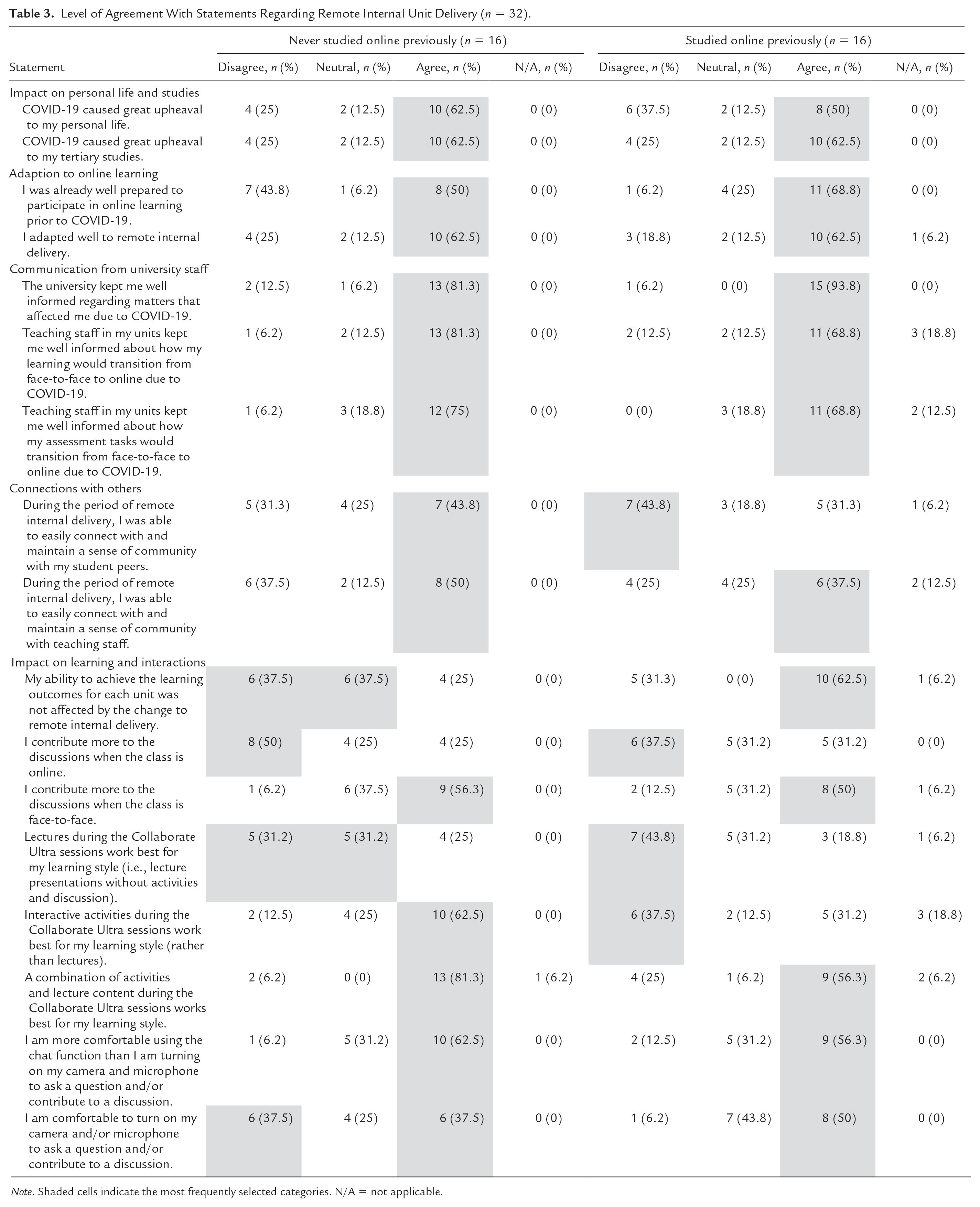
Half of the survey participants (50%, n = 16) had never studied fully online prior to Semester 1, 2020. The mean number of hours spent online for self-directed study per week was 19.16 (SD = 26.23). Approximately one third of participants stated that during the remote internal mode they were online a little bit more (28.1%, n = 9) or quite a bit more (37.5%, n = 2) than prior to COVID-19. Almost two thirds of participants (62.5%, n = 20) agreed that COVID-19 caused great upheaval to their tertiary studies; however, 59.4% (n = 19) agreed that they were already well placed to learn online. More than two thirds of participants (68.8%, n = 22) thought that the internal mode should be more expensive than the fully online mode. Additional survey results are summarized in Table 3.
Level of Agreement With Statements Regarding Remote Internal Unit Delivery (n = 32).
Note. Shaded cells indicate the most frequently selected categories. N/A = not applicable.
Six themes regarding the student experience of remote internal mode and online learning were identified across the three study phases: (1) face-to-face contact provides a sense of community (2) online learning is better when it is interactive, (3) online learning is convenient, (4) delivery mode affects student willingness to contribute to discussions, (5) students enjoy a mixture of teaching patterns, and (6) technological issues create barriers to effective learning.
Face-to-Face Contact Provides a Sense of Community
Students suggested that the internal study mode provided a greater sense of community when compared with the remote internal mode. Face-to-face contact provided numerous benefits over online learning, such as forming new connections with other students, easier engagement with students and teaching staff, and enhanced discussions during class. The lack of social support affected negatively on the personal lives of some students, for example, I didn’t realise most of my friends were from uni, so all of a sudden, I was not able to see a big chunk of people that I was really looking forward to seeing after the break. So, it did impact my personal life that way. (SX)
The lack of social connection also affected negatively on learning for students who struggled with issues related to extrinsic and identified motivation as well as a perceived lack of an accessible learning community. Consequently, students also cited challenges with learner self-regulation: “Just finding motivation and trying to engage online with the material. I still feel quite disconnected from the course and the people so that has been the biggest challenge not really feeling part of it anymore” (SX).
More than one third of the survey participants (37.5%, n = 12) disagreed with the statement “During the period of ‘Remote Internal’ delivery I was able to easily connect with and maintain a sense of community with teaching staff,” which supports the qualitative findings. Similarly, more than half of the survey participants (56.3%, n = 18) agreed with the statement “COVID-19 caused great upheaval to my personal life.” A greater proportion of students who had never studied online previously agreed with this statement (62.5%, n = 10) when compared with students who had studied online previously (50%, n = 8).
Online Learning Is Better When It Is Interactive
Online learning was most effective when it was highly interactive in design and delivery. Students enjoyed the ability to interact with peers and teaching staff in the online environment as well as having access to a range of platforms and activities during their learning. Some students commented on the importance of live delivery to be “able to talk with [teaching staff] directly about any questions I have for the unit” (SX) and the “option for live tutorials when students cannot attend face-to-face so we can remain connected and not isolated” (HP). Other students discussed the usefulness of certain platforms and their functions, such as the “chat function, polls and the whiteboard functions during Collaborate Ultra sessions” (HP) and “Collaborate . . . for group projects” (HP).
Survey results support the focus group findings. Almost half of the survey participants (46.9%, n = 15) agreed with the statement “Interactive activities during the Collaborate Ultra sessions work best for my learning style.” Similarly, 43.8% (n = 14) disagreed with the statement “Lectures during the Collaborate Ultra sessions work best for my learning style (i.e., lecture presentations without activities and discussion).”
Online Learning Is Convenient
Some students enjoyed the convenience of online learning afforded by the remote internal mode. Students found benefits in greater flexibility around study times and personal commitments, reduced travel times, and increased financial savings via reduced travel and parking costs. The additional time meant that students “had more time to study” (SX) and could be “more focused as I don’t have to drive a long-distance home which tends to make me feel less motivated” (HP). One student explained the impact of “remote learning” on their grades: “[I like] less contact hours or having the flexibility to work at home if you need to. I got a lot out of having that extra spare time and I didn’t feel that remote learning affected my grades” (HP).
Delivery Mode Affects Student Willingness to Contribute to Discussions
Online discussions were favored by some students and viewed negatively by others. During the remote internal mode, the use of technology allowed self-identified shy students to contribute more to discussions in the virtual classroom, whereas other students felt more comfortable contributing to discussions in face-to-face classes. One student highlighted the enabling nature of the chat room in Collaborate Ultra: I get nervous speaking up in class when raising points or asking questions, so the chat box on Blackboard Collaborate made it easier to answer the questions for me because I didn’t have to speak in front of the class. (SX)
Another student explained the impact of face-to-face interaction on making friends and feeling comfortable contributing to discussions, through face-to-face support provided by peers, particularly where there was a perception of material being challenging: “I found it quite intimidating giving my opinion online whilst discussing sensitive topics. I felt more vulnerable and therefore less engaged when I think I could have thrived in a classroom environment” (SX).
These opposing qualitative findings are supported by the survey results. More than half of the participants (53.1%, n = 17) agreed with the statement “I contribute more to the discussion when the class is face-to-face,” whereas almost half (43.8%, n = 14) disagreed with the statement “I contribute more to the discussion when the class is online.” More than half of the participants (59.4%, n = 19) agreed with the statement “I am more comfortable using the chat function than I am turning on my camera and microphone to ask a question and/or contribute to a discussion.”
Students Enjoy a Mixture of Teaching Patterns
Students who preferred the internal mode still enjoyed elements of online learning and benefitted from some online activities. From the students’ perspective, face-to-face classes and units work best when they incorporate prerecorded lectures, live delivery with interactivity, discussion boards, online meetings, and chat rooms. One student commented on the importance of being able to ask questions and seek feedback from teaching staff during online sessions: If you miss class as an internal student you should be able to watch the live recording through Blackboard at home. Also being able to ask questions through the chat box live from home so that they can discuss it live during the internal class. (SX)
Similarly, another student explained the usefulness of feedback during group activities: “We had the group discussion board where the teacher staff could monitor and see our collaboration as well and it was helpful to get their input” (HP).
The majority (68.8%, n = 22) of survey participants agreed with the statement “A combination of activities and lecture content during the Collaborate Ultra sessions works best for my learning style,” which supports the qualitative findings. A greater proportion of students who had never studied online previously agreed with this statement (81.2%, n = 13) when compared with students who had studied online previously (56.2%, n = 9).
Technological Issues Create Barriers to Effective Learning
The remote internal mode relied on efficient and effective platforms, adequate internet connections, functioning hardware, and sound technological skills possessed by students and teaching staff. If even one of these key ingredients was missing or not functioning well, students experienced barriers to effective learning. Examples of issues include “constantly having to restart due to technology problems” (SX) and the “inability to see when someone else is going to talk” (SX) due to time lags. Another student explained that issues with technology made learning less enjoyable: “I didn’t particularly enjoy Collaborate Ultra or live tutorials. I didn’t get much out of them because it was very slow to use and complete activities” (HP).
Objective 2: The Teaching Staff Experience of Remote Internal Unit Delivery
Five themes regarding teaching staff experience of remote internal mode and online teaching were identified from Phase 2: (1) connections matter, (2) face-to-face delivery enhances engagement, (3) learning outcomes are a priority for teaching staff, (4) online delivery needs effective supports, and (5) students have online privacy concerns.
Connections Matter
When reflecting on their remote internal experience, teaching staff members considered building connections to be rewarding, natural, and with deeper meaning when teaching is delivered face-to-face. Teaching staff indicated that mentoring and supervision relationships are more easily formed when teaching staff interact face-to-face with students, as staff who teach online “lose that opportunity to build those relationships because you don’t get that when you’re sitting at your desktop, recording a lecture, or doing the online stuff” (TA/TRA). One teaching staff member explained feedback from students who “choose to be face-to-face because there is some other opportunities with being face-to-face around establishing a relationship with academics [which can be] very hard in an online environment to get a real connection at that sort of level” (TA/TRA). Another explained the importance of student–teaching staff connections when graduates are seeking referee reports for employment opportunities: “I need to know who that person is so that I can actually do that with confidence or choose not to. Sometimes I’ll decline because I don’t feel like I can write a praiseworthy review” (TA/TRA).
Teaching staff also shared their perspectives on the importance of students connecting with each other. When face-to-face, students have opportunities for “peer support, the connections for future career and just for life friendships that . . . are valued by internal students and sometimes online students . . . regret that they can’t have that” (TA/TRA). When strong connections are formed between students, they “trust that safe environment” (CA), which is beneficial in the classroom for discussions and group work.
Face-to-Face Delivery Enhances Engagement
Teaching staff compared the engagement levels of face-to-face and online delivery methods. Face-to-face methods provide more “capacity to be more organic, flexible in teaching [and] to be able to tailor materials on the fly to [answer] students’ questions” (TA/TRA). One teaching staff member explained the impact on engagement levels that would potentially result from internal lectures being replaced by prerecorded lectures: I actually worked very hard to make lectures interactive. We stop, we pause, microphones are handed round so online students get full class discussion. And now that’s really inhibited my teaching to think “Well, I can only do what I can be recorded to do now.” (TA/TRA)
Another teaching staff member explained the difficulty of demonstrating discipline-specific skills to students when delivering online during the remote internal mode: “I like to be modelling that engaging facilitator, and it was like using technology that wasn’t able to really let that happen” (CA).
Teaching staff highly value student feedback during teaching delivery, which was a missing element during the remote internal mode. Teaching staff did not receive nonverbal cues during online classes, for example, The tutor or lecturer says something and the students don’t get it and they kind of raise eyebrows at each other and then they have a little chat. It’s very hard when everyone’s got their videos off to get any of that opportunity for students. (TA/TRA)
The visual cues received in face-to-face classes provide teaching staff with the ability to “go back into an idea and say, ‘did everyone actually really get that?’” (TA/TRA). The lack of feedback during the remote internal mode left teaching staff “not knowing whether what you’re delivering is being received” and “constantly doubting yourself” (CA).
Learning Outcomes Are a Priority for Teaching Staff
Teaching staff noted that universities should prioritize teaching delivery methods that best support students to achieve learning outcomes. Participants discussed the potential move to online learning post-COVID-19 and the tension of “budget trimming . . . [and] . . . not being driven by good pedagogy” (TA/TRA). Under financial constraints, “it does seem cheaper to do it online” (TA/TRA); however, the quality of teaching, the cognitive load on students and teaching staff, and the impact on workloads were raised as concerns, in addition to the learning experience for students. As one teaching staff member noted, It’s not about easier. It’s about what works for the students, what works for the learning outcomes of the unit, what works for what you’re trying to achieve within the unit. As soon as you give up on that, you’ve lost really. (TA/TRA)
The rapid move to online teaching and learning highlighted the importance of face-to-face delivery for developing practical skills and discipline-specific competencies. Several participants noted that teaching practical skills is more difficult online, stating that there is “no way that could be replicated in [Blackboard] Collaborate” (TA/TRA). Teaching practical skills to fully online students ordinarily requires sufficient planning and partnerships with external stakeholders to ensure that the learning outcomes are achieved. During the remote internal mode, some practical internal units and activities were substituted for fully online units, which “can’t happen . . . in an accredited degree” (TA/TRA). The DHPS courses are “training the next generation of professionals” (TA/TRA) in health promotion and sexology, and the university is “not just producing people with great degrees, we’re also helping to replace ourselves in the future” (TA/TRA). One participant discussed the importance of delivery mode for certain content areas and units with sensitive topics: The subject matter that we discuss . . . requires a lot of engagement. You just don’t get the same engagement if someone is typing on the screen or wanting them to talk over the microphone on topics they feel that they can only discuss in with the safety of others. Yeah, so, I just don’t think that it is a good choice for this particular area of public health. (TA/TRA)
Online Delivery Needs Effective Supports
Teaching staff members explained that effective online teaching needs to be supported by effective and efficient technology and staff resources. Participants discussed the range of technical skills and experience of teaching staff within the DHPS who are overall “quite digitally savvy . . . [and] . . . quite good at embracing technology” (TA/TRA); hence, for some, moving online “wasn’t a massive challenge ‘cause I taught an online unit for about six years prior to that, so I had run Blackboard Collaborate pretty much sort of separately from the internal unit” (CA). For those who had limited experience with online teaching, the remote internal mode gave “access to a wider repertoire of online technologies that the University had” (TA/TRA). The most frequently used university-supported platforms during remote internal mode were Blackboard Collaborate Ultra, Cisco WebEx (enterprise videoconferencing service) (Cisco, 2021), and GroupMap (a real-time online brainstorming and group decision-making tool; GroupMap, 2021).
Participants highlighted that the limitations of online teaching lie in the lack of “consistent backup and support of IT [information technology staff] and whoever it is if something does go wrong” (TA/TRA) within the university. As one teaching staff member stated, “I don’t have a problem with doing online and face-to-face [teaching] provided of course the infrastructure works immediately and without any issue” (CA). Technological and connectivity issues at the students’ end further complicated matters when “not only are you relying on your expertise in your content expertise, you’re then juggling all this technology together with students going ‘mine’s just dropped out’ and ‘my Internet is not working’” (TA/TRA). These issues not only affected content delivery but also the assessment process: Students presenting through Collaborate live, losing their connectivity again, not being able to use camera because it didn’t have one or their gadgets, laptops were broken, and it was quite difficult to mark them as well. Also considering that you know it’s all online and they may not have the ability to have those gadgets required for that assessment. (CA)
Students Have Online Privacy Concerns
A significant engagement barrier during the remote internal mode noted by teaching staff was online privacy concerns held by students. Some students were “very aware and concerned about their online presence . . . [and] . . . aware they’re being recorded, even the chat box” (TA/TRA). Teaching staff suggested that online students “don’t have the capacity to blend into a classroom, and if they are actually on video or on mic then they are front and centre” (TA/TRA), which limited their level of engagement. Some teaching staff members received feedback from students stating that “they wish to engage, but due to privacy reasons and in case somebody may be recording them, they were not able to open up and engage” (CA). Students expressed similar privacy concerns during online learning, due to the presence of family members, friends, and strangers if studying in public. One student also explained their concerns regarding other online learners: “I don’t know whether I’m being recorded and don’t feel safe and comfortable” (CA).
Discussion
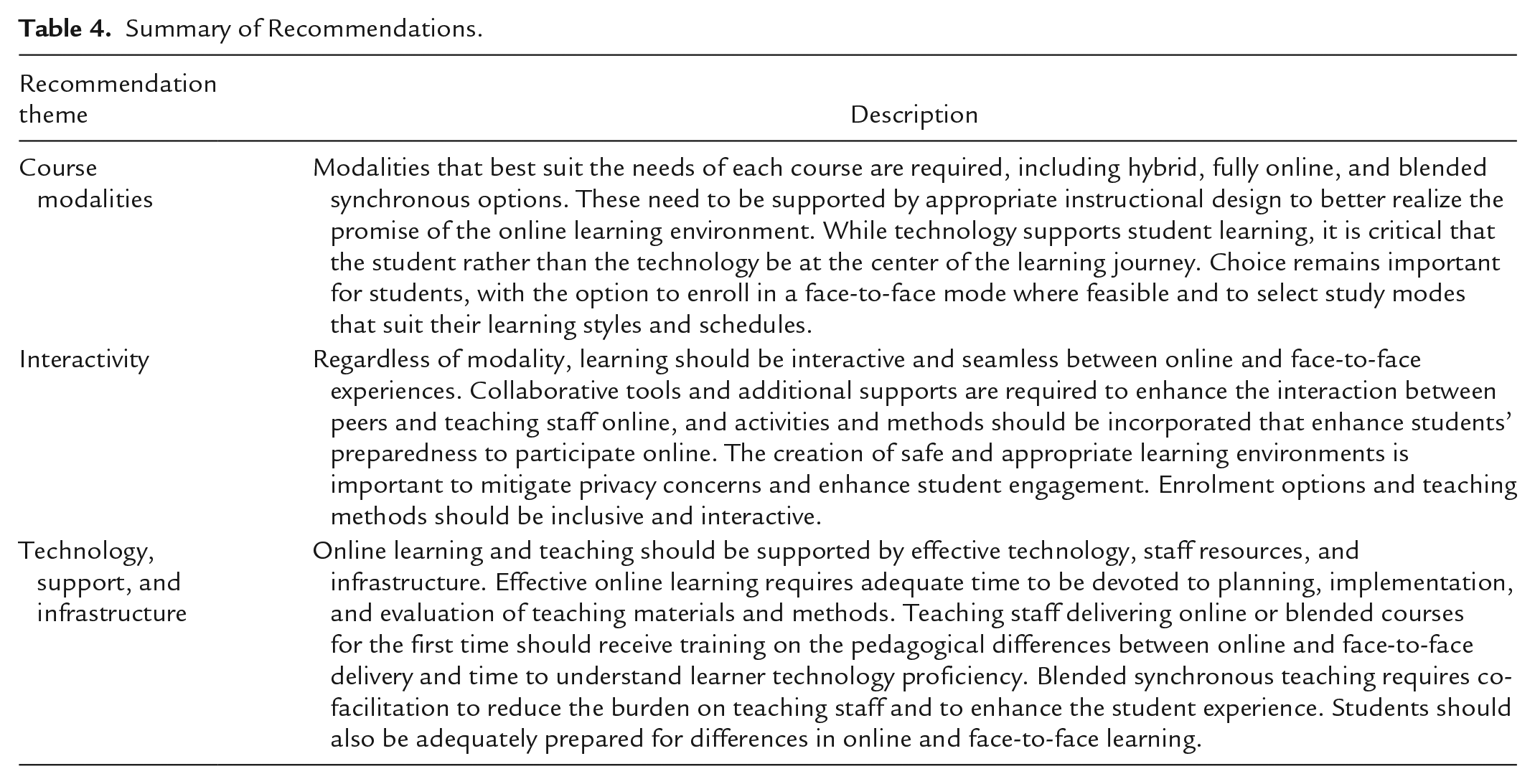
This study aimed to examine the impact of remote learning necessitated by the COVID-19 pandemic, from the perspective of health promotion and sexology students and teaching staff at a large WA university. The contemporary investigation of online teaching practices has revealed a range of strengths and limitations of online learning that relate to connections between teaching staff and students, achievement of learning outcomes, technological issues, and interactivity of teaching methods. As the technical challenges due to the rapid move to online teaching are resolved, universities and teaching staff should consider how to enhance student engagement and make better use of online learning pedagogy (Bowles & Sendall, 2020). Findings from the present study inform the following recommendations (Table 4) to improve the design and delivery of courses in a postpandemic environment.
Summary of Recommendations.
Course Modalities
Modalities that best suit the needs of each course are required, including hybrid, fully online, and blended synchronous options, supported by appropriate instructional design to improve the online learning environment (Kite et al., 2020). This is consistent with findings from the literature cautioning against a one size fits all approach (Gillett-Swan, 2017), which emphasize that while technology supports student learning, it is critical that the student rather than the technology be at the center of the learning journey (Rasheed et al., 2020). University students highly value face-to-face learning modes and supervision (Symonds, 2014), which is consistent with findings from this study, which highlight that face-to-face delivery remains a strong preference for both students and teaching staff, particularly for units with a focus on skill and competency development. Other literature has found high levels of support for online learning in clinical skills development and comparable levels of development for face-to face and online delivery (Weightman et al., 2017). It may be that what is missing is the lack of community of practice to support these capabilities, which is more readily provided in the face-to-face environment.
Teaching staff and students from both disciplines noted the importance of face-to-face delivery in building social capital, social support, sense of community, and facilitating interaction and engagement during the learning and teaching process. These factors were perceived to be more difficult to achieve and maintain when teaching fully online; however, teaching staff noted the importance of providing students a range of modality options that are comparable in terms of expectations and workload. Additionally, survey findings highlight a preference for interactive activities rather than lecture content among students who prefer to study face-to-face. Choice remains important for students, with the option to enroll in a face-to-face mode where feasible and to select study modes that suit learning styles and schedules (Walker et al., 2020). Investigating the possible amplifying effects of receiving both on and offline experiences on learning and social support is recommended.
Teaching staff discussed the importance of prioritizing student learning outcomes and preferences when it comes to decision making regarding teaching methods and modalities. With the increasing move to online learning worldwide, university administrators may see a potential cost saving due to the reduction in face-to-face contact hours and perceived efficiencies resulting from online delivery (Bowles & Sendall, 2020). However, over and above budgetary and workload implications, decision makers should consider whether such changes will adequately equip students with the required knowledge and skills and, in the case of public health, to address future public health challenges beyond COVID-19 (Bowles & Sendall, 2020). Additionally, survey findings from the present study suggest that students who prefer to study face-to-face may perceive the fully online delivery mode to be lower value for money, which could impact on course enrolments in future.
Interactivity
Regardless of modality, findings suggest that learning should be interactive and seamless between online and face-to-face experiences; this is supported by the literature (Rasheed et al., 2020). Students discussed the importance of interactive classes and activities and the limitations of the didactic online delivery they occasionally experienced during the remote learning mode. Teaching staff highlighted the importance of these factors for discipline-specific learning and teaching, in terms of effective methods to foster student achievement of learning outcomes and developing competencies as health practitioners. Reporting on learning and teaching in public health, Kite et al. (2020) suggest that concerns about authentic, deep engagement online may be ameliorated through more sophisticated use of online learning platforms. Greater understanding of how teaching staff use online platforms and spaces and their confidence to do so is critical to building cohesive online learning experiences that more genuinely replicate offline environments. This may also reduce teaching staff and student perceptions of inferior experience or quality.
It has been suggested that the most effective learning approaches in public health courses are those that increase student and teaching staff interaction (Godley et al., 2020). Providing materials and readings prior to class allows for class time to be spent discussing ideas and problem solving (Berić-Stojšić et al., 2020). This is an important consideration to boost interaction between students and teaching staff irrespective of modality; however, while online students often possess ample data literacy and information skills, they may lack communication and collaboration skills necessary to maximize their learning via the online environment (Scull et al., 2020). Effects may be magnified if learners experience English-language competency challenges or other equity considerations. Collaborative tools and additional supports are required to enhance the interaction between peers and teaching staff online (Scull et al., 2020), and activities and methods should be incorporated that enhance students’ preparedness to participate online. Other literature has pointed to a need for online learning tasks to focus more explicitly on cognitive complexity and intellectual stimulation to improve learning outcomes (Gillett-Swan, 2017).
While increasingly it is acknowledged that learning can happen anywhere at any time, the creation of safe and appropriate learning environments is important to mitigate privacy concerns and enhance student engagement. Participants in the present study expressed concerns regarding privacy during the remote learning mode when discussing sensitive topics, particularly during sexology classes. Some students found it challenging to find a quiet space not occupied by other people, and some stated that they were concerned about being recorded during classes. Describing the impact of COVID-19 on delivery of an undergraduate health promotion unit at another Australian university, Nava Buenfil et al. (2020) found that students faced similar difficulties during lockdown due to shared housing, inadequate study spaces, or carer responsibilities. Enrolment options and teaching methods are required to ensure that learning environments are inclusive and interactive.
Technology, Support, and Infrastructure
Online learning and teaching should be supported by effective technology, staff resources, and infrastructure. Students and teaching staff highlighted a number of barriers to effective learning and teaching that related specifically to technological platforms, connectivity, and university supports and processes. These findings are consistent with the literature (Rasheed et al., 2020), which highlight a range of technology insufficiency issues. Nava Buenfil et al. (2020) noted the dual challenges of time and technology while developing online teaching materials rapidly during lockdown and the requirements for appropriate time and technical expertise to be provided by the university.
Effective online learning requires adequate time to be devoted to planning, implementation, and evaluation of teaching materials and methods. Bower et al. (2015) suggest that teaching assistants are highly advantageous in helping deal with the increased cognitive load required to manage blended synchronous learning classes. Additional vital factors are sound technical infrastructure, student and teaching staff competence, and pedagogies for online learning (Marinoni et al., 2020).
Consistent with findings in this study, the literature suggests tensions between institutional expectations and rhetoric regarding the resources required for quality in online learning and teaching and experiences of academic teaching staff (Brown, 2016). Bowles and Sendall (2020) have argued that universities should ensure that these supports are in place by investing in infrastructure and skill development of teaching staff. Scull et al. (2020) have cautioned conflating social media proficiency with general technology proficiency or assuming that students possess the ability to make use of digital platforms for educational purposes. Teaching staff delivering online or blended courses for the first time should receive training on the pedagogical differences between online and face-to-face delivery, take time to understand learner technology proficiency, and be offered the opportunity to co-teach with an experienced teaching staff member; and students should be adequately prepared for differences in online and face-to-face learning (Walker et al., 2020).
Strengths and Limitations
To the authors’ knowledge, this was the first study to investigate the impact of COVID-19 and the remote learning mode on learning and teaching at a WA university. The mixed methods design enhanced credibility and provided a comprehensive understanding of the research aim, and the use of the COREQ checklist (Tong et al., 2007) ensured trustworthiness was maintained during the research process. However, the small sample size and low survey response rate limit the generalizability of quantitative findings and the ability to compare results by demographic categories and courses. Data collection occurred during a pandemic, and the level of engagement was possibly higher than usual. Given the nature of the study and the type of participants, results may have been subject to social desirability and volunteer bias. Data were possibly over complimentary to teaching staff, as found by Nava Buenfil et al. (2020), who observed that students were more forgiving during the pandemic than in previous study periods regarding issues that may have arisen during learning and teaching.
Conclusion
The consequences of COVID-19 restrictions continue to challenge the higher education sector globally. This study examined the impact of remote learning during COVID-19 on health promotion and sexology learning and teaching at an Australian university. Three key recommendations are presented to improve the design and delivery of courses regarding modalities, methods to enhance interactivity, and supportive technology and infrastructure. Uptake of these recommendations will serve to better meet the technological, demographic, and socio-environmental needs of higher education learners.
Footnotes
Acknowledgements
The authors gratefully acknowledge the students and staff who participated in this research, and the technical support provided by the information technology staff at the university during the remote internal mode.
Declaration of Conflicting Interests
The author(s) declared the following potential conflicts of interest with respect to the research, authorship, and/or publication of this article: KBl, GC, SW and JH are Teaching and Research Academics, and MT is a Teaching Academic. All staff teach health promotion and sexology at Curtin University. MT was a participant in the staff focus groups but was not involved in data analysis.
Funding
The authors received no financial support for the research, authorship, and/or publication of this article.
