




Abstract
Studies have shown that racial and ethnic minority health professionals are more likely than those in the majority to work in predominantly underserved, largely minority communities. Increasing the pool of underrepresented racial and ethnic professionals could help reduce health disparities. Summer programs giving minority students public health training and experiences can increase the number who enter the health professions. This article describes recruitment strategies for obtaining a diverse pool of applicants for such a program as part of a Centers for Disease Control and Prevention funded multisite undergraduate training program intended to increase the diversity of the public health workforce. The recruitment strategies used included institutional linkages, collaborative partnerships, and interpersonal contacts. No one strategy was more effective; however, Hispanic/Latinas were more likely to be recruited through institutional linkages, but less likely to be recruited through interpersonal contacts than other female groups. Understanding successful recruitment strategies to achieve a diverse application pool for public health training programs is vital to achieve health equity.
The elimination of health disparities in the United States continues to be a national priority as defined in the national Healthy People 2030 report (Office of Disease Prevention and Health Promotion, n.d.). One strategy for addressing this priority is to increase the number of people from underrepresented racial and ethnic populations and other vulnerable groups in the public health workforce and biomedical fields (Beadle & Graham, 2011). Summer programs that expose college students from underrepresented groups to field experiences and relevant academic enrichment programs increase the number who enter these professions. Known as pipeline programs, these programs target, enroll, train, and support selected undergraduate students in career preparation and professional development (Bouye et al., 2016). Much of the literature in this area focuses on the successful transition of underrepresented students from pipeline programs into undergraduate and graduate programs (Belcher & McFadden, 2015; Duffus et al., 2014). Fewer assessments discuss the methods of successful recruitment strategies for achieving diverse student reach, enrollment, and participation in summer pipeline programs as an initial step for pursuing public health careers (Shadding et al., 2016).
Strengthening the workforce infrastructure to support more public health professionals from diverse underrepresented groups through specific training opportunities is a critical strategy for achieving health equity (Institute of Medicine, 2003; Yeager et al., 2016). The purpose of this descriptive article is to share strategies used to recruit diverse applicants for the Future Public Health Leaders Program at the University of Michigan (Michigan FPHLP).
Michigan FPHLP is one of five pipeline programs funded by the Centers for Disease Control and Prevention’s (CDC) Undergraduate Public Health Scholars Program (CUPS) addressing the diversification of the public health workforce. It uses a 10-week summer training program to deliver both field experiences and a competency-based curriculum. A vital component of the program is the recruitment of diverse applicants from across the United States and U.S. territories. From 2012 to 2019, Michigan FPHLP has recruited 7,277 applicants representing underrepresented racial and ethnic groups, diverse gender identities, physical abilities, colleges and universities, and geographic regions. Multiple recruitment strategies were used to achieve this success. This article describes lessons learned regarding different recruitment strategies to reach diverse student populations.
Increasing Diverse Program Applications
Expanding the diversity of the public health workforce begins with recruiting diverse groups of applicants into pipeline programs. A summer experience that exposes college students to different public health careers by working with professionals who enhance their understanding of how the discipline contributes to communities and the public at large (Hernandez et al., 2014; Satcher et al., 2005) can increase the likelihood that participants will enter the public health workforce. Potential barriers to underrepresented students applying to pipeline programs include limited access to career development, mentorship, and exposure to field experiences (Hernandez et al., 2014; Satcher et al., 2005). This article presents approaches to address these barriers and create the next generation of public health professionals.
Results of Recruitment Strategies Used by Michigan FPHLP
Michigan FPHLP applied Shadding et al.’s (2016) findings that race, ethnicity, and gender differentially determined the effectiveness of a particular recruitment strategy for increasing the applicant pool for public health pipeline programs. A multiprong strategy was used for recruitment into the Michigan FPHLP to achieve broad representation and a diverse array of applicants. These strategies were not used sequentially but were applied in a complementary way to ensure broad reach, especially based on race, ethnicity, and gender. Table 1 shows that 45% of applicants were seniors, 25% represented juniors, and 21% were recent graduates. In addition, 81% of program applicants were females, 17% males, and 1% transgender. Blacks represented 34% of applicants, with 16% Hispanic/Latino, 18% Asian American, 1% American Indian/Alaska Native (AI/AN), 1% Native Hawaiian/Pacific Islander (NH/PI), 1% Middle Eastern/North African, 21% White, and 5% Multiracial. Overall, Michigan FPHLP received 17% of applications from college students attending minority-serving institutions, with 65% attending predominantly White institutions. They attended colleges/universities in all four regions of the country and U.S. territories with 31% applying from the Southern region followed by 20% from both the Midwest and Northeast, and 12% from the West with 1% from U.S. Territories. The percentages presented represent available data, and, therefore, they do not add up to 100% in the text. (See Table 1 for explanation.)
Characteristics of Michigan FPHLP Applicants, 2012–2019.
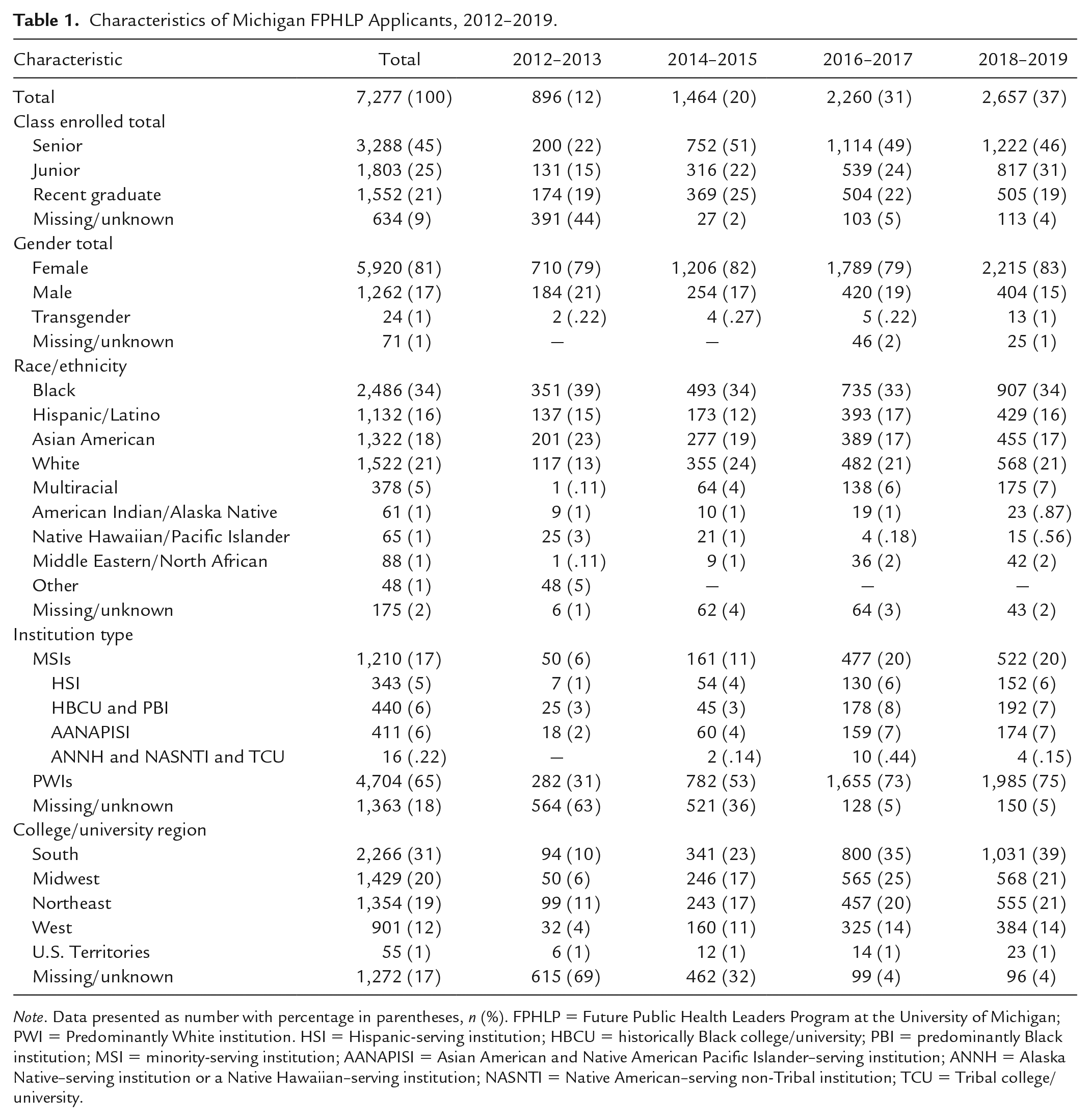
Note. Data presented as number with percentage in parentheses, n (%). FPHLP = Future Public Health Leaders Program at the University of Michigan; PWI = Predominantly White institution. HSI = Hispanic-serving institution; HBCU = historically Black college/university; PBI = predominantly Black institution; MSI = minority-serving institution; AANAPISI = Asian American and Native American Pacific Islander–serving institution; ANNH = Alaska Native–serving institution or a Native Hawaiian–serving institution; NASNTI = Native American–serving non-Tribal institution; TCU = Tribal college/university.
The broad racial and ethnic diversity achieved in program applications was due to the three recruitment strategies used: (1) institutional linkages, (2) collaborative partnerships, and (3) interpersonal contacts. Key distinctions between the recruitment strategies were that the messenger was often known to the potential applicant at the college/university level for institutional linkages; the messenger was likely associated with prior internship placements and organizational connections as part of collaborative partnerships, and the messenger was frequently program alumni for the interpersonal contacts strategy using specific websites. Recruitment strategies were categorized based on responses to an application question that asked, “How did you hear about FPHLP?” Response categories were provided with opportunities to name additional sources. Table 2 presents the three recruitment strategies by cohort years. Lessons learned from each recruitment strategy are described next.
Recruitment Strategies Used by Michigan FPHLP by Cohort Years.
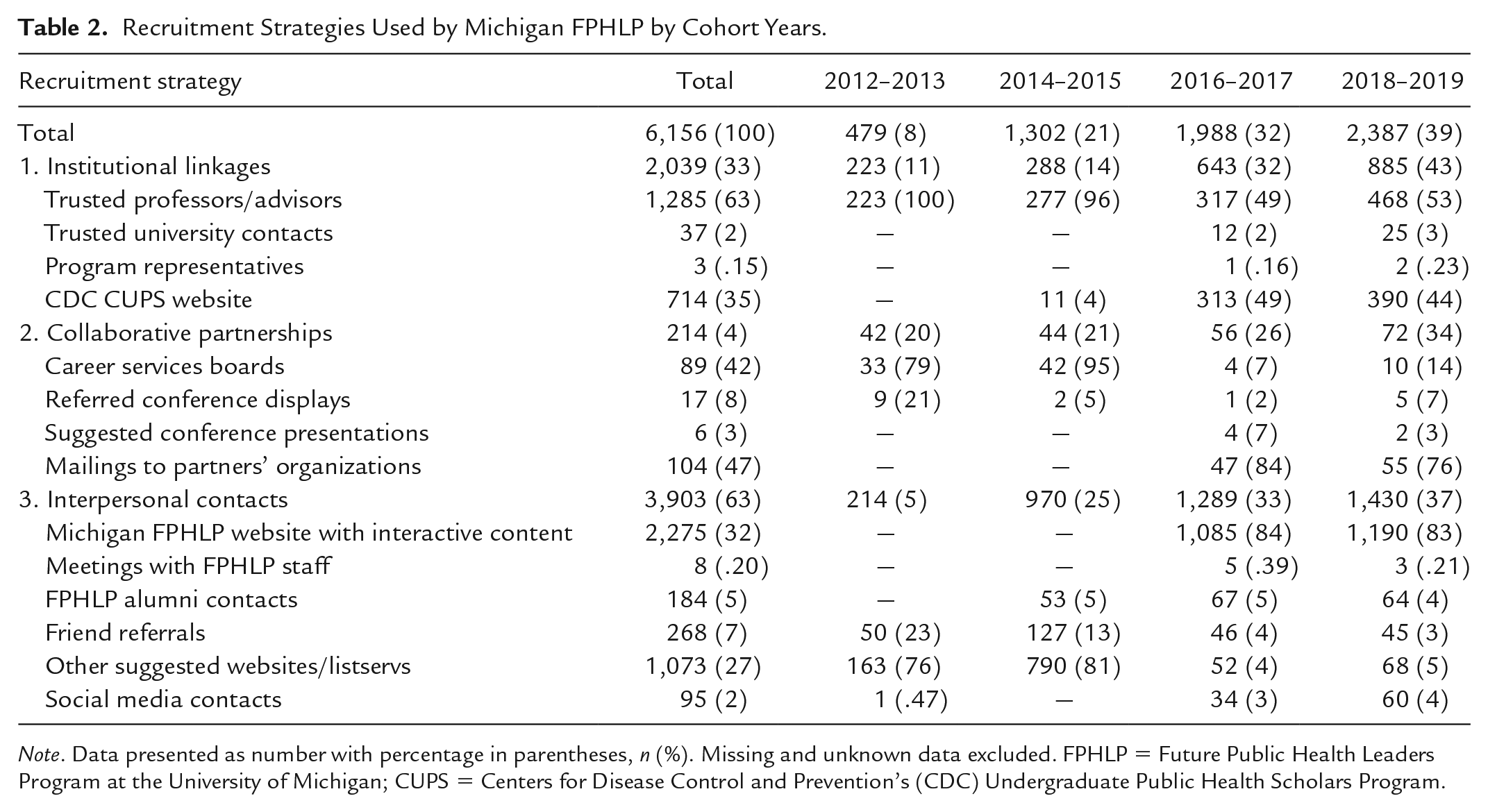
Note. Data presented as number with percentage in parentheses, n (%). Missing and unknown data excluded. FPHLP = Future Public Health Leaders Program at the University of Michigan; CUPS = Centers for Disease Control and Prevention’s (CDC) Undergraduate Public Health Scholars Program.
Institutional Linkages
Institutional linkages represented 33% of how applicants learned about Michigan FPHLP. This strategy involved working with colleges, universities, and institutional programs to identify underrepresented students. Regular communication with officials and program directors from multiple academic institutions was critical to the success of this recruitment strategy. For example, working closely with the Ronald McNair Scholars Program, which is designed to train underrepresented undergraduates in research, at a local Michigan university has led to an increase in the number of applications from that institution annually (0 applications initially to an average of 20 applications each year). Institutional linkages include meeting with key representatives and program directors to provide information and updates on the Michigan FPHLP, coordinate informational sessions at the institution, and share information on students who have participated in Michigan FPHLP from their institution. The representatives and directors often publicized student alumni from their institution, representing an additional recruitment tool for administrators to gain support for the program. Michigan FPHLP staff typically participated in informational sessions to describe the program with university program representatives at regional colleges and informational webinars for institutions outside the local region. Unlike the collaborative partnerships described below, institutional linkages vary from year to year as institutional contacts and programs changed over time. Thus, new relationships were frequently formed, and collectively these contacts serve as a conduit of information for informing diverse groups of students about Michigan FPHLP.
Within this strategy, students can be recruited through trusted institutional officials (e.g., professors, advisors, administrators) and program staff known to students at their local colleges or universities. Professors/advisors was the largest category within institutional linkages for students learning about the program (63%). The trusted officials speak about Michigan FPHLP with students they believe might benefit from the program. These officials introduced the program to students, assisted them throughout the application process, and encouraged them to complete their application. This level of engaged recruitment is helpful in attracting students who may not independently seek program information. The engagement with different institutional representatives, faculty advisors, student counselors, and campus program representatives who students have an established relationship with are considered trusted institutional representatives. This included reaching out to Black males and both Hispanic/Latino/a ethnicities who may be less assertive in seeking information than other students.
Like other students, racially and ethnically diverse students search for summer enrichment or exposure programs on the internet. Michigan FPHLP, like all CDC CUPS programs, is prominently featured on the CDC’s CUPS website, which has increased the program’s internet presence from an institutional perspective. Thirty-five percent of applicants learned about the program from the CDC CUPS website.
A complementary approach to the program’s institutional recruitment strategy is working with the University of Michigan School of Public Health recruitment team. This team distributed Michigan FPHLP materials at various institutional recruitment events across the country specifically aimed at recruiting underrepresented students (e.g., the Society for Advancement of Chicanos and Native Americans in Science, Morehouse School of Medicine Public Health Fair). This allowed the program to have direct contact with students and increased its recognition by being associated with the fourth ranked School of Public Health in the country.
Collaborative Partnerships
Collaborative partnerships represented 4% of how applicants learned about the program. This strategy reflects long-term public health partnerships that existed with the University of Michigan’s Office of Public Health Practice prior to the establishment of Michigan FPHLP in 2012. Specific ongoing collaborative partnerships with public health organizations have been developed for both recruitment and field placement purposes. The program staff have developed and maintained relationships with experienced employees at public health organizations, career sites, and conference liaisons to broaden recruitment outreach. The process involved general recruitment materials being mailed to public health organizational career staff, followed by telephone calls to clarify questions and targeted recruitment emails and other mailings (e.g., brochures) to emphasize the value of the Michigan FPHLP. Materials mailed to partner organizations accounted for 47% of how applicants learned of the program within the collaborative approach. The program allowed partners to assist with recruiting diverse students because of their detailed knowledge of the program. They became champions of the program. In addition, Michigan FPHLP staff worked with partner organizations to post program materials on their career services boards to increase the program’s visibility. This strategy was helpful because the informed career staff did outreach to potential participants to increase awareness of the program as well as to individually guide underrepresented students through the application process as they sought career advice. Posting recruitment materials on career services boards within partner organizations represented 42% of how applicants learned of the program within this strategy. The collaborative partnerships technique also included public health organizations where the Michigan FPHLP staff recruited at specific organizational events such as the Michigan Premier Public Health Conference. Conference participation included both setting up booths to disseminate recruitment materials and conference presentations about the program.
Interpersonal Contacts
Interpersonal contacts represented how 63% of applicants learned about the program. This strategy highlights interpersonal relationships that are especially important. Using this strategy, alumni were engaged (i.e., former Michigan FPHLP participants) in an “Each One Reach One” recruitment outreach strategy that involved personal contact with potential applicants through their own social networks. Alumni had a chance to be recognized for their recruitment efforts among peers. This strategy encouraged alumni to recruit potential program applicants wherever they were located. It focused on the unique program experiences shared by alumni. The process of transformational learning (the way they learn and think about the world and how they think about themselves) experienced during the program was shared with potential applicants. The ways in which the program altered their perspectives and made them critically think about the world were major points made in alumni discussions.
Alumni received referral points when their name appeared on a completed application, which contributed to their total to be the “Grand Winner” in the recruitment rally for a given year. The alumni recruitment winners were featured in the Michigan FPHLP newsletter, which is highly regarded by alumni and shared across the program’s social media platforms. Former participants were eager to share their experiences and encourage others to apply to the program. This strategy was particularly appealing because of the personal contact and outreach by peers. The interpersonal contact recruitment strategy was vital for the “word-of-mouth” outreach necessary to engage AI/AN and NH/PI groups through personal networks. A program coinvestigator was a tremendous resource for recruiting these underrepresented populations because of her personal and long-standing relationships working with these cultural communities.
Social media was classified as another form of interpersonal contact because of the visibility of Michigan FPHLP alumni in this recruitment effort and the hosted webinars. The Michigan FPHLP website extends the interpersonal recruitment strategy by specifically highlighting alumni perspectives and achievements through the “I Am FPHLP” campaign. By telling their experiences in FPHLP and then sharing the impact of the experiences on their career trajectory, the “I Am FPHLP” campaign highlighted the transformative learning experience of the program.
Michigan FPHLP has been promoted through Facebook, Instagram, and other forms of social media to reach specific populations by highlighting others like them in the recruitment efforts. Tailored recruitment emails were sent to various listservs suggested by alumni and others (e.g., Black Young Professionals Network, the NH/PI Network). Recruitment webinars hosted by Michigan FPHLP staff each Fall were tailored to underrepresented populations to encourage application submissions and to address questions during the application process. During these webinars program staff highlighted diverse alumni and what they were doing. This cultural approach provided an opportunity for a broader range of underrepresented populations to see themselves in the Michigan FPHLP. This website accounted for 32% of how applicants learned about the program within this strategy, followed by 27% from websites/listservs suggested by alumni and others, with 20% from meeting with program staff and referrals by friends (7%).
Social media proved critical to developing the interpersonal contacts strategy. The program crafted recruitment messages that facilitated an understanding of public health’s impact on communities of color. More important, the approach provided opportunities for comments and interactions with potential participants. These messages focused on increasing an understanding of public health, health disparities, and health equity. Thus, messages were tailored to promote an understanding of the impact of public health in communities like their own and the potential to contribute to communities through public health careers. Acknowledging that others from different Michigan FPHLP cohorts were similar to potential applicants in backgrounds and experiences and have been successful in the program was meaningful.
Regardless of the strategy used, all recruitment materials were tailored to appeal to underrepresented racial and ethnic groups, as well as vulnerable populations such as students with physical disabilities, and diverse gender identities and sexual orientation. This approach was evident in program flyers using pictures and words of former participants to describe their experiences in the program and recruitment webinars that featured messengers from diverse backgrounds who were former program participants.
Assessment of Recruitment Strategies by Race, Ethnicity, and Gender
The three recruitment strategies were assessed to determine which was most useful to reach specific populations. Table 3 provides the results for each strategy by race, ethnicity, and gender. In general, the three recruitment strategies primarily targeted males and females of Black and Hispanic/Latino/a ethnicity. However, Hispanic/Latinas were more likely to be recruited through institutional linkages, but less likely to be recruited through interpersonal contacts compared with other females (p < .0001). Nevertheless, interpersonal contacts as a recruitment strategy was the most frequent source of information about the program across all groups.
Recruitment Strategies Used by Michigan FPHLP Applicants by Gender and Race/Ethnicity.
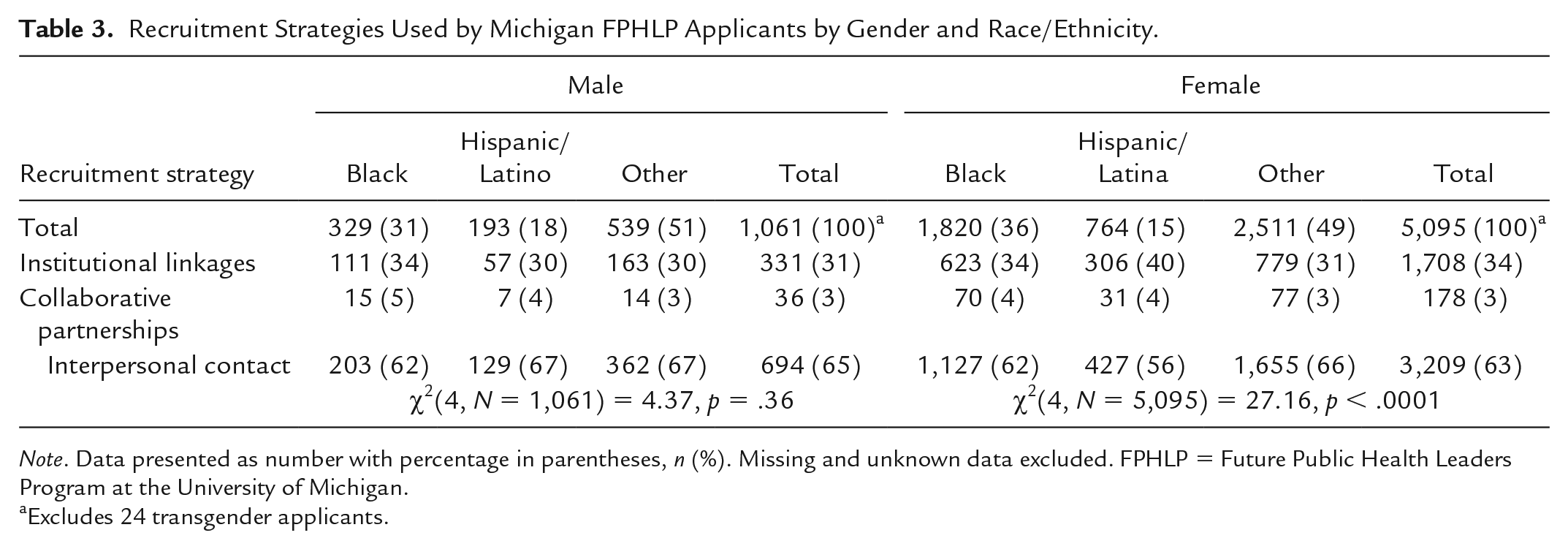
Note. Data presented as number with percentage in parentheses, n (%). Missing and unknown data excluded. FPHLP = Future Public Health Leaders Program at the University of Michigan.
Excludes 24 transgender applicants.
As shown in Table 3, 34% of Black males and 30% of Hispanic/Latino males were recruited through institutional linkages and trusted officials, while 30% of males in the other category were recruited by this strategy. Furthermore, 34% and 40% of Black females and Hispanic/Latinas, respectively, were recruited through this strategy, while 31% of females in the other category used this strategy. Results for collaborative partnerships were similar across all subgroups. Interpersonal contacts resulted in 62% of Black males, 67% of Hispanic/Latino males, and 67% of males in the other category learning about the program, while 62% of Black females, 56% of Hispanic/Latinas and 66% of other females learned about the program this way. These differences reflect statistically significant variation in recruitment strategies for Hispanic/Latinas. However, each recruitment strategy revealed more similarities than differences for learning about the program across subgroups.
Figure 1 shows the state and U.S. territory representation for the academic institutions of applicants to Michigan FPHLP. Recruitment strategies were particularly effective within several states: Michigan, New York, Georgia, California, and Texas. However, there is representation from all states, except Alaska, and from all U.S. territories. This demonstrates the reach and high demand for Michigan FPHLP.
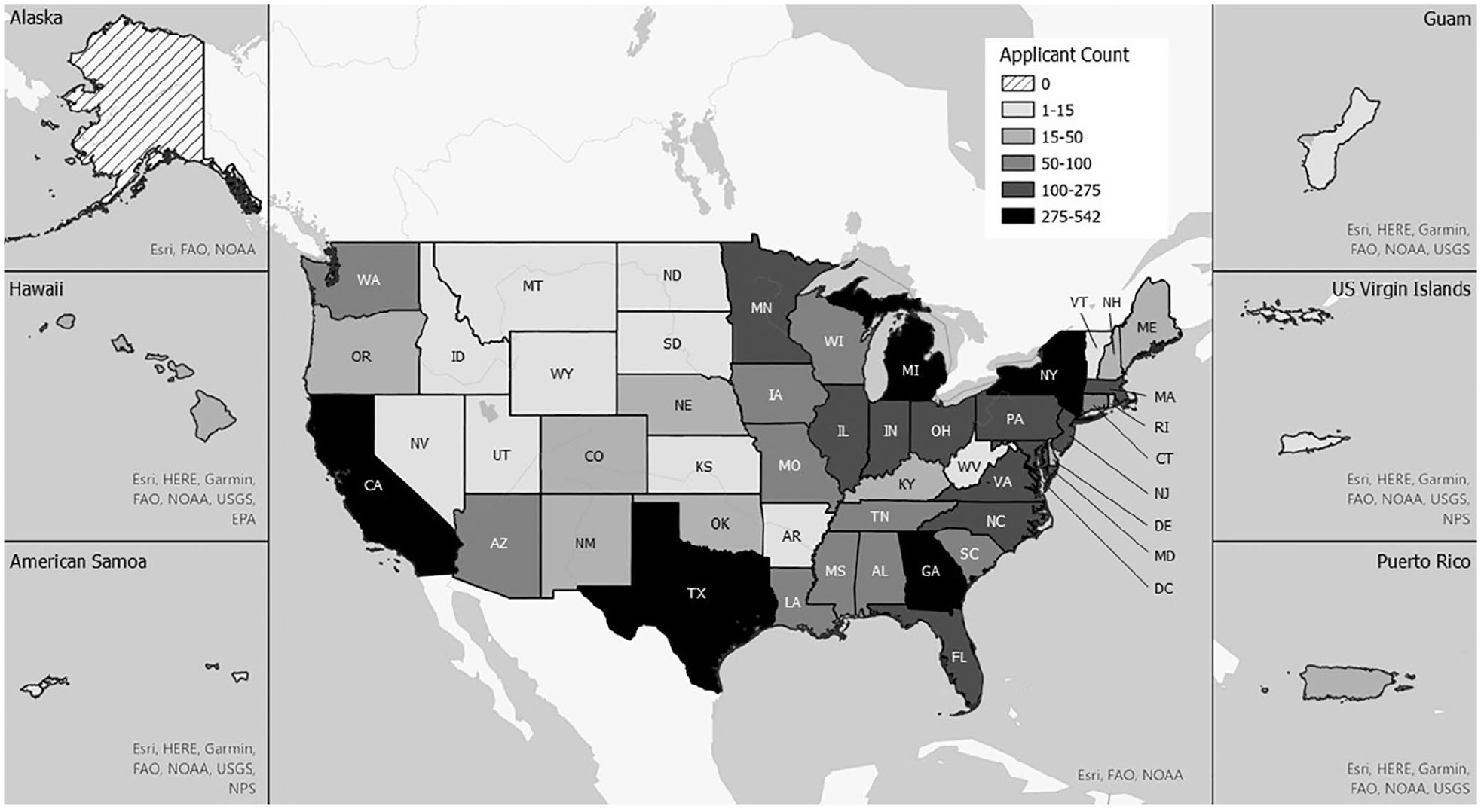
Location of colleges/universities attended by Michigan Future Public Health Leaders Program (FPHLP) applicants, 2012–2019.
Discussion
Recruitment for public health pipeline programs is crucial for program success, yet few studies have demonstrated how to successfully recruit diverse applicants. The current article focuses on recruitment strategies used by the Michigan FPHLP. Recruitment into pipeline training programs is the first step in preparation for diversifying the public health workforce to ensure reach and engagement of underrepresented groups for early training in public health. The three-pronged strategy used for recruitment offers lessons learned for reaching underrepresented groups for public health training. These were institutional linkages, collaborative partnerships, and interpersonal contacts, with each achieving varied levels of reach, completion, and engagement as well as requiring different levels of effort and resources for execution.
Institutional linkages with formal outreach to trusted officials and program representatives highlight the need for the influence of established relationships and personal encouragement at local institutions to reinforce the strengths of a potential applicant. Black and Hispanic/Latino students often have not had significant mentoring, career development awareness, or understanding of requirements necessary to be successful when applying to competitive public health training programs (Hernandez et al., 2014; Yeager et al., 2016). They often experience low expectations at their colleges and universities and can lack motivation to apply (Johnson-Bailey et al., 2014; Lancaster & Xu, 2017). The extra effort by known institutional representatives can provide the stimulus they need to develop a strong application for external pipeline training programs. This strategy points to the need to see recruitment for pipeline programs as a social determinant of health when working with underserved communities because of the need for mentoring prior to applying to pipeline programs. The concept of taking the program directly to potential applicants was helpful for increasing the number of diverse applicants.
Collaborative partnerships were closest to the traditional ways of recruiting underrepresented students into public health training programs given the focus of working with public health organizations through established professional relationships. Engaging in public health activities with local partner organizations enhanced student referrals and solidified the ongoing recruitment relationships with public health organizations. However, this strategy yielded the least number of applications.
Data show that working with interpersonal contacts was the most common (63%) strategy by which Michigan FPHLP applicants became aware of the program. Unlike interaction with institutional trusted officials, outreach and shared experiences by Michigan FPHLP alumni to potential applicants reflect their actual experiences in the program. This specific interpersonal recruitment strategy demonstrated that others who were like potential applicants had succeeded in the program. Such real-life examples were particularly attractive for encouraging applications from diverse students. This strategy also was critical to recruiting hard-to-reach American Indian/Alaska Native and Native Hawaiian/Pacific Islander applicants because of the ability to address culturally based concerns through interpersonal community engagement strategies.
Interpersonal contacts involving social media strategies using culturally targeted messages, combined to make a promising recruitment strategy for underrepresented populations who do not often see themselves in public health pipeline programs. The use of websites suggested by alumni and others familiar with the program was effective in addition to individual interactions with program staff. The significance of a recruitment strategy will vary by setting and culture. A greater understanding of the setting and identification of trusted messengers remain critical to success. As institutions build recruitment strategies for public health pipeline programs, identifying successful strategies must be a balance between reach and available resources. The three strategies outlined in this article had varied results with the interpersonal contact strategy resulting in lower cost and higher yield.
Conclusion
Concerns linger over the persistently inadequate number of racial and ethnic minority public health practitioners and researchers who are part of the public health workforce. Because racial and ethnic minority health professionals are more likely to work in underserved, largely minority communities they are critical to the public health workforce to address health disparities, with a goal of achieving health equity. A number of public health training programs have emerged to introduce undergraduate students to the idea of public health as a career. Nevertheless, more outreach must be made to recruit those who represent the most vulnerable populations. Recruitment for public health training programs is essential to understand as the first step toward diversifying the public health workforce. With over 7,200 applications for the 350 slots available to the Michigan FHPLP over 8 years, it is clear that there is enormous interest and demand for this type of training program from diverse applicants. The hope is that lessons learned from recruitment with the Michigan FPHLP will stimulate more attention to pipeline program recruitment strategies designed to diversify program participation. Recommendations for effective recruitment strategies require an understanding of settings and identification of appropriate messengers to reach large numbers of underrepresented applicants. Based on the three strategies used for Michigan FPHLP, culturally appropriate websites as part of the interpersonal contact strategy reached the largest number of applicants. This strategy should be a priority as a good investment if recruitment resources are limited and the goal is to reach underrepresented college students.
Footnotes
Declaration of Conflicting Interest
The authors declared no potential conflicts of interest with respect to the research, authorship, and/or publication of this article.
Funding
The authors disclosed receipt of the following financial support for the research, authorship, and/or publication of this article: This work was supported by a Cooperative Grant (5 NU50MN000001-05-00) from the Centers for Disease Control and Prevention for the CDC Undergraduate Public Health Scholars Program (CUPS): A Public Health Experience to Expose Undergraduates Interested in Minority Health to Public Health.
Supplement Issue Note
This article is part of a Pedagogy in Health Promotion: The Scholarship of Teaching and Learning supplement, “Preparing the Future Public Health Workforce: Contributions of the CDC Undergraduate Public Health Scholars Program,” which was supported by a cooperative agreement from the U.S. Centers for Disease Control and Prevention, Office of Minority Health and Health Equity to the Society for Public Health Education, entitled “Strengthening Public Health Systems and Services through National Partnerships to Improve and Protect the Nation’s Health” (Contract Number 5 NU38OT000315-03-00). The views and findings expressed in this issue are those of the authors and are not meant to imply endorsement or reflect the views and policies of the U.S. government. The entire supplement issue is available open access at  .
.