




Abstract
Introduction
Patient satisfaction and dissatisfaction are critical indicator of healthcare quality. This study assessed satisfaction levels and identified factors associated with outpatient dissatisfaction among adult outpatient attendees in public hospitals in Addis Ababa, Ethiopia.
Methods
A multicenter, institution-based cross-sectional study was conducted in August 2023 among 421 outpatients. Data were collected using a standardized questionnaire, processed in EpiData, and analyzed via SPSS version 27. Multivariable logistic regression was used to identify factors associated with patient dissatisfaction.
Results
A total of 421 patients participated, with an overall satisfaction was 67% (95% CI [62.5, 71.5%]). Patients with repeated visits for the second (adjusted odds ratio (AOR): 0.023; 95% CI [0.003, 0.192]) and third visits (AOR: 0.098; 95% CI [0.016–0.603]) were significantly less likely to be dissatisfied compared to first-time visitors. Conversely, partial (AOR: 4.126; 95% CI [1.589, 10.72]) or complete non-availability (AOR: 6.668; 95% CI [2.14, 20.753]) of ordered procedures, unclean waiting areas (AOR: 12.48; 95% CI [3.96, 39.37]) or consultation rooms (AOR: 0.168; 95% CI [0.041, 0.68]), and poor patient-provider interactions, including not feeling comfortable asking questions (AOR: 30.28; 95% CI [13.52, 67.85]), and perceived impoliteness: (AOR: 7.204; 95% CI [1.305, 39.78]) were significantly associated with higher odds of dissatisfaction.
Conclusion
Patient satisfaction was sub-optimal. Outpatient dissatisfaction was strongly associated with first-time visits, structural limitations in procedure availability, unclean waiting environments, and poor interpersonal interactions. Strengthening nurses’ roles in patient communication and coordination represents a vital pathway to mitigate dissatisfaction and optimize healthcare quality.
Introduction
Since the late 1970s, healthcare research has shifted from the traditional “quantity of life” focus to a patient-centered “quality of life” concept (Ekram & Rahman, 2006). Patient satisfaction is now a primary measure of healthcare quality, reflecting how well expectations are met. High satisfaction is linked to better treatment adherence, improved outcomes, and efficient resource use (Huang et al., 2004). Thus, satisfaction serves as a critical measure of clinical effectiveness and organizational accountability.
Conceptually, satisfaction is a psychological response to the confirmation or disconfirmation of expectations (Kaur & Mahajan, 2019). It is multidimensional, shaped by structural, procedural, and interpersonal factors like facility accessibility, provider communication, and drug availability. Additionally, auxiliary services such as cleanliness, food quality, and pharmacy operations strongly influence perceptions (Kumar, 2016; Zienawi & Birhanu, 2019). Consequently, patient satisfaction is globally recognized as a reliable proxy for healthcare quality (Prasanna et al., 2009).
Systematic surveys identify performance gaps and inform resource prioritization for providers and policymakers (Chakraborty et al., 2016; Merkineh et al., 2020; Sagar & Kumar, 2022). These assessments also empower patients and foster active participation in care. Satisfied patients are more likely to maintain institutional loyalty and adhere to prescribed care, strengthening institutional reputation (Hussain et al., 2019; Kassaw et al., 2020). Accordingly, satisfaction is now integrated into hospital management and global quality frameworks (Hussain et al., 2019; Seneviratne, 2017).
However, achieving high satisfaction in resource-limited contexts remains difficult. In low- and middle-income countries, insufficient infrastructure and drug shortages often undermine patient experiences (Chakraborty et al., 2016). Global studies show significant variation: 39% satisfaction in South Asia (Adhikari et al., 2021) and 68% in China (Gao et al., 2022), compared to 78.5% in Nigeria and 83% in South Africa (Ibirongbe et al., 2024; Peltzer, 2009). These variations reflect differences in resources and sociocultural expectations.
The outpatient department (OPD) is the primary point of contact and a major determinant of hospital performance (Hussain et al., 2019; Sagar & Kumar, 2022). Satisfaction in these settings is closely linked to nursing-sensitive quality domains (Doran, 2011). Nurses, the largest segment of the healthcare workforce, are central to coordinating services, facilitating communication, and delivering compassionate care (Aiken et al., 2008; Doyle et al., 2013). Their practice also contributes to a safe environment through infection prevention and control (Doran, 2011; Lake, 2002), directly influencing quality perceptions (Aiken et al., 2008). Thus, examining OPD satisfaction provides insight into nursing effectiveness and patient-centered systems (Doyle et al., 2013), which is vital for both the Ethiopian context and international efforts to strengthen care in resource-constrained settings (Aiken et al., 2008; Doran, 2011). Therefore, this study aimed to assess patient satisfaction with adult outpatient services and associated factors in public hospitals of Addis Ababa in 2023.
Review of Literature
Level of Patient Satisfaction
Global evaluations of outpatient services vary significantly. A facility-based cross-sectional study in South Asia reported an outpatient dissatisfaction rate of 61% (Adhikari et al., 2021), whereas studies in South Africa and southwest Nigeria found much lower dissatisfaction rates of 11.5% and 21.5%, respectively (Ibirongbe et al., 2024; Peltzer, 2009).
Within Ethiopia, findings also show wide disparities in outpatient sentiment. Moderate to low levels of dissatisfaction were recorded in South Wollo (35.6%), Hawassa University Referral Hospital’s emergency department (13.3%), and Jimma (23%) (Assefa et al., 2011; Ayele et al., 2022; Worku & Loha, 2017). Conversely, higher rates of dissatisfaction were reported in Gondar (42.9%) and Dilla (44.6%) (Kassaw et al., 2022; Merkineh et al., 2020). Specific institutional studies in Addis Ababa and surrounding areas revealed even higher levels of negative evaluations: Saint Paul’s Hospital Millennium Medical College reported 49.7% dissatisfaction with nursing services (Amanu Bogale et al., 2023), while Debre Berhan Comprehensive Specialized Hospital and Yekatit 12 Hospital reported outpatient dissatisfaction levels of 50.8% and 53%, respectively (Berehe et al., 2018; Sharew et al., 2018).
Factors Contributed to Patient Satisfaction
The number of healthcare visits represents a key correlate of outpatient evaluations. International evidence shows that the frequency of encounters is often associated with changing patient expectations (Marzo et al., 2021; Mularczyk-Tomczewska et al., 2025). Similarly, studies in Jimma, Eastern, and central Ethiopia demonstrate that the number of healthcare contacts varies in its association with patient evaluations, often depending on localized continuity of care and structural support systems (Assefa et al., 2011; Wakjira et al., 2023; Woldeyohanes et al., 2015).
Facility cleanliness is another consistent correlate of the patient experience. In low-resource settings, perceived poor hygiene in waiting or consultation areas negatively associates with quality perceptions and is a prominent factor linked to higher odds of dissatisfaction (Mularczyk-Tomczewska et al., 2025; Peters et al., 2022). Ethiopian studies in Eastern and central regions confirm that inadequate cleanliness strongly correlates with increased patient dissatisfaction (Wakjira et al., 2023; Woldeyohanes et al., 2015).
Finally, patient-provider interaction is strongly associated with outpatient outcomes. Poor communication and perceived impoliteness from staff are strongly correlated with dissatisfaction globally, whereas respectful, clear interactions foster trust and adherence (Ibirongbe et al., 2024; Otieno et al., 2023). Ethiopian evidence similarly highlights that patients who experience discomfort asking questions or encounter impolite staff exhibit significantly higher odds of dissatisfaction, underscoring the importance of exploring patient-centered, respectful care components (Getahun et al., 2023; Marzo et al., 2021).
Methods and Materials
Study Area
The study was conducted in Addis Ababa, Ethiopia’s capital and largest city. The city hosts 12 public hospitals administered by two governmental authorities: five under the Federal Ministry of Health and seven under the Addis Ababa City Health Bureau.
Four public hospitals were selected for this study: St. Paul’s Hospital Millennium Medical College (SPHMMC), St. Petros Specialized Hospital, Ras Desta General Hospital (RDGH), and Zewuditu Memorial Hospital. All these institutions provide a range of specialized, referral, and general health services to patients residing in Addis Ababa, as well as those referred from other regions of the country. There is no significant variation among the hospitals in terms of size, service provided, and their level.
Study Design and Period
An institution-based cross-sectional study was conducted among patients attending OPD services at selected public hospitals in Addis Ababa. The study was reported in accordance with the Strengthening the Reporting of Observational Studies in Epidemiology (STROBE) statement (Vandenbroucke et al., 2007). Data were collected over one month, from August 1 to August 30, 2023.
Source and Study Population
The source population comprised all patients visiting the OPDs of public hospitals in Addis Ababa, Ethiopia. The study population consisted of patients who attended the OPDs of four randomly selected public hospitals during the study period (August 1–30, 2023) and met the eligibility criteria. The study unit was an individual patient selected from those attending the OPDs at the time of data collection.
Inclusion and Exclusion Criteria
All adult patients attending the OPDs to receive healthcare services during the study period were eligible for inclusion. Patients who were critically ill, unable to communicate, revisiting the OPD during the study period (to avoid duplicate participation), and children under 15 years of age were excluded from the study.
Study Variables
The primary outcome of this study was satisfaction with outpatient department services. The independent variables included socio-demographic characteristics, such as age, gender, religion, marital status, residence, educational level, occupation, and estimated monthly income, as well as outpatient service-related factors, including: reason for visit, frequency of outpatient visits in the last 12 months, payment status, registration timeliness, availability of ordered procedures, availability of prescribed drugs and supplies, information provided on drugs, cleanliness of waiting areas and consultation rooms, comfort in asking questions to healthcare providers, and perceived politeness of healthcare workers.
Operational Definitions
Preparatory School
An academic institution providing teaching-learning services for grade 11 and 12 students.
Satisfied
Respondents who scored greater than or equal to the mean value which is 54 (Ayele et al., 2022; Sharew et al., 2018).
Dissatisfied
Respondents who scored less than the mean value which is 54 (Ayele et al., 2022; Sharew et al., 2018).
Free Service Patients
Patients covered by health insurance who don’t pay at the point of service.
Paying Patients
Individuals without insurance who pay for services directly with their own money at the time of care.
Determination of Sample Size and Sampling Technique
The sample size was determined using a single population proportion formula, with the following assumptions: 95% confidence level, Zα/2 = 1.96, 5% margin of error, and a satisfaction proportion of 47% from a study conducted at Yekatit 12 Hospital (Berehe et al., 2018). This yielded a sample size of 383, and after adding 10% for potential non-response, the final sample size was 421. From the 12 public hospitals in Addis Ababa, four hospitals were randomly selected. Within each hospital, participants were recruited using systematic random sampling, with proportional allocation based on the expected outpatient flow. The total estimated monthly outpatient flow across the selected hospitals was 85,500. The sampling interval (K) was calculated as K=N/n=85,500/421≈203. The first participant was selected randomly by lottery method from the first 203 patients, and thereafter every 203rd patient exiting the outpatient department was included until the required sample size was reached.
Data Collection Instruments and Procedures
The data collection tool was adapted from relevant literature (Assefa et al., 2011; Berehe et al., 2018; Ibirongbe et al., 2024; Kassaw et al., 2022; Peltzer, 2009; Sharew et al., 2018; Worku & Loha, 2017) to assess patient satisfaction and factors associated with outpatient department services. The outcome variable, patient satisfaction, was assessed using a validated 18-item, 5-point Likert scale tool previously used in Ethiopia, with good internal consistency (Cronbach’s alpha = 0.88) (Berehe et al., 2018). In the current study, the instrument demonstrated high reliability, with a Cronbach’s alpha of 0.89. The response options ranged from 1 (strongly dissatisfied) to 5 (strongly satisfied), yielding a total score ranging from 18 to 90. The overall satisfaction score was computed by summing the responses to all items. For analytical purposes, the total score was dichotomized using the mean score as a cut-off point; participants scoring greater than or equal to the mean (≥54) were categorized as “satisfied,” while those scoring below the mean were categorized as “dissatisfied.” Information was obtained directly from patients who visited outpatient departments in selected governmental hospitals.
Data Quality Assurance
To ensure data quality, collectors and supervisors received a one-day orientation. The structured checklist was validated by experienced researchers and pretested on 5% of the sample at Black Lion Hospital (outside the study area) to refine language, clarity, and usability. During collection, investigators and supervisors provided continuous monitoring and performed daily reviews of all questionnaires for completeness and consistency.
Data Processing and Analysis
Data were coded, cleaned, and entered into EpiData 4.6, and then exported to SPSS 27 for analysis. Descriptive statistics were used to summarize socio-demographic characteristics and patient satisfaction variables. Multicollinearity among independent variables was assessed using the Variance Inflation Factor (VIF), with values ranging from 2.4 to 3.9, indicating no significant multicollinearity. Model fitness was evaluated using the Hosmer-Lemeshow goodness-of-fit test, which yielded a non-significant p-value of 0.135, indicating that the logistic regression model adequately fits the data. Variables with p ≤ .2 in the bivariate logistic regression were entered into the multivariate model. Statistical significance was set at p < .05, and results are reported as adjusted odds ratios (AOR) with 95% confidence intervals (CI).
Results
Sociodemographic Characteristics
All 421 sampled participants completed the study, yielding a response rate of 100%. Among the participants, 212 (50.4%) were men and 209 (49.6%) were women. The participants were recruited from four hospitals: St. Paul’s Hospital Millennium Medical College (n = 241, 57%), St. Petros Specialized Hospital (n = 72, 17%), Ras Desta General Hospital (n = 42, 10%), and Zewuditu Memorial Hospital (n = 66, 16%).
The mean age of the participants was 42.4 ± 16.9 years, with a range of 15 to 89 years. The largest proportion of participants, 191 (45.4%), were in the 31–45-year age group. The mean monthly income was 4,168 ± 1,815 ETB, with most participants earning between 3,000 and 5,000 ETB.
Socio-Demographic Characteristics of Respondents in A.A Public Hospitals Outpatient Department, 2023 (n=421)

Health Service and Related Characteristics
Among the 421 outpatients interviewed, 234 (55.6%) visited for illness, 176 (41.8%) for follow-up, and 11 (2.6%) for screenings. Nearly half, 205 (48.7%), were first-time visitors, and 42% had undergone follow-up visits within the past 12 months. Regarding payment status, 275 (65.3%) were paying patients, and 146 (34.7%) received free service.
Health Service and Other Related Characteristics of Patients in A.A Public Hospitals Outpatient Department, 2023 (n=421)

Satisfaction Status of Study Participants
This study found that nearly one-thirds of the respondents, 139 (33.0%, 95% CI [28.5, 37.5]) exhibited dissatisfaction with outpatient services in Addis Ababa public hospitals, while 282 (67.0%, 95% CI [62.5, 71.5]) reported overall satisfaction (Figure 1). Satisfaction status of patients about adult outpatient services in public hospitals, Addis Ababa, Ethiopia 2023 (n=421)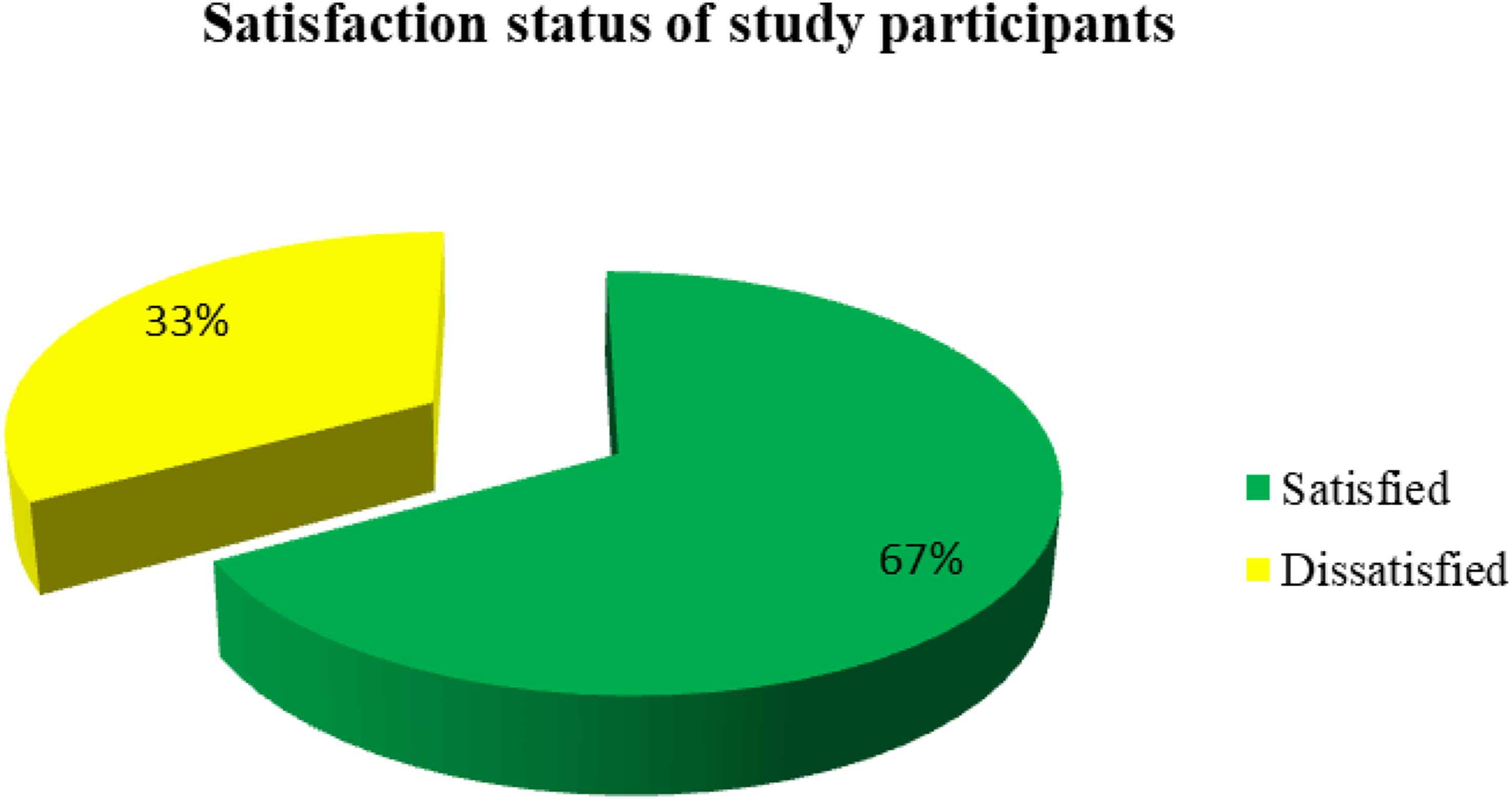
Factors Associated With Patient Satisfaction
Bivariate Analysis
The potential factors associated with patient dissatisfaction were examined using binary logistic regression. Socio-demographic variables such as educational status, occupation, place of residence, and income, were demonstrated significant unadjusted associations with outpatient dissatisfaction. Respondents with a secondary school education displayed significantly higher odds of dissatisfaction (COR: 6.58, 95% CI [1.23, 35.71]) and those who were self-employed exhibited higher odds of dissatisfaction (COR: 4.29, 95% CI [1.03, 17.86]) compared to their respective reference groups.
Factors Associated With Patient Satisfaction in Bivariate Analysis in Addis Ababa Public Hospitals 2023 (n=421)

Multivariate Analysis
In the multivariate analysis, patient satisfaction was significantly associated with frequency of visit, availability of ordered procedures, cleanliness of facilities, communication, and provider behavior.
Regarding the frequency of healthcare utilization, patients with repeated visits had significantly lower odds of reporting dissatisfaction compared to first-time visitors. Specifically, those attending for their second visit (AOR: 0.023, 95% CI [0.003,0.192]) and third visit (AOR: 0.098, 95% CI [0.016,0.603]) displayed significantly decreased odds of dissatisfaction than first-time attendees. Conversely, structural and environmental limitations within the outpatient facilities were strongly associated with an elevated likelihood of dissatisfaction. Patients attending hospitals with only partial availability of ordered procedures had 4.1 times higher odds of dissatisfaction (AOR: 4.126, 95% CI [1.589,10.720]). Those in facilities completely devoid of available procedures faced 6.7 times higher odds of dissatisfaction (AOR: 6.668, 95% CI [2.140,20.753]) compared to patients in facilities where all required procedures were readily accessible.
Environmental hygiene also emerged as a significant correlate. Patients who reported that the waiting areas were not clean had 12.5 times higher odds of dissatisfaction (AOR: 12.480, 95% CI [3.960,39.370]) than those who reported clean waiting environments. Similarly, well-maintained clinical environments served as a protective factor against negative feedback; patients who reported that the consultation rooms were adequately clean demonstrated 83.2% lower odds of dissatisfaction (AOR: 0.168, 95% CI [0.041,0.680]) relative to those who perceived the consultation spaces as poorly maintained.
Factors Associated With Patient Dissatisfaction in Multivariate Analysis in Addis Ababa Public Hospitals 2023 (n=421)

Note. AOR=adjusted odd ratio; COR=crude odd ratio.
*Shows statistically significant variables in multivariable analysis.
Discussion
This study explored the factors associated with patient dissatisfaction among outpatient attendees in public hospitals in Addis Ababa. The investigation revealed that overall patient dissatisfaction with outpatient services was 33% (95% CI [28.5, 37.5]), meaning that 67% of the study population reported being satisfied. This level of dissatisfaction is comparable to findings from South Wollo, which reported an equivalent dissatisfaction rate of 35.6% (Ayele et al., 2022). The similarity may be due to comparable outpatient service structures, measurement tools, and patient expectations regarding regional healthcare quality.
Conversely, the current rate of dissatisfaction is lower than those reported in investigations conducted at Debre Berhan Comprehensive Specialized Hospital (50.8%) (Sharew et al., 2018), Gondar (42.9%) (Merkineh et al., 2020), Saint Paul’s Hospital Millennium Medical College (49.7%) (Amanu Bogale et al., 2023), Dilla (44.6%) (Kassaw et al., 2022), Yekatit 12 Hospital (53.0%) (Berehe et al., 2018), and South Asia (61.0%) (Adhikari et al., 2021). These regional and institutional discrepancies may reflect differences in hospital infrastructure, essential procedure availability, staffing levels, provider-patient communication, and overall service management systems. On the other hand, the dissatisfaction rate observed in this study was higher than reports from Hawassa University Referral Hospital (13.3%) (Worku & Loha, 2017), Jimma (23.0%) (Assefa et al., 2011), South Africa (11.5%) (Peltzer, 2009), and a tertiary hospital in Nigeria (21.5%) (Ibirongbe et al., 2024), possibly due to superior service accessibility, more advanced clinical facilities, or higher staffing ratios in those settings.
In this study, structural factors were significantly associated with dissatisfaction. Patients in facilities with restricted availability of ordered procedures exhibited a significantly elevated likelihood of dissatisfaction. Specifically, those in establishments with some accessible procedures experienced 4.1 times higher odds of dissatisfaction (AOR: 4.126, 95% CI [1.589, 10.72]), while those in facilities devoid of any procedures available faced 6.7 times higher odds (AOR: 6.668, 95% CI [2.14, 20.753]), in contrast to facilities where all procedures were readily available.
The cleanliness of the health facility also emerged as a significant correlate. Patients who perceived the waiting area as unclean had more than 12 times higher odds of dissatisfaction (AOR: 12.48; 95% CI [3.96, 39.37]), Proper maintenance of consultation rooms acted as a protective factor; patients who reported that rooms were adequately maintained had 83.2% lower odds of dissatisfaction (AOR: 0.168; 95% CI [0.041, 0.68]) compared to those who perceived the rooms as poorly maintained. Similar findings have been reported in Ethiopia (Wakjira et al., 2023; Woldeyohanes et al., 2015), and other low-resource settings (Mularczyk-Tomczewska et al., 2025; Peters et al., 2022), which reported that poor hygiene and unclean environments are negatively associated with patients’ perceptions of care quality and their overall satisfaction. Therefore, ensuring clean waiting areas and consultation rooms is essential to enhance patient experience and service utilization.
From a nursing perspective, these structural findings can be interpreted through the lens of Florence Nightingale’s Environmental Theory (Zahra & Pappas, 2022), which suggests that a clean, well-organized environment is conducive to patient well-being. While nursing-specific variables were not the primary focus of this study, these results may imply that the role of nursing staff in managing the clinical environment, such as oversight of infection prevention, remains a supportive factor for the overall patient experience.
Patient-provider interaction demonstrated one of the strongest associations with patient satisfaction in this study. Patients who did not feel comfortable asking questions to their healthcare providers were exhibited approximately 30 times higher odds of dissatisfaction (AOR: 30.28; 95% CI [13.52, 67.85]), highlighting the central role of effective communication in healthcare. Good communication fosters trust, enhances care understanding, and correlates with improved treatment adherence. Similar findings were reported in Ethiopia (Getahun et al., 2023) and Kenya (Otieno et al., 2023), has noted that patient-centered communication is strongly associated with satisfaction. Additionally, patients who perceived healthcare workers as impolite were seven times higher odds of dissatisfaction (AOR: 7.204; 95% CI [1.305, 39.78]), consistent with Ethiopia (Marzo et al., 2021) and Nigeria (Ibirongbe et al., 2024). Respectful and polite behavior strengthens the therapeutic relationship and positively influences the overall patient experience. These findings suggest a potential role for therapeutic communication; if providers fail to facilitate open inquiry, the process of care may be perceived as fragmented, potentially making interpersonal interactions a high-order correlate of satisfaction.
Furthermore, the number of visits was a significant correlate of satisfaction. In this study, patients on their second visit had 97.7% lower odds of dissatisfaction compared to first-time visitors (AOR: 0.023, 95% CI [0.003, 0.192]), and patients on their third visit were demonstrated 90.2% lower odds of dissatisfaction compared to first-time visitors (AOR: 0.098, 95% CI: [0.016, 0.603]). While some literature suggests that frequent hospital contact reduces satisfaction due to cumulative service delays, this trend may align with the Continuity of Care model. One possible interpretation is that first-time visitors face heightened system navigation anxiety, which may be mitigated during subsequent visits through familiarity or guidance provided by health personnel. These repeated interactions might foster a rapport that serves as a protective factor, though further research is needed to confirm the specific influence of nursing coordination on this trend.
The 67% satisfaction rate represents an outcome that is closely linked to the interplay between the hospital’s structure and the nursing process. While gaps in procedure availability and hygiene are strongly associated with higher odds of dissatisfaction, the profound impact of communication and navigation education suggests that the patient’s final evaluation is most heavily influenced by how they are treated and guided.
Ultimately, these results suggest that while structural elements such as equipment availability and facility cleanliness are critically associated with long-term quality, focusing on the process of care represents a vital pathway for enhancing the patient experience. By prioritizing structured care coordination and respectful communication, public hospitals in Addis Ababa may optimize outpatient workflows, helping to support patient dignity, trust, and clear guidance even within resource-constrained environments.
Strengths and Limitations
This study’s primary strength lies in its multi-center approach across four public hospitals, which enhances the generalizability of the findings regarding outpatient service delivery. However, several limitations must be acknowledged. First, the cross-sectional design limits the ability to infer directionality or temporal priority among the identified correlates. Second, certain adjusted odds ratios regarding communication and repeat visits displayed exceptionally wide confidence intervals, which may indicate residual confounding or limited sample sizes within specific subgroups; therefore, these specific effect sizes should be interpreted with caution.
Third, the use of the sample mean as a dichotomous cutoff for satisfaction is presents a measurement constraint. While common in local literature, this approach reduces the granularity of the continuous data and may affect comparability with studies using different scoring rubrics. Finally, while Nightingale’s Environmental Theory provides a useful interpretive framework for the discussion, it was primarily utilized as a lens for interpretation rather than informing the initial study design and variable selection. Additionally, the study may be subject to recall bias and social desirability bias, in which respondents might provide favorable answers regarding healthcare provider behavior.
Implication for Practice
The findings of this study underscore that while structural deficits in Addis Ababa’s public hospitals are strongly associated with higher odds of patient dissatisfaction, the process of care may play a crucial role in shaping the patient experience. Clinically, while structural modifications and environmental cleanliness fall under broader hospital administration responsibilities, outpatient nurses can utilize these insights to advocate for optimized patient environments. Drawing on Nightingale’s Environmental Theory, nurses can engage in routine clinical oversight and collaborate with administrative teams to highlight the significant association between waiting area conditions and the overall care experience.
Furthermore, the strong correlation between of patient-provider interaction and outpatient dissatisfaction highlights the need for nurses to champion therapeutic communication. Standardized tools, such as the “Ask Me 3″ technique, should be integrated into outpatient workflows to empower patients to ask questions and foster a culture of open inquiry. Nursing education must also evolve to prioritize high-fidelity communication simulations and soft-skill training, treating politeness and empathy as essential clinical competencies rather than optional traits. The findings suggest that strengthening the process of care specifically through focused coordination and respectful communication offers a valuable avenue for supporting public hospital outpatient services. While structural resource constraints require long-term solutions, prioritizing these interpersonal elements may help optimize the patient experience within the current operational context.
Conclusion
Overall evaluation of care in Addis Ababa public hospitals was relatively moderate, with an overall dissatisfaction rate of 33%. Outpatient dissatisfaction was significantly associated with: The frequency of clinic visits, The availability of ordered procedures, The cleanliness of waiting areas and consultation rooms, Comfort levels in communicating with physicians, and The overall politeness of healthcare workers. Strengthening nurses’ roles in patient communication, coordinating outpatient services, and maintaining a supportive, hygienic care environment represents a vital pathway to mitigate dissatisfaction and optimize the overall quality of outpatient healthcare.
Recommendations
To bridge these identified gaps, the following targeted actions are recommended: For Policy Makers and Hospital Managers: Implement patient-focused strategies, optimize diagnostic and procedural service accessibility, and enhance structured staff orientation and interpersonal training programs. For Academic Researchers: Further studies are highly recommended to explore additional correlates of outpatient dissatisfaction using mixed-method designs to guide institutional quality improvement continually.
Supplemental Material
Supplemental material - Correlates of Adult Outpatient Dissatisfaction in Public Hospitals of Addis Ababa, Ethiopia: A Multi-Center Study
Supplemental material for Correlates of Adult Outpatient Dissatisfaction in Public Hospitals of Addis Ababa, Ethiopia: A Multi-Center Study by Mohammed Yesuf, Zeleke Woldiya, Eyayalem Melese and Dawit Bezabih in Sage Open Nursing.
Supplemental Material
Supplemental material - Correlates of Adult Outpatient Dissatisfaction in Public Hospitals of Addis Ababa, Ethiopia: A Multi-Center Study
Supplemental material for Correlates of Adult Outpatient Dissatisfaction in Public Hospitals of Addis Ababa, Ethiopia: A Multi-Center Study by Mohammed Yesuf, Zeleke Woldiya, Eyayalem Melese and Dawit Bezabih in Sage Open Nursing.
Footnotes
Acknowledgment
The authors sincerely acknowledge the invaluable efforts of the data collectors and supervisors, as well as the generous participation of all study respondents, whose contributions were essential to the successful completion of this research.

Ethical Considerations
This study was conducted in accordance with the ethical principles of the Declaration of Helsinki. Ethical clearance was initially obtained from the Kea-Med Medical College, College of Health Sciences Research Committee (Ref. No.: OF02/KMC/6107/2023), and subsequently approved by the Addis Ababa Health Bureau IRB office (Ref. No.: A/A/1013/2023). Further authorization was granted by the research offices of the designated public hospitals. During data collection, verbal informed consent was obtained from each participant after providing clear information about the study’s purpose, procedures, and voluntary nature. The confidentiality and anonymity of all responses were strictly maintained throughout the research process.
Author Contributions
MY: Conceptualization, Formal analysis, Methodology, Software, Formal Analysis. ZW: Writing an original draft, Reviewing, and Editing. DB: Methodology, Software, Data curation, Writing an original draft. EM: Data curation, Methodology, Software, Reviewing, and Editing. All authors read and approve the final manuscript.
Funding
The authors received no financial support for the research, authorship, and/or publication of this article.
Declaration of Conflicting Interests
The authors declared no potential conflicts of interest with respect to the research, authorship, and/or publication of this article.
Data Availability Statement
The datasets used and analyzed in this study are available from the corresponding author upon reasonable request.
Supplemental Material
Supplemental material for this article is available online.
Appendix
References
Supplementary Material
Please find the following supplemental material available below.
For Open Access articles published under a Creative Commons License, all supplemental material carries the same license as the article it is associated with.
For non-Open Access articles published, all supplemental material carries a non-exclusive license, and permission requests for re-use of supplemental material or any part of supplemental material shall be sent directly to the copyright owner as specified in the copyright notice associated with the article.
