




Abstract
Abstract
This study examines whether and to what extent ‘domestic’ education level mediates the relationship between mobile phone diffusion and new business formation rates across the developing world, that is, Brazil, Russia, India, China and South Africa (BRICS) and non-BRICS developing countries. Drawing on the knowledge spillover theory (KST) of entrepreneurship, we suggest that the recent rise in domestic education levels might explain the positive association between mobile phone diffusion and new business formation rates.
Utilising country-level panel data on 66 developing countries, the results indicate that the mediating effect of education on mobile phone diffusion and new business formation rates is not just limited to developing countries (including BRICS) but that this pattern can also be found in non-BRIC developing nations too, with the exception of the least developed countries (LDCs). We conclude with implications for theory and policy.
Keywords
Introduction
The analysis of the potential forces influencing entrepreneurship (defined as new business formation rates) across space has received much attention from the advocates of the knowledge spillover theory (KST) of entrepreneurship (Acs, Braunerhjelm, Audretsch, & Carlsson, 2009; Acs et al., 2013; Audretsch & Keilbach, 2007; Guerrero, Urbano, & Fayolle, 2016; Shuet al., 2014; Tavassoli, Bengtsson, & Karlsson, 2017). The theory suggests that new business formation is a crucial contextual factor that is important for researchers and policymakers to understand, not just in developed countries but also in their developing counterparts. It is considered as an important tool for stimulating growth and development (Acs & Virgill, 2010). From this perspective, new business formation and its context are vivid and virtually inseparable (Audretsch, Heger, & Veith, 2015; Ferreira, Ratten, & Dana, 2017; Qian, Acs, & Stough, 2012; Venkataraman, 1997). According to this, notion of inseparability of new business formation and contexts means that the entrepreneurial opportunities are more likely to be generated in (1) contexts with higher levels of technology diffusion, particularly through networks; and that (2) higher levels of education attainment can enhance the positive effects of technology on new business formation (Audretsch, Keilbach, & Lehmann, 2006).
Several studies particularly in developed countries have examined the influence of education and technology diffusion (especially through networks) on new business formation rates (Abubakar & Mitra, 2007, 2013; Acs & Armington, 2004; Aghion & Jaravel, 2015). However, according to Acs and Virgill (2010, p. 491) ‘while KST may have been intended for developed economies, the externalities (that is, education and networks of technology diffusion) identified by Audretsch et al. (2006) could also be valid for developing countries’. Yet, very little research, if any, has examined the impact of these externalities, in particular, the role of domestic education mediating technology diffusion, on new business formation rates across the developing world. We have information on returning Chinese and Indian migrant entrepreneurs from advanced countries like the USA, with their ‘foreign’ education, who are accelerating the process of technological diffusion and innovation in their home countries particularly in information and communications technology (ICT) industries (Saxenian, 2002, 2005). Research has focused mainly on the relationship between education acquired by returning entrepreneurs from foreign countries and its impact on innovation mostly in BRICS-related countries (Brazil, Russia, India, China and recently South Africa). What remains unclear is the extent to which ‘domestic’ education levels enhance the impact of technology diffusion on ‘new business formation rates’ across the developing world.
Four major observations in developing countries provide the motivation for this study. First, in general, developing nations now have increasingly higher levels of education (UNDP, 2010, p. 36). For example, on average, a person aged 15 or older in 1960 had less than 4 years of schooling (UNDP, 2010). By 2010, this number had doubled globally and more than tripled in developing countries (from 1.9 years to 6.4) (UNDP, 2010, p. 36). Second, these countries have the fastest growing mobile phone market in the world (Pyramid Research, 2010). Third, published ‘micro-level’ case studies suggest that the diffusion of mobile phone in developing countries has led to the creation of several innovations and extraordinary large amounts of new businesses, and not just in the BRICS (Pyramid Research, 2010; Yang & Steensma, 2014). Fourth, estimates suggest that the mobile phone is having a considerable ‘macro-level’ impact on economic growth in developing countries (Deloitte & Touche LLP, 2007; Kathuria, Uppal, & Mamta, 2009; Qiang, 2009). But these observations leave us with several unanswered questions: Is there any correlation between the rise in education levels and the seemingly productive changes in the mobile phone market and new business formation rates? Or are they simply incidental outcomes? Taken together, the observations about these rapid development and the ensuing questions provided a strong motivation for us to investigate whether the education level in a country mediates and enhances the positive relationship between mobile phone diffusion and new business formation rates in developing countries.
To help focus our research interests, we raise the following questions:
1. Across developing countries (including BRICS) in general, does the level of education enhance (mediate) the relationship between mobile phone diffusion and new business formation rates? 2. In non-BRICS developing countries, does the level of education enhance (mediate) the relationship between mobile phone diffusion and new business formation rates?
We seek to find answers to these two questions in three key developing economy contexts: (a) All developing countries (including BRICS); (b) Non-BRICS developing countries; and (c) Least developed countries (LDCs). The contextual focus allows us to examine whether the importance of education in mediating the relationship between mobile phone diffusion and new business formation rates in developing countries is limited to BRICS, or whether we can see similar relationships in non-BRICS developing countries and LDCs.
The rest of the article is structured as follows: Second section of the article outlines the KST of entrepreneurship, with particular focus on technology diffusion and education as key factors that matter for new business formation rates across space; third section develops a conceptual framework and hypotheses based on the theoretical overview in the previous section; the methodology is presented in fourth section, and the findings in fifth section; The final part presents the conclusion and implications for theory and policy
Theoretical Background: KST of Entrepreneurship
According to Breschi and Lissoni (2001, p. 258), knowledge spillovers refer to the following: (a) the transfer of technology generated within innovative firms to other firms; (b) the technology that spills over is ‘freely’ available or acquired at less than its original cost by those wishing to search it out (non-excludability), and can be used by many users at the same time (non-rivalry); and (c) notwithstanding previously discussed point (b), technology ideas that spill over are more easily transferred through networks, which are often favoured by being located in the same geographical area, that is, knowledge spillover has a spatial dimension (Abubakar & Mitra, 2009; Audretsch & Belitski, 2017; Tavassoli et al., 2017). These suggest that knowledge spillovers happen because knowledge can be transferred to non-investing parties. Crucially, the non-excludability and the non-rival factors account for knowledge as a public good. This implies that entrepreneurs and small firms especially when located close to key knowledge sources can acquire technological ideas more easily, because of its essential characteristic as a public good. The beneficiaries of this spillover process, therefore, find it easier to form new businesses using the spilled over knowledge underpinning those technologies (Acs & Armington, 2004; Saxenian, 1994). Acs and Virgill’s (2010) research on KST and identify networks that enable technology diffusion is an important channel for knowledge spillovers.
Technology Diffusion through Geographic Networks and Its Effect on New Business Formation Rates in Advanced Economies
Technology diffusion generally describes the process whereby a product or service and the knowledge of its use and application move from a source, such as a large research and development (R&D) firm to a point of reception (e.g., entrepreneurs), which leads to commercialisation often through new start-ups (Acs, 2002; Abubakar & Mitra, 2013; Acs et al., 2013; Bozeman, 2000). A prominent feature of KST is that technology diffusion particularly through geographic networks plays a crucial role in creating opportunities for budding entrepreneurs to create new businesses (Acs et al., 2009; Lehmann & Menter, 2016; Stuart & Sorenson, 2003; Yang & Steensma, 2014; Zucker, Darby, & Brewer, 1994). Consider, for example, the Silicon Valley where the diffusion of Internet technology created opportunities for new business formation by countless entrepreneurs, such as Jerry Yang (Yahoo), Larry Page and Sergey Brin (Google Inc.), Marc Pincus (Zynga) and Aron Levie (Box). This diffusion of technology leading to new business creation often occurs in spatially bounded networks (Abubakar, 2013; Lehmann & Menter, 2016; Saxenian, 1994; Tavassoli et al., 2017). This is because entrepreneurs often find it easier to leverage social ties necessary to mobilise essential resources and knowledge when they reside close to the source of the knowledge that spills over (Stuart & Sorenson, 2003; Yang & Steensma, 2014). But what factors affect the rate at which technology diffuses through new business formation in a society?
We cannot expect technology diffusion to occur at the same rate in all countries or regions. Neither can we expect the conversion rates (from diffusion to new firm formation) to be the same across different environments. Understanding what the underpinning factors are and how they vary across space becomes, therefore, an important consideration for researchers and policymakers trying to encourage the spread of technology and its impact on new business formation, as a means of creating opportunities for budding entrepreneurs and promoting economic growth.
The Role of Education as a Mediator between Technology Diffusion and New Business Formation in Advanced Economies
Scholars have argued that the diffusion of technologies often requires human capital in the form of education and learning, both formal and informal (Cohen & Levinthal, 1989; Cosar, 2011; Qian et al., 2012). Nelson and Phelps (1966) initiated this line of thinking by arguing that education helps people to perceive, evaluate and implement new production techniques and inputs. Human capital refers to an individual’s stock of education, experience, skills and intelligence (Mitra, Abubakar, & Sagagi, 2011). The KST suggests that a good stock of human capital offers better opportunities for individuals to start new businesses because it provides them with the skills and competencies to take advantage of the spilled over technologies (Acs & Virgill, 2010; Acs et al., 2013; Acs, 2002; Audretsch et al., 2006; Qian et al., 2012; Verheul et al., 2002; Yang & Steensma, 2014).
A study by Colombo, Delmastro and Grilli (2004) found that founders’ educational background has a crucial influence on entrepreneurs’ ability to start-up technology-based new businesses in Italy. At the regional level, Zucker et al. (1994) found that the rise of new biotechnology businesses in the USA is intertwined with educational human capital. And in the UK, a study based on county-level data on information and communications technologies (ICT) sector of East of England, by Abubakar and Mitra (2007), showed that networks between university and industry influence new business formation rates across space. Going beyond new business formation, Doms, Dunne and Troske (1997), studying manufacturing plants in the USA discovered that plants with a higher proportion of workers that have higher levels of education tend to use more advanced technologies.
Previous Research on Knowledge Externalities and Innovation in Developing Countries
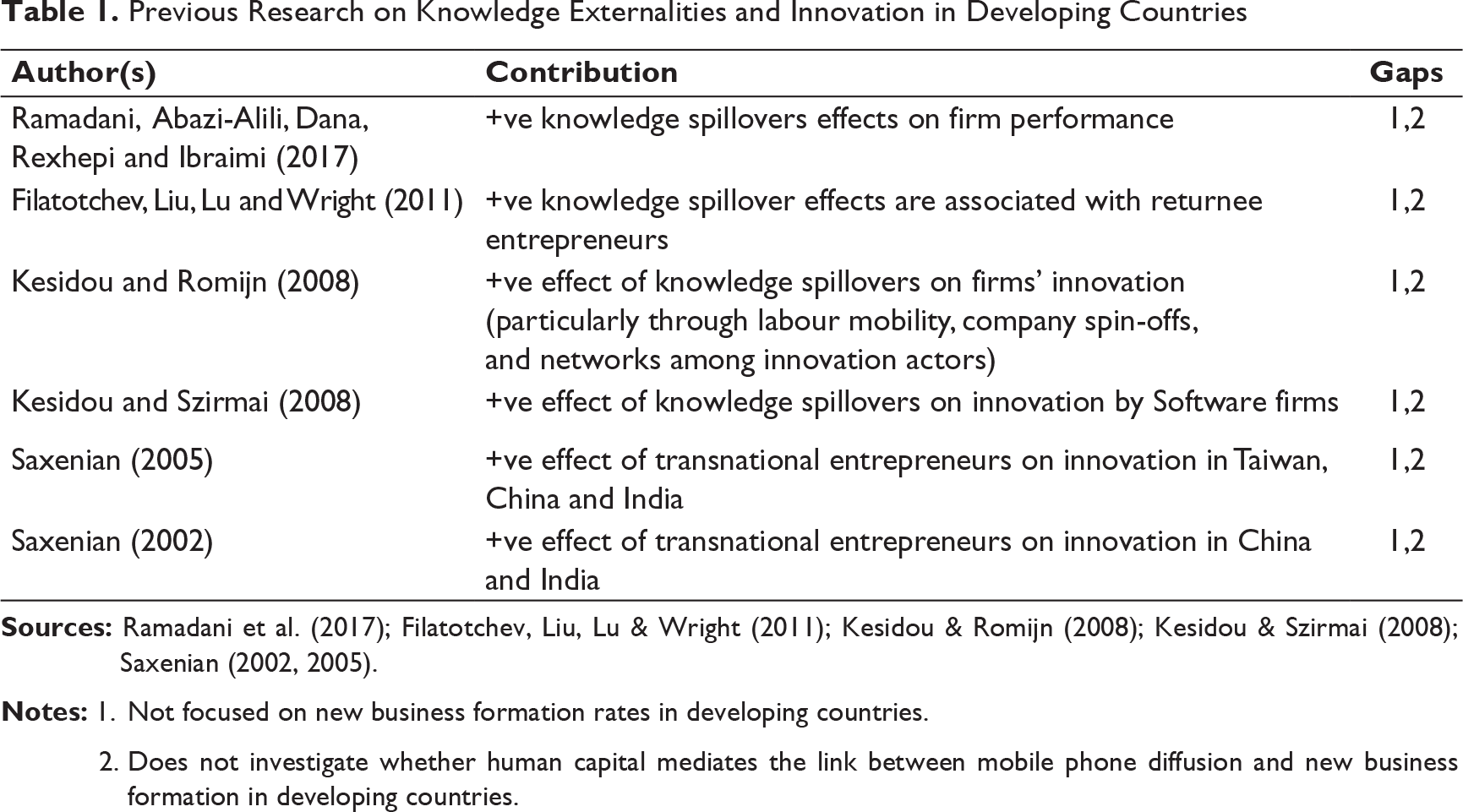
2. Does not investigate whether human capital mediates the link between mobile phone diffusion and new business formation in developing countries.
To the best of our knowledge, we offer fresh insights into the role of human capital in technology diffusion and new business creation in developing countries. We use education levels as our proxy for human capital and develop a conceptual framework for our enquiry into the mediating role of education in the relationship between technology diffusion and new business formation in the developing economy context. (refer Figure 2 for a diagrammatic expression of this framework).
The Research Setting: Developing Countries
Developing countries are defined as low- and middle-income countries (The World Bank, 2012). The World Bank definition is based on gross national income (GNI) per capita, with low-income countries being those with US$1,025 or less- and middle-income countries being those with US$1,026– US$12,475. Thus, the term ‘developing countries’ encompasses a diverse group of countries that include leading emerging economies, such as the BRICS, the Next 11 and other LDCs. The BRICS refers to ‘large developing countries’ (Goldman Sachs, 2003, p. 3) with the potential for accelerated growth in the coming few decades, to ‘become a much larger force in the world economy’ (Goldman Sachs, 2003, p. 3). 1
Although South Africa’s population is much smaller than the other four, it is nevertheless part of BRIC because of its economic leadership in Africa (Kahn, 2011).
A 3 year average estimate of the GNI per capita is with a threshold of US$905 for possible cases of addition to the list, and a maximum of US$1,086 for graduation from LDC status.
Involving a composite index known as the Human Assets Index, based on indicators of nutrition, health, school enrolment and literacy; and
Made up of a composite index known as the Economic Vulnerability Index, based on indicators of natural shocks, trade shocks, exposure to shocks, economic smallness and economic remoteness.
Technology Diffusion, Externalities and New Business Formation: The Case of Mobile Phones
Empirical Studies: Mobile Phones and Economic Performance in Developing Countries
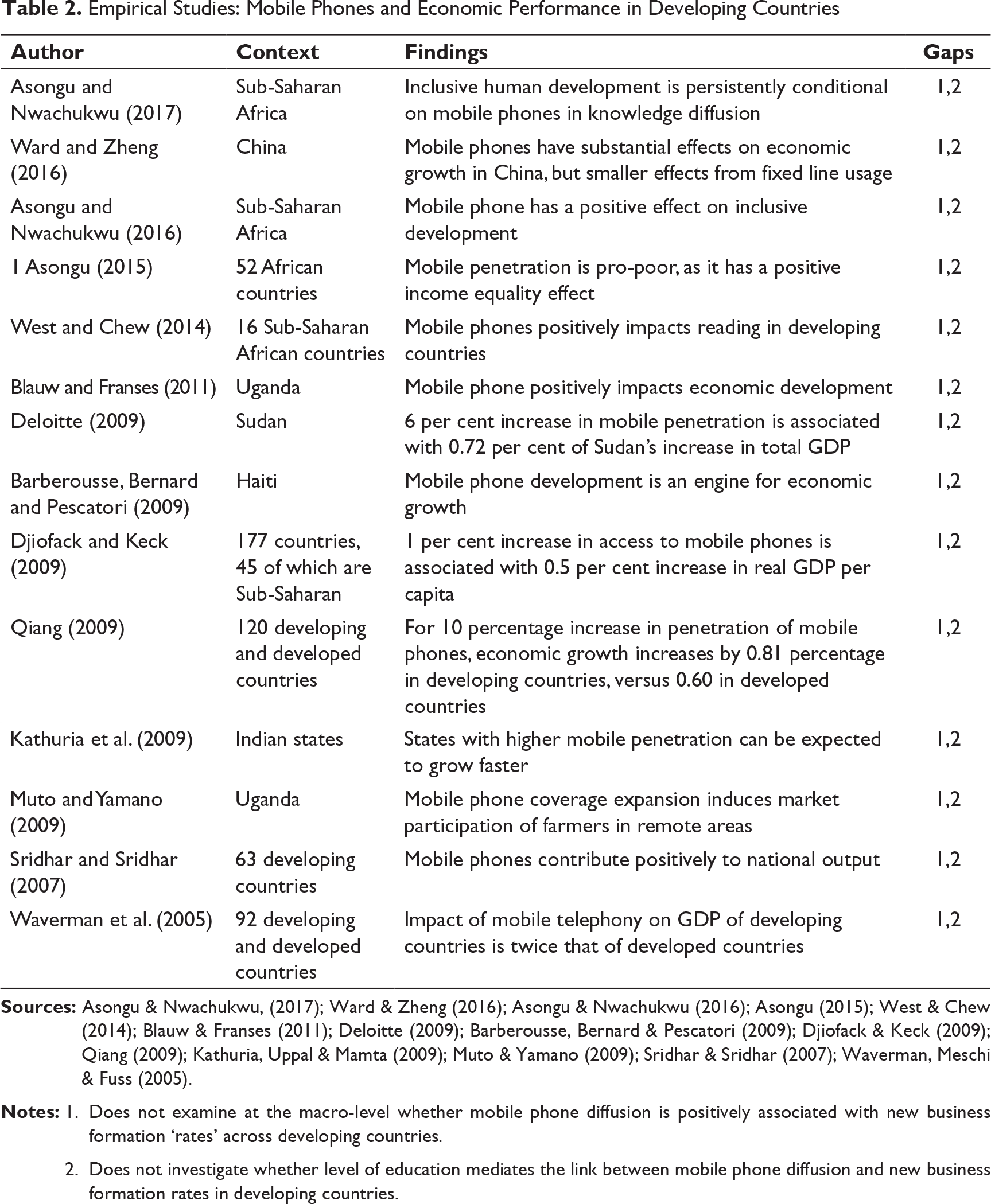
2. Does not investigate whether level of education mediates the link between mobile phone diffusion and new business formation rates in developing countries.
The impact of mobile phone technology diffusion is an intriguing phenomenon in developing countries, impacting the formation of new businesses, positively (Aker & Mbiti, 2010). Apart from generating jobs directly, large mobile phone companies in developing countries create indirect job opportunities for budding entrepreneurs by giving them the opportunity to start new businesses. These opportunities are manifested in the growth of third-party application developers, content providers, recharge card sellers, phone repairers and call centre operators (Andjelkovic & Imaizumi, 2012; Pyramid Research, 2010: e.g., refer Table 3).
Micro-level Case Studies Linking Mobile Phone Diffusion Networks between Mobile Phone Corporations and Local Entrepreneurs with New Business Formation In Developing Countries
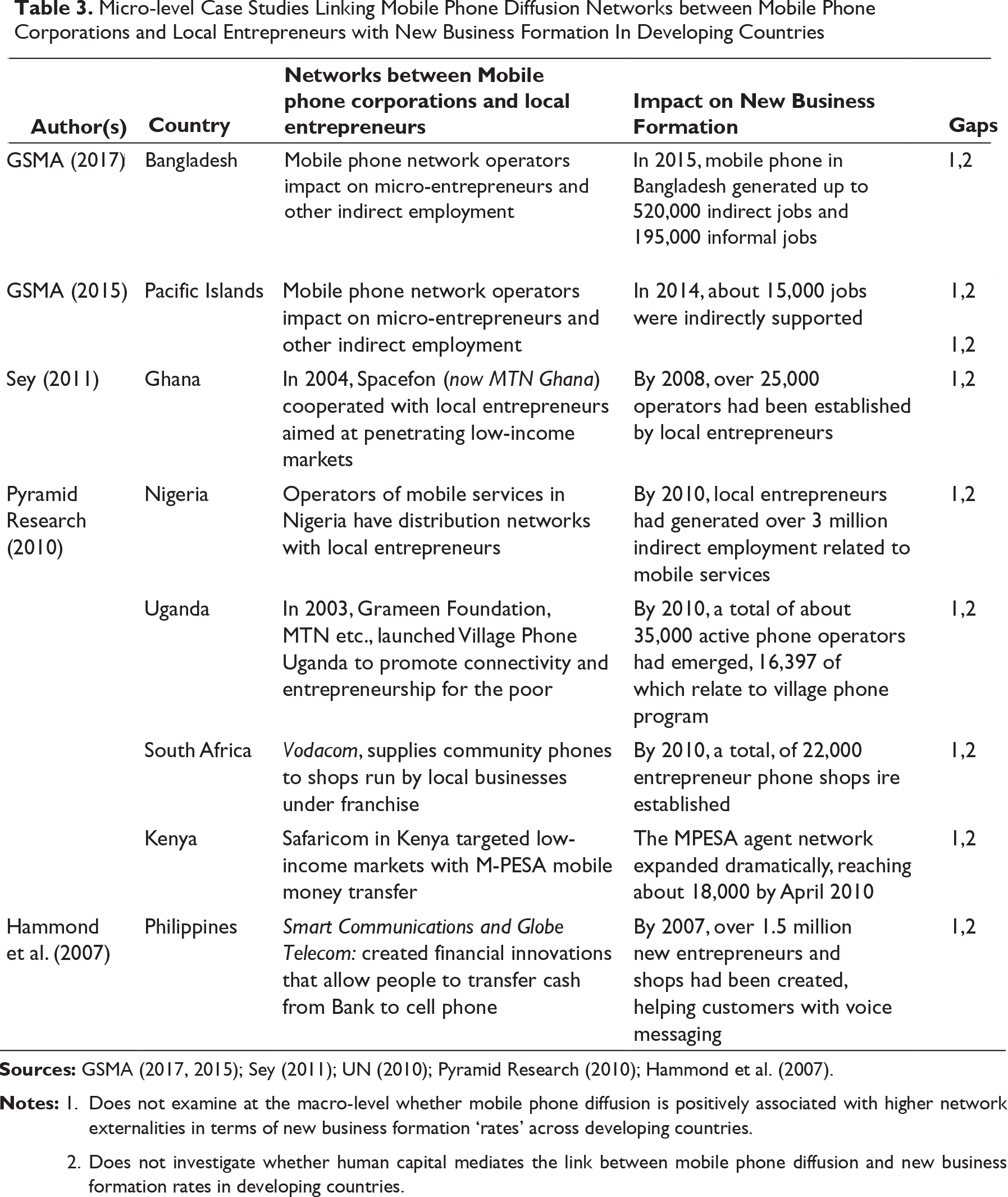
2. Does not investigate whether human capital mediates the link between mobile phone diffusion and new business formation rates in developing countries.
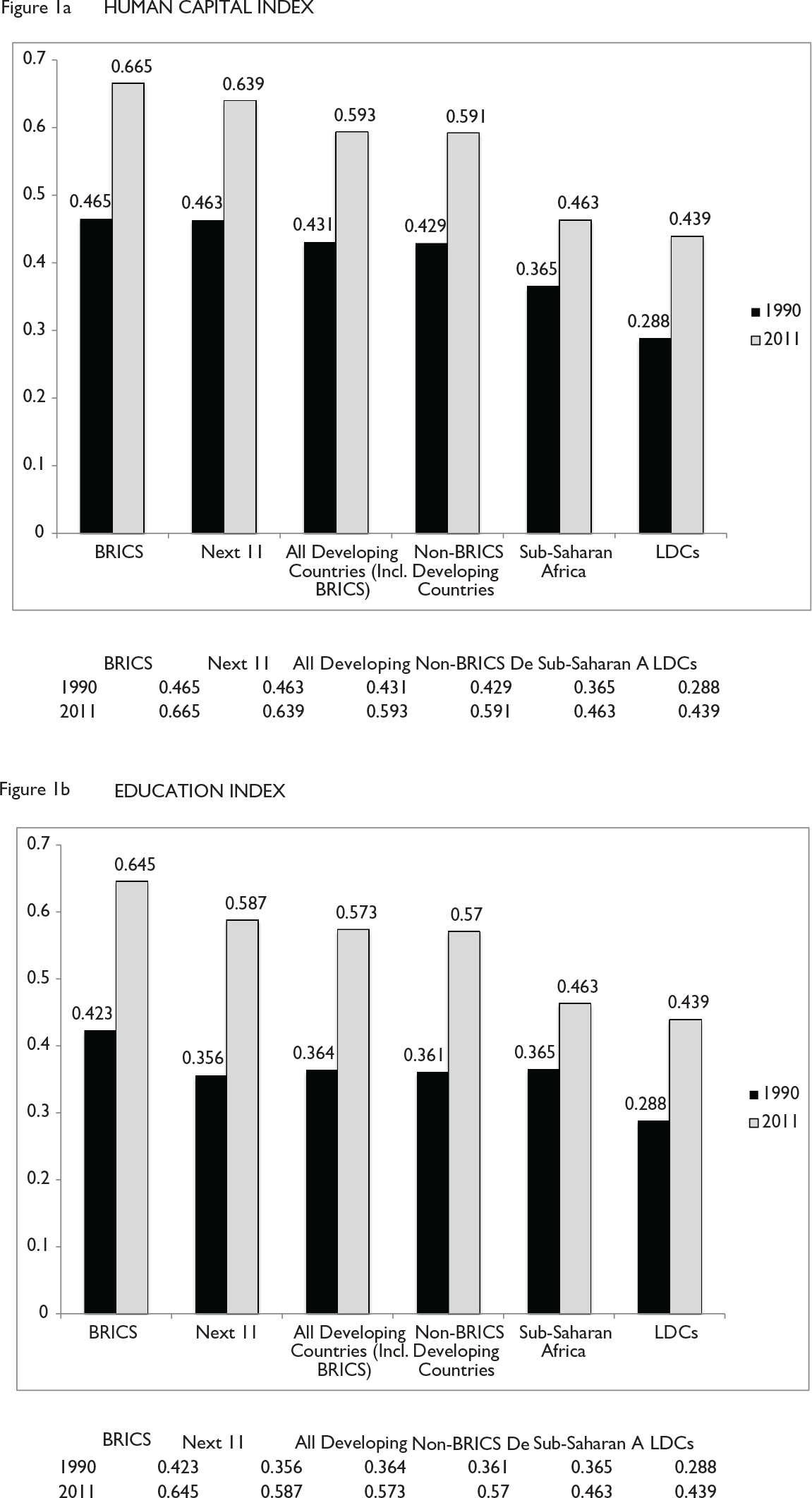
To summarise, we know that
1. micro-level case studies suggest that mobile phone diffusion has positive externalities for new business formation in developing countries on a large scale (Acs et al., 2013; Pyramid Research, 2010; Hammond et al., 2007); 2. mobile phone diffusion is enhanced by the level of education (Cohen & Levinthal, 1989; Cosar, 2011); and 3. that education is significantly related to new business formation rates (Abubakar & Mitra, 2007; Acs & Armington, 2004; Zucker et al., 1994)
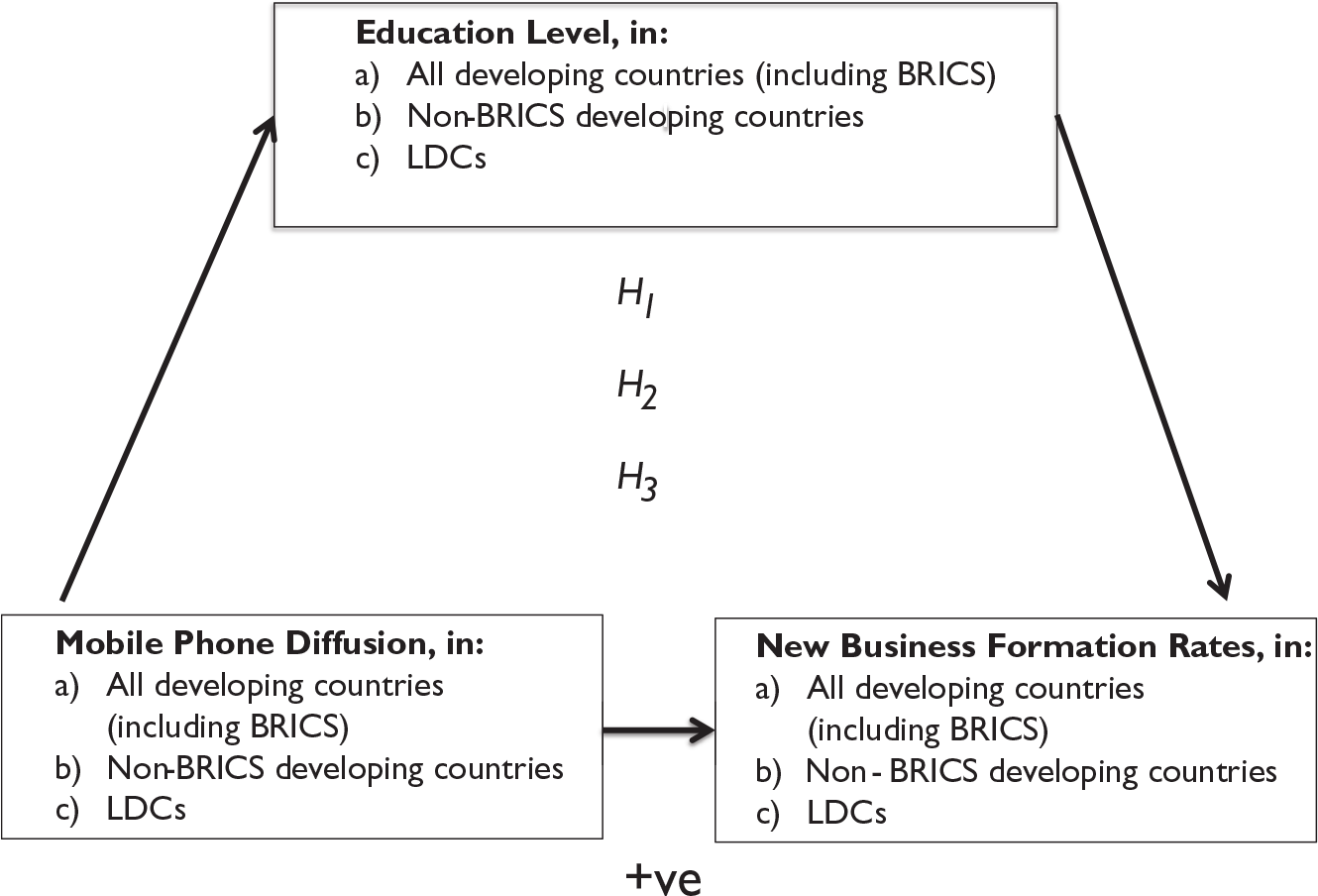
Assuming that these relationships hold in all developing economies given the growing strength of the key variables of education, technology (mobile) diffusion, and new business formation, we can offer three hypotheses:
Figure 2 depicts the hypothesised relationships.
Methodology
Sample Selection
Panel data set was used to test the three hypotheses. The sample under this study is made-up of developing countries for which data on new business formation rates is available from World Development Indicators (WDI, 2012). The sample was selected based on the following criteria: (a) developing countries, which is low- and middle-income countries (this ensures that only developing countries are selected); and (b) sourcing data on new business formation rates (so as to ensure that an acceptable measure of entrepreneurship is employed) (Acs & Armington, 2004). Based on the above criteria, a sample of 66 developing countries (out of a total of 144) was generated, that is, 46 per cent of the total population of developing countries. The sample is further divided into the following groups: DCs including BRICS), 5
The Dependent Variables
New Business Formation Rates: The dependent variable for this study is represented by the national rates of new business formation as measured by the number of new businesses registered per working age population in the formal sector (Acs & Armington, 2004). The study is limited to new business registration in the formal sector, not only because of the lack of cross-country data on start-ups in the informal sector business start-ups but also because of the advantages of formal sector participation, which include greater potential for high-growth (Schneider & Enste, 2000).
The Independent and Mediator Variables
Mobile Phone Diffusion: To measure mobile phone diffusion across countries, we use data on mobile cellular subscriptions (per 100 people) from 2005 to 2009 (WDI, 2012). These are subscriptions made for mobile phone services based on cellular technology that gives access to the public-switched telephone network (WDI, 2012).
Education Level: To measure the level of education in each country, this study uses the UN Education Index, which is one of the most recognised measures of education level across countries. The Index measures the mean of years of schooling for adults aged 25 years and also the expected years of schooling for children of school entering respective age. The data for the Education Index was obtained from UNDP’s HDI for the years 2005–2009 (UNDP, 2012).
Analytic Methods and Controls: Other Factors that may affect New Business Formation Rates in Different Developing Economy Contexts
Baron and Kenny’s (1986) test of mediation involves establishing four conditions: Step One: The Independent Variable (that is Mobile Phone Diffusion) is significantly related to the Dependent Variable (i.e., New Business Formation Rates); Step Two: The Independent Variable (i.e., Mobile Phone Diffusion) is significantly related to the Mediator Variable (Education Level); Step Three: The Mediator Variable (Education Level) is significantly related to the Dependent Variable (i.e., New Business Formation Rates); Step Four: When controlling for the effects of the Mediator Variable (Education Level) on Dependent Variable (i.e., New Business Formation Rates), the effect of the Independent Variable (i.e., mobile phone diffusion) on the Dependent Variable (i.e., New Business Formation Rates) is no longer significant. Baron and Kennyʼs procedure is a common approach used to test mediators (Suliman, 2002; Preacher & Hayes, 2004; Zhu et al., 2005). The regressions are based on ordinary least squares (OLS). Hierarchical regressions are also in testing the Steps 3 and 4 of Baron and Kennyʼs procedure.
This is because working age population is preferred to population or employment as a size indicator, because it is a better measure of the number of potential entrepreneurs (Acs & Armington, 2004, p. 250). This labour market approach has a particular appeal in that the entrepreneur starting a new business is assumed to live in the same geographic area as the new business and to have benefited from spillovers within that geographic area (Acs & Armington, 2004). Using controls for working age population is particularly important especially when BRICs are considered in the sample, because large workforce is considered as one of the key determinants of the economic performance of BRICs (Goldman Sachs, 2003).
A control variable for Migrant Returnees from Developed Countries was also included into the analysis, since returning migrants from developed countries may also contribute to entrepreneurship in developing countries (Saxenian, 2005). This again is particularly important because some studies in some BRICs countries and some emerging countries have observed that migrants in developed countries are contributing to entrepreneurial experimentation and upgrading in their home countries (Saxenian, 2005; Yang, 2005; Wahba & Zenou, 2012). The data for Migrant Returnees from Developed Countries was obtained from OECD StatExtracts — 2005–2009, data on outflows of foreign population from OECD countries (OECD, 2012).
Controls are also included for University Research, because the KST argues that it is an important input in the entrepreneurship process as it generates the new knowledge needed for new businesses formation (Audretsch et al., 2005). University Research is measured using data on number of scientific and technical journal articles published, which was obtained from World Development Indicators 2005–2009 (WDI, 2012).
Control for Population Growth was added because a growing population often increases the supply of potential founders of new businesses, or even growth in existing businesses (Acs & Armington, 2004). This is especially important because some LDCs are included in the sample, and economic performance in LDCs may be affected by population growth (UNCTAD, 2011, p. 3). The data was obtained from World Development Indicators 2005–2009 (WDI, 2012).
Control was applied for varying rates of Economic Growth across the developing countries, as research suggests that economic growth as measured by GDP growth may influence entrepreneurship (Wong et al., 2005). Economic growth was measured using GDP growth, as reported in data from World Development Indicators 2005–2009 (WDI, 2012).
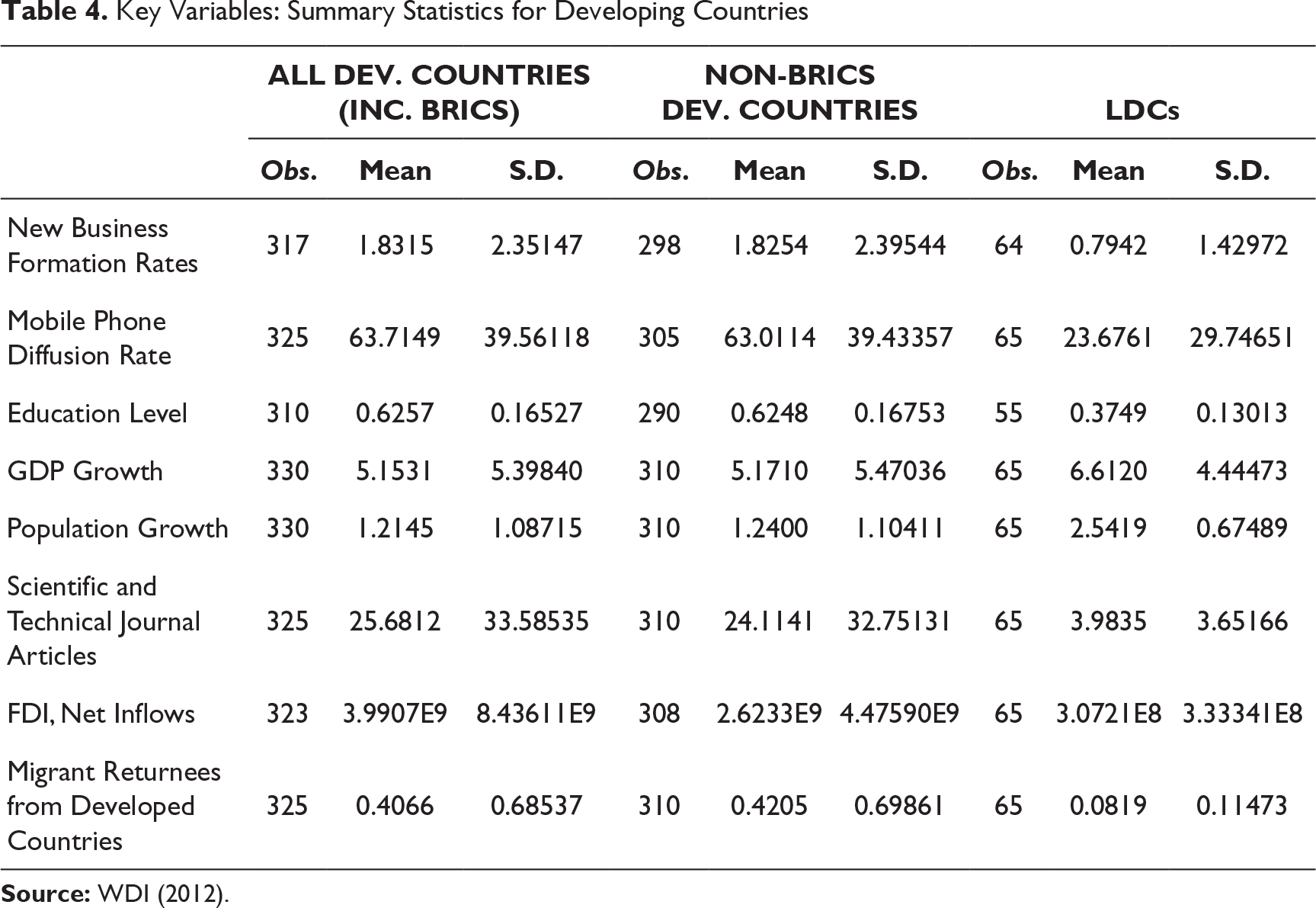
Descriptive Statistics
Key Variables: Summary Statistics for Developing Countries
Results: Testing for Mediation Using Baron and Kenny Procedure
Step One
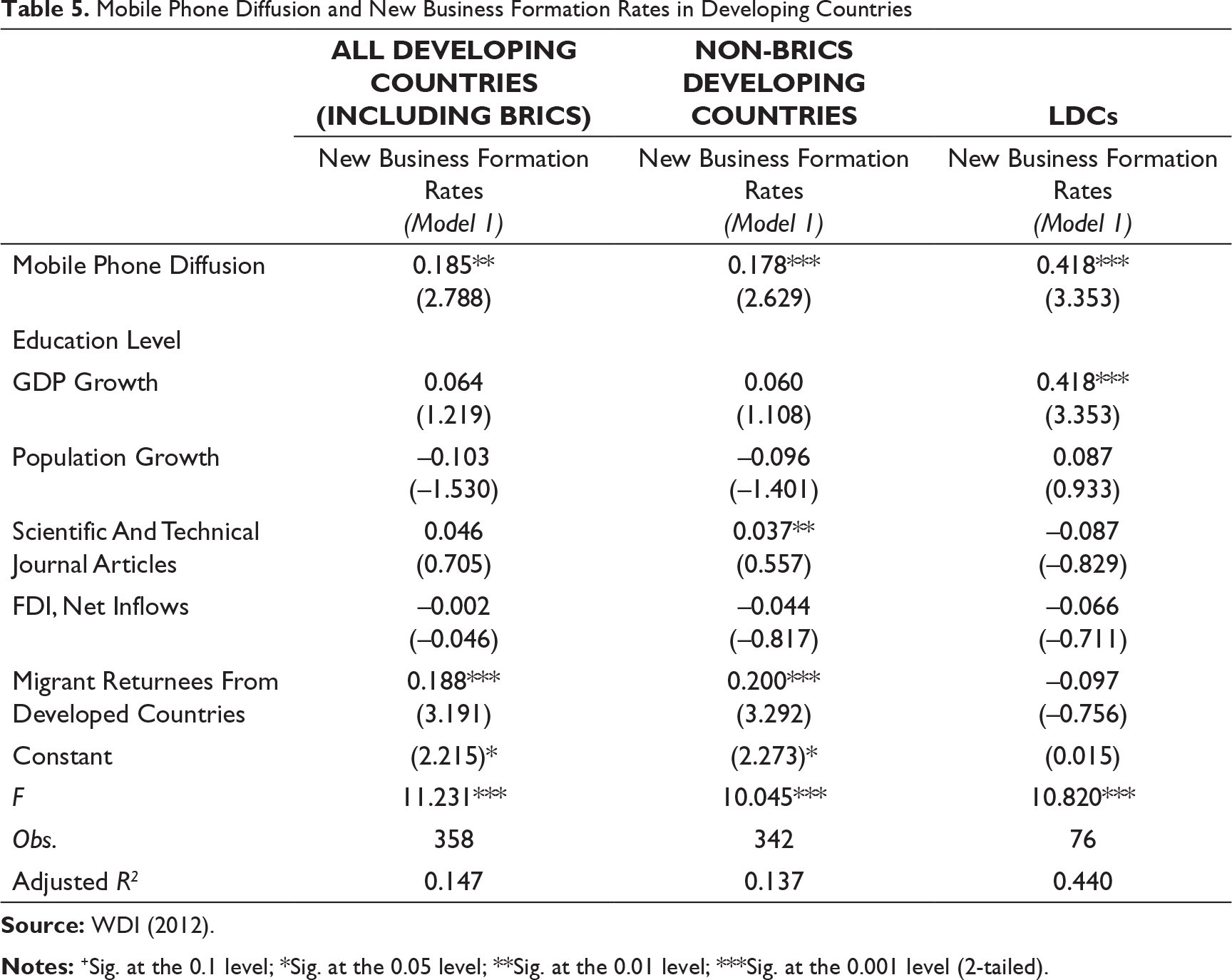
First, based on Baron and Kenny’s (1986) procedure, we investigate the relationship between the independent mobile phone diffusion variable and the dependent new business formation rates variable. The standardised regression coefficient (beta) is assessed to determine the size of the relationships and whether it is significant. We employ several control variables, and the analysis for each research context is carried out separately. If this association is not significant, there is no mediation as there is no relationship to mediate. Different results are presented in Table 5 for all DCs and non-BRICS DCs and the LDCs, based on Baron and Kenny’s Step 1 procedure for testing mediation (Baron & Kenny, 1986; Zhu, Chew, & Spranger, 2005). The Table shows the adjusted R2 for all DCs (including BRICS) (Adj. R2 =.147) and the non-BRICS (Adj. R2 =.137) and LDCs (Adj. R2 =.440). Although only a small amount of variance is explained in the new business formation rates by mobile phone diffusion, the table shows that the relationship is significant for the first group (F = 11.231, p < 0.001), for the non-BRICS group (F = 10.045, p < 0.001), and also for the LDCs group (F = 10.820, p < 0.001). Therefore, in all the three contexts, the relationship between mobile phone diffusion and new business formation rates appears to be significant.
Mobile Phone Diffusion and New Business Formation Rates in Developing Countries
Step Two
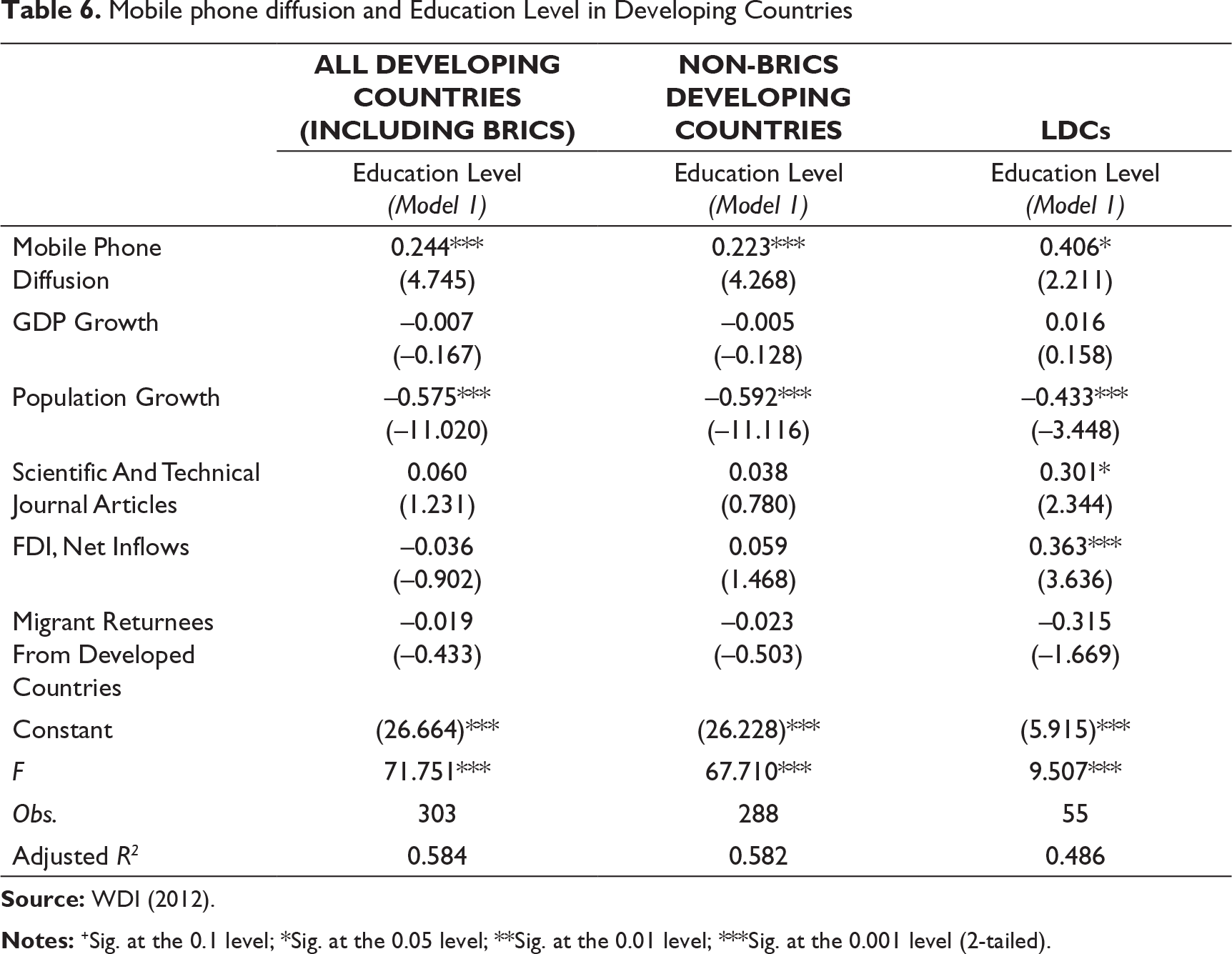
Mobile phone diffusion and Education Level in Developing Countries
Steps Three and Four
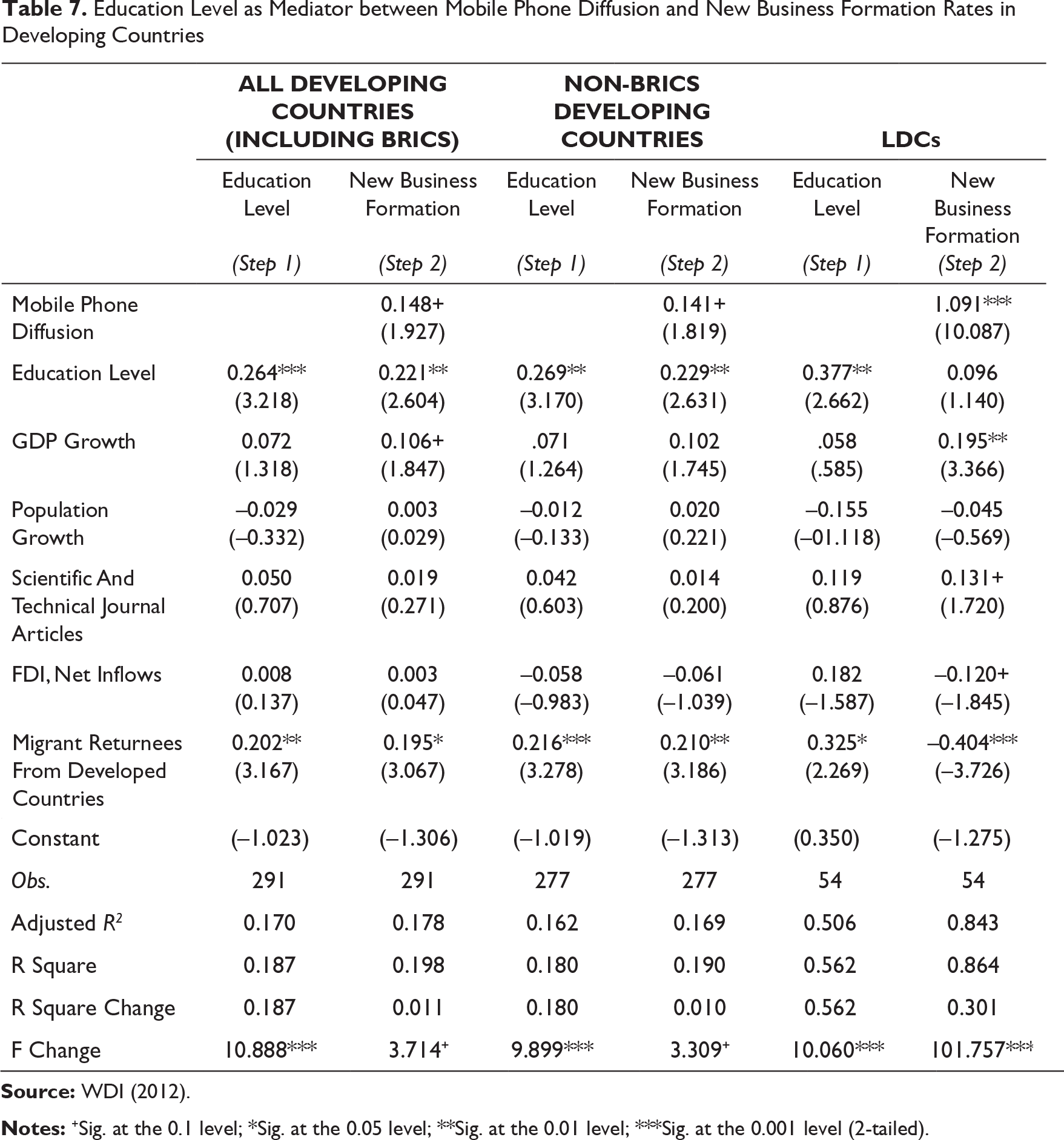
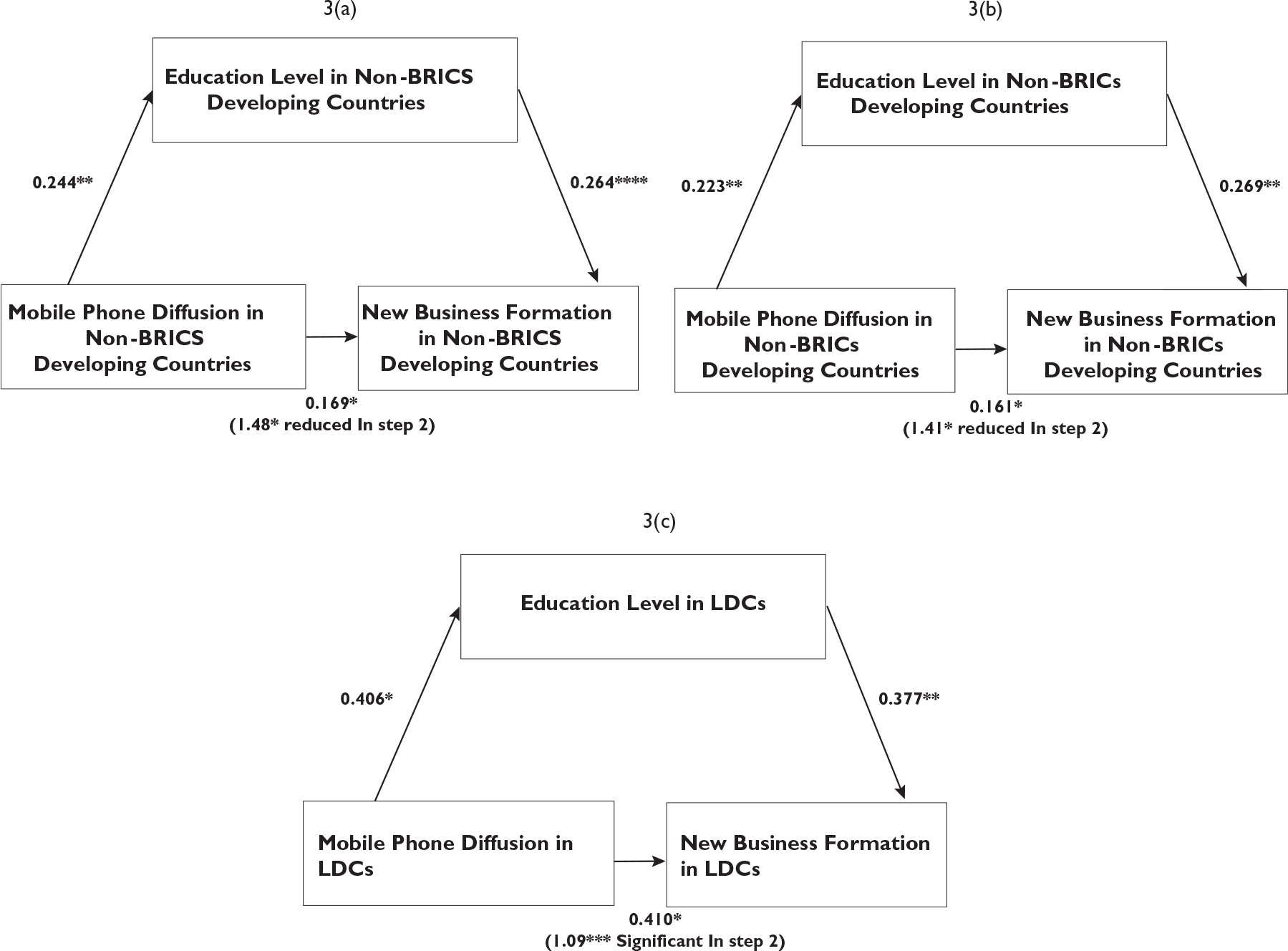
Finally, a hierarchical regression is performed in two steps. At step three of Baron and Kenny’s formulation, the association between education levels and new business formation rates is examined in the three research contexts. At step four, the relationship between mobile phone diffusion and new business formation (tested earlier in Step One) is examined again.
Education Level as Mediator between Mobile Phone Diffusion and New Business Formation Rates in Developing Countries
Conclusions and Implications
This article examines the extent to which the education level mediates the relationship between mobile phone diffusion and new business formation rates in the three contexts of all DCs including BRICS, the non-BRICS developing countries and the LDCs. The analysis contributes to the KST of entrepreneurship in developing countries in at least three important ways. First, it suggests a macro-level association (for the first time) between a developing country’s level of technology stated in terms of mobile phone diffusion and the country’s new business formation rates. Second, the article suggests that the relationship between mobile phone diffusion and new business formation rates in developing countries is partially mediated by the education level in all DCs and non-BRICS DCs. In contrast, the role of education levels as a mediator of the relationship does not appear to be significant in LDCs. Third, the empirical analysis is based upon rigorously collected authoritative multi-country data from WDI that answers the concern voiced by researchers for the dearth of macro-level empirical research on the viability of KST across developing countries (Acs & Virgill, 2010).
We note a number of policy implications. Governments in BRICS and non-BRICS DCs may need to consider designing appropriate policies for encouraging mobile phone corporations to network with local entrepreneurs, which can result in more opportunities for new business formation for local entrepreneurs. Since mobile phone start-ups in LDCs do not appear to be affected by education levels, it is possible that their business formation rates and economic growth are being held back because of this education gap. Policies encouraging higher levels of investment in education in these countries might help advance new knowledge creation, higher levels of technology diffusion, new business creation and subsequent economic growth. That domestic education provision matters is borne out by our findings, and the positive relationships between the key variables mediated by education, would offer prospects for focused education and training provision for development in the future.