



Abstract
Abstract
This article explores mutual relationships between embeddedness and second-generation ethnic entrepreneurs. We apply an exploratory and inductive qualitative research design to investigate how a dual embeddedness of second-generation immigrants in the ethnic community and in mainstream society influence their entrepreneurial activities and vice versa. Based on multiple cases studies of Vietnamese second-generation ethnic entrepreneurs, we identify four causal relations between embeddedness and entrepreneurial activities: (a) resource mobilisation; (b) formation of entrepreneurial motivation; (c) feedback effect on embeddedness and (d) re-formation of dual identity. This research contributes to the research on ethnic entrepreneurship by showing novel causalities between socio-psychological factors and entrepreneurial activities of second-generation entrepreneurs.
Keywords
Introduction
The number of immigrants has been increasing in recent decades; according to the United Nations, in 2017, there were more than 258 million people living abroad. Their contributions to the global economy have attracted the interest of not only practitioners but also researchers from various fields (Portes & Martinez, 2019). Despite the significant number of reports and academic studies about the phenomenon, what we need to be aware of is the fact that the nature of migration-related issues has drastically changed. Scholars commonly agree that the effect of migration on an individuals’ life does not end after one generation but lasts over multiple generations, and therefore, it is necessary to understand the migration phenomenon additionally in a broader context by considering the second-generation migrants who are born in host countries. One explanation for the increasing relevance of the second generation is the recent significant migration that has taken place since the Second World War (European Political Strategy Centre, 2017). The children and grandchildren from this wave are now of an age to engage in economic activities. Their entrepreneurial motivations are different compared to the first generation, who often became entrepreneurs out of necessity in host societies. Many obstacles in the host countries, such as discrimination, limited skills force some immigrants to start their own businesses and to become necessity entrepreneurs (Chrysostome & Arcand, 2009).
The second-generation immigrants who were born or had an entire education in their host country differ from the first generation in a number of ways in sociological and psychological aspects (cf. Dustmann, Frattini & Theodoropoulos, 2011; Kibria, 2000; Urban, 2012). For example, the study of Sandberg (2018) emphasises the unique integration process of second-generation immigrants, which is ‘relatively smooth’. Furthermore, previous literature suggests that this distinctive nature of the second-generation migrants, such as identity and psychosomatic symptoms, is attributed to their identity and behaviour (Walsh, Kolobov, Raiz, Boniel-Nissim, Tesler, & Harel-Fisch, 2018). On the one hand, according to the Segment Assimilation Theory, the second-generation immigrants could integrate into the mainstream population while maintaining their ethnic essence (Portes & Rumbaut, 2001). On the other hand, studies of the second-generation immigrants show that they often pursue their careers in highly intellectual and creative industries by virtue of the higher education received from the host country (Baycan-Levent, Nijkamp & Sahin, 2008).
The mixed embeddedness theory offers a possible explanation for understanding these characteristics of second-generation immigrants (Bagwell, 2018; Kloosterman & Rath, 2018) The embeddedness of immigrants is determined by complex emotional and societal dynamics. Growing up and receiving an entire education in their host country, second-generation immigrants have chances to embed themselves into two different cultures (Giuliani, Tagliabue, & Regalia, 2018; Masurel & Nijkamp, 2004). This mixed embeddedness forms their dual identity that can influence their entrepreneurial activities. However, there is a lack of study on entrepreneurship that takes into account the psychological and sociological aspects of these entrepreneurs.
By investigating the entrepreneurial activities of second-generation immigrants and influencing factors, this study aims to examine the research question: How does the dual embeddedness of second-generation immigrants in both the ethnic community and the mainstream society influence their entrepreneurial activities?
In order to explore the causal effects of the dual identity of second-generation ethnic entrepreneurs and their entrepreneurial activities, we apply an explorative-qualitative research approach with multiple case studies with Vietnamese second-generation ethnic entrepreneurs in Germany.
The structure of this study begins with a brief review of the background of existing research on ethnic entrepreneurship, focusing on current trends and research gaps in the field. Next, we present our research design, after which we then present and interpret the findings of second-generation ethnic entrepreneurship. Finally, we develop a multi-level conceptual framework which shows how the mixed embeddedness of second generation in ethnic and host-country institutions influences their entrepreneurial activities and vice versa. Finally, this article offers theoretical contributions as well as practical implications for future research and practice in the area of ethnic entrepreneurship.
This research contributes to the research on ethnic entrepreneurship by showing novel causalities between socio-psychological factors and the entrepreneurial activities of second-generation ethnic entrepreneurs. First, the study not only considers the impacts of their identity on business activities but also the feedback of these activities on the identity of the group. Second, the combination of the prior results of socio-psychological studies about immigrants’ descendants and the discussion of mixed embeddedness in management studies provides a comprehensive overview of the phenomenon. Moreover, the study offers the first empirical evidence of new networks emerging among second-generation immigrants. These findings are meaningful for policymakers who want to enhance the entrepreneurial potential of the descendants of immigrants in the country.
Conceptual Background
Ethnic Entrepreneurship
Scholars use different concepts in order to describe the entrepreneurial activities of migrants, such as diaspora entrepreneurship (Basit, 2017; Harima, Elo, & Freiling, 2016; Riddle & Brinkerhoff, 2011), immigrant entrepreneurship (Beckers & Blumberg, 2013; Ndofor & Priem, 2011; Teixeira, Lo, & Truelove, 2007) and transnational entrepreneurship (Drori, Honig, & Wright, 2009; Pruthi & Wright, 2017). While they all investigate entrepreneurship in the context of migration, ethnic entrepreneurship focuses on ethnicity, which migrants and their descendants inherit over generations. Ethnicity refers to ‘relationships between groups whose members consider themselves distinctive’ (Erikson, 2010). Prior studies on ethnicity and the migrant waves of various groups also state that moving to the new environment can significantly change society and culture, but the ethnic identity remains for generations (Erikson, 2010).
In this study, we apply the term ethnic entrepreneurship since ethnicity plays a crucial role in the entrepreneurship of second-generation immigrants. Additionally, they are no longer immigrants from the resident country’s point of view (Alba, 2005). Nevertheless, their unique backgrounds and the ethnic values they received while growing up in an ethnic family are undeniable (Phuong & Harima, 2019; Portes & Rumbaut, 2001; Sabatier, 2008).
Research on ethnic entrepreneurship started in the 1980s (Aldrich & Waldinger, 1990; Bonacich, 1987; Light, 1984; Shapero & Sokol, 1982). Ethnic entrepreneurship is defined as business ownership by immigrants, ethnic group members or both (Valdez, 2008). This definition incorporates the descendants of immigrants who are a part of the ethnic community. Their entire education has been attained in the host country, and they are generally found to be more ambitious and selective in choosing a job compared to the first generation (Vathi, 2015).
Ethnic entrepreneurs are characterised by their dual embeddedness in institutions of the ethnic community and host society. This particular nature of their embeddedness was labelled as the concept of ‘mixed embeddedness’ (Kloosterman, van der Leun & Rath, 1999). This concept combines personal and group factors with regards to market conditions and regulatory matters in order to understand specific resources relevant to ethnic entrepreneurship (Kloosterman & Rath, 2003; Ram & Jones, 2008; Rath, 2000, 2002). The nature and balance of mixed embeddedness may differ to a large extent depending on ethnic groups, generations, the environments of host countries and individual characteristics (Barrett & Jones, 2010; Sofer & Schnell, 2002). For instance, Nguyen and Benet-Martínez (2013) present the diversity of bicultural individuals in deciding their embeddedness, pointing out that they can negotiate and combine two cultures differently. These individuals are competent in navigating both cultures and can be part of social support networks from both cultures (Lafromboise, Coleman, & Gerton, 1993; Mok, Morris, Benet-Martínez, & Karakitapoğlu-Aygün, 2007). Moreover, the interpretation of the negotiating process can result in great integrative complexity and creativity (Benet-Martínez, Lee, & Leu, 2006; Tadmor, Tetlock, & Peng, 2009). Furthermore, Efendic and Wennberg (2016) argue that ethnic entrepreneurs in the second generation have an improved understanding of both ethnic and local customers, which makes them more successful than the first generation. Despite this, there is an insufficient academic discussion on how mixed embeddedness changes between generations and how it affects their entrepreneurial activities.
Through their dual embeddedness, ethnic entrepreneurs have access to different types of networks both in the host and ethnic communities. On the one hand, literature suggests that social networks are instrumental for ethnic entrepreneurs in acquiring knowledge, distributing information, recruiting capital and labour and establishing relations with clients and suppliers (Bagwell, 2014; Pruthi & Wright, 2017). On the other hand, Zimmermann (2007) indicates that the strong ethnic ties, at the same time, can cause difficulties for ethnic entrepreneurs in their host economies, for example, by limiting the market. Therefore, the balance of cultural and social commitments between the host country and the country of origin is one of the most influential success factors on immigrants’ business activities in their host country (Constant, Gataullina, & Zimmermann, 2009; Diab, Paradiso, & Schnell, 2019).
While several studies have applied qualitative approach to investigate ethnic entrepreneurship in receiving countries (e.g., Kariv, Menzies, Brenner, & Filion, 2009; Kerr & Mandorff, 2015; Portes & Martinez, 2019), there have been few empirical investigations into the businesses of immigrants’ children particularly. Moreover, Zhou (2004) pointed out that scholars have not treated non-economic attributes of ethnic entrepreneurs as central factors for their investigation. Qualitative research, which overemphasises the technical detail and outcome of ethnic entrepreneurship can prevent us from the exploration of the connection between socio-cultural factors and entrepreneurial activities. Therefore, our research is designed to understand factors that can influence individual entrepreneurs and their business activities by paying particular attention to the psychological and social characteristics of second-generation ethnic entrepreneurs.
Second-Generation Immigrants as Entrepreneurial Actors
‘Second-generation’ immigrant refers to the children of immigrants who are either born in host countries or arrive in host countries with their parents in their early years (Harker, 2001). Previous literature suggests that the second-generation immigrants have several peculiarities in contrast to the first-generation immigrants. Based on their characteristics, we have developed a framework, which allows us to analyse how factors on different levels are interrelated to each other. The second-generation immigrant issues have been addressed from mainly two different perspectives: (a) embeddedness and (b) entrepreneurial activities. This chapter discusses each of these different views in turn.
The first perspective deals with embeddedness, in which two factors are considered: societal elements and psychological elements. First, sociological literature has investigated life stories of second-generation immigrants based on the Segment Assimilation Theory (Fernández-Kelly & Konczal, 2005; Portes & Rumbaut, 2001; Xie & Gough, 2011). This theory suggests that second-generation immigrants can assimilate themselves to the host country better than their parents due to their advanced language proficiency as well as educational backgrounds (Haller, Portes, & Lynch, 2011; Portes, Fernández-Kelly, & Haller, 2009). By the same token, they learn about their ethnic culture through family education (Portes & Rumbaut, 2001; Sabatier, 2008). This view is helpful for this study to understand the social dynamics in which immigrant descendants are influenced by both society and ethnic contexts.
Second, psychological literature has elaborated the psychological aspect of immigrants’ descendants, focussing on their ethnic identity. Portes and Rumbaut (2001) indicate that the ethnic identity is a way of answering the question: Where do I come from? They suggest that even though those identities may be constructed socially and politically ,they are also commonly experienced and expressed as natural. Answering that question also helps the descendants of immigrants feel connected to the ethnic community (Borjas, 1992; Portes & Rumbaut, 2001). However, psychological studies on the descendants of immigrants also show that in some ethnic enclaves, children of immigrants have negative experiences regarding their ethnicity, such as discrimination or ethnic conflicts (Verkuyten, 2018; Walsh et al., 2018). In addition, the encouragement by the host society to assimilate could weaken the ethnic identity of the second-generation immigrants (Haller et al., 2011).
The next perspective deals with the entrepreneurial activities of second-generation ethnic entrepreneurship. The economic study highlights the mixed embeddedness to discuss the potential advantages of second-generation immigrants (Waldinger & Perlmann, 1998). While first-generation immigrants are often overly embedded in the ethnic community, which restricts their economic activities within ethnic enclaves or markets, second-generation immigrants are more embedded in the institutional environments of host countries (Zhou & Lee, 2007). Their connection and legitimacy in host countries can provide them with certain advantages, which are not necessarily available to the first-generation migrants. Second-generation immigrants are considered to possess the ability to breakout of the traditional business strategy and seek entrepreneurial opportunities outside of the ethnic enclave (Abada, Hou, & Lu, 2014; Baycan-Levent, Masurel, & Nijkamp, 2005).
As suggested by Kloosterman et al. (1999), second-generation immigrant entrepreneurs are embedded in two different institutional environments: (a) ethnic institutions and (b) host country institutions. Although the literature on mixed embeddedness advocates that first-generation immigrants have such dual embeddedness to a certain extent, sociological literature supports the argument that second-generation immigrants have a different ‘balance’ of embeddedness (Sekhon & Szmigin, 2011). The offspring of immigrants are more likely to be able to integrate into the local society (Clark & Drinkwater, 1998; Motti-Stefanidi & García Coll, 2018). In the case of some ethnic groups, native-born children even lose their connection to the ethnic minority since they lose their languages and knowledge about ethnic traditions (Borjas, 1992; Rumbaut & Portes, 2001). Nevertheless, several studies show that children of immigrants stay in touch with the ethnic community (Straubhaar, Dixon, Spence, & Rojas, 2019; Syed et al., 2013). For example, the study of Straubhaar and his colleagues on Latino and Asian second-generation immigrants in the United States presents the influence of second-generation immigrants’ ethnic connections on their feelings connected to the homeland (Straubhaar et al., 2019).
Their dual embeddedness leads second-generation immigrants to have a dual identity. On one side, they feel attached to the host country, since this is the place where they have grown up. On the other side, the ethnic identity cannot be melted over generations, especially if the children of immigrants are raised within the ethnic enclave (Borjas, 1992; Dustmann et al., 2011). Each person has a different mixture of these feelings and often struggles with internal conflicts to find their own identity (Johnston & Klandermans, 2013; Sandole, Byrne, Sandole-Staroste, & Senehi, 2008). Depending on the way they identify themselves, the nature of the entrepreneurial opportunities they pursue may differ to a large extent. For instance, some focus on their ethnic identity as a consequence of social exclusion (Alba, 2005; Syed et al., 2013). Additionally, early ethnic education and involvement in ethnic activities can strengthen the ethnic identity of the immigrants’ descendants (Feliciano & Rumbaut, 2018). In such cases, the offspring of immigrants may have a strong willingness to stay in their ethnic enclaves and serve their community (Rumbaut & Portes, 2001). On the contrary, a strong orientation of assimilation may lead them to create a greater distance from their ethnic community (Portes, Fernández-Kelly, & Haller, 2005; Zhou & Lee, 2007). Some of them are additionally embedded in their host community, joining in the mainstream labour market as locals and gaining professional experience from their host economy (Constant & Zimmermann, 2003; Haller et al., 2011).
The entrepreneurial activities of ethnic entrepreneurs in the second generation provide this study with possible explanations of how the above-mentioned societal and psychological factors may influence their entrepreneurial activities in mainly two ways. First, second-generation immigrants have access to various types of resources from the ethnic community and local society. For instance, they know about culture and markets. Growing up in the mixed community and experiencing different cultures gives children of immigrants great chances to understand both communities as insiders (Kloosterman et al., 1999; Kloosterman, Van Der Leun, & Rath, 1998; Portes & Zhou, 1993). Second, second-generation immigrants can also address both their ethnic network and host-country networks (Nguyen & Benet-Martínez, 2007). The availability of different networks may be determined by various societal and psychological factors discussed above.
Methodology
We adopt a qualitative multiple-case approach to delineate characteristics of the second-generation ethnic entrepreneurs and how they influence their ethnic entrepreneurship in host countries. There are two major reasons for our methodological selection. First, a qualitative-inductive approach allows us to capture a range of experience of ethnic entrepreneurs on the individual level. It is essential to use data that closely reflect the subjective ‘life experience’ of entrepreneurs in order to understand this particular group of people (Miles & Huberman, 1994). In addition, qualitative research can facilitate understanding of the second-generation ethnic entrepreneurship as a socially situated phenomenon (c.f. Denzin & Lincoln, 1994).
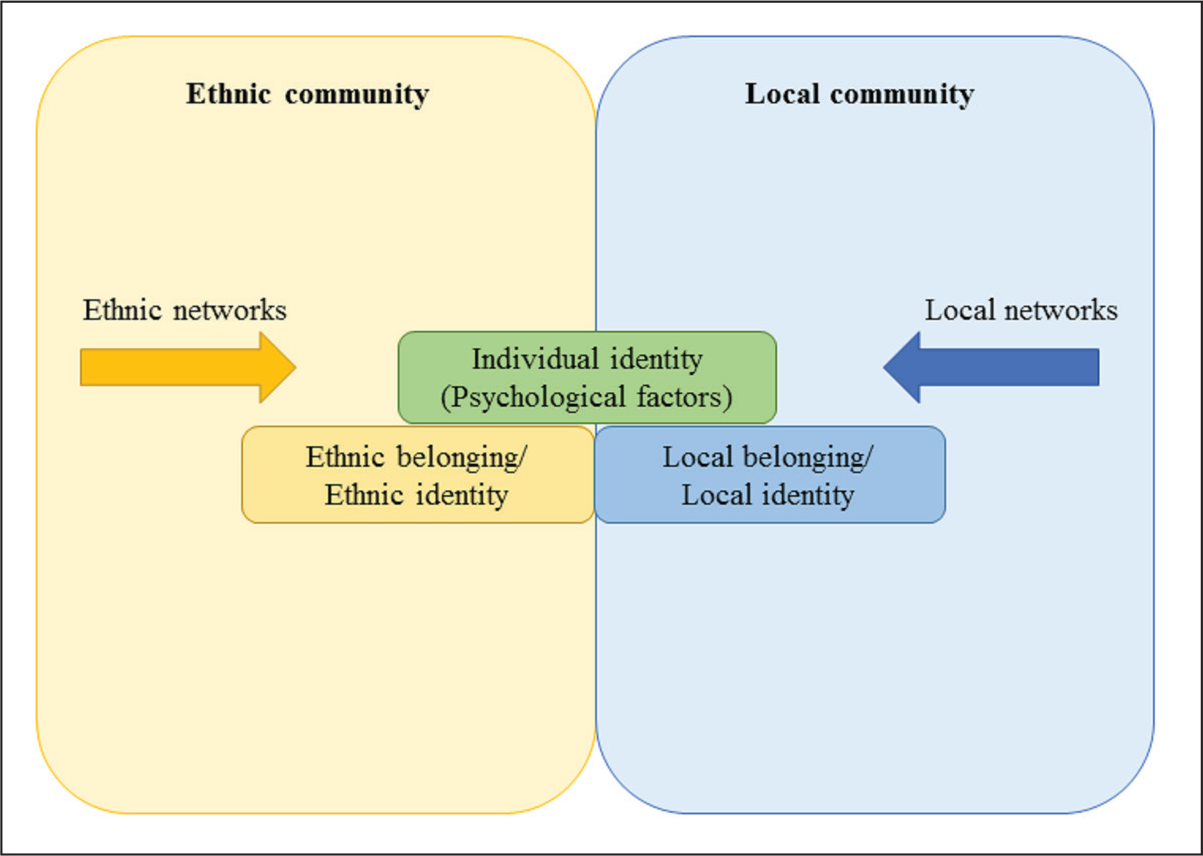
We selected Vietnamese second-generation ethnic entrepreneurs who are currently developing ethnic businesses in Germany. Vietnamese second-generation immigrants in Germany are an interesting group particularly for research since they belong to one of the best-integrated immigrant groups in Germany while their parents’ generation has a strong ethnic orientation and tend to stay within the ethnic enclaves. This setting enables them to be well embedded in both German society and in an ethnic community, which offers this study the chance to investigate mutual relations between their mixed embeddedness and entrepreneurial activities. To remark on the uniqueness of the second-generation ethnic entrepreneurship, in the beginning, two authors discussed and agreed on setting a priority, in which types of businesses were crucial. In following with this discussion, only businesses that have connections to the ethnic market are considered. This type of business will provide us with the comprehensive insights of the phenomenon, as these entrepreneurs have a certain level of embeddedness in their ethnic community.
The process of collecting empirical data began with an expert interview with the leader of the Vietnamese business association in Germany. The expert interview provided reflective knowledge outside of the professional context (Meuser & Nagel, 2009). The expert provided information about overall situations of the Vietnamese migrants in Germany and helped us to reach out to Vietnamese second-generation ethnic entrepreneurs. In this interview, the author also shared the research idea and selection criteria of potential interview partners to get concrete feedback and suggestions from the expert. The expert introduced the key actors of the association, who belong to the second-generation group. Subsequently, the author could get access to the networks of Vietnamese immigrants’ descendants to contact ethnic entrepreneurs who meet the study’s criteria. This snowball sampling strategy is helpful in examining the group of people sharing common social norms and internal feelings towards certain social conditions (Biernacki & Waldorf, 1981; Robinson, 2014).
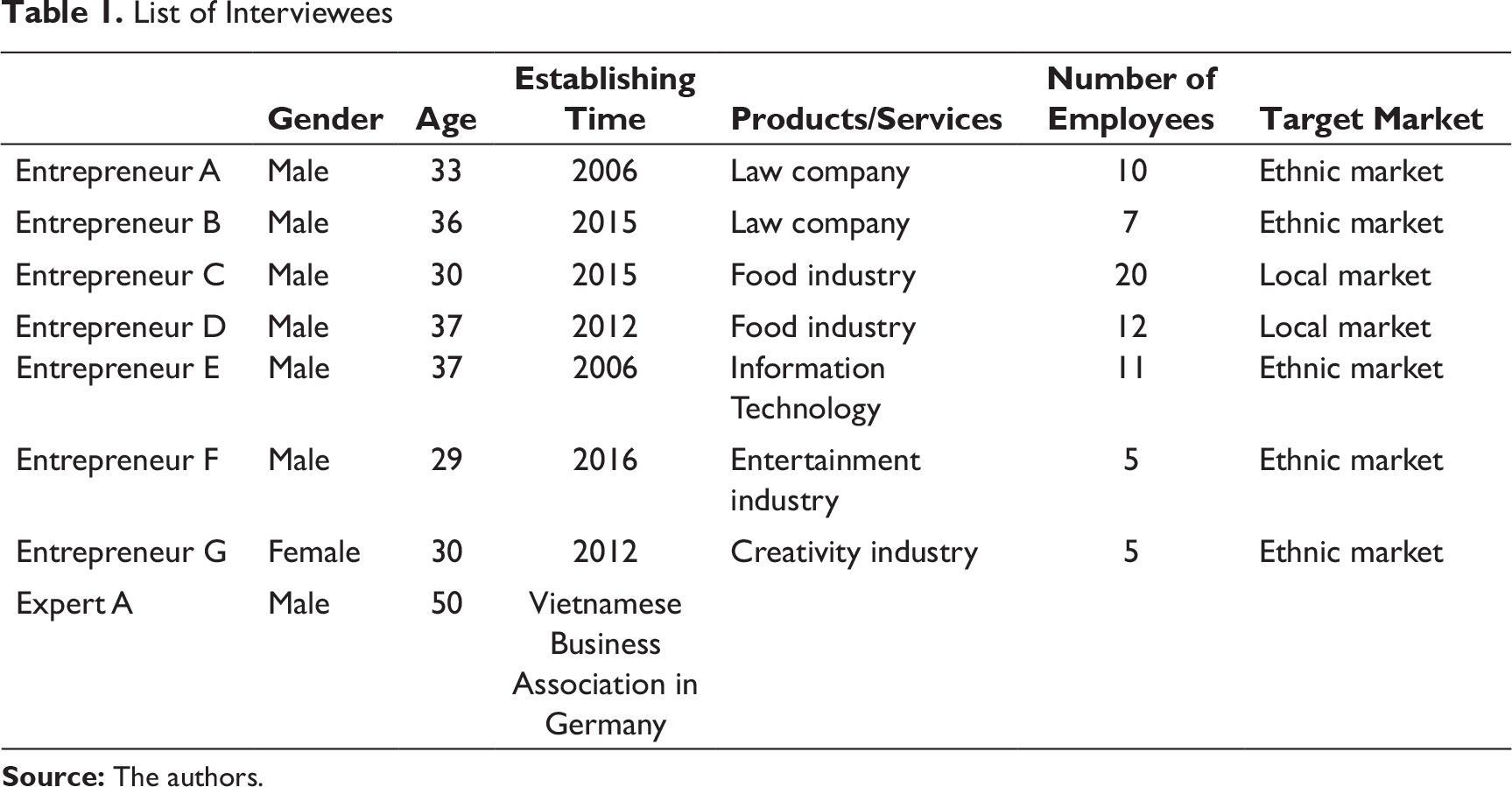
Table 1 presents the list of interviewees and their information such as gender, age, established year of the business and offered products or services. In total, this study conducted eight semi-structured interviews. We include individuals who are not only actively engaged in entrepreneurial activities but also individuals who are still in the process of realising business ideas. Considering both types of entrepreneurs gives us a chance to incorporate barriers that entrepreneurs face during the implementation of their ideas.
List of Interviewees
We apply a thematic analysis to make sense of the collected data. This process was implemented separately by two authors in order to avoid the risk of subjectivity. In order to organise the large volume of data and codes, both of the investigators used MAXQDA, Software for Qualitative and Mixed Methods Research, as a qualitative data analysis software. It is also worth noting that one author is of Vietnamese origin, and another has no ethnic connection to the community. This setting allows this study to analyse cultural issues and ethnicity, both as an insider and an outsider.
Coding System (The First Three Levels)
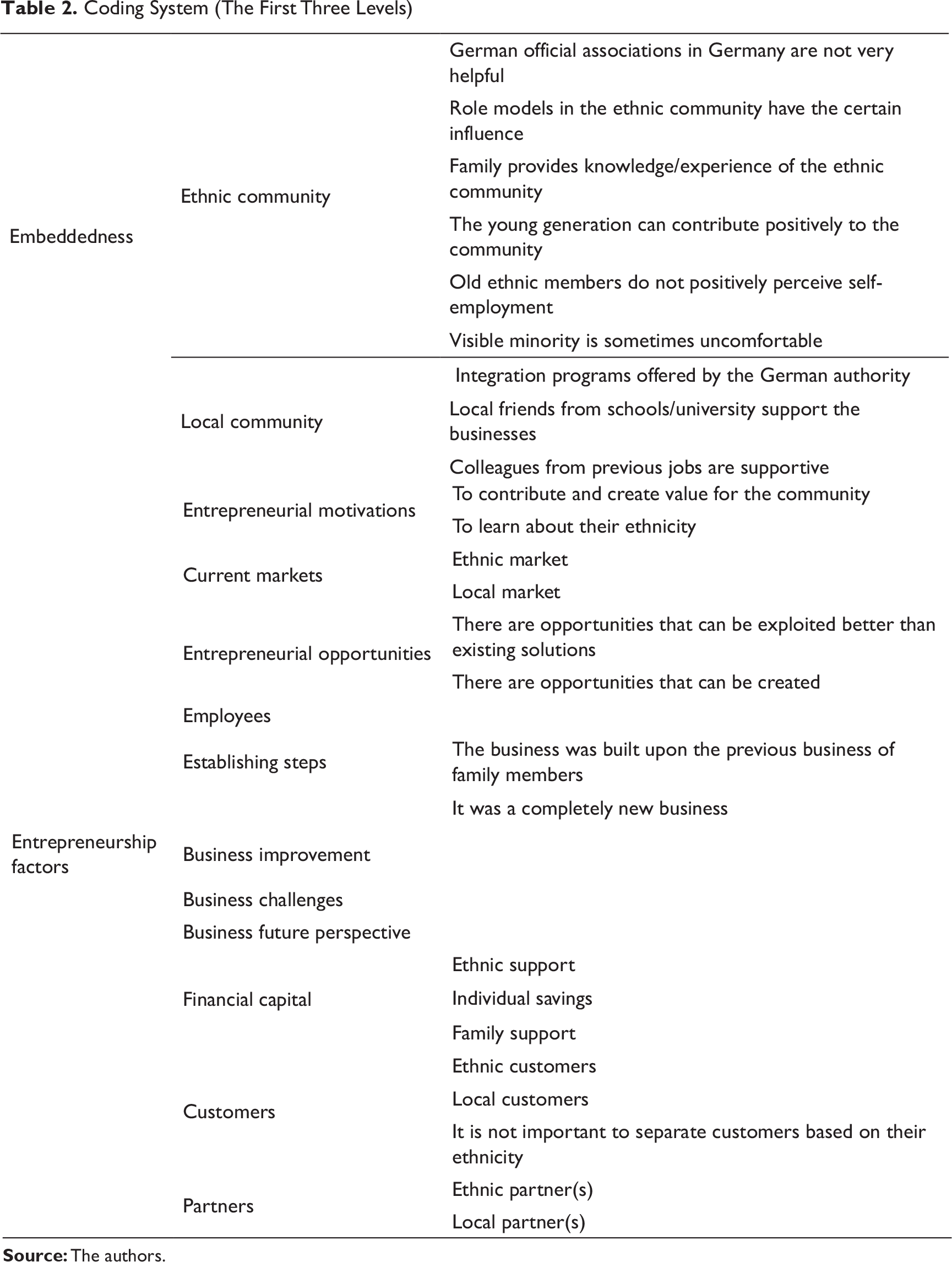
After defining categories on the first and second levels, two investigators once again discussed and re-analysed the empirical data in order to understand possible causal relations between categories. We then reflected on the observed causal relations with the existing literature once again in order to extend the analytical framework and to develop a conceptual model. Finally, the study was able to identify four causal relations: (a) resource mobilisation; (b) formation of entrepreneurial motivation; (c) re-formation of dual identity and (d) feedback effect on embeddedness.
In the discussion chapter, we develop a set of research proposition regarding influencing factors on entrepreneurial activities of second-generation ethnic entrepreneurs based on the results of our study in contrast to extant literature. The next section describes research settings as well as case descriptions.
Empirical Findings
Current Situation of Vietnamese Immigrants in Germany
In Germany, there are more than 19.3 million people with a migration background (Statistisches Bundesamt, 2018). The most significant growth in the foreign population in Germany took place when so-called ‘guest workers’ entered the country from 1955 to 1973, and asylum seekers began arriving in great numbers in late 1980s (Documentation Centre and Museum of Migration in Germany, 2013). The economic boom of the post-war era—the German ‘economic miracle’ led to the massive demand for labour forces. In order to cover the lack of German labour force (partly attributed to the war-dead), Germany decided to invite millions of unskilled foreign guest workers to Germany in the period from 1955–1970 (Rietig & Müller, 2016).
Among a number of ethnic communities in Germany, the Vietnamese represent the only one non-European ethnic community that consists of members from both immigration waves: refugees and guest workers (Hillmann, 2007; Statistisches Bundesamt, 2015). The Vietnamese refugees are known as ‘boat people’; 38,000 Vietnamese refugees arrived in West Germany between 1975 and 1986 for political reasons. These boat people consisted of highly skilled migrants, such as professors and business professionals who were forced to leave Vietnam after the Vietnam War, especially during 1978 and 1979. More than 60,000 Vietnamese guest workers came to East Germany in the 1980s with five-year contracts. Hillmann (2007) highlights the differences in the integration between these two groups of Vietnamese migrants in Germany. The emergence of these differences is attributed to the German policy of the time, which treated these two groups differently. She found that Vietnamese refugees were treated with favourable political conditions and therefore integrated themselves faster and more successfully into the German society compared to the guest workers.
The second-generation of Vietnamese immigrants have been recorded as one of the best integrated immigrant groups in Germany with above-average grades in schools (Spiewak, 2009). On the one hand, their German education in schools completes their knowledge of local culture and mainstream behaviour (Riphahn, 2003). On the other hand, growing up within an immigrant community gives the descendants of Vietnamese immigrants high chances to experience and understand their ethnic background (Downs & Downs, 2014; Koh, 2015).
In 2016, there were about 16,000 individuals with a Vietnamese migrant background in Germany, who were self-employed. Of the 6,600 individuals in employment, the largest proportion (63%) worked in retail, hospitality and transport, followed by 19 per cent in other service sectors and 18 per cent in other sectors, such as manufacturing (Schaland & Schmiz, 2016). The political situation is one of the crucial factor influencing the high self-employed rate of Vietnamese immigrants in Germany. The former German Democratic Republic regulation which was implemented did not allow Vietnamese contract worker to obtain residential permission without an income, which made it difficult to find a regular job (Schmiz, 2011). Consequently, in many states of East Germany, the rate of self-employed is higher than others. For instance, roughly 55 per cent of Vietnamese individuals over 18 in Berlin were self-employed (Schaland & Schmiz, 2016).
Several researchers have studied the ethnic business of first-generation Vietnamese immigrants in Germany. According to previous studies, most of the Vietnamese entrepreneurs in the first generation are necessity entrepreneurs (e.g., Bui, 2003; Dinh, 2015). After the reunification of Germany, most of them faced unemployment and therefore decided to open small restaurants (bistro), floral stands and grocery stores. The major financial source for their businesses was either their savings or family support (Bui, 2003). In recent years, Vietnamese ethnic entrepreneurship has become increasingly visible in Germany (Dinh, 2015). One reason for this visibility is that they have started offering their ethnic products on the mainstream market (Éigeartaigh, Howard, & Getty, 2007). Decades after the arrival of the first-generation Vietnamese in Germany, the second-generation Vietnamese have now reached the age at which they can start engaging in economic activities.
Second-Generation Vietnamese Ethnic Entrepreneurs in Germany—Cases Description
Entrepreneur A established his law company in 2006 after working for several years as a lawyer in a corporate law firm with other local lawyers. He came to Germany when he was 12 years old as a part of a reunification family program. His parents were contract workers, and after the reunification, they stayed in Germany. He spent his first year in Germany in secondary school like other locals. ‘It was a tough time’—unlike today, there were no integration courses where he could get the first preparation, such as a language course, and his parents could not help. Fortunately, teachers and friends at the school helped him a lot, and he could catch up within one year. After graduating from a university in Germany with a bachelor of law, he decided to do his internship in Vietnam to learn about the homeland and the people there. He stated that he did not feel like he belonged to the country and came back to Germany, as he felt more comfortable living in the place he ‘grew up and received his education’. He joined a law firm after passing his exams and worked there for several years. His job was ‘interesting but had nothing to do with ethnic people and the ethnic community’. During this time, there were some relatives and ethnic community members who came and asked him to help with some legal issues. He emphasised that those tasks were very simple, but people could not deal with these issues because of their lack of legal knowledge and language proficiency. This experience somehow motivated him to quit his job and establish his own law firm, which offers special consultations for people from his ethnic community. This company is a win-win strategy for him, as he can use his legal knowledge and work as a lawyer while contributing to the ethnic community through his consultations. He now has several different offices in cities in Germany, where there is a significant number of Vietnamese immigrants.
Entrepreneur B established a law company with his wife, who was born in Germany. At first, the company was a part of a law corporate firm that was affiliated with other German partners. After several years, Entrepreneur B joined the company as an assistant to his wife. They decided to expand their focus group to include ethnic customers, as Entrepreneur B had significant connections to the ethnic community, and they learned that there were many legal issues related to ethnic businesses in the modern economy. Gradually, they have acquired recognition in the ethnic community by building an ethnic customer base. Moreover, the company also offers consultation services for sending Vietnamese students/workers to Germany through cooperating programs. The company used to give scholarships to Vietnamese female students who live in poverty and want to come to Germany for training programs. He stated that in the near future, they would like to offer additional support to this group through their business.
Entrepreneur C came to Germany with his mother when he was two years old, as a refugee, while his father was a contract worker in Germany. His parents then had a small food stand as other Vietnamese people did at that time. His father unfortunately passed away when he was 15 years old, and his mother had to close the store, as she could not manage that business on her own. He and his mother had an extremely difficult time afterwards. He stated that he was about to leave school many times due to his challenging life circumstances, but his mother did not allow him to do so. She believed education would change their life conditions sustainably. Entrepreneur C managed to get a bachelor’s degree in business administration and worked for an international trading company in Germany. His major tasks in the company related to importing coffee products from Latin American countries to Europe. During a trip to visit his relatives in Vietnam, he realised that his home country had a promising market of coffee products, and the quality of raw beans was comparable to Latin American coffee beans. He stated that the unprofessional process of roasting beans reduced the quality of Vietnamese coffee products. He shared his points with other friends who were also working in the industry in Germany as well as his ethnic friends. They then worked together to develop a project to apply German technology to improve the quality of Vietnamese coffee products. They also contacted the farmers in Vietnam and formed an agreement in which they agreed to follow a strict process to guarantee the quality of the input products. After two years, they successfully launched a coffee shop in Berlin to sell the products. Currently, they have branches in five different cities in Germany. In addition, they are now setting up a network among agricultural scientists in Vietnam and Germany to improve the efficiency and sustainability of coffee farms in Vietnam. He states that the more he works with ethnic partners, the more Vietnamese identity he has. He said that he had never tried to create such a thing called ‘balance’, as it is just a part of his background. The mixed culture background helped him understand both cultures well and work with people from both countries.
Entrepreneur D came to Germany with his family, his parents, brothers and his grandmother as refugees. The parents had a small food stand and worked very hard to support the family. They did not have time for their children. Thus, the grandmother had to take care of all the children. The youngest child in the family was born in Germany. He was different compared to the other brothers and sisters in the family. Entrepreneur D described his youngest brother as a free soul who pursued his own standard of happiness and success. Despite his parents’ expectations, he applied to study art after getting his Abitur (high-school degree). Their parents were not happy with his decision, as they thought being an artist could not guarantee a ‘stable income’ for their child. Fortunately, his brothers and sisters supported him during his studies, both financially and mentally. After graduating from university, he started his career as a freelance designer for restaurants in Berlin and nearby cities. The experience from this job helped him in recognising the gap in the food market. Even though Vietnamese cuisine had been gaining a positive reputation in the mainstream market at the time of 2015, many ethnic entrepreneurs did not consider the design and online marketing seriously. He decided to cooperate with his brother (Entrepreneur D) to open an ethnic restaurant in Berlin.
The restaurant did not follow the same strategy as other Vietnamese restaurants offering Asian food in general, such as Chinese dishes or Thai dishes. Their restaurant highlights the uniqueness of the Vietnamese cuisine and offers only authentic Vietnamese dishes; some of them are very extraordinary and have never been offered officially to the mainstream market but only to the ethnic community. Moreover, they also invested in the design professionally. All the decorations were imported from Vietnam, from the tables and lamps to chopsticks. They spent two months in Vietnam to take photos and gain real experience in the country, after which all the details were planned. As a result, a ‘long list of needed materials’ was sent to their relatives in Vietnam to prepare. In the meantime, they worked with professional artists and painted the walls and doors to create exact images of Vietnam ‘at the centre of Europe’. Moreover, the connections of the younger brother to the host society supported them in doing advertisement on mainstream markets. There were significant artists, cultural bloggers who wrote about their restaurant and recommended the restaurant as a place to get authentic ethnic dishes. He stated that for him the ethnic identity was an advantage, as his business offered ethnic products and ethnic images. However, the case was different for his younger brother—the co-founder of the business. The brother was only responsible for doing marketing in the mainstream market but often had difficulties in dealing with ethnic issues, such as employees or suppliers. He identified himself more as a German, ‘I have a Vietnamese look, but it does not matter as I feel more comfortable to present myself as a German’.
Entrepreneur E came to Germany after finishing his elementary schooling in Vietnam (about at the age of 11). His parents were contract workers in the 1980s; they decided to stay in Germany after the reunification and owned and ran a food stand in Leipzig. At this point, they took their children to Germany; Entrepreneur E was the oldest child and the last one who came to Germany. He said that he did not have excellent connections to his parents, as most of his childhood time was spent in Vietnam with his grandparents. He stated that even after he came to Germany, his parents did not have time for him. They rarely talked, but his parents always emphasised that he had to try his best to go to the university and earn his degree in engineering. He did the bachelor program in information technology, following his parents’ expectations. While at university, he worked with a group of students in a start-up project known as the university start-up incubator program. After his graduation, he continued working with the team for two years. Based on this experience, he decided to start his own business, focussing on offering electronic cash registers and security software for ethnic customers. In the beginning, his parents were not happy with his decision, as doing business could be risky, and they would have preferred that he simply work in a big corporation with a stable income. They did not support him at that time; they wanted to convince him to be a white-collar worker. Thus, he had to spend the savings he had accrued from the previous business to invest in the new business. In the first years, the business ran well. To expand the company, he decided to move his business to Berlin, where he could reach more customers from the ethnic community. His parents supported this decision, because by then they could see the significant development of the business and his ambition. Currently, he has customers not only in Germany but also in other European countries. The company also has a cooperation with an IT company in Vietnam. He says that this cooperation increases the competitive advantages for his company. Because of the time difference, the partner in Vietnam can work during the night in Germany and deliver the results within a day. Through this cooperation, he also wants to share the new trends on the German market, as well as the European market with the Vietnamese partner. This can help the partner develop and in the long-term, may also lead to developments in the domestic market in Vietnam. He strongly identifies himself as a Vietnamese, but he also mentions that he adapted to the good behaviour typical of German culture, which makes him more professional to his customers and his employees.
Entrepreneur F came to Germany with his mother as a refugee in 1992. His father was a contract worker who stayed in Germany after the reunification. They had to stay in a refugee camp while his father lived and worked in a different city. He described that time as ‘the hardest time’ for the family. His father had to travel back and forth to meet the family, but he could not afford such trips later on. It took more than two years for his mother and himself to get an official residence permit. During this time, he learned German through integration programs, and then he was sent to a German secondary school. He stated that teachers helped him a lot in getting along with the education and culture in the country. He also had German friends, and they have always been ‘willing to help’ him any time. He started his business when he was in college. In the beginning, he just wanted to look for a part-time job to finance his studies. Through his ethnic friends, he got to know one entertainment company organising events for Vietnamese people in Germany. He worked there for two years until he graduated from college. He liked entrepreneurship but did not work as a full-time entrepreneur until their corporation took a turn for the worse. They could not agree on the business plan for the future. In addition, the founder of the company always kept him out of the spotlight and took over his ideas without letting him know. He claimed that he would like to prove that he could work independently. Thus, he decided to invest more time in the business and spent all his savings on that. He communicated in Vietnamese fluently, and he said it was not that good before, but he learned a lot while working with Vietnamese business partners. He noted that it was difficult for him to say whether he was Vietnamese or German. For him, self-identity depends on the context; he acts as a Vietnamese if he has to deal with Vietnamese partners, but he is a German with his friends and German business partners.
Entrepreneur G came to Germany in the late 1990s with her mother as a part of a family reunification program. Her father had a bachelor’s degree in engineering from a university in Eastern Germany. He worked for a German company until the economic crisis in 1992–1993. Like most of the immigrant employees at the time, he lost his job. He was the breadwinner in the family, and thus, he was pushed to become self-employed. Entrepreneur G said that time was very tough for the whole family. Despite his workload, the father always helped his children with their homework. As a result, Entrepreneur G and her brother got along very well in schools. She got a bachelor’s degree in business and worked for an international accounting firm. She travelled around the world, either for business or vacation. She stated that those trips were a priceless experience during which she could reflect on herself and her life’s goals. The turning point happened during her maternity leave. She said that she wanted to show her child the beauty of his origin as Vietnamese but could not find any bilingual materials. She had to create the content and design the first book for her child with the support from a craft publisher in Germany. The first product was only for her child and her friends’ children. Her friends then gave it to their relatives and friends, who also have small children. They all asked her to come out with the next editions. Thus, she decided to establish the company and focus on publishing bilingual books for children and their parents who have Vietnamese origins. Her project receives much support from other second-generation Vietnamese immigrants who share her ambition and mission. However, in the beginning, she struggled in creating the connection to the networks of the first-generation Vietnamese immigrants. She claimed that it took time for them to understand the situation of ‘young Vietnamese people’ in the country. She identified herself as a person standing between two cultures; she said the mixed identity was the most important part of her job as a bilingual publisher.
Mutual Relations Between Embeddedness and the Entrepreneurial Activities of Second-Generation Immigrants
Through the analysis of multiple cases with Vietnamese second-generation ethnic entrepreneurs in Germany, we identified four novel causal relationships between their embeddedness and entrepreneurial activities: (a) resource mobilisation; (b) formation of entrepreneurial motivation; (c) re-formation of dual identity and (d) feedback effect on embeddedness. In this section, we present these four causal relationships based on empirical findings in contrast to literature.
Resource Mobilisation
The first relationship which this study highlights is ‘resource mobilisation’, which explains how the societal embeddedness of second-generation immigrants in ethnic and mainstream communities influences the availability of resources related to their entrepreneurial activities. The reality of the second-generation Vietnamese and how they are embedded in two different communities is complex. In the observed cases, all the second-generation ethnic entrepreneurs feel that they are more embedded in Germany society than in the ethnic community. In fact, they struggle with the ethnic community mainly in two aspects: (a) connection to the ethnic and the host country societies and (b) intergenerational relationships within families. Both aspects present a social mechanism of how second-generation immigrants feel a distance from the ethnic community, which strengthens their embeddedness in German society.
The first aspect is the connection of the second-generation Vietnamese immigrants to the ethnic community in Germany. Interviews illuminate a strong generation gap between the first and second generations. Due to this gap, the first generation does not fully understand the second generation and vice versa:
We [the second-generation Vietnamese] do appreciate them [the first-generation immigrants], and we are doing our best to maintain values created by them. Unfortunately, it is not easy, especially because we do not share the same mind-set and life standard. (Entrepreneur E) I feel like I have to re-integrate myself into the community. After many years studying in German schools and working for international enterprises with German colleagues, I have realised that there is something I still do not understand even though I have tried. (Entrepreneur G)
One reason for this generation gap is that the second-generation Vietnamese have norms and values that are influenced through their participation in the German formal education system. On the contrary, many first-generation Vietnamese stay in their ethnic enclave with limited access to German society and keep their traditional Vietnamese norms and values, which are entirely different from German ones. As a result of having different norms and values, a significant generation gap inevitably emerges. The emergence and growth of such gaps can be moderated, for instance, by early ‘ethnic’ education (Case B, D and G). Some families encourage their children to participate in language classes or traditional events, which strengthen their connection to ethnic culture (Haller et al., 2011).
The second aspect is intergenerational relationships within families. In the case of second-generation Vietnamese immigrants, there were certain tensions within families, especially with their parents in various forms.
My little brother wanted to be an artist. Our parents worried about him very much, and they could not convince him, so they had many conflicts … He rarely contacts our parents. (Entrepreneur D)
As visible in this quote by Entrepreneur D, the case study shows that the parents of second-generation Vietnamese often put concrete expectations on their children with regards to their future career. Entrepreneur F also confirmed this point.
Vietnamese parents would prefer it if their children could be doctors, lawyers or at least working in offices, you know, a kind of white-collar class because other people in the community would admire them. (Entrepreneur F)
Such expectations are formed from the difficult lives of the first-generation immigrants who had to establish their life with limited resources in a foreign environment (Williams & Westermeyer, 1983). Their strong wish for the vocational and societal success of their children, however, may lead them to ignore the real abilities and ambition of their children (Kwak, 2003). The first generation wish that their children will have a stable job with a good reputation, such as lawyers or employees of established firms. Perceiving those concrete expectations of parents as well as the ethnic community, as a burden, the second-generation Vietnamese may take a step back from the ethnic community. This leads them to be ‘under-embedded’ in the ethnic community.
Empirical cases suggest that the under-embeddedness of second-generation immigrants influences their access to resources and markets:
In order to market my products, I tried to contact some people from the ethnic community, … but they did not reply. I think they need a so-called ‘personal relationship’ to build up business partnerships. I would say, at that time, I struggled a lot. (Entrepreneur G) It took time for me to have access to the ethnic community and have loyal customers from the ethnic market as we do now…. First, they did not know me, so they preferred to wait for the recommendations from someone who already used our services. It is typical behaviour of Vietnamese customers, and I did not know about that before. (Entrepreneur A)
Previous literature suggests that there are different types of resources that immigrants and their descendants can utilise for their entrepreneurial activities through their mixed embeddedness (Deakins, Majmudar & Paddison, 1997; Waldinger & Perlmann, 1998). On one side, entrepreneurs per se can build their human capital by acquiring resources from their host country or ethnic communities. From the host country, entrepreneurs can gain knowledge about local markets and customer needs through participation in formal education and the mainstream economy (Fernández-Kelly & Konczal, 2005). They learn the norms and values of local people and understand the host country’s culture as insiders (Waldinger & Perlmann, 1998). In a similar vein, they acquire knowledge about ethnic markets and customers by understanding ethnic values (Levitt & Waters, 2002). Even though they feel the distance to the ethnic community and have emotional gaps within families, such ethnic values and knowledge are also formed at an early age through family education (Haller et al., 2011).
My mother used to teach Vietnamese to me at home.… She often took me with her when she visited Vietnamese cultural activities in Berlin. I learned a lot from her. (Entrepreneur F) We speak Vietnamese at home.… Our parents always celebrate the traditional New Year and teach us about Vietnamese traditions. Our grandmother took care of us since my parents were too busy; she always cooked for us, and her food inspired me to become a chef and have my own Vietnamese restaurant. (Entrepreneur D)
On the other side, entrepreneurs can gain support through their social capital from the mainstream and ethnic communities. When second-generation ethnic entrepreneurs have vocational experiences, they already have formal connections in certain industries. Growing up in local society allows them to have a number of informal contacts with Germans. Both formal and informal contacts in the local community provide entrepreneurs with resources (Efendic & Wennberg, 2016). They have possible access to social capital with the ethnic community. However, the availability of ethnic social capital for second-generation ethnic entrepreneurs seems to be limited, as most of their ethnic connections are limited to their family circle. Literature suggests that this limited exposure to the ethnic community can be observed in other ethnic communities as well (cf. Fishman & García, 2010; Kwan & Sodowsky, 1997; Yoon, 1995).
While literature often illustrates second-generation ethnic entrepreneurs as fortunate actors who are able to address the markets and resources of both the host country and the ethnic communities, we found that second generation has somewhat limited access to resources in the ethnic community due to generation gaps with the community and with parents. While second-generation ethnic entrepreneurs can develop their human capital through ethnic knowledge that they acquired from early family education, they have little access to the ethnic social capital offered by the community. In contrast, second-generation immigrants have advantages over the first-generation since they have excellent access to resources in the host-country society.
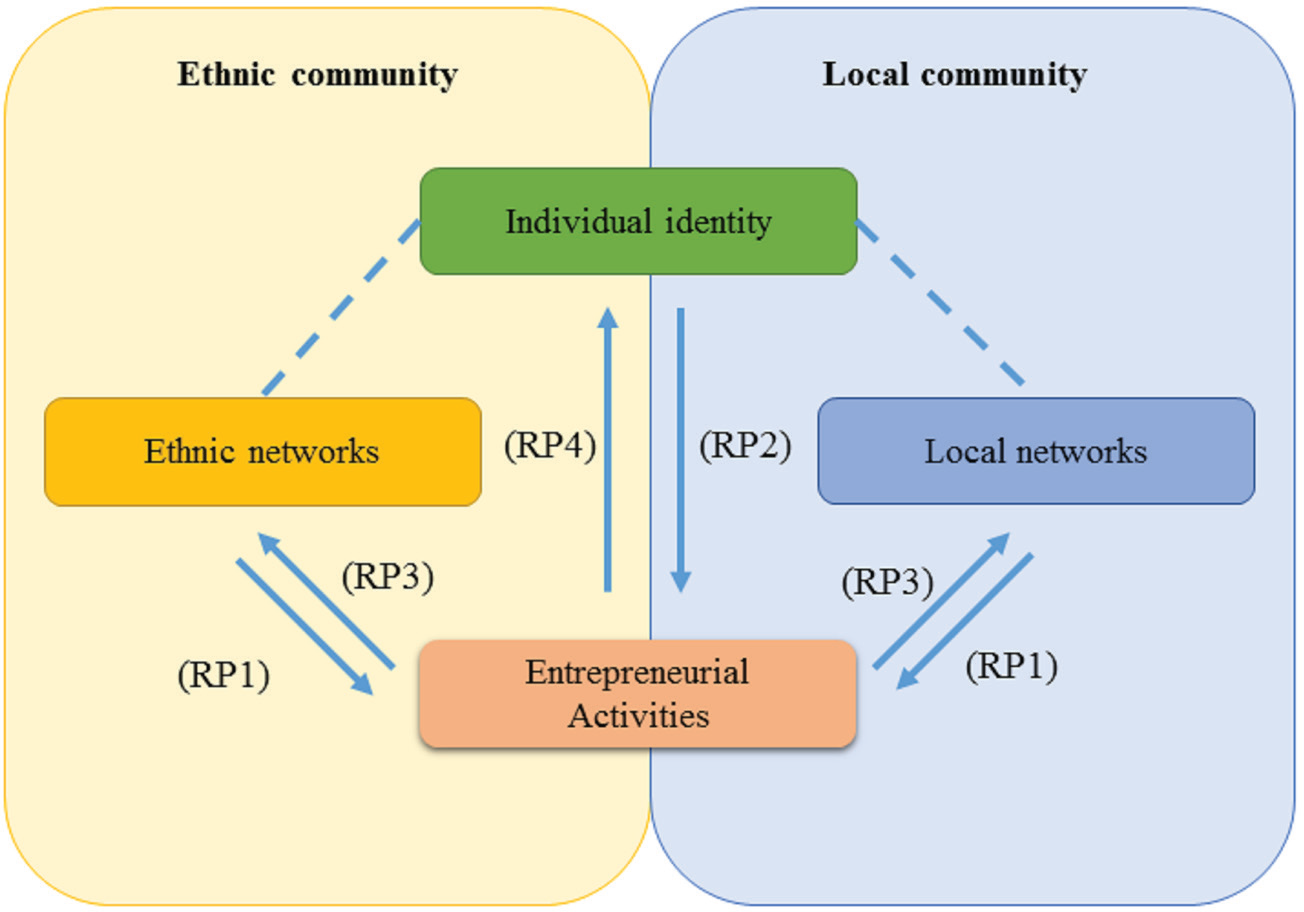
Research proposition 1a: Second-generation ethnic entrepreneurs have difficulties in approaching ethnic resources, as they often lack a full connection to the ethnic community.
Research proposition 1b: Through the ethnic networks of the older generations in families, second-generation ethnic entrepreneurs can re-build the connections to the ethnic community.
Formation of Entrepreneurial Motivation
The previous section shows that second-generation ethnic entrepreneurs struggle to connect themselves to the ethnic community. If they do not understand the ethnic community well, the question arises as to why they decide to become ethnic entrepreneurs addressing ethnic markets or resources. The second causal relationship provides this question with an answer and shows that their dual identity—a mixture of ethnic and host-country identity—plays a crucial role in the formation of their entrepreneurial motivation.
In order to understand this mechanism, we first present what their dual identity looks like according to three different types of identities observed in the case studies. (a) host-country identity; (b) ethnic identity and (c) dual identity:
First, most of the cases show that the second-generation Vietnamese in Germany feel like locals in Germany to a certain degree. While there is a difference to what extent they identify themselves as ‘German’, the following quotes show that some of the second-generation Vietnamese can have a strong host-country orientation:
Many second-generation immigrants, especially those who performed well in schools, are not integrated but have acculturated themselves into the mainstream community. (Entrepreneur A) The second-generation Vietnamese can have a German partner or Vietnamese partner, but they communicate in German. Or they have friends… most of them are Germans or international people without any connections to the Vietnamese community.… You cannot recognize whether they are Vietnamese or just a German with an Asian look; they are a German completely, and there is nothing Vietnamese in the way they live. (Entrepreneur B)
In the observed cases, the second generation feel more comfortable presenting themselves as a member of the mainstream community. One possible reason is that the second generation receive their entire education in the host country, which results in acculturation (Van Oudenhoven, Ward & Masgoret, 2006). Entrepreneur C, F and G manifested that their family is the only environment where they act as a Vietnamese since they were taught to behave like a German in the schools and their workplace.
Nevertheless, cases also capture the strong emotional attachment of the second-generation Vietnamese to the ethnic community. For instance, interviewees often stated that whenever they communicate with other ethnic members, they attempt to behave like Vietnamese and are excited to learn about their ethnic traditions. The following quotes show that the second-generation Vietnamese also identify themselves through their ethnicity:
No matter how long we stay in Germany, in my opinion, we are all Vietnamese, just as my father said.… There is no doubt that I have a Vietnamese appearance, and I am Vietnamese. (Entrepreneur F) I know that a lot of the second-generation is struggling with identity, but they would not go so far as not to be able to define who they are.… I am Vietnamese, and there is no doubt about that. (Entrepreneur A) What is remarkable here is that Entrepreneur A emphasises both national and local identity. In fact, it was not only the case with Entrepreneur A, but also Entrepreneur D shows a similar mixture of identity. Some of the interviewees seem to clearly identify themselves as someone who is located between the ethnic and the German community. For them, there was no dominant identity: I have the feeling that I am the bridge between two communities, and I am here to connect people from those groups. (Entrepreneur B) I was born in Germany and grew up as a ‘German,’ but I am always curious about my roots and want to learn about Vietnam. (Entrepreneur C)
Indeed, they are often indecisive and ambivalent about their social belonging. Entrepreneur F expresses his confusion as follows:
Germany is now my homeland … I am essentially German … but sometimes I have the feeling that I am just a foreigner in Germany. (Entrepreneur F)
On the one hand, second-generation Vietnamese immigrants adopt German mainstream values and norms, having received education in Germany together with local classmates. This finding is in line with the Segmented Assimilation Theory, which argues that descendants of immigrants can integrate themselves into the mainstream society well due to the absence of language and cultural barriers (Portes et al., 2005; Portes & Zhou, 1993). Compared to the first-generation, second-generation Vietnamese have less of a connection to the ethnic culture and community. Interviewees also emphasised that they had a limited command of the Vietnamese language.
The evidence above supports the fact that Vietnamese second-generation immigrants have mixed feelings about their origins. On the one hand, they feel that they are losing connections to the community. On the other hand, they are proud of their culture and proactively present themselves as a Vietnamese minority in Germany. These opposing feelings seem to reside within their minds simultaneously. One explanation for the willingness to emphasise their ethnic backgrounds may be attributed to the fact that Vietnamese immigrants belong to a so-called ‘visible minority’ in Germany (Dana, 2000). Having a non-Western appearance necessarily highlights the foreignness of their ancestry, which may strengthen their emotional belonging to the Vietnamese ethnicity. This phenomenon is not particular to Vietnamese immigrants in Germany. In fact, literature has investigated how such visible physical differences may influence a formation of immigrants’ identity and perception in other contexts, such as Cuban and Mexican in the United States (Portes & Rumbaut, 2001).
The observed Vietnamese second-generation immigrants decided to start their business mainly for two reasons. The first reason is that they want to make contributions to their ethnic community (Basu & Altinay, 2002).
Through our business, we want to present the beauty of Vietnamese culture…. We offer authentic cuisine and import all the decoration from Vietnam. (Entrepreneur D) I found that when working with only German customers, I was just a German lawyer, like thousands of German lawyers out there, but I would like to create different values from my professional skills and experiences for the ethnic community. (Entrepreneur A)
This feeling may be comparable to the homeland-duty (Zhou, 1997) or homeland-orientation (Levitt, 2009) of the diaspora population. Compared to the first-generation, second-generation immigrants have better access to resources in the mainstream market. They also have acquired rich education and vocational experience from German society. Leveraging such resources and human capital, they now want to develop businesses which create novel values for the ethnic market.
The second reason is to understand their origins (Berry, 1990). Empirical findings show that second-generation immigrants often feel indecisive concerning how to identify themselves, and sometimes, even face an ‘identity crisis’ (Erikson, 1968). Vietnamese second-generation ethnic entrepreneurs are confused that they have a Vietnamese appearance while not knowing much about their ethnic origin. This gap is one of the drivers for them to pursue becoming ethnic entrepreneurs to understand their origins through their entrepreneurial activities:
Even though my current income from the business is not comparable to my income from my previous job, I am happy since I could apply the knowledge and experience I gained from the German community to do something meaningful for the young Vietnamese immigrants in the country. (Entrepreneur G) When I told my family that I would leave my job for one year, go to Vietnam to do the market research and build up a production chain from Vietnam to Germany, … my mother was shocked since my current job was very good with a stable income and great colleagues … I visited Vietnam several times, and I really want to support farmers there with my skills and knowledge. (Entrepreneur C)
The previous literature emphasises the advantages of the second-generation ethnic entrepreneurs by arguing they can address the mainstream market, which is generally more profitable than the ethnic one (Rath & Kloosterman, 2000). The entrepreneurs in the investigated cases, however, intentionally chose to address the ethnic market since they were more driven by emotions and feelings for their ethnic community than by pure economic motivation. Despite the fact that second-generation ethnic entrepreneurs’ embeddedness in the ethnic community is limited compared to the first generation, empirical evidence shows that their ethnic identity motivates them to pursue a business that they perceive to be good for their ethnic community, even in exchange for promising vocational alternatives.
Research Proposition 2a: Individual identity influences the entrepreneurial activities of second-generation ethnic entrepreneurs. The more they identify themselves as a member of the ethnic community, the more entrepreneurial activities related to the ethnic community there are.
Research Proposition 2b: A robust ethnic identity motivates the second-generation immigrants to pursue ethnic businesses that can contribute to the development of the ethnic community.
Feedback Effect on Embeddedness
The third causal relationship explains the feedback effect of the entrepreneurial activities of second-generation immigrants on their societal embeddedness. Research on ethnic entrepreneurship maintains that ethnic entrepreneurship is influenced by their mixed embeddedness (Kloosterman et al., 1999). The case studies identify that ethnic entrepreneurial activities also influence the mixed embeddedness of second-generation Vietnamese immigrants. In this part, we analysed this relationship from two different perspectives: (a) connection to the ethnic and the host-country societies and (b) intergenerational relationships within families
First, we present some empirical findings to show how intergenerational relationships within families are improved through the entrepreneurial activities of second-generation immigrants. As presented above, the decision of second-generation Vietnamese to become ethnic entrepreneurs was often not appreciated by their parents, who expect them to have a successful stable life in Germany. Despite their initial disappointment, parents gradually come to understand their children’s motivation to support the ethnic community and to understand their ethnic roots and start to offer support:
My parents were afraid that having my own business would not be stable, but they saw my ambition, they learned from other ethnic members that my business supported them, and they appreciated my work … I think, at that moment, my parents changed. (Entrepreneur G) They supported us, economically and mentally.… Of course, they were not happy with our decision to be self-employed, but after one year, we became famous not only in the ethnic community but also in the local community.… They saw that our business is creating new value and presenting the beauty of the homeland, which makes them proud of my business. (Entrepreneur D)
In order to conduct ethnic businesses, entrepreneurs need a number of connections within the ethnic market. In the case of second-generation ethnic entrepreneurs, they have limited connections to the ethnic community due to the generation gaps we presented above. Some of them are connected to the ethnic community only through their family. It is a challenge for them to reconnect themselves to other ethnic members—their potential suppliers, business partners, competitors and customers. In this regard, their family played a significant role to make a bridge between second-generation entrepreneurs and the ethnic community:
Our first supplier was my mother’s friend.… Since we did not know many Vietnamese people in Germany, she introduced him to us through her networks. She also taught us how to deal with some ethnic issues. (Entrepreneur C) I came to some Asian centres to do marketing for my business … after talking for a while, they (the managers of the centres) realised that they know my father … they did not ask me for the fee since they considered me as their son. (Entrepreneur F)
To strengthen the connections to the ethnic community, second-generation ethnic entrepreneurs need their parents’ support (Aldrich & Cliff, 2003; Deakins, Majmudar & Paddison, 1997). For instance, through parents’ networks, second-generation ethnic entrepreneurs can build trustworthy connections to ethnic business partners (Aldrich, Renzulli & Langton, 1998).
The case of Entrepreneur C presents that his mother not only links him to the ethnic community but also teaches him how to behave in a culturally appropriate manner, which is an essential skill to establish an ethnic network. Entrepreneur F’s case indicates two critical issues. One issue is the role of trust within the ethnic community. Fairchild (2010) states the crucial role of being a part of ethnic enclaves in order to access ethnic resources, such as networks, knowledge, attitudes and skills. Another issue is the existence of unwritten rules in ethnic networks. In order to be able to become an integral member of the community, second-generation entrepreneurs need to be familiar with such unwritten business rules.
Research on ethnic entrepreneurs has highlighted the existence of such taken-for-granted assumptions with regards to business rules within the ethnic economy and pointed out that those who do not follow them are excluded from the network (Volery, 2007; Zhou, 2004). The literature on institutional theory also supports this argument with the concept of legitimacy. Suchman (1995, p. 574) defines legitimacy as ‘a generalised perception or assumption that the actions of an entity are desirable, proper, or appropriate within some socially constructed system of norms, values, beliefs, and definitions’. For second-generation immigrants who have socialised mostly in the mainstream community, gaining legitimacy within the ethnic network is more challenging than finding the right people to approach. Without legitimacy, their business relations will not be sustainable (Greve, 1995). Second-generation immigrants learn ethnic values and norms either through their entrepreneurial activities—with support from their parents, or simply through learning-by-doing—as their entrepreneurial activities necessarily require them to have frequent interactions with ethnic members:
I learned what they [ethnic members] need from doing business and offering consulting sessions at the Vietnamese Business Association in Germany.… It is the process of learning by doing, not only my Vietnamese language but also my understandings about Vietnamese people in Germany has been improved. (Entrepreneur A). Talking to my ethnic customers, I learned what they need, and considered if I could offer those products.… The idea for our next products came from young Vietnamese mothers in Germany, they came and asked if I had something like that. It was very important for them and their children in their daily lives. (Entrepreneur G)
Doing business in the ethnic community influences the balance of the mixed embeddedness of second-generation ethnic entrepreneurs. Through interactions with other ethnic members, they learn about their roots, gain legitimacy within ethnic networks and become an official part of the community. Their initial disconnection to the ethnic community can be overcome through their parents’ support. As a result, entrepreneurial activities reduce their under-embeddedness in the ethnic enclave.
Research proposition 3a: Doing ethnic businesses requires second-generation ethnic entrepreneurs to have legitimacy in the ethnic community.
Research proposition 3b: Through their parents, second-generation ethnic entrepreneurs gain a useful understanding of the ethnic community, and, therefore, they can embed themselves better into the ethnic community.
Re-Formation of Dual Identity
Ethnic entrepreneurship changes the balance of the mixed embeddedness of second-generation immigrants as well as their dual identity. This section explains how ethnic entrepreneurial activities re-form the identity of second-generation immigrants:
Because of my business, I now come to Vietnam two or three times per year.… I did not think about that before. but working for years with Vietnamese people has made me feel that I am a Vietnamese. (Entrepreneur C)
The case of Entrepreneur C presents how interactions with people with the same ethnicity and the country itself influence entrepreneurs’ identity. Nguyen and Benet-Martínez (2013) argue that one of the major reasons for the second generation to refuse their ethnic identity is a lack of understanding of the ethnic community. By interacting with Vietnamese people, they need to understand ethnic values and act Vietnamese:
I had some problems in the beginning. I did not know how to deal with ethnic partners in specific situations. No one taught me how to use different pronouns in different contexts.… But now I know how to negotiate with them as a Vietnamese. (Entrepreneur F)
In order to make business partnerships with the first-generation Vietnamese or Vietnamese successful, one needs to behave and act Vietnamese:
I have some Vietnamese business partners in Vietnam; our cooperation is going very well. Of course, there were some issues, but after discussing them, I realised that sometimes I misunderstood them.… I knew that I should consider things from their point of view, as a Vietnamese. (Entrepreneur E)
Consequently, the balance of ‘dual-identity’ can be changed into more ethnic identity than national identity. Phinney, Horenczyk, Liebkind and Vedder (2001) also show the crucial role of the balance between these identities. Therefore, second-generation ethnic entrepreneurs re-construct their self-identities by focussing more on their ethnic identity.
Research proposition 4: While conducting the ethnic entrepreneurship, second-generation ethnic entrepreneurs are embedded into the ethnic community; thus, their ethnic identity becomes stronger.
Discussion and Conclusion
Previous studies illustrate the ethnic entrepreneurial activities of the second-generation in contrast to that of their parents by arguing that the second-generation have better access to the mainstream community while maintaining their ethnic origin (Beckers & Blumberg, 2013; Fernández-Kelly & Konczal, 2005). At the same time, the literature on second-generation immigrants highlights their complex societal positions as well as their self-identity (Fernández-Kelly & Konczal, 2005; Portes & Rumbaut, 2001; Portes & Zhou, 1993). Our study provides evidence to fill the research gap that previous research did not fully consider the psychological and societal aspects of the ethnic entrepreneurship of second-generation immigrants. We develop the conceptual framework of second-generation ethnic entrepreneurs (Figure 2) to visualize the mutual relations between embeddedness and the entrepreneurial activities of second-generation ethnic entrepreneurs. This study makes contributions to literature in a three-fold manner.
First, the prior discussions of immigrants’ descendants often consider their mixed embeddedness as a source for competitive advantages. The studies by Kloosterman and his colleagues emphasise that the mixed embeddedness create unique entrepreneurial opportunities for immigrants in general (Kloosterman, 2010; Kloosterman & Rath, 2001). However, it is not always the case for their descendants. Growing up and having an entire education in the receiving country can reduce the connections of second-generation immigrants to ethnic communities. From the sociological point of view, this unbalanced embeddedness can affect the individual identity of second-generation immigrants, as it can lead to refuse their own ethnic heritage (Pyke & Dang, 2003). This study reveals which relationships second-generation ethnic entrepreneurs have to the ethnic community, and how they can overcome the lack of legitimacy, tacit knowledge and social capital in ethnic markets through the support of their family. As suggested by Portes and Rumbaut (2001), some ethnic groups maintain strong connections among family members, and these connections can support the descendants of immigrants to reconnect to ethnic communities and thereby gain fundamental access to these communities.
Second, this study reveals the role of the mixed identity of second-generation ethnic entrepreneurs. Fauchart and Gruber (2011) state the crucial role of founder identities in creating and operating the business. Additionally, ethnic identity is an important entrepreneurial aspiration (Wilson, Marlino, & Kickul, 2004). This study finds that the entrepreneurial decision-making process of the second-generation ethnic entrepreneurs is more strongly influenced by their emotions and feelings for their ethnic community than by pure economic motivation. In a sense, this study illustrates how the mixed identity of the second-generation ethnic entrepreneurs forms their entrepreneurial motivations and entrepreneurial activities. Regarding their societal interactions with the ethnic societies, second-generation ethnic entrepreneurs can learn about their communities, and, therefore, have a better understanding of their ethnicity.
Third, this study identifies a unique feedback process from ethnic entrepreneurship to the social connections and identity of the second-generation ethnic entrepreneurs. While studies on ethnic entrepreneurship often deal with the societal and psychological factors that may influence the entrepreneurial activities of immigrants (Rath & Kloosterman, 2000), the reverse effect of entrepreneurial activities on their societal embeddedness and identity has not been investigated well. In order to market in an ethnic community, it is necessary for the second-generation immigrants to learn about their ethnicity and to interact with the ethnic community. Through these actions, the second-generation feel more connected to the ethnic community, which then changes the balance of their ethnic embeddedness and dual identity. This is in line with the psychological study about the descendants of immigrants, in which positive feelings and a sense of security can re-form the ethnic identity positively (Liebkind & Jasinskaja-Lahti, 2000; Phinney, Romero, Nava, & Huang, 2001).
This study has several limitations. First, the gender aspects of second-generation ethnic entrepreneurs were not considered in this study. Since gender identity may impact the self-identity and social embeddedness of immigrants’ descendants (Wilson et al., 2004), ethnic entrepreneurs conduct entrepreneurial activities differently depending on their gender. Second, our case studies have limited considerations of time-dimensions, as we did not conduct a longitudinal study, and interviewees reflect their own experience in the past, retrospectively. Third, we did not consider how different family backgrounds may influence their children’s businesses. For instance, there are mainly two different groups of Vietnamese migrants in Germany: refugees and guest-worker migrants. Vietnamese refugees generally have higher educational backgrounds since most of them decided to leave the country for political reasons while the Vietnamese who came to Germany as guest workers did not have academic backgrounds. How their backgrounds influence the life development of their children may impact the way the second-generation immigrants create businesses. Future research could consider these differences in the backgrounds of the first-generation and how they influence second-generation ethnic entrepreneurship. Considering the limitations of this study and emerging causalities that are presented in the form of research propositions above, we suggest that future research investigates the following research questions:
How does the balance of mixed embeddedness and dual identity influence the entrepreneurial activities of second-generation entrepreneurs who have other ethnical backgrounds than Vietnamese? How do the entrepreneurial activities of second-generation entrepreneurs who have other ethnical backgrounds than Vietnamese influence the balance of mixed embeddedness and dual identity? How does the balance of mixed embeddedness and dual identity change over the course of the business development of second-generation ethnic entrepreneurs? What is the role of family members in second-generation ethnic entrepreneurship? What is the role of gender in second-generation ethnic entrepreneurship?
This study also offers practical implications. In Germany, the second-generation Vietnamese migrants have now reached the age at which they are starting to engage in economic activities (Vietnam Botschaft, 2012). The children of the Vietnamese immigrants in Germany have integrated themselves well into mainstream society while achieving even higher educational achievement than local German children (Spiewak, 2009). This success at integration has turned into employees, as well as entrepreneurs, with high potential for the host country. Understanding the embeddedness of the second-generation Vietnamese and their ethnic entrepreneurial activities provides German policymakers with insights to leverage their entrepreneurial potential for the national economy.
Findings of this study demonstrate how the access to resources and social network of second-generation ethnic entrepreneurs differs from the first-generation, how dual identities drive second-generation entrepreneurs to conduct ethnic business and how their embeddedness in the ethnic community and mainstream society play roles in their business. Based on these findings, this study recommends policymakers in host countries to pay particular attention to the roles of the socio-cultural and emotional factors of second generations, such as their relationship to the ethnic community and identity, to tailor their support instruments to leverage the entrepreneurial potential of second-generation ethnic entrepreneurs.
Footnotes
Declaration of Conflicting Interests
The authors declared no potential conflicts of interest with respect to the research, authorship and/or publication of this article.
Funding
The authors received no financial support for the research, authorship and/or publication of this article.
