




Abstract
A new service concept meets some resistance from those who face it prior to adoption. If the resistance cannot be overcome, the new service will not be diffused. There have been many studies of business-to-consumer (B2C) contexts on adoption and rejection of product and service innovation. The question remains, what barriers should be overcome in the diffusion process of new services in the business-to-business (B2B) contexts? For example, if you implement a new service concept to your organization to create new value with your customers, what barriers does your organization need to overcome? Few studies to date have revealed the issue. To identify barriers for adoption, this study focuses on the diffusion process of the Agile software development method in Japanese organizations, which is still in progress, and attempts to approach the adoption barriers for service innovation in the B2B context to understand the barriers and leverage point for overcoming them.
The Agile software development method is an innovation of software development. But there is a possibility that its diffusion will be stopped due to the resistance of project managers involved in a software development. This may lead service systems to value co-destruction as well.
Introduction
They let others take customers away from them because they assumed themselves to be in the railroad business rather than in the transportation business. The reason they defined their industry incorrectly was that they were railroad oriented instead of transportation oriented; they were product oriented instead of customer oriented. (Levitt, 1975)
Levitt explained that in the 1960s, in the United States, railroad companies lost their customers by non-railway transportation (buses, airplanes), and declined. He explained the failure was due to managers becoming too short-sighted to understand the innovation emerging around the business. The implications suggest the possible failure to promote service innovation due to the narrow understanding of any changes occurring at the moment. The story might have been different if railroad management in the 1960s had found significant implications for the value of transporting. Therefore, it is important to have a customer-centric view of customer value.
In business, if you make a mistake, the consequences are the responsibility of the management, but in the process up to that point, the individual who is facing innovation is the key. In other words, what determines the diffusion of innovation is whether to reject or adopt it, and ultimately the process revolves around the individual. The concept of innovation encounters resistance from those who face it before it is adopted (e.g., Moldovan & Goldenberg, 2004; Ram & Seth, 1989). If the resistance cannot be overcome, the new service concepts will not spread. Therefore, it is important for practitioners involved in innovation and for business owners who want to grow their business through innovation to know what the barriers to adoption are.
In 2001, a certain software developers’ community declared the Manifesto for Agile Software Development. Agile, a software development method, has been expected to overcome the various problems of Waterfall development method (hereafter, Waterfall), which had been the traditional software development method. Agile has been taken up and accepted by many software development practitioners as an innovation in software development. Agile undoubtedly started in software development; however, it is no longer a software-development-only method. For example, radio stations in the United States have used Agile for planning new programs, manufacturing companies have used it for the development and production of equipment, and others have used it for marketing and human resources. In any case, to operate in a very dynamic environment, it is necessary to promote innovation in functional processes (Rigby et al., 2016).
To understand how Agile is used, we go back to software development and focus on the ongoing diffusion process of Agile in Japanese organizations and the barriers to adoption of service innovation in a business-to-business (B2B) context. In addition, we attempt to determine the barriers, obtain insight into the approaches to overcome them, and explore approaches to adopt innovation and co-create value without compromising value created with customers.
Theoretical Background
Study of Diffusion of Innovation
There are two approaches related to the diffusion of innovation. The first approach focuses on its adoption, and there have been many studies that have mainly focused on understanding the reasons for adoption, as represented by Rogers (2003). For example, Bult et al. (2016) analysed and claim the factors that affect adoption and found that ease of use and usefulness are important in the adoption of self-service technology as innovation.
The second approach focuses on rejecting innovation by approaching the barriers that cause rejection of innovation. These studies focused on the uncertainty of innovation and the barriers to innovation. (e.g., Ram & Sheth, 1989). Claudy et al. (2015) argued that studies explaining the reasons for adoption were not always successful. They emphasize the importance of understanding the reasons for resistance and refusal to innovate, not just for reasons for adoption. Reasons for adoption and resistance differ qualitatively and have different effects on decision-making (Claudy et al., 2015). Particular focus has been on psychological barriers. Ram and Sheth (1989) pointed out that there are two primary types of barriers to consumer adopting innovation: functional barriers and psychological barriers. Functional barriers can be divided into usage, value and risk. On the other hand, psychological barriers are divided into traditional and image. Laukkanen (2016) used these types as barriers to adoption and argued that value barrier was the strongest, and that image barrier slowed adoption and traditional barrier explained the reasons for rejection. However, many studies including this focus on consumer behaviour do not explain the B2B environment.
Service Dominant Logic, Value Co-Creation and Co-Destruction
Since 2000, there has been many proposals in marketing research that customers should be viewed as collaborating with companies and creating value together instead of being passive (Prahald & Ramswamy, 2004). Service Dominant Logic (SDL), proposed by Vargo and Lush (2004), is a value co-creation method from the interaction of the competence of the customer and specialized side of the company, and customers are not only in a position to receive value but also to always participate in value creation. Value in SDL is created with customers and businesses, meaning not only tangible goods but also value in context or value in use formed through the use and experience of services. Plé et al. (2010) argued that the basic principle of SDL is only value co-creation and that the interactions between service systems are not only value co-creation but also value co-destruction. In addition, describing the significance of value co-creation and of value in use lacks discussion on the converse possibility (value co-destruction and co-creation) (Plé et al., 2010). Also, while it is important to understand what can lead to value co-creation, it is just as important to understand co-destruction (Plé, 2017). Co-destruction, specifically, as it is important to understanding customer complaining behaviours to further improve service quality and restore dissatisfied customers (Maxham, 2001; Snellman & Vihtkari, 2003), it is also important to understand how value is destroyed. Thus, Plé et al. (2010) noted that SDL does not explain how value is destroyed through interactions between service systems then conceptualized value co-destruction. First, co-destruction can be defined as an interaction process between service systems, and the interaction can result in reduced benefits for at least one service system. Specifically, it explains that the value co-destruction process occurs when at least one of the interacting service systems misuses its resources and/or the resources of another system. In this context, the term ‘misuse’ refers to the inability of other service systems to integrate and/or apply resources in an appropriate and expected manner. Such a co-destruction process results in value destruction by misuse for at least one party. It also states that the process of value destruction due to misuse can occur as a result of accidental or deliberate misuse of resources by service systems, further reducing the level of value achieved by various service systems. However, at this point, both value co-creation and co-destruction are focused on interaction processes. There is no discussion on what strategies are needed to prevent value co-destruction.
Methods and Analysis
Methods and Data Source
Rogers (2003) mentioned that regarding software innovation that may be almost entirely comprised of information; examples are a conservative political philosophy, a religious idea like Transcendental Meditation, a news event, a rumour, assembly-line production and management by objective (MBO), a methodological problem in such studies is that adoption of such innovation cannot be so easily traced or observed, also that such idea-only innovations have a relatively lower degree of observability, thus a slower rate of adoption. We focus on innovation that is almost entirely composed of information, so-called software innovation, and attempt to obtain data sources that can keep track of the state of diffusion over time.
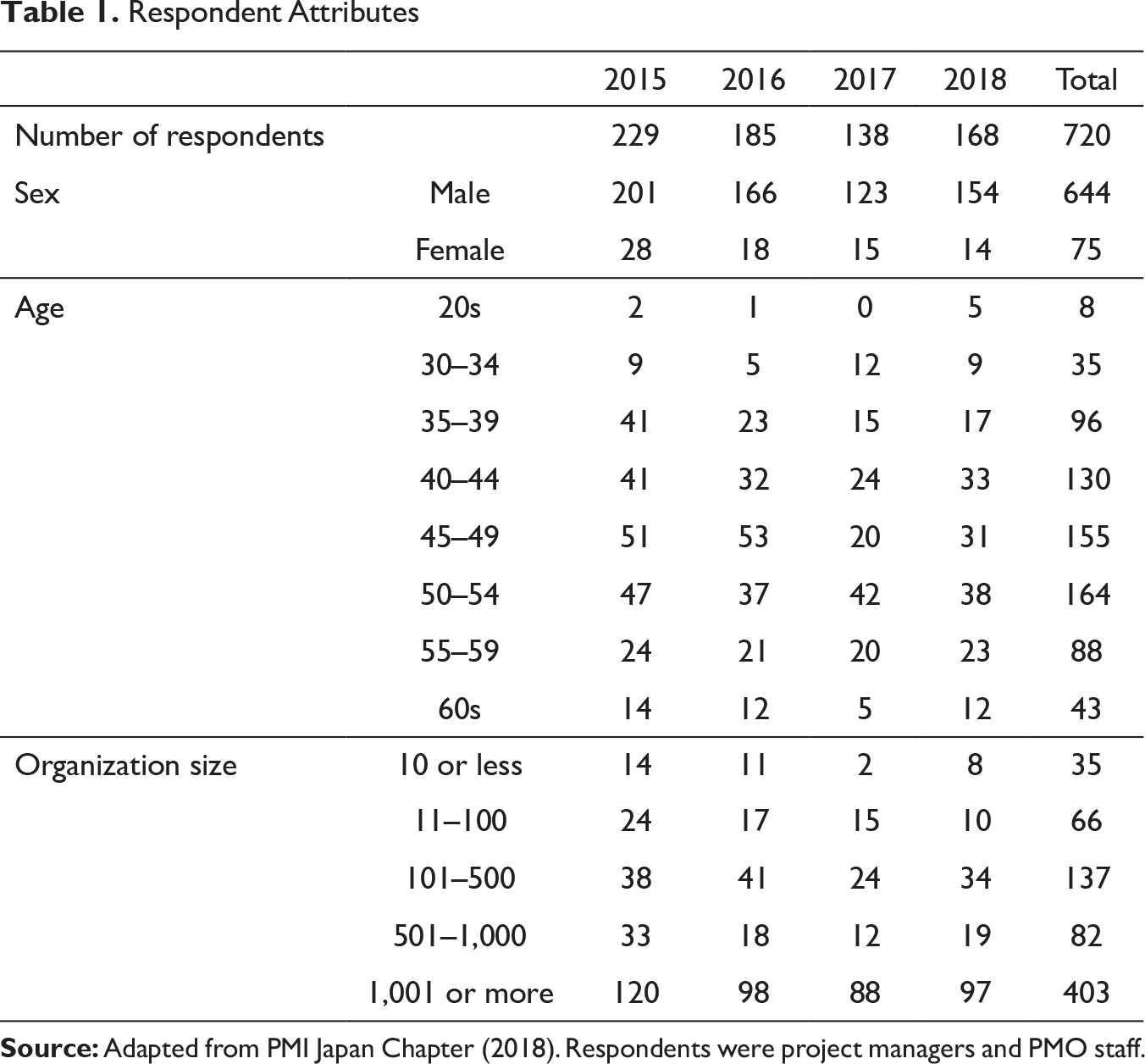
Respondent Attributes
Respondents’ Activity for Agile

Data Process
The free-text answers obtained from the respondents were scattered in the PMI-Japan public materials on their Web site (PMI Japan Chapter, 2018). In our study, the question items were considered questions on the awareness of Agile and were classified into two awareness categories rejection or adoption (Table 3).
Question Categories and Number of Sentences from Respondents

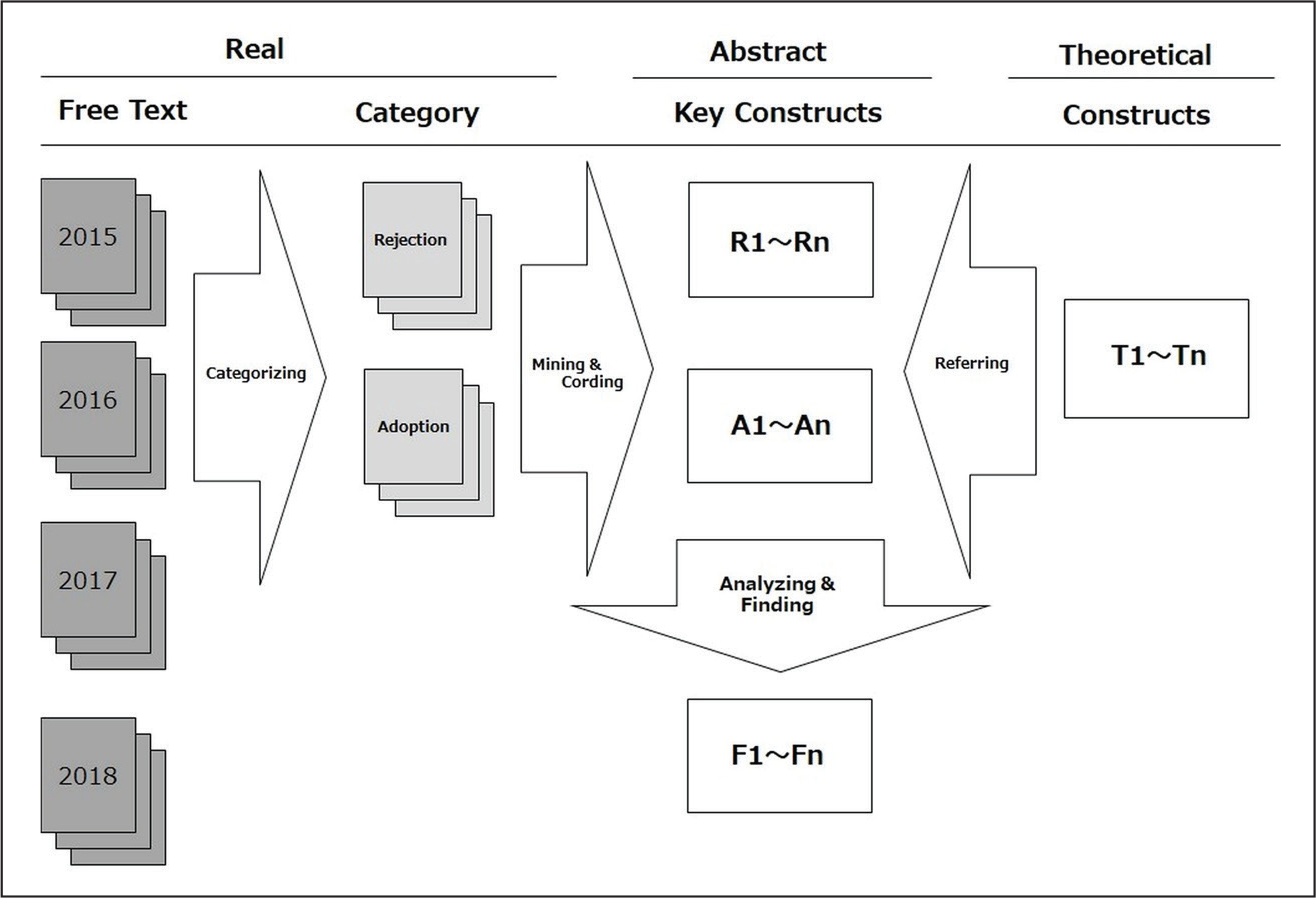
KH coder supports two stages of the post-categorization analysis process. The first stage is called text mining, in which free-text data, that is, 125 sentences for rejection and 178 sentences for adoption, were analysed using KH coder. The analysed data were first summarized and presented in a form that is not influenced by our awareness for Agile. Therefore, it was possible to observe the whole topic in the text group of each category. In the second stage, we created coding rules while observing the output of the first stage, derived constructs that could be grasped in each category, and observed the annual emergence of constructs using the KH coder. Saldaña (2015) suggested that when the major categories are compared with each other and consolidated in various ways, you begin to transcend the ‘reality’ of your data and progress towards the thematic, conceptual, and theoretical. In addition, we proceeded with theoretical analysis by referring to the constructs derived from the above processes into a theoretical framework. Figure 1 shows the flow of these analyses.
As a result of text mining with KH coder, co-occurrence network diagrams of frequently used words were obtained for each category (Figures 2 and 3). The co-occurrence network diagrams represent words that occur simultaneously in a connecting diagram. With these figures, the themes that respondents expressed in each category can be roughly observed.
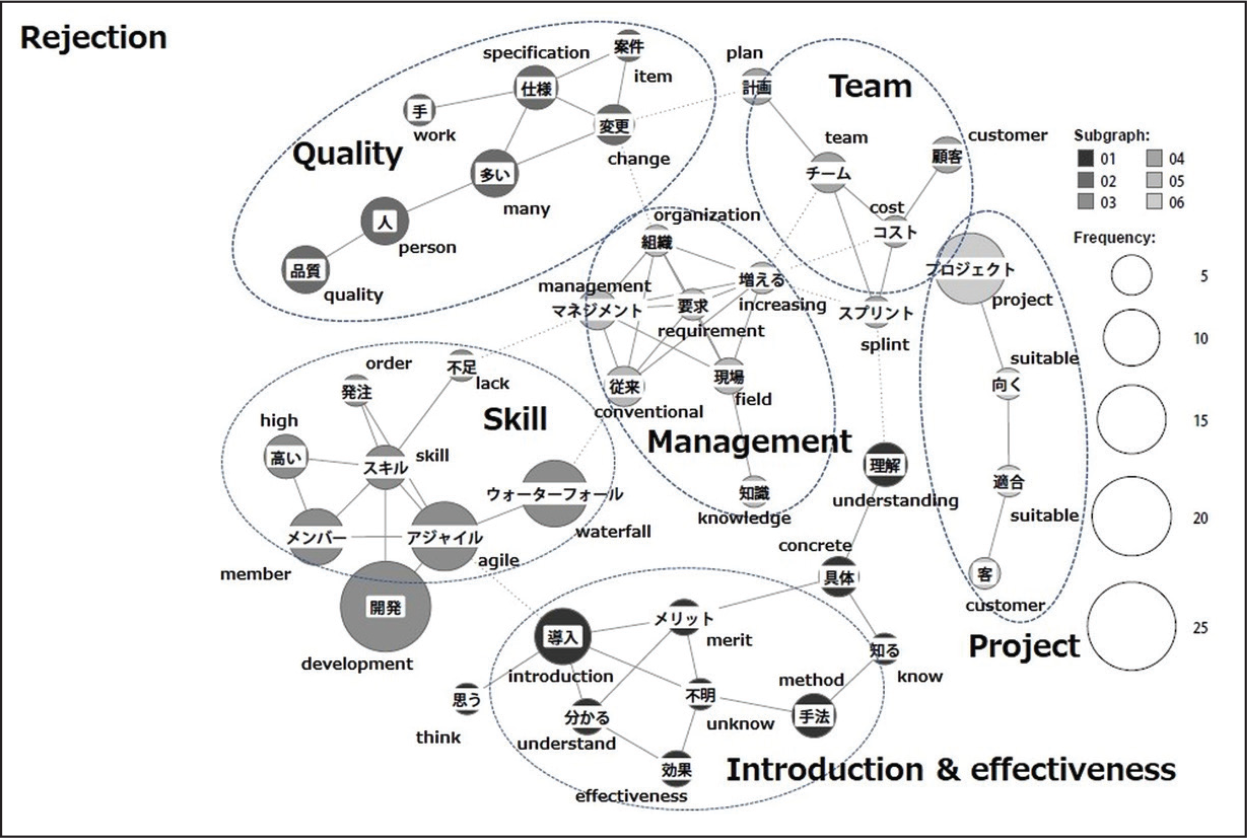
The figure represents and connects words that occur simultaneously. Original output was in Japanese and translation was added by authors. Also, ellipses and bold type themes in each group were added by authors for coding phase.

The figure represents and connects words that occur simultaneously. Original output was in Japanese and translation was added by authors. Also, ellipses and bold type themes in each group were added by authors for coding phase.
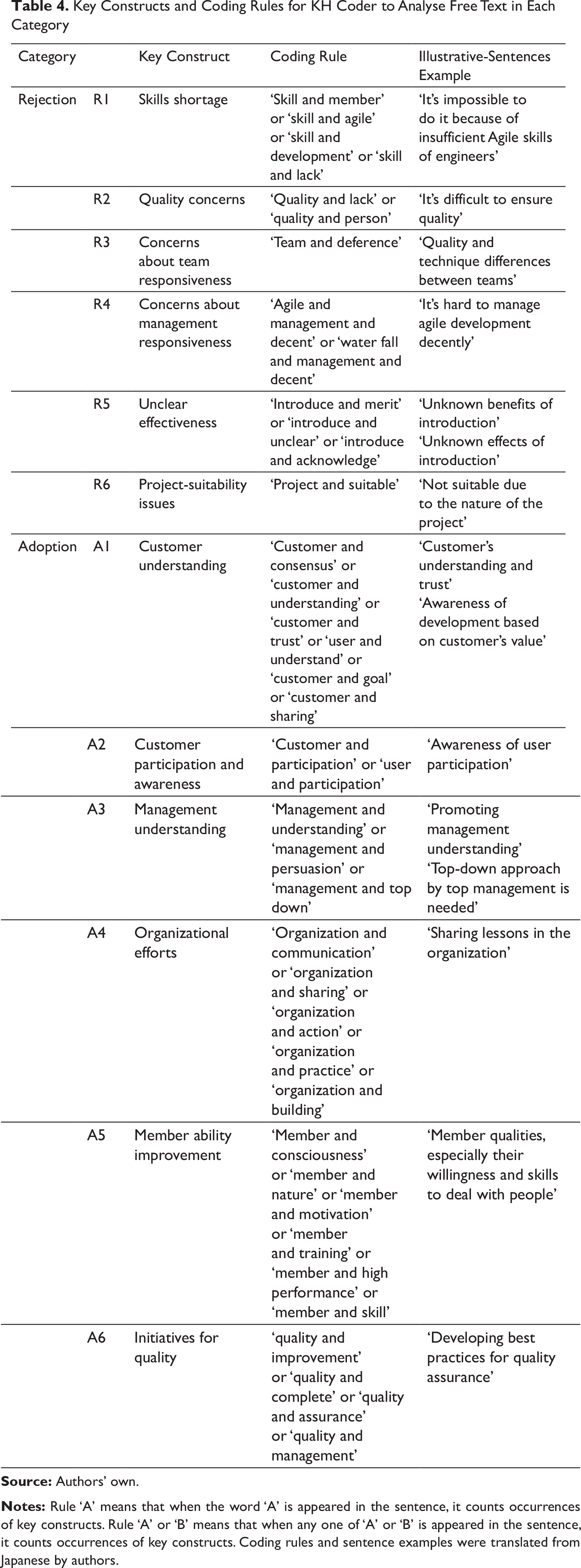
Key Constructs and Coding Rules for KH Coder to Analyse Free Text in Each Category

Size of bubble represents appearance rate of each key construct in free text in each year and category.

Size of bubble represents appearance rate of each key construct in free text in each year and category.
Analysis
Rejection is a collection of negative conscious responses from respondents’ experiences with Agile. Analysis led to six key constructs in this category. These are skills shortage (R1), quality concerns (R2), concerns about team responsiveness (R3), concerns about management responsiveness (R4), unclear effectiveness (R5) and project-suitability issues (R6). The yearly distribution of these constructs (Figure 4) showed that R1 and R6 were constantly expressed. In the most recent year (2017), the expression of R1, R4, R5 and R6 was prominent, and all are also expressed at the same level of frequency. These four constructs need to be considered as reasons for Agile rejection in this survey (PMI Japan chapter, 2018).
Adoption, on the other hand, is a collection of responses related to the efforts required for continued use, derived from respondents’ experiences with Agile. Analysis led to six key constructs in this category as well. These are customer understanding (A1), customer participation awareness (A2), management understanding (A3), organizational efforts (A4), member ability (qualitative) improvement (A5) and quality initiatives (A6). In the yearly distribution of these constructs (Figure 5), A1 is constantly expressed. In the most recent year (2018), there are manifestations of all key constructs except A2. The five key constructs—customer understanding, customer participation awareness, management understanding, organizational efforts and quality initiatives—will continue to be key issues for continued adoption of Agile in this survey (PMI Japan Chapter, 2018).
Theoretical Constructs
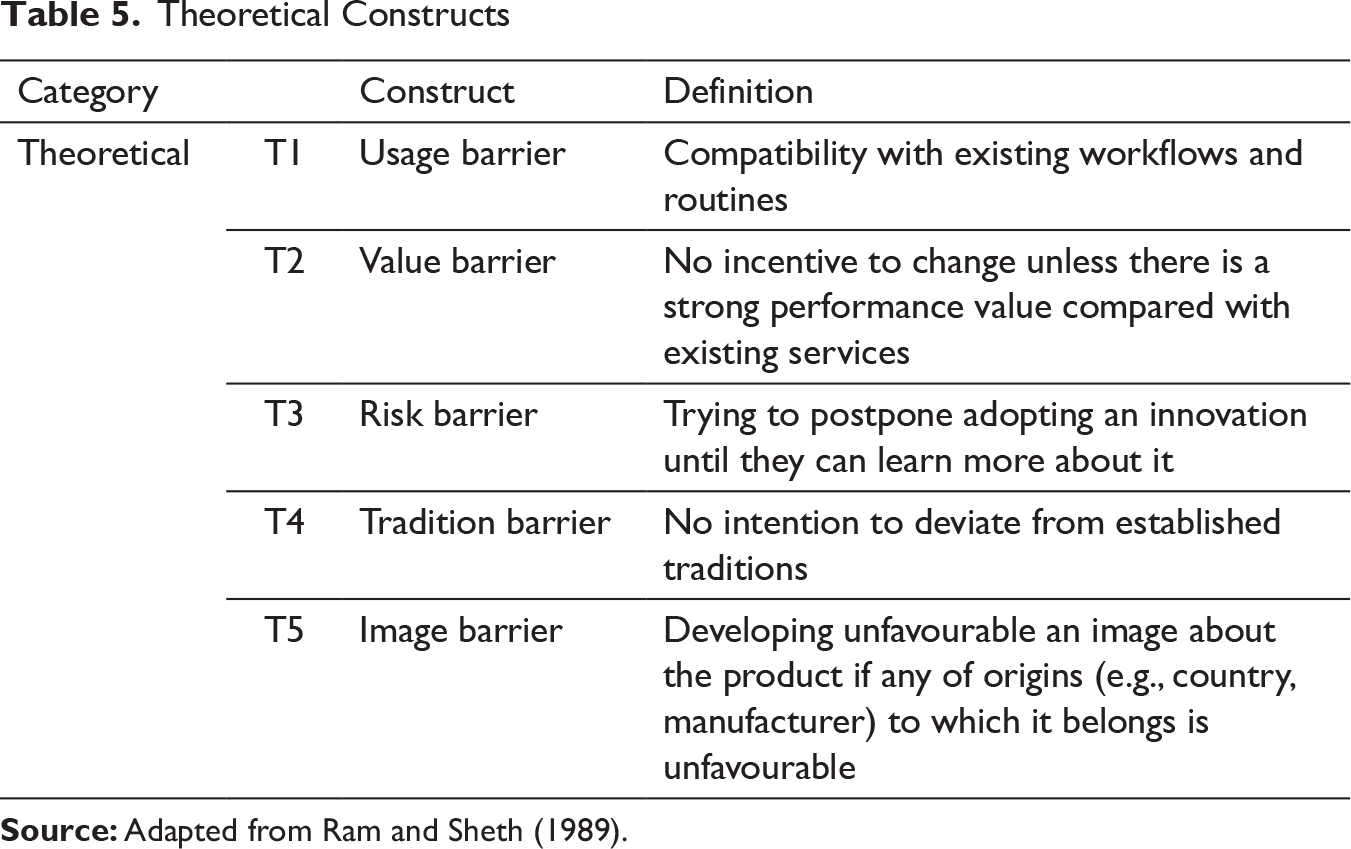
Key Constructs of Rejection Mapped to Theoretical Constructs
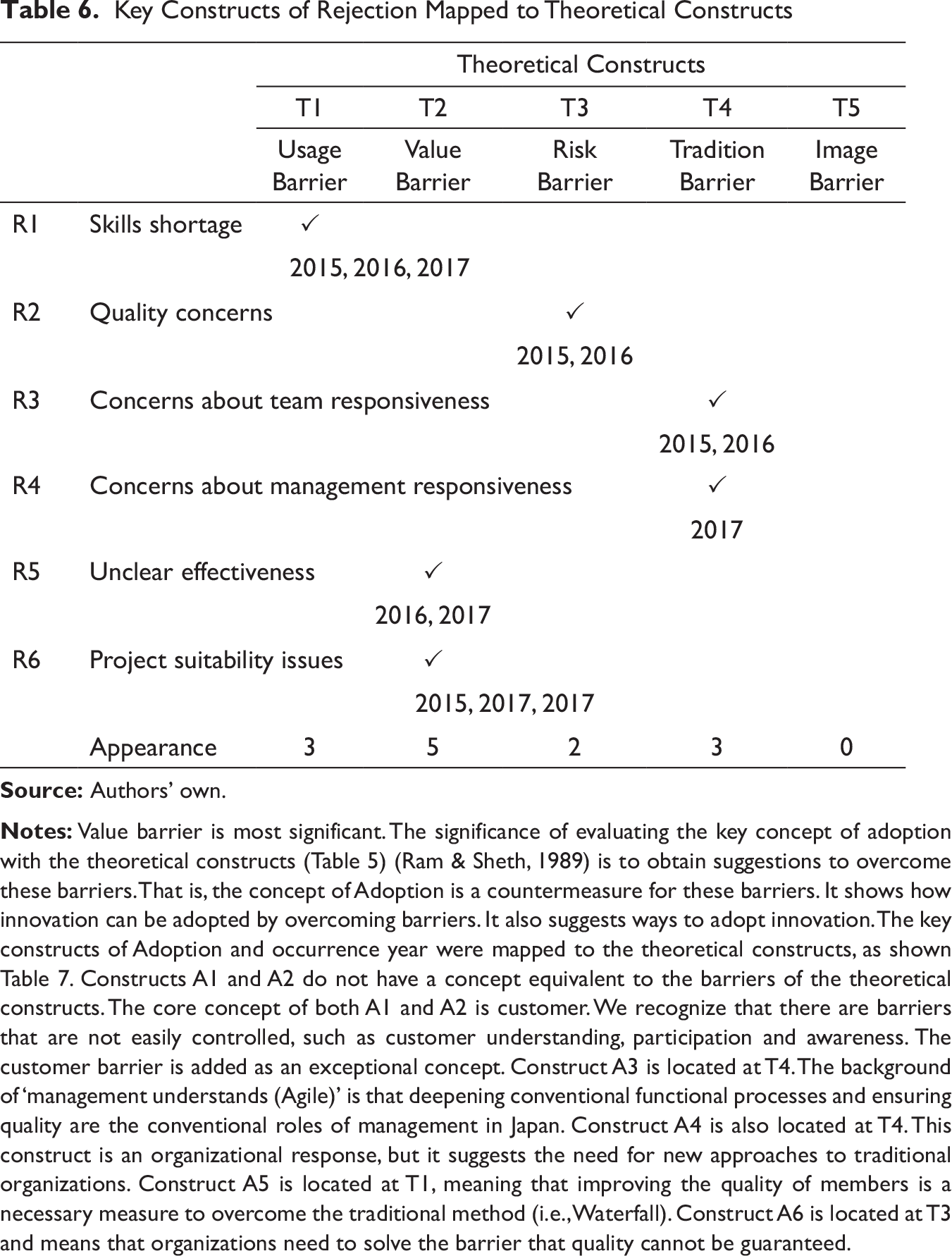
Key Constructs of Adoption Mapped to Theoretical Constructs
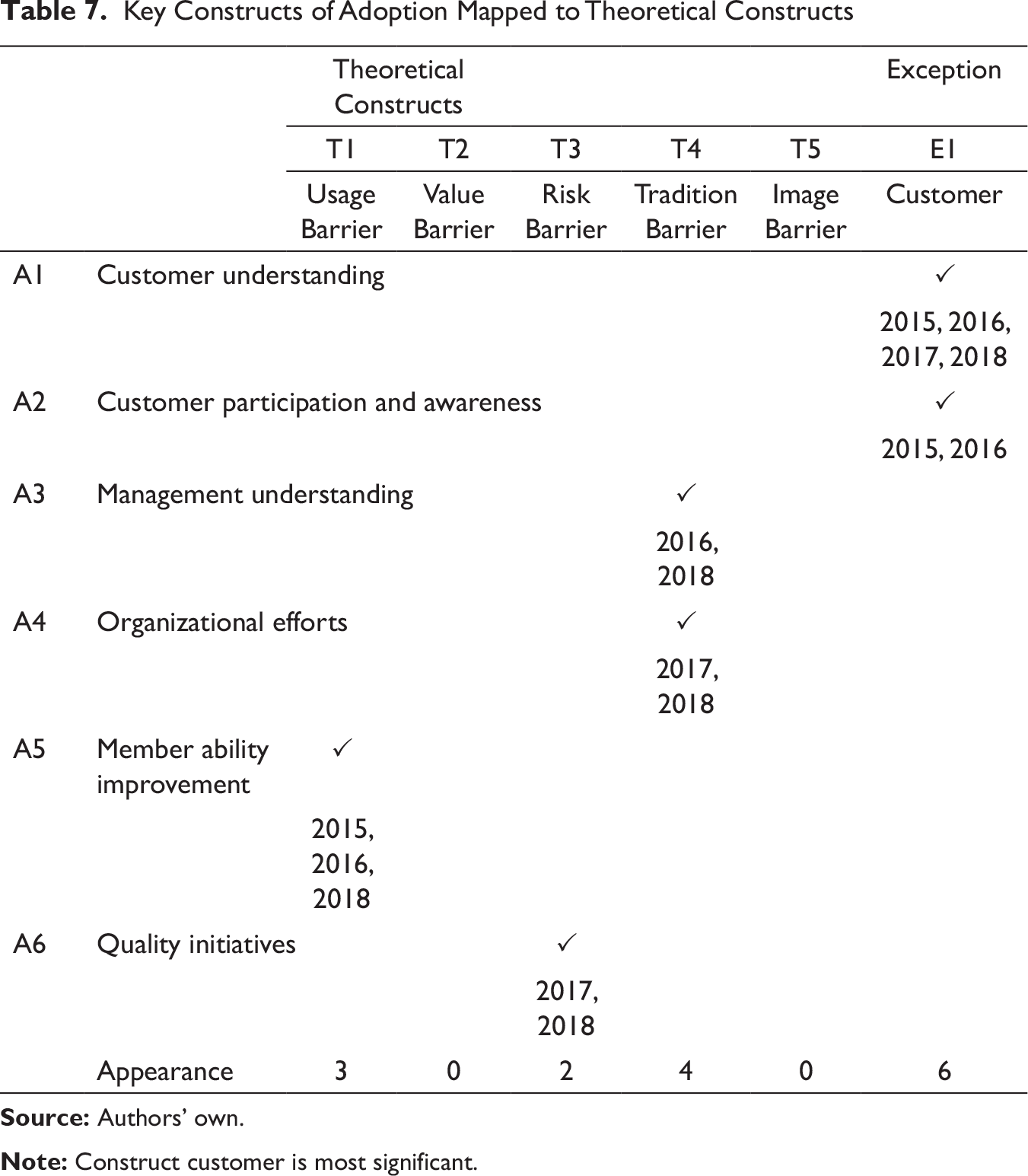
Barriers to Agile Adoption
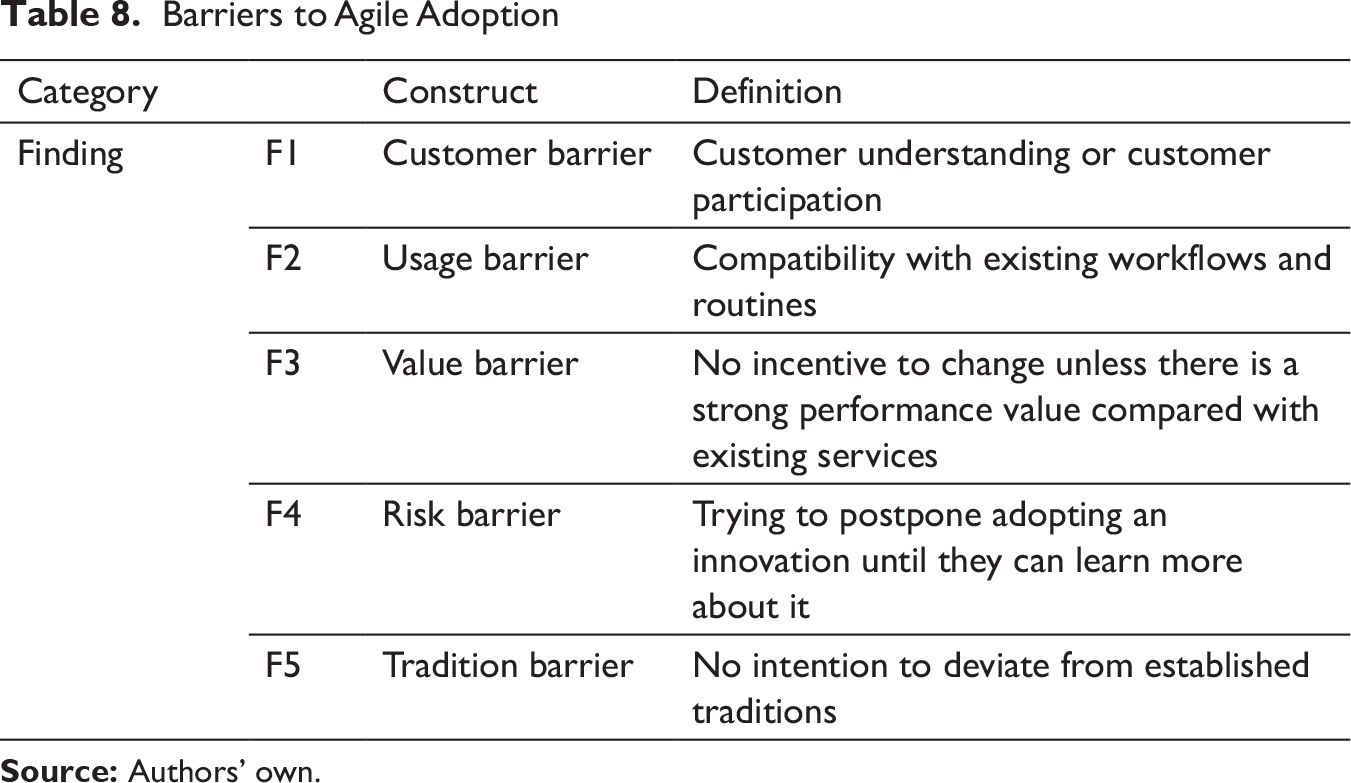
Findings
The adoption barriers we identified for Agile as a result from evaluating Tables 6 and 7 are listed in Table 8. We also identified new leverage points for adoption. It is necessary to understand for whom the innovation is and who has initiative to adopt the innovation in organizations.
Innovation Rejection
Looking at activities for Agile respondents in Table 2, less than 9 per cent quits Agile each year. Of note is the fact that some but not all respondents stop using Agile regularly and the reasons for rejection. As a result (Table 6), the value barrier is the most noticeable barrier. The result was the same as the previous study for consumers (Laukkanen, 2016); value and tradition barriers for explaining the reasons for rejection. When barriers are dominating project managers, it is possible to reject Agile. Initially, Agile was an innovation for developers. However, now it has an impact on a way to manage projects for the related project managers and staffs of PMO. In fact, project managers have a questionable or rejective attitude towards the shift from the traditional approach to Agile (e.g., Wells et al., 2015). Figure 6 shows the causal dependence on rejection for Agile. The respondents with negative constructs may not recognize that Agile goes beyond current methods (i.e., Waterfall) or may recognize that new methods (i.e., Agile) do not have the power to change current behaviour. Those with the concept of rejection may act as a resistance among the people involved in Agile.
Many of the respondents of the survey said that the benefits of implementation of Agile are unclear. However, we do not know how they behave as a resistance. Regarding the resistance or rejection of innovation in an individual consumption behaviour, Talke and Khedienrich (2013) explained that resistance occurs before and after the evaluation of an innovation, but they do not explain the resistance behaviour in organizations. As the respondent’s attribute (Table 1) indicates, many of them are veterans or experienced, in other words, in an organization, it may be the role of a coach leading a team and may stop trying anything new because the benefits are unclear. Veterans and experts have ‘deep smarts’ (Leonard & Walter, 2005) that are the engine of any organization as well as the essential value that individuals build throughout their careers. Leonard and Walter (2005) explained that their deep smart is not just technical expertise, but also includes beliefs and stereotypes that underpin decision-making and coaching. Meanwhile, it should be recognized that sticking to experience and stereotypes for veterans makes themselves to feel a threat from new methods. There have been cases where veterans have resisted reform (e.g., Goodson et al., 2006), in which a rapid change is a threat to veterans.
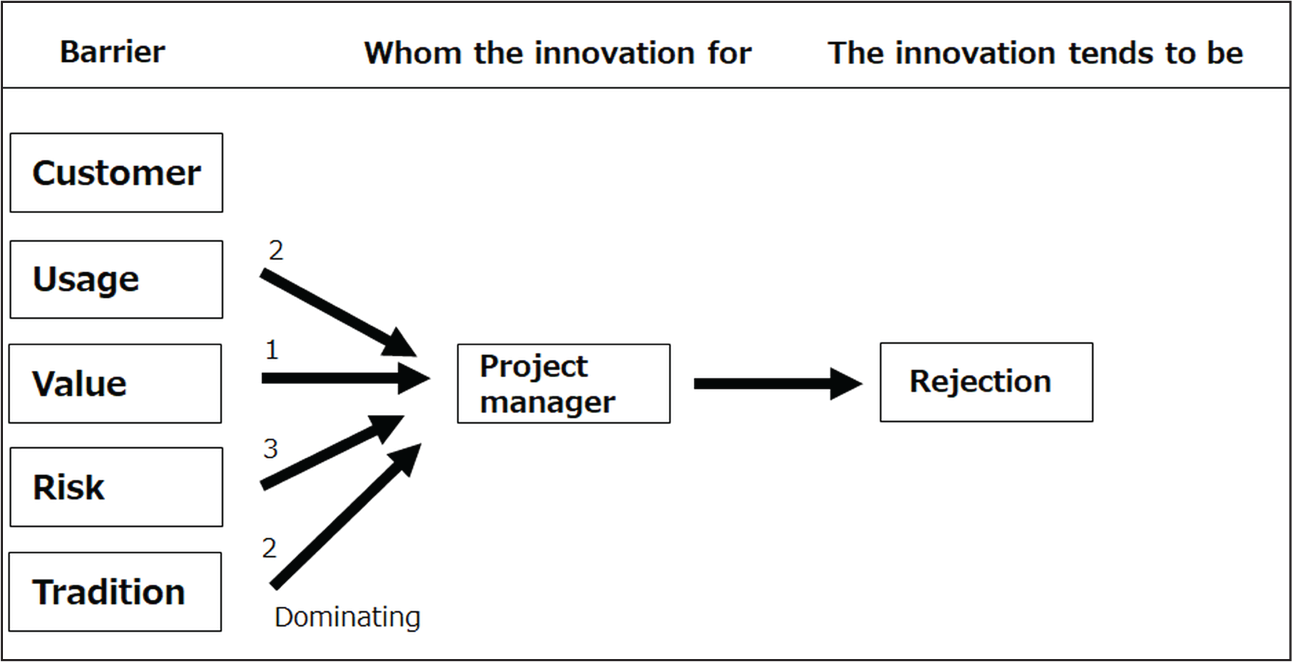
Numbers represent strength.
Innovation Adoption
Agile which was an innovation for developers has an impact on a way to manage projects for the related project managers and staffs of PMO. If Agile is seen as an innovation for project managers and PMO staff as well, it can be observed that they can reject such innovations depending on barriers, especially value barrier, as suggested in Figure 6. In other words, the values of the project managers were found to influence adoption for Agile. On the other hand, it was found that overcoming the barriers, other than the value barrier, in Table 8 would lead to adoption of Agile (Table 7).

Numbers represent strength.
On the value of Agile that adopters recognize, they said ‘responding to change and creating value faster’, ‘the ability to deliver value in a timely manner’, ‘to focus on business value’ and ‘we can create only what we believe to be valuable’, ‘increase customer value’ . In general, it is possible to response to change and improve customer value. Thus, the turning point in the adoption of Agile is whether all parties see the responsiveness to change and the increasing customer value as a value for own organization.
For B2B organizations, the Adoption barrier means all barriers that managers can solve by taking the initiative. Looking further at Table 7, we can see that the customer concept has the most influence. In other words, it was suggested that a manager of an organization should perceive that an innovation was for the customer and him/herself and not for the developer alone and that it is necessary to address these barriers. Figure 7 shows the causal dependence on adoption for Agile.
Value Co-Creation and Co-Destruction
Both value co-creation (VCC) and value co-destruction (VCD) are the focus during interaction processes (Plé et al., 2010). However, organizations should have strategies for VCC and for preventing VCD before building service processes. We reveal an approach to adopting and rejecting innovation and provide insights into the causal dependence on both VCC and VCD and the strategy of management strategically preventing co-destruction of value.
Service systems are ‘configurations of resources (including people, information and technology) connected to other systems by value propositions’ (Vargo et al., 2008). From this view, service systems include firms, customers, suppliers, employees, and all the other partners in a firm’s network (Lusch & Vargo, 2006). Also, each of these service systems contributes to the creation of value for itself and others (Vargo et al., 2008). In Agile, a service system is composed of resources on the customer and development sides. If the value of the customer in this service system is flexibly responsiveness to business environmental changes, the proposal from the project manager would be Agile. If the project manager is ideally prepared for Agile (Figure 7), it can be in VCC (Figure 8). From SDL perspective, customers are not only in a position to receive value, but they are also always in a position to participate in value creation (Vargo & Lush, 2004). Thus, project managers should see Agile method as a new way to co-create value with customers.
In contrast, if the project manager as a resource on the service system does not accept value creation through Agile and sticks to the conventional method (i.e., Waterfall), it will destroy the value creation with the customer. It is also value destruction by the manager who chooses a resource (Figure 9). Plé et al. (2010) argue that value co-destruction results from the misuse of resources during the interactions between different service systems and that inappropriate or unexpected use of the available resources in an interaction will result in value co-destruction for at least one of the parties. The manager’s further responsibilities extend to organizational routines (e.g., Fellin & Foss, 2009; Gilbert, 2005) in which he/she is involved. If managers maintain an environment where Agile cannot be continued, they will not be able to propose new system developments to any customers in the future.
Discussion
We identified barriers that could influence the adoption of innovation in a B2B context and suggested leverage points to overcome those barriers. We also gave suggestions for preventing value destruction depending on the strategic application of innovation in the context of B2B value creation.

VCC is produced by the background that organization is ready to provide Agile.

VCD is produced by the background that organization is not ready to provide Agile.
Theoretical Implications
We incorporated the five innovation barriers presented by Ram and Sheth (1989) into a theoretical framework. It is necessary to try to examine which factors are significant and what their effects are. The focus of this study was on the barriers to adopting innovation in the B2B context, which is the adoption of the Agile. First, we explored the barriers to adoption where Agile is an innovation for software developers. As a result, the Value barrier was the most influential. In short, even in a B2B context, it ultimately depends on the individual to adopt new concepts and innovations. It is an important threshold whether to satisfy one’s values. In other words, the most common reason of innovation rejection is that the innovation cannot be recognized as exceeding current methods, and that for individuals, the method itself does not have the power to change current behaviour.
In this research, we gained not only a negative intention for new concepts and innovations but also suggestions for adopting them continuously. As a result of these analyses, we found that the concept of Customer had a significant meaning in overcoming barriers. This Customer concept does not exist in the five theoretical constructs of Ram and Sheth (1989). The background of these five constructs is derived from the consumption structure established based on whether the individual who receives the innovation is satisfied with his/her values. Therefore, the difference is that the individual receiving the innovation is not related to fulfilling his/her own values but related to software development delivering services for customers. As a result of this study, the constructs relating to individual’s values did not appear as a factor of adoption and continuation in the B2B-service-innovation context and that Customer was given priority.
Practical Implications
When practitioners belonging to an organization see an innovation, they should consider whom the innovation is for. From a diffusion perspective, Agile will be prioritized as a software development innovation for software developers. However, the results of this study suggest that treating Agile as an innovation for value creation with customers will change the leverage point for its diffusion. In other words, once any innovation helps customers to create their value, customers will support it. This is because an innovation must overcome the value barrier which the customer has. Also, practitioners should pay attention on that if the innovation is limited for the limited people, the barriers for adoption of the innovation has impacts on the limited people and it makes the limited people to become resistant and might stop the innovation.
Furthermore, among the constructs obtained in this study, ‘organization’ and ‘manager’ also appeared. The implications of this research for organizational managers in adapting to an innovation can be traced back to the resources and routines mentioned by Gilbert (2005). That is, the rigidity (inertia) of an organization in a changing business environment is related to resources. As a result, the routines of those resources cannot be adapted to the changes in the environment if they are rigid. Our study showed that a project manager as a resource can be dominated by traditional values and might stop an innovation by sticking to traditional routines. Thus, enterprise managers should be aware of the changing values of their customers and innovations that surround their business and recognize that routines in the resources of their business organization can be a brake. Otherwise, they will be the same as managers of the US railroad companies in the 1960s.
Conclusion and Limitation
Our primary interest was to find barriers to the adoption of ‘software innovation’ in organizational activities. The data source published by the third party makes it possible to get the awareness of those who adopt Agile and those who do not do it at the same time. Also, by text mining respectively it made it possible to gain insights that cannot be understood in the pre-coded question and response. Furthermore, with the help of existing theoretical frameworks, we sought to derive adoption barriers and identify the main causes of rejection to Agile development methods and the leverage point to promote adoption. An innovation rejection is dominated by barriers, namely, usage, value, risk, tradition and customer. Among them, ‘value’ derived from traditional methods is the most influential barrier to adoption. By viewing Agile as an innovation for value creation with the customer from start to finish, customers will become the leverage point to overcome the barrier, which is a traditional value conscious motivating the rejection.
While our research contributes to the innovation diffusion study, it has limitations that remain to be addressed by future study. In this research, the understanding of awareness of rejection/adoption of an innovation was biased to PMO and project manager. They are parts of Agile development stakeholders, but not everything that affects the innovation adoption. This is also a limitation that was beyond the control of our research because of the given data published. In the future, by directly observing Agile developments, a comprehensive analysis of stakeholders (manager, customer and developer) consciousness will advance research theoretically and practically.
Footnotes
Declaration of Conflicting Interests
The authors declared no potential conflicts of interest with respect to the research, authorship and/or publication of this article.
Funding
The authors received no financial support for the research, authorship and/or publication of this article.
