




Abstract
The Laymen’s Foreign Missions Inquiry was an ambitious attempt by seven mainline Protestant denominations to evaluate the state of American foreign missions in 1931–32. It consisted of two parts, a fact-finding mission and the Commission of Appraisal, the findings of which are known as the Hocking Report. The Report stirred quite a bit of controversy and helped shape American Protestant missions for years to come. This article is based on a collection of letters written by the secretary of the Commission; it offers a glimpse into the inner workings of the Commission as it traveled around the world.
Henry Reginald Bowler—my paternal grandfather—was a forty-three-year-old father of two in May 1931, when he agreed to serve as secretary of the Laymen’s Foreign Mission Inquiry Commission of Appraisal and travel with the Commission for nine months on a journey that circled the world. Reg managed the Commission’s travel arrangements and its secretarial work. This article is based on a collection of letters that he wrote to his wife, Helen, during the journey. 1
Reg was born in Nebraska, the ninth child of pioneer immigrant parents. He was educated at Linfield College and received a Rhodes Scholarship to study English at Oxford from 1913 to 1916. When he returned to the United States, he worked for the YMCA War Services Division in New York City and as a secretary to John R. Mott. From 1921 until 1958 he worked for the Northern Baptist Convention in New York City in a variety of positions, including as budget adviser. He was a devout Northern Baptist and prolific letter writer. Most of these letters were typed on his “trusty Underwood,” though several were handwritten and intended as private letters to Helen.
The Laymen’s Foreign Mission Inquiry was, according to Timothy Yates, “a notable piece of Christian self-criticism.” 2 John D. Rockefeller, himself a devout Northern Baptist and friend of John R. Mott, provided the funding for the Inquiry, the purpose of which was to evaluate the state of American Protestant foreign missions in India, Burma, China and Japan. Seven mainline Protestant denominations supported and participated in the project. The work of the Inquiry took place in two stages: the fact-finding trip of May 1930–September 1931 and the Commission of Appraisal of September 1931–June 1932. The work of the Commission of Appraisal, led by William Ernest Hocking, culminated in the publication of its report, Rethinking Missions: A Laymen’s Inquiry after One Hundred Years, also known as the Hocking Report. 3 The impact and significance of the Report is best debated elsewhere, but there is no doubt that it was quite controversial and helped shape the direction of missions in the mainline denominations for years to come. The aim of this article is to offer a glimpse into the inner workings of the Commission as it traveled around the world, from the point of view of its secretary.
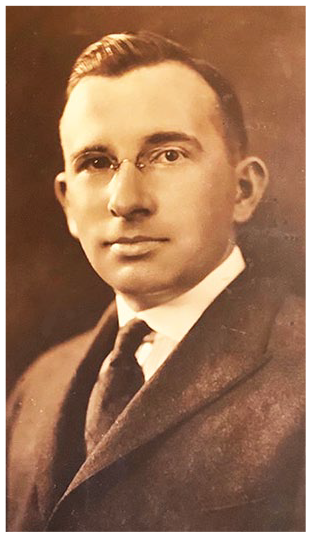
Henry Reginald (“Reg”) Bowler, 1889–1976.
Underway
Reg and members of the Commission set sail from New York on the Aquitania on September 29, 1931.
4
In a letter dated October 1 he writes,
I had a good send-off . . . my old friend Jack Rockefeller sent me a miniature garden which is decorating my dresser during the voyage along with the picture of David and Bannie [his children, aged five and four]. I will send you his card as a souvenir. He was also down to the ship to see us off, and though I did not see him myself, I was told that he asked for me by name and sent his best wishes.
Despite the promising send-off, the young father soon longed for home and family, as he did throughout the journey.
I confess, however, that none of this made me very cheerful, and I felt very gloomy indeed as I saw the gang-plank pulled in and felt the water begin to churn from the motion of the screw. . . . That evening on the deck I exchanged a few words with Mr. Sibley, one of the members of our Commission, and found him feeling gloomy too, or “low,” as he expressed it, and for much the same reason. He has six children, two of whom are old enough to be married, but the youngest of whom is only four. He said he felt very bad at leaving the baby, who is ready enough now to run and meet him and hold his hand, but who at this stage and during so long an absence may grow away from him beyond catching up. Mr. Sibley is several times a millionaire, and no doubt every possible provision is made for the youngster in his absence, but I was interested to discover him reacting to the situation in almost exactly the same terms as an ordinary mortal like me. (10/1/1931)
The members of the Commission were indeed impressive people, 5 who began their work while on board. Hocking, however, joined them later.
We have not been working very hard on the ship, for which I thank Heaven. The Commission has a meeting every morning, which I attend and sometimes my assistants. Apart from this there have only been a few odds and ends to be done, and some tedious things which will have to be done before we reach India, but which can be spread over this voyage and the next. The Commissioners are going through the Fact-Finder’s report on India, but I don’t think any of them are doing themselves any damage by over-work. So none of us are too busy. My boys and I will have two or three strenuous days in France, and perhaps after we have the Chairman with us, he may work us harder on the next voyage, though I doubt it, particularly as we shall be entering the tropic heat during the last half of it. (10/1/1931)
Reflecting on his position, Reg reiterates his longing for home and mulls over his decision to accept the job, wondering about the point of the whole enterprise.
And now I have had to go away and leave you. How I have dreaded it! I don’t think I have had a really happy day since the 16th of May, when the subject first came up. I haven’t told you how many nights I have lain awake until two or three o’clock in the morning, for fear you would worry about me getting sick. . . . I’m afraid it would have cast a shadow of doubt over all the rest of my life if I hadn’t gone, though even now I cannot be confident that it will make any great difference either to us personally or to the world at large. . . . Five days have gone already.
6
It seems like an endless time until next summer, but it will come, and every day is a step in that direction. (10/1/1931)
France
The Aquitania arrived in Cherbourg on October 5, and the group enjoyed a few days of sightseeing in Paris. Reg coped with mountains of baggage and exchanged previously purchased orders for tickets into actual tickets all the way to Hong Kong. He visited the Folies-Bergère with his young assistants and particularly enjoyed spending time with Dr. Petty, “advisor to the Commission on Indian affairs and the only other unattached man in the party.” Although it is difficult to discern who was traveling with the group, it is clear that the male members of the Commission brought their wives. Only Mrs. Hocking, Mrs. Sibley, and Miss Woodsmall are named as members of the Commission in its final report. In various places Reg mentions that he has assistants named Bob Buchanan, Crain, and Ward.
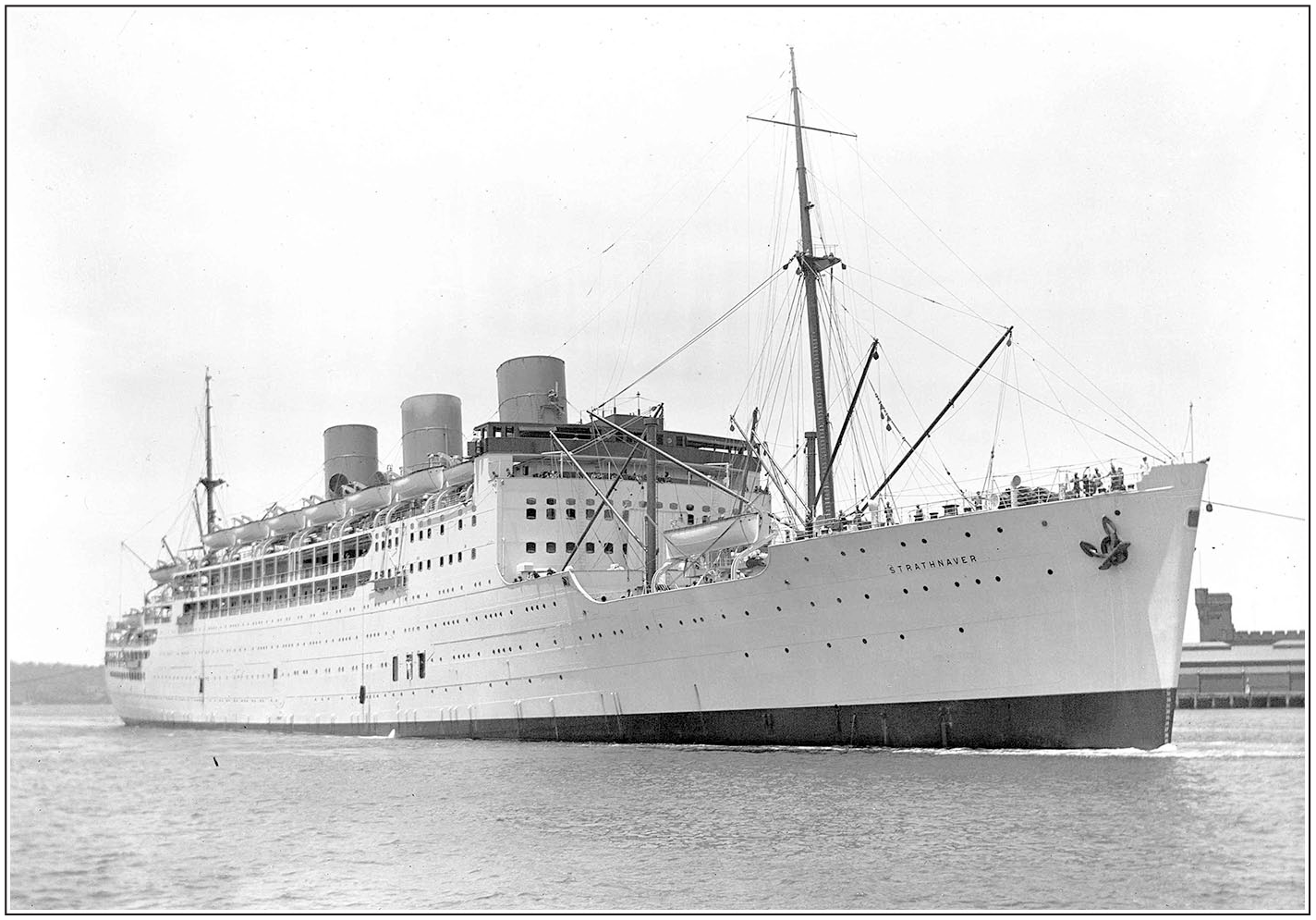
The Commissioners traveled by train to Marseilles and set sail on the Strathnaver on October 10. The Strathnaver was on her maiden voyage, originating in England, en route to Sydney, sailing through the Suez Canal and on to Bombay.
On its maiden voyage the Strathnaver sailed into Circular Quay harbor, Sydney, Australia, on November 26, 1931. Previously on board were the Commissioners of the Laymen’s Foreign Missions Inquiry Commission of Appraisal, representing an attempt by seven mainline Protestant denominations to evaluate the state of American foreign missions in 1931–32. Photo by Frederick Garner Wilkinson (www.flickr.com/photos/anmm_thecommons/8434134138/).
As usual, the Commissioners traveled first class. Hocking was with them by now, and Reg describes some aspects of his leadership.
I saw our Hon. Commission (believe it or not) turned into a singing class by our esteemed chairman. We have been holding daily meetings as on the Aquitania, only here we could not obtain a public room owing to the crowding on the ship and have been obliged to squeeze from fifteen to twenty people into an ordinary cabin with the beds removed. This morning as I approached the room I heard strains of music issuing therefrom, and when I opened the door I found myself in the midst of a singing class, with Herr Professor Hocking giving them the key, beating the time with his forefinger, etc. I suppressed with difficulty a loud guffaw, for some of the brethren and sisters were by no means designed for members of the choir. Before we left New York, I received a letter from Hocking asking me to include in our traveling library a number of copies of a particular song-book which he mentioned. I wondered at the time why in the world he wanted them along, and now it comes out. Evidently, he knows something about music himself, for he was finding keys in his own throat and telling the singers of the various parts where they were wrong; and I suppose this is his idea of giving the commissioners a little relief from their strenuous labors. But it looked awful and sounded awfully funny to me. (10/10/1931)
Continuing with a rather extensive description of Hocking’s leadership, Reg writes,
Our chairman follows quite the professorial method in his tactics. He has been the central figure in all the proceedings on board this ship, since he has been giving a report of his interviews and impressions in London, and if he isn’t teaching singing, he is teaching philosophy. Practically all that he has said has been in the realm of abstract philosophy, and if I mistake not, well over the heads of about five-sixths of his auditors. Ward was present at the first session and had all he could do to keep awake, and to judge from their looks most of the commissioners were in the same state, though they were not so ready to confess it. A little spice is contributed to the proceedings, however, by the performance of Mrs. H., who must have her place in the spotlight. Every once in a while, she pops up with her little, bird-like voice, to remind her husband of something he didn’t say, or to make a report of her own impressions. . . . She and her husband saw Gandhi in London, and she contrived to get herself invited to read to the whole commission several pages of a long letter which she had written to her children detailing her impressions of the occasion. . . . They were not given a real interview with him but were only allowed to sit in while he talked business on quite another subject with one of his lieutenants. (10/10/1931)
Reg goes on to voice his doubts about the Commission’s work.
Meanwhile, her husband is apparently going about with his head in the clouds, thinking of nothing but the abstractions of idealistic philosophy, as applied to comparative religion. If I interpret his present temper rightly, he thinks that Hinduism, Mohammedanism and Buddhism in their primitive states were just as good as Christianity, and that perhaps the Asian peoples would be just as well off if they were left to their own religions. I am no philosopher, but I know that if this commission’s report contains any such idea as this even by implication, its enemies will ask for no better weapon with which to destroy it. The commission met for prayer this morning. [It prays once a week, on the initiative of Dr. Merrill,] and I said to Dr. Petty, with whom I have many a confidential chat in which we speak freely, that the first thing they had better pray for is a good supply of ballast to counterbalance the inflation at the top. Now I find I have written a highly dangerous document, which I shall have to keep under lock and key until I get it into the mail. For Heaven’s sake don’t let any of this get out in such a way that it may reach anyone who has an interest in this jaunt, either favorable or unfavorable, or I shall be hanged on the yardarm at the next sun-rise. (10/10/1931)
As the ship sailed on, the members of the Commission enjoyed the scenery on the Mediterranean. One day they adjourned a meeting to admire the dramatic cliffs of the Straits of Messina. The weather grew hot as they stopped at Port Said, entered the Suez Canal, and stopped again at Port Sudan and Aden. They continued to hold daily meetings on board and were given piles of assigned reading, although Reg says he sees “several commissioners sleeping over their ponderous tomes in deck chairs and elsewhere.” Hocking and others played deck tennis early in the morning and were entertained with a fancy dress party on board. Reg writes to Helen that he misses “the little nippers” at home.
India
Finally, on October 23, the Commission arrived in Bombay. Reg and his assistants managed the usual heaps of baggage and got everyone settled at the Taj Mahal Hotel. Reg hired servants for the group and one for himself, and remarks to Helen on the exorbitant amount of money being spent on the journey, noting that the bill for their first week at the hotel was $1,300. He set up an office at the hotel and says, There has inevitably been a good deal of confusion during these first few days, with everybody just starting to work, and not knowing just what they want to do or how to go about it. We have had to keep work going in the office for long hours, though it has not been especially pressing so far; somebody has been on duty all day long from 7:30 in the morning until 10:30 at night. . . . The inevitable political currents in such a large and heterogeneous and diverse-minded group have begun to develop; in fact, they were developing rather rapidly during the last few days on the ship, and I was somewhat relieved when they got ashore and had something else to occupy their attention. (10/25/1931)
As at every destination, Reg maintained an office for the Commission at the hotel while the Commissioners split up and went off in various directions to visit field sites. Some of the wives stayed back and went shopping. In Bombay this included Mrs. Hocking, who continued to get under Reg’s skin.
Three or four of the wives (the wiser ones) remain in Bombay during the absence of their spouses, but they are harmless. I have gotten on very amicably with all of the ladies, though I avoid Mrs. Hocking as much as I can, because she makes my hair stand on end by her mere presence. But even she said something nice to me as she was leaving yesterday. I had shaken hands with them and wished them a good journey . . . when she looked back over her shoulder and said, “Where you are it seems like home.” (10/25/1931)
Early in November the members of the Commission traveled by train to Delhi. Reg called at the viceroy’s palace and met with his secretary, hoping to arrange a meeting with Hocking. He and others saw some of the sights, including the Towers of Silence, where the Parsees [Parsis] disposed of the dead by placing the bodies on towers to be eaten by vultures. He describes a daylong visit to an outlying hospital with Dr. and Mrs. Emerson, and an excursion to Agra. His November 23 letter begins, “I have seen the Taj Mahal, so now I am ready to fold up my tent like the Arabs and silently steal away from India.” By now several of the group were or had been sick, and some were left behind in the hospital, to catch up later.
Next on the itinerary was Lucknow, where the Commission was invited to lunch at the home of Sir Malcolm Hailey, the governor of the United Provinces. “. . . a fish mayonnaise; then chicken cutlets; cold roast mutton and ham; with beet salad (I thought the salad should be safe there, so ate the first lettuce I have tasted since landing in Bombay); fruit salad with cream; cheese and coffee.” Reg writes of the first inklings of trouble in China
7
that might affect their journey and says,
What effect the trouble in Manchuria may have it is at this distance impossible to say. Our schedule was planned to take us right through the midst of the area where the fighting is going on, from Peiping [Beijing] up through Mukden and down through Korea to the coast. Unless the difficulty clears up more quickly than it seems likely to do, that of course would be out of the question. (11/29/1931, handwritten)
Reg arrived in Calcutta on December 5, where the Commission made its headquarters at the Great Eastern Hotel. He stopped in Benares on the way and depicts a scene of bathers in the Ganges, Maharajahs’ palaces lining the river, and funeral pyres. Members of the Commission arrived in Calcutta a day or two later and went out variously from there to Assam and Burma, returning to Calcutta before they left for a Christmas vacation in Darjeeling. In Calcutta Reg writes that he is working all the time, “we are at it Sundays, evenings, and every other time . . . there is a continuous sense of pressing responsibility.” But Christmas vacation was magical. The group traveled to Siliguri by train and from there on “the narrowest of narrow-gauge railways” and by car to Darjeeling and the Mount Everest Hotel. Reg and some of the others were up early on Christmas day.
If I have had nothing of an intimate, home-like Christmas, I have at least had a memorable one, and I do not think I shall forget it as long as I live. In the early morning I stood in the darkness on Tiger Hill, at an elevation of about 8,500 feet, and watched the dawn break and the sun rise over the ranges of the Himalayas, with the peak of Mount Everest just visible in the distance, 125 miles away, and with Kachenjunga, the second highest mountain in the world, towering over my head in full view. It was a perfectly magnificent panorama, and more beautiful by the changing lights, which in the course of an hour and a half turned from full moonlight to daylight. The experience quite went to my head, and I think it will be a long time before the impression fades. (12/25/1931)
A few days later the group returned to Calcutta, where Hocking, Reg, and others attended a meeting in celebration of the poet Rabindranath Tagore’s seventieth birthday and heard him speak. The Commission met with noted Methodist missionary and evangelist E. Stanley Jones for “a couple of hours.”
The Commission had invited him in to get his views on some of the questions on missions, and he certainly gave us some good stuff. Mrs. H. trotted out her usual line of stuff but was no match for him. He is liberal enough in his theology to be regarded by many of the brethren as a dangerous radical, but I never heard more positive or convincing testimony, based primarily not on statements in the Bible but on twenty-five years of experience here, that in Christ men do find a way to God which they do not find in other religions. But it was plain to be seen that Mrs. H. was writing him down as one of the narrow minded. (12/30/1931)
January found the group in Madras, “worse split up on this leg of the journey than it has ever been before. . . . They are going off in threes and fours and fives, on different days, and have to take whatever accommodations they can get on the trains,” then on to Kandy, in Ceylon [Sri Lanka]. Reg was busy, as usual, making arrangements for travel to Hong Kong, and writes on January 29,
I have scarcely had space to breathe, much less sleep and eat. I have worked till after midnight for three nights. . . . There have been meetings and meetings and meetings all this week, with all sorts of minutes and drafts and reports to write, so we have done nothing but work. . . . A few nights ago, before it got quite so strenuous, I was in my room at half past ten, thinking of going to bed, when the Hon. Chairman burst in and complained because the office was closed “at this hour!” I guess he has been satisfied by the course of events since then. (handwritten)
China
By the beginning of February the Commission was on board the Carthage en route to Hong Kong. It was her maiden voyage also, originating in London and stopping in Colombo, where the Commission boarded, Penang, Singapore, and Hong Kong, where they disembarked. The situation in China continued to be of concern, and Reg offers Helen reassurance.
I hope you are not too much worried these days by the troublesome events in Shanghai. Nobody knows, of course, just what they are going to mean for the world or, less important, for the plans of our party. It looks to me as if things would be so unsettled at the best that it would be impossible for a commission like this to get anything like a representative view of missions as normally conducted, but there are others in the group, including the chairman, who think the political conditions will not seriously interfere with our work (and I suppose his view will have more weight than mine!) However, I think you need not worry about our going into any situation that is actually dangerous. In the first place, these men are not going to risk taking their wives into danger, and in the second place the wives are not going to let their husbands go alone, exposing them (the wives) to the possibility of being stranded off on the edge of things. And the wives, as I have already discovered, have a good deal to say about what the men in this outfit do. . . . In the meantime we are going into no kind of danger in Hong Kong, which is British territory. For the rest, there is nothing to do but wait and see what happens. (2/2/1932)
Members of the Commission went sightseeing in Singapore and in Penang, where Reg remarks on his visit to the Snake Temple. “Snake worship is associated with it, and part of its interior decoration consists of live snakes. They are draped around columns, and worked in and out of screens, and laid on altar pieces. . . . Some of them are fairly large, two or three feet long, and some are small. They are all perfectly harmless, having been doped by some process that renders them almost motionless.”
While in Singapore the Commission received a cablegram from the Executive Committee of the Inquiry regarding the situation in Shanghai, advising them to proceed to Hong Kong and use their own best judgment about the continuing on to Shanghai. Clashes between Japanese and Chinese troops continued throughout February, until a cease-fire in early March, and Reg’s letters reflect the fact that the Commission’s plans changed from day to day. He makes travel arrangements, cancels them, and makes them again. He says, “Nothing is certain with this outfit except that everything is uncertain. It is impossible not only to plan for anything three months ahead, but to arrange anything with confidence for next week or tomorrow. It has been so all the way along.”
Reg misses Helen and home. In a private letter to her on February 4 he says:
Belovedest: My favorite post these days, whenever I can take a few minutes, and especially at night, is up at the front of the ship, just under the bridge, where I can look out ahead into the distance where you are and think that every turn of the propeller is bringing me closer to you. . . . If I had known last summer what I know now, I never would have left New York. . . . This morning when I got off the ship there was another one tied up just ahead of her, which proved to be the “President Monroe, of San Francisco,” with the stars and stripes flying from her stern. Of course the name of her home port and the sight of the flag (only the second I have seen since leaving home) made me good and homesick, and I wished I could stow away on her. . . . Good night my darling. I go to sleep every night with thoughts of you in my heart. (handwritten)
The Commission arrived in Hong Kong on February 10 and stayed, as usual, at a first-class hotel, the Peninsula. Reg kept the office there, and members of the Commission made forays into the field. Some went to Foochow [Fuzhou], and others to Canton [Guangzhou]. The weather turned cold.
We have been having a touch of winter weather in Hong Kong. The last couple of days it has been raining, with plenty of raw, cold wind. The people who have been in Canton say it has been even worse there, and they suffered even more because they have been living in missionaries’ homes, with no heating arrangements but fireplaces and stoves. Some of the more critical brethren have been inclined to think the missionaries have too much luxury, so perhaps this experience will show them that it isn’t always so pleasant. (2/28/1932)
Finally the decision was made to proceed to Shanghai, and on March 9 Reg writes that he’s surprised to find himself on a German ship, the Derfflinger, sailing to Shanghai. The group arrived in Shanghai on Friday, March 11, “to the scene of the recent war, with everything as peaceful as can be, at least for the moment.” As the ship reached the Yangtse River, before proceeding up the Whangpoo to Shanghai, it passed a group of fifteen or more Japanese warships at anchor. They passed buildings reduced to piles of bricks and scenes of destruction that worsened as they sailed upriver. They passed a village where
the Chinese put up a determined resistance to the Japanese advance. Here the destruction was simply terrific. The little houses had been built right up against each other, fronting on narrow, winding streets, and housing great numbers of people in a relatively small area. They had been shelled heavily and were so completely destroyed that it was impossible to distinguish one building from another. Whole streets were now nothing more than common heaps of ruins. Little groups of the villagers were moving about in the debris, looking for furniture and other belongings which might be saved from the wreck, and these they carried down to little boats at the water’s edge, in which they were taking things away. They looked very pitiful as they went about this hopeless business. (3/13/1932)
The Commissioners scattered again, as usual, on their way to various mission sites, and Reg writes that he doesn’t expect the group to be together again until they reach Peiping [Beijing], if then. Some went to Hankow [Hankou], others to Nanking [Nanjing], and others, including himself, to Tientsin [Tianjin] before traveling to Peiping [Beijing]. By March 20 the Browns had split off and traveled to Peiping [Beijing] and on to Japan, preparing to leave Japan in April in order to attend a General Conference at home.
March 27 was, for Reg, “about as dismal an Easter Sunday as I remember.” He and some of the others were on a small steamer traveling from Shanghai to Tientsin [Tianjin]. Most were seasick and even though “almost any American congregation would count themselves fortunate to have with them today either one of the two well-known preachers we have on board—Dr. Merrill and Dr. Jones—but their talents are going to waste, for if we attempted to hold a service, they would get a congregation of about five persons.”
They arrived in Peiping [Beijing] in early April and stayed at the Hotel de Pekin, where they ran into a Commission of the League of Nations that was “inquiring into the relations between China and Japan in Manchuria,” chaired by Lord Lytton. Lady Astor’s son was there, as well as General McCoy and Wellington Koo. Reg remarks that one of his staff secretaries struck up an acquaintance with another notable person in the hotel, the famous aviator Ruth Elder. Members of the group continued their work and made visits to the Great Wall, the Ming Tombs, and the Temple of Heaven.
Japan
April 22 found Reg sailing ahead to Nara, Japan, to “perform a very delicate errand.” It seems that the hotel where they were staying had only six rooms with private baths, and this fact was causing “a tempest in a teapot.” Reg says, “I have judged it expedient to be on the ground in advance and get the space assigned in such a way as to keep everybody as happy as possible.” Others in the group had already traveled to Japan on their own, by way of Korea.
The Commission continued to work hard and hold lengthy meetings while in Nara. Reg says, “We have two meetings a day, with all sorts of reports and other sorts of documents (each growing progressively longer) to be written and duplicated in between. My boys and girls are at it all day long, from immediately after breakfast till midnight or after, taking notes and pounding the typewriter and running the mimeograph machine.” Reg and the Baptist Commissioners did get away and enjoy a traditional Japanese tea at the home of a Baptist pastor, and Reg was amused by the “sacred” deer that wandered freely in the city and tried to snatch a sweet cake out of his hand.
The Commissioners traveled on to Tokyo and woke up on May 16 to learn that Prime Minister Tsuyoshi had been assassinated in a coup attempt the day before and that a “reign of terror” was being announced in the newspapers. Reg writes that there was “a certain tenseness of feeling,” but that “the normal life of the city was going on as if nothing had happened.” At the Imperial Hotel they again encountered celebrity. Charlie Chaplin and his brother Syd were guests at the same hotel. As he often did along the way, Reg visited Baptist missionaries in the area, some of whom were old friends from home, and was invited by them to hear the Christian reformer and peace activist Toyohiko Kagawa speak. Reg says, “I don’t think I ever saw anyone whose character seemed to stand out in his face as his did. . . . He is full of vitality and seems to radiate power. They say he has four or five mortal diseases, any of which would kill an ordinary person, but he lives a strenuous life and survives them all.” A few days later the Commission also met with Kagawa, who “came on Sunday morning to spend three hours with us. Some of the more superior among us, however, were disposed to turn up their noses at him.”
Spring came, and it began to feel like the journey was drawing to a close. Reg delighted in the taste of fresh strawberries at the hotel and in the recognition that “it won’t be long now. Only seventeen days till I sail, and four weeks after that till I reach San Francisco.”
As the return home approached, worries about the economic situation in the United States appear in Reg’s letters. He assumes he will face a reduction in salary when he returns, and he frets with his wife about the cost of repairs to their car. Reflecting on his experience of the last eight months in a private letter to Helen, he says:
Even at a reduced salary I shall be glad to get back to a job that I consider constructive. I do not share your concern lest we may not be able to settle down to a normal life again. Now, I feel much as you say you do—unsettled and useless, and so on. One of the hardest things to bear about this experience has been the oppressive sense of futility that hangs over it for me. I have done so much that has had to be undone for a mere whim. And now the report is beginning to take shape, it doesn’t look to me as if it were going to produce anything commensurate with the time and money that have been put into it and the splurge that has been made about it. . . . Goodnight, my beloved. You dream of me, and I’ll dream of you. (handwritten, undated)
Reg and other members of the Commission sailed from Yokohama on the Japanese ship Chichibu Maru on June 9 and arrived in Honolulu on June 16. They left Honolulu on the Tatsuta Maru on July 1 and arrived in San Francisco on July 6. By the time Reg returned to New York City, he had traveled around the world. Little did he know that the outcome of the journey was of consequence, after all.
Footnotes
Appendix: Members of the Commission of Appraisal
Dr. William Ernest Hocking, professor of philosophy at Harvard University, chairman of the Commission
Dr. Frederick Woodward, vice-president of the University of Chicago, vice-chairman of the Commission
Dr. Clarence A. Barbour, president of Brown University
Edgar H. Betts, businessman and banker, Troy, NY
Dr. Arlo A. Brown, president of Drew University
Dr. Charles Phillips Emerson, professor of medicine and dean of the Medical School of Indiana University
Mrs. William Ernest Hocking, founder of Shady Hill School, Cambridge, MA
Dr. Henry S. Houghton, dean of the Medical College of the University of Iowa
Dr. Rufus M. Jones, professor of philosophy at Haverford College
Dr. William Pierson Merrill, pastor of the Brick Church, New York City
Albert L. Scott, president of Lockwood Greene Engineers, Inc., New York City
Harper Sibley, lawyer and businessman, Rochester, NY
Mrs. Harper Sibley, religious leader and speaker, Rochester, NY
Dr. Henry C. Taylor, agricultural economist of Washington, DC
Miss Ruth F. Woodsmall, specialist in work for women, YWCA of the United States