




Abstract
The massive migration of laborers from rural areas to urban areas has resulted in many family issues including those related to children’s education and the protection and care of older parents. The purpose of this study was to explore factors associated with the family migration of farmer-workers. Using data from the 2012 China Mobile Population Survey, factors associated with family migration of farmer-workers were identified and policy recommendations for helping migrant-worker families stay together were discussed.
Introduction
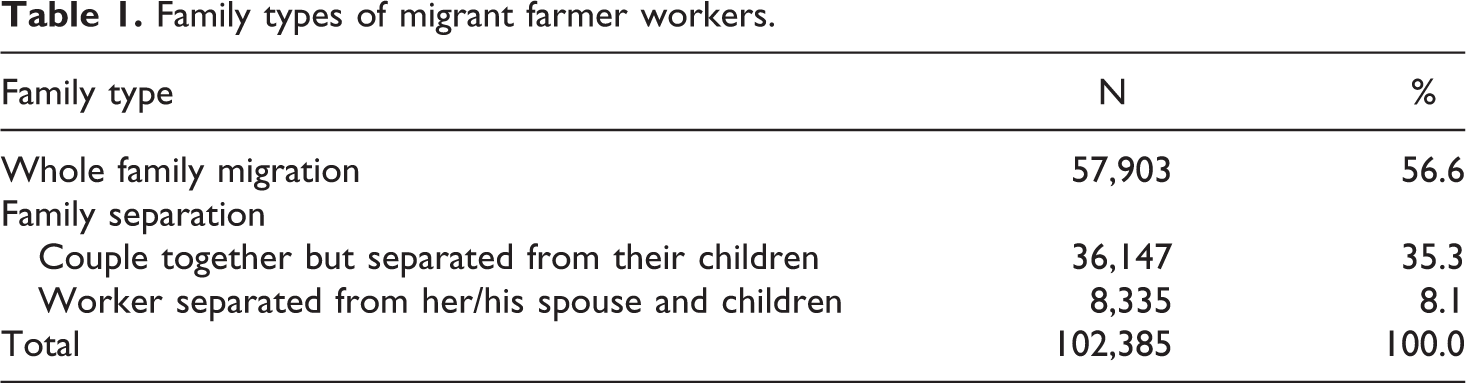
Before economic reforms started in 1978, China enforced strict dual residential registration systems. Rural people were not allowed to leave their local areas to work in cities. In 1984, the Chinese central government’s No. 1 Document issued policy guidance that “allows farmers to work, open businesses, and provide services in urban areas by arranging their own food supplies” (Wan, 1984, p. 1). It also granted farmers the right to live legally in urban areas. Since then, millions of farmers have poured into cities, the largest population migration in human history. The sixth census of China in 2010 showed that the number of migrant farmer-workers reached 236 million. Based on the official definition, migrant farmer-workers are counted in the urban population if they have resided in cities for more than six months. However, from a family perspective, 43.4% of the farmer-worker families have members who are separated between rural and urban areas (Table 1).
Family types of migrant farmer workers.
Massive rural-urban migration spawned by industrialization has occurred in many countries, including Germany and the United States and later in Latin America and the East Asian four-tiger countries/areas of Hong Kong, South Korea, Singapore, and Taiwan (Lin, Cai, & Li, 1999; Song, 2008; Sun, 2007; Wang, 2013). However, China’s situation is unique. Although many farmers have entered cities and changed careers, they have not received appropriate institutional arrangements for life in the cities to which they have migrated because they have their hukou (household registration) in rural areas. Because they are still legally registered in their original rural areas, they cannot pull out their “roots” where they have their contracted lands, residential lands, and houses, as well as their spouses and children. Thus, they must endure a long-term family separation.
China is starting a social movement of urbanization. The essence of urbanization is to move populations from rural to urban areas, with the ultimate goal of improving the lives of farmers and their families (Zhang, 2013). Family separation among migrant workers is not conducive to family happiness and social harmony and stability (Gu, Yi, & Li, 2011; Wu & Ye, 2010). Reuniting the families of migrant workers should be a high policy priority for the government. The Chinese government has started to pay attention to the separation of farmer-worker families. In October 2016, the Chinese State Department initiated a program to facilitate family settlements of farmer-workers who have resided in cities for five or more years, especially for over 100 million new-generation farmer-workers.
This study used data from the 2012 Mobile Population Survey sponsored by the China National Health and Family Planning Commission to explore factors associated with the family migration of farmer-workers. The unique contribution of this study is to explore conditions and influential factors of family migration of farmer-workers that can be used to inform social policies for promoting social and family well-being among migrant farmer-workers.
Literature review and hypotheses
Conceptual considerations
Family, based on marriage and kinship, is the basic unit of society. There are two ties connecting family members. One is marriage, the foundation of the family. The other is kinship that results from the marriage and reinforces the existence and maintenance of the family. Family members also need to live and spend time together (Cheal, 2002). However, modernity causes many family members to separate and live in different places – a phenomenon called “time and space extension” of the family (Giddens, 1990, pp. 89-95).
In China, modernization, industrialization, and urbanization are occurring simultaneously, resulting in an unprecedented time and space extension of family. First, modernization affects labor migration. The theory of push-pull asserts that the purpose of labor migration is to pursue better employment and living conditions. Positive factors associated with employment and life in urban areas (such as better employment opportunities, higher income, higher living standard, better educational opportunities, better entertainment and transportation conditions, and better environments) become the “pull” force, while factors not benefiting employment and life in rural areas (such as exhausted natural resources, increased agricultural production costs, and excess rural laborers) become the “push” force. The labor migration is caused by these two types of forces (Lee, 1966; Ravenstein, 1885, 1889). The unique situation in China is that farmers’ migration is restricted by the system of household registration. In this system, workers in urban and rural areas enjoy different levels of resources provided by the government. Because of this system, urbanization in China is called half-urbanization or incomplete urbanization (Bai & Li, 2008; Li, 2001; Tang, 2008; Wang, 2006; Zhou, 2005). Half-urbanization may have a unique effect on labor migration where farmer-workers are nominal urban people without social benefits enjoyed by urban people who have an urban hukou (household registration).
Second, industrialization may affect labor migration. The theory of imbalance of dual economies states that labor migration may be caused by a developmental imbalance between primary, secondary, and tertiary industries. As soon as high-income employment opportunities exist in secondary and tertiary industries, they continuously attract laborers from the primary industry (Fei & Ranis, 1964; Lewis, 1954; Todaro, 1969). The interaction of industrialization and modernization affects labor migration. Research shows that developments in modern transportation and communication have shortened the distance and therefore enhanced relationships between immigrants’ current places of residence and their original rural home towns. Making money in higher-income cities and traveling back to spend money in less-expensive home towns in rural areas is economically justifiable by these immigrants. This kind of circular migration is also popular in countries that are experiencing rapid urbanization and industrialization (Skeldon, 1990).
At the micro level, the decision to migrate involves both individuals and their families. The new theory of family migration asserts that the decision of an individual to migrate is made jointly by family members. The migration is considered a family strategy to maximize economic benefits and minimize economic risks. The cyclical back-and-forth migration of farmers allows families to take full advantage of family resources in both urban and rural areas. Thus, individual migration is not only influenced by individual factors but, maybe more importantly, by family factors including family structure and lifecycle (Stark & Bloom, 1985). Second, social capital may also affect migration. Migrators may choose inflow places based on networks formed by relatives, fellows, and friends to reduce costs and risks of migration (Stark & Taylor, 1991). Chinese farmer-workers have their unique characteristics in terms of accumulating social capital and constructing social networks. Research shows that the decision to choose alternatives between cross-province migration and within-province migration is largely determined by social networks (Ren, 2006).
Factors associated with family migration of farmer-workers
Based on relevant theories and literature, several factors are associated with family migration of farmer-workers.
Children’s education
Hukou (household registration) is an endowment of sorts. The household registration system is considered a form of “social closure” in that it excludes a portion of population from social resources that are enjoyed by another portion of population residing in the cities (Li, 2002). This system destroys the motivation and confidence needed by the mobile population to integrate into host communities. Because they are discriminated against, the majority of farmer-workers have a negative attitude toward immigrating to or living on a long-term basis in the cities, which is not what they originally intended but, rather, a rational decision based on self-knowledge (Ren & Wu, 2006). This closure function is more obvious in the case of education resources. Research shows that farmer-workers’ children cannot enjoy the free, compulsory education provided in inflow cities. Even after they pay to receive compulsory education in the cities, they need to go back to their original rural home towns to participate in entrance examinations for high schools and colleges (Duan & Huang, 2012; Huang, 2015).
Migration range
In China, administrative districts are divided into four levels: province, city, county, and town. Migration across these levels exists in three forms: (a) cross-province; (b) within-province, cross-city; and (c) within-city, cross-county. People in the cross-province migration cannot enjoy the social security (healthcare, retirement, unemployment benefits) provided by the outflow provinces (Yang, 2015), which affects a farmer-worker’s decision to bring their family members along with them (Wang & Wang, 2011).
Woman’s employment
The relationship between married women’s employment and family reunion or separation is complex (Blue, 2004). On the one hand, women’s employment promotes family reunion in that women can go to cities where their husbands work. On the other hand, it is a disadvantage when childcare is considered. Whether or not to bring their children is determined by the children’s ages and educational needs (Chen & Zhang, 2016; Li, 2016).
Work income
From the perspective of social stratification, farmer-worker incomes are relatively low compared to urban residents. Low incomes that only meet the minimum survival needs of immigrant workers and do not cover the expense of having their families live with them in the cities are an important factor contributing to family separation (Sun & Wang, 2013).
Age cohorts
Immigrant workers are divided into new and old generations according to their birth year, with some researchers making a distinction between those born in 1980 or earlier and those who were born after 1980. There is a difference between the young and old generations in terms of the decision about whether or not to stay in the cities. New-generation farmer-workers are more likely to hope to move the whole family to cities (Li & Tian, 2011; Xu & Xu, 2007).
Migration time
Zelinsky (1971) asserts that population migration proceeds in stages. At the beginning, migration is for survival. After living in their new locales over time, immigrants know more about local cultures, begin to develop local identities, and are more willing to integrate into the new community, which results in possible family reunion. Thus, migration time is an important indicator that can be used to measure cultural adaptation.
Willingness to integrate
In the process of urbanization in China, helping farmer-workers integrate into local communities is an important issue (Ren & Wu, 2006). Social integration involves four dimensions: economic, social, mental, and identity. The willingness to integrate has an important effect on the decision to choose to live in urban or rural areas (Li & Tian, 2012). It also affects farmer-workers’ employment, consumption, and family migration modes.
Hypotheses
Based on the above discussion, we propose the following hypotheses: Family migration is affected by: child education (H1); migration range (H2); age cohort (H3); employment opportunities for women (H4); family income (H5); migration time (H6); and the willingness to integrate (H7).
Method
Data
Data used were from the Mobile Population Survey sponsored by the National Health and Family Planning Commission in China in 2012. The purpose of the survey was to understand the survival and developmental statuses of the mobile population and provide policy recommendations for relevant government agencies. The target population included those who stayed in one place for more than one month. Using the mobile population database of 31 provinces or province equivalents and the Xinjiang Production and Construction Corps (a special administrative district in Xinjiang, equivalent to the level of a province) as the sampling frame, the researchers used multilayer, multistage, and proportional sampling methods to select the samples for this study. From the sampling frame, 158,586 households in 106 cities were selected. Among those, 135,632 households (85.52% of the sample) had rural residential registrations, of which 102,385 were married households. This study focused on only married households living in rural areas.
Variables
Family migration type
This study focused on the nuclear family. Based on the key family member’s residential place, family type was divided into (a) whole-family migration, (b) couples living together in the inflow city but separated from their children, and (c) situations in which one spouse and children are separated (i.e., situations in which either husband or wife and some of their children do not live in the inflow city).
Migration range
The survey asked about where the farmer-workers migrated. The options were (a) cross-province, (b) within-province, cross-city, and (c) within-city, cross-county.
School type
The children’s education variable had six categories: not in school, elementary school, junior high school, senior high school, vocational or trade school, and college or above. In this study, the school type refers to that of the youngest child in the family.
Age cohort
Immigrant workers were divided into new and old generations, depending on their birth year: on or before 1980, or after 1980.
Employment
The employment status of both workers and their spouses was measured. Employment status was classified as nonfarm employment, farming, unemployment, not working, or household work.
Income
The respondents were asked about their wage income in the month prior to the survey. Responses were ordered from low to high and divided evenly into low-, middle-, and high-income categories.
Migration time
Respondents were asked how many years ago they had moved to the city. Based on the answers, migration time includes six categories (1–3, 3–5, 5–8, 5–10, 10–15, and 15 years or more).
Willingness to integrate
The respondents were asked if they were willing to integrate to the inflow city, with four options (very unwilling, unwilling, willing, and very willing).
Bivariate analysis results
Married families with unmarried children accounted for 94.0% of the sample, of which 50.0% had one child, 37.9% had two children, and 6.1% had three or more children. (The remaining 6% had married children and were excluded from the study.) The families included in the study were classified into three categories (Table 1): those that migrated to the city as a whole family (56.6%), families in which the couple lived together in the city but were separated from at least one child (35.3%), and those in which the worker was separated from her/his spouse and children (8.1%).
Residential registration status
Table 2 shows the urban versus rural registration status of the sampled families by family type. Compared to families with rural registration, proportionately more families with urban registration migrated to the cities as a whole.
Type of residential registration by family type.

Migration range
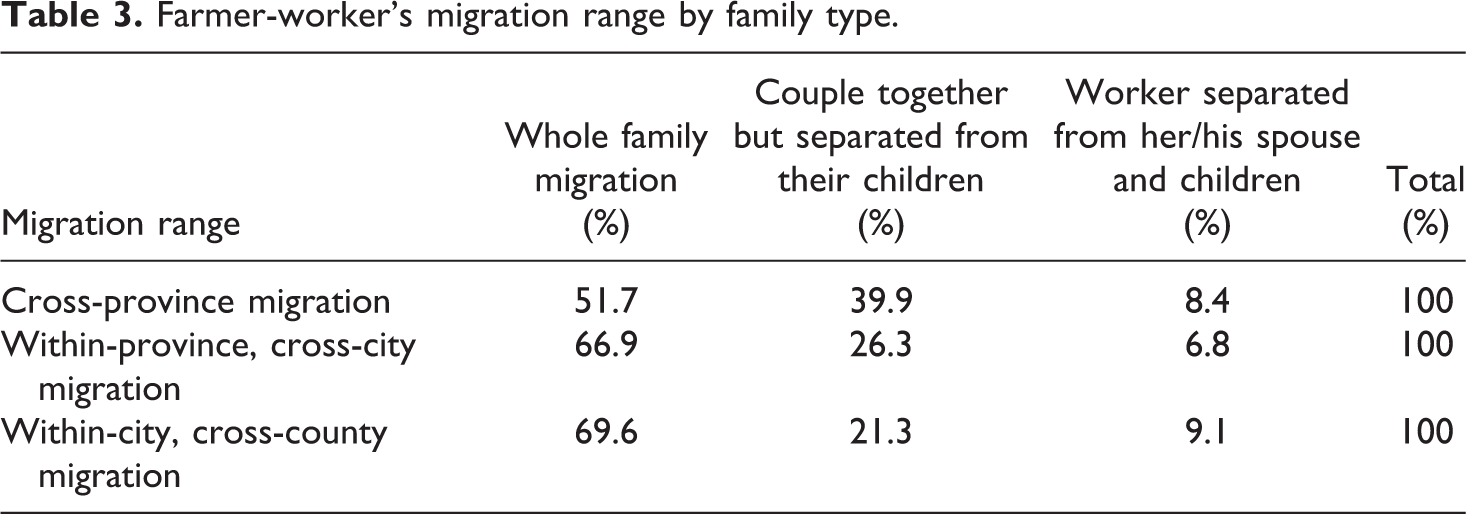
Table 3 shows that the proportion of families migrating as a whole was much lower among those in the cross-province migration category than in the two other categories (the within-province, cross-city category, and the within-city, cross-county category). However, the proportion of families in which the couple migrated together while leaving one or more children behind was higher for those in the cross-province migration category than it was for those in the other two.
Farmer-worker’s migration range by family type.
Education system
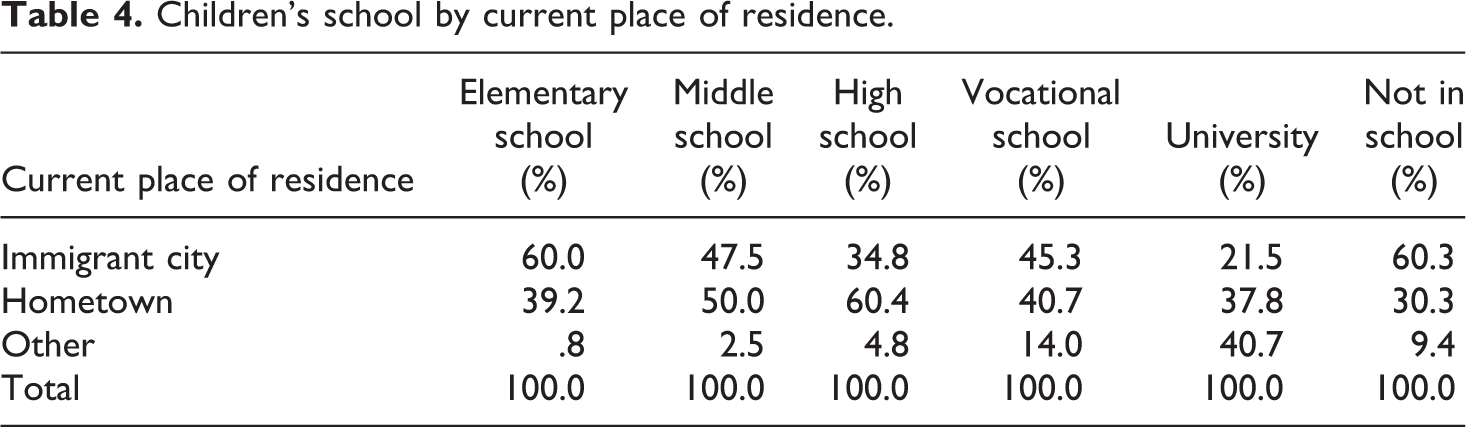
Families in which the couple migrated together while leaving one or more children behind accounted for the majority of separated families, and education was the most relevant institutional factor related to the separation of parents from children. Results in Table 4 show the variations in the type of school attended by the children of the migrant-workers, by the current residence of the children (in the city to which one or more parents had immigrated, in the hometown from which the parents immigrated, or other). Results in Table 4 show that of those children who were not in school and of those who were in elementary school, about 60% lived in the immigrant city. Among children in middle school, the proportions living in the immigrant city and in the hometown were almost even (47.5% versus 50.0%, respectively). Of those in high school, 34.8% resided in the immigrant city while 60.4% lived in the hometown. Thus, the proportions of middle and high school children living in the hometown from which their parents had migrated and where they had residential registration were high. Entrance exams to high schools and universities are important factors that cause child separation for immigrant worker families.
Children’s school by current place of residence.
Employment status
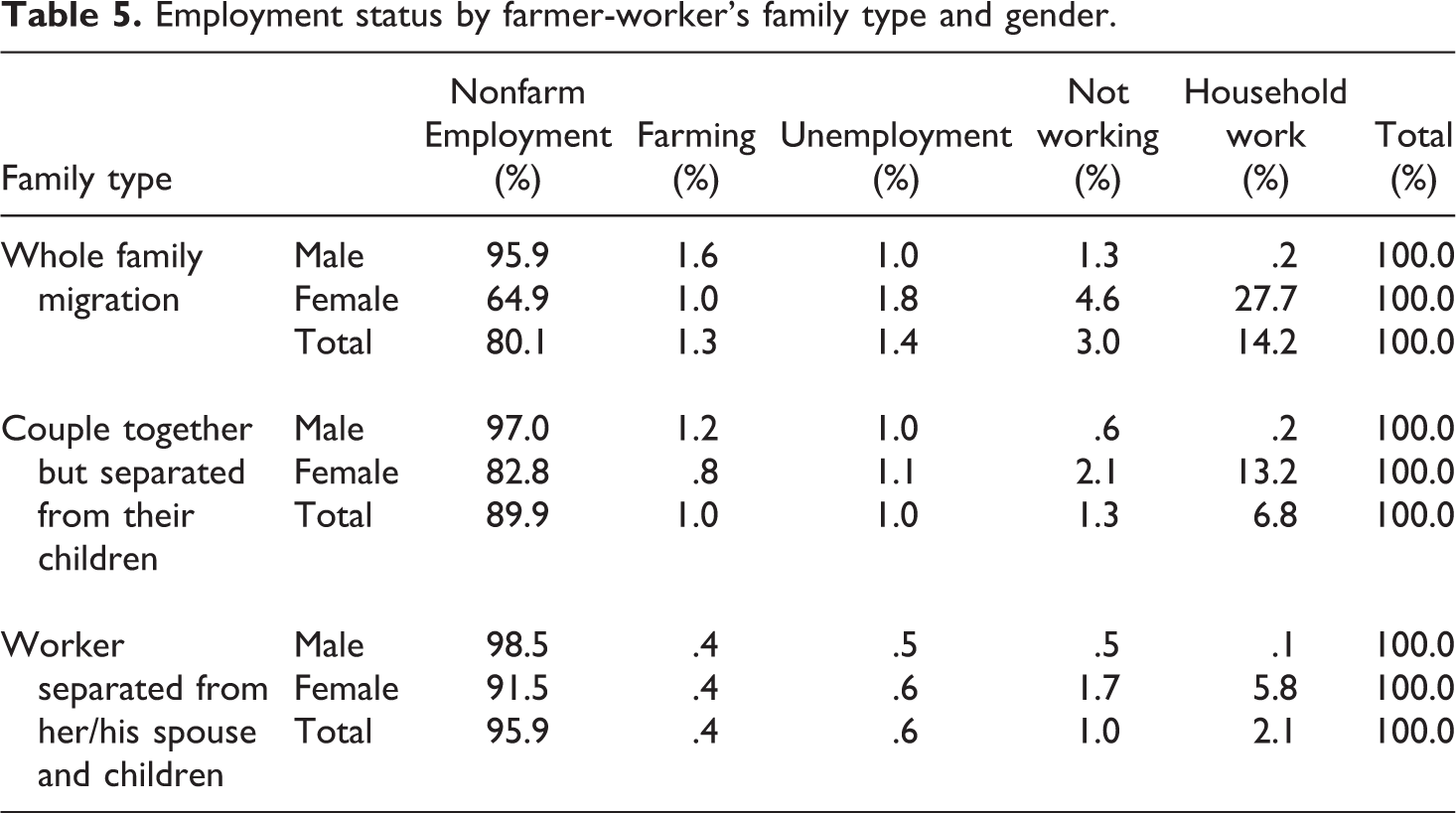
Table 5 shows that the nonfarm employment rate of male heads of households in which the family had migrated as a whole was 95.9%, implying that being employed is a precedent condition affecting the migration decisions of male laborers. However, the nonfarm employment rate for their wives was only 64.9%. Among families in which couples lived together but away from their children, the average employment rate was 89.9%, but the employment rate of the wives was 82.8%. In families with both spouse and child separation (i.e., spouses were separated and one of the parents was separated from one or more of his or her children), the average employment rate was 95.9%, while the wives’ employment rate was 91.5%. These differences imply that to reunite with her husband, a woman may lose her job, become underemployed, or continue to work by choosing family separation.
Employment status by farmer-worker’s family type and gender.
Work income
Migrant workers have low incomes that often meet only their own minimum survival needs and cannot cover expenditures for their families living in cities, which is an important factor of family separation. Table 6 indicates that the proportion of families that had migrated as a whole was highest in the high-income group (63.4%), followed by middle-income families (52.4%), and low-income families (51.3%). The proportion of families in which the couple had migrated together while leaving behind one or more children was highest in the low-income group (40.0%), followed by the middle-income group (37.1%), and high-income group (29.5%). In addition, the proportion of families in which both couples and children were separated was higher in the middle-income group than in the other two income groups.
Income and generational status by farmer-worker’s family type.

Age cohorts
Table 6 also shows significant generational differences. The proportion of worker-families migrating as a whole was higher in the new generation group (67.3%) than in the old-generation group (49.7%). The proportion of families in which the couple had migrated together while leaving behind one or more children was higher among old-generation families (41.2%) than in new-generation families (26.0%). The educational levels of immigrant workers are low, and their human capital is tied mainly to age. Younger workers are more competitive in labor markets. Compared to their older counterparts, they have weaker linkages with rural lands, are more attuned to like city lifestyles, and are more likely to move their families to cities.
Migration time
Table 7 shows that when the family head’s stay in the city was short, the chance of whole-family migration was low and the tendency to be separated from one’s spouse and children was high. But as the length of time in the city increased, the incidence of whole-family migration increased and the tendency to be separated from one’s spouse and children decreased.
Migration time, willingness to integrate by farmer-worker’s family type (%).

Willingness to integrate
Table 7 also shows that among the families that had migrated as a whole, the combined rate of being “very willing” and “willing to integrate” was high (94.1%) and the combined rate of being “not willing” or “not willing very much” was low (only 5.9%). This compares to 90.3% and 9.7%, respectively, for families in which couples had migrated together while leaving one or more children behind, and 88.2% and 11.8%, respectively, for families in which couples were separated and one of the parents was separated from his or her children.
Multivariate analyses results
In the multivariate models, family migration type variables were dependent variables. Independent variables included three sets. The first set was related to residential registration and child education systems (i.e., institutional effects). The second set included labor-market variables such as employment and income, as well as the variable related to age (young generation versus old generation). The third set included acculturation-related variables such as migration time and willingness to integrate. Multinomial logistic models were used for data analyses. Results are presented in Table 8.
Results of multinomial logistic model on farmer-worker’s family type.
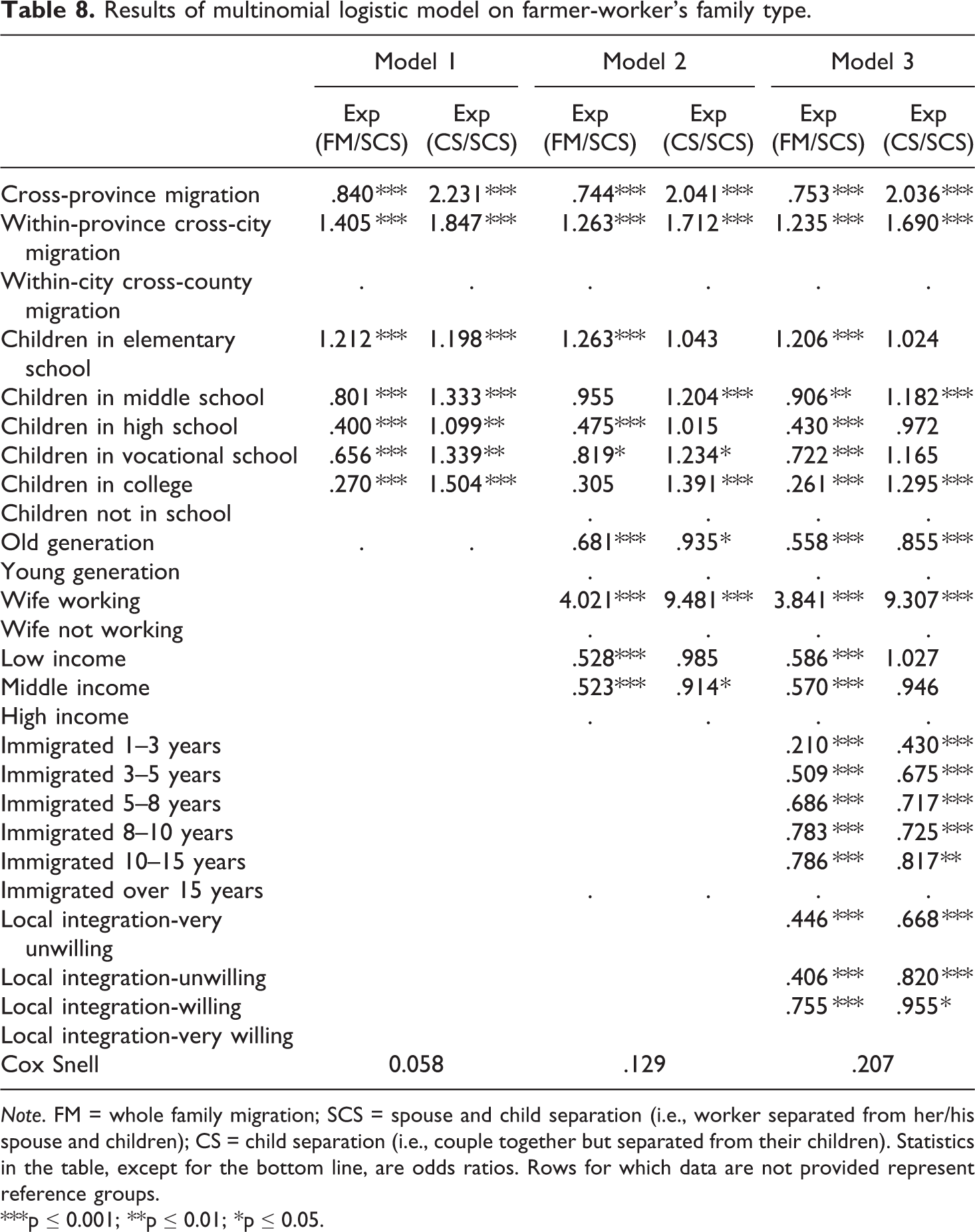
Note. FM = whole family migration; SCS = spouse and child separation (i.e., worker separated from her/his spouse and children); CS = child separation (i.e., couple together but separated from their children). Statistics in the table, except for the bottom line, are odds ratios. Rows for which data are not provided represent reference groups.
***p ≤ 0.001; **p ≤ 0.01; *p ≤ 0.05.
Effects of institutional results
One finding was that the high school and university entrance exam system decreases the probability of whole-family migration and increases the chance of child separation. When these workers’ children were in middle school, the chance of whole-family migration was .801 times that of those whose children were not in school, but the chance of migrating together as a couple while leaving one or more children behind was 1.333 times greater. When the children were in high school, the chance of whole-family migration was only .40 times that of those of families with children not in school, while the chance of migrating together as a couple while leaving one or more children behind was 1.1 times greater. The results support Hypothesis 1. Thus, the high school and university entrance exam system adversely influences the probability that immigrant-worker families will migrate as a whole.
Findings also suggest that the residential registration system decreases the probability that worker-families will migrate as a whole and increases the probability of children separation. When workers migrated out of their original provinces, the chance of whole-family migration was only .840 times that of those migrating across counties. When workers migrated within the province but across cities, the chance of whole-family migration was 1.405 times that of those who engaged in within-city, cross-county migration, and the chance of migrating together as a couple while leaving at least one child behind was 1.847 times that of those who engaged in within-city, cross-county migration. This supports Hypothesis 2, suggesting that within-province, cross-city migration could help improve the probability of keeping the families of immigrant workers together.
Effects of age cohort
The multivariate analyses indicate that the probability of whole-family migration for new-generation workers is larger than that for their older counterparts. In fact, this probability was .681 times that of new-generation workers, while the probability of migrating as a couple while leaving at least one child behind was .935 times that of new-generation workers, supporting Hypothesis 3. Most children of old-generation workers were in middle school, high school, or university, or worked in other cities, which may be the reason for the high rates of separation between parents and children.
Effects of labor markets
Several findings emerged concerning the effects of labor markets. First, it appears that if women in the labor markets of the inflow cities are disadvantaged, they are more likely to choose employment at the expense of the family remaining together. The influence of women’s employment on the family staying together is positive. Families in which the female spouses worked were 4.021 times more likely to migrate as a whole than families in which the female spouses did not work. But the probability of migrating as a couple while leaving at least one child behind was 9.48 times greater when the female spouses worked than when they did not work. This supports Hypothesis 4, implying that women face a choice between employment and family reunion, they choose employment.
Second, labor prices affect the probability of the family staying together. In the labor market, the chances of low-income and middle-income families migrating as a whole were, respectively, only .528 and .523 times greater than the probability of whole-family migration among their high-income counterparts. This supports Hypothesis 5; the probability of the family remaining together was greater among higher-income workers than among lower-income counterparts.
Third, market factors enhance the effect of institutional influences on family separation. After market factors were entered into the model, the effect of residential registration was enhanced. The odds ratios related to whole-family migration among families that had engaged in cross-province migration decreased from .840 to .744, and from 1.405 to 1.263 for cross-city migration families. After market factors were entered into the model, the effects of education systems on family separation were also enhanced. The odds ratios for whole-family migration increased from .801 to .955 for workers with children in middle school, and increased from .40 to .475 for workers with children in high school.
Effects of cultural adaptation
Finally, multivariate analyses yielded three insights about the effects of cultural adaptation. First, the probability that families will remain together increases with workers’ willingness to integrate into the culture of the cities to which they have migrated. The longer workers stayed in the inflow cities, the more likely they were to adapt to the local culture, and the probability of the family staying together was greater. The probability of remaining together as a family was higher among worker-families that had lived in their new cities for over 15 years than it was for worker families that had lived in the cities for shorter periods of time. These results support Hypothesis 6.
Second, workers who embraced social integration were more likely to have succeeded in keeping their families together. Compared to workers who were “very willing” to integrate with local cultures, those who were just “willing” or who were “unwilling” were less likely to have succeeded in keeping their families together. This outcome supports Hypothesis 7.
Third, introducing cultural adaptation variables weakens the income and gender effects on the probability that families will remain together. After entering the cultural adaptation variables, this probability decreased for low-income, old-generation, and female workers. However, these variables had little influence on the effects of institutional factors.
Conclusions and implications
This study explored characteristics of migrant peasant workers during urbanization and factors associated with keeping the families of these workers together. The results show that about half of farmer-workers have family members from whom they are separated. The contributing factors are relevant to institutions, labor market, age cohort, and cultural adaptation. Residential registration and education systems are major factors influencing families of farmer-workers staying together. Irregular labor markets and low female employment rates are important factors, as are age cohort and cultural adaptation. Based on the results of this study, we propose following policy recommendations.
First, to promote new urbanization, we need to pay special attention to issues that affect the ability of migrant-worker families to remain together. Urbanization policies need to consider population and family factors. Facilitating the ability of migrant farmer-workers to keep their families together can help speed up the development of new urbanization, enhance social stability, and ensure sustainable economic development. At the same time, it can also help encourage the upgrading of family education, support, protection, and development among migrant farmer-workers.
Second, to further the ability of migrant farmer-workers to keep their families together, we must continue to reform education systems in urban areas. We need to ensure that mobile populations have the same right as permanent populations to educational opportunities and resources. We also need to reform high school and university entrance exam systems by allowing children of immigrant workers to take these exams in places where their parents live. Finally, because migrant-worker families whose children are “not in school” are highly likely to migrate together as a family, we need to pay attention to the mandatory education of these children, encouraging the innovation of preschool and childcare systems that will ensure these children’s healthy development.
Third, we need to facilitate migrant women’s full employment. The employment rate of female migrants in inflow cities is low, limiting the incidence of whole-family migration. Some women prefer giving up jobs for the sake of keeping the family together, which affects their living standards and decreases their bargaining power in the family. Thus, when planning industry development and structure in places with massive immigrant worker populations, planners need to consider the factors that keep families together and develop industries that employ both male and female workers.
Fourth, we need to adjust pay structures. The low income earned by migrant workers is also an important factor that keeps their family separated. Workers’ income is not only for their own consumption and development, but also for raising and educating their children for their human capital investment. In estimating minimum wage standards, policy makers need to fully consider families of migrant workers and factors that enhance the ability of these families to remain together and as a hedge against the risks they take as migrant workers.
Fifth, governments should provide guidance to mobilize social resources that help migrant workers integrate into their local communities and thereby make it easier for their families to remain together. The low rate of migrant workers living with their children can be traced to the occupations and living environments of these workers. Government should develop policies that mobilize local community and business resources in the effort to develop childcare centers, kindergartens, and schools in areas with massive migrant-worker populations. These measures will help migrant-workers adapt to local cultures, integrate into local societies, and keep their families together.
Footnotes
Declaration of conflicting interests
The author(s) declared no potential conflicts of interest with respect to the research, authorship, and/or publication of this article.
Funding
The author(s) disclosed receipt of the following financial support for the research, authorship, and/or publication of this article: Feng Sun is supported by Tsinghua University for a research project titled “Research on New Urbanization and Farmer-worker Issues” (#20131089221).