



Abstract
This paper examines the public procurement policy towards small- and medium-sized enterprises adopted by the UK coalition government during its five-year term of office from May 2010 to May 2015. First, it determines the policy instruments that have been implemented; second, it tracks policy development throughout the period and, third, it considers measurement and assessment of policy outcomes. Finally, it discusses the direction and nature of the policy development and considers implications for future policy development and further research. The paper found that the coalition government had actively and consistently pursued the policy of improving small- and medium-sized enterprise access to public procurement throughout the parliament. It determined that the coalition government had advanced the UK's intervention approach by its efforts in monitoring progress against some targets and, especially, by its increased use of regulation. As the legislation was introduced at the end of the period of office, it has been too early to consider how effectively the new requirements are being implemented, but the need to consider compliance and enforcement is identified. An aspirational target to spend 25% with small- and medium-sized enterprises was ostensibly met by central government departments but there is a need to develop better ways of measuring and collecting data. Finally, the evidence has revealed a low level of awareness of the initiatives amongst the target small- and medium-sized enterprise audience.
Introduction
When the UK coalition government took office, in May 2010, it identified public procurement as a vehicle for supporting small- and medium-sized enterprises (SMEs). In its initial programme for government it included ‘an aspiration that 25% of government contracts should be awarded to small and medium-sized businesses’ (HM Government, 2010: 10), and this was followed by the introduction of a series of procurement-related measures across its five-year period in office. This proactive stance to improve SME participation in public procurement (Flynn and Davis, 2015a) reflects an increasing evidence base showing that SMEs are at a disadvantage in engaging with public procurement compared to larger suppliers.
Whilst public procurement plays a vital operational role, supporting the delivery of public services, the trend is towards governments looking to procurement to deliver strategic objectives such as support for the environment and for SMEs (OECD, 2013a). The desire to support SMEs has led an increasing number of governments to introduce procurement-related measures to facilitate their successful participation in the public procurement process. Alongside the developing policy arena, academic interest is also increasing and more evidence being reported. Initial studies tended to focus upon the identification of barriers to successful participation (Loader, 2013) but more nuanced studies are now emerging, examining, for example, SME experiences disaggregated by size and sector (Flynn et al., 2015; Loader and Norton, 2015). Studies report some consistency both with regard to the benefits of engaging small businesses and, especially, the challenges they continue to face. This persistent reporting of challenges suggests that policies are not delivering the anticipated improvements in SME engagement with public procurement and there is growing recognition of a policy–practice divide (Flynn and Davis, 2016; Harland et al., 2013).
The aim of this paper is to undertake a comprehensive review of the policy initiatives to improve SME access to public procurement undertaken by the UK coalition government. By reviewing key policy documents and literature, the paper examines and reflects upon how the coalition government has addressed and developed this policy during its time in office, a fixed period from May 2010 to May 2015. It also presents reflections about policy outcomes. The discussion considers implications for future policy and sets out the need for further research. This extensive review thereby contributes to the emerging evidence base relating to this issue, and in particular hopes to improve our understanding of policy development and practice.
The paper begins by reviewing the broader empirical and conceptual evidence relating to public procurement policy and SME access. It then presents evidence relating to the UK comprising policy initiatives, their development and outcomes. This is followed by a discussion of the findings, their implications and concluding remarks.
Public procurement policy
Public procurement is a significant activity for governments and economies. In part its significance stems from its scale; governments spend large amounts on the acquisition of goods and services. The OECD (2015) reports that its member governments spent on average 29% of general government expenditure in 2013, which is equivalent on average to 12.1% GDP. The amount of spend varies considerably across jurisdictions; for example, Mexico spent just over 5% GDP in contrast to Netherland's spend which is above 20% GDP, and almost 45% of total government expenditure. The UK government spent £242 billion in 2013/14, above the average, accounting for 33% of public sector spending (Booth, 2015). This spending provides a trading opportunity for businesses of all sizes and from different sectors, and contracts can vary in value, i.e. there are opportunities for a wide and diverse range of organisations.
There is a political dimension to public procurement as it takes on a more strategic role (Kahlenborn et al., 2011). In addition to the functional activity of procuring goods and services, governments internationally now recognise that they can use the leverage of public procurement to support a wide range of policies, typically economic, social and environmental (Arrowsmith, 2010; Harland et al., 2013, 2007; OECD, 2015). Thus, public procurement policies can be adapted to pursue innovation and sustainability, and to support and encourage diversity and minority businesses (Ram and Smallbone, 2003; Temponi and Cui, 2008; Thomson and Jackson, 2007; Uyarra and Flanagan, 2010; Walker and Preuss, 2008).
Erridge and McIlroy (2002) determined that the broad scope of public procurement can be seen to contain three strands: commercial, regulatory and socio-economic, and Harland et al.'s (2007) international study of public procurement developed a framework which classifies public procurement across seven stages, or roles. These comprise sourcing and delivering goods and services through compliance, efficiency, accountability and value for money to the recognition that procurement can support and deliver broader objectives. However, the range of goals can be problematic for procurers. Erridge and McIlroy (2002) referred to ‘competing priorities’ (2002: 53) and later studies have also evidenced the challenges of attempting to achieve what can be conflicting goals, especially between value for money and broader objectives (Loader, 2007; Preuss, 2011). The OECD (2013b: 12) has also identified that governments must try to avoid ‘objective overload’ and questions whether other policy instruments might be a more cost-effective alternative to procurement.
The distinctiveness of public procurement, compared to private, reflects the fact that it is spending public, or taxpayers', money. This necessitates a need to seek value for money, as well as demonstrating that the process is transparent, competitive and fair (Erridge, 2007; HM Treasury, 2007). Consequently, public procurement is normally practised within a complex regulatory framework, resulting in more exacting procedures than those typically found within the private sector (Burnes and Anastasiadis, 2003) and this can add to the time and effort required by business when pursuing a public contract. Thus, not surprisingly, bureaucracy is frequently identified as a constraint to business engagement, especially for SMEs (Lian and Laing, 2004; Quayle and Quayle, 2000).
The presence of a regulatory framework requires a consideration of various issues such as compliance, discretion, enforcement and sanctions. Ambiguous, broad or imprecise policy objectives can provide opportunities for discretion (Vega et al., 2013) and compliance can be affected by various influences such as procurement staff familiarity with the rules and the presence of organisational incentives (Gelderman et al., 2006). Enforcement may depend upon the nature and cause of non-compliance. In the EU, a remedies approach is adopted, that is it is mainly down to suppliers to pursue actions against non-complying organisations, with a variety of remedies available to the High Court both pre-and post-contract, as appropriate (Crown Commercial Service (CCS), 2015a).
Finally, it should be noted that public procurement is not practised uniformly by all public sector organisations. Different elements of the public sector, and indeed different organisations within the same area such as local government, are subject to varying influences and priorities which can affect procurement practice and outcomes (Walker and Brammer, 2009; Walker and Preuss, 2008). Whilst this enables tailored responses to ‘local’ needs and circumstances, it can also produce fragmentation and a lack of consistency for suppliers (Loader, 2016; Walker and Preuss, 2008).
SME access to public procurement
The concern with SME access to public procurement arises because of governments' desire to support business, but small businesses especially because of their frequent significant economic presence and potential contribution to employment growth, competition and innovation (Bennett, 2014). It is beyond the scope of this paper to examine the merits or otherwise of this policy which has been much debated. However, we can reflect that this support can take many forms, including both supply-side measures such as the provision of advice and education (Storey, 1994) and demand-side measures such as providing SMEs with trading opportunities through the purchase of their goods and services, either directly or via the supply chain (Bennett, 2014). Public procurement, as a demand-side instrument, offers an alternative approach to other forms of business support which are recognised as costly (Huggins and Williams, 2009), although Pickernell et al. (2011) found a positive and complementary relationship between public procurement and supply-side instruments such as the provision of advice.
Further justification for adopting public procurement as a small business support measure is a recognition of the benefits which can result from SME participation in public procurement, for example their ability to respond more quickly and flexibly to market opportunities (Bennett, 2014; Glover, 2008; Loader, 2007) as well as their contribution to increased competitiveness and innovation (Glover, 2008). However, economic growth does not appear to be an outcome of SME participation (Pickernell et al., 2011).
SME access to public procurement can be pursued in an explicit, direct way by providing preferential treatment to SMEs. This has been adopted by some countries, such as Australia in relation to ICT sector-specific contracts and the USA at federal government level (Bennett, 2014; Glover, 2008), where a variety of small business set-asides are utilised, according to factors such as contract value, sector and competition (US Small Business Administration, n.d.). However, whether such affirmative action benefits SMEs is debated (Bennett, 2014; Clark and Moutray, 2004; Glover, 2008). It has not been the favoured method in the UK; whilst EU requirements have, in recent times, precluded such favoured status, the UK has traditionally favoured a more neutral approach (Bannock and Peacock, 1989; Bolton, 1971).
Evidence collected across a 20-year period has demonstrated that there have been only minimal improvements in SME access to public procurement (Loader, 2013). Evidence demonstrates low levels of participation in the public procurement process, less success in winning public contracts compared to private contracts (FreshMinds, 2008) and a low share of procurement spend relative to their contribution to the economy, although this varies by type and tier of public sector organisation (BERR, 2007; Bovis, 1996; OECD, 2015; Pickernell et al., 2011). Studies have determined that SMEs have faced a range of barriers (Fee et al., 2002; Loader, 2005; MacManus, 1991; Peck and Cabras, 2011), and these can be linked both to public sector characteristics and processes, and also to the perceptions, attitudes and behaviours of SMEs (Karjalainen and Kemppainen, 2008; Loader, 2013; O'Brien, 1993).
SME Access to public procurement: Mapping policy maturity.
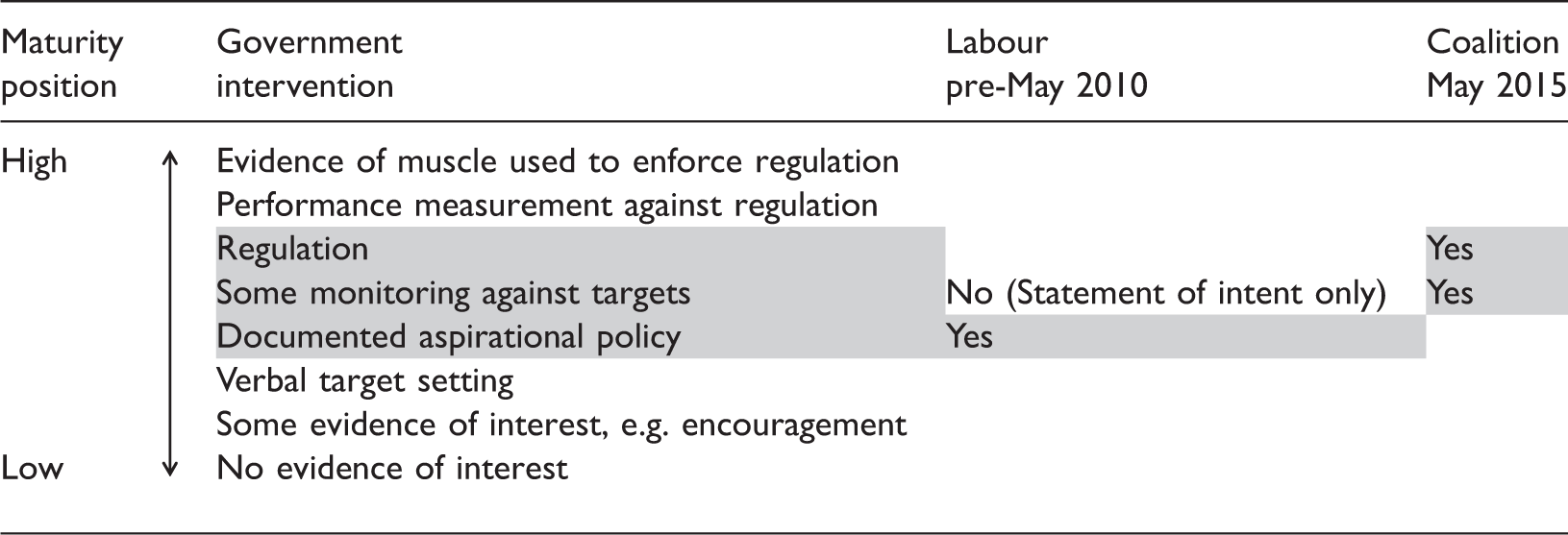
SME: small- and medium-sized enterprise. Source: Author, adapted from Harland et al. (2013: 396).
Over time researchers are developing more theoretical (e.g. Reijonen et al., 2016) and nuanced approaches as they attempt to understand what increasingly appears to be a challenging objective. Young (2013) focused upon the needs of micro businesses, and Flynn et al. (2015) found that public procurement does present challenges for SMEs but that they are not uniformly disadvantaged. Specifically they determined that size influences tendering resources, tendering behaviour and success, but crucially they found that micro firms were most adversely affected. Size has also been found to be a predictor of familiarity with procurement policy, with less awareness associated with smaller firms (Flynn and Davis, 2016). It has also been suggested that the significance and type of challenge faced can vary according to sector, thereby requiring more targeted support and distinct processes (Loader and Norton, 2015).
Even if policies are more targeted, implementation requires awareness and compliance on the part of procurement officers. Flynn and Davis (2016) have determined factors which can help to predict more likely policy compliance: they found involvement in procurement to be significant, which they argue suggests a need for a centralised procurement function with full time staff; also, policy familiarity which requires clear government communication of requirements; and recognition of the importance of SME access, framed in terms of competition rather than support. Of course claims about the success, or otherwise, of policies, can only be made with confidence if outcomes can be measured. Davis and Brady (2015) identified a need for robust measurement and monitoring with regard to public procurement policies and SME access. This finding echoes previous claims that public organisations fail to measure SME contract awards consistently and comprehensively (Loader, 2007, 2013). Also, Murray (2014) has called for outcome evaluations, based upon reliable baselines, to be used to inform policy development rather than what he saw and described as anecdotal evidence.
Finally, there are recent calls for the SME access to public procurement policy to be reviewed. Nicholas and Fruhman (2014) claim that it is time to undertake a comprehensive and robust review of SME policies, as they relate to public procurement, in particular implementation and policy interaction. Murray (2015) also questions whether the pursuit of an SME policy in relation to public procurement makes sense, and whether it works. This paper contributes to this debate by undertaking a thorough review of the policies undertaken by the UK coalition government, reflecting upon policy development and effectiveness.
SME access to public procurement in the UK
This section reviews UK policies which aim to improve SME access to public procurement, beginning with a review of policy development, followed by a consideration of policy outcomes and effectiveness. Whilst the focus is upon the detailed policies instigated by the coalition government, these are placed within a longer time frame.
Policy development: An overview
The first significant review of public procurement in the UK appeared in 1984 (Cabinet Office, 1984). It established that value for money was the primary objective for government purchasers and this was reiterated throughout the 1990s in three prominent publications; first, in 1995 a White Paper setting out procurement strategy (Cmnd 2840, 1995), second, in 1998 a review of procurement efficiency (HM Treasury, Cabinet Office, 1998) and third, in 1999 a further review of procurement (Gershon, 1999) alongside the publication of the labour government's Modernising Government White Paper (Cmnd 4310, 1999). Each emphasised the need for more co-operation between departments, in order to maximise buying power, and collaboration with suppliers, thereby changing the nature of procurement and the relationship between public procurers and buyers (Erridge and Greer, 2002). However, these developments did not recognise the needs of SME suppliers, although concerns had previously been raised. For example, the Bolton Committee of Inquiry drew attention to the adverse impact of the state's purchasing practices, claimed to ‘inevitably discriminate, albeit unwittingly, against the small firm’ (Bolton, 1971: 80); Bannock and Peacock (1989) identified government purchasing as one of five policy areas that could be used more effectively to support small business and Curran and Blackburn (1994) depicted the challenges faced by SMEs doing business with large organisations in both the public and private sectors.
However, during the next decade, we began to see SME access receiving government attention. In 2001, the Labour government provided advice about improving access to both public sector organisations and small business (OGC, SBS, 2001a, 2001b). This was followed in 2003 by the Better Regulation Task Force and Small Business Council report which produced 11 recommendations (BRTF, SBC, 2003), and in 2008 by the Glover review. In reviewing progress from 2003, Glover determined that a number of actions had been taken, including the development of a web portal and a mechanism for reporting non-compliance with the Government's Procurement Code of Good Practice, yet many similar concerns about SME access and participation remained (Glover, 2008: 45). The Glover Committee produced its own 12 recommendations, which were accepted by the Labour administration and influenced its thinking, culminating in the statement in its final budget, March 2010, that it would ‘increase the proportion of central government procurement spend that goes to SMEs by 15 per cent throughout the supply chain’ and ‘publish for the first time the level of spend that goes to SMEs, which will be used as a baseline for these targets’ (HM Treasury, 2010: 54). Based upon Harland et al.'s (2013) maturity framework (Table 1), we can see that just prior to the coalition government taking office, there was documented aspirational policy in place and a stated intention to publish evidence for monitoring purposes.
Therefore, the coalition government's initial statement of intent regarding SME access to public procurement demonstrates continuity in policy direction. Its first policy statement articulated its aspiration to award 25% of government contracts to SMEs, and an intention to publish opportunities online and to make them freely available (HM Government, 2010). This also maintains continuity in the level of maturity at the start of the period. The aim now is to examine how the policy develops and to consider whether the nature of the intervention changes.
Coalition initiatives to improve SME access to public procurement.
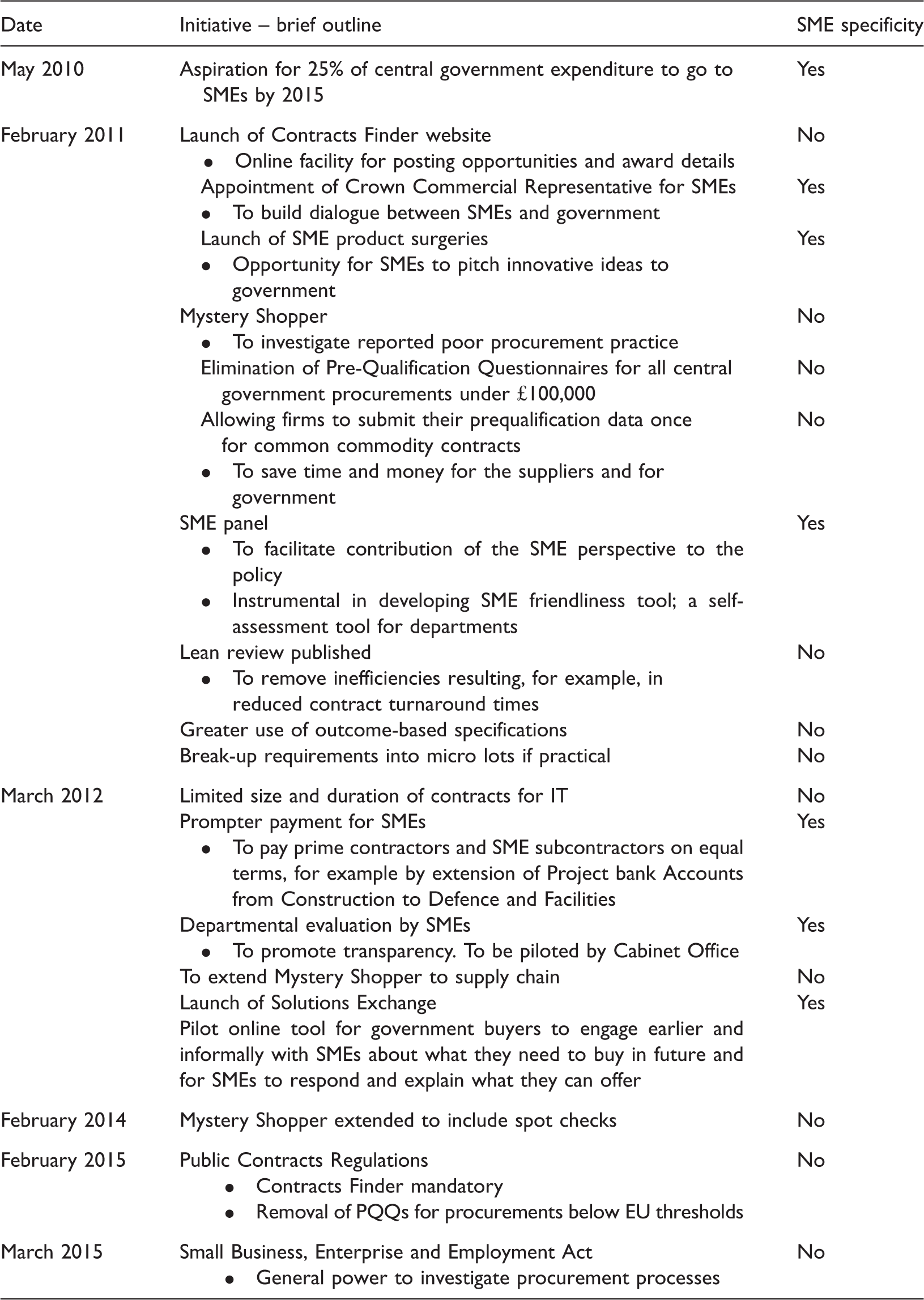
PQQ: pre-qualification questionnaire; SME: small- and medium-sized enterprise.
A period of relative stability followed, although relevant and related activities were occurring such as ongoing negotiations to agree a revised EU procurement policy and the development of the Public Services (Social Value) Act 2012 which mandated commissioners to consider economic, environmental and social benefits in their procurement process (Booth, 2013; Cabinet Office, 2012a). The next significant development was a report on micro business (Young, 2013) which highlighted the significant trading potential of public procurement and influenced a second government consultation exercise on SME access to public procurement, launched September 2013 (HM Government, 2013a). Addressing pre-qualification, transparency, and payment and finance, this consultation attracted responses from 155 stakeholder organisations including suppliers, procurers and representative bodies (HM Government, 2013b). Following this consultation a further series of procurement measures were announced in December 2013 as part of a renewed commitment to support small business (BIS, 2013). Significantly, the coalition government announced that it would develop legislation, culminating in two pieces of legislation, the last significant actions of the coalition government on this issue. First, Public Contract Regulations which came into force in February 2015 implement the recommendations made by Lord Young as well as the recently agreed EU Public Sector Procurement Directives (CCS, 2015b); second, the Small Business, Enterprise and Employment Act 2015 includes provisions to make public procurement practices more streamlined and efficient (BIS, 2015).
Policy development: Analysis of four policy instruments
Across the five-year period, four policy instruments are prominent: first, the articulation of an aspirational goal; second, the launch of Contracts Finder, an online portal for posting contract opportunities; third, a ‘Mystery Shopper’ service to investigate poor practice; and finally, the elimination of pre-qualification questionnaires (PQQs) for all central government procurements under £100,000 (Cabinet Office, 2011a, 2013). The examination of these four cases informs this review by enabling a more detailed understanding of how policy has evolved.
The first initiative was the introduction of the 25% aspirational target, noteworthy in light of Glover's (2008) conclusion that setting a goal for public procurement spend awarded to SMEs would not be practical or effective. However, the committee did recognise the symbolic importance such a goal could play (Glover, 2008). The scope of this target was clarified as applying to central government expenditure, both direct and in the supply chain (Cabinet Office, 2012b). It should be noted that elements of the overall policy apply across the public sector and some to central government only. This reflects that procurement rules and practice are not homogenous across the UK public sector. In particular, the devolved administrations (Northern Ireland, Scotland and Wales) have scope to develop their own initiatives, for example each has their dedicated procurement website (GOV.UK, n.d.). There is also diversity across the public sector with local government, health and the police, for example, each establishing their own requirements and practices. The aspirational 25% target was at the forefront of policy throughout the five-year period but was refined in response to feedback from government departments. Whilst the overall target of 25% remained, individual departments agreed targets tailored to their own circumstances, reflecting the view that some types of contract, such as those for IT and professional services, are more suited to SMEs (NAO, 2013). The targets vary between 9% for HM Treasury and 42% for BIS (Cabinet Office, 2013).
The second initiative, to advertise opportunities online and free of charge, was also identified in the initial programme for government. Whilst this benefits all potential suppliers, its free availability should please SMEs which have previously raised concerns about the need to pay to access public contract opportunities (Glover, 2008). An online portal known as Contracts Finder was established and used to publish procurement information including opportunities, tender documents and contract awards (Cabinet Office, 2011a). Whilst its use was required by central government departments, the facility was made available to the wider public sector but use was not obligatory. However, the final development saw the inclusion of this policy element within the 2015 Public Contract Regulations. These mandated that all procurement opportunities above thresholds are published on Contracts Finder and broadened its scope to include the wider public sector, although it may be used instead of or in addition to other portals. Awards to SMEs must also be identified for procurements below EU thresholds. Implementation of the regulations coincided with the site's relaunch, under the operation of the CCS (CCS, 2015c).
The third initiative is known as ‘Mystery Shopper’, a scheme for (potential) suppliers to report unnecessary bureaucracy and complexity which is then investigated. This also benefits all suppliers, but the concerns over burdensome processes have been especially associated with SMEs (Loader, 2013). It too developed over the period, extended to include the supply chain (Booth, 2013) and then to include spot checks (Cabinet Office, 2014). The final development in effect placed the scheme on a statutory footing by including a power to investigate procurement processes within the Small Business Enterprise and Employment Act 2015 (BIS, 2015).
The fourth initiative relates to improving the pre-qualification experience. In order to reduce the time and bureaucracy associated with tendering for public sector contracts (FSB, 2012a), the government advocated eliminating PQQs for contracts under EU thresholds. The policy path was similar: launch early on, consideration within the second consultation process and, finally, mandating the process by its inclusion within the Public Contracts Regulations 2015.
Policy evaluation: Evidence and outcomes
The procurement activity just described was undertaken in order to make public procurement more accessible to SMEs. This section reviews the evidence and reflects upon the outcomes and effectiveness of the policy.
Central government spend with SMEs.
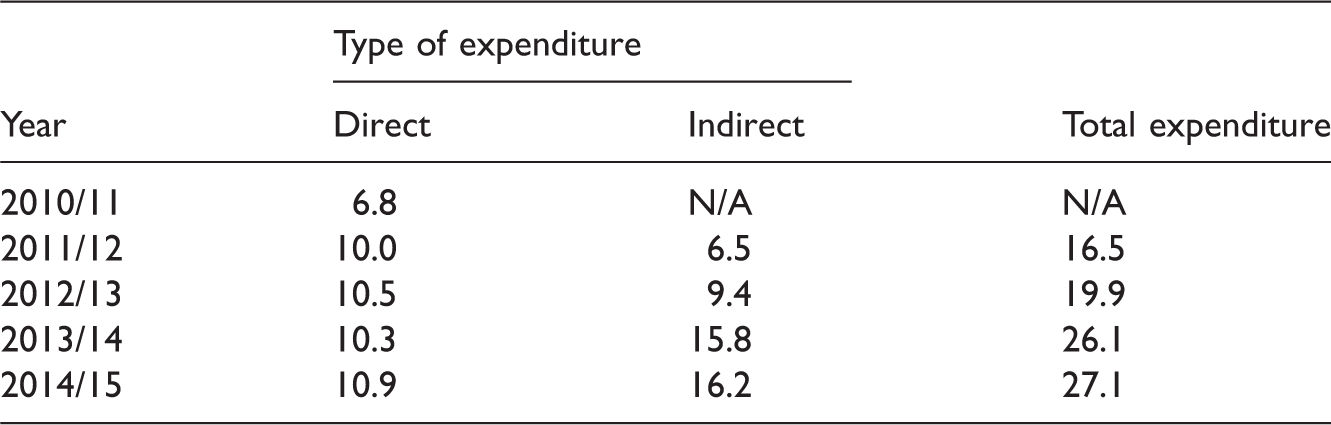
SME: small- and medium-sized enterprise.
Evidence for Contracts Finder, Mystery Shopper and Pre-qualification Questionnaires.
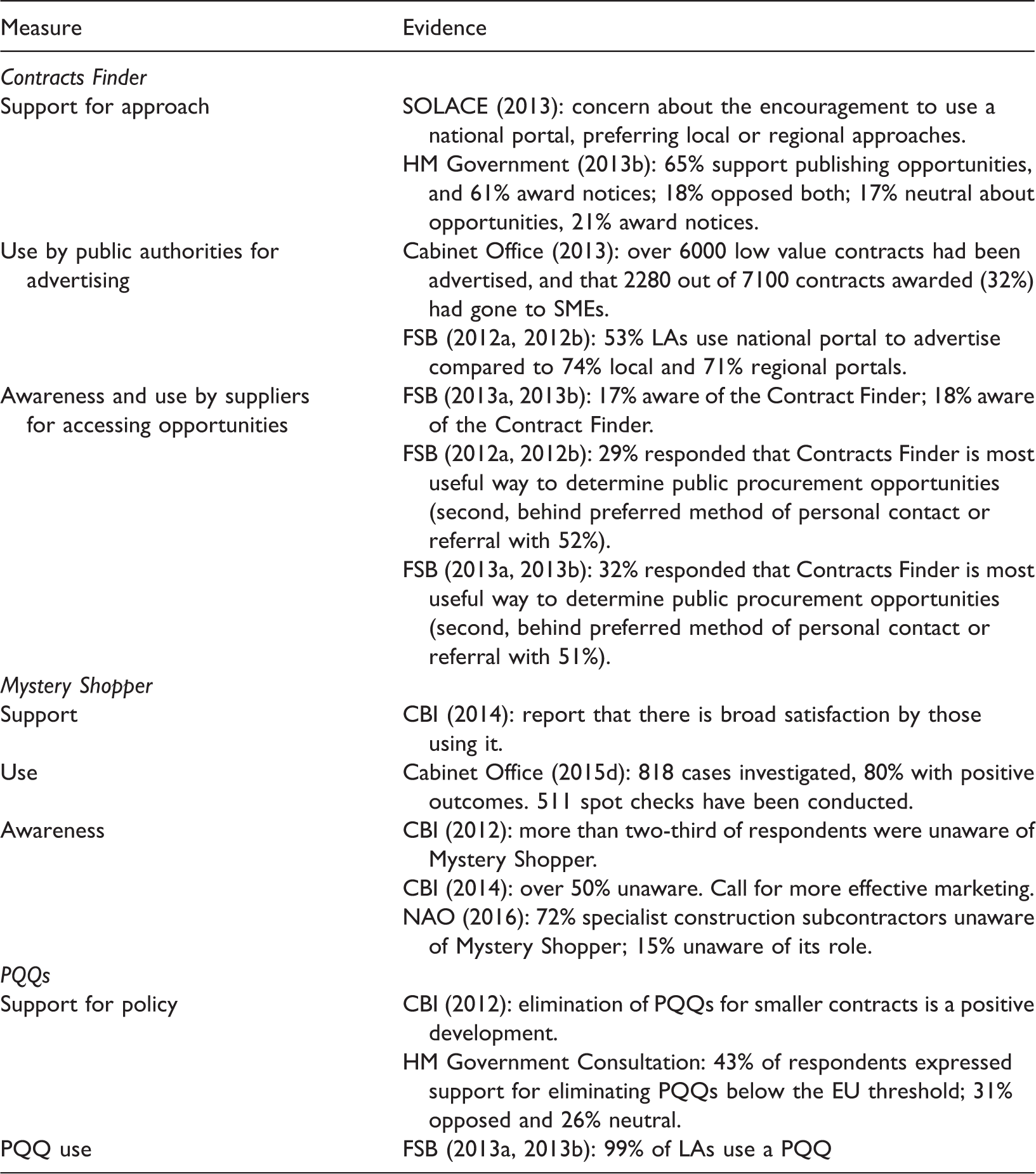
CBI: Confederation of British Industry; FSB: Federation for Small Business; LA: local authority; NAO: National Audit Office; PQQ: pre-qualification questionnaire; SME: small- and medium-sized enterprise.
The aspirational target appears relatively straightforward to evaluate, subject to the availability of data. The Cabinet Office has published spend data regularly, and announced that the target had been met by the end of 2013–14, and then exceeded in 2014–15 (Cabinet Office, 2015a, 2015b). However, SME spend remains below the EU average of 29% (European Commission, 2015). The figures (see Table 3) demonstrate that the majority is ‘indirect’ spend, that is through the supply chain. There are two main concerns relating to the data. First, its reliability is questioned, due to inconsistent methodologies for determining direct spend, and indirect spend figures that are not based upon complete and accurate data but are described by the Cabinet Office (2015a: 2) as ‘indicative’, derived from a supplier survey. The NAO was so concerned that it reported ‘We cannot be certain that the amount of spending going to SMEs has increased since 2010’ (NAO, 2016: 18). Second is the difficulty in collecting and classifying data about suppliers, especially as a supplier's status can change over time. A further indicator of success is awareness of the policy amongst the target audience but this is low: 14% in 2012, 15% in 2013 (FSB, 2012a, 2013a).
The 25% target applies to central government only. However, NHS and local government are seen to provide better opportunities for SMEs (Young, 2013) and this appears to be borne out by the data. There is no target for the NHS, but NHS Supply Chain (2015) reports that spend with SMEs across the supply chain has reached 30.2%. Local government data show that local authorities were spending an average of 49% with SMEs in 2012 and 47% in 2013 (FSB, 2013b), although levels of spend vary considerably (FSB, 2012b). The Department for Community and Local Government's (DCLG) competition to find the best council to do business with (DCLG, 2013) revealed an average spend of 44.9%, varying between 86 and 14% (Loader, 2016). Although there is some progress in collecting local authority data on SME spend, it too is currently incomplete, for example only 51% recorded spend in 2012, 60% in 2013. This contrasts with numbers recording spend with local firms: 62% in 2012 and 70% in 2013 (FSB, 2012b, 2013b). Spending with SMEs by Police Forces is reported to be about 40% (Public Accounts Committee, 2013).
No specific or quantifiable targets have been identified for the second case, Contracts Finder but, implicitly, its success can be judged if it is being used by both public procuring organisations and suppliers, and if it is supported by business. The Cabinet Office has reported regularly on usage, including numbers of opportunities advertised, viewings and contracts awarded to SMEs and their data suggest that usage has improved over time (Cabinet Office, 2011c, 2012b, 2013). However, prior to being made mandatory in February 2015, local authorities were using this national portal less frequently than local and regional portals (Table 4). A response to the government's 2013 consultation explains: Locating all opportunities in one central contract portal would allow larger national enterprises to sweep up and cherry pick the most lucrative ones or even to engage in predatory pricing. Local authorities prefer to use regionally based portals to promote opportunities for local businesses. (SOLACE, 2013: 4)
Awareness of the Mystery Shopper scheme is also low amongst business according to the CBI and FSB, and the NAO (2016), highlighting low awareness amongst subcontractors, reports their fears that its use could lead to less work. Data about cases raised have been collected and reported by government since the initiative was launched and is publicly available. The scheme has experienced a steady use over the five-year period with most cases resolved satisfactorily (Cabinet Office, 2015c). However, the NAO (2016) reflects that supplier firm size is not routinely collected. Its comparative analysis of cases by type of complaint, for 2011 and 2015, suggested only a small number were from SMEs, insufficient to determine progress on SME access. Paradoxically, greater awareness of the scheme by SMEs could lead to more complaints, which might suggest a lack of success with SME access, at least in the short term.
The final element saw the elimination of PQQs for contracts below EU thresholds and success is achieved through compliance with the requirement. There is a lack of evidence about compliance but the CCS reported a decrease in complaints to support progress (NAO, 2016). The CBI expressed broad support for the initiative, but the response to the government's 2013 consultation produced a mixed reaction to the proposal (HM Government, 2013b) at odds with the criticism associated with the burden of pre-qualification practices (Loader, 2005; O'Brien, 1993). However, the Communities and Local Government Committee (CLGC) inquiry into local government procurement explains: ‘It should be noted that we received little evidence arguing for total abolition of PQQs since some form of pre-evaluation enables councils to keep costs down by screening out unviable bids at an early stage’ (CLGC, 2014: 32).
The NAO (2016) expressed a further concern that SMEs may devote resources to the tender process before finding out, at a later stage, that they do not meet requirements. However, an alternative view was expressed by the CCS: Yes, that is a risk. Again, it is a balance. Do you put a hurdle at the beginning and lots of people fall at it? Small firms said to us, “No, we don't want that because you'll knock us out because my insurance documents are not reaching a certain threshold”. ….. I would say that there is more of an opportunity that you would get kept in at a later stage rather than thrown out. (PAC, 2016a: Q68)
Discussion
The UK coalition government maintained the policy of supporting SMEs by attempting to improve their access to public procurement throughout the five-year parliament. The policy comprised a range of initiatives and whilst these were mainly introduced in the early years of the period, development continued to take place throughout, informed in part by consultations with SMEs and other stakeholders. The policy developed through a combination of fine-tuning the original actions, extending their scope and introducing new dimensions, as demonstrated by the examination of four policy initiatives.
The nature of the policy development can be examined with reference to the maturity continuum developed by Harland et al. (2013). What emerges is the increased reliance upon legislation. Consequently, we can see that the coalition government has advanced the UK's position towards greater maturity: the 25% target and associated monitoring is situated at the fifth level, with the other three initiatives reflecting regulatory intervention which is at level six of eight. The newly developed regulations may contribute towards improved policy outcomes via compliance and enforcement, articulated within the final two stages of maturity, namely performance measurement and enforcement related to regulation. As the legislation was only introduced in 2015, more time is required before a full assessment of progress can be conducted.
The statutory requirement to use Contracts Finder should improve the service offered by the national portal, by providing a complete set of opportunities, but this has not yet been achieved according to the NAO (2016). They call for improvements including the need for enforcement. Evidence to the PAC demonstrates a lack of clarity about the nature of sanctions and whether they would be enforced (PAC, 2016a) resulting in the Committee expressing a concern ‘that the Government is leaving itself open to potential legal challenge by not advertising all available contracts’ (PAC, 2016b: 6).
The presence of rules, including regulation, can affect the level of discretion available to those implementing policy, which can be seen to have advantages and disadvantages. Whilst discretion can enable individual or special circumstances to be taken into account, a lack of clarity and certainty can lead to inconsistent application of policy, producing confusion amongst the business community (Schapper et al., 2006; Ulbrich, 2011). The introduction of legislation in the three cases differs in its impact upon discretion. The removal of the pre-qualification stage is unambiguous and should provide a consistent experience for SMEs, subject to procurement officers' awareness and compliance. However, the requirement does not reflect the diversity in views about PQQs, and the positive role some see for them, in particular relating to greater resource efficiency. The requirement to use the national Contracts Finder preserves an element of discretion as it does not preclude use of local and regional portals alongside, but it does not address concerns raised about local SMEs losing contracts (SOLACE, 2013) and the complexity and subsequent confusion associated with multiple sites in action as public procurers adopt inconsistent approaches (Loader, 2016). Mystery Shopper places the public procurer in a more passive role, requiring compliance with investigations, and as such this should not impact directly upon the experiences of SME suppliers.
As identified, we can expect legislation to affect the actions of public sector organisations, assuming that procurement officers comply with the new rules. In light of Gelderman et al.'s (2006) findings, this will require ensuring that procurers are familiar with the rules and a consideration of organisational incentives to comply. However, the legislation does not, and cannot, address the behaviours and actions of the SME sector. Therefore, success will not be enhanced whilst SMEs remain unaware of policies, as seen with the case initiatives examined here. As identified by Flynn and Davis (2015a), governments therefore must ensure that SME-related procurement initiatives are effectively communicated to SMEs and their representatives as well as to their own procurement officers.
A further issue to emerge relates to the measurement of spend. There needs to be more comprehensive and consistent recording across the public sector and its supply chain. Until this is improved and made more reliable, then it is difficult to have full confidence, for example, in the claims that the 25% target has been met by central government departments, as articulated by the NAO (2016). This remains urgent in light of the policy announcement in August 2015 by the newly elected Conservative government to increase the target to 33%, to be achieved by the end of its period of office in 2020 (Cabinet Office, 2015d); the rationale and feasibility of which have been questioned by the PAC (2016b). This concern over measuring spend can be extended to a broader need to identify targets and measures for all the policy initiatives such that outcomes can be determined and assessed. The nature of some initiatives may preclude the simple use of a quantifiable measure and so more thought is required to articulate a clear aim and a means for evaluating effectiveness, perhaps combining both quantitative and qualitative approaches (Curran and Storey, 2002). For example, use of Contracts Finder by public organisations can be quantified but it is its accessibility to suppliers to find out about opportunities, SMEs especially, which signals effectiveness. Accessibility could be captured by monitoring and quantifying various actions such as expressions of interest, submitted tenders or tenders won, but evaluation would be subjective, especially as figures would differ across a range of products and services. Supplementary qualitative evidence could help to provide greater understanding about the facility, especially if it could capture the views of non-users.
Conclusion and implications
This paper is contributing to the discussion about SME access to public procurement. It has comprehensively examined and reviewed UK public procurement policy towards SMEs, focusing upon the coalition government's five-year term of office. First, it determined the policy instruments that have been implemented; second, tracked policy development and, third, considered measurement and assessment of outcomes.
It found that the coalition government had actively and consistently pursued the policy of improving SME access to public procurement throughout the parliament. The policy was examined further through the detailed consideration of four policy instruments. Analysis demonstrated that these instruments were refined, developed and extended throughout the period. Unfortunately their success is difficult to evaluate in the absence of comprehensive, systematic and quantifiable evidence. Although the aspirational target provides a ready-made quantifiable measure, the other case examples did not articulate identifiable targets and measurable outcomes to aid evaluation. Therefore, evaluation was based upon evidence such as awareness and support for the measures, as a proxy for determining success.
The aspirational target set for central government departments was reported as achieved, but the reliability of the data was questioned. In the other three cases, the basis of the policy developments was not always clear or universally applauded. For example, views on the appropriateness of a national portal vary according to the tier of government, and the public procurers' views on the elimination of qualifying PQQs are mixed, and within the SME population they have a relatively low priority.
Using the maturity framework developed by Harland et al. (2013), the paper identifies that the coalition government advanced the UK's intervention approach by its efforts in monitoring progress against some targets and, especially, by its increased use of regulation. As the legislation was introduced at the end of the period of office, it has been too early to consider how effectively the new requirements are being implemented. However, legislation brings with it additional burdens: it is costly (Schapper et al., 2006) and it introduces a need to monitor compliance. The latter ties in with the final stages of maturity which are suggested to be performance and enforcement related to regulation (Harland et al., 2013). These will be affected by compliance and, if required, the action needed to ensure compliance. Compliance by public procurers is a challenge and a range of actions is required to enhance its achievement, such as training to improve familiarity with the policy, dedicated buyers, better recognition of the importance of SME success and use of organisational incentives (Flynn and Davis, 2015a; Gelderman et al., 2006). Enforcement within the EU and UK is currently achieved by firms being prepared to report and complain about non-compliance. However, to operate successfully, it requires that SMEs are aware of the facility. This paper has confirmed that low SME awareness of initiatives is a concern, supporting previous findings (Flynn and Davis, 2015a). Therefore, even though government has taken steps to further demonstrate its commitment to improving SME access, the need to reach the target audience – so that it can take advantage of developments such as Contracts Finder, as well as contribute to compliance – remains a most crucial requirement.
The findings suggest a number of implications for policymakers. There need to be improvements in the measurement and collection of SME supply data, especially within the supply chain. The impact of the legislation must be monitored closely and steps to enforce compliance must be considered and taken as required. Finally, an immediate priority must be to address the need for better communication about initiatives to procurement practitioners, SMEs and SME representatives. There is also scope for further work by the academic community. In particular, there is a need to study the impact of the new mandatory practices, with the scope to develop ongoing work on compliance and discretion (Flynn and Davis, 2015b).
There are limitations associated with the study, principally its reliance upon secondary data. Whilst this provides a cost-effective approach, the selection and use of evidence must be considered carefully. Issues of research design, relevance and scope of the data gathering process, and the balance of views represented are pertinent to the usefulness of the approach (Caird et al., 2014). For example, some of the evidence is generated by expert witnesses who were selected by those commissioning reports; some was provided by self-selecting stakeholders where bias may be a concern. However, additional benefits have been realised: a wider and more extensive set of data and evidence has been obtained, collected over a period of time and adopting a variety of techniques.
Footnotes
Declaration of conflicting interests
The author(s) declared no potential conflicts of interest with respect to the research, authorship, and/or publication of this article.
Funding
The author(s) received no financial support for the research, authorship, and/or publication of this article.